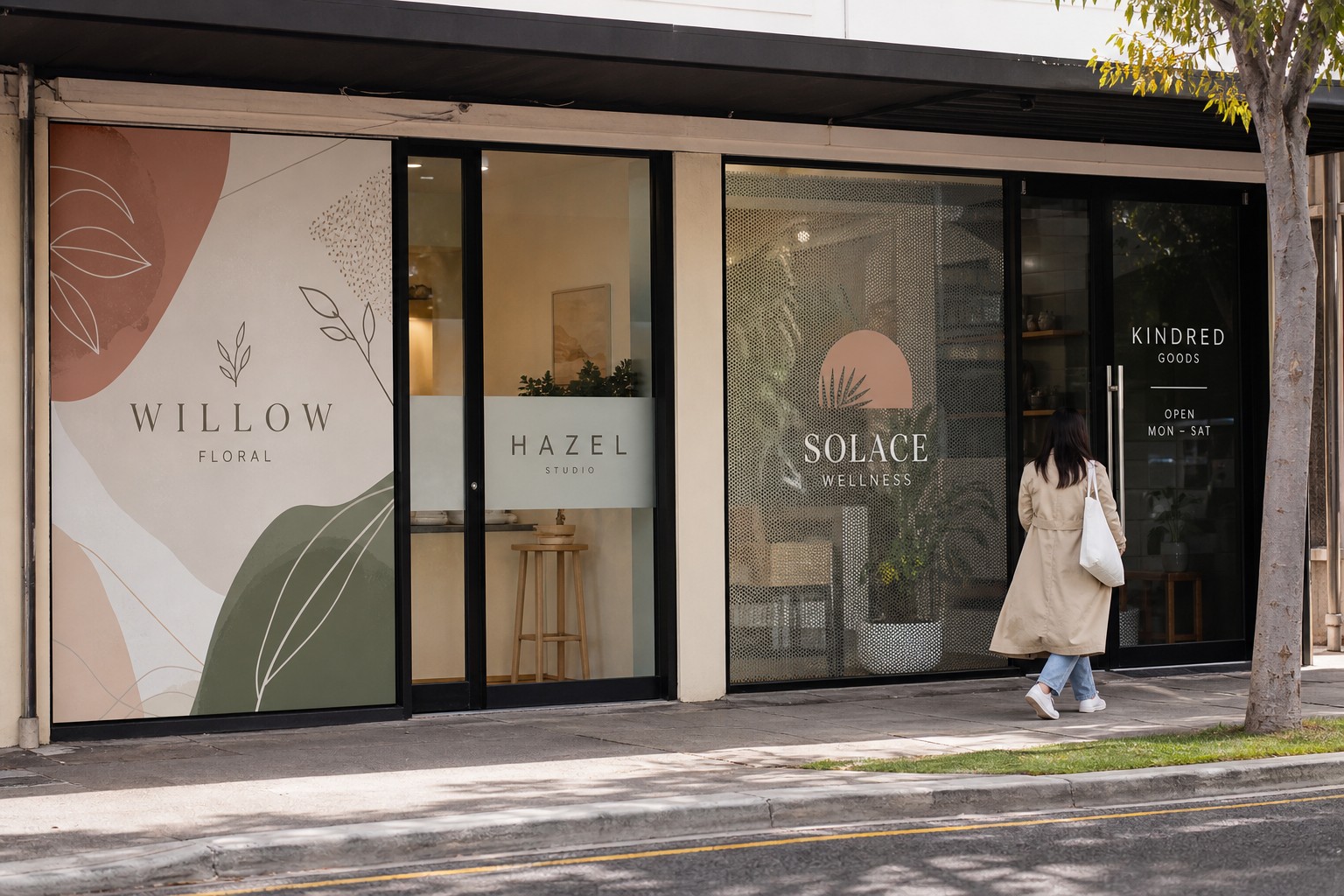
Your shopfront window is the one advertising surface that works around the clock without a recurring cost. A well-chosen graphic communicates your brand, draws pedestrian attention, and signals what’s inside before a customer takes another step.
The options have expanded well beyond a vinyl sticker on the door. The right approach depends on your business type, your goals, and how much of the window you want to work with.
– Brand visibility + impact: full-coverage digitally printed vinyl wrap
– Privacy without darkness: one-way perforated mesh (see-through from inside, full graphic from outside)
– Elegant privacy for offices and salons: frosted/etched-look cut vinyl banding
– Seasonal campaigns and promotions: opaque self-adhesive decals (clean removal, quick turnaround)
– Minimum baseline every business needs: cut-vinyl lettering for hours, name, and logo
– Best layering approach: permanent lettering base + campaign decal on top, or frosted band + cut logo over it
Five styles of shopfront window graphics
1. Full-coverage digitally printed vinyl
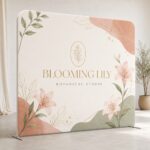
A full-coverage vinyl wrap turns your window into a billboard-scale canvas at street level. The graphic is printed on white or clear vinyl film and applied across part or all of the glass: a product photograph, a lifestyle scene, a seasonal campaign image, or a bold brand pattern. From the footpath, the effect is immediate.
White vinyl produces full-colour opacity, meaning the interior is not visible through the graphic. Clear vinyl gives a slightly translucent result, allowing background light to soften the image. Both are available as self-adhesive panels for semi-permanent installation or static cling for temporary campaigns.
This style suits any business where visibility and recognition are the primary goals. It is the highest-impact option in a busy retail strip.
Best for: quick-service restaurants and cafes featuring food photography, fashion retailers running seasonal campaigns, gyms promoting a new programme, businesses opening in new locations that need fast brand presence.
2. Frosted and etched-look cut vinyl
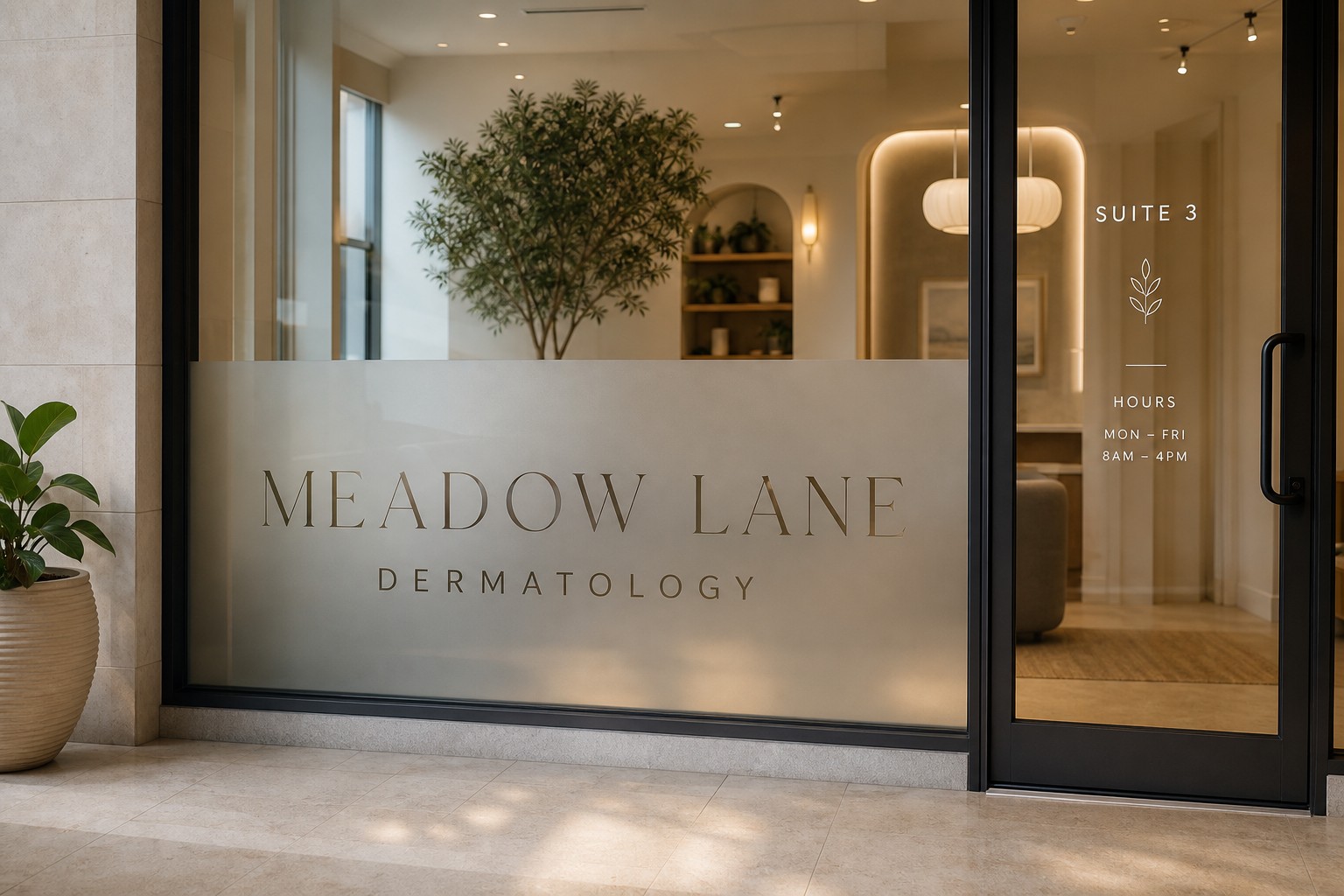
Frosted vinyl film mimics the look of sandblasted or acid-etched glass at a fraction of the cost. It diffuses light and obscures the view through the glass while still allowing natural light into the space. The result reads as a considered, permanent design decision rather than applied signage.
The most common application is a horizontal banding treatment across the window at seated or standing eye level, typically between 900mm and 1,700mm from the floor. It can also cover the full window on a partition, or be cut into a decorative pattern or logo shape.
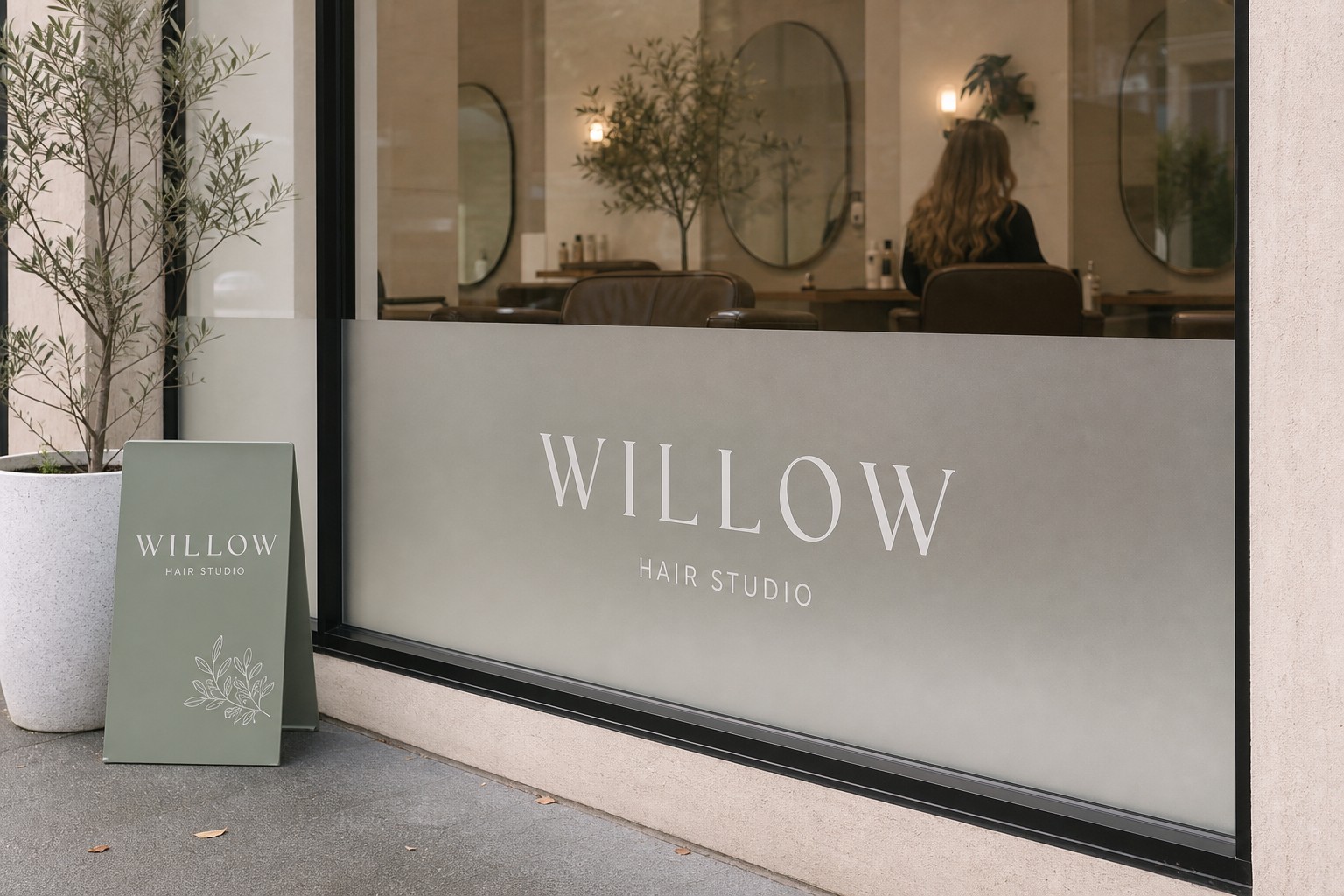
Best for: professional offices where meeting rooms face a shared lobby, medical and dental clinics, beauty salons and spas where treatment chairs are visible from the entry corridor, and any space where the aesthetic goal is privacy with a clean, professional finish.
3. Promotional and seasonal decals
Seasonal decals are the most flexible tool in a retailer’s window-graphics kit. Applied as opaque self-adhesive vinyl, they carry a campaign-specific message for a defined period: end-of-financial-year sales, Christmas and summer promotions, new product launches, limited-menu announcements. When the campaign closes, the decal removes cleanly and the next one goes up.
Because print runs are typically small (one or two panels per window), digital printing is the right process. Turnaround from proof approval to finished panels is 2-5 business days, which fits a standard campaign calendar.
Best for: fashion and gift retail with seasonal promotional cycles, hospitality venues advertising menus and events, health and beauty businesses promoting featured treatments or packages.
Design note: keep each seasonal panel to one message. A single large headline, a logo, and a URL or QR code is sufficient. Window copy needs to be readable at footpath pace, which means large type and minimal detail.
4. One-way perforated mesh
One-way vision film is printed on a vinyl substrate that has a micro-dot pattern of tiny holes punched through it, either in a 50/50 ratio (equal printed surface to open hole) or 60/40 (more print coverage, stronger outside impact, slightly less interior light). In daylight from the street, you see the full-colour graphic. From inside, you see the world outside through a slightly dimmed, dot-patterned view.
This style works particularly well on large floor-to-ceiling windows where a fully opaque wrap would close off the interior. The activity inside the venue remains visible through the mesh at oblique angles, which is often desirable for cafes, gyms, and retail stores.
One-way perforated window films from Paperlust Print Shop are available from 1200mm x 1200mm panels with both 50/50 and 60/40 perforation ratios to balance graphic density against interior light.
Best for: cafes and restaurants with large street-facing windows, gyms where floor activity is visible (and acts as social proof), retail stores where a full-colour street graphic is the goal without darkening the interior.
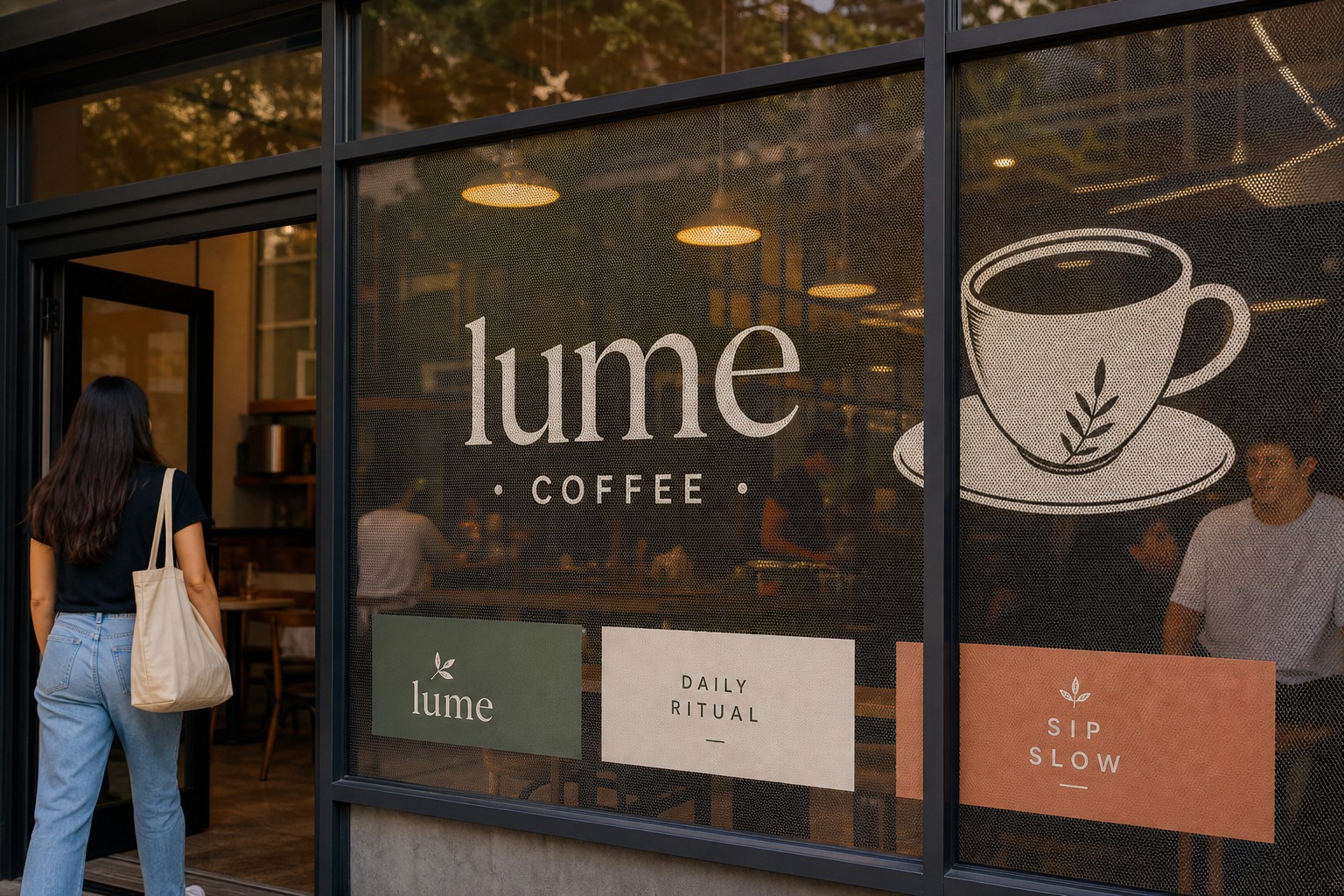
5. Hours, lettering, and branding accents
Cut-vinyl lettering is the baseline treatment every shopfront should have: the business name, trading hours, and logo mark applied directly to the glass in individual letter or shape cuts. It requires no panel installation, lasts 5 or more years on clean flat glass, and reads as intentional design rather than decorative signage.
The standard application includes hours on the door, the business name or tagline on the main fascia windows, and a logo mark on a glazed entry panel. This is the base layer on which every other graphic style builds. It stays in place when seasonal decals change, underneath frosted banding, and alongside perforated mesh.
Best for: every business type as a permanent minimum. Also the right choice for businesses where a clean, understated presence is the brand signal (independent bookshops, financial services, legal firms, architects).
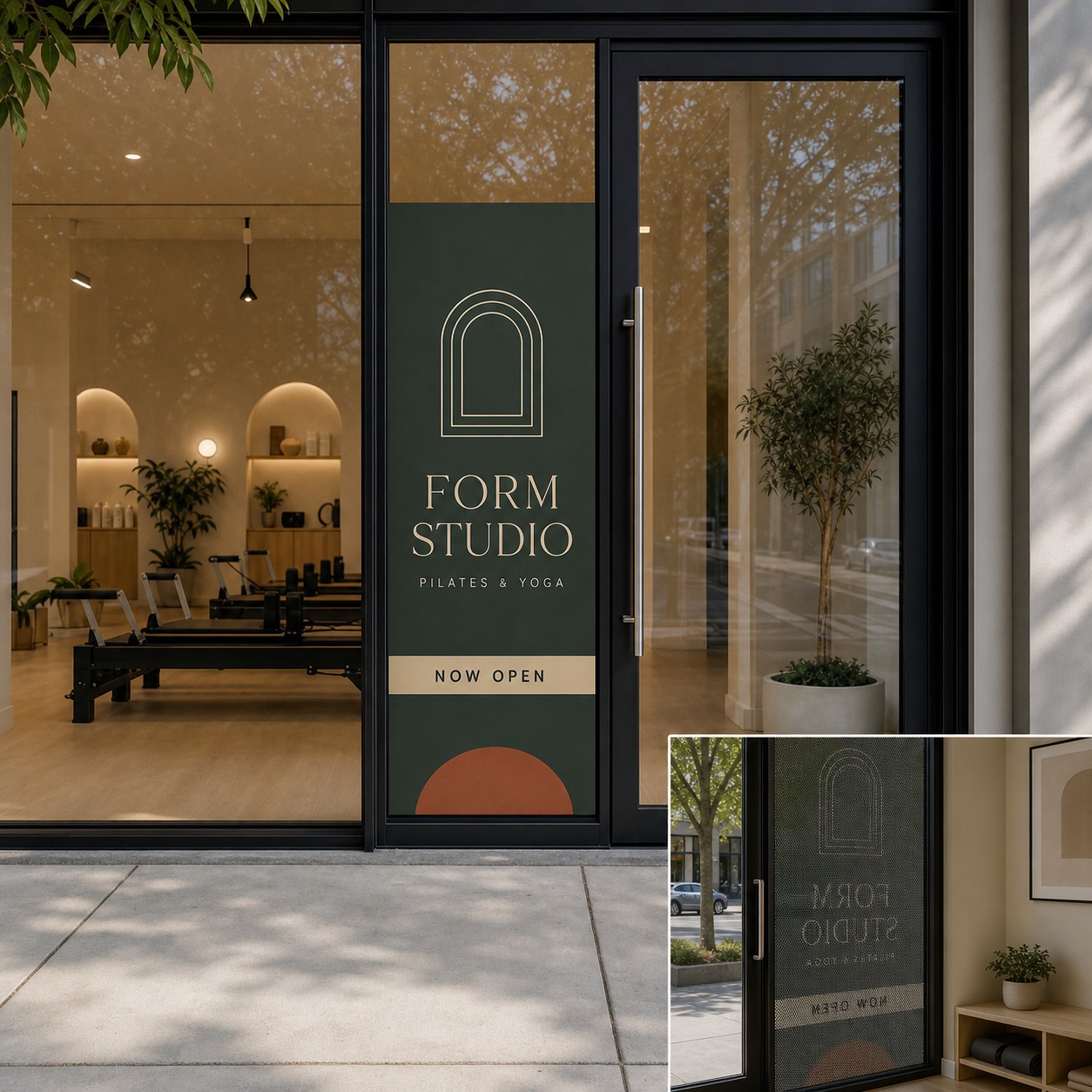
Window graphic ideas by business type
Cafes and hospitality venues
The window brief for a hospitality venue is usually twofold: communicate the atmosphere and signal that you’re open and active. Full-coverage vinyl with food photography or lifestyle imagery does the first job at distance. One-way mesh on a large window does both: customers, movement, and atmosphere visible from outside; full-colour branding graphic facing the street.
A common layered approach is permanent cut-vinyl lettering (name, hours, social handle) on the door and side panels, with a seasonally updated campaign decal on the main window for rotating menu or event promotion.
Boutiques and fashion retail
Fashion retail benefits from windows that feel curated. A large-format digitally printed panel with a lifestyle image, seasonal editorial scene, or bold brand colour positions the store before the customer enters. For boutiques with limited window real estate or high internal display value, minimal cut-vinyl lettering and a frosted return panel preserves the display window for physical product.
For stores in heritage buildings where a full-width graphic might not fit the facade character, a series of smaller branded decals applied in a deliberate pattern across the glazing bars creates a cohesive result from the footpath.
Salons, spas, and wellness studios
Privacy is the primary functional need for most health and beauty spaces. A frosted vinyl band at 900-1,500mm height covers seated treatment clients from street view while keeping natural light in the space and the upper portion of the window open. A cut-out of the studio logo in the frosted band adds a design element without surrendering privacy.
For studios aiming to build social media presence, a branded back wall or door panel with a bold graphic, a colour wash, or a punchy quote becomes an informal photo backdrop, turning the window graphic into content.
Professional offices, clinics, and financial services
For offices and clinics, the window graphic serves wayfinding and credential signalling. The business name, professional registration detail, suite number, and after-hours emergency contact on the entry glass; a frosted treatment on street-level partitions or meeting room windows; a logo mark on the glazed reception panel.
Medical practices often layer frosted vinyl on waiting room windows facing shared corridors with cut-vinyl practice name and specialist field on the door. The result is private, professional, and navigationally clear.
Which style fits your goal?
| Goal | Best style | Why it works |
|---|---|---|
| Maximum street-level brand visibility | Full-coverage digitally printed vinyl | Billboard-scale image at eye level; full colour, full bleed |
| Full-colour graphic without darkening the interior | One-way perforated mesh | 50/50 or 60/40 perforation lets daylight and the view through from inside |
| Privacy with a professional finish | Frosted/etched-look cut vinyl | Diffuses view, retains light, reads as a permanent fit-out decision |
| Seasonal promotion or campaign messaging | Opaque self-adhesive decal | Quick turnaround (2-5 days), small print run, clean removal when campaign ends |
| Permanent baseline brand presence | Cut-vinyl lettering and logo marks | Long lifespan, low cost, professional result; layers with every other treatment |
Combining styles for a layered shopfront window
Most well-considered shopfronts use two treatments together rather than relying on a single graphic. Common combinations that work:
- Frosted band with cut-vinyl logo: A frosted privacy strip across the eye-level zone with the business name and logo cut through it in a contrasting colour. Standard approach for salons, clinics, and professional offices.
- Permanent lettering with seasonal decal overlay: The name, hours, and logo remain fixed on the door and flanking panels. A campaign decal occupies the main window and is swapped each season without disturbing the permanent layer.
- One-way mesh with door cut-vinyl: Large windows carry the perforated mesh graphic for full-colour coverage; the door carries the permanent hours, emergency contact, and website in durable cut vinyl that stays legible year-round.
- Full-coverage display window with frosted return panel: A display window and adjacent entry panel. The display window runs a full-colour brand or campaign graphic; the return panel uses frosted vinyl for visual continuity without duplicating the graphic.
The guiding principle is hierarchy: one dominant layer for brand or campaign, supported by a permanent information layer below it that never changes regardless of what the promotional window is doing.
Getting your window graphics printed
Digitally printed window graphics from Paperlust Print Shop are available in white opaque vinyl and clear film, starting from $89.62 inc. GST for a 600mm x 600mm panel. Custom panel sizes are available for larger shopfront installations. Digital proofs are provided within 1-2 business days of receiving your artwork, with standard production of 2-5 business days after approval. A 24-hour express option is available for campaigns with tighter lead times.
For large-window applications where interior light and outward visibility matter, one-way perforated window films start from $157.35 inc. GST in 1200mm x 1200mm panels with 50/50 and 60/40 perforation ratios. Production is 2-5 business days after proof approval.
Browse the complete window and floor graphics range for floor stickers and additional window treatments alongside the digitally printed vinyl and mesh formats.
Artwork requirements: PDF, SVG, or Adobe Illustrator (.ai/.eps) in CMYK colour mode at final output size with 3mm bleed and all fonts outlined. A free pre-press file check is included with every order.
Related reading
- Shopfront and Office Signage: A Complete Guide covers fascia signs, A-frames, reception panels, and wayfinding beyond windows
- Window Decals for Business: Sizing, Application, and Lifespan covers installation, surface preparation, and durability in detail
Frequently asked questions
What is the difference between one-way window film and digitally printed vinyl?
Standard digitally printed vinyl is fully opaque once applied: you see the graphic from outside and a printed backing from inside, with no view through the glass. One-way perforated mesh has a micro-dot pattern of tiny holes through the vinyl, so from the street in daylight you see the full-colour graphic, while from inside you can see out through the open holes with some reduction in light. One-way film suits large windows where full branding coverage is the goal without closing off the interior; standard vinyl works better for partitions and areas where interior visibility is not needed.
How long do window vinyl graphics last on a shopfront?
Digitally printed vinyl on an exterior application typically lasts 3-5 years under standard conditions. One-way perforated mesh generally lasts 1-3 years outdoors due to the open perforation pattern increasing UV and weather exposure at the film edges. Frosted cut vinyl used in interior or sheltered applications often exceeds 5 years. Lifespan is affected by UV intensity, coastal salt air, and the direction the facade faces. Seasonal promotional decals are usually replaced well within their material lifespan.
Can window graphics be removed without damaging the glass?
Yes. Self-adhesive vinyl on clean, flat glass is designed to remove without adhesive residue when taken off correctly. Gentle heat and a slow, low-angle peel is the standard approach. Static cling vinyl (sometimes used for repositionable or temporary applications) requires no adhesive at all and leaves no residue. Textured, heavily tinted, or already-frosted glass may present different removal results, which is worth checking before applying a semi-permanent vinyl to unusual surfaces.
What artwork format do I need to supply for window graphics?
PDF, SVG, or Adobe Illustrator format (.ai/.eps) at the final output size, in CMYK colour mode with 3mm bleed and all text converted to outlines. If you are supplying raster images, check that they are at a minimum of 100-150 dpi at the final print size. Paperlust Print Shop includes a free pre-press file check with every order and will flag any issues in the proof stage before production begins.
What size should a shopfront window graphic be?
For maximum impact, the graphic should cover at least the central third of the window width. For a standard shopfront window of 1,500-2,400mm wide, a single panel of 600mm x 900mm to 1,200mm x 1,800mm creates a strong presence without cluttering the glass. For larger windows, tiled panels or a full-coverage treatment with perforated mesh is more effective. As a legibility rule for text elements: letter height should be a minimum of 10mm per metre of viewing distance, so a headline read from 5 metres needs letters at least 50mm tall.
Is window vinyl suitable for all glass types?
Standard self-adhesive digitally printed vinyl is designed for flat, clean glass in good condition. It is not suitable for textured glass, heavily tinted glass (dark tint can create adhesion issues), or glass that already has a factory-applied frosted or etched coating. If you have specialist glass, check suitability with the print team before ordering. For glazed shopfronts in standard retail or commercial fit-outs, flat-pane glass is almost universal and vinyl application presents no issues.