The signwriter’s quote is still sitting in your inbox, and the line items are not the problem. It is the callout fee, the two-hour minimum and the vague promise of a return visit to measure the window. You already know the name that needs to go on the glass, the van door or the boat hull. What you want is vinyl lettering in Australia that arrives cut to size and ready to apply, without turning a simple job into a scheduled appointment.
Cut vinyl lettering is a made-to-order product, not an installed service. The sizes, colours and prices are published on the product page, and the price updates as you select size, colour and quantity. Instead of buying a roll of film and a plotter, you order the exact text or artwork, and the piece arrives weeded and pre-spaced on transfer tape. That changes the job from a booking into an order you can place in your own time.
This guide explains what cut lettering is, how the sizing blocks work, which colours and surfaces suit it best, what you can expect from outdoor life, and how to specify a job so the price matches the piece you actually need.
The short version
- Cut vinyl lettering is self-adhesive vinyl with no background, so the colour is the film itself and the surface shows between and inside each character.
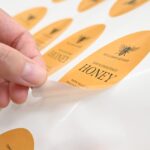
- Each piece is hand weeded and supplied pre-spaced on transfer tape, ready to position and apply in one go, with no letter-by-letter alignment.
- Five pre-set size blocks run from 200 x 100mm to 600 x 260mm, measured as width x maximum letter height. The largest single piece is 600 x 260mm.
- Keep your lettering at least 20mm tall because anything smaller cannot be weeded and applied cleanly, and keep every stroke at least 5mm thick.
- Thirteen colours are available across two finishes: ten standard gloss colours and three Premium Metallic films.
- Outdoor life is up to 3 years for standard colours, and up to 5 years for Black and White. Metallic films are best inside or in sheltered outdoor spots.
- The entry point is a 200 x 100mm standard colour at $25.00 inclusive of GST.
What cut vinyl lettering is, and what it is not
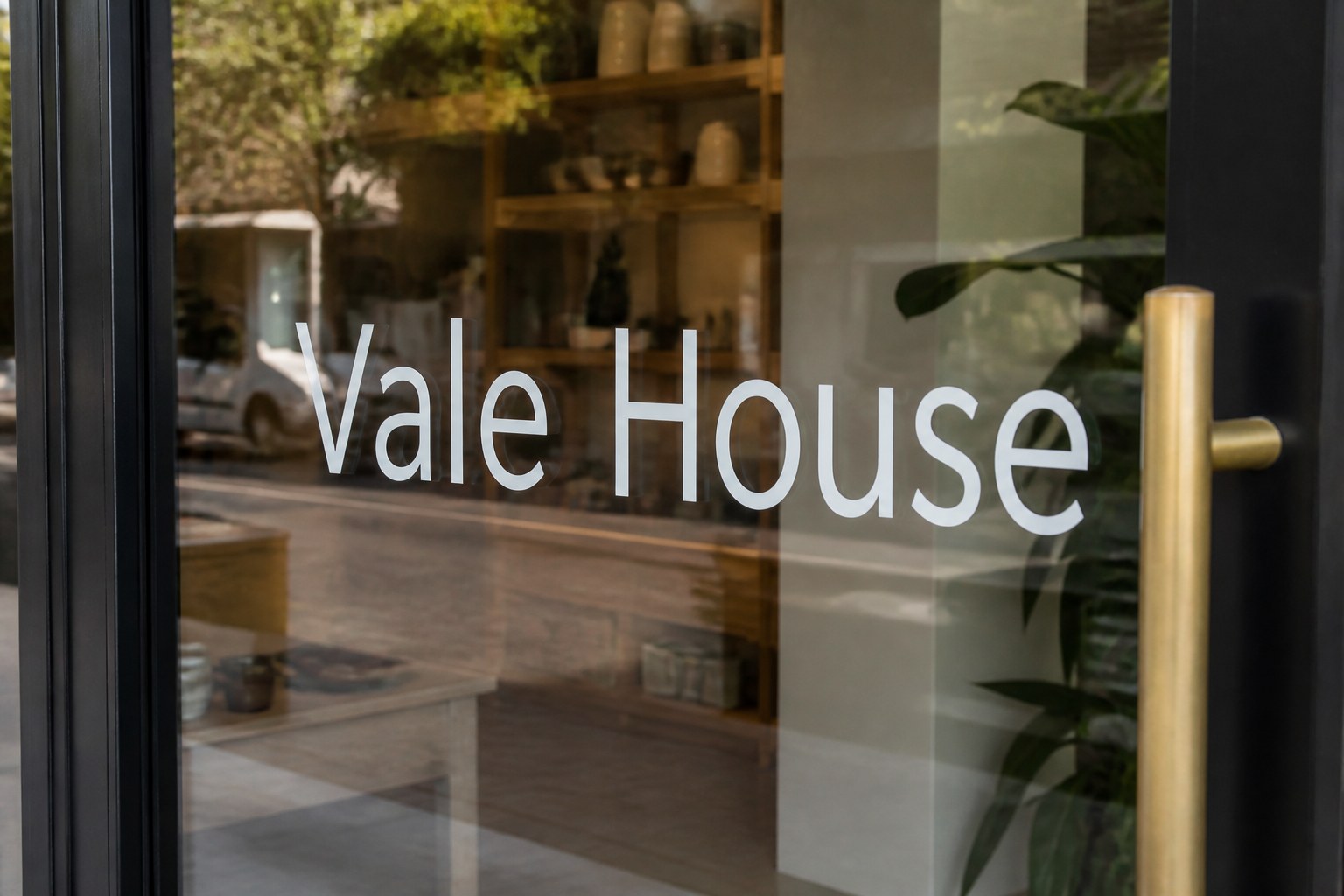
The full specification is on the custom vinyl lettering product page, but the defining feature is simple: the colour is the film itself. Cut vinyl lettering starts as self-adhesive vinyl. There is no ink to fade differently, no white background behind the design and no printed cut line around each shape. When the backing is removed, the window, vehicle panel or wall shows between and inside each character.
Because the lettering has no background, a flat colour design leaves the surface visible through the middle of letters such as the counter of an o and across the gaps between words. There is no white rectangle, no clear border and no separate printed layer. The finished job reads like professional hand-painted signwriting, not like a sticker stuck onto a window. That difference matters commercially, because the sign looks embedded in the surface rather than placed over it.
The boundary matters for quoting too. A job with a photograph, a gradient or more than a few flat colours is a printed job, not a cut job. Those designs belong on printed vinyl stickers. Each cut piece is produced in one colour, so a multi-colour design is ordered as multiple pieces you position separately to build the finished layout. The simple test is whether the colour is the film or the print. If you are still deciding between the two, a quick comparison of decals versus stickers explains which one your job needs.
Sizing, the 600 x 260mm maximum and the height people misread
Five pre-set size blocks are available: 200 x 100mm, 300 x 150mm, 400 x 200mm, 500 x 260mm and 600 x 260mm. Each is measured as width x maximum letter height, and the word maximum is the part most first-time buyers skim past. The height is not a fixed letter height. It is the tallest point the design can reach within that block, so a 600 x 260mm piece can hold a short word at 260mm, a longer line at a smaller height, or a stacked layout that balances across both.
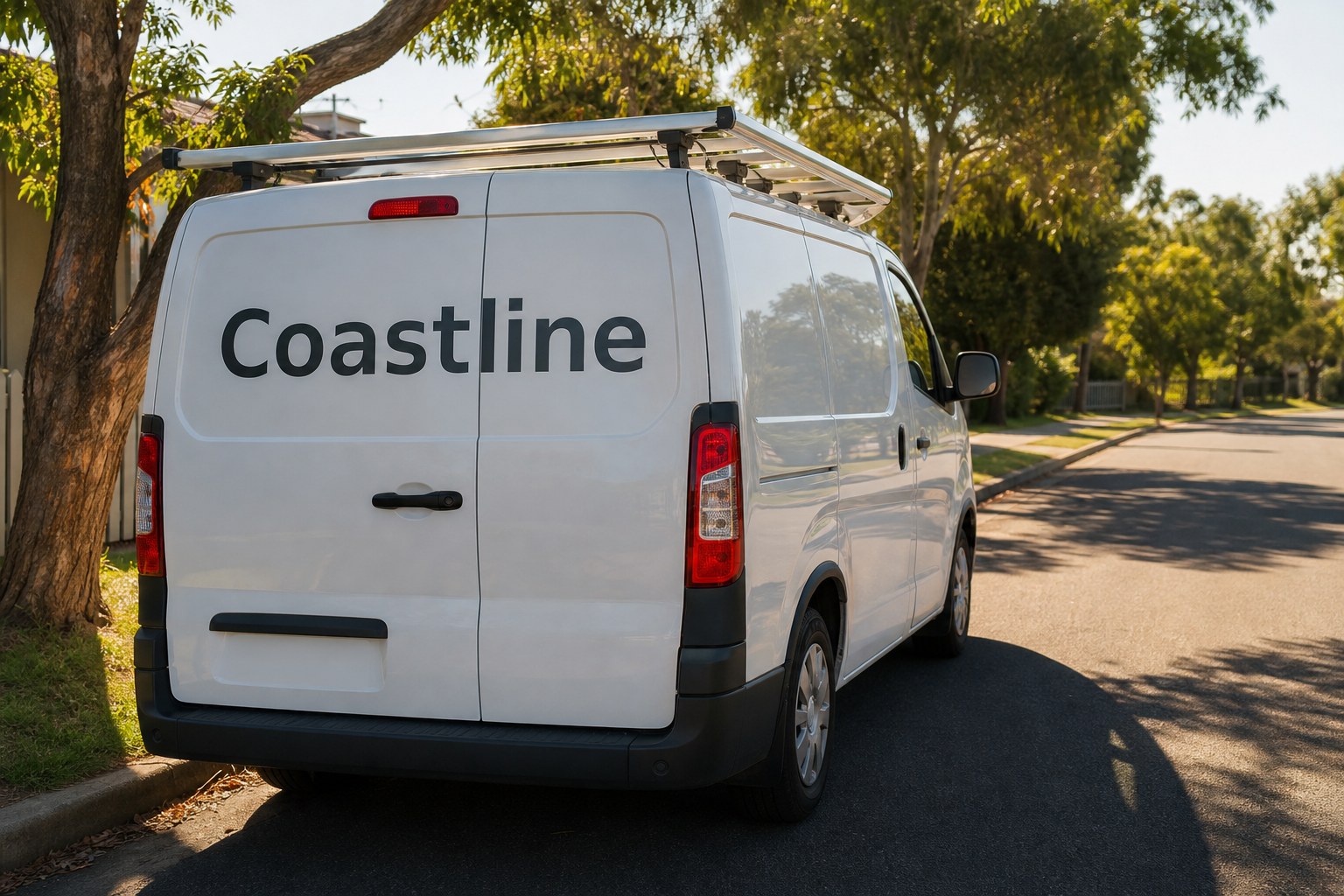
The largest single piece is 600 x 260mm. That ceiling is set by the transfer tape, not by the film itself. If your design is larger than one piece, it arrives in separate pieces, each within the 600 x 260mm maximum, and you position and align them yourself during application. This is standard for longer shopfront names, vehicle signage and boat names, but it does mean the layout needs a straight guide line on the day.
The smallest lettering we cut is 20mm high, and every stroke must be at least 5mm thick. Below that, small counters and thin strokes become difficult to weed cleanly, and fine vinyl elements tear or twist during application. If your design cannot work at 20mm or larger, this product is the wrong starting point.
Colours and finishes, including the Premium Metallic range
Thirteen colours are available across two finishes. The standard gloss range is Black, White, Red, Reflex Blue, Light Blue, Kelly Green, Orange, Yellow, Magenta and Dark Grey. The Premium Metallic range carries three stock films that use a genuine metal-effect finish: Gold, Rose Gold and Silver.
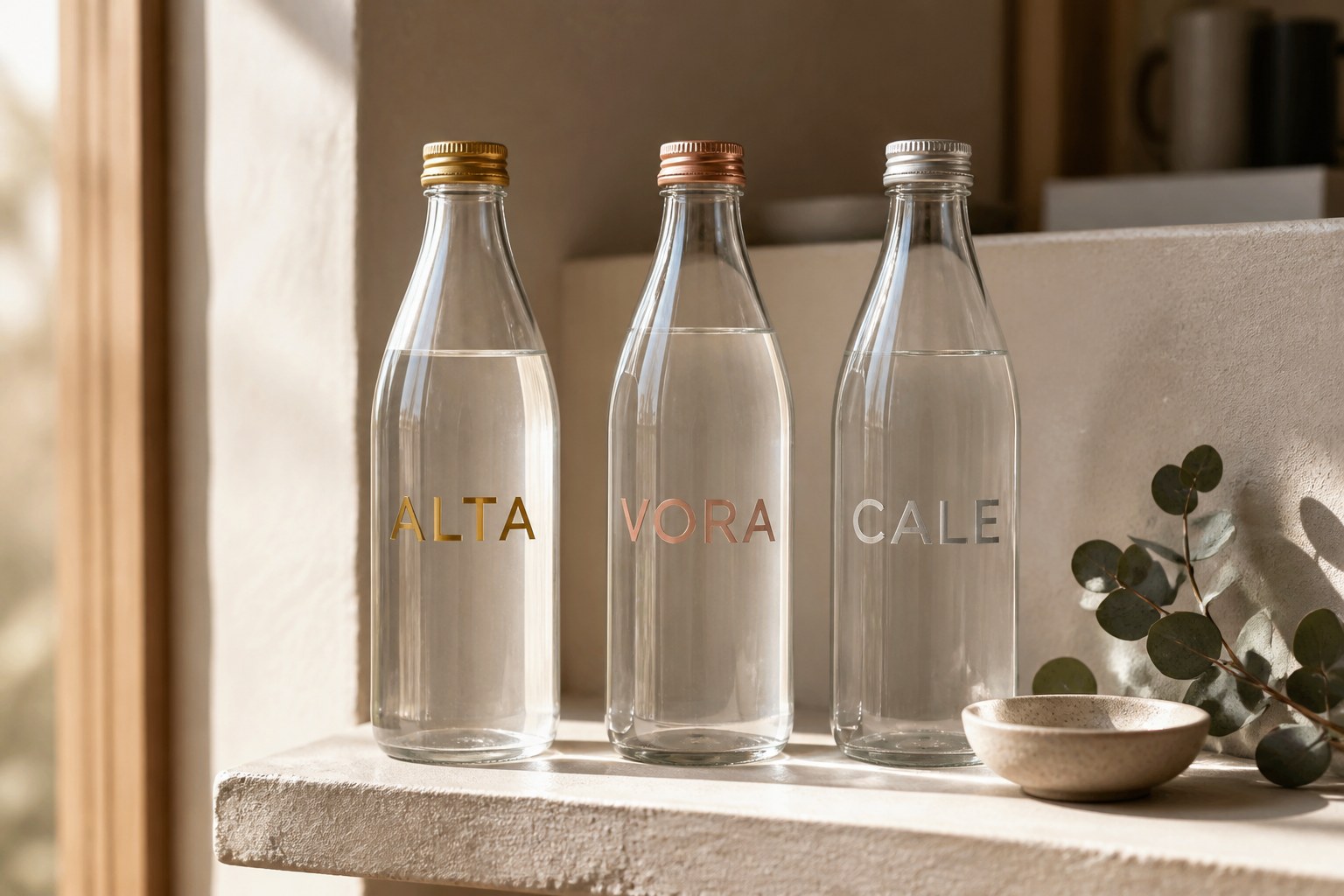
Colour choice within a tier does not change the price. What changes the price is the finish tier, because Premium Metallic carries a higher per-unit price in every size cell. That means Black and Reflex Blue cost the same at a given size, while Gold costs more than both. If you are trying to hold a quote to a number, select the standard gloss range first and confirm the colour before you check the Premium Metallic column.
The choice also affects durability. Indoors and sheltered outdoor spots are where Gold, Rose Gold and Silver belong. On a west-facing Australian shopfront, that is a real constraint. The metal-effect films will not give the same outdoor life as the standard gloss colours, so reserve them for interior windows, under-counter signage or south-facing glass where the sun is less punishing.
Which surfaces suit vinyl lettering, and why they must be non-porous
Every suitable surface shares one property: it is smooth and non-porous. The practical list is glass shopfront windows, glassware, drink bottles, painted metal, plastic, sealed timber and smooth painted walls. If a surface is clean, dry and glossy to the touch without any grain, the adhesive layer can make full contact and hold the vinyl in place.
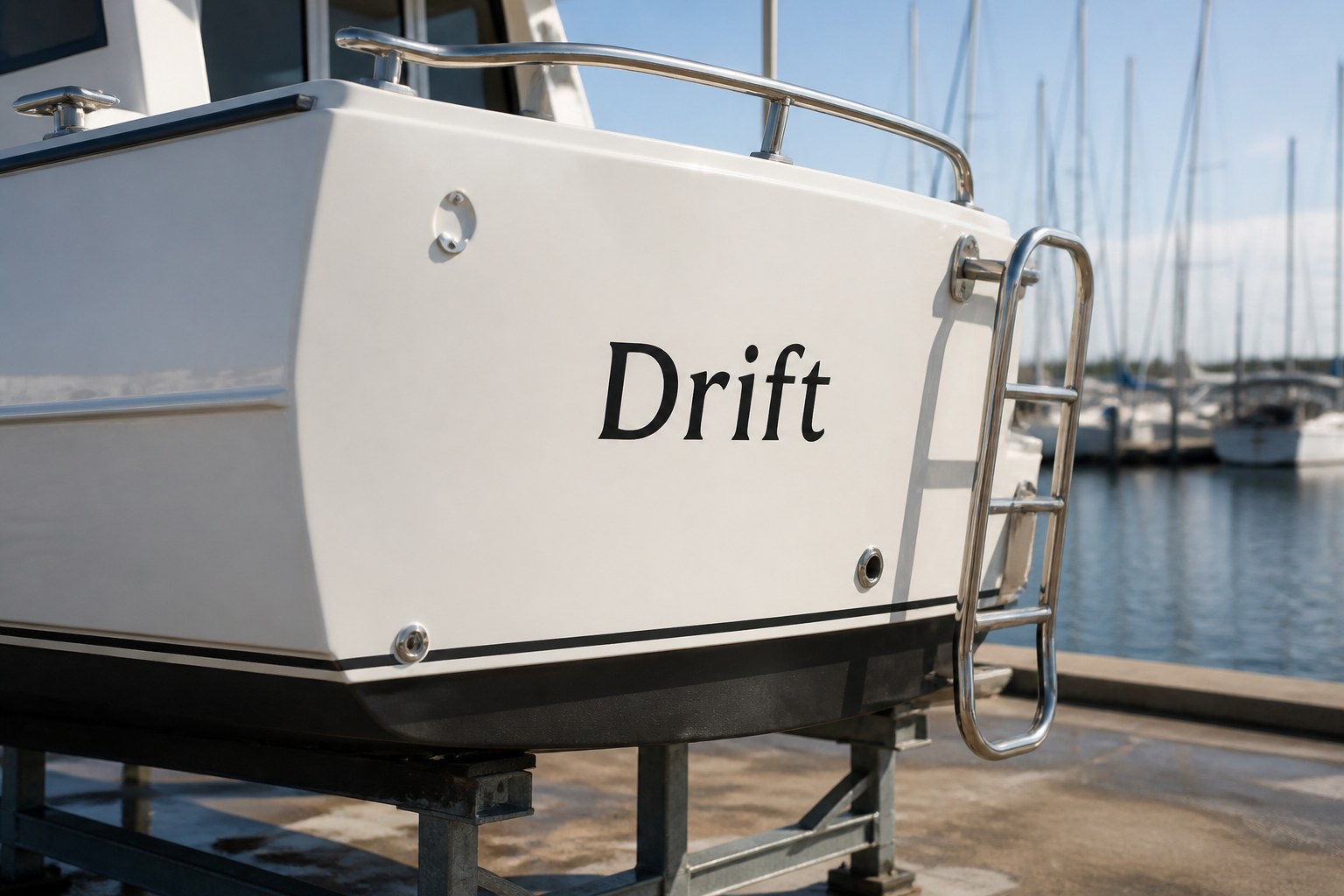
Common jobs cover a lot of small-business ground. Window lettering for shopfronts, vehicle panels and glass, office and studio walls where the wall colour shows through the letters, and names and registration numbers on boats above the waterline all follow the same surface rule. On glassware and bottles, hand wash only applies once the lettering is in place, because the product is not dishwasher safe.
Brick, render, unsealed timber and other textured or porous surfaces are not suitable, because the vinyl cannot key to anything solid. For those spots, a rigid option such as corflute signs mounted to the wall is usually the better answer.
How long it lasts outdoors in Australian conditions
Standard colours are cut from 70 micron gloss calendered vinyl with permanent adhesive. The rating that follows from that material is honest: up to 3 years outdoor life for standard colours, and up to 5 years for Black and White. The exception sits with the metal-effect films: full weather exposure is not what Gold, Rose Gold and Silver are made for, and they are better placed indoors or under shelter.
Some signage products advertise much longer outdoor ratings. Those figures usually come from cast films, which are a different material class and are not what this product is. The practical question for a shopfront is whether you want a crisp name you can refresh in a few years, or a higher-spec film purchased through a different channel. For most shopfront lettering, the 3 to 5 year window is easier to accept once you know it is the real rating rather than an optimistic one. A boat name expected to outlive the boat is a different purchase again, and it is worth being plain about that before you order.
What custom vinyl lettering costs per piece
Prices are published at quantity 1 and include GST. The table below shows the standard and Premium Metallic prices across all five size blocks.
| Size | Standard | Premium Metallic |
|---|---|---|
| 200 x 100mm | $25.00 | $30.00 |
| 300 x 150mm | $35.00 | $42.00 |
| 400 x 200mm | $45.00 | $54.00 |
| 500 x 260mm | $55.00 | $66.00 |
| 600 x 260mm | $65.00 | $78.00 |
Orders can be placed for 1 to 10 pieces. The per-unit price falls as quantity rises, across quantity rungs of 1, 2, 3, 5 and 10. Quantity 2 is the normal order rather than the exception, because a boat needs port and starboard sides and a van usually needs both doors. The order total is the unit price times the quantity, so a job with two pieces is calculated on the unit price for that quantity rung, not on a single-piece price added twice.
The entry point is a 200 x 100mm piece in a standard colour at $25.00 inclusive of GST. At the top of the published table, the largest standard piece is $65.00 and the largest Premium Metallic piece is $78.00 before any quantity discount.
How to specify your artwork and text before ordering
You supply your text and font choice, or your own artwork, through the artwork upload and order notes flow. There is no live text and font preview on the product page, so the details you put in the order notes carry the job. If the font matters, name it. If the spacing between two lines matters, type the layout in notes or supply a reference file.
Every piece is made to order in Australia and is hand weeded before it is sent. That means your specific text is cut, the excess vinyl around each letter is removed, and the finished piece is placed onto transfer tape for you. Production takes 3 to 5 working days, and that time does not include the parcel’s transit time.
Before you submit the order, make two decisions. First, choose one of the five size blocks. Second, check whether the design fits inside a single piece or must run as multiple pieces. The size block is not just a quote line. It determines whether your longest line will fit at a readable height, and whether you will need to align more than one piece on the day.
The transfer tape step, in outline
Applying the lettering follows a four-step method. Clean the surface first, then position the piece with the transfer tape still in place. Press the letters down firmly through the transfer tape, then peel the tape back slowly at a low angle. The whole piece moves as one unit because it is pre-spaced, so there is no letter-by-letter placement.
If your order runs across multiple pieces, start by marking a reference line with low-tack masking tape and a spirit level, or use an existing straight edge such as a window frame or panel line. Apply one piece at a time and check alignment before removing each backing. The adhesive is permanent and the letters are single-use, so they do not re-stick. Position before you peel the backing, because a second bond is not part of the deal. The full how to apply vinyl lettering guide covers the technique in detail.
Frequently asked questions
What is the largest vinyl lettering size, and is 600 x 260mm the maximum?
The largest single piece is 600 x 260mm, measured as width x maximum letter height. That ceiling is set by the transfer tape rather than by the film. If your design is larger than one piece, it comes as several pieces, each within the 600 x 260mm maximum, and you position and align them yourself during application. This is the standard path for a long shopfront name, vehicle signage or boat name. Ordering to the maximum piece size does not increase the letter height unless your design is short enough to use the full height.
What is the smallest letter height for vinyl letters, and why is it 20mm?
Lettering must be at least 20mm high, and the thinnest part of every letter must have a stroke at least 5mm thick. Anything smaller cannot be weeded and applied cleanly, because tiny counters and thin strokes become difficult to separate from the waste vinyl and tend to twist or tear when the transfer tape is lifted. For addresses, phone lines, taglines or registration numbers, keep every character at least 20mm high, and use a shorter line or a larger size block if the design does not fit. If the artwork contains fine lines that fall below that height, it will not reproduce reliably.
How do multi-colour vinyl lettering designs work when each piece is one colour?
Each piece is cut in one colour, so a multi-colour design is ordered as multiple pieces. You position each piece separately to build the finished layout. For example, a two-line shopfront name in white and red is supplied as two pieces, with the white line and the red line on separate transfer tapes. The surface colour shows between and inside each piece as normal. There is no full-colour print, so the system works best for flat colour combinations rather than gradients, photographs or complex blends.
Which surfaces suit vinyl lettering, and why does the surface need to be non-porous?
Suitable surfaces are smooth and non-porous: glass shopfront windows, glassware, drink bottles, painted metal, plastic, sealed timber and smooth painted walls. The surface must be clean and dry, with no grain or texture that can break the adhesive contact. Porous or heavily textured surfaces such as brick, render, unsealed timber or fabric do not give the adhesive enough continuous contact to hold the vinyl. On glassware and bottles, hand wash only applies, because the lettering is not dishwasher safe.
How long does vinyl lettering last outdoors? Is up to 3 years the limit?
For standard colours, outdoor life is up to 3 years. Black and White are the exception at up to 5 years. The metallic colours, Gold, Rose Gold and Silver, belong indoors or in sheltered outdoor locations, so it is safer not to treat them as full weather exposure films. These ratings come from the 70 micron gloss calendered vinyl used for the standard range. Longer outdoor ratings in the broader signage market generally require a different material class, so this product’s rating is deliberately stated to match the film we stock rather than an optimistic headline figure.
Can vinyl lettering be removed and reused, or is it single-use?
Vinyl letters can be removed later, but they are single-use and do not re-stick. The standard colours are cut from vinyl with permanent adhesive, so the bond is designed to hold once pressure is applied. If you lift a piece after it has touched the surface, the adhesive layer is compromised and the lettering will not give a clean second bond. This is why the application method is to position before peeling the backing, not to reposition after contact. For temporary or frequently changed signage, a different product is needed.
Can I use vinyl lettering for boat names and registration numbers above the waterline?
Names and registration numbers on boats work well above the waterline on clean painted panels or glass. The lettering is cut from standard gloss or Premium Metallic films, and the surface rule is the same as for any job: smooth, non-porous, clean and dry. Longer boat names come in more than one piece, and you align them on the hull during application. Having a level reference line makes that job far easier. Make sure the hull is clean of fuel wipe residue, salt and silicone, because the adhesive needs a sound surface to bond.