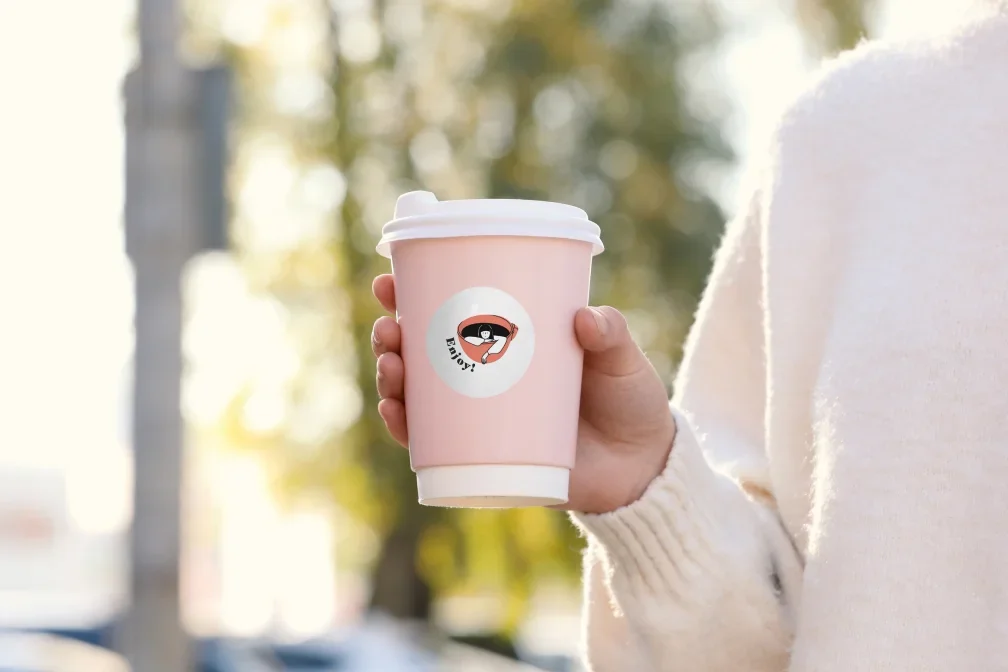
A plain bag leaving your counter is a missed conversation with your customer. Whether you run a specialty espresso bar in Fitzroy, a casual diner in Brisbane, or a food truck doing the festival circuit on the Gold Coast, custom sticker printing turns every piece of packaging into a brand touchpoint, every window into a passive billboard, and every bottle into a shelf-talker. This guide covers every practical sticker use case for Australian cafes, restaurants, food trucks, and bars, the right materials for each job, AU-specific climate and compliance considerations, and what to expect on pricing and lead times when you order.
Quick Reference: Sticker Printing for Restaurants and Cafes
| Use Case | Best Format | Best Material | Key Feature |
|---|---|---|---|
| Takeout container seals | Circle or die-cut | White Gloss Sticker or White Matte Sticker | Tamper-evident |
| QR code menu stickers | Square or circle | White Matte Sticker, matte laminate | High scan contrast |
| Loyalty punch stickers | Circle (30-40mm) | White Matte Sticker | Low cost, high volume |
| Window decals (outdoor) | Die-cut or rectangle | White Matte Vinyl or Clear Vinyl (Vinyl Stickers), no laminate | Waterproof as standard |
| Cup sleeve / lid stickers | Rectangle or circle | White Gloss Sticker or White Matte Sticker | Laminate helps it stay intact when wet |
| Wine and beer bottle labels | Die-cut or rectangle | White Matte Vinyl or Clear Vinyl (Vinyl Stickers) | Waterproof as standard; not dishwasher safe |
| Allergen and nutrition labels | Rectangle | White Matte Sticker | Legible, FSANZ-ready |
| Hamper and gift seals | Die-cut or circle | White Gloss Sticker or White Matte Sticker, matte laminate | Premium finish |
| Merchandise stickers | Die-cut | White Matte Vinyl (Vinyl Stickers) | Resists water, UV and scratching |
| Delivery vehicle branding | Die-cut or rectangle | White Matte Vinyl or Clear Vinyl (Vinyl Stickers), no laminate | Holds on painted vehicle panels; handles car washes once cured |
| Wall art and interior accents | Die-cut | White Matte Vinyl (Vinyl Stickers) | Made to stay; can be lifted with heat |
| Reorder and thank-you stickers | Circle or rectangle | White Matte Sticker | Brand recall, repeat-order trigger |
Takeout Container Seals: Tamper Evidence and Branding in One
A takeout seal does two jobs at once: it signals to the customer that their order has not been opened in transit, and it puts your logo in front of whoever placed that order. For any cafe, restaurant, or food truck operating on delivery platforms or running a dark-kitchen model, a branded seal is one of the most cost-efficient marketing assets you can run.
Materials for takeout seals
For takeout seals, the circle and die cut options are printed on White Gloss Sticker or White Matte Sticker. These are paper-based stocks built for full-colour digital print. If the container will be chilled or is likely to come into contact with water, add an optional matte or gloss laminate, as that extra layer helps the seal hold up when wet.
For a cleaner look, Clear Stickers are run on a clear synthetic film, so the board or bag stays visible around your design. If you want a white-backed seal, custom die-cut stickers can follow the outline of your logo, while standard circles and rectangles remain a simpler option.
Design considerations for takeout seals
Keep the design simple: logo, venue name, and optionally a short tagline or social handle. This is a micro-format and dense copy will not read at 50-70mm diameter. If you operate multiple outlets, a unified master design with a small location identifier keeps your brand consistent across the group while keeping print procurement simple. For seasonal campaigns, a limited-run seal with a festive message or QR code leading to a special offer adds a low-cost conversion layer to every order that leaves your kitchen.
Custom Die-Cut Seals for Takeout and Delivery
Order stickers cut to the outline of your logo, printed in Melbourne on either White Gloss Sticker or White Matte Sticker. Minimum 10 units. Upload your artwork and get an instant quote.
QR Code Menu Stickers for Cafes and Restaurants
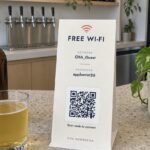
QR code menus are now standard across Australian hospitality, and stickers remain the lowest-friction way to deploy them. Unlike printed card inserts, a sticker can be applied to an existing table surface, laminated menu cover, or A-frame in minutes, and replaced when your URL or menu changes without reprinting your whole menu suite.
What makes a good QR sticker
Contrast is everything for scan reliability. Print your QR code on a white or light background and never on a textured or dark surface where the code modules can blend into the substrate. A White Matte Sticker finish lowers the reflection you would get from gloss under cafe downlights, so phone cameras settle on the code more easily. Where tables live outside, Vinyl Stickers made on white matte vinyl are waterproof as standard and carry no laminate at all.
Standard square stickers or circle stickers work well for this use case. A 70mm square fits on most table surfaces and includes room for a short instruction line (“Scan to view our menu”) alongside the QR code. If your venue runs separate menu categories, consider printing multiple codes on a sticker sheet so you can place them contextually, for example drinks code on the bar, food code at the table, and desserts code on the receipt.
Durability in a wipe-clean environment
Commercial tables are cleaned with diluted bleach or food-safe sanitiser multiple times a day. Without lamination, a digital print will lift and fade within weeks in this environment. Specify a gloss or matte laminate overcoat when ordering QR stickers for any table or counter surface. This is not optional in a commercial kitchen or high-traffic dining environment: it is the difference between a sticker that lasts a week and one that lasts a year.
Loyalty, Punch-Card, and Reorder Stickers
Loyalty stickers are one of the highest-volume print formats for independent cafes, and a physical loyalty mechanic (collect 9 stamps, get the 10th free) drives return visits more reliably than a passive digital card for customers who do not use your app. Stickers replace the traditional stamp-and-ink process with a more hygienic, brand-consistent approach that reinforces your visual identity at every visit.
Loyalty sticker formats
The standard loyalty sticker is a 30-38mm circle in your brand colour with a simple graphic or icon. Customers receive one per purchase and apply it to a loyalty card you supply at the counter. Alternatively, design a single-sheet loyalty card with sticker positions pre-marked and supply matching peel-off stickers separately, which gives you more flexibility on card design without a custom printer commitment.
For higher-end venues, a die-cut loyalty sticker in a custom shape (a coffee cup outline, a leaf for a plant-based brand, a fork for a restaurant) significantly increases the perceived value of the programme and gives customers a reason to share on social media. If your brand has a recognisable icon or mascot, this is where that asset earns its keep.
Reorder and thank-you stickers
Reorder stickers are a simple but consistently underused mechanic. Placed inside a takeout bag or on a receipt, a small sticker reading “Enjoyed your meal? Order again at [yourwebsite.com.au] or scan here” turns a single transaction into a repeat-engagement trigger. Pair it with a QR code linking to your online ordering page or a loyalty sign-up landing page. Rectangle stickers at around 90x50mm give enough space for a QR code and a short message while fitting neatly inside standard takeout bags. Ordering these alongside your takeout seals in a combined run reduces unit cost significantly.
Window Decals and Wall Art Stickers
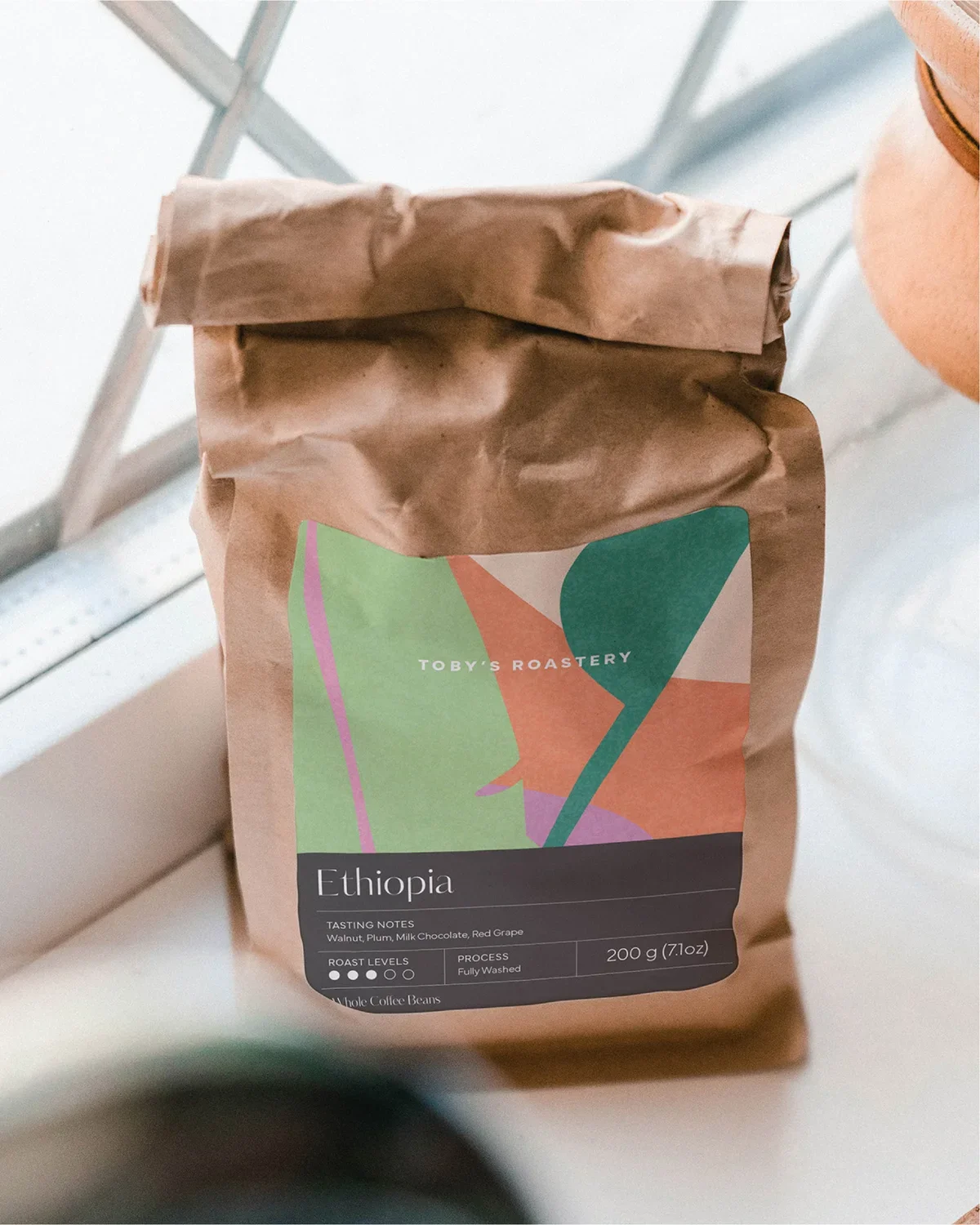
Your shopfront glass is a full-time advertising channel. Window decals communicate trading hours, delivery platform partnerships (Uber Eats, DoorDash, Menulog), dietary credentials (gluten-free available, halal-certified, plant-based menu), and social handles, all without a monthly rental cost. Applied correctly to outdoor vinyl spec, a quality window decal runs for 3-5 years with no maintenance.
Outdoor vinyl durability by Australian climate
Durability requirements for window decals vary significantly across Australian cities, and choosing the right spec protects your investment:
- Brisbane and south-east Queensland: In Queensland, long summer heat on a north-facing pane will stress any sticker. Vinyl Stickers use UV cured ink, stay waterproof as standard and need no laminate, yet the expected life of 3 to 5 years drops under heavy sun, so keep dark-backed decals off north-facing glass during summer.
- Melbourne winters: In Melbourne winters, condensation gathers on the inside of single-glazed panes when it turns cold. Apply decals only to clean, dry glass because the vinyl sticker adhesive holds firmly to a smooth, clean surface.
- Sydney and coastal locations: Salt air and strong sun shorten outdoor sticker life around Sydney and coastal areas. Vinyl Stickers are covered for one year outdoors and usually last 3 to 5 years based on sun and weather, and need no laminate.
Die-cut window stickers in your exact logo shape are the highest-impact shopfront format. A contour-cut version of your brand mark at up to 295 x 425 mm reads as deliberate and premium compared to a generic rectangle and creates a strong first impression from the street. Use die-cut stickers for logo marks and icons, and standard rectangle stickers for information panels like trading hours, dietary icons, and delivery app badges.
Interior wall art and chalkboard accent stickers
Matte vinyl wall stickers offer a cost-effective way to add typographic or illustrative elements to an interior without commissioning a full mural. A brand statement, a menu manifesto, or a hand-lettered quote in your brand font can transform a blank wall and create a natural backdrop for customer photography. Vinyl wall stickers use a low tack permanent acrylic made to stay. Heat may release one, but leftover adhesive can remain, and since these stickers are not repositionable, test a single decal on the painted wall in your leased space first. Chalkboard-surface venues often combine a standard chalkboard surround with a die-cut vinyl logo or accent element for a more polished result than chalk alone achieves. For more on current sticker and print trends driving hospitality branding, see the top sticker trends for 2026.
Coffee Cup, Lid, and Beverage Branding
Custom cup and lid stickers are the most visible branding surface for any cafe running a significant takeaway trade. Every cup that leaves your counter is a moving brand advertisement in the hand of someone walking down the high street, and the cost per impression is effectively zero once the sticker is ordered.
Material specs for hot beverage applications
Standard paper cup sleeves accept adhesive stickers for short-duration branding: the sticker needs to survive the 10-15 minutes a customer carries their coffee, not repeated dishwasher cycles. On cup sleeves and lids, choose circle or rectangle stickers in White Gloss Sticker or White Matte Sticker, and add a matte or gloss laminate only if you want it. A gloss finish keeps your logo colours bright against white or clear lids, while matte looks gentler on a paper sleeve.
When ordering circle stickers for hot drink lids, specify a diameter 5-8mm smaller than your lid outer edge so the sticker sits flush on the lid face without wrapping around the rim. For cup sleeves, measure your sleeve dimensions before ordering as they vary by cup manufacturer and a mismatch will require a reorder.
Cold-pressed, bottled, and specialty beverages
Cold-pressed juice, kombucha, kefir, and house-made beverages are growth categories for contemporary cafes, and a rectangle or die-cut label on a glass or PET bottle with a premium matte finish immediately elevates a house-made product to retail quality. The material specification for bottled beverage labels is covered in full in the bottle labels section below. For cup branding at scale across a multi-site group, ordering a consolidated run of cup stickers is significantly more cost-efficient than individual site orders.
Wine, Beer, and Private-Label Bottle Labels
BYO venues, wine bars with a house pour, and small breweries or distilleries producing private-label product all need custom bottle labels, and the technical requirements differ meaningfully from standard sticker applications. Get the material wrong and your label peels off in the ice bucket at table six.
Labels for bottles in ice buckets and fridges
Condensation on a chilled glass and the water sitting in an ice bucket will challenge most labels. For chilled bottles choose Vinyl Stickers in white matte vinyl or clear vinyl, as they are waterproof as standard and need no laminate. The permanent low tack acrylic adhesive holds most firmly on a bottle that is clean, dry and smooth, so run a test on one bottle before you commit to a full order.
Matte paper labels give a traditional European wine aesthetic and photograph beautifully for social media. Matte vinyl is more durable in wet environments. If house made hot sauce, infused oils or preserves sit on a shelf, not in a fridge, White Gloss Sticker or White Matte Sticker with optional matte or gloss laminate is enough.
Die-cut label shapes for standout shelf presence
Rectangular labels are the standard, but a die-cut label in a custom shape (an arch, a pennant, a circle with a cutout, a cartouche matching your brand aesthetic) transforms a house-made product into a gift-worthy item that photographs well and earns social shares without any additional marketing spend. For small-batch products sold at the counter or through an online store, a die-cut label is a marginal additional cost over a standard rectangle that pays disproportionate brand dividends in perceived quality.
For premium bottle labels, foil stickers in gold, silver, or rose gold add a metallic accent that signals quality and performs exceptionally on dark glass bottles where the metallic catches the light. A matte label body with a foil logo element is a particularly strong combination for wine, spirits, or a premium house sauce range sold at the counter.
Allergen and Nutritional Compliance Labels
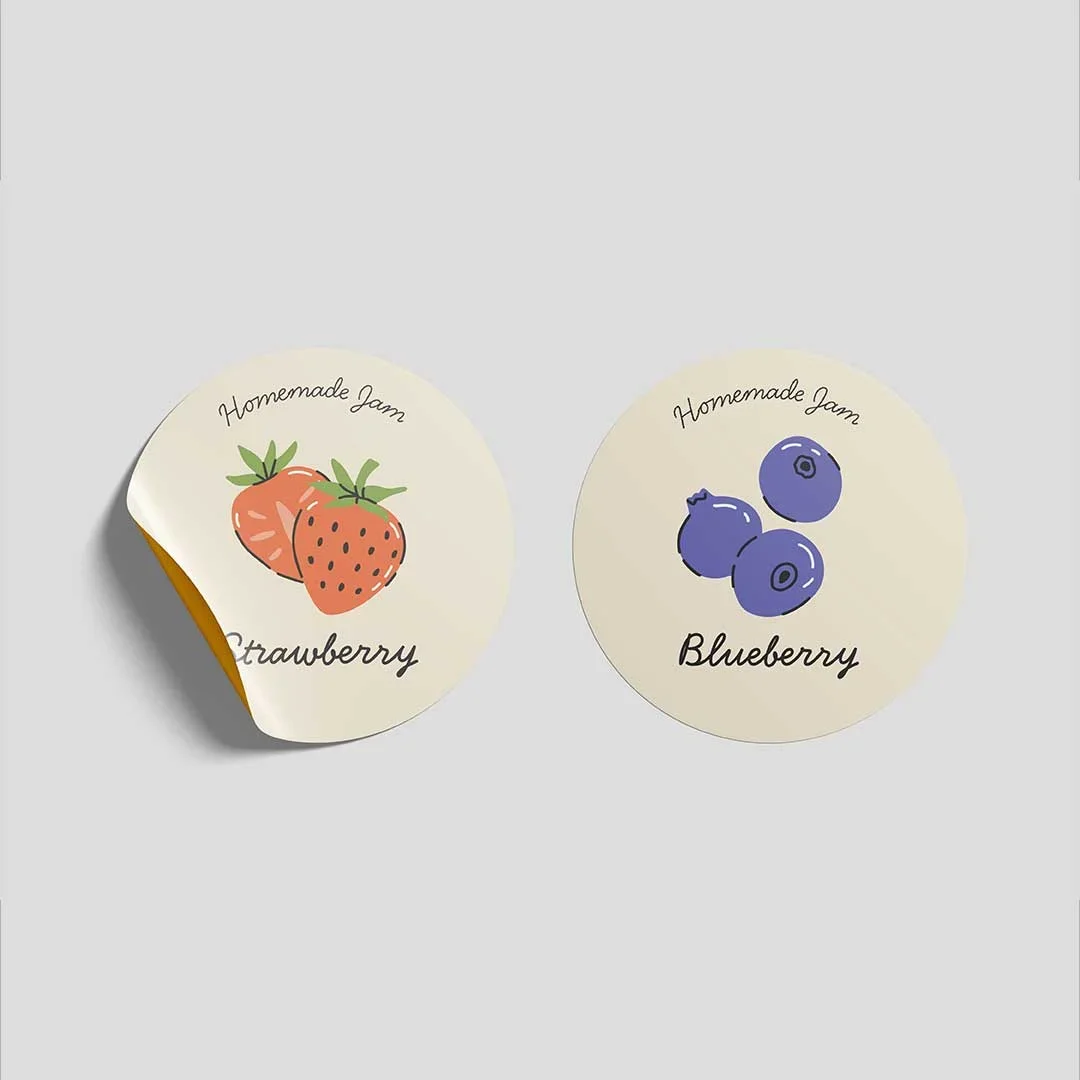
Under Australian food labelling regulations, any pre-packaged food product sold directly to consumers must declare allergen information as a minimum. For venues selling packaged goods such as baked goods, house-made sauces, meal kits, or deli items, a compliant allergen label is a legal requirement, not an optional brand extra.
FSANZ requirements at a glance
Food Standards Australia New Zealand (FSANZ) Standard 1.2.3 requires declaration of the presence of any defined allergens: peanuts, tree nuts, milk, eggs, wheat, sesame, lupin, fish, shellfish, soybeans, and sulphites above 10mg/kg. The declaration must be clearly legible in a font size appropriate to the label area, on a contrasting background. Best practice is to include allergen declarations in a bold font to distinguish them from the standard ingredients list.
Allergen labels usually take the form of rectangle stickers on White Matte Sticker, which keep small print readable and can be ordered with an optional matte laminate for fridge storage, with a minimum of 10 per design that suits venues whose range changes often. A 90x50mm or 100x70mm rectangle gives enough space for allergen declarations, a brief ingredients list, net weight, and a best-before date while still fitting on most retail-format packaging.
Variable data labelling for frequently changing menus
If allergen or nutritional information changes product to product (different flavours of a sauce, different daily special fillings, rotating deli items), consider a hybrid labelling approach: order a branded base label for your venue name, logo, and static design elements, then print the variable allergen and best-before data on an in-house thermal label printer applied alongside the base label. This keeps your branded presentation consistent while allowing operational flexibility without a full reorder cycle every time your menu changes.
Branded Packaging Seals for Hampers and Gifting
Christmas, Mother’s Day, Valentine’s Day, and local food festivals all generate a gifting revenue stream for hospitality businesses with strong product ranges. A branded hamper or gift box with a premium seal turns a collection of products into a cohesive, gift-ready package that commands a higher price point and photographs well for social promotion.
Material and finish for gift packaging
White gloss die-cut stickers work on ribbon-tied boxes and white gift bags. For a premium result, a matte laminate die-cut seal in your brand shape reads as a signature closure element rather than an afterthought and significantly increases the perceived value of the package.
If you are selling via Australia Post or a third-party logistics provider, verify that your packaging seal adhesion is suitable for both the box surface and the temperature range the package may encounter in transit. A seal on White Gloss Sticker or White Matte Sticker with matte or gloss laminate is sound for parcels, as the laminate helps it stay intact when wet. For flat-packed gift boxes that are folded and sealed post-dispatch, order seals that are slightly oversized relative to the fold edge to ensure both panels are anchored.
Order Custom Die-Cut Stickers for Your Venue
Choose die cut stickers shaped to your logo for takeout seals and hamper packaging, from 10 per design, printed in Melbourne on either White Gloss Sticker or White Matte Sticker. Production is 24-hour when the proof is approved by 10am Melbourne time.
Merchandise and Delivery Vehicle Stickers
Branded merchandise for staff and customers
Sticker merchandise is a low-cost, high-return brand-building tactic for venues with a strong visual identity. Laptop stickers, water bottle stickers, and tote bag stickers given free to loyal customers or sold at a nominal cost extend your brand into environments that paid advertising cannot reach. When you make merchandise stickers, a logo shaped piece at 80 to 100 mm tends to be what most customers expect. For drink bottles, laptops and helmets use Vinyl Stickers in white matte vinyl, which resist water, UV and scratching with no laminate, and keep handouts on White Gloss Sticker with a gloss laminate.
Staff uniform stickers applied to helmets for delivery riders or hard hats for event catering teams offer a lower-cost alternative to embroidered patches for short-term campaigns or seasonal branding moments. If helmets or hard hats stay outdoors, choose Vinyl Stickers, as they are waterproof as standard, need no laminate, and are rated for one year outside.
Delivery vehicle and food truck exterior stickers
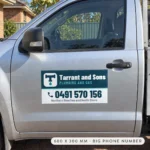
A branded sticker on a delivery driver’s vehicle or a food truck’s exterior panel is subject to the harshest conditions any sticker will encounter: sustained UV, rain, heat cycles, car-wash chemicals, and road grit. The specification for this application requires:
- Vinyl Stickers: printed on vinyl film, white matte vinyl or clear vinyl, and contour cut to the outline of your artwork.
- No laminate: the vinyl and the UV cured ink are waterproof as standard, guaranteed for one year outdoors, with an expected life of 3 to 5 years depending on sun exposure and weather.
- Permanent low tack acrylic adhesive: holds on painted vehicle panels, and once applied and cured (24-48 hours) the stickers can handle car washes.
A single sticker is often the starting point on a food truck exterior, and vinyl stickers with a contour cut can be ordered up to 295 x 425 mm, the largest option available, with anything beyond that handled as a separate large format sticker product. It establishes brand presence at markets, festivals, and street positions without the cost or commitment of a full vehicle wrap.
For the full hospitality print range including corflute A-frames, coasters, menus, and POS standees that pair with your sticker programme, visit the restaurants and cafes category page. For broader sticker use cases across other small business contexts, see the guide to stickers for small business.
The Material Guide: Matching Stickers to the Job
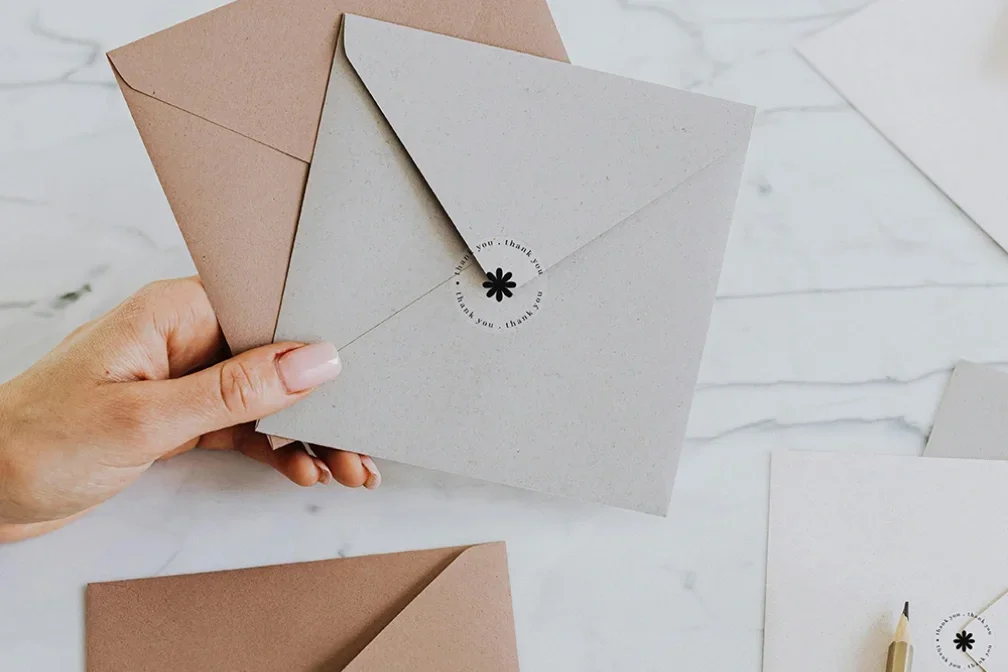
Choosing the wrong material for a sticker application is the most common and costly mistake operators make. A paper sticker on a bottle going into an ice bucket will peel within hours. Keep paper-based sticker stock indoors or behind glass, while the outside of a window is better served by Vinyl Stickers, which are waterproof as standard. The table below maps each hospitality use case to the recommended material and finish combination.
| Use Case | Recommended Material | Finish | Why |
|---|---|---|---|
| Takeout seals | White Matte Sticker | No laminate or matte laminate | Paper-based sticker stock; laminate helps it stay intact when wet |
| QR code menu stickers (indoor) | White Matte Sticker | Matte laminate | No glare under cafe lighting |
| QR code stickers (outdoor tables) | White Matte Vinyl (Vinyl Stickers) | No laminate (waterproof as standard) | Waterproof as standard; guaranteed for one year outdoors |
| Loyalty stickers | White Matte Sticker | No laminate | Low cost per unit; easy to handle at counter |
| Window decals (southern states, indoor-facing) | White Gloss Sticker or White Matte Sticker | Gloss or matte laminate | Paper-based sticker stock |
| Window decals (QLD, coastal, north-facing) | White Matte Vinyl or Clear Vinyl (Vinyl Stickers) | No laminate (waterproof as standard) | UV cured ink; expected life 3 to 5 years outdoors |
| Cup sleeve and lid stickers | White Gloss Sticker or White Matte Sticker | Gloss or matte laminate | Laminate helps it stay intact when wet |
| Bottle labels (chilled, ice bucket) | White Matte Vinyl or Clear Vinyl (Vinyl Stickers) | No laminate (waterproof as standard) | Apply to clean, dry glass; not dishwasher safe |
| Allergen labels | White Matte Sticker | No laminate or matte laminate | Legible at small font sizes |
| Hamper and gift seals | White Matte Sticker | Matte laminate | Premium presentation |
| Merchandise stickers | White Matte Vinyl (Vinyl Stickers) | No laminate | Resists water, UV and scratching |
| Food truck and vehicle stickers | White Matte Vinyl or Clear Vinyl (Vinyl Stickers) | No laminate (waterproof as standard) | Holds on painted vehicle panels; handles car washes once cured |
| Interior wall art | White Matte Vinyl (Vinyl Stickers) | No laminate | Made to stay; can be lifted with heat; test on painted walls first |
Gloss vs. matte: the quick call for hospitality operators
Gloss finish maximises colour vibrancy and has a tactile premium quality that works well for merchandise and gift packaging. Matte finish is more legible under bright cafe lighting, feels more refined on food and beverage packaging, and is the better choice for QR codes, allergen labels, and anything where scan reliability or readability in a bright service environment matters. For a detailed comparison across brand contexts, see the glossy vs. matte sticker guide.
Clear vinyl: the no-label look
Clear vinyl stickers create a seamless, no-label appearance on glass, bottles, and polished packaging surfaces. For Clear Stickers the stock is a clear synthetic film. White ink behind a design is not part of the order form and adds cost, so ask for a quote if white must appear solid on dark glass. This is a strong choice for premium beverage labels on dark glass where a white-backed label would interrupt the bottle’s aesthetic, and for window decals on glass shopfronts where you want the look to integrate with the architecture rather than sit on top of it. Clear stickers are available across the Print Shop’s custom sticker range.
Production, Ordering, and Cost Guide
Understanding lead times and pricing before you need a reorder means you are never caught short before a peak trade period, venue opening, or seasonal campaign launch.
Minimum quantities, lead times, and file requirements
Paperlust Print Shop produces stickers in Melbourne with a minimum order of 10 stickers per design, which is well below the 50-100 unit minimums that most commercial label printers impose. Orders of 10 to 50 stickers are priced the same as a 50-sticker run, so most customers simply order 50. This makes it practical to trial a new design or run a limited seasonal sticker without a large upfront commitment. The clock starts once you approve the design proof emailed to you. Digital print stickers have a 24-hour production window when the proof is approved by 10am Melbourne time. Foil stickers take 3 to 5 working days, vinyl stickers take 5 to 7 and bumper stickers take 4 to 5, with peak times sometimes adding a little.
Give yourself room for the email proof approval, the production run and the postage, keeping in mind standard delivery to metro addresses runs 2 to 5 business days while express sits at 1 to 2. For group orders combining multiple designs into a single run (loyalty sticker, takeout seal, and window decal ordered together), consolidating into one order streamlines proof approval and dispatch logistics.
Vector artwork is the preferred file format for die-cut stickers: Adobe Illustrator (.ai), EPS, or PDF with fonts outlined. For square, circle, or rectangle stickers, high-resolution raster files at 300 DPI at final print size are acceptable. Always include 3mm bleed around your artwork and keep critical design elements at least 5mm from the cut edge to allow for production tolerance. If you need design assistance, the Print Shop offers design packages starting from $19 AUD.
Cost guide for restaurants and cafes (AUD, indicative, inc. GST)
| Sticker Type | 50 units | 100 units | 500 units | Best for |
|---|---|---|---|---|
| Die-cut stickers (logo shape, 60mm) | From $72 | From $88 | From $212 | Takeout seals, hamper closures, merchandise |
| Circle stickers (40mm) | From $32 | From $52 | From $131 | Loyalty stickers, cup lids, packaging seals |
| Rectangle stickers (50x100mm) | From $72 | From $88 | From $248 | Allergen labels, reorder stickers, trading hours |
| Square stickers (60mm) | From $72 | From $88 | From $212 | QR code menus, social promo stickers |
| Sticker sheets (A4, multi-design) | From $375 | From $626 | From $2,028 | Variety packs, loyalty sets, multi-code QR sheets |
| Foil stickers – die-cut (gold or silver, 60mm) | From $121 | From $165 | From $489 | Premium bottle labels, luxury hamper seals |
Each listed price covers the full run for one design on White Gloss Sticker with no laminate, in the size shown in that row, and GST is already included. Final pricing depends on exact dimensions, finish specification, and quantity. Use the die-cut sticker product page or browse the full custom sticker range to configure your order and get an accurate quote.
Browse the Full Restaurants and Cafes Print Range
Stickers, menus, A-frames, coasters, counter cards, and POS signage, all printed in Melbourne for Australian hospitality venues. Explore the full range.
Frequently Asked Questions
What sticker material survives in a commercial dishwasher?
No pressure-sensitive sticker adhesive is rated for commercial dishwasher conditions: the combination of steam, high-alkaline detergent, and 70-85°C wash cycles will degrade any adhesive bond. For labelling on dishwasher-cycled items, use a heat-applied label or a direct print process rather than a stick-on sticker. Vinyl Stickers are waterproof, but they are not dishwasher safe. On hand washed bar ware and reusable cups, hot water and soap will still cause gradual wear over time.
Can I order under 50 units?
Yes. Paperlust Print Shop’s minimum order is 10 stickers per design for die-cut and standard shape formats. This is well below the 50-100 unit minimums imposed by most commercial label printers, making it practical to trial a new design, run a short seasonal sticker, or test a loyalty programme format without a large upfront commitment.
What is the lead time for a 5,000-unit takeout-seal run?
Production begins once you approve the design proof. For digital print stickers, a die cut or circle seal runs in a 24-hour window when the proof is approved by 10am Melbourne time. Foil stickers need 3 to 5 working days and vinyl stickers need 5 to 7. Busy periods can stretch those times a little, so get in touch for a firm date such as a venue opening.
Are Paperlust Print Shop stickers food-safe?
The sticker stock and inks used are not for direct food contact (do not apply stickers to the surface of unwrapped food). They are appropriate for application to the outside of food packaging: cardboard boxes, plastic containers, glass jars and bottles, kraft paper bags, and sealed takeout containers. For specific compliance requirements under FSANZ Standard 1.2.3 (allergen labelling for pre-packaged products), consult a food safety auditor or the FSANZ website directly.
Do you offer custom shapes for logos?
Yes. Die-cut stickers are cut precisely to your design’s outline via contour-cutting technology, so any shape your logo takes including wordmarks, illustrated icons, mascots, and irregular custom shapes can be reproduced as a clean, shape-defined sticker. Supply a vector file with a clearly defined cut path and the cutter will follow it exactly. There is no additional die or tooling cost for custom shapes at Paperlust Print Shop.
What is the difference between a die-cut sticker and a kiss-cut sticker?
A die-cut sticker is cut all the way through the sticker and the backing, producing a finished sticker with no excess material around the edge. A kiss-cut sticker is cut through the sticker layer only, leaving the backing sheet intact so the sticker remains in sheet format until peeled. Kiss-cut (sticker sheet) format is practical for loyalty programmes and counter distribution where you want stickers to stay on a backing for easy handling. Die-cut is preferred where a clean, shape-defined result is the priority, for example takeout seals or bottle labels.
Can I get stickers in bulk for a group of venues?
Yes. Multi-location orders with a consistent master design across a venue group are a standard use case. Ordering a consolidated bulk run is more cost-efficient per unit than multiple small orders, and you can include a discreet location identifier in the design without changing master brand elements. Contact the Print Shop team to discuss volume pricing for orders above 1,000 units across multiple designs.
Will stickers peel off in the Brisbane summer heat?
Indoors in air conditioned rooms, the paper-based White Gloss Sticker and White Matte Sticker are fine. On Queensland north facing glass or anything outdoors, go with Vinyl Stickers, which print with UV cured ink, are waterproof as standard, have no laminate and are covered for one year outdoors. Avoid applying any adhesive sticker to a surface that exceeds 40°C at the time of application, as this prevents the adhesive from bonding correctly from the outset.
Do you offer clear or white ink stickers for dark packaging?
Clear stickers use a clear synthetic film, giving a look with no label on dark glass, dark bottles and polished surfaces. White ink behind a design is a quoted extra outside the order form. This is the preferred format for premium bottle labels on dark glass where a white-backed label would interrupt the bottle’s aesthetic.
What file format should I submit?
Vector files are preferred: Adobe Illustrator (.ai), encapsulated PostScript (.eps), or PDF with fonts outlined. For raster artwork, submit at 300 DPI at final print size in CMYK colour mode. Include 3mm bleed around your design and keep text and critical elements at least 5mm from the cut edge. If you need help preparing print-ready artwork, the Print Shop offers design packages from $19 AUD to take your logo or concept through to a production file.
Can I order foil stickers for bottle labels?
Yes. Foil stickers in gold, silver, and rose gold are available and work particularly well on dark glass wine, spirits, or cold brew bottles where metallic accents catch the light and signal premium positioning.
Where can I see the full sticker range?
The complete range including die-cut, circle, square, rectangle, clear, foil, and sticker sheets is available at the custom stickers hub. For the broader hospitality print range including menus, A-frames, coasters, and POS signage, visit the restaurants and cafes category page.