Restaurants & Cafe
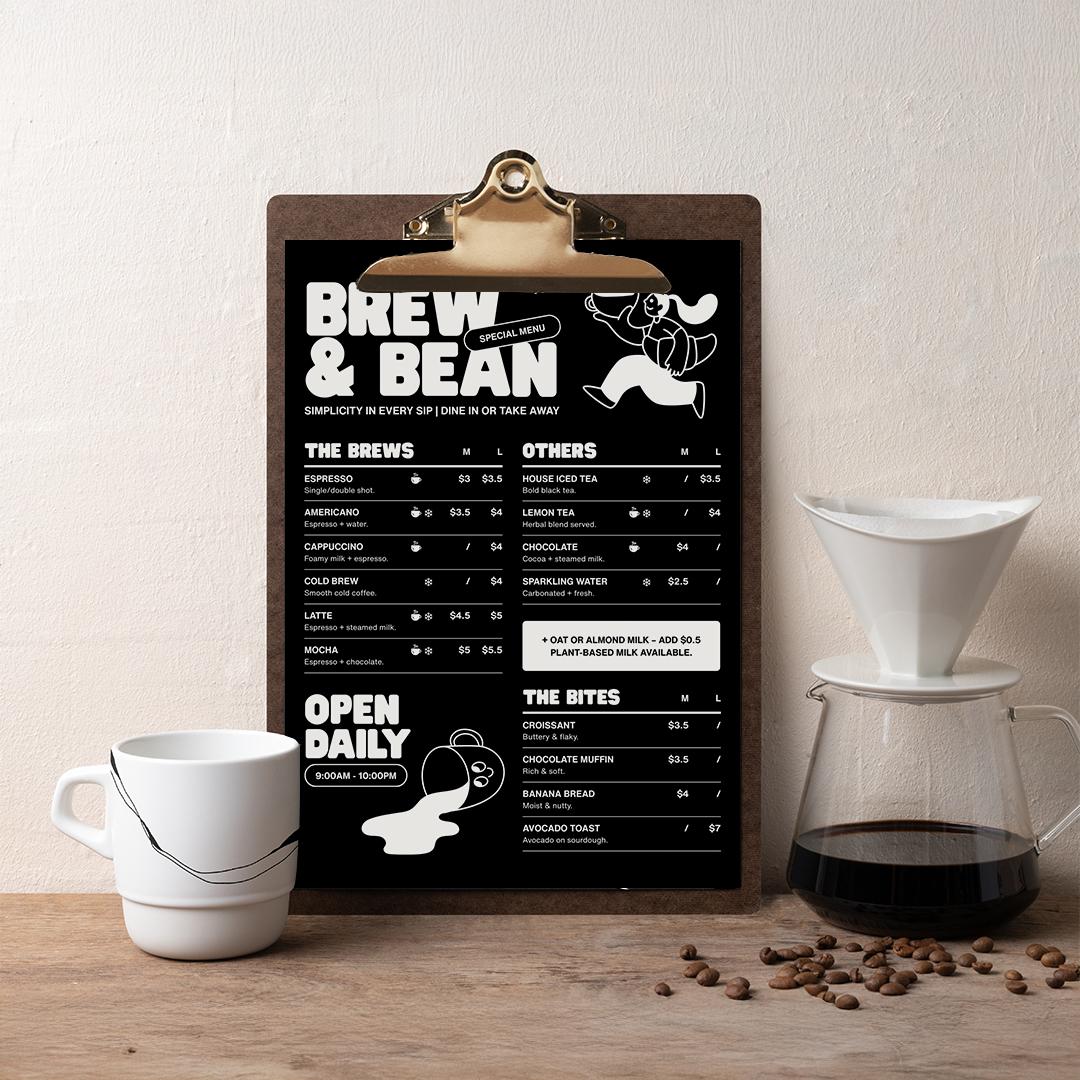
Make the first look at your table as appetising as the first bite, with custom menus and coasters that carry your venue's personality.

Our commitments
Why Paperlust Print Shop Stands Apart
Quick Turnaround
We take pride in our lightning-fast turnaround times. We understand the importance of deadlines, ensuring your orders are delivered promptly and efficiently.
Dedicated Customer Service
With us, you’re more than just a client; you’re a valued partner. Our dedicated team is here to assist you every step of the way, ensuring your complete satisfaction. Simply reach out via, and we’ll get back to you as quickly as possible
Low Minimum, Wholesale Price
We ensure that you can access high-quality printing services without the burden of large orders, making us the ideal choice for businesses of all sizes.
What is the difference between standard, foil, and die-cut menus?
Standard laminated menus print on 350 to 400 gsm coated board with a gloss or matte laminate. They are the workhorse format for most dining venues: durable, wipeable, and reprinted economically when the menu changes. This is the correct specification for casual restaurants, cafes, and any venue rotating menus seasonally.
Foil menus add a hot-foil stamped finish (gold, silver, rose gold, or copper) to the printed cover, creating a premium tactile signal suited to fine-dining rooms, tasting menus, and upscale bars where the menu is part of the guest experience. Die-cut menus use a CNC-routed custom silhouette shape rather than a standard rectangle, differentiating the physical form of the piece at first touch. Foil and die-cut options can be combined on the same menu.
Are laminated menus waterproof and suitable for a busy restaurant service?
Laminated menus resist wipe-down cleaning and light spills effectively, which makes them suitable for regular table service use. A gloss laminate on 400 gsm board is the most wipeable surface in the range; a matte laminate on 350 gsm board is more tactile but shows fingerprints more readily under certain lighting. Neither finish is designed for submersion or sustained liquid exposure.
For venues with high moisture at the table, such as outdoor dining areas or venues serving large groups, replacing menus on a shorter rotation cycle is more cost-effective than specifying a heavier material. PVC menu covers (supplied separately by the venue and used with insert pages) are an alternative for environments where the printed piece needs to survive repeated exposure to spills and cleaning products.
What is the minimum order quantity for menus and counter cards?
The smallest order for standard, foil, die cut and white ink menus is 10 menus for each of those four products. Counter card orders begin at 1 card, and coaster orders begin at 50. On every one of these products the unit price falls as quantity rises. Each product page lists all available quantity steps.
How long does production take for restaurant and cafe print materials?
Standard laminated menus and counter cards typically ship within 3 to 5 business days after artwork approval. A-frame inserts on corflute follow the same turnaround. POS standees with easel finishing run 3 to 5 business days. Posters and coasters on paper board typically ship within the same window.
Foil menus require additional time for hot-foil stamping after the base print run: allow 5 to 7 business days. Die-cut menus and shaped coasters add 1 to 2 days for CNC routing after the print run. Rush production is available on most formats, confirm availability before order placement if you have a hard reopening or event deadline.
Can you print menus in a custom size or shape?
Yes, custom sizes are available across the menu range. Any dimension within press format limits can be specified at quote stage; supply your exact finished size with bleed on all sides. Folded formats (single-fold, bi-fold, tri-fold) are available in custom finished sizes.
Custom die-cut silhouettes are available for menus and coasters via CNC router. Supply the cut path as a vector spot-colour layer in your artwork file. The production team confirms the cut path on the digital proof before any stock is pressed. There is no restriction on the complexity of the silhouette shape, though very fine cut details and small internal cutouts will be assessed at file-check stage for structural integrity.
What artwork file formats do you accept?
Vector formats are preferred for all items: AI, EPS, PDF, or SVG with all fonts outlined and at 100% print size with 3 mm bleed on all sides. High-resolution PNG and TIFF files are accepted at 300 dpi minimum at print size for paper-based formats including menus, counter cards, coasters, and posters.
For foil menus, the foil zone must be supplied as a separate spot-colour layer (typically named FOIL) in the artwork file; the base print and foil zone are processed on different equipment and require separation at the file stage. Die-cut paths for shaped menus and custom-silhouette coasters must be supplied as a separate vector spot-colour layer. The pre-press team will flag any missing layers or file structure issues at file-check stage before production starts.
What sizes are available for restaurant menus?
Standard menu sizes in frequent use: A6 (105x148 mm) for small single-page menus and tasting notes, A5 (148x210 mm) for compact folded menus and wine lists, A4 (210x297 mm) for standard table menus and full-range dining menus, and DL (99x210 mm) for single-fold cocktail and bar lists. Square formats (148x148 mm) are ordered for boutique cafes and bar programmes where the format is part of the brand identity.
Custom sizes outside the standard range are produced at quote stage to your exact finished dimensions. Folded menus specify the finished (closed) size; supply the unfolded flat size in your artwork file with fold lines marked. Multi-page menus (three or more pages) are produced as saddle-stitched booklets or folded booklets; confirm the page count and folding configuration at order stage.
How much do restaurant and cafe print materials cost?
Pricing varies by format, paper stock, finish, and quantity. Standard laminated menus are the most accessible entry point: short runs of 50 to 100 units are economical for a single location, and unit cost drops noticeably at higher quantities. Counter cards follow a similar pricing curve. A-frame corflute inserts are priced per panel and are cost-effective at quantities of 10 to 50.
Foil menus carry a premium over standard laminated menus due to the additional hot-foil stamping process. Die-cut menus and coasters add a CNC routing cost to the base print price. PVC coasters carry a higher per-unit cost than paper coasters but have a much longer service life. The most accurate quote for any format is the live calculator on the individual product page, which reflects quantity tier breaks and finishing options.
Do you offer recycled or eco friendly options for menus and coasters?
No. This range does not include recycled or FSC certified stocks for coasters, standard menus, diecut menus, foil menus or white ink menus, and we do not offer them on request either. It is simply not a stock we hold.
Menus are printed on 300 gsm matte or 170 gsm silk paper, with an uncoated board option around 400 to 450 gsm when a tactile feel is wanted. Coasters use 355 gsm beermat board, which is an absorbent pulpboard stock.
Will the print fade or peel over time on laminated menus?
Laminated menus retain colour effectively for 6 to 18 months under normal restaurant service conditions. Gloss laminate is the most durable surface under daily wipe-down. Matte laminate shows wear at the edges faster under high-rotation use. Edge delamination at the corners and fold lines is the primary failure mode for menus, caused by accumulated wipe-clean cycles at the edge zone rather than print fade.
Storing menus flat in a dry environment between service periods and avoiding abrasive cleaning products on the laminate surface are the two most effective ways to extend service life. When the edge shows visible delamination or the laminate lifts at corners, the menu should be replaced regardless of the print condition, as a lifting laminate edge creates a hygiene concern at the table.
Can I see a physical sample or get a digital proof before the full run?
Every order receives a digital proof before printing, you sign off on colour, sizing, layout, fold lines, die-cut paths, and foil zone placement before we go to press. No production starts until you confirm the proof. For most formats the proof is returned within one business day of file-check completion.
Physical material samples of laminated board stocks (gloss and matte, 350 gsm and 400 gsm) are available on request for first-time orders or large-volume runs, so you can confirm the surface feel and finish in hand before committing to a full print run. This is particularly useful for venues choosing between gloss and matte laminate for a fine-dining menu where the tactile quality of the stock is part of the brief.
Do you help with menu design and layout?
Yes, if you have a logo, brand colours, photography, and copy our design team can build print-ready menu artwork for a small additional fee. We also supply blank print templates pre-set with the correct dimensions, bleed zones, safe zones, and fold-line marks for the common menu sizes (A6, A5, A4, DL, 148x148 mm square), available for download from each product page.
For brand-sensitive menus, supply your style guide and existing brand assets and we will match colour and typography on the proof. Our pre-press team also flags layout issues at file-check stage, including copy that falls too close to the bleed or fold zone, and sends back specific notes before production starts. That catch-and-fix step is included free with every order regardless of whether you use our design service.
Can you print changeable specials inserts for use with a menu cover?
Yes, insert-style menus are available for venues that rotate specials frequently. The configuration typically uses a durable laminated cover (printed to the full laminated board spec) with a clear internal sleeve that holds a single-sided or double-sided A4 or A5 insert. The cover is printed once to a durable spec; the insert pages are printed on lighter stock (130 to 150 gsm coated) for low-cost frequent reprinting as the specials change.
This format is particularly effective for cafes and casual dining venues with daily or weekly rotating specials, where reprinting the full menu for every change is cost-prohibitive. The insert can be reprinted in small quantities on a fast turnaround. Confirm the cover sleeve dimensions and insert finished size at order stage to ensure the insert fits the cover correctly.
How often should I expect to reprint my restaurant menus?
Reprint frequency depends on two factors: how often the content changes, and how quickly the physical menu shows wear. Gloss laminated menus on 400 gsm board in standard table service last 6 to 12 months before visible wear at the edges; matte laminated menus on 350 gsm board typically show wear sooner under the same service conditions. Most casual dining venues reprint seasonally (3 to 4 times per year) aligned with menu changes, which happens to coincide with when the physical piece is ready for replacement.
High-volume venues with menus handled at every sitting should budget for a 3 to 6 month replacement cycle for standard laminated menus. Fine dining venues with lower covers per service and less handling can expect 12 months or more from a well-specified laminated board menu before replacement is needed for quality reasons rather than content changes.
Frequently Asked Questions
What is the difference between standard, foil, and die-cut menus?
Standard laminated menus print on 350 to 400 gsm coated board with a gloss or matte laminate. They are the workhorse format for most dining venues: durable, wipeable, and reprinted economically when the menu changes. This is the correct specification for casual restaurants, cafes, and any venue rotating menus seasonally.
Foil menus add a hot-foil stamped finish (gold, silver, rose gold, or copper) to the printed cover, creating a premium tactile signal suited to fine-dining rooms, tasting menus, and upscale bars where the menu is part of the guest experience. Die-cut menus use a CNC-routed custom silhouette shape rather than a standard rectangle, differentiating the physical form of the piece at first touch. Foil and die-cut options can be combined on the same menu.
Are laminated menus waterproof and suitable for a busy restaurant service?
Laminated menus resist wipe-down cleaning and light spills effectively, which makes them suitable for regular table service use. A gloss laminate on 400 gsm board is the most wipeable surface in the range; a matte laminate on 350 gsm board is more tactile but shows fingerprints more readily under certain lighting. Neither finish is designed for submersion or sustained liquid exposure.
For venues with high moisture at the table, such as outdoor dining areas or venues serving large groups, replacing menus on a shorter rotation cycle is more cost-effective than specifying a heavier material. PVC menu covers (supplied separately by the venue and used with insert pages) are an alternative for environments where the printed piece needs to survive repeated exposure to spills and cleaning products.
What is the minimum order quantity for menus and counter cards?
The smallest order for standard, foil, die cut and white ink menus is 10 menus for each of those four products. Counter card orders begin at 1 card, and coaster orders begin at 50. On every one of these products the unit price falls as quantity rises. Each product page lists all available quantity steps.
How long does production take for restaurant and cafe print materials?
Standard laminated menus and counter cards typically ship within 3 to 5 business days after artwork approval. A-frame inserts on corflute follow the same turnaround. POS standees with easel finishing run 3 to 5 business days. Posters and coasters on paper board typically ship within the same window.
Foil menus require additional time for hot-foil stamping after the base print run: allow 5 to 7 business days. Die-cut menus and shaped coasters add 1 to 2 days for CNC routing after the print run. Rush production is available on most formats, confirm availability before order placement if you have a hard reopening or event deadline.
Can you print menus in a custom size or shape?
Yes, custom sizes are available across the menu range. Any dimension within press format limits can be specified at quote stage; supply your exact finished size with bleed on all sides. Folded formats (single-fold, bi-fold, tri-fold) are available in custom finished sizes.
Custom die-cut silhouettes are available for menus and coasters via CNC router. Supply the cut path as a vector spot-colour layer in your artwork file. The production team confirms the cut path on the digital proof before any stock is pressed. There is no restriction on the complexity of the silhouette shape, though very fine cut details and small internal cutouts will be assessed at file-check stage for structural integrity.
What artwork file formats do you accept?
Vector formats are preferred for all items: AI, EPS, PDF, or SVG with all fonts outlined and at 100% print size with 3 mm bleed on all sides. High-resolution PNG and TIFF files are accepted at 300 dpi minimum at print size for paper-based formats including menus, counter cards, coasters, and posters.
For foil menus, the foil zone must be supplied as a separate spot-colour layer (typically named FOIL) in the artwork file; the base print and foil zone are processed on different equipment and require separation at the file stage. Die-cut paths for shaped menus and custom-silhouette coasters must be supplied as a separate vector spot-colour layer. The pre-press team will flag any missing layers or file structure issues at file-check stage before production starts.
What sizes are available for restaurant menus?
Standard menu sizes in frequent use: A6 (105x148 mm) for small single-page menus and tasting notes, A5 (148x210 mm) for compact folded menus and wine lists, A4 (210x297 mm) for standard table menus and full-range dining menus, and DL (99x210 mm) for single-fold cocktail and bar lists. Square formats (148x148 mm) are ordered for boutique cafes and bar programmes where the format is part of the brand identity.
Custom sizes outside the standard range are produced at quote stage to your exact finished dimensions. Folded menus specify the finished (closed) size; supply the unfolded flat size in your artwork file with fold lines marked. Multi-page menus (three or more pages) are produced as saddle-stitched booklets or folded booklets; confirm the page count and folding configuration at order stage.
How much do restaurant and cafe print materials cost?
Pricing varies by format, paper stock, finish, and quantity. Standard laminated menus are the most accessible entry point: short runs of 50 to 100 units are economical for a single location, and unit cost drops noticeably at higher quantities. Counter cards follow a similar pricing curve. A-frame corflute inserts are priced per panel and are cost-effective at quantities of 10 to 50.
Foil menus carry a premium over standard laminated menus due to the additional hot-foil stamping process. Die-cut menus and coasters add a CNC routing cost to the base print price. PVC coasters carry a higher per-unit cost than paper coasters but have a much longer service life. The most accurate quote for any format is the live calculator on the individual product page, which reflects quantity tier breaks and finishing options.
Do you offer recycled or eco friendly options for menus and coasters?
No. This range does not include recycled or FSC certified stocks for coasters, standard menus, diecut menus, foil menus or white ink menus, and we do not offer them on request either. It is simply not a stock we hold.
Menus are printed on 300 gsm matte or 170 gsm silk paper, with an uncoated board option around 400 to 450 gsm when a tactile feel is wanted. Coasters use 355 gsm beermat board, which is an absorbent pulpboard stock.
Will the print fade or peel over time on laminated menus?
Laminated menus retain colour effectively for 6 to 18 months under normal restaurant service conditions. Gloss laminate is the most durable surface under daily wipe-down. Matte laminate shows wear at the edges faster under high-rotation use. Edge delamination at the corners and fold lines is the primary failure mode for menus, caused by accumulated wipe-clean cycles at the edge zone rather than print fade.
Storing menus flat in a dry environment between service periods and avoiding abrasive cleaning products on the laminate surface are the two most effective ways to extend service life. When the edge shows visible delamination or the laminate lifts at corners, the menu should be replaced regardless of the print condition, as a lifting laminate edge creates a hygiene concern at the table.
Can I see a physical sample or get a digital proof before the full run?
Every order receives a digital proof before printing, you sign off on colour, sizing, layout, fold lines, die-cut paths, and foil zone placement before we go to press. No production starts until you confirm the proof. For most formats the proof is returned within one business day of file-check completion.
Physical material samples of laminated board stocks (gloss and matte, 350 gsm and 400 gsm) are available on request for first-time orders or large-volume runs, so you can confirm the surface feel and finish in hand before committing to a full print run. This is particularly useful for venues choosing between gloss and matte laminate for a fine-dining menu where the tactile quality of the stock is part of the brief.
Do you help with menu design and layout?
Yes, if you have a logo, brand colours, photography, and copy our design team can build print-ready menu artwork for a small additional fee. We also supply blank print templates pre-set with the correct dimensions, bleed zones, safe zones, and fold-line marks for the common menu sizes (A6, A5, A4, DL, 148x148 mm square), available for download from each product page.
For brand-sensitive menus, supply your style guide and existing brand assets and we will match colour and typography on the proof. Our pre-press team also flags layout issues at file-check stage, including copy that falls too close to the bleed or fold zone, and sends back specific notes before production starts. That catch-and-fix step is included free with every order regardless of whether you use our design service.
Can you print changeable specials inserts for use with a menu cover?
Yes, insert-style menus are available for venues that rotate specials frequently. The configuration typically uses a durable laminated cover (printed to the full laminated board spec) with a clear internal sleeve that holds a single-sided or double-sided A4 or A5 insert. The cover is printed once to a durable spec; the insert pages are printed on lighter stock (130 to 150 gsm coated) for low-cost frequent reprinting as the specials change.
This format is particularly effective for cafes and casual dining venues with daily or weekly rotating specials, where reprinting the full menu for every change is cost-prohibitive. The insert can be reprinted in small quantities on a fast turnaround. Confirm the cover sleeve dimensions and insert finished size at order stage to ensure the insert fits the cover correctly.
How often should I expect to reprint my restaurant menus?
Reprint frequency depends on two factors: how often the content changes, and how quickly the physical menu shows wear. Gloss laminated menus on 400 gsm board in standard table service last 6 to 12 months before visible wear at the edges; matte laminated menus on 350 gsm board typically show wear sooner under the same service conditions. Most casual dining venues reprint seasonally (3 to 4 times per year) aligned with menu changes, which happens to coincide with when the physical piece is ready for replacement.
High-volume venues with menus handled at every sitting should budget for a 3 to 6 month replacement cycle for standard laminated menus. Fine dining venues with lower covers per service and less handling can expect 12 months or more from a well-specified laminated board menu before replacement is needed for quality reasons rather than content changes.
Learn More
Restaurant & Cafe Print Materials Printed in Australia
From laminated lunch menus on every table to branded coasters under every glass, the printed collateral in a hospitality venue shapes the guest experience before a word is spoken. Paperlust Print Shop produces the full range of restaurant and cafe print materials for Australian hospitality operators: menus in standard laminated, foil, and die-cut formats; counter cards for daily specials and allergen notices; corflute A-frames for footpath display; coasters in paper and PVC; in-venue posters; and freestanding POS standees for entrance and bar areas. Every item is locally printed, with a digital proof before production and a free pre-press file check included on every order.
The range serves the full hospitality spectrum. Single-location espresso bars running a rotating seasonal specials board, multi-site casual dining groups coordinating a national menu reprint, boutique fine-dining rooms commissioning foil-finish tasting menus, and food trucks needing a fast-turnaround A-frame for a Saturday market pitch all produce print through the same pipeline. Our business branding guide for hospitality covers how printed collateral fits the broader brand system for cafes and restaurants, and the A-frame foot traffic guide runs through placement and copy strategy for footpath display specific to food and beverage venues.
Three levers drive most hospitality print orders: format (what the piece is and where it sits in the venue), paper stock and finish (the durability and tactile feel the format requires), and quantity (whether it is a short-run seasonal refresh or a standing reorder for a multi-location group). Pick the format first based on venue type and guest interaction; stock and quantity follow from there. The sections below walk each lever in detail.
Shop Restaurant & Cafe Print by Format
Format determines how the piece is handled, how often it is replaced, and how much wear the material needs to absorb during a service. Six core formats cover the printed touchpoints across a full hospitality operation.
Menus: the highest-value print piece in any venue
Restaurant menus carry more brand weight per square centimetre than almost any other printed item in a venue. They are in the guest's hands at the moment of highest intent and they define the perceived quality tier of the experience before food arrives. Three menu print formats cover the full hospitality spectrum.
Standard laminated menus on 350 to 400 gsm coated board with a gloss or matte laminate are the workhorse format: durable, wipeable, and reprinted economically when the menu changes. A gloss laminate reads rich and saturated under warm restaurant lighting; matte laminate is more tactile and suits brand aesthetics where the surface feel matters as much as colour reproduction. For dining rooms with regular menu rotation, a laminated board weight holds up through dozens of table wipes without edge delamination, which is the failure mode that shortens the life of lighter-stock menus early.
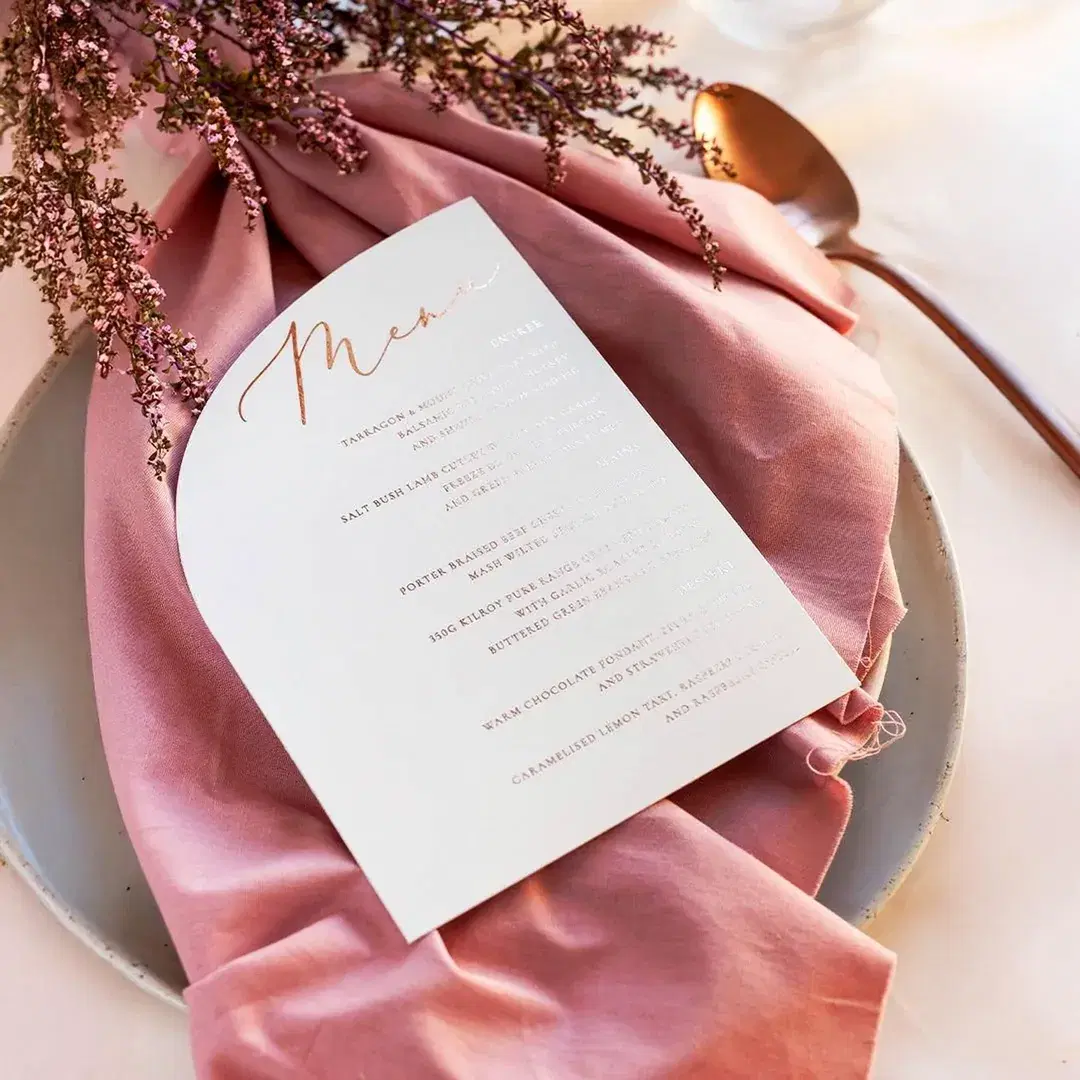
Foil menus use gold, silver, rose gold, or copper foil stamped over the printed card for a premium finish that reads immediately as a considered design investment. They are ordered for fine-dining rooms, tasting-menu programmes, and high-end bar lists where the menu is part of the dining ritual rather than a disposable information sheet. A foil front cover over a standard laminated inner set is the most common configuration: the cover carries the branding, the inner pages carry the content, and the two components update independently when the menu changes. Our foil finish guide covers how foil interacts with different base stocks and colour backgrounds, a useful reference when briefing a foil menu for the first time.
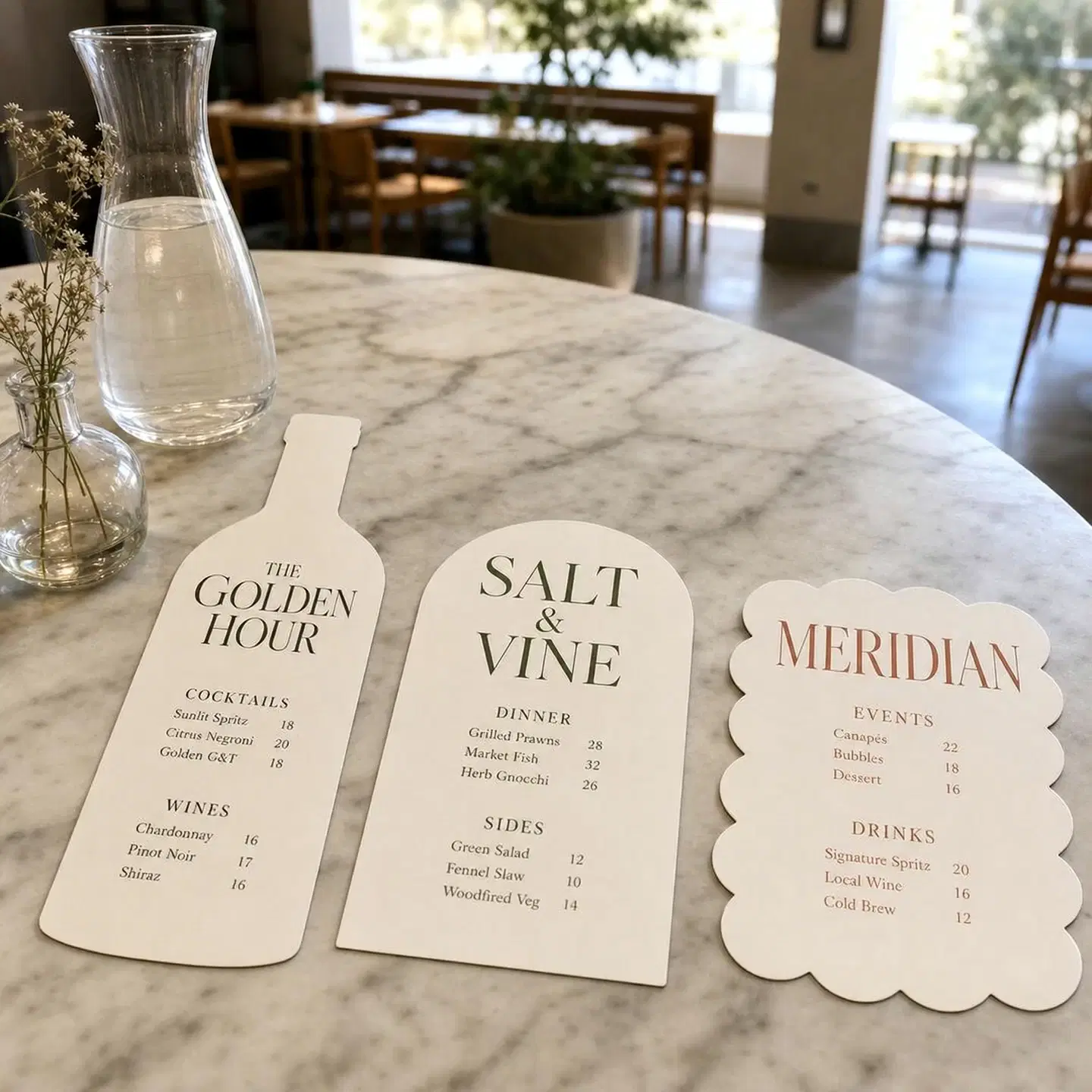
Die-cut menus use a CNC-routed custom silhouette: a cocktail glass outline for a bar programme, a botanical leaf shape for a plant-based cafe, a rectangle with radius corners and a custom notch for a wine bar. The die-cut format differentiates the physical form of the menu from the standard rectangular stack and adds a tactile cue at the guest's first touch. Artwork must include the cut path as a vector layer; the production team confirms the cut path on the digital proof before pressing any stock.
Counter Cards: specials, allergens, and table prompts
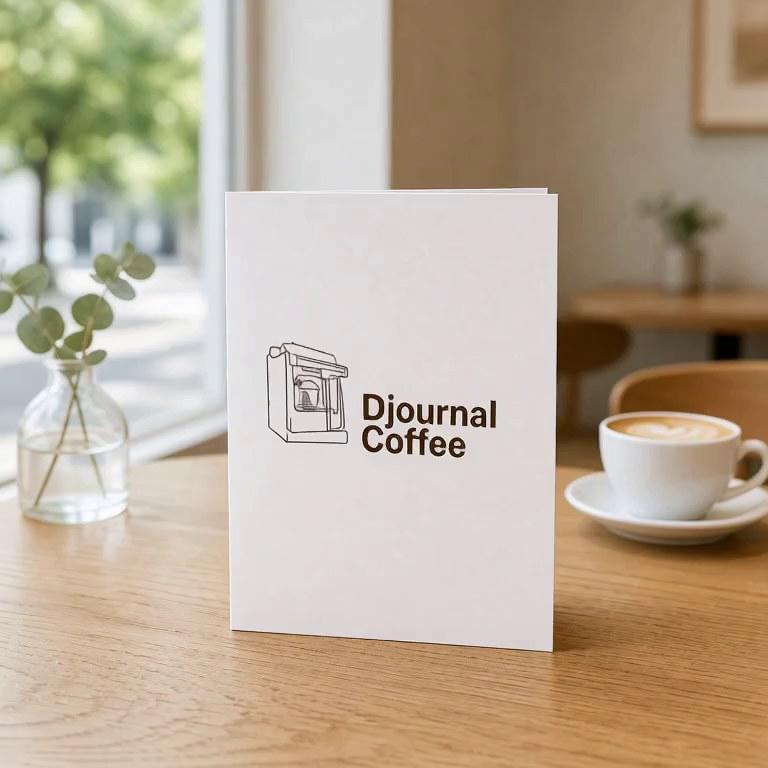
Counter cards use a rigid 2.5mm Ecoboard base and come in arch, rectangle or wave, each in A5, A4 or A3, self-supporting with an optional paper stand for A5 and A4. They carry changing specials, allergy alerts, menu QR codes and seasonal offers beside the till and along the pass. For a card that shows both faces to guests at a table, order table talkers as a different format. Our branded venue collateral guide covers how table and counter print coordinates across a full service space, including events and private dining setups.
Corflute A-Frames: footpath and entrance display
Corflute A-frames intercept the guest before they make the decision to enter. For cafes on a busy high street or in a food precinct, the A-frame on the footpath carrying the daily special, coffee price, or seasonal message is often the first piece of branded print a potential guest encounters. Standard A-frame inserts use 4 mm or 5 mm corflute, full-colour digital print, at the standard sandwich-board insert dimensions: typically 600x900 mm or as specified by the frame supplier. The insert is lightweight enough to be moved in and out daily and durable enough to survive a full outdoor trading week before replacement, making it the most cost-effective per-impression format in hospitality. The storefront display and placement guide covers how A-frames, window stickers, and window graphics work together for a coordinated footpath-to-entrance visual journey. For a deeper read on A-frame strategy, the A-frame foot traffic guide covers copy, placement, and rotation schedules for food and beverage venues specifically.
Coasters: branded touchpoints at the table
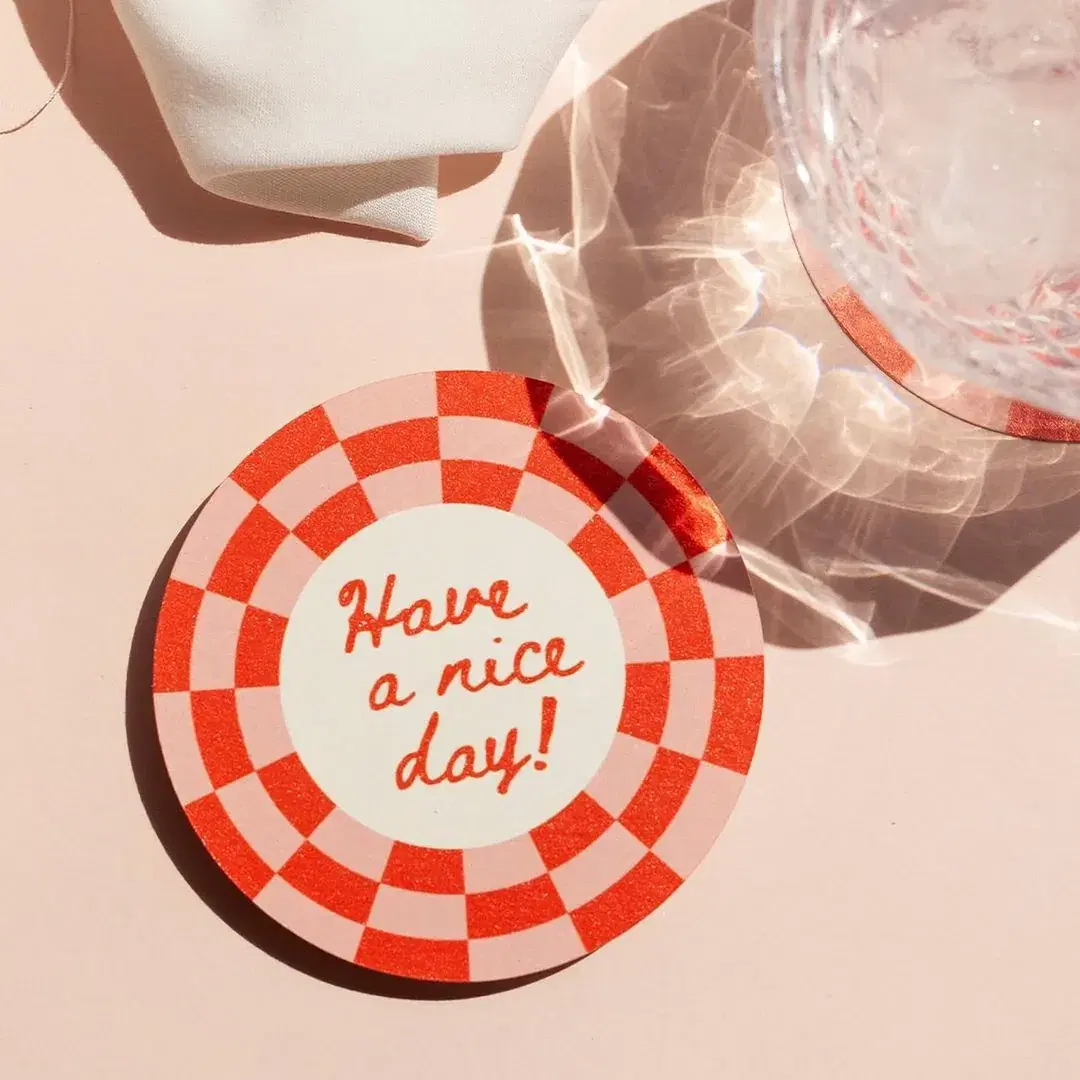
Printed coasters are one of the highest-dwell print pieces in a venue: they sit in front of the guest for the duration of a drink and are handled repeatedly through the session. Paper coasters on 300 to 350 gsm absorbent board absorb condensation and deliver excellent print reproduction with a soft-touch surface; they are the standard for casual and mid-market venues running regular seasonal promotions or rotating drinks programmes. PVC coasters on 0.6 to 0.8 mm rigid PVC sheet are wipeable and rated for extended service life, making them the preferred format for high-volume venues where replacement frequency is a cost driver. Round formats (90 mm or 95 mm diameter) are the most ordered, with square and custom die-cut shapes available for venues where the coaster shape is part of the brand identity.
Posters: in-venue display and atmosphere
Restaurant and cafe posters serve two distinct purposes: operational (kitchen allergen charts, daily specials boards in staff areas, hygiene notices) and atmospheric (brand imagery, seasonal campaigns, decorative panels in the dining room). Both run on standard satin or matte poster stock from A4 through A1. Satin finishes suit hospitality atmosphere posters where colour depth under warm lighting matters; matte finishes suit typography-led or hand-illustrated work where surface glare would compete with the design. For an overview of how floor graphics and wall display work together in food and beverage venues, our floor stickers and in-venue display guide covers the full ground-to-wall coverage approach for cafes and restaurants.
POS Standees: entrance and bar floor display
Freestanding POS standees on 5 mm corflute or PVC with an easel leg or base foot deploy in restaurant and cafe entrances, beside the host stand, at the bar entry, and in dining-room aisles to carry seasonal promotions, events announcements, or directional messages. Height runs up to 1800 mm for a full-height display panel; die-cut silhouettes are available for shaped standees carrying product or brand imagery. The format delivers the highest visual impact of any single-sheet display piece in the venue. Our in-venue branded display guide covers how standees coordinate with packaging and collateral across a full hospitality brand system.
Format Comparison at a Glance
Side-by-side spec comparison for the core formats in this range. Use this as a quick filter before drilling into the format sections above.
| Format | Typical Size | Material | Best For | Service Style |
|---|---|---|---|---|
| Menus (Standard) | A5, A4, or custom | 350 to 400 gsm coated, gloss or matte laminate | Table menus, lunch and dinner programmes, drinks lists | All venues |
| Menus (Foil) | A5, A4, or custom | 350 gsm coated, foil-stamped cover | Tasting menus, wine lists, cocktail programmes | Fine dining, upscale bars |
| Menus (Die-Cut) | Custom silhouette | 350 to 400 gsm coated, CNC-routed cut path | Cocktail menus, themed venues, boutique cafes | Bars, boutique cafes, fine dining |
| Counter Cards | A5, A4 or A3 | 2.5mm Ecoboard, arch, rectangle or wave | Daily specials, allergen notices, QR prompts, loyalty sign-up | All venues |
| A-Frames (Corflute) | 600x900 mm (typical) | 4 mm or 5 mm corflute, full-colour digital print | Footpath specials, entrance display, daily offers | Cafes, casual dining, food trucks |
| Coasters | 90 mm or 95 mm round, custom shape | 300 to 350 gsm absorbent board or 0.8 mm PVC | Table branding, drinks promotion, seasonal campaign | All venues, especially bars and pubs |
| Posters | A4 to A1 (custom) | 130 to 150 gsm coated satin or matte | In-venue atmosphere, seasonal campaigns, staff notices | All venues |
| POS Standees | Up to 900x1800 mm | 5 mm corflute or PVC, easel back or base foot | Entrance display, bar floor, seasonal promotions | All venues |
Shop by Service Style
Cafe and Coffee Shop
The core cafe print kit covers the counter card for the daily special at the register, the A-frame on the footpath for the morning offer and seasonal drinks, and an in-venue poster for atmosphere or the seasonal campaign. Menus for cafes typically run as single-sided A4 laminated boards or folded A4 cards for a fuller range. Coasters at the table pick up the brand for seated guests. Short-run reprinting on counter cards and A-frame inserts is cost-effective enough to rotate weekly without building significant print budget.
Casual Restaurant
Casual dining venues typically run a standard laminated menu on 350 gsm matte-laminated board, reprinted seasonally or when the menu changes. Counter cards for specials and upsell prompts sit on each table and are replaced more frequently. A-frames at the entrance and POS standees in the dining room carry the seasonal campaign or events promotion. The full casual dining print kit, menu, counter card, A-frame, and one or two in-room posters, can be briefed as a coordinated suite and produced in a single order for visual consistency across the venue.
On each table beside the menus, table talkers lock at the base into a triangle in A6, DL or A5 and face guests on both sides. Use Scan to order to put a table number on each card, and our team sets up the QR code, then you check the emailed PDF proof before approval.
Fine Dining
Fine dining venues invest in the tactile quality of the menu as a deliberate signal of the experience quality. Foil-stamped covers on 350 gsm coated board, matte laminated inner pages, and die-cut format options are all standard in this tier. Tasting-menu formats typically run as A5 single-fold or bi-fold on heavyweight stock with a foil detail on the cover panel. The menu is often reprinted for each seasonal tasting cycle, so production pipeline turnaround and proof accuracy matter more than per-unit cost at volume.
Bar and Pub
Bar and pub print collateral centres on branded coasters, cocktail and drinks menus, and counter cards for specials at the bar. Branded coasters on absorbent board are the highest-volume print format for bars: ordered in quantities of 500 to 2,000 and replaced on a rotating basis as they absorb spills. Cocktail menus in die-cut or foil formats lift the perceived quality of the drinks programme. A-frames on the footpath and POS standees inside carry seasonal promotions and events listings. Our business banner and display formats guide covers how in-venue standees and outdoor display work together for a bar or pub marketing push.
Food Truck and Pop-Up
Food trucks and pop-up venues need print that is durable, lightweight, and fast to produce. A corflute A-frame insert is non-negotiable: it is the primary wayfinding and specials display for a venue with no fixed shopfront. Menus for food trucks typically print as A4 or A3 laminated boards displayed on the service window or counter, sized for legibility at ordering distance. Counter cards are used for upsell and QR prompts at the point of payment. The full food truck print kit prioritises low cost per impression over premium finish.
Catering and Events
Catering and events operations print for context: menus at place settings, branded coasters for the drinks service, counter cards at food stations, and POS standees at buffet and bar areas identifying dishes, allergens, and station labels. Print quantities vary event by event, so minimum order quantities and fast turnaround matter for this service style. Foil covers on event menus add a premium touch for gala dinners and corporate functions where the menu doubles as a keepsake.
How to Choose: A Quick-Pick Guide
The right format and stock depend on how the piece is handled during service, how often it is replaced, and what the brand tier of the venue demands. The quick-pick below maps common hospitality print briefs to a recommended starting format and material. These are defaults; the proof and quote stage is where the spec is confirmed to your exact venue and volume.
If your brief is...
Table menu for a casual restaurant, seasonal rotation: A4 or A5 folded menu, 350 gsm matte laminate, single or bi-fold.
Fine dining tasting menu: A5 single-fold, 350 gsm coated board, foil-stamped cover, matte-laminated inner pages.
Daily specials at the register or on tables: A5 counter card on 2.5mm Ecoboard at the register, table talkers in A6, DL or A5 on tables, reprint weekly or fortnightly.
Footpath display for a cafe or restaurant: 4 mm corflute A-frame insert at 600x900 mm, full-colour digital print, rotated weekly or seasonally.
...the recommended spec is
Branded coasters for a bar or pub: 90 mm or 95 mm round on 300 to 350 gsm absorbent board for regular rotation, or 0.8 mm PVC for extended service life.
In-venue atmosphere poster or seasonal campaign: A2 or A1 satin poster, 130 to 150 gsm, no laminate needed for short-run indoor display.
Entrance or bar floor display: POS standee on 5 mm corflute, up to 900x1800 mm, easel back or base foot.
Cocktail or drinks menu for a bar programme: die-cut format on 400 gsm coated board with a CNC-routed custom silhouette or a rounded-corner format.
Menu Paper Stocks and Durability
Menu durability is determined by three things: the base stock weight, the laminate type, and how often the piece is handled during service. Getting the specification right prevents the most common menu failures: edge delamination, print scuffing on unlaminated stocks, and the floppiness of a lightweight card that reads as a low-quality venue signal before the food arrives.
Standard menu stock runs 350 to 400 gsm coated board: heavy enough to hold its shape flat without curling under the heat and humidity of a restaurant dining room. A matte laminate on 350 gsm board delivers a tactile, anti-glare surface with good scuff resistance, and suits the kind of understated brand aesthetic where the menu feels considered rather than glossy. A gloss laminate on 400 gsm board delivers the deepest colour reproduction and the most wipeable surface, an advantage for menus that come into regular contact with food and liquid at the table. Matte laminate is more likely to show fingerprints under certain lighting conditions; gloss laminate reflects badly if the venue uses direct overhead spotlighting at table height, so the lighting environment is a real factor in the laminate choice.
Unlaminated heavyweight board menus (400 to 450 gsm) are an option for venues where the brief calls for an uncoated tactile feel. They are less wipeable and require more frequent replacement, but deliver a natural paper surface that suits certain brand aesthetics. For catering events where menus are single-use keepsakes, this is a cost-effective option. For venues running the same menu through months of daily service, a laminated board weight is the correct specification regardless of the aesthetic preference: the surface must survive regular handling without showing wear.
Venue Branding: Finishes, Colour, and Print Cohesion
The printed collateral across a venue operates as a system. When the menu, the counter card, the A-frame, and the coaster all carry a consistent typographic and colour system, the venue reads as a considered operation. When they are produced independently across different suppliers with different colour profiles and slightly varying brand colours, the inconsistency is visible to guests even if they cannot identify it explicitly.
Foil accents are the single most impactful finish upgrade across the hospitality print range. Gold foil on a menu cover, repeated as a border detail on a coaster, creates a cohesion signal that reads immediately as designed-for-this-venue rather than an off-the-shelf print job. The foil options available across the range, gold, silver, rose gold, copper, all map to the warm metals that dominate current hospitality interior design palettes, which makes them straightforward to deploy without conflicting with the physical environment of the dining room.
Colour consistency across formats requires a unified CMYK specification from the outset. Supplying your brand CMYK values (not just RGB or hex) at order stage allows the pre-press team to match your brand colour as closely as the coated-stock print process allows. The digital proof step before every order is where colour confirmation happens; reviewing the proof on a calibrated screen, or requesting a physical colour swatch before sign-off on large runs, is worth the added day in lead time for brand-sensitive hospitality groups running multiple locations.
How a Hospitality Print Order Moves Through the Press
From order placement to dispatch, every restaurant and cafe print item passes through a five-step production pipeline. Lead times vary by format: menus and counter cards move fastest, foil menus and die-cut formats add finishing steps, but the proof and sign-off structure is consistent across the full range.
1. File check
Within one business day our pre-press team opens your artwork and checks resolution, bleed, font outlining, fold-line positioning on menus, die-cut path integrity for custom silhouette menus, and foil layer separation for foil menu covers. Flagged issues come back with specific notes; clean files proceed directly to proof.
2. Digital proof
You receive a digital proof at exact sizing with fold lines, die-cut paths, foil zone overlays, and bleed marks. For multi-page menus, the proof covers every page in sequence. No production starts until you confirm the proof in writing.
3. Production
Standard laminated menus and counter cards run on flatbed digital CMYK presses. Foil menus go to hot-foil stamping after the base print run. Die-cut menus and A-frame inserts run on flatbed UV presses and then through a CNC router for the cut path. Coasters run on the press matched to the substrate: digital for absorbent board, UV flatbed for PVC. POS standees run on flatbed UV for the rigid corflute or PVC substrate.
4. Finishing
Lamination for menus, CNC die-cut for custom silhouette menus and die-cut coasters, hot-foil stamping for foil covers, and punch or kiss-cut for round coasters. Each finishing step is specified at the quote stage so there are no last-minute scope changes before dispatch.
5. Pack and dispatch
Menus are banded and boxed flat with edge protection. Counter cards are banded in sets. A-frame inserts are stacked flat in protective cardboard. Coasters are shrink-wrapped in 25 or 50-piece packs and boxed. All orders ship with tracked courier and a dispatch confirmation email. Rush production is available on most formats, confirm availability before order placement if you have a hard event or reopen deadline.
Care, Cleaning, and Service Life
A basic care routine extends the service life of every hospitality print piece and keeps the cost-per-guest-interaction low across a full venue operation.
- Wipe laminated menus with a damp cloth after service; avoid abrasive cleaners that degrade the laminate edge over repeated wipe-down cycles.
- Store menus flat or standing upright in a dry area between service periods; stacking horizontally with weight on top accelerates edge delamination on high-rotation items.
- Rigid Ecoboard is not water resistant, so keep counter cards clear of the wet bar, sink and pass. If they get splashed, wipe them dry.
- A-frame inserts should be brought inside at close of trade in wet weather; 4 mm corflute survives light rain but sustained wet exposure degrades the printed face without a UV laminate.
- Paper coasters have a single-session service life by design; PVC coasters can be wiped down and reused across multiple sittings without print degradation.
- POS standees store flat in the original shipping carton between seasonal campaigns; the substrate holds its shape without warping when kept away from direct heat and sunlight.
Why Print With Paperlust
Australian-printed across all formats: menus on locally stocked coated board, coasters on absorbent board and PVC, A-frame inserts on corflute, posters and standees on the press matched to each substrate. Multi-format hospitality orders ship together from one production facility rather than arriving in separate parcels from different suppliers on different days, which matters when the menu reprint, the specials counter cards, and the seasonal A-frame all need to land before a reopen or a seasonal menu launch.
Free pre-press file check on every order, with specific notes back on low-resolution artwork, missing bleed, incorrect fold-line positioning, or die-cut path issues before printing starts. Every order receives a digital proof signed off before press, so format, sizing, colour, finish, fold, and any die-cut path are confirmed before production cost is committed. For venues running coordinated print suites across multiple formats, the proof stage covers every item in the order before any production starts.
Trusted by 800+ Australian Customers
★★★★★ 4.9 / 5
4.9/5 from 670+ reviews on Google · 4.9/5 on Trustpilot · 4.9/5 on ResellerRatings from 63 reviews
Popular Products in this Range
- Standard Menus
- Foil Menus
- Die-Cut Menus
- Counter Cards
- Coasters
- Posters
- Point of Sale Standees
- A-Frame Signs
- Table Talkers