
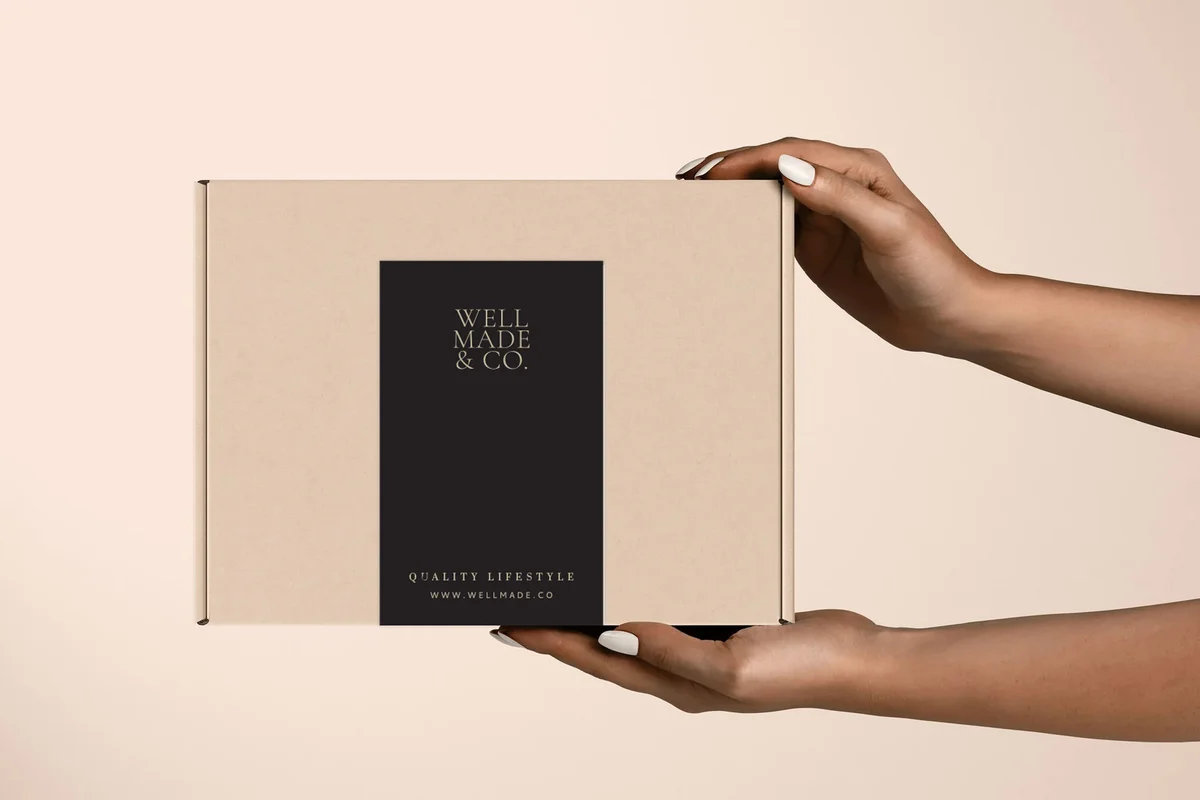
The sticker on the outside of your packaging is doing three jobs at once — sealing the box, displaying your brand, and setting expectations about what’s inside. When it’s done well, it punches well above its cost.
When it’s just a generic address label, it’s a missed moment.
Print packaging stickers that seal and sell
Custom die-cut shapes, gloss or matte laminate, sized for mailers, boxes, and tissue wraps. Minimum 50 pieces, ships Australia-wide.
At a Glance
Three sticker roles separate functional packaging from premium packaging — and most brands miss two of them.
Seal stickers close the box (tamper-evident, 25–50mm round), label stickers carry the legal and regulated info layer (ingredients, batch, barcode, weight), brand stickers turn the unboxing moment into marketing. White vinyl + matte laminate covers 80% of e-commerce packaging needs — step up to silver foil or kraft for premium positioning.
- Seal sticker — tamper-evident, simple branding, used to close mailers/boxes. Round 25–50 mm. Logo + thanks message reads best.
- Label sticker — the legal/regulated information layer (ingredients, batch, weight, barcode). Rectangular, durable, must survive shipping and shelf life.
- Brand sticker — surprise-and-delight insert, optional. Either part of the wrapping ritual or a freebie that ends up on a laptop later.
- Order strategy: rotate seal designs seasonally, lock label artwork to your SKU range, treat brand stickers as marketing budget — not packaging cost.
- Material default: white vinyl + matte laminate covers 80% of e-commerce packaging needs. Step up to silver foil or kraft paper for premium positioning.
The Seal Sticker
The most underestimated role for packaging stickers is the seal — the sticker that holds the flap of a mailer, box, or tissue paper closed.
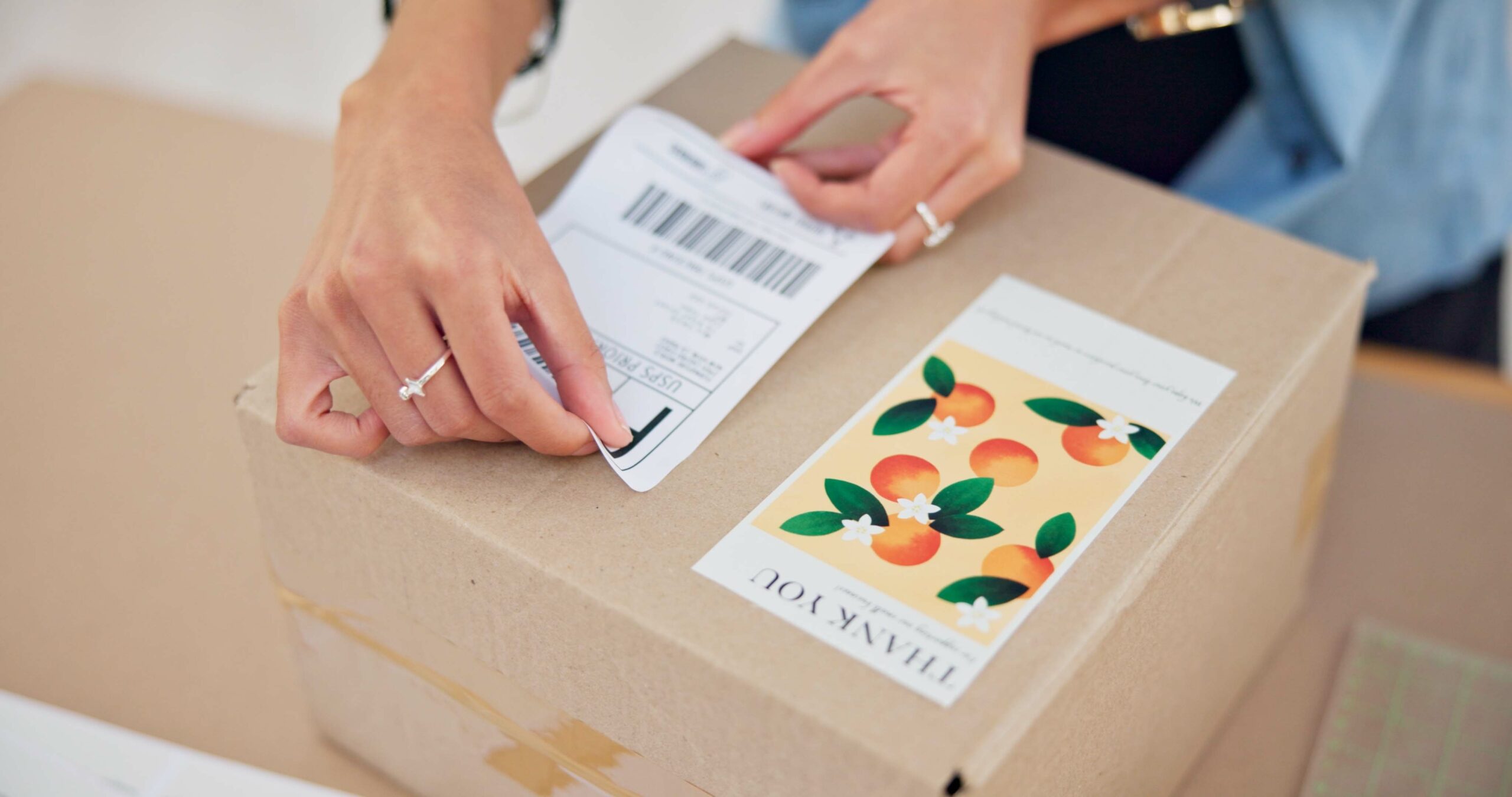
A seal sticker replaces generic packing tape. It keeps the packaging closed, but it also signals care. The customer sees it before they open anything. First impressions happen before the product is even visible.
For seal stickers, circle stickers in the 38-50mm range are standard. Oval stickers work well for brands with horizontal logos. Custom die-cut shapes — a crest, leaf, or product silhouette — turn the seal itself into a branded moment.
Material matters: for packaging seals, you need adhesive that stays closed in transit but doesn’t destroy the packaging on opening. Paper sticker stock with a quality adhesive is the right call for most mailers and kraft packaging.
The Label Sticker
If you’re a maker, artisan, or small-batch producer, a well-designed product label sticker is often more practical than commercial label printing. You can:
- Start with smaller quantities (no 5,000-unit minimum order)
- Update labels as your product evolves
- Apply them across multiple package types — jars, bottles, boxes
- Mix designs across a product range without reprinting all your packaging
Clear stickers are the choice for the “no label” premium look on glass jars and smooth bottles. Die-cut stickers on white vinyl give you vibrant colours and a clean background for maximum legibility on any surface.

The Brand Sticker
Beyond sealing and labelling, stickers are a low-cost way to add visual branding to otherwise plain packaging. A plain kraft mailer with a well-designed sticker on the flap looks considered and deliberate. It communicates that someone cared about the presentation.
This is especially effective for:
- Artisan food producers
- Small-batch beauty and skincare brands
- Handmade craft and homewares sellers
- Subscription box operators who want to stand out without a full packaging redesign
The brand sticker doesn’t have to be large. A 40-60mm circle with your logo, a simple colour, and a clean background can elevate an entire unboxing experience. The sticker brands the outside, while package insert cards inside the box can carry the thank-you, care or reorder message.
Need a seal that survives shipping?
Laminated die-cut stickers stay put through the postal network and look sharp on the unbox — we print both gloss and matte finishes on the same line.
Choosing the Right Finish
| Finish | Best for |
|---|---|
| Gloss | High-visibility labels, product labels on jars and bottles |
| Matte | Premium minimalist brands, packaging with a sophisticated feel |
| Clear | Glass containers, smooth surfaces, floating design effect |
| Kraft paper | Artisan, handmade, eco-friendly brand aesthetics |
Multiple SKUs in a single order?
Sticker sheets let you mix designs, sizes, and SKUs on one print run — one cost, one shipment, one inventory line.
Multiple SKUs, One Sticker Strategy
If you sell across multiple product lines or sizes, stickers solve a labelling problem cheaply. Instead of printing custom packaging for each SKU, use a consistent outer box and apply product-specific stickers to differentiate. This is common practice in cosmetics, food, and artisan goods.
For brands juggling 4+ packaging-sticker designs in a single product range, custom sticker sheets can carry every variant on one kiss-cut sheet, your team peels the right one per SKU and reorders quarterly instead of separately. Useful for cosmetics with multiple scent or colour variants, food brands with flavour SKUs, and gift packs where each item gets its own seal sticker. One artwork file, one sheet, one shipment.
The sticker strategy works best when:
- You have more than 3-4 SKUs
- Your packaging changes more often than your box design
- You’re scaling and don’t want to commit to large custom packaging runs
Ordering the Right Quantities
Sticker unit cost drops meaningfully at higher quantities. For packaging stickers you’ll use continuously, it’s worth calculating your annual usage and ordering accordingly. A 500-unit run may cost 40% more per sticker than a 2,000-unit run.
For new products or designs you’re still refining, 250-unit runs let you test in the field without locking in a large quantity.
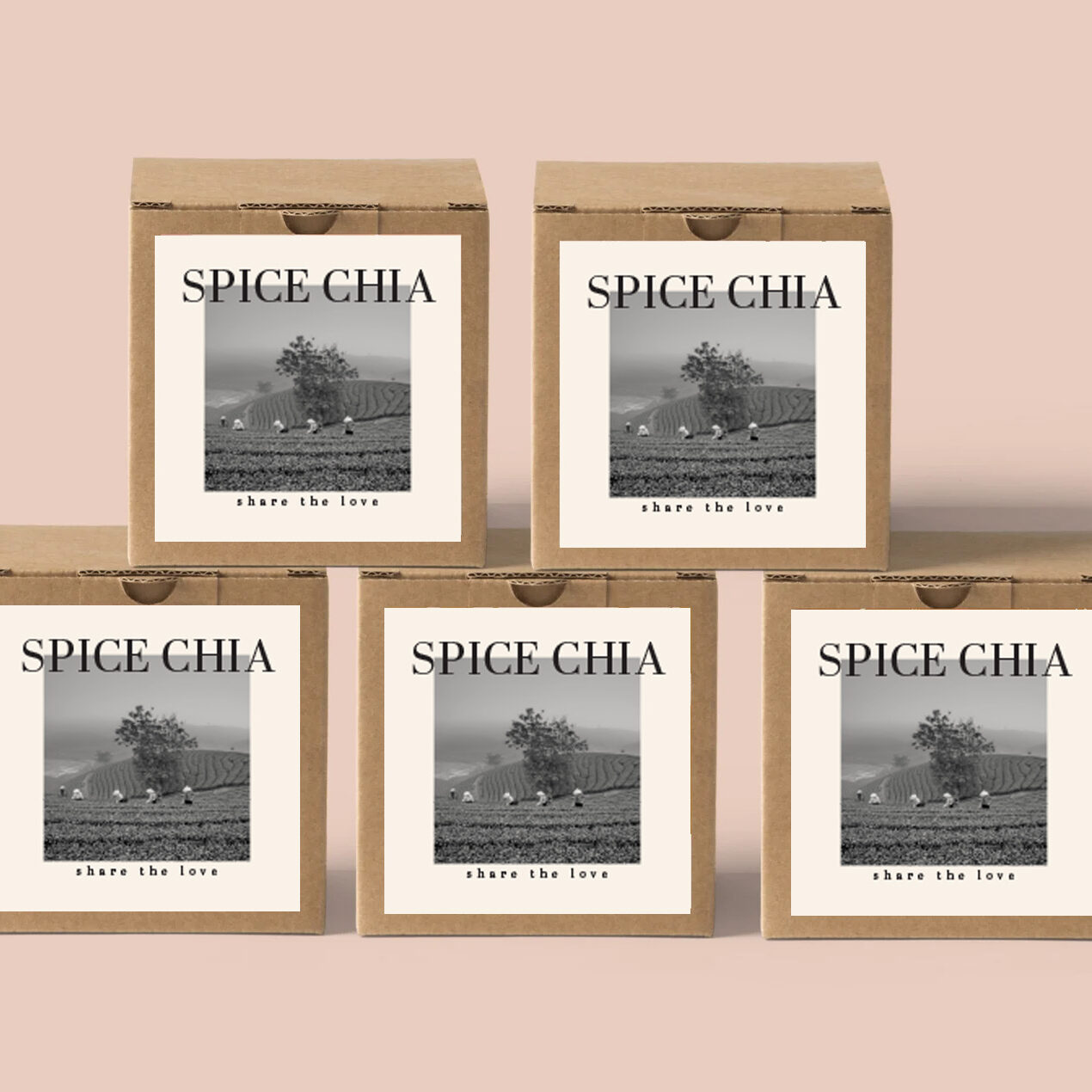
Browse die-cut stickers, circle stickers, and oval stickers to configure your packaging sticker order. Flat-rate $10 shipping Australia-wide, free on orders over $100.
How to Choose the Right Material for Packaging
The correct sticker stock depends on what the packaging is made of and what it goes through before reaching the customer.
Paper sticker stock (uncoated or semi-gloss) is the natural match for kraft mailers, cardboard boxes, and tissue paper. It adheres cleanly to porous surfaces and reads as intentional rather than industrial. For eco-positioned brands, uncoated paper stock reinforces the narrative. If the tissue itself is branded, our printed tissue paper comes as 28gsm recyclable stock in 1 or 2 spot colors.
Vinyl sticker stock is better for packaging that faces handling stress or moisture – poly mailers, bags, containers that might sit in a humid warehouse. The adhesive is more durable, and the material doesn’t absorb ambient moisture the way paper does.
For premium unboxing experiences, a matte laminate over either stock elevates the tactile feel. The customer peels back packaging and the first physical thing they touch is something that feels considered. That’s worth the marginal cost increase.
Sizing Guide for Packaging Seals and Labels
Seal stickers (the sticker that closes a flap, box, or tissue paper fold) have a fairly standard size range: 38-50mm circle for mailers and tissue, 50-65mm for boxes. The seal should be large enough to close the flap reliably – not so large it dominates the packaging.
Oval stickers in a similar size range work well for horizontal logos and wordmarks that don’t compress well into a circle.
Product label stickers require measuring the actual packaging surface first. Leave 5-10mm margin on all sides of the label relative to the surface it sits on. For cylindrical packaging (jars, bottles, tubes), rectangle stickers at 60-80mm wide wrap around the curve without lifting at the edges. For flat surfaces (box lids, flat-pack cards), there’s more flexibility.
A rule of thumb: if the label looks right in a preview but awkward in person, it’s usually too large for the packaging. Scale down by 20% and reassess.
Getting Your Artwork Right
Setup errors are the most common cause of disappointing sticker results. The issues are preventable.
Supply files at minimum 300dpi in CMYK color mode. RGB files print differently on press – blues shift toward purple, reds shift orange. What you see on screen in RGB is not what you get on paper in CMYK. If your designer works in RGB, ask for a CMYK-converted export before submitting.
Include a 3mm bleed on all sides – this is the area of artwork that extends beyond the cut edge. Without bleed, any slight variation in the cut position creates a thin white border. With bleed, the cut lands in artwork regardless of minor variation.
For clear stickers where the design sits on a transparent background, white ink is often needed to make the design visible on dark packaging. Specify white ink as an underbase when the design includes large areas of light color or photography.
Keep critical text and logos at least 3-4mm inside the cut edge. This is the “safe zone” – anything in this margin risks being cropped by production variance.
Ordering in Batches as a Small Business
The temptation for small businesses is to order large quantities upfront to reduce per-unit cost. The risk is ordering more than you’ll use before you need to update the design – new branding, a price change, a seasonal variant that makes the original run obsolete.
A practical approach: start with 100-250 units for a new design. This is enough to assess the sticker in use, get feedback from customers, and identify any design adjustments. Once the design is proven and stable, move to larger runs (500-1,000+) for the cost reduction.
Reorder before you run out, not when you run out. Production takes 2-4 business days for standard runs. Running out of packaging seals mid-week and needing them for Friday dispatch creates expensive rush situations. Set a reorder trigger at 15-20% of stock remaining.
Keep separate SKUs for seasonal variants. A Christmas seal design is a one-run item – order conservatively. Your evergreen brand seal is permanent stock – order at the volume that makes economic sense.
Sustainable Packaging Sticker Options
Sustainability is a factor in purchasing decisions across the small business market – both for brands choosing their own packaging and for the end customers receiving it. Sticker choices are part of that conversation.
Paper sticker stock
Uncoated or kraft-finish paper sticker stock is the most sustainable option. No plastic laminate, biodegradable backing, and compostable in most municipal systems. The trade-off is durability – paper stickers are not appropriate for packaging that will encounter moisture or extreme handling. For standard postal mailers in protective outer packaging, paper stock holds up fine.
Paper stickers work especially well for artisan, food, and sustainability-positioned brands where the uncoated paper aesthetic supports the brand narrative. The sticker looks like it belongs on kraft packaging rather than applied to it.
Recyclable vinyl options
Standard vinyl stickers are not recyclable, but recyclable vinyl substrates are now available as a premium option. These use bio-based or recycled-content vinyl films that can be processed through specialist recycling streams. Not appropriate for claims of full biodegradability, but a meaningful improvement over standard petrochemical vinyl for brands with sustainability commitments.
Minimum order quantities and waste reduction
Sustainability also applies to ordering quantities. Over-ordering creates waste when designs change or products are discontinued. Start with smaller pilot runs (100-250 units) to validate the design before committing to volume. Once the design is stable, move to quantities that reduce per-unit cost without creating surplus that will be discarded.
The cheapest sticker on a per-unit basis is rarely the most sustainable option once disposal of unused stock is factored in. Order closer to your actual usage, refresh designs annually, and treat sticker inventory the same way you’d manage any other consumable stock.
Frequently Asked Questions
What size circle sticker is best for sealing mailers?
38-50mm is the standard range for mailer and tissue paper seals. A 38mm circle seals most standard tissue paper folds cleanly without excess. For larger flap openings on rigid mailers or boxes, 50mm provides more secure coverage. Custom circle stickers in these sizes are the workhorse of small business packaging – they’re large enough to do the job and small enough that the brand mark looks proportional rather than oversized.
Should packaging stickers be vinyl or paper?
It depends on the packaging material and the journey the package takes. For kraft mailers and cardboard boxes in standard ambient shipping conditions, paper sticker stock adheres well and looks intentional. For poly mailers, bags, or packaging that might face moisture or extended storage, vinyl is more durable. If your packaging is heading into cold storage or international shipping, vinyl is the safer choice. When in doubt, vinyl gives you more margin for varied conditions without visible quality difference at the customer end.
How do I ensure my packaging sticker design prints correctly?
Supply artwork as a high-resolution file (minimum 300dpi) in CMYK color mode with 3mm bleed on all sides. RGB files will shift in color on press – blues and reds in particular. The bleed extends your design beyond the cut line so no white border appears from slight production variation. Keep logos and critical text 3-4mm inside the cut edge as a safe zone. If using clear stickers on dark packaging, specify white ink as a base layer for light design elements to remain visible.
What’s the best sticker finish for premium packaging?
Matte laminate is the most effective finish for packaging stickers targeting a premium positioning. The tactile quality of matte – the slight resistance and the absence of reflective glare – communicates care before the customer consciously evaluates it. Gloss is appropriate for food, beauty, and consumer products where color vibrancy is a priority. Soft-touch matte (a velvet-texture laminate) is the highest-end option for packaging inserts where the unboxing experience is a core part of the brand.
How many packaging stickers should a small business order initially?
For a new design, start with 100-250 units. This quantity lets you use the sticker in practice, get customer feedback, and refine the design before committing to a larger print run. Once the design is stable and your monthly dispatch volume is established, move to 500-1,000 unit runs for better per-unit economics. Set a reorder trigger at 15-20% remaining stock – running out mid-week when orders need to ship is an expensive problem to solve on short notice.
Ready to upgrade your packaging?
Upload your artwork, choose your finish, and we’ll handle production. Most packaging-sticker orders ship within 5 business days.