
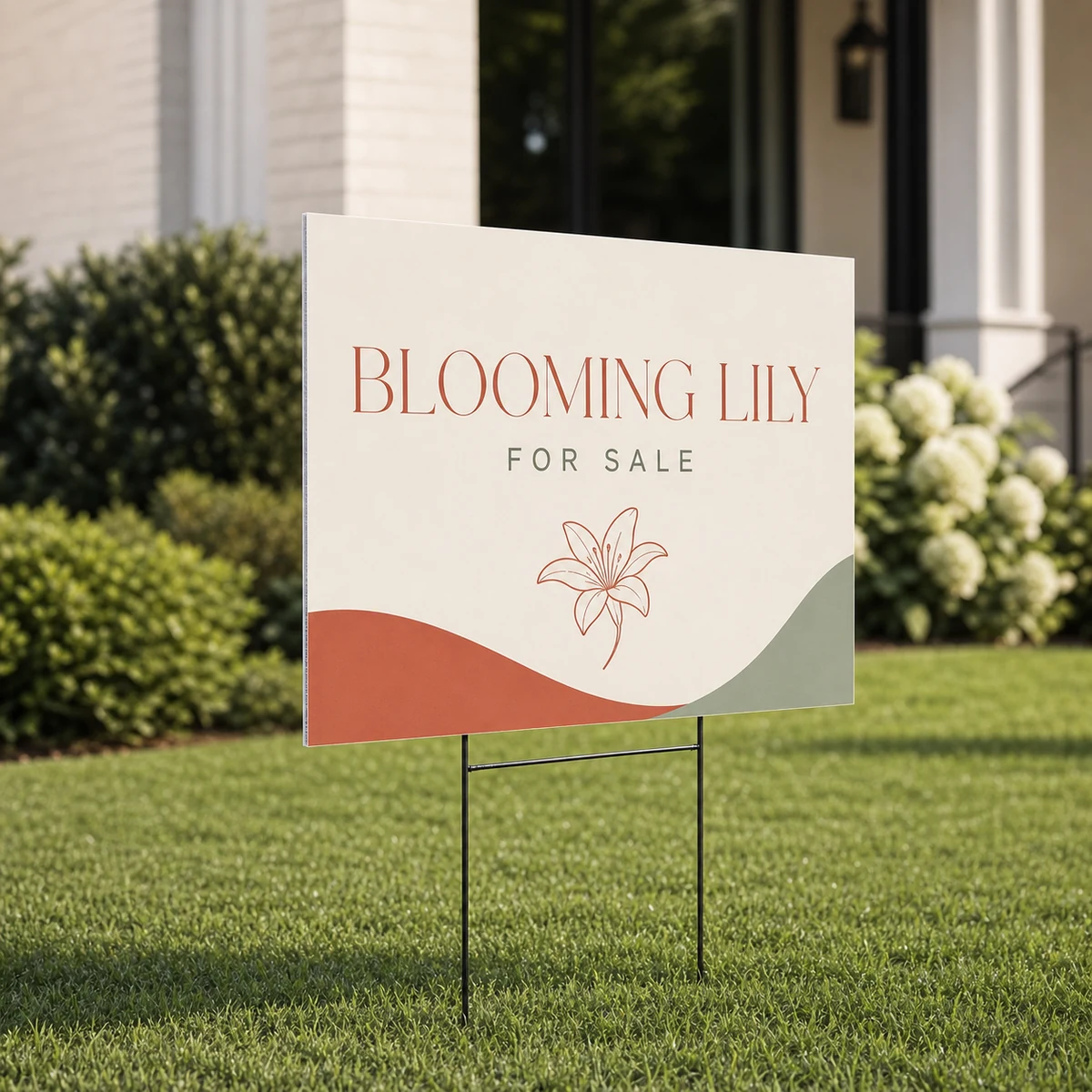
Corflute signs are one of the most versatile display tools for Australian businesses, real estate agents, event organisers, and tradies. They are lightweight, weatherproof, and can go up in minutes. But the way you mount and position a corflute sign determines how well it performs, how long it lasts, and whether it stays put on a gusty afternoon. This guide covers every practical method: ground stakes, wall and fence mounting, A-frame footpath placement, wind management, and storage for reuse.
If you are ordering custom corflute signs, the Paperlust Print Shop corflute signs come in 3mm and 5mm TEKflute options across five standard sizes, with A-frame inserts and H-stakes available so your signs arrive ready to display.
Quick answers for displaying corflute signs in Australia.
- Soft ground (grass, soil): use H-stakes or star pickets driven 150-200mm deep; 5mm corflute grips the channel better than 3mm in wind.
- Hard ground or paving: use a sign spike with a base plate, a weighted A-frame, or mount to a nearby fence or wall.
- Fences and walls: cable ties through the flutes work on wire or mesh fences; screws with broad washers are best on timber or solid walls.
- A-frames on footpaths: most Australian councils require a minimum 1.5m clear pedestrian path; always check with your local council before placing on public land.
- Wind management: orient flutes vertically, keep large signs low, add sandbags to A-frame bases, and use 5mm material in exposed or coastal locations.
- Storage: stack flat, keep out of prolonged direct sun, and wipe down with a damp cloth before reuse.
Ground Mounting: H-Stakes, Star Pickets, and Sign Spikes
Ground mounting is the most common method for real estate for-sale boards, election signs, event directional signs, and construction site notices. Choosing the right stake depends on the ground surface.
H-Stakes for Grass and Soft Soil
H-stakes (sometimes called H-frames or wire yard-sign stakes) are the standard accessory for lawn signage throughout Australia. The H-shape creates two parallel legs that slide into opposite ends of a corflute sign’s flute channels, then push into the ground.
Installation steps:
- Slide the top legs of the H-stake into the top flute channels of the sign. For a 600 x 900mm sign, position the stake roughly one-third in from each side for balance.
- Stand the assembled unit on the ground at the chosen spot.
- Push firmly downward. For firmer soil, use a rubber mallet to drive the legs to a depth of at least 150mm. For softer ground, 200mm or more gives better resistance.
- Test by pressing laterally on the sign face. If it wobbles, drive deeper.
3mm vs 5mm for H-stakes: The channel width on standard H-stakes is 6-7mm, which means both thicknesses fit. However, 5mm corflute grips the channel more snugly and resists lateral movement better in wind. For low-wind suburban positions, 3mm is perfectly adequate and lighter to transport. For coastal suburbs, exposed road corners, or large sign sizes (900 x 1200mm), specify 5mm.
Star Pickets for Extended Campaigns
For signs that stay up over weeks or months, star pickets (Y-shaped steel posts) driven into the ground offer more structural stability than wire H-stakes. Mount the corflute to the picket using cable ties threaded through the flute channels, with ties at top, middle, and bottom to prevent flapping. Use star picket post caps to protect the sharp top end.
Sign Spikes for Compacted or Semi-Hard Ground
Sign spikes with a base plate or ground anchor suit compacted earth, gravel, or areas where a mallet-driven H-stake would bend. The spike screws into the ground; the sign clips or ties to the shaft. Some spike systems include a ballast tray where you can place sand or water to add weight.

Wall and Fence Mounting
Corflute’s fluted structure gives you a built-in fastening advantage: you can pass ties or fixings through the channels without drilling through the printed face.
Cable Ties Through the Flutes (Fences and Rails)
For wire fences, mesh fencing, pool fencing, or metal railings, cable ties are the fastest mounting method.
- Choose tie attachment points near the four corners of the sign and at mid-span on larger formats.
- Thread a heavy-duty cable tie (minimum 4.8mm width, UV-resistant for outdoor use) through the flute channel adjacent to the fence wire.
- Loop the tie around the fence wire and cinch it tight.
- For large signs (A1 or 600 x 900mm), use 6-8 ties to prevent bowing between attachment points.
Do not overtighten ties on 3mm material in hot weather – polypropylene expands slightly in heat, and a too-tight tie can create a stress point.
Screws and Washers for Timber and Masonry Walls
For timber fences, timber frames, concrete block walls, or brick facades, screws give a more permanent result.
- Pre-mark drill points on the corflute, at least 30mm in from any edge to avoid tearing.
- Use a washer (minimum 25mm diameter) under each screw head to spread the load over the corflute surface. Without a washer, the screw head can pull through the plastic under wind load.
- For masonry, use a plastic anchor plug before inserting the screw.
- Drive screws to finger-tight, then a quarter turn more. Over-tightening compresses the flute and weakens the mounting point.
Sign Clips and Standoffs for Display Frames
Signage clip systems and standoff mounts (also called projection mounts or barrel fixings) suit retail situations where the sign is inside or under a protected awning. Standoffs attach through a pre-drilled hole in the corflute face, giving a clean floating appearance. They are not suitable for windy outdoor conditions unless the backing is solid.
A-Frame Placement on Footpaths and Forecourts
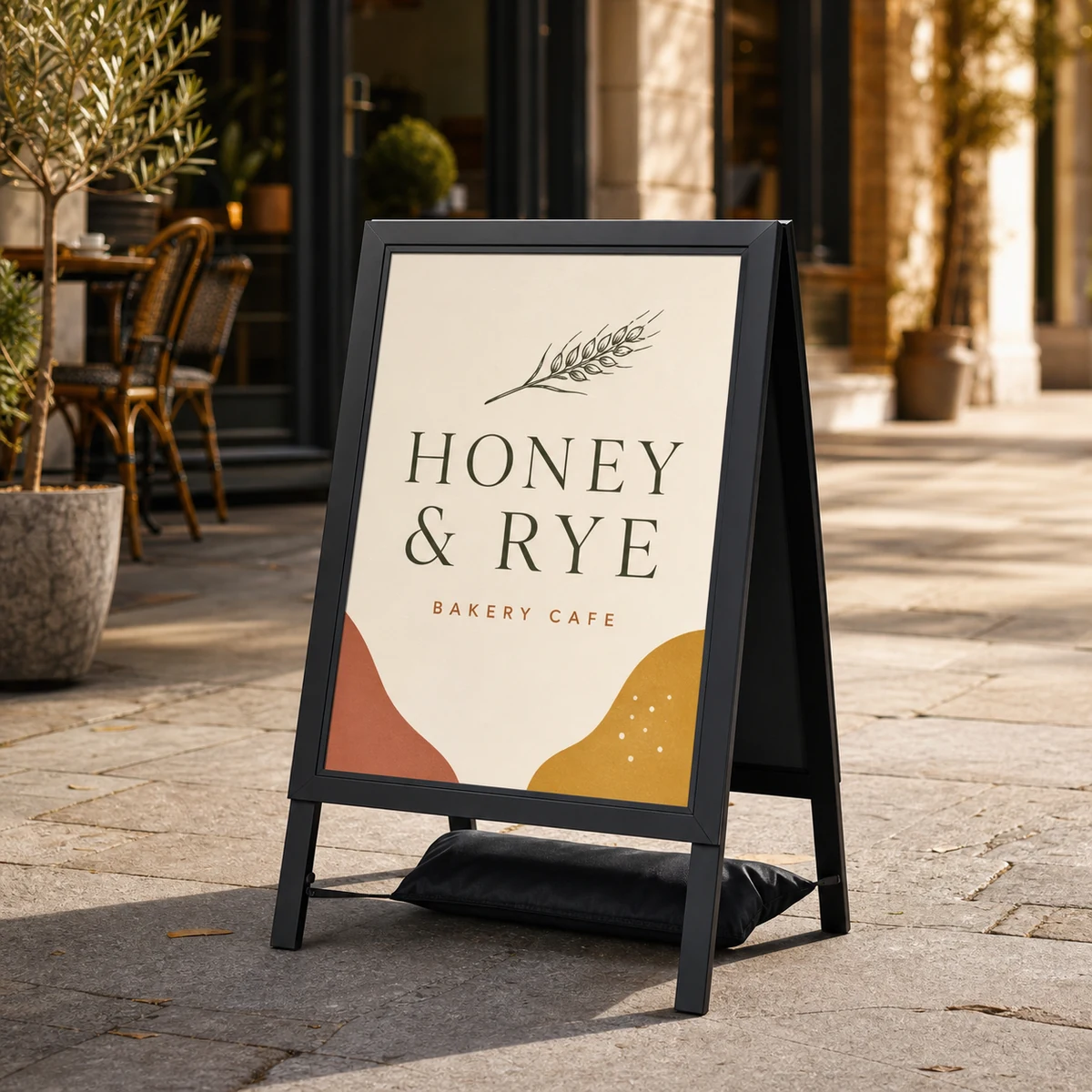
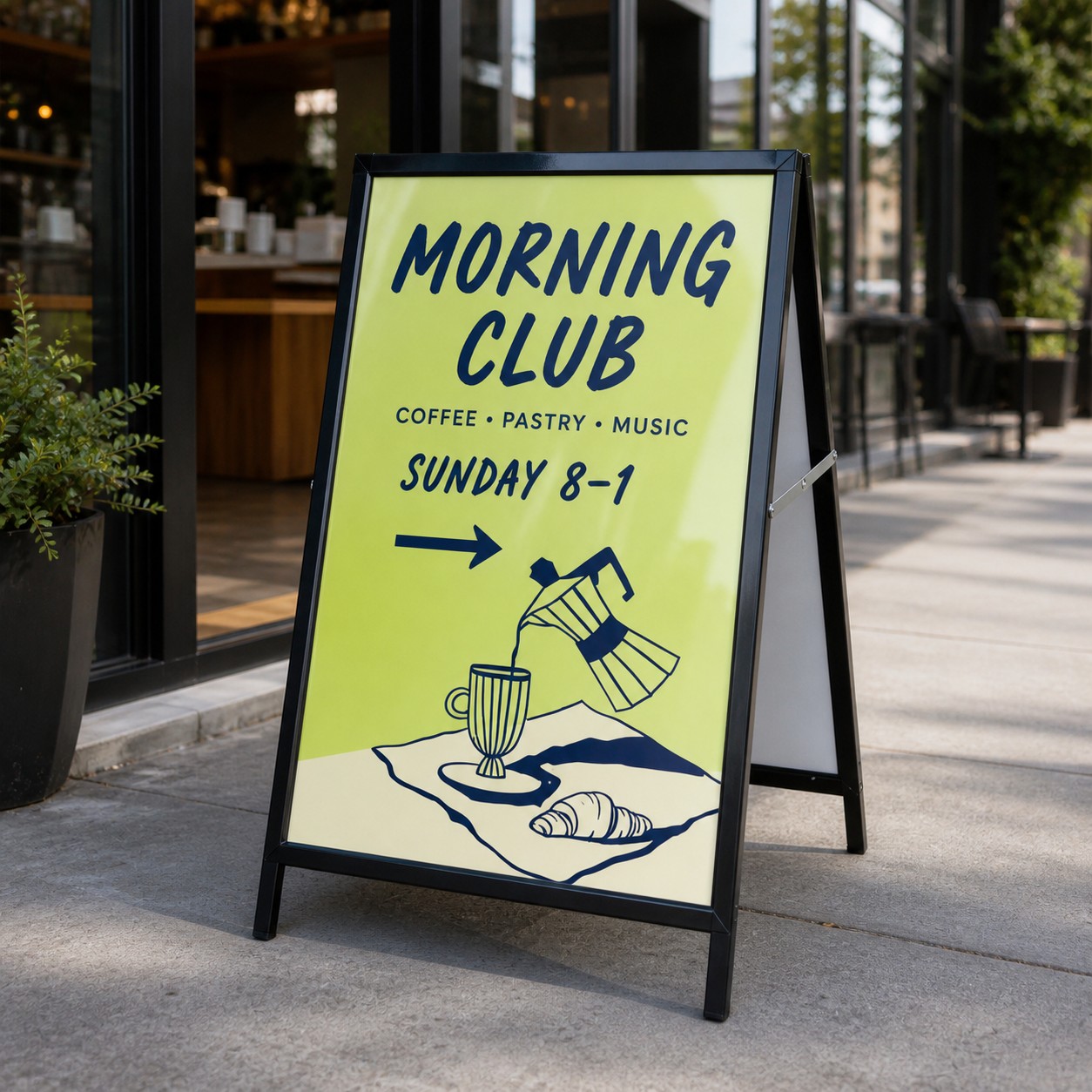
A-frames (sandwich boards) are the standard footpath display method for cafes, retail shops, salons, and service businesses. Corflute inserts into the frame’s side channels and holds a different message on each face.

Positioning for Visibility and Pedestrian Safety
Position your A-frame at a 45-degree angle to the shop entrance and pedestrian flow, not flat against the wall. A flat sign parallel to the footpath is nearly invisible from the approach direction; a 45-degree angle catches sightlines from both directions along the footpath.
Key clearances to observe:
– Leave at least 1.5 metres of clear, unobstructed footpath width for pedestrians, prams, and wheelchair users. This is the minimum most Australian councils reference in their footway trading guidelines.
– Do not place an A-frame at a pedestrian crossing, near a bus stop, in front of any designated access ramp, or within 1 metre of a fire hydrant or utility access point.
– Keep the A-frame within the frontage of your own premises, not in front of a neighbouring business.
Council Permits and Local Rules
A-frame signage on public footpaths is regulated at the council level in Australia, and requirements differ significantly between local government areas. Some councils require a paid permit (renewed annually or biannually); others require only that you meet their published by-law dimensions. A few councils in metro centres charge a footpath trading fee that covers A-frame rights.
General guidance (not legal advice):
– Check with your specific local council before placing any sign on public footpath. Council websites typically list their signage by-law or footway trading policy.
– Common permit requirements include maximum sign dimensions (often 600mm wide by 900mm tall or smaller), maximum number of signs per frontage, and a requirement that signs be taken inside outside business hours.
– Property forecourts (your private land between the building and the boundary) generally do not require council approval for an A-frame, but verify your lease and any body corporate rules if applicable.
Height and Sightline Optimisation
The readable panel of a standard A-frame sits between 400mm and 900mm above ground, which is at eye level for a walking adult. Keep text in the top two-thirds of the panel so it remains visible even when the bottom is partially obscured by passing foot traffic, outdoor furniture, or other displays. For cafes and retail, the most important information (product, price or key offer) should fill the top 60% of the corflute panel.
Wind Resistance: What Actually Works
Wind is the most common cause of corflute sign failure in Australian outdoor conditions. Coastal suburbs, open car parks, construction sites, and exposed road verges all present significant wind loading, particularly during storm season.
Why Flute Direction Matters
Corflute has a directional structure: the parallel flute channels run in one direction only. When the flutes run vertically (up-down), the sign has far greater resistance to bending across its width under lateral wind load. When the flutes run horizontally, lateral wind bends the sign across its height more easily.
Best practice: specify or orient your corflute so the flutes run vertically. On H-stakes and A-frames, vertical flutes are standard because the stake legs and frame channels align with the vertical direction. For wall or fence-mounted signs, confirm flute orientation before mounting; rotating a sign 90 degrees relative to its frame can significantly affect rigidity.
Ballast and Sandbags for A-Frames
A-frames in open locations or on non-level footpaths are vulnerable to tipping in gusts. Most A-frame designs include a bottom rail or foot channel where ballast can be added.
- Fill a heavy-duty sandbag (5-10 kg) and hang it from the central hinge of the A-frame, or lay it across the bottom rail.
- On smooth pavement, anti-slip feet on the A-frame base reduce walking migration in light breeze. On uneven ground, sandbag ballast is more effective.
- For events in exposed areas, fill a purpose-built water-weight bag (sold by sign accessory suppliers) via the hose fitting. These hold 5-15 litres and are easy to empty for transport.
Mesh Inserts and Wind-Slits for Large Signs
For large corflute signs (900 x 1200mm or larger) mounted on stakes or fences in exposed positions, solid print area creates significant wind load. Two mitigation options:
- Wind-slit inserts: some sign holders offer interchangeable corflute and mesh panels. A mesh or perforated insert on the same H-stake frame reduces wind resistance dramatically without changing the framing.
- Partial print layout: designing the sign with open or light-coloured margins (rather than edge-to-edge dark or solid fill) does not reduce wind load on the physical panel, but it does look less visually dominating in the streetscape, which is sometimes a council consideration.
Note: cutting wind-slits directly into a printed corflute panel is not recommended as it compromises structural integrity and creates sharp edges.
Lower Placement in Exposed Spots
Wind load increases with height. On H-stakes in an exposed position, the lowest effective display height reduces the leverage arm. Drive stakes deeper and crop the sign lower if your location is known to be gusty. For rooftop or elevated wall mounting, consult a signage installer or building manager; corflute is not rated for elevated structural mounting without engineering assessment.
Positioning for Maximum Foot Traffic Visibility
Good mounting technique is wasted if the sign is pointed at a wall. Visibility comes from understanding the approach direction of your audience.
Reading the Pedestrian and Vehicle Flow
Before installing, stand at the most common approach point and look toward your sign location. The angle that makes the sign face square-on to the most common approach is almost always the right orientation. For vehicle traffic on a road, signs should face into the direction of oncoming traffic so drivers have time to read them; do not angle them so drivers must turn their head to read while passing.
For event directional signs on a footpath, stagger them at decision points (intersections, car park entrances, building entries) rather than spacing them evenly along a straight run. Signage at choice points reduces confusion; signs mid-block where there is no decision to make are largely ignored.
Height Above Ground
- Pedestrian footpath: panel face height 800mm to 1,200mm works for standing adults. Keep critical information above 600mm.
- Road verge / property frontage: 600mm to 1,500mm visible panel height, with the bottom of the sign at least 150mm above grass level to avoid obscuration by long grass or road camber.
- Fence mounting at head height: the top of the sign should not exceed 1,800mm on residential fencing to avoid overshadowing neighbouring properties or creating a visual obstruction for drivers at driveways.
Weatherproofing and Lifespan
Corflute signs printed with UV-resistant inks in the flute channels hold colour well outdoors. The polypropylene substrate is itself waterproof, but some environmental factors accelerate wear.
What affects lifespan:
– Prolonged direct UV exposure: even UV-resistant inks fade over 6-12 months of full summer sun. For long-term installations, 5mm material combined with UV-laminated printing extends display life.
– Saltwater environment: coastal air causes corrosion on metal H-stakes and cable ties. Use galvanised or powder-coated stakes and stainless steel or nylon ties in coastal postcodes.
– Physical contact: corflute at ground level in pedestrian areas gets scuffed and kicked. Mount signs above knee height where possible or protect edges with frame channels.
Cleaning for reuse: wipe the printed face with a damp cloth and mild detergent. Do not use abrasive pads; they scratch the surface. Avoid high-pressure washing which forces water into the flute channels and can cause warping when the sign is stored flat.
Taking Down and Storing Corflute Signs for Reuse
One of corflute’s advantages over other sign substrates is that clean signs can be restocked and reused for multiple campaigns.
Removal Without Damage
- Pull H-stakes straight upward, not at an angle, to avoid bending the stake legs or tearing the flute channels.
- Cut cable ties cleanly at the cinch point; do not try to pull them through the flute backward (the head can catch and tear the channel).
- Remove screw-mounted signs by backing out the screw fully before lifting; do not lever the sign off with the screw still engaged.
Storage Best Practices
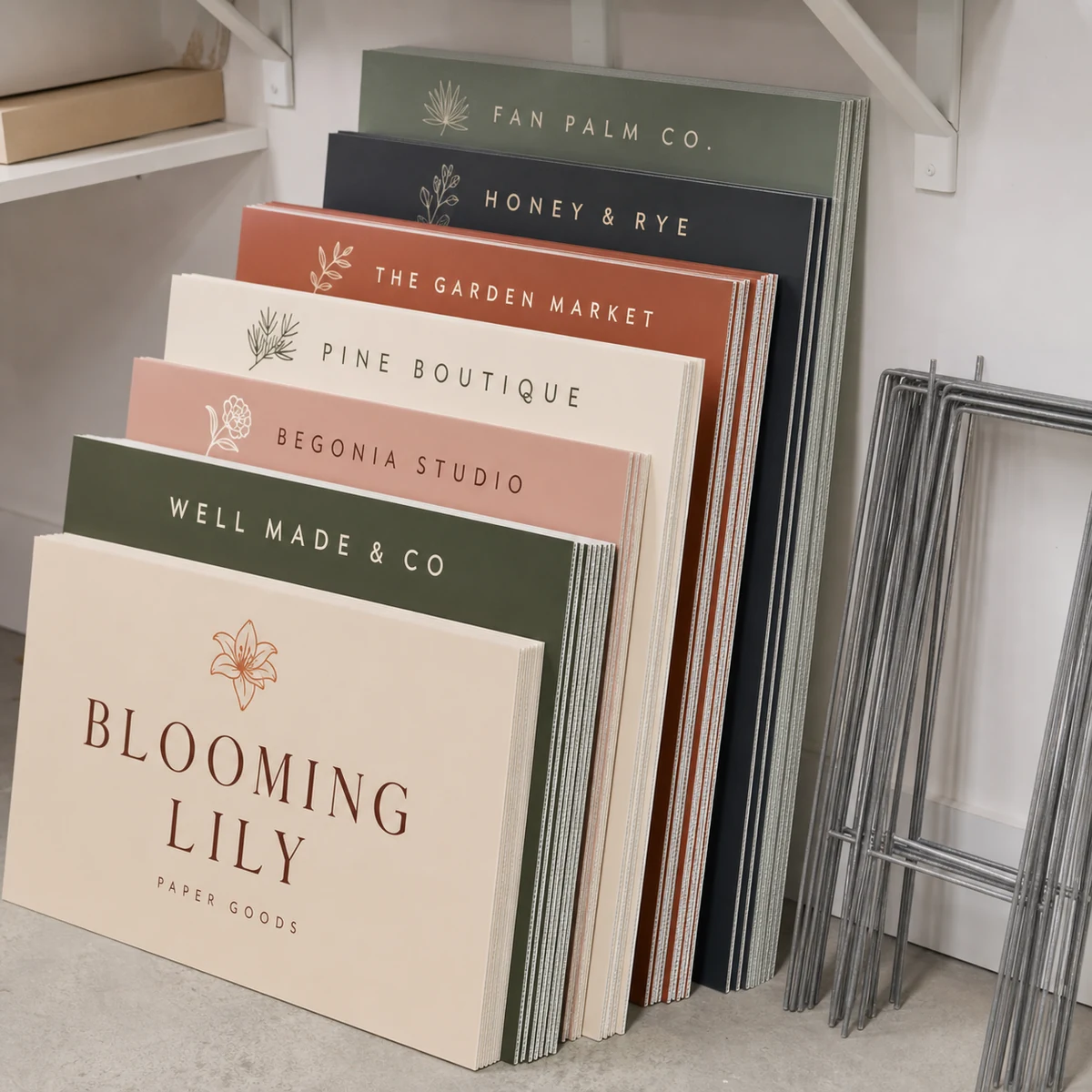
- Stack flat, not on edge. Corflute stored on edge in a bundle can bow under its own weight over weeks.
- Store out of direct sun. Prolonged UV exposure even in storage can yellow white areas of the print.
- Keep away from solvents, oils, or paint fumes; polypropylene absorbs some solvents and becomes brittle.
- For large batches, a flat cardboard slip-sheet between each sign prevents the ink on one sign rubbing onto the face of the next.
When to Reorder vs Reuse
If the sign face is clean and the content is still current, reuse is straightforward. Order new signs when: the printed graphics are faded or chipped, the sign has stress cracks around mounting holes, or the content (price, contact number, event date) has changed. Ordering a fresh print is less expensive than it looks once you factor in the time of manually correcting or stickering over outdated information.
For custom-printed corflute signs in five standard sizes with 3mm and 5mm options, the Paperlust Print Shop offers production in 24 hours on the 600 x 900mm board and 2-3 business days on the other sizes, with flat-rate shipping Australia-wide.
See Also
Related Paperlust Print Shop guides that cover adjacent topics:
– Corflute Sign Sizes: Complete Size Guide for Australia – which size suits your use case and viewing distance
– Corflute Signs: Complete Guide for Outdoor Advertising – material, print options, and buying decisions
– A-Frame Signs Australia – sizing, materials, and frame specifications
– How Long Do Corflute Signs Last? – lifespan by environment and print method
– Maximising Foot Traffic with Outdoor Signs – strategy for driving customers through the door
Frequently Asked Questions
What is the best way to install a corflute sign in grass or soil?
H-stakes are the standard method for soft ground. Slide the two top legs of the H-stake into the flute channels at the top of the sign, then push or mallet the legs at least 150mm into the ground. For large signs (900 x 1200mm) or windy locations, use 5mm corflute rather than 3mm for a tighter channel fit, and drive the stakes at least 200mm deep.
Can I cable-tie a corflute sign to a wire fence?
Yes. Thread UV-resistant cable ties through the flute channels adjacent to the fence wire and loop around the wire. Use at least four ties for a standard 600 x 900mm sign, spaced near the corners. Choose ties at least 4.8mm wide for durability, and check them monthly in outdoor installations as UV exposure can weaken standard nylon ties over time.
Do I need council approval to put an A-frame sign on the footpath?
This depends on your local council. Many Australian councils require a permit or have a footway trading policy that sets dimensions, permitted hours, and minimum pedestrian clearance (commonly 1.5 metres). Some councils allow A-frames without a permit if you meet the by-law requirements. Check your specific local government area’s website or contact your council’s customer service team before placing any sign on public footpath.
How do I stop my corflute sign blowing over in wind?
Several measures help: orient the sign so flutes run vertically (this increases cross-wind rigidity); use 5mm material in exposed locations; for A-frames, add a 5-10 kg sandbag to the base or a water-weight bag hung from the central hinge; for H-stakes, drive legs at least 200mm deep; for large signs in very exposed spots, consider a partial-panel layout or a mesh insert frame to reduce effective wind load.
Can corflute signs be reused?
Yes, clean corflute signs reuse well. Remove them carefully (pull H-stakes straight up, cut cable ties cleanly), wipe the face with a damp cloth and mild detergent, then store flat in a cool, dry place away from direct sun. Avoid stacking on edge, which can cause bowing. Reorder when the print is faded, the panel has stress cracks, or the sign content is outdated.
Does flute direction affect how a corflute sign performs outdoors?
Yes. Corflute is strongest when the flutes run in the same direction as the primary bending stress. With vertical flutes (running top to bottom), the sign resists side-to-side flexing from wind much better than horizontal flutes. Most H-stakes and A-frame channels are designed for vertical-flute orientation. When mounting to a wall or fence, check your flute direction before drilling and rotate the sign if needed to get vertical flutes.