
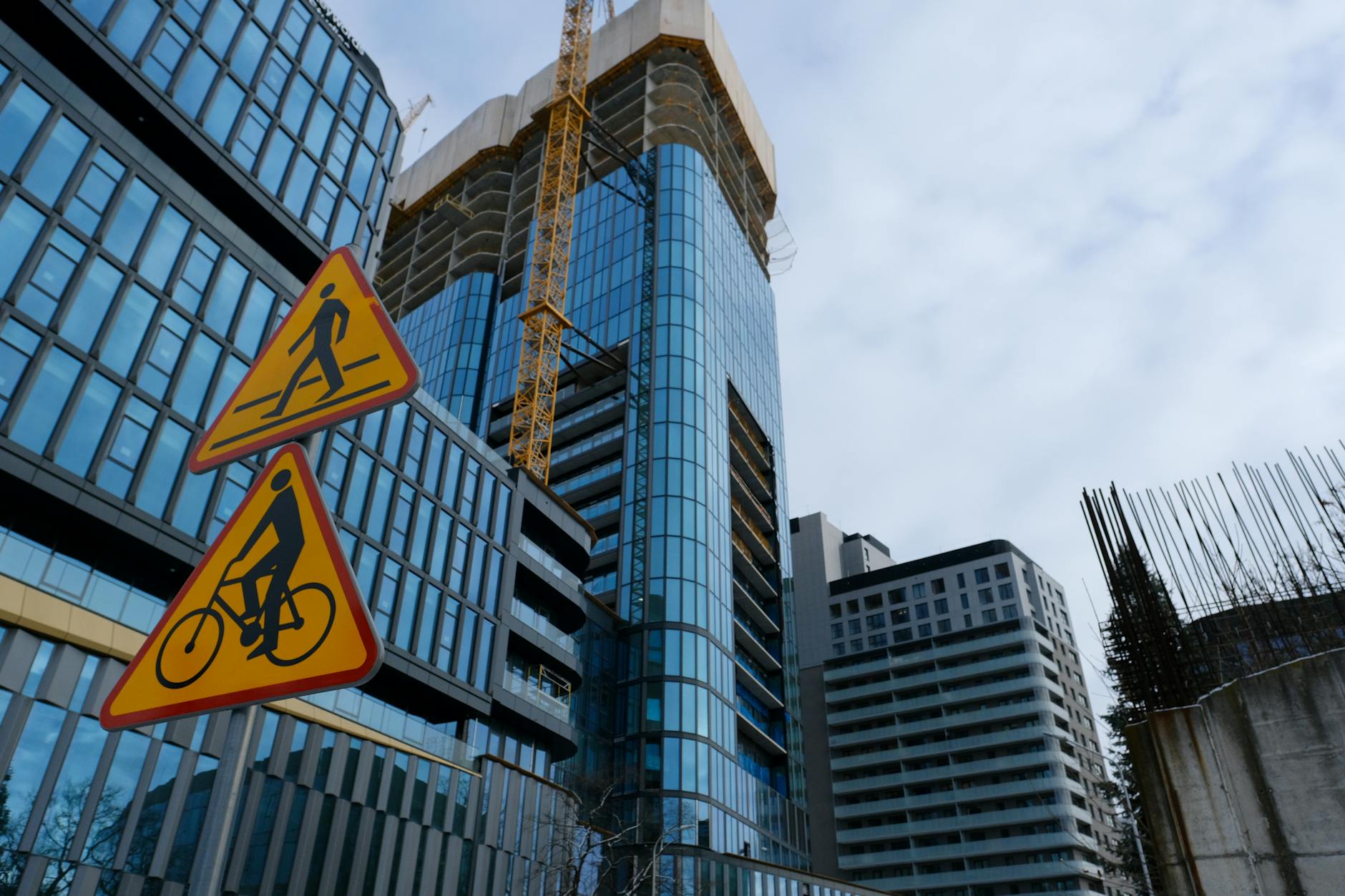
From the project signboard at the site entrance to the PPE mandatory signs bolted to hoarding, construction site signs do two jobs at once: they keep workers and visitors safe, and they put your company’s name in front of every passerby for the life of the project. Getting the right substrate, the right size, and the right sign category for each application saves rework, keeps you on the right side of WHS obligations, and makes your site look professional from day one.
Most Australian construction sites carry five sign categories, but only the principal contractor board has a work health and safety trigger. Regulation 308 of the Work Health and Safety Regulations requires a principal contractor to display its name, after hours telephone contact numbers, and site office location if there is one, clearly visible outside the workplace. The duty applies to construction projects worth $250,000 or more, or $350,000 in Victoria. Western Australia has no principal contractor signage regulation at all. Its site sign obligation comes from building services registration law instead. Below the threshold, general safety signage duties still apply.
- Project or company boards: names the principal contractor and after hours phone contact at the site entrance.
- Mandatory safety signs: sets out required personal protective equipment and actions workers must take.
- Warning and hazard signs: alerts people to risks such as falls, overhead work, and moving plant.
- Prohibition signs: bans unsafe behaviour and entry to restricted or hazardous areas.
- Directional and wayfinding signs: guides people to site facilities, emergency exits, and delivery zones.
- Five sign categories cover most construction sites: project/company boards, mandatory safety, warning/hazard, prohibition, and directional/wayfinding.
- Corflute (3mm or 5mm) is the go-to for temporary safety and PPE signs; ACM and rigid PVC suit longer-term or permanent installations.
- Mesh banners are the standard choice for temporary fence and hoarding wraps, allowing wind to pass through while displaying large-format branding.
- Principal contractors must display a project signboard showing name, contact number, and site office location. Requirements sit under WHS Regulations; check Safe Work Australia and your state/territory regulator for specifics.
- Common sizes: 600x900mm for individual safety signs, 900x1200mm for company/project boards, custom long panels for hoarding runs.
- Order through Paperlust Print Shop construction signs with 48-hour production on most formats.
Building Site Signs and Construction Site Signs: The Same Boards
On Australian job sites the two names are used interchangeably. Building site signs, building site signage and construction site signage all describe the same set of boards: the project signboard at the entrance, the mandatory PPE signs, the warning and hazard panels, the prohibition signs, and the directional boards that move people around the site. There is no regulatory distinction between the terms, and nothing in the Work Health and Safety Regulations or in AS 1319 turns on which one you use. Whichever your crew or your client says, the five categories below are what you are ordering.
The wording does matter on the boards themselves. Signage on building sites is read at a glance by people who are walking, driving or operating plant, so each panel needs one dominant message and nothing competing with it. A board that tries to carry the site rules, the PPE requirements and the delivery instructions at once is read as none of them. Split the message across separate signs and size each one to the distance it has to be read from.
The Five Sign Categories Every Construction Site Needs
Construction site signage is not one-size-fits-all. Different sign types follow different visual conventions, each carrying its own meaning to workers who may encounter them across multiple sites and employers. Understanding the categories makes it easier to brief your printer and ensures your site communicates clearly at a glance.
1. Project and Company Signboards
The project signboard is usually the first thing anyone sees at a construction site. Under WHS Regulations, principal contractors for construction projects are required to display a sign showing the principal contractor’s name and a contact telephone number, including an after-hours number, and the location of the site office if one exists. The sign must be clearly visible from outside the workplace.
Beyond compliance, the project board is prime advertising. Builders and developers typically include the developer’s name and logo, the project name, the architect or builder’s branding, the expected completion date, and sometimes a render of the finished building. For residential builds, the owner-builder’s name and any Principal Certifying Authority details are often required as well, so check your state or territory council requirements as these vary.
Typical substrate choices for project boards are rigid PVC or ACM (aluminium composite material) for durability, or corflute for shorter projects where weather resistance is adequate. Sizes commonly run from 900x1200mm for smaller residential sites up to full-panel custom dimensions for large commercial developments.
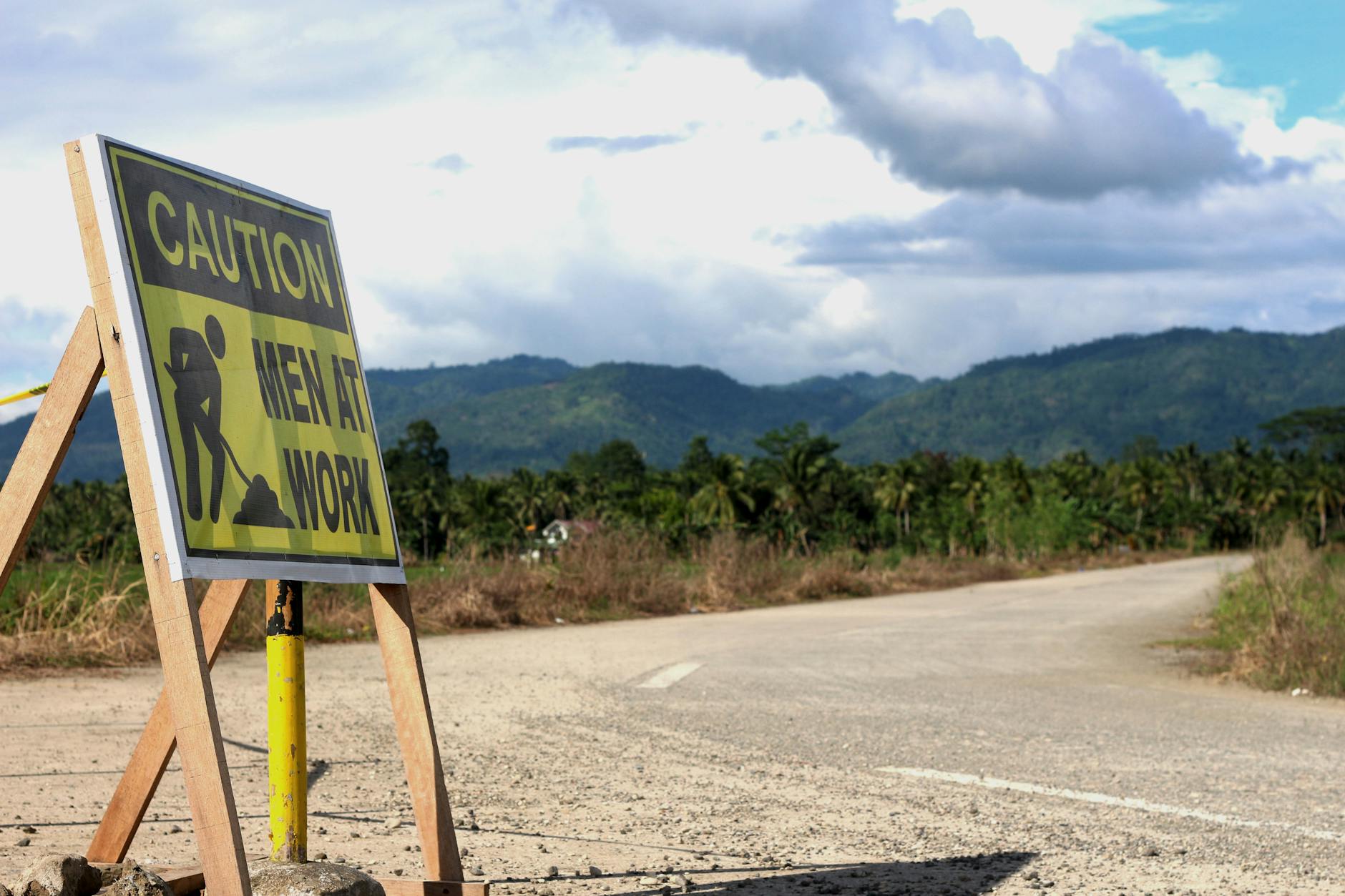
2. Mandatory Signs (PPE and Site Rules)
Mandatory signs use a white pictogram inside a blue circle and communicate instructions that must be followed: hard hats required, high-visibility vests must be worn, safety boots compulsory in this area, and so on. Under AS 1319, the recognised standard for workplace safety signs in Australia, mandatory signs follow a consistent colour code (blue) and symbol format so they are instantly understood across language barriers.
These are the signs most commonly produced on corflute because they need to go up quickly at site access points, near plant and equipment, and at the entrance to high-risk zones. A 3mm corflute A1 or 600x900mm panel is the typical format, cable-tied to chainmesh or mounted to a post with H-frame holders. The same corflute stock is also used for lightweight election signs at polling places and roadside display when campaigns need fast, weather-tolerant signage.
Note: AS 1319 and Safe Work Australia’s Model Code of Practice for Construction Work set out the design conventions and placement requirements for mandatory signs. Specific obligations vary by state and territory, and project type. Always verify current requirements with Safe Work Australia (safework.gov.au) or your state’s WHS regulator, and do not rely solely on your printer for compliance advice.
3. Warning and Hazard Signs
Warning signs use a yellow rectangle with a black triangle pointing upward, enclosing a hazard symbol. They communicate conditions that could cause injury or illness if workers are not aware and cautious. Common examples include: overhead hazard, electrical hazard, chemical storage, vehicle movement zones, and excavation or trench edges.
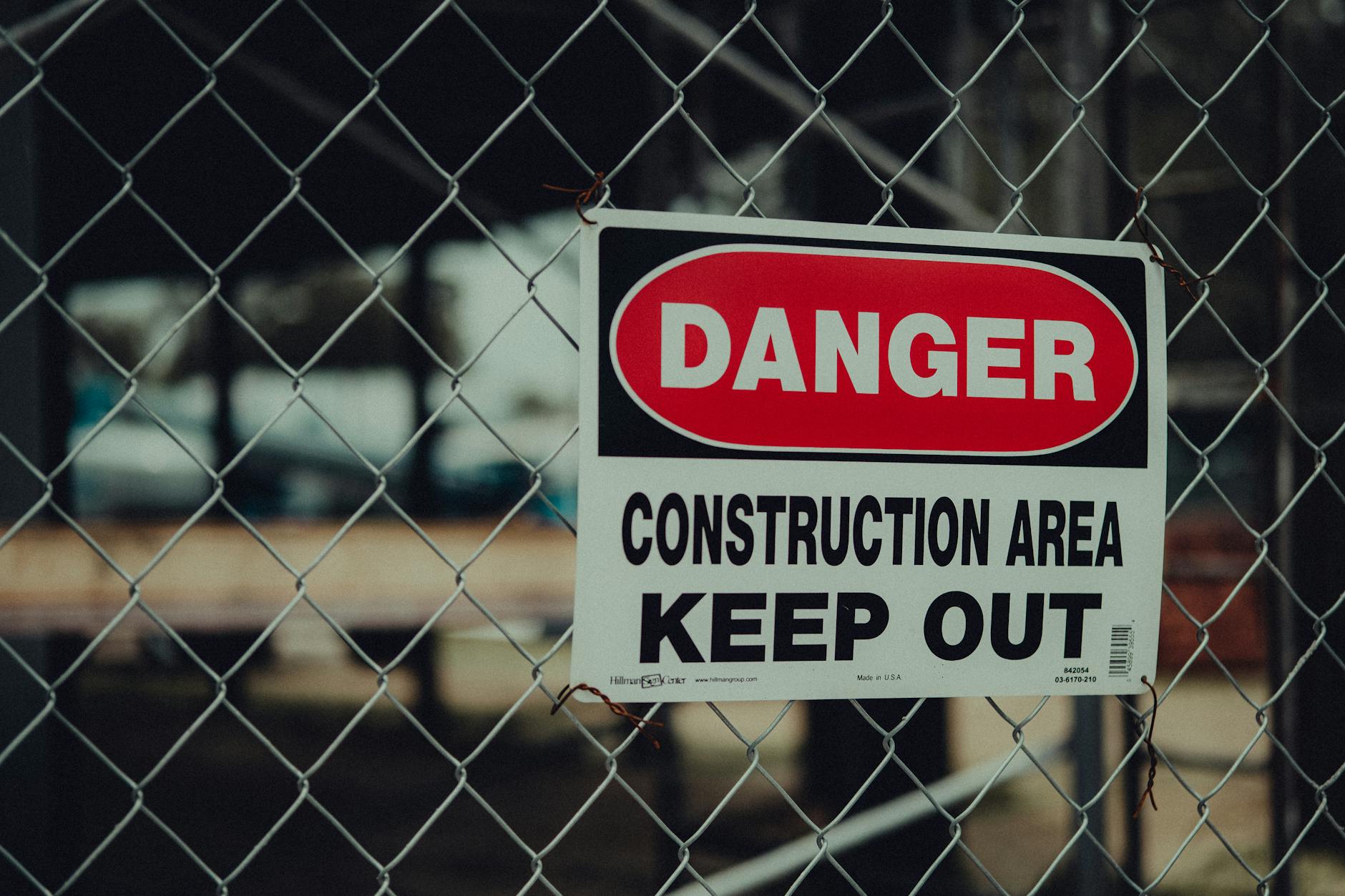
Danger signs use a red oval on a black rectangle background for the most serious, immediately life-threatening hazards, the convention set by AS 1319.
For outdoor construction environments, corflute or rigid PVC are both practical choices for warning and hazard signs. Rigid PVC handles long-term outdoor exposure better for signs that will stay in place throughout a multi-year project.
4. Prohibition Signs
Prohibition signs feature a red circle with a bar across a black symbol, indicating that something is not permitted: no entry without authorisation, no smoking, no mobile phones in designated areas, no pedestrians beyond this point. They are usually placed at site access gates, exclusion zones, and high-risk areas.
5. Directional and Wayfinding Signs
Larger or more complex sites benefit from internal wayfinding: site office this way, first aid station, emergency muster point, deliveries entrance, and parking directions for trades. These can be printed on corflute and fixed to posts or fences, or on lightweight PVC board for indoor and covered areas like fit-out floors in commercial builds. Around site car parks and vehicle gates, bollard signage wraps the same fluted plastic print around existing posts as a 270x1000mm triangular sleeve, keeping directions visible from every approach.
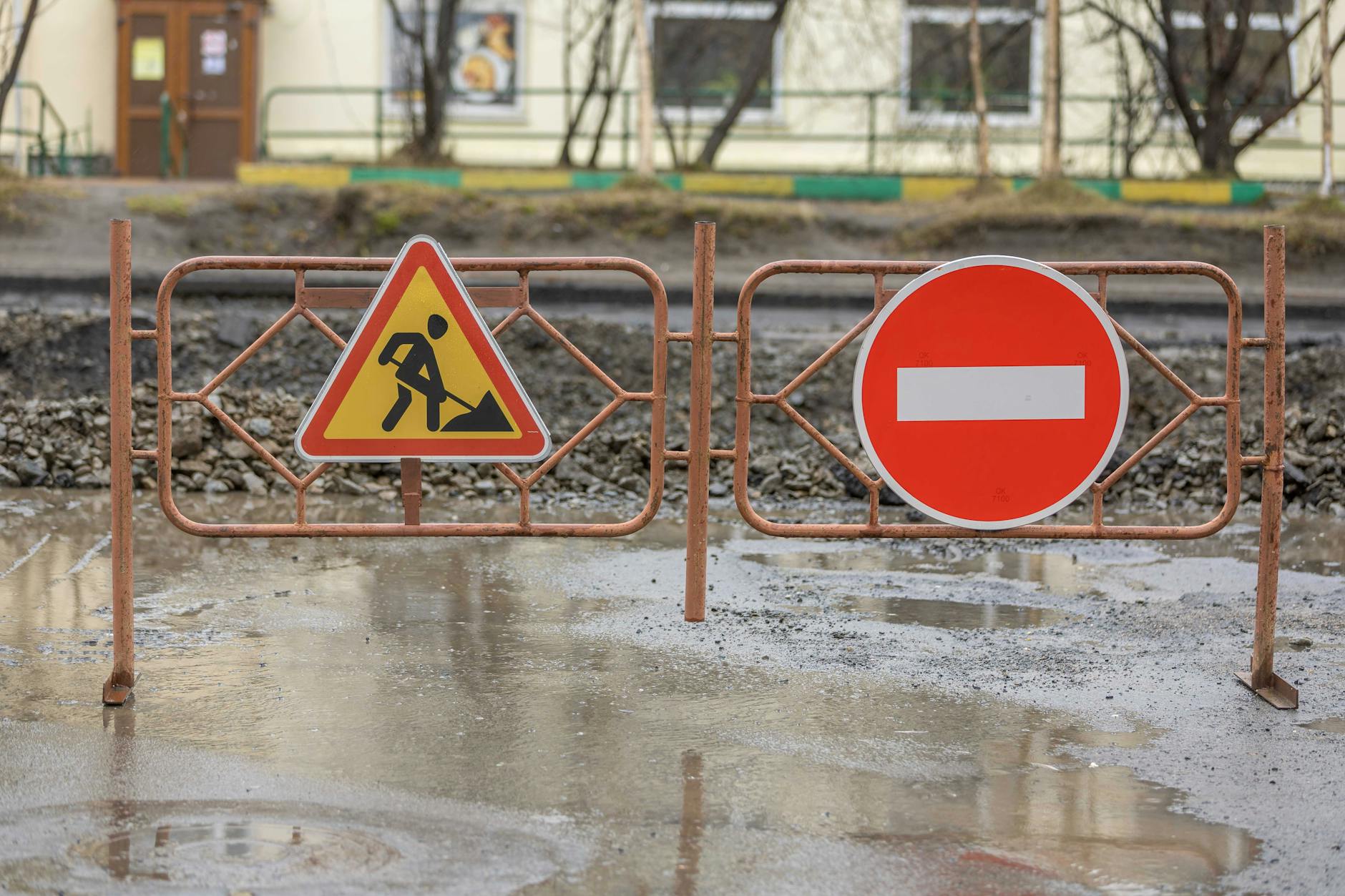
Substrates and Materials: Matching the Sign to the Application
The right material depends on how long the sign will be exposed, what it is mounted to, and how far away it needs to be read. Here is a practical breakdown of the substrates most commonly used on Australian construction sites.
Corflute (Fluted Polypropylene)
Corflute is corrugated plastic board available in 3mm and 5mm thicknesses. It is lightweight, water-resistant, UV-stable for short to medium-term use, and inexpensive enough to replace as conditions change or regulations require updated wording. Corflute is the standard substrate for:
- PPE mandatory signs at site entry points
- Temporary hazard and warning signs around live work zones
- Election-style project identifier signs on residential builds
- Temporary event, access, and directional signs
The 5mm option adds rigidity for larger panels (600x900mm and above) or sites with higher wind exposure. Standard mounting methods are cable ties to chainmesh fencing, H-frame sign holders, or direct drilling to timber and steel posts.
See the full range of sizes at corflute signs by Paperlust Print Shop.
Rigid PVC Board
Extruded rigid PVC board is heavier and more robust than corflute. It is rated for five to seven years of outdoor exposure with UV-resistant inks, making it the better choice for signs that will stay in place for the full life of a longer project, permanent site identification boards, and any sign where a more professional finish is needed. PVC is suited to company branding panels, permanent safety notices on plant rooms and switch rooms, and semi-permanent wayfinding.
View the PVC signs range for dimensions and production options.
ACM (Aluminium Composite Material)
ACM panels are 3mm aluminium composite board with a rigid aluminium face and polyethylene core. They are the premium outdoor option for construction project signboards that need to look polished and last the full duration of a multi-year project. ACM handles extreme weather well, resists warping and delamination, and takes full-colour print with excellent clarity. Common for developer-branded project boards, architect identification panels, and any signage that reflects directly on the professionalism of the builder or developer.
Mesh Banner (for Fence and Hoarding Wraps)
Temporary security fencing and hoarding boards surrounding a construction site present a large-format branding and communication opportunity. Mesh banners are purpose-designed for this application. The woven mesh substrate allows wind to pass through, reducing load on fence posts and hoarding structures that would be compromised by a solid vinyl banner catching the wind like a sail. Order custom mesh banners for site hoarding in standard bay sizes, with eyelets included.
Mesh banners are typically supplied in panels to match the standard bay width of temporary fencing. 1.8m high x 2.4m wide panels are a common format, though custom lengths are available for continuous hoarding runs. Eyelets or hem-and-eyelet finishing every 500mm is standard so panels can be zip-tied or tied securely to fence rails.
Uses for construction site mesh banners include: full-site branding wraps showing the developer or builder’s corporate livery, project renders and marketing imagery for upcoming residential or commercial developments, safety messaging and entrance instructions for the general public, and hoarding art programs required by some councils for long-running inner-city works.
Sizing Guide for Construction Site Signage
Sign sizing at construction sites is driven by reading distance, the surface available, and the nature of the message. AS 1319 provides guidance on letter height relative to viewing distance for safety signs. In general, a sign that needs to be read from further away requires larger text and therefore a larger panel.
| Application | Common Size | Typical Substrate |
|---|---|---|
| Individual PPE/mandatory sign | A1 (594x841mm) or 600x900mm | 3mm or 5mm corflute |
| Hazard / warning sign | A2 (420x594mm) or A1 | 3mm corflute or rigid PVC |
| Residential project signboard | 900x1200mm | 5mm corflute or rigid PVC |
| Commercial project signboard | 1200x2400mm or custom | ACM or rigid PVC |
| Fence mesh banner panel | 1800x2400mm per bay | Printed mesh |
| Directional/wayfinding sign | A2 (420x594mm) | 3mm corflute or PVC |
For signs in areas of low lighting or high visual noise (busy roadsides, multi-lane arterials), consider increasing the panel size by approximately 50 per cent to maintain legibility at the required reading distance.
Mounting Construction Signs to Fences and Hoarding
Getting your signs to stay up on a busy construction site, through weather and ongoing works activity, comes down to matching the mounting method to the substrate and the surface.
Chainmesh and Temporary Security Fencing
Cable ties (zip ties) through the grommets or existing holes in a corflute panel are the simplest approach. For larger panels or windier sites, use ties at every corner and at intermediate points along the top edge so the panel cannot flex or fold. Stainless steel ties or heavy-duty UV-resistant plastic ties will outlast standard nylon ties in outdoor conditions.
Mesh banners designed for fencing have eyelets sewn or punched at regular intervals (typically every 500mm along all edges) and are intended to be tied directly to fence rails top and bottom. The mesh construction means wind load is distributed rather than concentrated, reducing the risk of the fence being pushed over.
Hoarding Boards and Solid Barriers
Solid hoarding (plywood or proprietary hoarding systems) allows for direct fixing with screws or bolts through the panel face. ACM panels are typically framed or riveted for hoarding applications. Rigid PVC can be screwed directly with countersunk fixings. Where hoarding is temporary and the surface needs to remain unmarked, banner-to-frame clamping systems or tension-frame systems are available from sign suppliers.
Posts and H-Frames
Corflute signs are routinely used in plastic or wire H-frame holders that grip the bottom edge of the fluted board, allowing the sign to stand free or be pushed into soft ground. This is the fastest way to deploy and redeploy safety signs as work zones change. For permanent post mounting, pre-drill the corflute or PVC panel and use coach bolts with large washers to distribute load and prevent the fixing pulling through the material.
When Do You Need a Project Signboard?
Under the Work Health and Safety Regulations (Commonwealth and most state/territory equivalents), a principal contractor on a construction project is required to erect a sign at the workplace before construction work begins. The sign must be prominently displayed at the entrance, readable from outside the site boundary, and must remain in place for the duration of the project.
What must appear on the board varies between states and territories and by project type, but commonly includes:
- The principal contractor’s business name
- A business telephone number (and after-hours contact)
- The address of the site office (if there is one on site)
Owner-builders typically also need to display their owner-builder permit number, and council development approvals often require the DA number and certifier’s details to be shown. Some local councils, particularly in inner-city areas, specify minimum sign dimensions and additional content such as a project render, architect’s name, or public interest information about the development.
The safest approach is to check the requirements with your state or territory WHS regulator, Safe Work Australia’s guidance at safework.gov.au, and your local council planning requirements before ordering. Requirements do change, and a printer cannot give you compliance advice. That is a matter for your WHS advisor or legal counsel.
Construction Site Sign Requirements by State and Territory
Two separate layers of law can put a sign on an Australian building site, and they are routinely confused. The first is work health and safety law, which is where the principal contractor’s board comes from. The second is builder licensing and registration law, which is where the licence number on that board comes from. A single site can be caught by both.
The work health and safety layer. Every jurisdiction except Victoria applies the model Work Health and Safety Regulations; Western Australia has a modified version. Model regulation 292 sets the construction project threshold at $250,000 or more. Model regulation 308, “Specific control measure, signage identifying principal contractor”, requires principal contractor signs that show the principal contractor’s name and telephone contact numbers, including an after hours telephone number, site office location if any, and are clearly visible outside the workplace or work area. Regulation 308 carries the same number and near identical wording in New South Wales, Queensland, South Australia, Tasmania, the Australian Capital Territory, the Northern Territory and the Commonwealth. Western Australia is the exception: its Work Health and Safety (General) Regulations 2022 mark regulation 308 as “Not used”, with no principal contractor signage regulation. Regulation 292 uses a headcount test of five or more people working at once on site, with no dollar value. Site sign duties there come from building services registration law, not work health and safety law.
Victoria runs its own scheme. It has not adopted the model Work Health and Safety Regulations. Construction sits under the Occupational Health and Safety Regulations 2017 (Victoria). Regulation 334, Signage of principal contractor, requires a principal contractor to place signs clearly visible from outside the workplace where construction work is performed, showing the principal contractor’s name and contact telephone numbers. The threshold is $350,000, not $250,000. Regulation 334 does not apply if the same details are already displayed under regulation 317 of the Building Regulations 2006. The maximum penalty is 100 penalty units for a natural person and 500 penalty units for a body corporate. Victoria’s regulation 334 does not require the site office location, unlike model regulation 308.
What changed in New South Wales in 2025. New South Wales replaced the Work Health and Safety Regulation 2017 with the Work Health and Safety Regulation 2025, which commenced on 22 August 2025. The signage duty itself did not change in substance. Regulation 308 still requires the principal contractor to install signs that show the name and telephone contact numbers, including an after hours number, and the location of any site office, clearly visible from outside the workplace. The maximum court penalty under regulation 308 is 43 penalty units for an individual and 217 penalty units for a body corporate. With a New South Wales penalty unit set at $110, that is a maximum of $4,730 for an individual and $23,870 for a body corporate.
The table that follows lists each jurisdiction’s regime, project threshold, maximum penalty and regulator, and the penalty column shows the maximum a court can impose on conviction, not an on the spot fine.
| Jurisdiction | Regime | Project trigger | Maximum penalty, body corporate | Regulator to check |
|---|---|---|---|---|
| New South Wales (NSW) | WHS Regulation 2025 (NSW), reg 308 | $250,000 | $23,870 (217 penalty units) | SafeWork NSW |
| Victoria (VIC) | OHS Regulations 2017 (Vic), reg 334 | $350,000 | $104,550 (500 penalty units) | WorkSafe Victoria |
| Queensland (QLD) | WHS Regulation 2011 (Qld), reg 308 | $250,000 | $31,086 (36 penalty units x 5) | Workplace Health and Safety Queensland |
| Western Australia (WA) | WHS (General) Regulations 2022 (WA), reg 308 not used | 5 or more workers on site at once | No WHS signage penalty; duty sits under building services registration law | WorkSafe WA and Building and Energy |
| South Australia (SA) | WHS Regulations 2012 (SA), reg 308 | $250,000 | $18,000 | SafeWork SA |
| Tasmania (TAS) | WHS Regulations 2022 (Tas), reg 308 | $250,000 | $18,000 | WorkSafe Tasmania |
| Australian Capital Territory (ACT) | WHS Regulation 2011 (ACT), reg 308 | $250,000 | $25,000 (tier G, indexed) | WorkSafe ACT |
| Northern Territory (NT) | WHS (National Uniform Legislation) Regulations 2011 (NT), reg 308 | $250,000 | $18,000 | NT WorkSafe |
Penalty unit values used above: New South Wales $110, Victoria $209.10 for 2026-27, Queensland $172.70 from 1 July 2026. South Australia, Tasmania and the Northern Territory set the figure in dollars in the regulation itself. The Australian Capital Territory figure is the tier G amount in schedule 4 of the Work Health and Safety Act 2011 (ACT) and is indexed. Queensland states one maximum of 36 penalty units; under section 181B of the Penalties and Sentences Act 1992 a court may impose up to five times that on a corporation. Checked 1 September 2026.
The licensing layer. Builder licensing and registration rules sit with a different regulator again, and several states put an identifier on the site board. In New South Wales, residential building work that requires development consent must carry a sign identifying the licensed contractor and showing the contractor licence number. In Western Australia, a registered building contractor must show the builder’s name and registration number on signage for work covered by a building permit. In Queensland, QBCC licensees are required to display their licence number on site signage. None of these sit under the WHS regulator, so meeting one layer does not discharge the other.
On top of both, development consent conditions frequently specify their own board: a minimum size, the development application number, the certifier’s details, and sometimes a project render or public information panel. Owner-builders are usually required to display the owner-builder permit number as well. These conditions come from your local council, they vary between councils in the same state, and they are the most common reason a board has to be reprinted.
Requirements do change, and a printer cannot give you compliance advice. Confirm the current position with your state or territory WHS regulator, your building services or licensing regulator, Safe Work Australia’s guidance at safework.gov.au, and the conditions attached to your development consent before you send artwork to print.
Company Branding on Construction Signs
Beyond the mandatory minimum, construction site signage is one of the most cost-effective brand awareness channels available to builders and developers. A well-produced project board and branded hoarding wrap puts your business name in front of thousands of commuters, pedestrians, and potential clients every day for the duration of a project.
Builders who invest in consistent, high-quality signage across their sites signal quality and professionalism before a potential client ever calls. Consider including:
- Your logo in full colour at the top of the project board
- A project render or visualisation where space allows
- Your website URL and a QR code linking to the project or enquiry page
- Social proof such as awards, licences, or years in business
- Contact details in large, readable type
For tradies and subcontractors on residential sites, even a simple A2 or A1 corflute panel with your business name, trade licence number, logo, and phone number serves as a professional site identifier, and a low-cost advertising sign for the duration of the job.
A pre-start signage checklist for site supervisors
Run this pre-start signage checklist before work begins, as the site supervisor or leading hand walks the boundary and entry points. It covers signs only, not the wider work health and safety plan. The principal contractor board is the only listed item with a specific regulation in most Australian jurisdictions. Western Australia covers that duty through building services registration law instead.
- Principal contractor board: Confirm it is visible from outside and shows name, phone contacts including after hours, and site office location if present.
- Site entry signs: Check the entrance carries site induction required, report to site office, and authorised persons only.
- Mandatory PPE signs: Walk each entry point and confirm mandatory PPE signs use the blue circle format under AS 1319-1994.
- Traffic and pedestrian signs: Where the site meets a footpath or road, check traffic and pedestrian management signs are in place and visible.
- Temporary fencing signs: Judge whether 3mm or 5mm corflute or a mesh banner suits the fence and hoarding wrap in wind.
- Warning and hazard signs: Confirm yellow triangle signs sit at the actual hazard, not at the gate, and comply with AS 1319-1994.
- Prohibition signs: Confirm each prohibition sign uses the red circle with diagonal bar under AS 1319-1994.
- Sign legibility and attachment: Confirm every safety sign is legible and secure, with no fading, loose cable ties, or fence-facing turns.
- Emergency information signs: Confirm first aid, assembly point, and emergency exit signs are green under AS 1319-1994.
- Fire equipment signage: Check all fire equipment signs are red under AS 1319-1994.
- Council development site sign requirements: Compare council-imposed development site sign dimensions and any additional content against the current approval.
- Jurisdiction check: Identify which instrument applies in this state, regulation 308 in New South Wales, Queensland, South Australia, Tasmania, the Australian Capital Territory and the Northern Territory, regulation 334 of the Occupational Health and Safety Regulations 2017 in Victoria, or building services registration law in Western Australia, then confirm the board meets it.
For any failed line, stop pre-start and reattach, replace or reorder the sign before crews start. Direct compliance questions to the regulator or the site’s work health and safety adviser, not Paperlust.
Ordering Construction Signs: What to Prepare
A clean print-ready file produces the best result and the fastest turnaround. For construction signage, prepare your artwork at the actual print size (no upscaling), with bleed of at least 3mm on all edges, and save as PDF with embedded fonts and images. For safety signs, ensure any mandatory pictograms and colour coding meet AS 1319 conventions. Your WHS consultant or safety sign supplier can advise on compliant templates.
If you are ordering a batch of safety signs for a new site, plan for:
- Site entry mandatory signs (PPE requirements)
- Exclusion zone and no-entry markers
- Hazard signs for any known site-specific risks
- Emergency information (first aid, muster point)
- Project identification board
- Directional signs for deliveries and visitor access
Order a handful of spares for mandatory safety signs. They are exposed to traffic, weather, and the general wear of an active site, and having a replacement on hand saves the delay of a reorder when a sign is damaged or goes missing.
Browse the full range at Paperlust Print Shop construction signs, with 48-hour production available on standard corflute formats. If the project needs more than site boards, the full sign board printing range covers corflute, PVC, acrylic, and screenboard in one place.
Construction Signage in Melbourne, Sydney, Brisbane and Beyond
Construction signage is a national order placed against a local deadline, and the two things that decide whether it lands are production time and transit time. Paperlust Print Shop prints construction signs at its Melbourne production floor at 23 Manton Road, Oakleigh South, Victoria, and ships Australia-wide with tracking. Artwork, proofing and approval all happen by email, so construction signage for a site in Sydney, Brisbane, Perth, Adelaide, Canberra, Hobart, Darwin or regional Australia runs on exactly the same process as construction signage in Melbourne.
Production is 1-2 working days after your design proof is approved, and delivery sits on top of that. Once dispatched, metro Melbourne, Sydney, Brisbane and Adelaide typically take 1-2 business days. Perth and regional areas take 2-4 business days. If you are working backwards from a site start date, a council inspection or a handover, count both legs: a Perth site ordering construction signs on a Monday should plan for the end of that week rather than the middle of it.
Builders running work across several construction sites at once can order the whole rollout as a single job. The usual pattern is one artwork with only the site address or contact panel changing between boards, printed together and shipped to each site address. Send the list of sites and their delivery addresses with your enquiry so the team can quote it in one pass rather than as separate orders, and order a small overrun of the mandatory safety signs while the job is on press. A replacement board sourced later costs more in delay than it does in printing.
Builders Signage: Sign Boards, Licence Details and Multi-Site Rollouts
Builders signage is the board that carries the builder’s own identity rather than a safety message: company name, licence or registration number, contact phone, and often the project name and expected completion date. A builders sign board does two jobs at once. It satisfies the identification requirement that the WHS regulations and your licensing regulator place on the principal contractor, and it advertises the business to everyone who passes the site for the length of the job. Because it is doing both, it is the one board on site worth spending design time on.
What a builders sign board should carry:
- Registered business name exactly as it appears on the licence, not a shortened trading name.
- Builder licence or registration number in the format your state regulator uses, since several states require it on site signage.
- Contact telephone number, including the after-hours number where the WHS regulations call for one.
- Site office location if there is a site office.
- Logo and branding sized to be read from the footpath rather than from arm’s length.
Contractors running several jobs at once should treat construction sites signage as one order rather than as a run of separate ones. The artwork is identical across sites apart from the address or contact panel, so signage for construction sites in different suburbs can be printed together, boxed per site and sent to each delivery address. That keeps branding consistent across the whole rollout, puts every board on the same production run of 1-2 working days after proof approval, and avoids the per-job setup that comes with ordering boards one site at a time.
Specify builders signage the same way as the rest of the site: 3mm or 5mm corflute for boards that come down at handover, rigid PVC or ACM where the board has to survive a multi-year build. There is no minimum order, so a single replacement builders sign board is as orderable as a full set.
Frequently Asked Questions
What signs are legally required on a construction site in Australia?
Under WHS Regulations applying in most states and territories, principal contractors must erect a sign at the site entrance before works begin, showing the contractor’s name, contact telephone number, and site office location (if applicable). Additional requirements may apply depending on state, territory, council, and project type. Check safework.gov.au and your state WHS regulator for current obligations. These rules do change.
What are the requirements for a construction site notice board?
A construction site notice board is the same thing the WHS Regulations describe as the principal contractor’s sign, and what most builders call the project signboard. In most states and territories the notice board has to go up at the site entrance before work starts, be readable from outside the site boundary, and stay in place for the duration of the project. It normally carries the principal contractor’s business name, a business telephone number with an after-hours contact, and the address of the site office where one exists. Owner-builders usually add their permit number, and councils frequently require the DA number and certifier’s details as a condition of approval. Because notice board requirements vary by state, council and project type, confirm yours with your WHS regulator and your local council before you print.
What does AS 1319 cover?
AS 1319-1994 (Safety Signs for the Occupational Environment) is the Australian Standard that sets out the design conventions for workplace safety signs: the colour coding, symbol shapes, and text requirements for mandatory, warning, prohibition, danger, emergency, and fire signs. While it is not always prescribed as a mandatory compliance instrument in every piece of legislation, it is the recognised industry convention and following it helps ensure your signs are immediately understood by workers across different employers and sites. Check your applicable WHS regulations and Safe Work Australia guidance for whether AS 1319 applies to your specific context.
What material is best for outdoor construction site signs?
For temporary and short-term signs (up to 12-18 months), 3mm or 5mm corflute is the standard choice. It is lightweight, weatherproof, inexpensive to replace, and easy to fix to chainmesh fencing or H-frame holders. For project signboards or company identification boards that need to last the full life of a longer project, rigid PVC (rated to five-plus years outdoor) or ACM (aluminium composite) is more appropriate. Mesh banners are the correct choice for wrapping temporary security fencing and hoarding, as the mesh construction allows wind to pass through and reduces load on the fence structure.
What size should a construction project signboard be?
Regulations specify that project signboards must be clearly visible from outside the site, but rarely prescribe a minimum size in the WHS rules themselves. Common practice for residential builds is 900x1200mm. Commercial and multi-storey projects typically use 1200x2400mm or larger custom formats. Your local council may specify minimum dimensions as part of your development approval conditions. Check before ordering.
Can I get a custom project signboard with a project render printed on it?
Yes. Full-colour digital printing means you can include architectural renders, logos, photography, and any other artwork at print quality. Supply your artwork as a print-ready PDF at the final size with 3mm bleed. If you need a design built from scratch, a print shop or graphic designer can create a project board layout from your logo, render file, and contact details.
Do mesh banners need eyelets?
Yes. Mesh banners for construction fencing should have eyelets hemmed or punched at regular intervals along all edges, 500mm spacing is the standard, so they can be secured to fence rails with cable ties. Without eyelets, the banner has no reliable fixing point and will work loose in wind. Specify eyelet placement when ordering, and ask for stainless steel or heavy-duty UV-stable eyelets for outdoor longevity.