
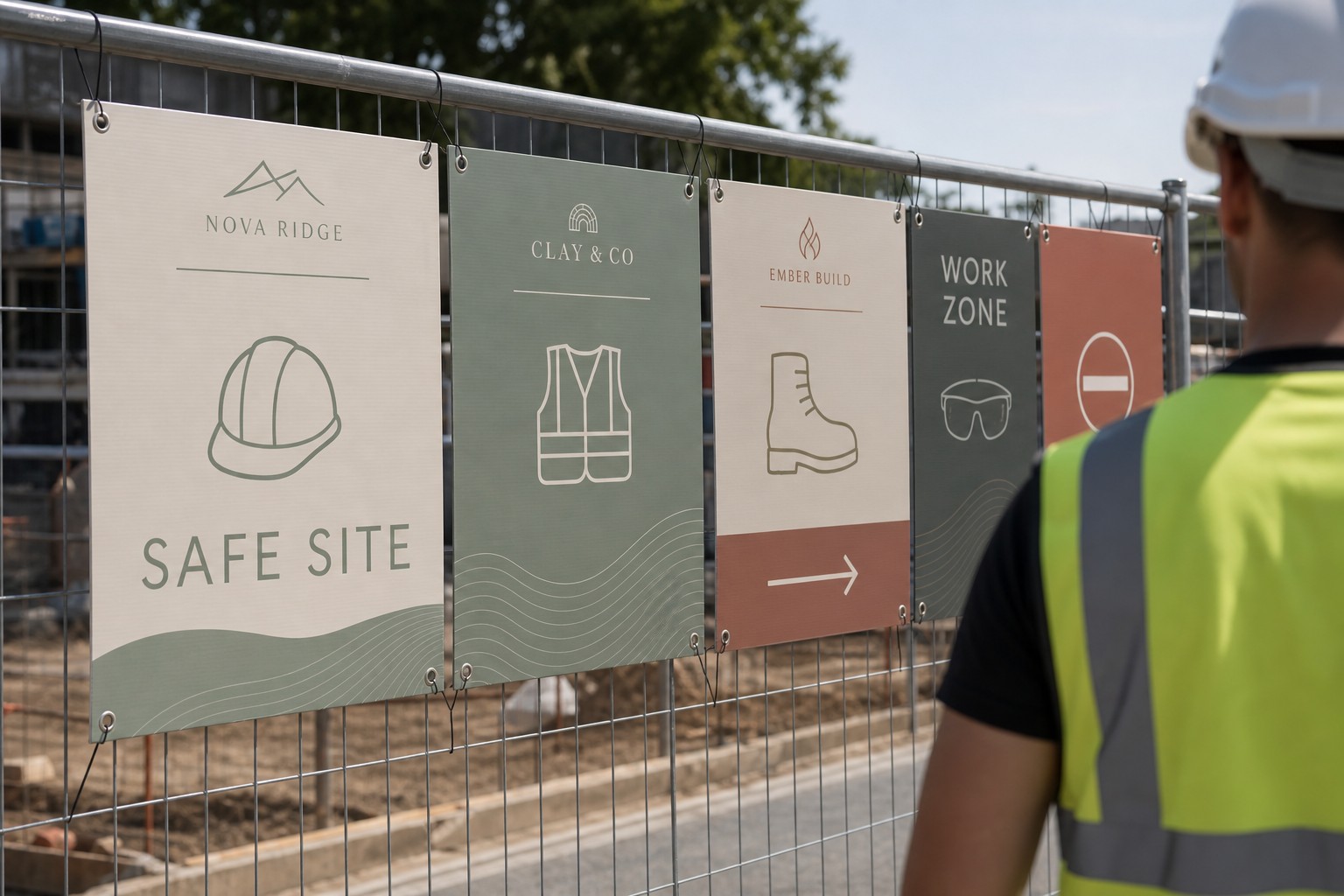
Every person who steps onto a construction site in Australia has a legal right to know the hazards present and the controls in place. That obligation falls on the PCBU under the Work Health and Safety Act, and correctly displayed construction signs are one of the most visible ways to meet it. Faded or categorically incorrect signs are a breach of WHS duties and a direct point of exposure during any site audit.
This guide covers the AS 1319 sign categories required on Australian construction sites, how to choose materials for outdoor durability, and the mounting methods that keep signs readable. Practical enough to hand directly to your site manager before the next audit.
Cheat sheet
- The standard to know: AS 1319-1994 (Safety Signs for the Occupational Environment) sets the colour coding, pictogram conventions, and wording rules for workplace safety signage across Australia.
- Five core categories: Prohibition (red/white), Mandatory (blue/white), Warning (yellow/black triangle), Danger (red/black/white), Emergency information (green/white). Fire safety (red) is a sixth.
- Site entry boards: A large-format board at the site entrance listing required PPE, emergency contacts, and principal contractor details is a separate compliance requirement, not covered by AS 1319 alone.
- Recommended material for most sites: 3 mm or 5 mm TEKflute fluted polypropylene. Durable, UV-resistant, lightweight, and drillable. ACM for semi-permanent installations.
- Turnaround: 24-48 hours production after artwork approval; Australian express delivery available.
- Who needs this: Principal contractors, site managers, WHS officers, and project administrators across commercial, civil, and residential construction.
- Minimum order: Single units accepted.
Understanding AS 1319: Australia’s Safety Sign Standard
AS 1319-1994 is the Australian Standard governing the design, use, and placement of safety signs in workplaces, including construction sites. Published by Standards Australia, it is referenced across Safe Work Australia guidance material and incorporated into state and territory WHS regulatory frameworks.
The standard does not dictate exactly which signs your site needs. That determination comes from your site-specific hazard assessment. What AS 1319 defines is the visual language: the colours, shapes, symbols, and lettering conventions that give each sign category its meaning at a glance. When a worker sees a blue circle, they register a mandatory instruction before reading a word. A yellow triangle signals a warning. That immediacy is the entire point of the standardised system.
PCBUs have a duty under the WHS Act to ensure hazards are communicated clearly. Safety signs are a recognised control measure for that duty. Faded, damaged, or incorrectly categorised signs do not satisfy it. They need to be legible, correctly positioned, and replaced when worn.
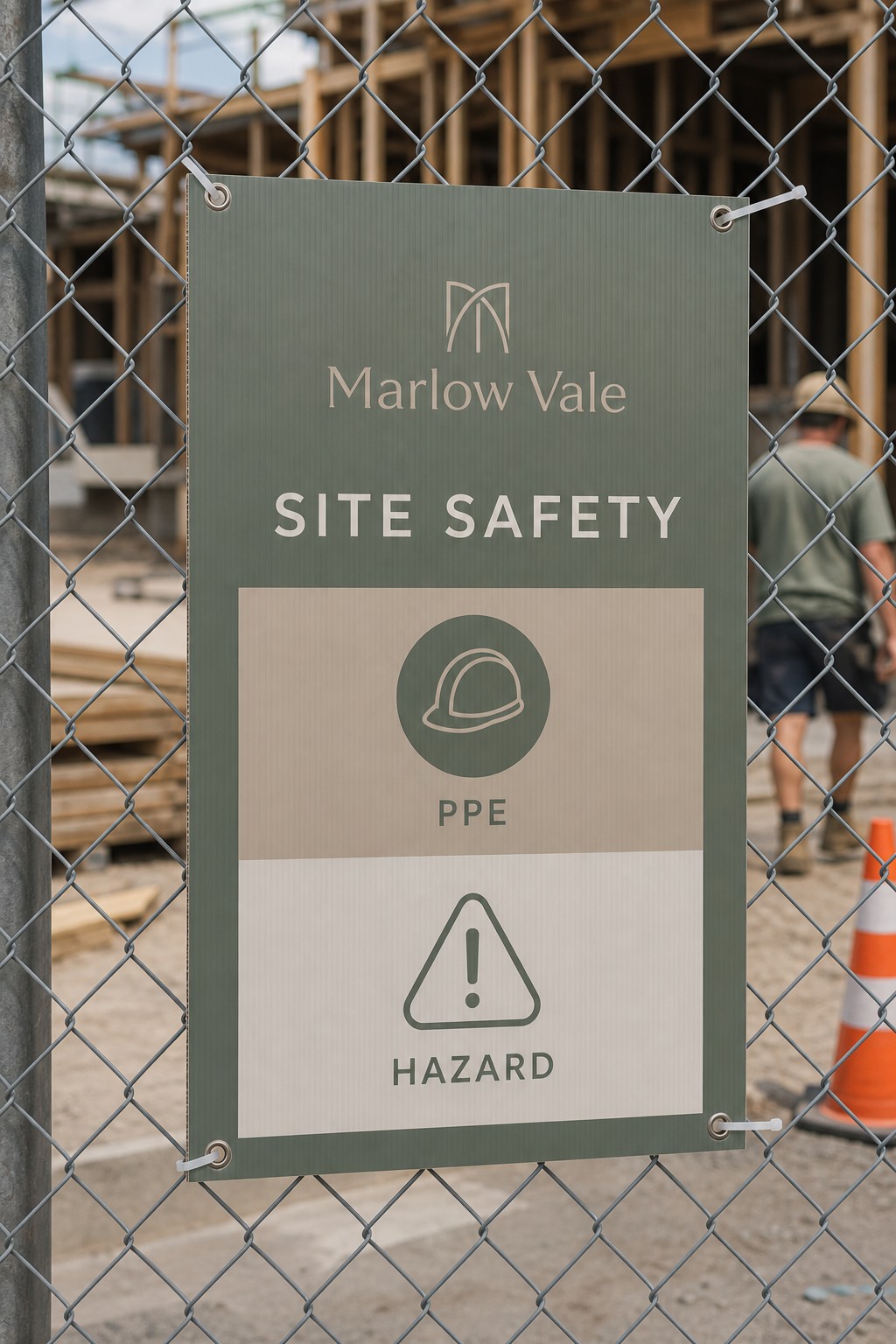
The Five Core AS 1319 Sign Categories
AS 1319 defines five principal sign categories, each with a specific colour scheme and shape that communicates its function before a worker reads a single word.
Prohibition signs (red and white)
Prohibition signs indicate what must not be done. A red circle with a diagonal slash sits on a white background, with the prohibited action shown as a pictogram inside the circle. Common examples on construction sites: No Smoking, No Unauthorised Entry, No Pedestrians, No Mobile Phones in Operating Plant Areas. These signs are typically required at site entry points, near hazardous equipment, and wherever a specific action creates serious risk.
Mandatory signs (blue and white)
Mandatory signs specify an action that must be carried out. A white pictogram appears on a solid blue circle. On construction sites, mandatory signs almost always relate to personal protective equipment: Hard Hat Must Be Worn, High Visibility Vest Required, Safety Footwear Must Be Worn, Eye Protection Required, Hearing Protection Required in Noisy Work Zones. These signs are required at site entries and repeated near each work area where the relevant PPE applies.
Warning signs (yellow and black)
Warning signs draw attention to a hazard that may cause injury or illness if no action is taken. A black symbol sits inside a yellow equilateral triangle. Common site examples: Forklift Operating, Slippery Surface, Overhead Hazard, Plant and Equipment in Use. Used wherever a caution is warranted but a prohibition or mandatory instruction is not the right response.
Danger signs (red, black, and white)
Danger signs communicate an immediate and serious risk. They are the highest-severity warning category under AS 1319. The word “DANGER” appears in white text set in a red oval against a black header bar, above a white panel describing the specific hazard. Common examples: Danger Confined Space, Danger Electrical Hazard, Danger Do Not Operate. These signs are placed at access points to high-risk zones and on or near specific equipment.
Emergency information signs (green and white)
Emergency information signs indicate the location of safety facilities and emergency equipment. White pictograms appear on a green background. Required signs include First Aid, Emergency Assembly Point, Eye Wash Station (where relevant), and fire equipment locations. These are not discretionary. An injured worker or emergency responder needs to locate these facilities immediately under stress.
Fire safety signs
A sixth category uses red backgrounds with white symbols to mark fire equipment locations: Fire Hose Reel, Fire Extinguisher Type, Fire Blanket. These are standard on sites with combustible materials or hot works.
Site Entry Boards and Safety Boards
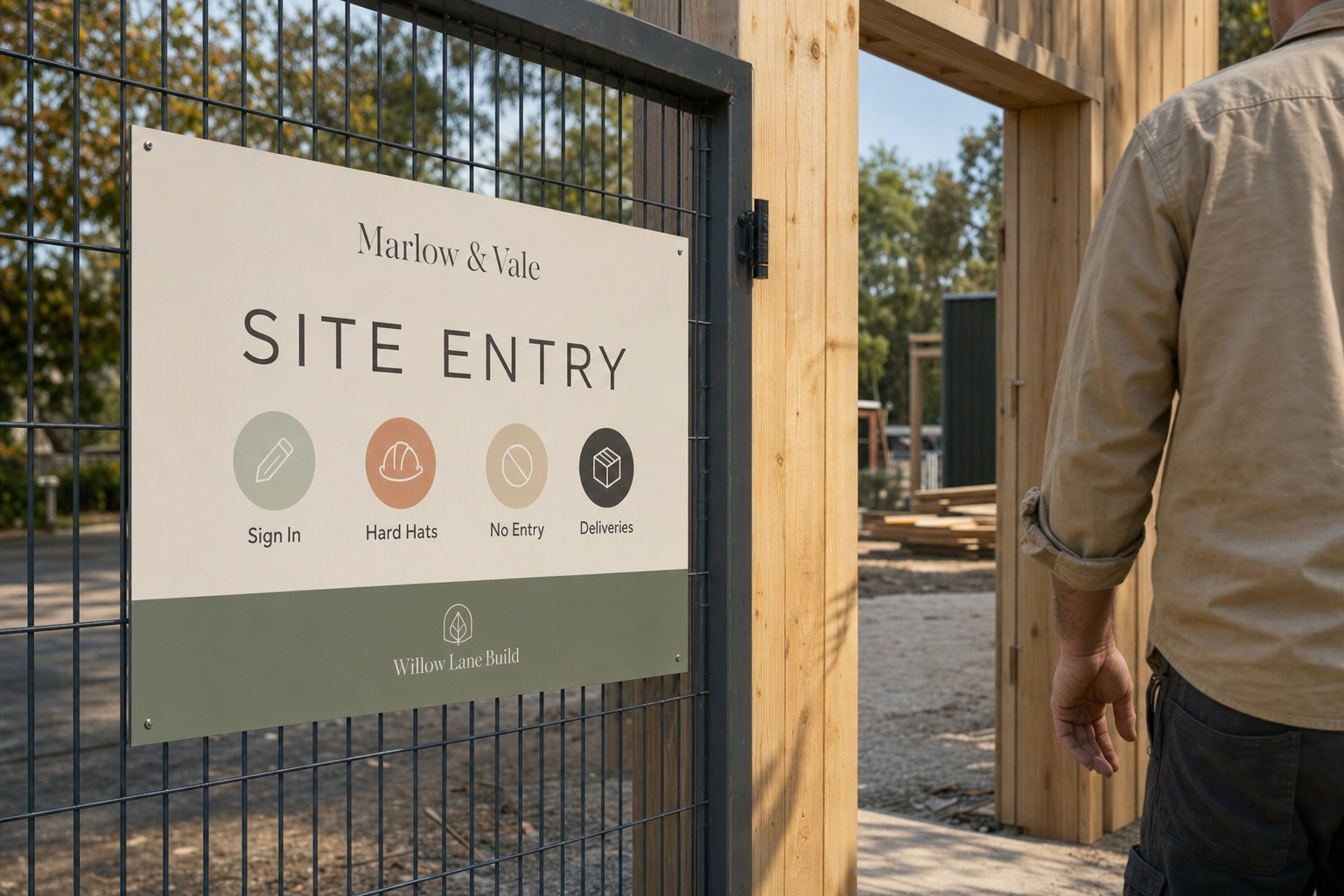
Beyond the AS 1319 sign categories, Australian construction sites are typically required to display a site entry board, also called a principal contractor board or site safety board. This is a large-format sign installed at the main site entrance. It identifies the project, communicates mandatory site requirements, and provides critical contact information at the exact point where workers and visitors enter.
A well-designed site entry board typically includes:
- Principal contractor name, logo, and contact number
- Project name and site address
- All mandatory PPE requirements as AS 1319 pictograms and plain text
- Emergency services number (000) and site emergency contact
- Site manager name and direct mobile number
- Induction requirements notice
In some states and under certain contract structures, the minimum contents and minimum size of the site entry board are prescribed in contract documents or principal contractor safety plans. Check those requirements alongside your state WHS regulator guidance before finalising the design.
Choosing the Right Material for Site Conditions
Corflute (TEKflute fluted polypropylene)
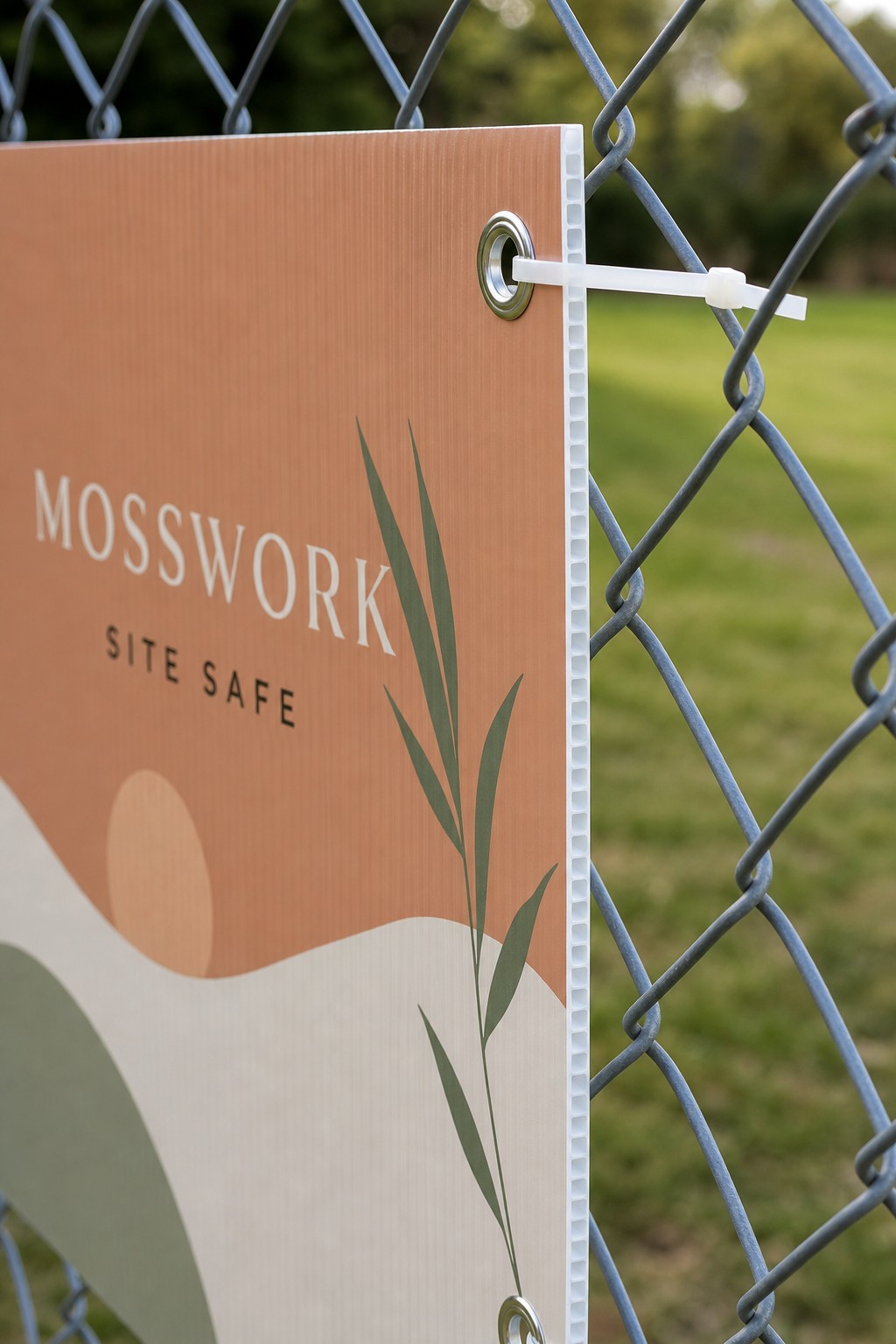
Corflute is the most widely used material for construction site signage in Australia. It is lightweight enough for one person to carry and reposition but durable enough to handle UV exposure, rain, and wind without delaminating or warping. The 3 mm option is the industry standard for site signs up to A1 (594x841mm). The 5 mm board suits larger formats (900x1200mm) and high-wind exposed locations where extra rigidity reduces flex and movement.
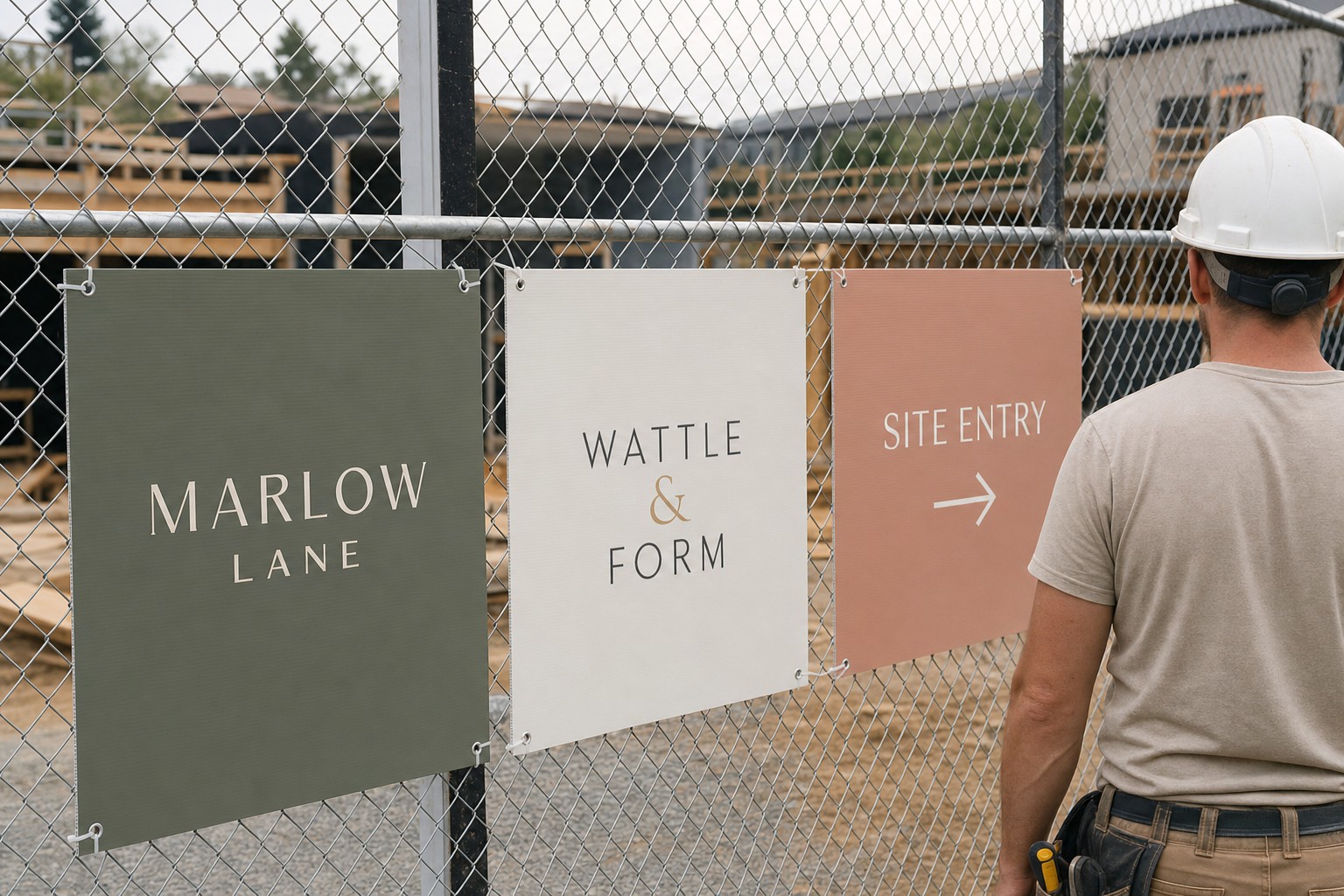
Corflute signs can be cable-tied to temporary hoarding, dropped into H-frame stands, or fixed directly to timber or steel posts by drilling through the board. The material does not split when drilled, and fixings can be repositioned as the site progresses. For most short-to-medium-term projects, corflute is the practical and cost-effective default.
Paperlust Print Shop’s custom construction signs are printed on TEKflute in four standard sizes from A3 through to 900x1200mm, with production completed in 24-48 hours after artwork approval.
ACM (Aluminium Composite Material)
ACM panels consist of two thin aluminium skins bonded to a polyethylene core. They are significantly more rigid and durable than corflute, with a lifespan suited to years of outdoor exposure rather than months. ACM is the right choice for permanent or semi-permanent installations: site identification boards on long-duration projects, signs mounted on site offices, and hoarding signage intended to remain in place for 12 months or more. ACM panels are heavier and require more robust fixing, so they are not designed to be relocated frequently. For most standard builds, ACM suits the site entry board and any critical safety sign in a fixed position, with corflute handling all relocatable signs.
Metal (steel or aluminium sheet)
Metal signs are reserved for permanent safety installations and high-risk industrial environments. For standard construction sites, metal is appropriate for safety-critical permanent fixtures such as electrical hazard warnings on fixed plant, but is generally overkill for temporary site signage.
Fixing and Mounting Options
How a sign is mounted affects its legibility and compliance. A sign positioned too low, obscured by plant, or angled away from the direction of approach does not satisfy the standard’s intent regardless of its colours.
H-frame stands
H-frames are the fastest temporary option: the corflute sheet slots into the frame’s channels and the whole assembly repositions in seconds. Ideal for internal site areas and pedestrian corridors where signs need to move as the project progresses. Not suitable for exposed outdoor locations without a weighted base.
Cable ties and direct fixing
Cable ties are the most versatile fixing method for corflute on active sites. They pass through the fluted channels of the board and around temporary hoarding rails, wire mesh, or perimeter fencing. Use two ties at the top and two at the bottom for large-format boards (A1 and above) in any exposed location. For a more permanent fix, drill through the corflute or ACM panel and screw into timber posts, star pickets, or steel sections. For ACM panels on perimeter hoarding, pop rivets give a clean finish. Chain suspension is common for overhead hazard signs hung from scaffolding where a face-level position is not practical.
Ordering a Compliant Site Signage Package
A minimum compliant signage package for a typical commercial build covers: a site entry board (900x1200mm), mandatory PPE signs at each entry (A2 or A1), prohibition signs at restricted areas (A3 to A2), warning signs near plant (A2), emergency information signs at first aid points and the assembly area (A2), and fire safety signs at equipment locations (A3).
For pedestrian entry points or delivery vehicle access, corflute A-frame signs pair a printed corflute insert with a reusable metal A-frame for fast deployment and easy repositioning as site conditions change.
For general-purpose signage where standard construction sign sizes are not the right fit, corflute plastic signs are available in A3, A2, A1 and 600 x 900mm, printed on the same UV-resistant TEKflute, with production in 24 hours on the 600 x 900mm board and 2-3 business days on the other sizes. Hoarding boards, bollard covers, and site identification panels all sit in the same sign printing range. The bollard covers are printed sleeves and covers that wrap car park and pedestrian bollards, with further detail on the bollard signs product page.
Supply print-ready artwork at actual size with a 3 mm bleed, at 300 dpi or higher, in CMYK colour mode. AS 1319-compliant sign templates are available from Safe Work Australia and state WHS regulators.
Frequently Asked Questions
What is AS 1319 and does it apply to my construction site?
AS 1319-1994 is the Australian Standard for safety signs in occupational environments, published by Standards Australia. It defines the colour coding, shapes, symbols, and wording conventions for each sign category. Under Australian WHS legislation, PCBUs have a duty to communicate workplace hazards clearly, and AS 1319 is the recognised benchmark for meeting that duty. If you are running a construction site in any Australian state or territory, AS 1319 applies.
What signs are legally required on a construction site in Australia?
WHS legislation does not publish a fixed list of required signs. Your obligations are driven by the hazards present on your specific site. At minimum, most sites require mandatory PPE signs at entries, prohibition signs where specific behaviours create risk, warning signs near plant and hazardous activities, emergency information signs for first aid and assembly points, and a site entry board identifying the principal contractor and project. Your WHS officer or principal contractor safety plan will specify the full package for your site.
How long do corflute construction signs last outdoors?
Standard 3 mm corflute printed with UV-resistant inks is suitable for most Australian site conditions for the duration of a typical short-to-medium-term project, up to around 12 months. In harsh UV environments such as Far North Queensland or exposed coastal locations, the substrate remains structurally intact but ink may fade more quickly. For projects exceeding 12 months, or in challenging climate conditions, step up to 5 mm corflute or ACM for high-priority signs.
Can I supply my own artwork for construction signs?
Yes. Paperlust Print Shop accepts print-ready artwork files. Set up your artwork at actual size with a 3 mm bleed, at 300 dpi or higher, in CMYK colour mode. Safety sign colours must match AS 1319 specifications. If you do not have a designer, AS 1319-compliant sign templates are available from Safe Work Australia and state WHS regulators as a starting point.
What size site entry board do I need?
The most common format is 900x1200mm, which provides sufficient space for principal contractor branding, all required PPE pictograms in a legible grid, emergency contact details, and site rules in readable type. For large projects or sites with multiple entry points, 1200x1800mm or a custom size may be appropriate. Check your principal contractor’s requirements, as some head contracts specify minimum dimensions for site identification boards.
How quickly can I get construction signs printed and delivered?
Paperlust Print Shop’s construction signs carry a 24-48 hour production window after artwork approval, with Australian express delivery available. Most metropolitan sites can have their signs within 2-3 business days from order placement.