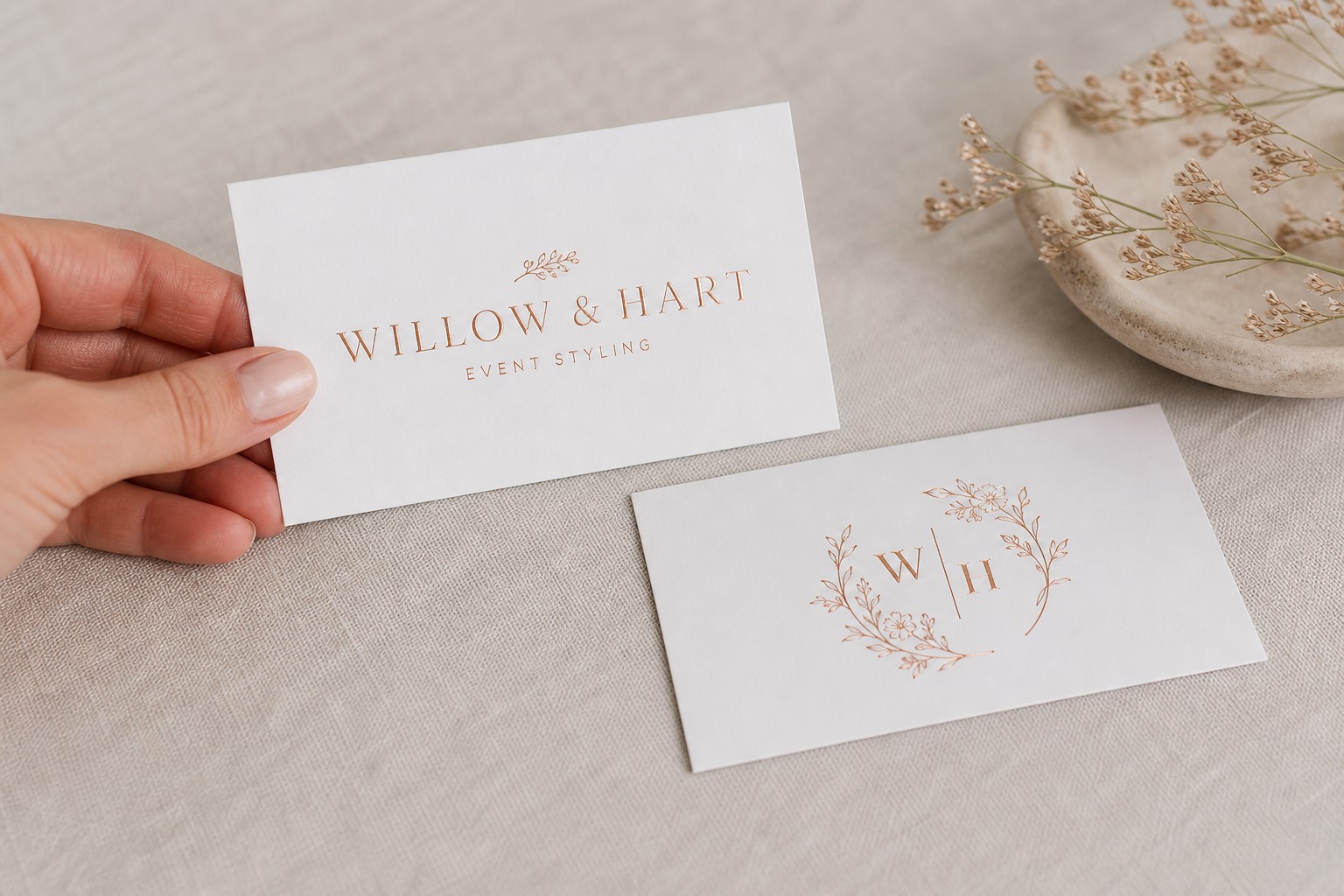
Rose gold sits in a distinct space among metallic foil finishes. It carries the warmth and weight of gold without the formality, and the softness of copper without the earthiness. If you have already settled on rose gold for your next run of business cards, this guide covers who it suits, which stocks it pairs with, how to design for it, and what to expect when you order.
– Rose gold foil suits beauty, wellness, photography, floristry, wedding, fashion, and personal brands
– Best stock pairings: matte white, heavyweight cream, black (for drama), navy
– Available as flat foil (from $1.59 inc. GST, min. 100 cards, 5 stock options) and raised foil (from $0.83 inc. GST, min. 250 cards, 450gsm Artboard with Velvet Laminate)
– One foil colour per card; aim for foil on no more than 40-50 per cent of the card face
– Flat foil includes a 48-hour production option; raised foil does not
– File setup: PDF, SVG or Adobe Illustrator, 3mm bleed, foil elements as 100% Magenta Spot Colour on the top layer
– Standard turnaround: 7-10 working days after proof approval for both options
The Brand Types Rose Gold Suits
Rose gold is a commercial finish. It consistently serves brands in industries where warmth, femininity and quality are the primary signals. Here is where it lands with the most authority.
Beauty and skincare
A beauty brand’s card is often the last physical impression left after a treatment or consultation. Rose gold reinforces quality without the coldness that silver carries, and avoids the authority-first signal that gold projects. Facialists, lash technicians, makeup artists and cosmetic tattoo practitioners benefit from rose gold’s “this is a considered brand” message, communicated the moment the card changes hands.
Wellness and health professionals
Naturopaths, yoga instructors, integrative medicine practitioners and health coaches work in industries where trust and warmth are the primary drivers of client decisions. Rose gold communicates investment in the physical details of a practice without the clinical distance of silver or the transactional weight of standard card stock.
Photographers and creative studios
Wedding and portrait photographers choose rose gold because it aligns with the aesthetic of the work they are selling. A card that mirrors the warmth of golden-hour imagery or soft editorial photography creates visual consistency before the client opens a portfolio.
Florists, stylists and event planners
These industries are built on aesthetic judgment. A florist’s card needs to look like the same eye that arranges the flowers chose the card. Rose gold signals taste and attention to material quality, which is precisely what clients in these fields are paying for.
Wedding and bridal professionals
Celebrants, bridal consultants, invitation designers and wedding coordinators work in an industry where every touchpoint reinforces the premium nature of the occasion. Rose gold is embedded in bridal aesthetics and reads as fluent in the visual language of the sector.
Fashion designers and boutiques
Independent fashion labels and boutique owners use rose gold to position against mass-market retail. The metallic warmth suggests hand-made, considered or limited-run goods, which is a harder signal to achieve with a standard-print card.
Personal brands, coaches and consultants
Life coaches, speaking professionals and business mentors often choose rose gold because it balances professionalism with approachability, without the corporate distance of gold. It works wherever the personal relationship between client and provider is the product being sold.
Why Rose Gold Has Staying Power
Gold signals heritage and authority but can read as corporate in sectors where warmth and personality are the primary differentiator. Silver signals modernity and precision but can feel cold in service-based industries where the relationship between client and provider is the product. Copper is warmer than both but carries an artisanal quality that does not suit all professional contexts.
Rose gold occupies the space between gold and copper: warm enough to signal care and creativity, metallic enough to signal investment and quality, and soft enough to work in industries where a traditional gold look would feel out of place. That specific combination has no close substitute in the foil colour range.
Pairing Rose Gold with the Right Stock
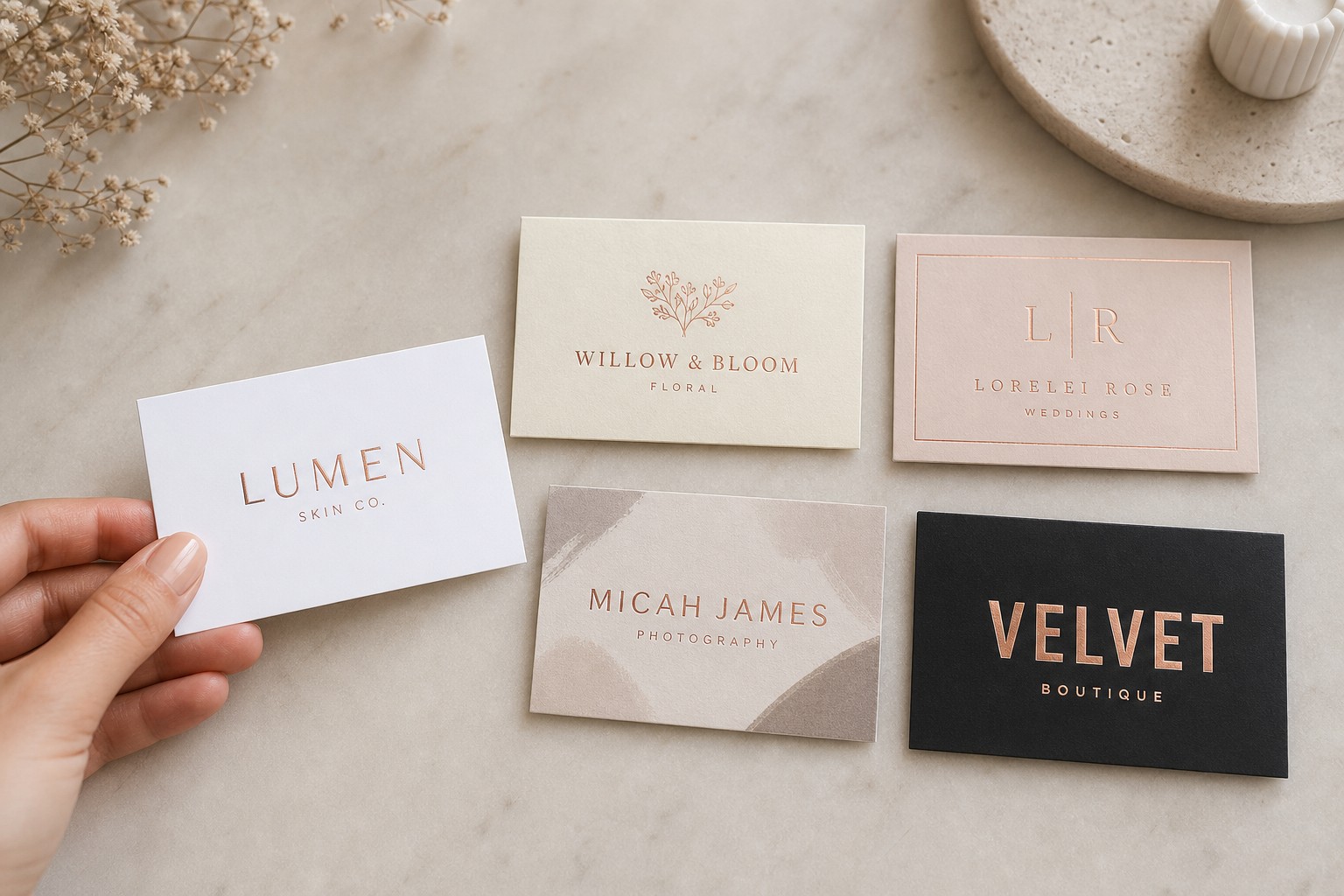
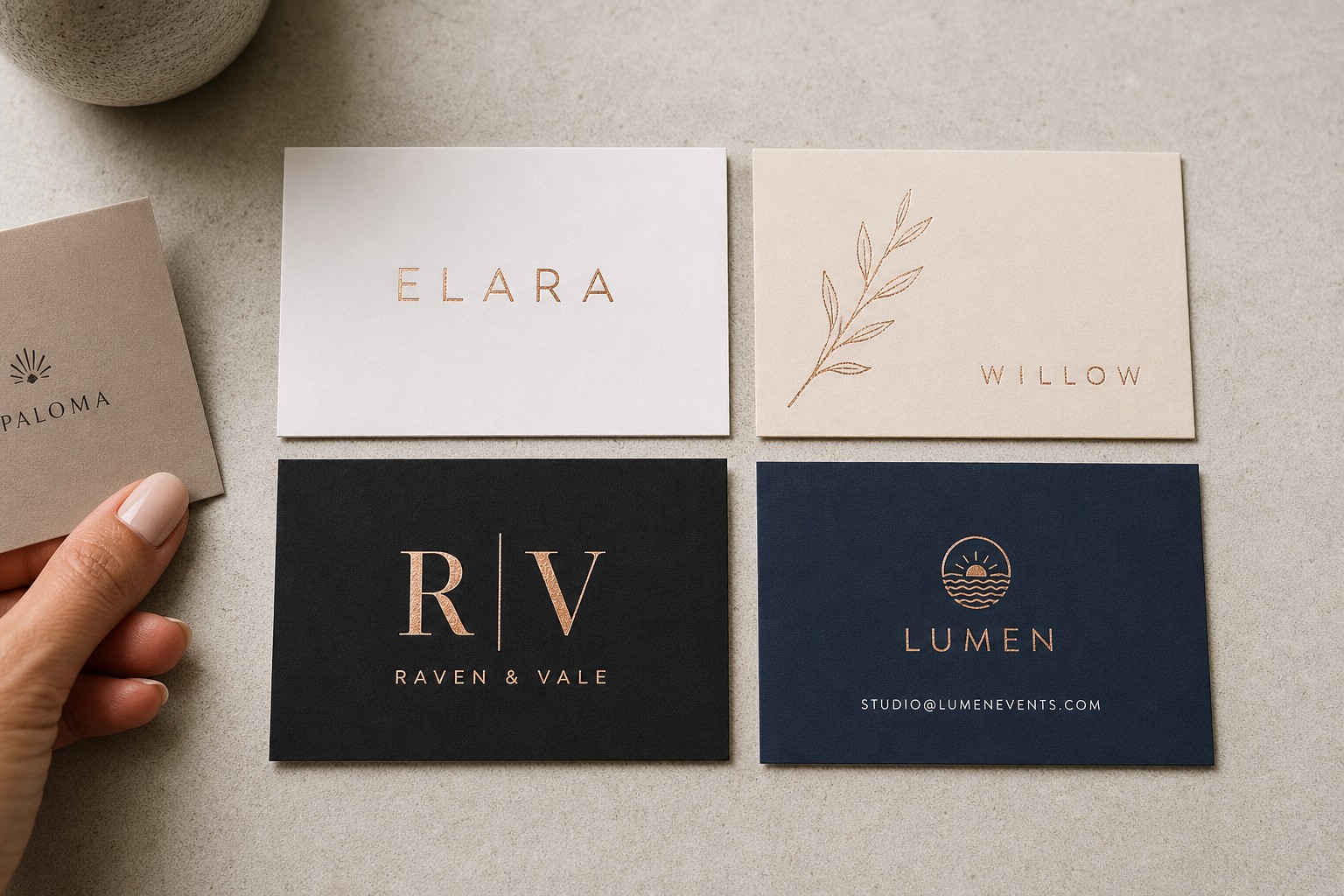
The stock you choose affects how the rose gold reads. The colour has a pink undertone that interacts differently with warm-toned and cool-toned backgrounds.
| Stock | How Rose Gold Reads | Best for |
|---|---|---|
| Matte White | Clean and airy; the foil reads as a considered accent | Minimal brands, beauty, wellness, photographers |
| Heavyweight (Cream-Toned) | Warm and tactile; rose gold and cream reinforce each other | Florists, wedding professionals, premium personal brands |
| Black | Dramatic but intimate; rose gold reads softer on black than gold does | Fashion boutiques, beauty brands, dark-aesthetic studios |
| Navy | Strong contrast with warmth; classic without being cold | Bridal professionals, event planners, photographers with a formal aesthetic |
| Premium | Higher-quality matte feel; slight texture adds depth to the foil | Coaches, consultants, health professionals |
Avoid pairing rose gold with bright pink, coral or red-toned backgrounds. The pink undertone in the foil competes with warm-toned backgrounds and the result reads muddy rather than metallic.
How to Design for Rose Gold Foil
Rose gold is a forgiving foil colour in terms of stock contrast, but the design choices that determine whether a card looks premium or ordinary are consistent across any metallic finish.
Apply foil to one primary element
Rose gold reads most clearly when it anchors one element: the logotype, a monogram, a graphic symbol, or the name. Foil spread across body copy, fine decorative borders and the logo at once loses the quality signal because no single element has space to register. One foil focus per card face is the standard to aim for.
Set type at 10pt or above
Fine letterforms and hairline details lose crispness in the foiling process. Sans-serif and clean serif fonts at 10pt or above hold the foil well. Decorative scripts work provided the strokes are thick enough to carry the metallic layer without closing up.
Keep foil coverage below 40-50 per cent of the card face
At 40-50 per cent coverage or less, the contrast between the foil elements and the stock creates the quality impression you are looking for. Above that threshold, the card reads busy and the foil competes with itself. Rose gold at moderate coverage looks intentional; rose gold at high coverage looks like a template choice.
Both sides remain available
The foil is applied to the specified elements on one face. The reverse can carry full-colour print, a solid background, or unprinted stock. Some brands run rose gold foil on the front and a deep solid on the back as a deliberate contrast; both surfaces are independent.
Flat Rose Gold vs Raised Rose Gold
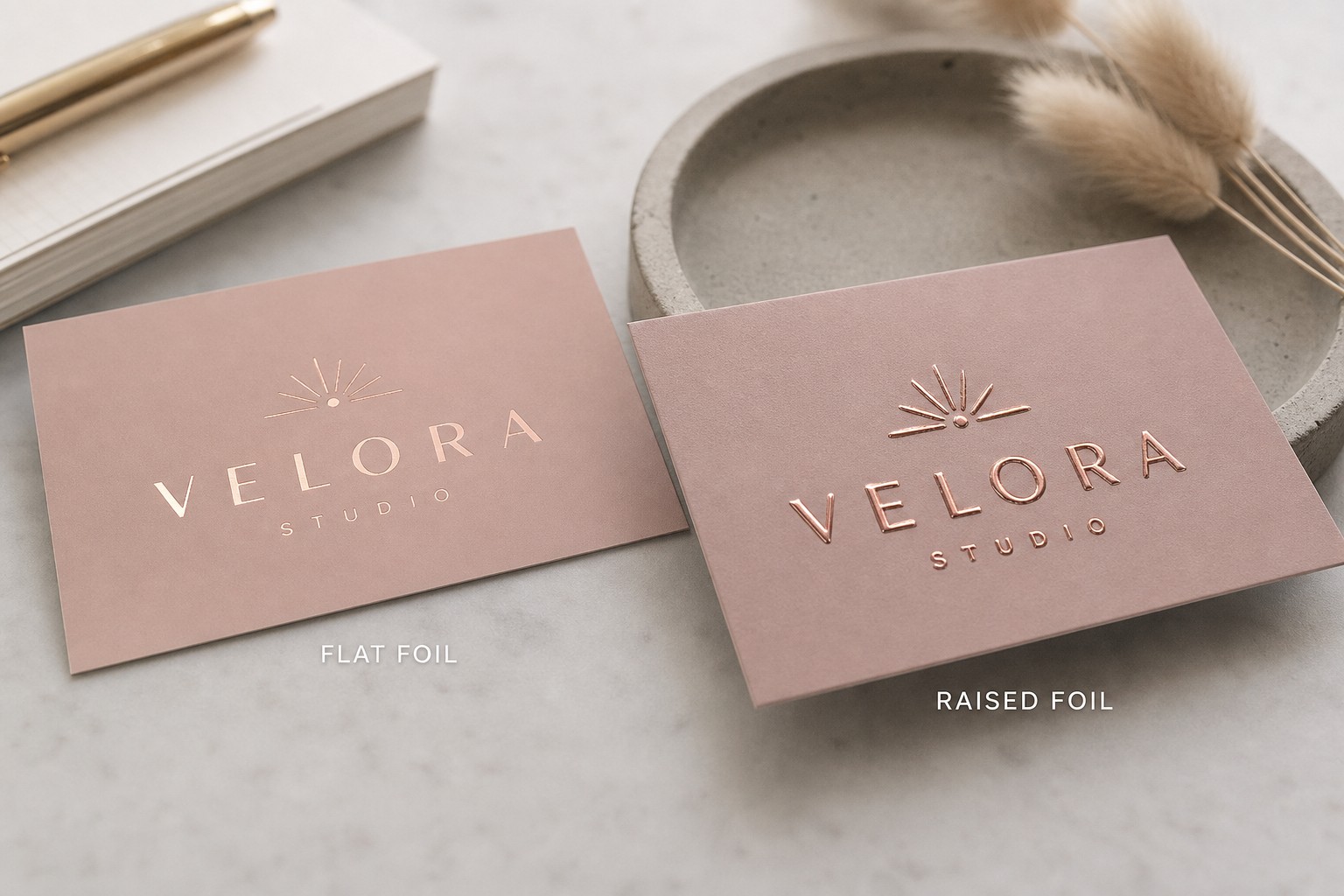
Rose gold is available in both flat foil and raised foil at Paperlust Print Shop. For most brand types choosing rose gold, the practical question is whether the tactile dimension of raised foil is worth the higher minimum order.
| Detail | Flat Rose Gold | Raised Rose Gold |
|---|---|---|
| Surface | Flush with card; smooth and mirror-bright | Elevated above the card surface; tactile edge with a fine shadow line |
| Starting price | From $1.59 inc. GST | From $0.83 inc. GST per card |
| Minimum order | 100 cards | 250 cards |
| Stock options | Matte, Premium, Heavyweight, Navy, Black | 450gsm Artboard with Velvet Laminate (single option) |
| Turnaround | 7-10 working days after proof approval | 7-10 working days after proof approval |
| Fast production | 48-hour option available after proof approval | Not available |
Raised rose gold suits brands where the card is expected to do significant sensory work: high-end beauty clients, senior photographers, or bridal professionals who want the card to be handled, felt and remembered. The velvet laminate on the 450gsm Artboard amplifies the contrast between the smooth metallic foil and the surrounding soft-touch surface.
Flat rose gold suits brands where the visual impression is primary. It also gives you more control over the stock you land on, with five options rather than one, and a lower minimum order if you are testing a run before committing to a larger quantity.
Ordering Rose Gold Foil Business Cards
Both options are available directly online. The process is the same for both: submit your artwork file, receive a design proof via email, approve the proof, and production begins.
File requirements for rose gold foil:
- Format: PDF, SVG or Adobe Illustrator
- Bleed: 3mm bleed and crop marks required
- Fonts: all text outlined or vectorised before export
- Images: all artwork embedded in the file
- Foil layer: rose gold foil elements set as 100% Magenta Spot Colour, placed on the top layer above all other artwork
The magenta spot colour tells the production system which elements receive the foil. Only elements on that layer will be foiled; everything else prints normally. Paperlust’s team reviews the file and sends a proof before any printing begins.
Order flat rose gold foil cards at the flat foil business cards page. For the raised option, visit the raised foil business cards page.
Browse the full custom business cards range to compare rose gold alongside other premium finishes before committing to an order.
Related reading: If you are still weighing rose gold against gold, silver, copper or holographic foil, the foil business cards guide covers all five colours and the flat vs raised decision in full.
Frequently Asked Questions
Is rose gold foil available as raised foil, or only flat foil?
Rose gold is available as both flat foil and raised foil. Flat rose gold starts from $1.59 inc. GST at 100 cards, or $119.20 inc. GST for 50 cards ($2.38 per card), with a 50-card minimum across five stock options. Raised rose gold starts from $0.83 inc. GST with a 250-card minimum on 450gsm Artboard with Velvet Laminate.
Which stock suits rose gold foil best?
Matte white and heavyweight cream-toned stock are the most versatile pairings for rose gold. Black and navy are effective for brands that want contrast and drama. Avoid pairing rose gold with warm pink, coral or red-toned backgrounds; the foil’s pink undertone competes with warm backgrounds and the result reads muddy rather than metallic.
Can I get rose gold foil on the front and a different print treatment on the back?
Yes. The foil is applied to specified elements on one face. The reverse can carry full-colour print, a solid colour, or plain stock. Foil on one side and a solid deep background on the reverse is a common combination for brands wanting a strong visual contrast.
How do I indicate the rose gold foil elements in my artwork file?
Set all elements intended for rose gold foil as 100% Magenta Spot Colour on a separate top layer in your PDF, SVG or Adobe Illustrator file. Every element on that layer receives the foil; everything else prints or remains unprinted as per your normal layers. Paperlust’s production team reviews the file and sends a design proof before any printing begins.
Can I order a sample of rose gold foil business cards before committing to a full run?
Sample packs are available at Paperlust Print Shop and include examples across different finishes and stocks. Contact the team through the website to request a sample before placing a full order.
What is the minimum order for rose gold foil business cards?
Flat rose gold foil business cards: minimum 50 cards. Raised rose gold foil business cards: minimum 250 cards. Both options require a proof approval before production begins.