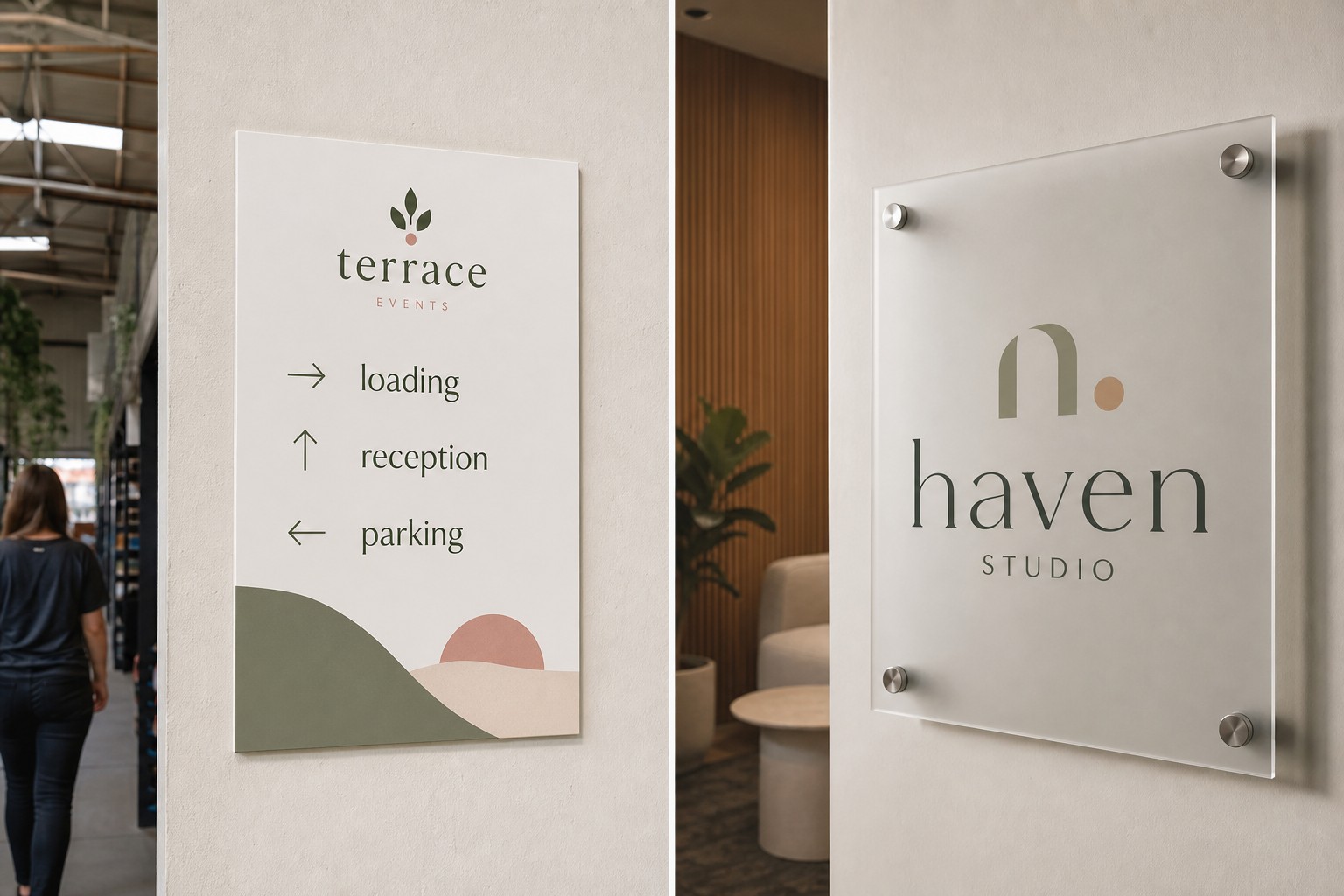
Fitting out a reception, upgrading office wayfinding, or organising signage across multiple rooms? PVC foam board and acrylic are the two most common rigid indoor substrates, and while they look similar in product photos, they sit at very different price points and communicate very different things about your brand. The right choice comes down to budget, location, and how your signage needs to perform over time.
“PVC foam board” can name either foamed PVC or paper faced polystyrene foam core. This article covers the foamed PVC board, so you order PVC foam board signs when you need a weatherproof board, and the test is the face: plastic faces go outside, paper faces stay indoors.
- PVC foam board: from $29.00 inc. GST; lightweight at around 1.4 kg per m2; UV-direct full-colour print; best for budget indoor signage, back-of-house, events, and temporary installs
- Acrylic panels: from $225.00 inc. GST; available in Clear, Black, White, Matte, Mirror, and Frosted; best for reception areas, foyers, and client-facing environments
- Both are indoor substrates: neither is suited to permanent outdoor exposure
- If full-colour print is your priority, PVC offers better value. If the material finish carries your brand, choose acrylic.
- Turnaround at Paperlust: acrylic = 5-7 working days after artwork approval; PVC = 1-2 working days after approval
What Are These Two Materials?
PVC foam board (also sold as Forex, Foamex, or Sintra) is a rigid, closed-cell polyvinyl chloride sheet. The foamed core keeps panels lightweight without sacrificing flatness, and the smooth white surface accepts UV-direct inkjet printing at photographic clarity. Paperlust’s TekPVC is available in 3 mm and 5 mm thicknesses, with standard sizes A3, A2 and A1 and custom sizes up to 2400 x 1200 mm by custom quote for large-format applications.
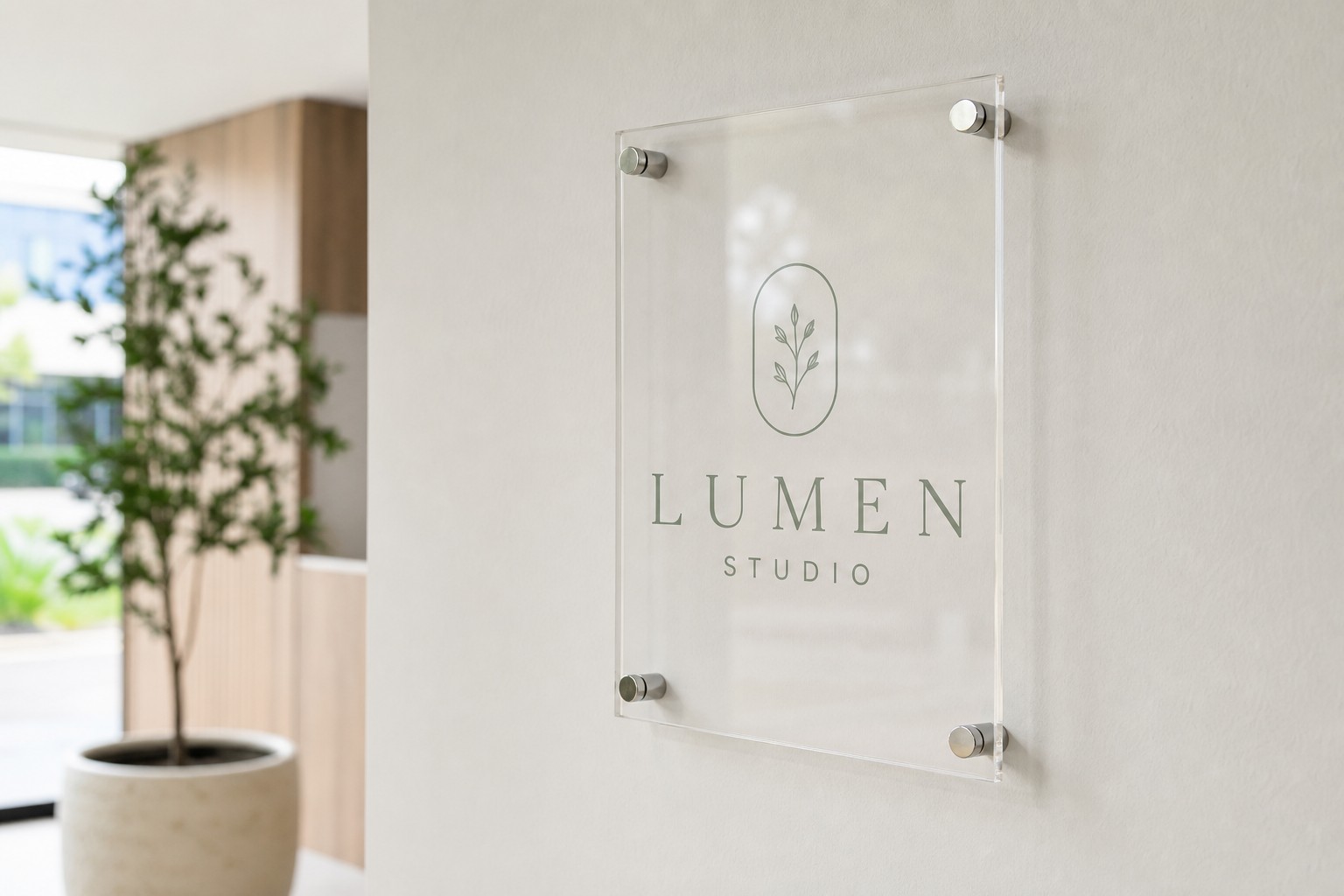
Acrylic (also called perspex or plexiglass) is a solid, unfoamed thermoplastic sheet. Unlike PVC, the substrate itself contributes to the sign’s visual effect: a clear panel with vinyl lettering reveals the wall behind it, while a frosted or mirror finish adds texture without any printing at all. Paperlust stocks 3 mm cast acrylic in six finishes (Clear, Black, White, Matte, Mirror, Frosted) in A1 (594 x 841 mm) and A2 (420 x 594 mm) standard sizes, with custom dimensions available on request.
Cost Comparison
Budget is usually the first filter. PVC foam board signs start from $29.00 inc. GST, making them one of the most cost-effective rigid substrates available. Acrylic reception panel signs start from $225.00 inc. GST, reflecting the material cost of cast acrylic and the additional finishing involved.
The price difference is significant, but context matters. A single acrylic reception sign that clients walk past every day for several years represents solid value per impression. A set of temporary directional signs for a three-day trade show does not need to be acrylic, and PVC at a fraction of the cost allows the budget to go further across more panels.
Weight and Installation
PVC foam board at 3 mm runs around 1.4 kg per square metre. A standard A1 panel weighs roughly 700 g, which means most mounting methods are straightforward: double-sided adhesive, standoff fixings, cable ties through pre-drilled holes, or simple velcro strips for temporary installs. The PVC Signs order form now includes a Drilled Holes option. Choose 4 x 10mm Corner Holes to add a 10 mm hole in each corner before dispatch; holes at custom positions and rounded corners with a 5 mm, 10 mm or 20 mm radius remain on request.
Acrylic is denser. A 3 mm cast sheet runs around 3.6 kg per square metre, putting a standard A1 panel at around 1.8 kg. Standoff fixings are the standard mounting method for acrylic, and Paperlust panels come with standoff holes pre-drilled and polished as standard. The hardware is purchased separately and gives installations a floating, architectural finish that looks intentional rather than improvised.
Both materials can be CNC-routed to custom shapes where the application calls for it.
Print Quality and Surface Finish
For PVC foam board, the printed surface is the sign. UV-direct printing on the smooth TekPVC face delivers sharp full-colour output, including fine text and photographic images, with no bleed or feathering on the non-porous surface. What you design is what you get, and the white substrate gives colours a clean base to sit on.
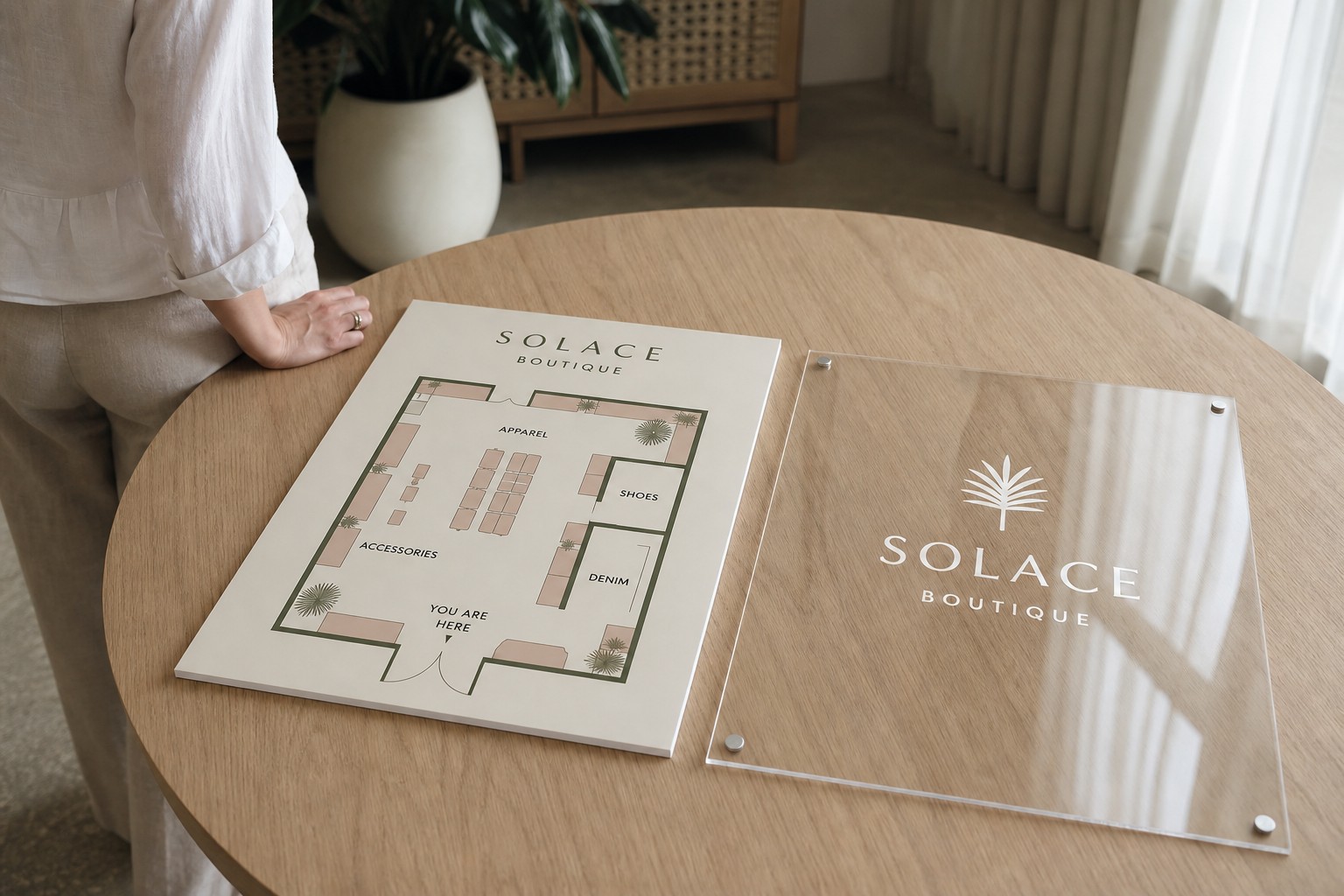
For acrylic, print and substrate work together. A clear acrylic panel with white vinyl lettering reads differently from the same words printed on white PVC because the clear background adds depth and a sense of material quality. Frosted acrylic with digital print creates a softened, premium effect. Mirror acrylic with vinyl foil lettering is common in luxury retail and hotel branding, where the sign needs to feel like part of the interior design rather than a printed product applied to a wall.
If full-bleed photographic graphics are central to your design, PVC delivers better colour saturation per dollar. If the sign is primarily text-based or uses a logo that benefits from a premium material context, acrylic pays off.
Durability for Indoor Use
For indoor applications away from direct sunlight, both materials are durable long-term.
PVC foam board does not warp or delaminate. It holds its shape in air-conditioned offices, retail environments, and cool storerooms. Its rated outdoor lifespan is 1-3 years depending on UV exposure, but indoors with no direct UV it performs indefinitely. The surface is not scratch-proof: panels that are frequently handled or moved will show marks over time.
Cast acrylic is harder and more scratch-resistant than PVC foam board, which is an advantage in high-traffic areas where panels might be cleaned regularly or brushed against by passersby. The trade-off is that visible scratches on a polished clear or mirror surface are more obvious than on an opaque PVC panel. For wall-mounted signage that nobody touches, both materials perform comparably over the long term.
Side-by-Side Comparison
| Feature | PVC Foam Board | Acrylic Panel |
|---|---|---|
| Starting price | From $29.00 inc. GST | From $225.00 inc. GST |
| Material | TekPVC foamed sheet | 3 mm cast acrylic |
| Thickness options | 3 mm, 5 mm | 3 mm |
| Substrate finishes | White face (full-colour print) | Clear, Black, White, Matte, Mirror, Frosted |
| Print method | UV-direct full colour | Digital print + vinyl foil |
| Standard sizes | A3, A2, A1; custom up to 2400 x 1200 mm by quote | A1, A2; custom on request |
| Approx. panel weight (A1) | ~700 g | ~1.8 kg |
| Turnaround | 1-2 working days after approval | 5-7 working days after approval |
| Indoor durability | Excellent; does not warp or delaminate | Excellent; harder, more scratch-resistant |
| Best for | Budget, back-of-house, temporary, high-volume | Reception, foyers, premium client-facing spaces |
Choose PVC Foam Board When…
- Budget is a priority and you need multiple panels for a fitout, rebrand, or seasonal campaign
- The sign is in a back-of-house, warehouse, or storeroom environment where premium finish is not required
- You are producing temporary signage for an exhibition, conference, product launch, or event and the panels will not be reused long-term
- You need large-format coverage beyond standard acrylic sizes: TekPVC is available up to 2400 x 1200 mm by custom quote
- Full-bleed photographic or complex full-colour graphics are central to the design
- You need a 5 mm thickness option for greater rigidity without additional mounting hardware
Browse PVC foam board signs at Paperlust, from $29.00 inc. GST with flat-rate Australia-wide shipping.
Choose Acrylic When…
- The sign is in a reception area, hotel lobby, medical clinic foyer, or client-facing meeting room where the substrate finish contributes directly to the brand impression
- You want a material finish that goes beyond a printed white surface: clear, frosted, mirror, or matte acrylic all carry visual weight that PVC foam board cannot replicate
- The sign will be mounted on standoffs and viewed up close daily by clients, visitors, or staff
- Durability under regular cleaning or incidental contact matters: acrylic’s harder surface handles this better than PVC over the long term
- Vinyl foil text or wayfinding lettering on a clear substrate is part of the design concept
View acrylic reception panel signs at Paperlust, from $225.00 inc. GST in A1 and A2 with custom dimensions available.
Which Substrate Suits Which Room?
Reception areas and foyers
Acrylic. The polished edge profile, clear or frosted finish, and standoff mounting communicate a level of care and quality that flat-printed PVC cannot match when viewed at arm’s length by every visitor.
Office corridors, meeting rooms, and breakrooms
Either works. For informational signage (room names, floor maps, health and safety notices), PVC is more cost-effective and easier to replace when content changes. For brand-facing installations (feature walls, values displays, donor boards), acrylic is worth the investment.
Warehouses and back-of-house areas
PVC foam board. Durable, large-format-capable, cost-effective, and the environment does not call for premium finish.
Trade shows and short-run events
PVC. Lightweight, portable, professionally printed, and budget-friendly for signage that has a fixed end date.
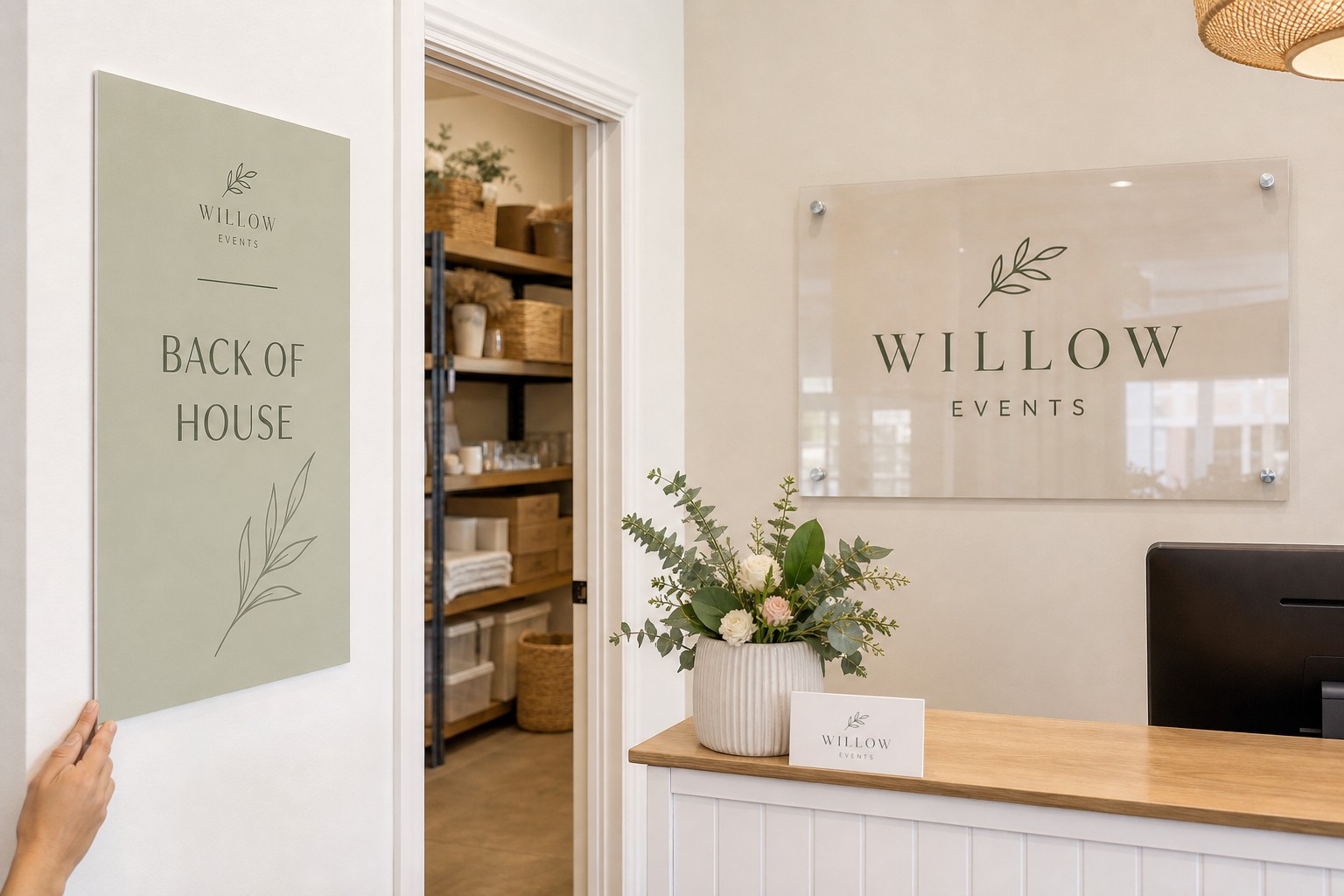
Browse the full signage panels range to compare all available substrates, including corflute, screenboard, and bollard signs.
Related Reading
- Corflute vs PVC Signs, if you are comparing corflute and PVC for outdoor or semi-permanent applications
- Acrylic Signs Australia, a deeper guide covering acrylic specification, finish selection, artwork setup, and mounting methods
Frequently Asked Questions
Is PVC foam board the same as acrylic?
No. PVC foam board (also sold as Forex, Foamex, or TekPVC) is a lightweight foamed polyvinyl chloride sheet designed for full-colour UV-direct printing. Acrylic (also called perspex or plexiglass) is a solid thermoplastic sheet available in tinted and textured finishes that can be printed on or fitted with vinyl lettering. The two materials differ significantly in weight, surface character, cost, and intended application.
Can I use PVC foam board outside?
PVC foam board has a rated outdoor lifespan of around 1-3 years depending on UV exposure and climate. For permanent outdoor installations, corflute or a UV-laminated substrate is more appropriate. For strictly indoor applications, PVC foam board performs indefinitely without degradation. Specifications for our corflute signs are on the product page: 3mm and 5mm TEKflute, rectangle or custom shapes.
Which is more durable: PVC foam board or acrylic?
It depends on the context. Cast acrylic is harder and more scratch-resistant for signs that will be regularly cleaned or touched. PVC foam board is more flexible and will dent rather than shatter under impact. For wall-mounted indoor signage with no regular handling, both materials are reliable long-term options.
Can I get custom sizes in both materials?
Yes. Paperlust PVC foam board signs are available in A3, A2 and A1 as standard, with custom sizes up to 2400 x 1200 mm and CNC-routed shapes by custom quote. Acrylic reception panels are stocked in A1 and A2 as standard, with custom dimensions available on enquiry.
Which has a faster production time?
PVC foam board has the faster production time of the two, with a turnaround of 1 to 2 working days after approval. Acrylic reception panels, by comparison, take 5 to 7 working days after artwork approval. Both products ship flat rate Australia wide.
Is acrylic worth the extra cost for a reception sign?
For a single client-facing sign viewed daily by visitors and staff, yes. The material finish of cast acrylic, particularly in frosted or clear variants with standoff mounting, reads as a considered, premium choice that printed PVC cannot replicate at close range. For back-of-house or high-volume signage where aesthetics are a secondary concern, PVC provides better value per panel.