
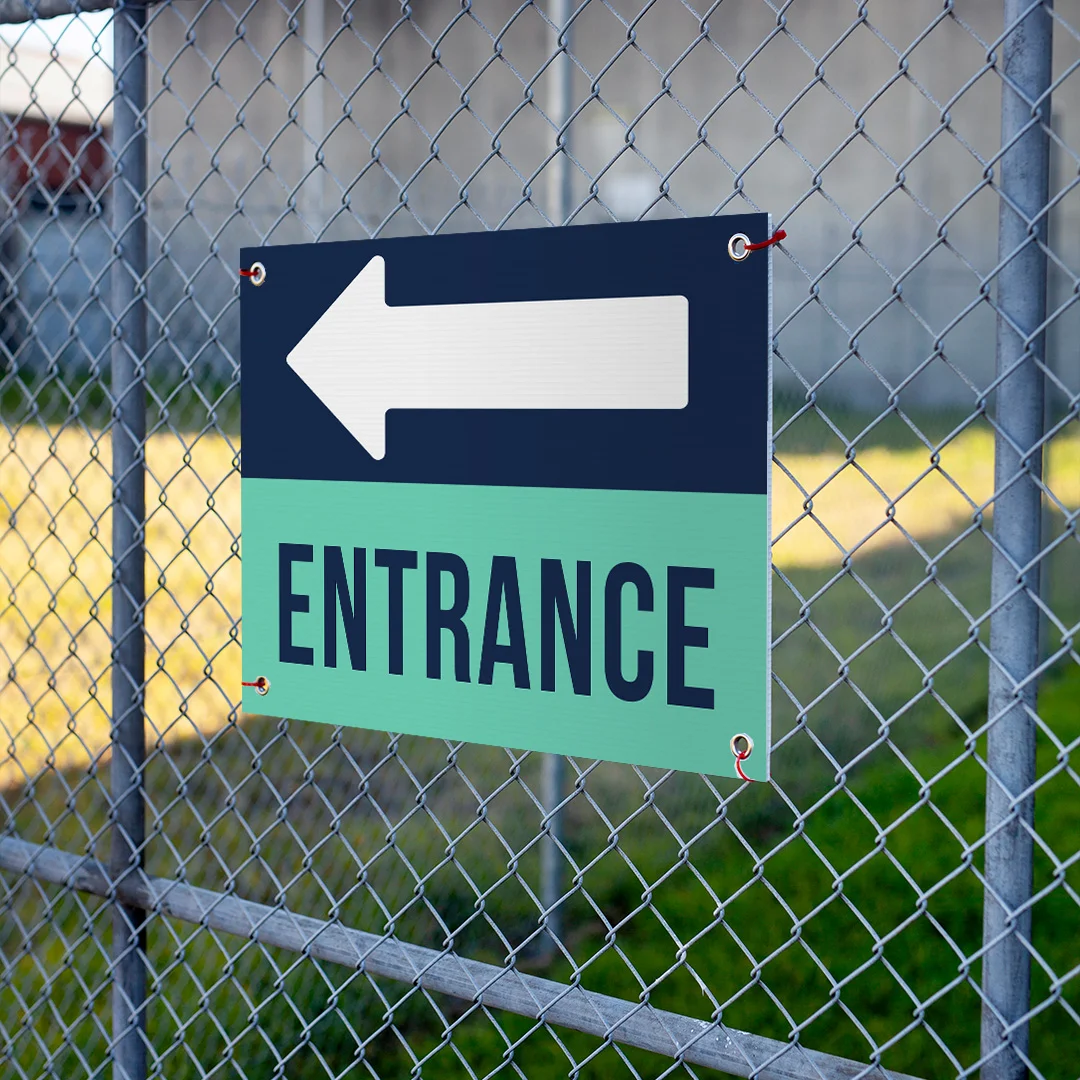
Choosing between corflute and PVC for your signs isn’t a matter of one being better than the other. They’re built for different jobs. Corflute is the fast, affordable workhorse for outdoor campaigns and temporary signage. PVC is the premium choice when appearance, longevity, and indoor presentation matter. Pick the wrong one and you’ll either overpay for a disposable sign or under-deliver on a display that needed to look sharp. Here’s how to get it right.
At a Glance
Corflute for short-medium term. PVC when the sign needs to outlast the campaign.
Corflute is corrugated polypropylene, cheap, lightweight, 12 to 18 month outdoor life. PVC (Sintra/Forex) is denser, smoother, lasts 3 to 5 years outdoor. A single entry-level sign is now line-ball ($30.00 corflute vs $29.00 for an A3 PVC sign), while corflute is about 40% to 50% cheaper at qty 100. The right call depends on whether you are renting attention for 6 months or building a permanent fixture.
- Choose corflute when: Lifespan 6 to 18 months, election, real estate, events, construction
- Choose PVC when: Lifespan 2+ years, permanent signage, retail, directional
- Print quality: PVC edges out, smoother surface, sharper photo detail
- Weight: Corflute is half the weight at the same panel size
- Cost (comparable area): Single sign $30.00 corflute vs $29.00 PVC A3, near parity; at qty 100, 600 x 450mm corflute $6.00 per sign vs PVC A2 $9.94 per sign, about 40% cheaper
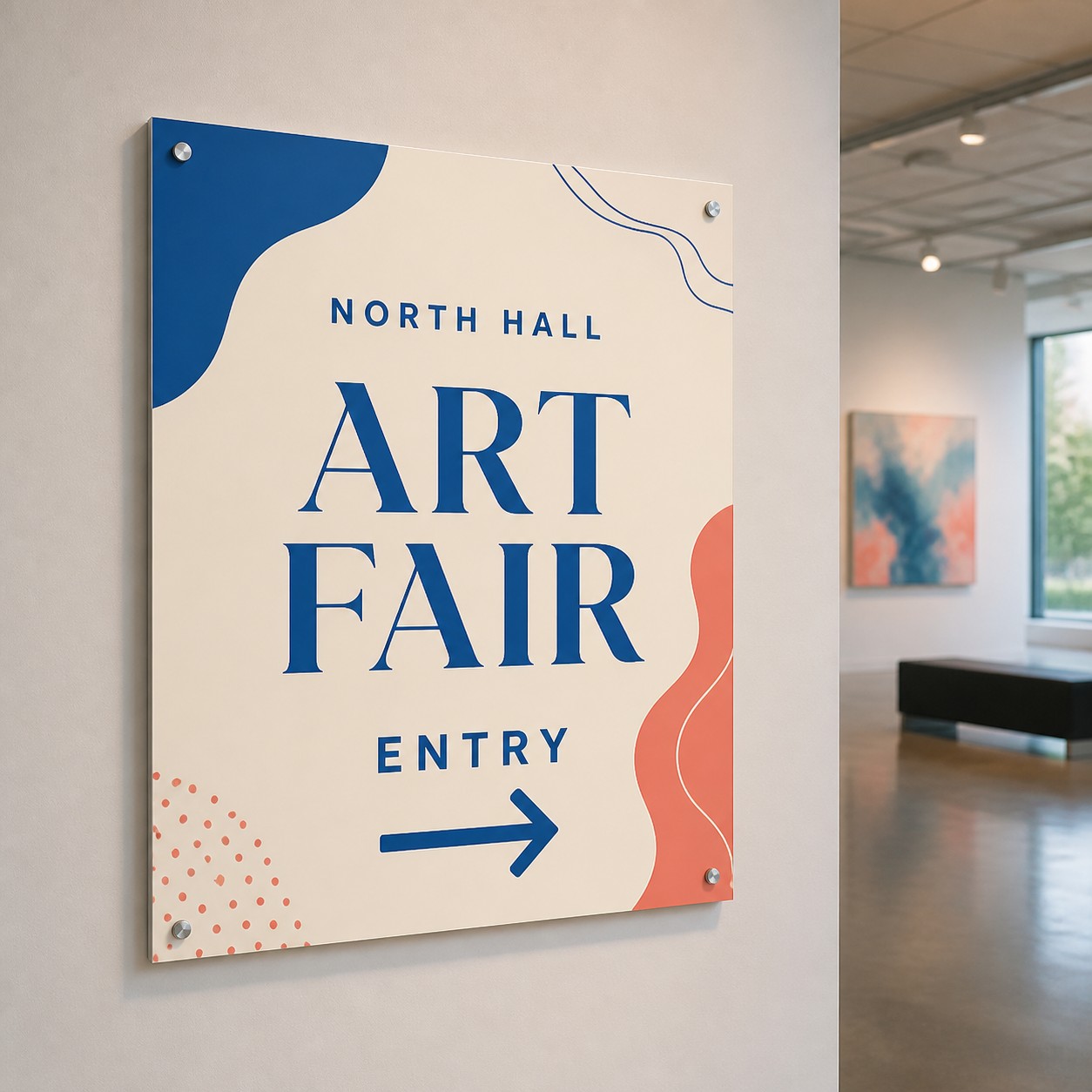
Understanding the Materials
Before comparing use cases, it helps to understand what each material actually is and how it’s made.
What Is Corflute?
Corflute is a brand name that has become genericized in Australia, much like “Texta” or “Biro.” The actual material is corrugated fluted polypropylene – essentially the plastic equivalent of corrugated cardboard. Two flat outer sheets of polypropylene are bonded to a series of parallel internal ribs (the flutes), creating a hollow-core structure that is remarkably rigid for its weight. The result is a material that is lightweight, weather-resistant, and very affordable to produce in large sheets.
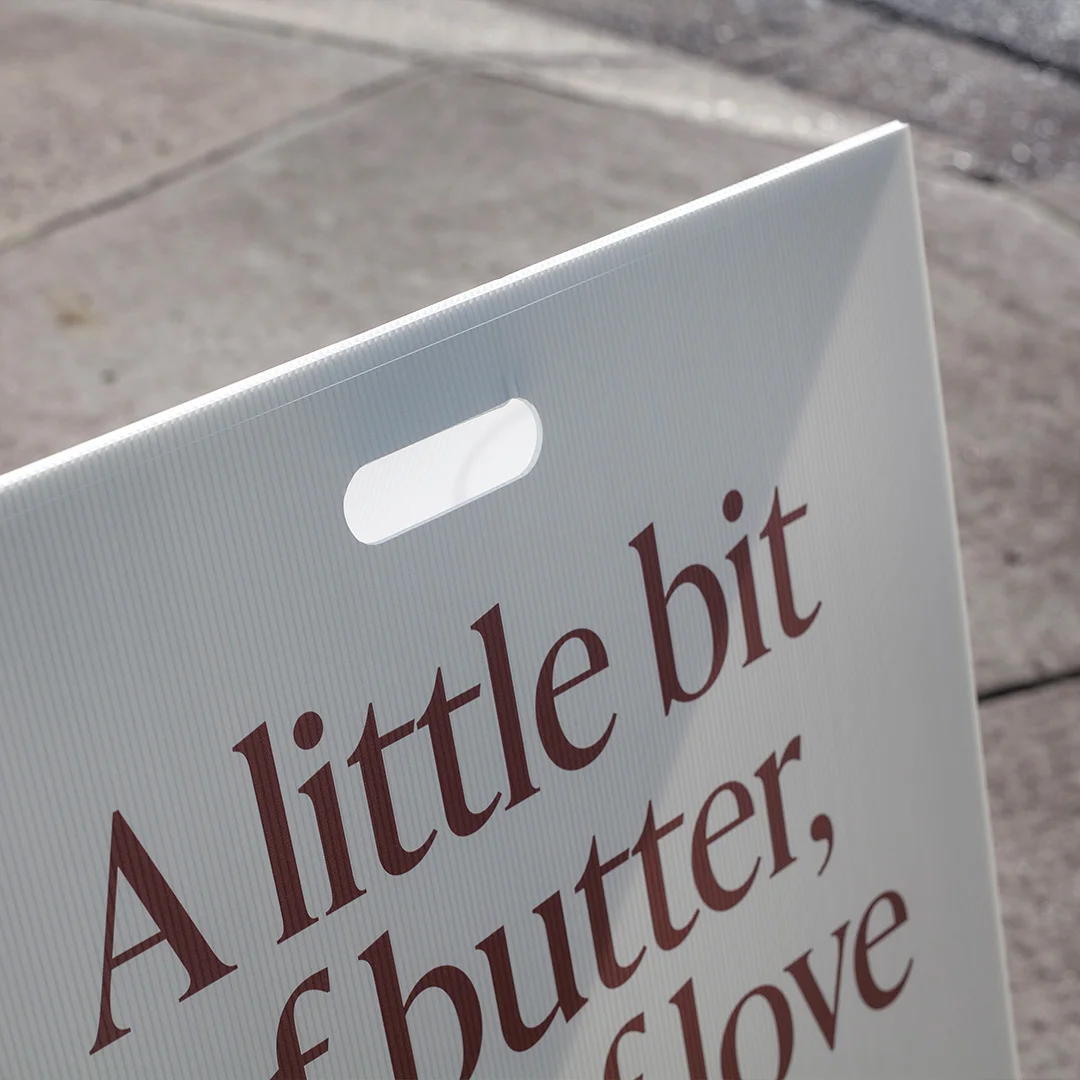
Corflute is available in several thicknesses, most commonly 3mm and 5mm. The 3mm variant is used for most standard signage applications; 5mm is recommended for larger formats or exposed outdoor locations where wind load requires extra rigidity. The fluted structure means the edges of corflute signs have a visible ribbed profile – which is why corflute looks less polished than PVC when viewed up close or from the side.
What Is PVC (Rigid PVC Board)?
PVC signage board – sometimes called foamed PVC, Forex, or rigid PVC sheet – is a solid, smooth plastic panel. Unlike corflute, there are no internal channels or hollow spaces. The material is manufactured as a continuous solid sheet, which gives it a smooth, uniform surface on both faces and a clean, solid edge. PVC board is denser and heavier than corflute, with no visible internal structure. This produces a sign that looks polished and professional even when viewed from very close range – and that holds its shape without bowing under its own weight or in windy conditions.
PVC is available in multiple thicknesses ranging from 3mm to 10mm. Thicker boards are used for permanent fixtures, wall-mounted signs, and applications requiring structural rigidity. For most standard signage use cases, 3mm or 5mm PVC board delivers the right balance of strength and cost.
Quick Comparison
| Feature | Corflute | PVC |
|---|---|---|
| Weight | Very light (fluted hollow core) | Heavier, solid sheet |
| Rigidity | Flexible, can bow in large formats | Rigid, holds its shape |
| Weather resistance | Good for short-to-medium outdoor use | Good, suited to long-term outdoor or indoor |
| Best environment | Outdoor temporary, events, real estate | Indoor displays, premium outdoor, long-term |
| Starting price | From $30.00 AUD inc GST (single one-sided 600 x 450mm 3mm) | From $29.00 AUD inc GST (single A3 3mm one-sided) |
| Best use | Campaigns, elections, construction, events | Retail interiors, trade shows, office signage |
Corflute: Strengths and Best Uses
Corflute is made from fluted polypropylene, the plastic equivalent of corrugated cardboard. The hollow ribbed core makes it surprisingly rigid for its weight while keeping it light enough to carry and install without effort.
What corflute does well:
- Cost: From $30.00 inc GST for a single one-sided 600 x 450mm 3mm sign, and $6.00 per sign inc GST at qty 100 on the same board, corflute is one of the most affordable rigid sign materials available. Ordering 50 signs for an event or election campaign stays well within budget.
- Weight: A 600 x 900mm corflute sign weighs very little. That matters when you’re putting up 30 real estate boards across a suburb on a Saturday morning.
- Speed: Production is 24 hours on every corflute size, so corflute keeps pace with fast-moving campaigns.
- Versatility: Corflute slots into A-frame stands, accepts stake installation, ties to fencing through eyelets, and hangs easily. It works in almost any temporary installation scenario.
- Recyclability: Polypropylene is recyclable, so end-of-campaign disposal is more responsible than many alternatives.
Where corflute fits best:
- Real estate “For Sale”, “For Lease”, and open home directional signs
- Event and festival directional and promotional signage
- Construction site safety notices and contractor branding
- Car park bollard signs wrapped around existing posts for 360-degree visibility
- Election and political campaign signs in residential areas
- Retail footpath promotions and corflute A frame signs
- Short-to-medium term outdoor campaigns (typically up to 6 months)
What corflute doesn’t do well: It’s not a premium-looking material up close. The fluted edge is visible on the sides, and the surface, while excellent for print quality outdoors, lacks the sleek finish that works in a polished indoor environment. It’s also not suited to permanent installation.
PVC Signs: Strengths and Best Uses
Pick the right rigid sign for your job
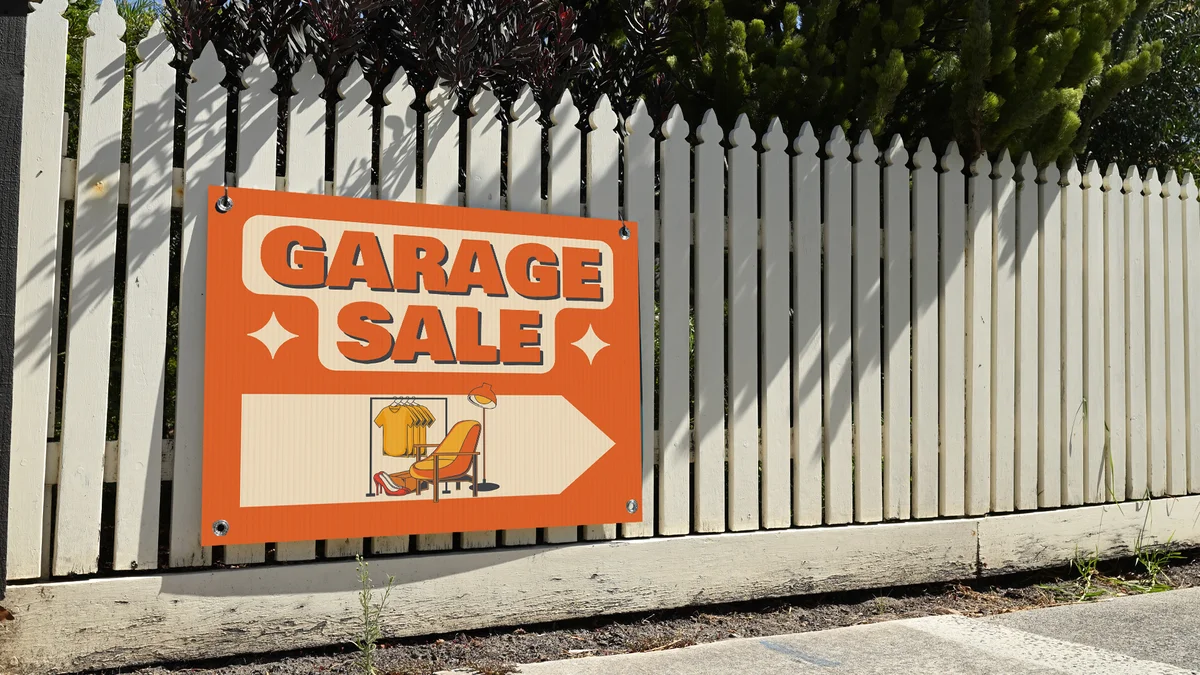
Both corflute and PVC printed, finished, and shipped from Sydney. Free file check on every order.
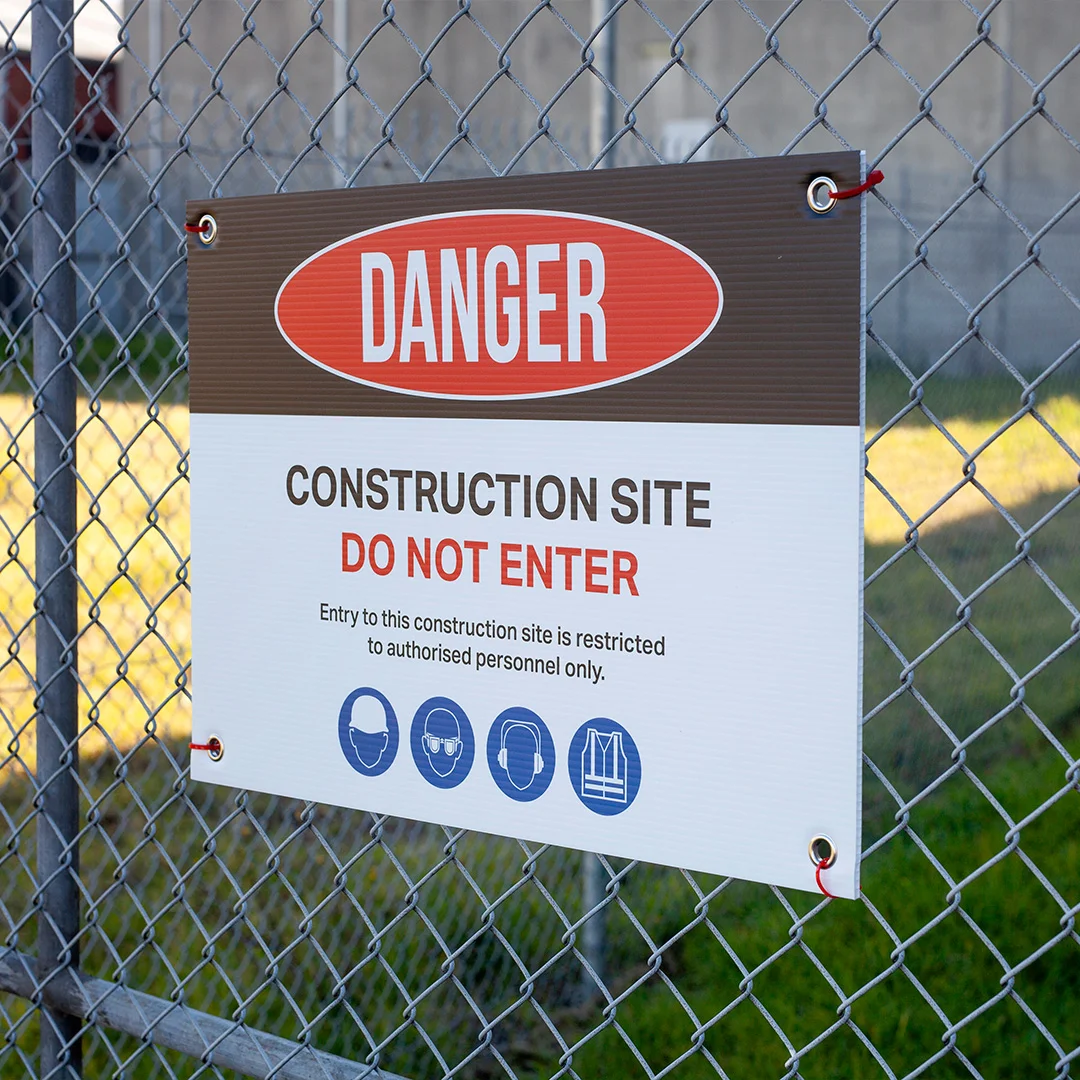
PVC (polyvinyl chloride) signs are made from a solid, rigid plastic sheet. There are no hollow channels, no visible fluting on the edges, and no flex. The surface is smooth and uniform, giving printed graphics a clean, finished appearance that reads as professional and permanent.
What PVC does well:
- Appearance: PVC has a sleek, flat surface that presents printed graphics with a polished, high-quality look. The solid edge and smooth face suit indoor environments where people will look closely at the sign.
- Rigidity: PVC holds its shape. Large-format PVC signs don’t bow or flex the way corflute can in windy conditions.
- Longevity: PVC is better suited to long-term outdoor or indoor installation than corflute. It handles UV exposure and temperature variation without degrading as quickly.
- Vibrant print quality: The solid, non-porous surface accepts ink evenly, producing vibrant, sharp results that hold up over time.
Where PVC fits best:
- Retail interior displays and point-of-sale signage
- Office lobby, reception, and wayfinding signage
- Trade show booth displays and exhibition panels
- Long-term outdoor signs on buildings or fixed structures
- Premium signage where close-up presentation matters
- Signage that will be handled and repositioned regularly, where the solid edge and weight read as quality
What PVC doesn’t do well: It’s heavier than corflute, which matters when you’re installing or transporting large volumes of signs. On a comparable-area run of 100, PVC A2 420 x 594mm works out to $9.94 per sign inc GST against $6.00 for a corflute 600 x 450mm sign, so it costs more per sign at volume. For a campaign where you need 100 signs and they’ll be removed after 6 weeks, that cost difference adds up quickly without delivering meaningful benefit.
Head-to-Head: Which Material by Scenario
Real Estate Lawn Signs
Corflute. They go in on Friday, come out after the open on Sunday, and get reused for the next listing. Light, cheap, and easy on stakes. PVC’s weight and cost don’t make sense here.
Retail Indoor Display
PVC. Customers walk right up to it. The sleek surface and solid construction read as professional. Corflute’s visible fluted edge would undercut the presentation.
Event Directional Signage
Corflute. You might need 40 directional signs spread across a venue or along a road. Corflute keeps the budget manageable and makes set-up and pack-down fast. One person can carry a stack of them.
Office Lobby or Reception Signage
PVC. This is a fixed, close-up environment where people are standing still and looking directly at your sign. PVC’s rigidity and smooth finish suit the context.
Construction Site Signage
Corflute. Safety notices, contractor IDs, and site branding on a building site get dirty, knocked around, and occasionally damaged. Cheap-to-replace corflute is the practical choice. It ties to fencing easily and handles site conditions well. Paperlust Print Shop prints construction signs on 3mm and 5mm corflute in 600 x 450mm, 600 x 900mm, and 900 x 1200mm, so one order can cover both eye-level hazard notices and full site-entry boards. A3 is 297 x 420mm and is not a stock size on the page, so order an exact A3 sign as a custom size: choose Custom Dimension in the Size menu, type the size in millimetres, and the price shows.
Trade Show Booth
PVC. Trade shows are competitive environments where your presentation matters. PVC panels look polished and hold up through multiple shows. They’re worth the extra cost when the display will be reused repeatedly.
Price Comparison: Is the Difference Worth It?
For a run of 100 signs on comparable panel areas, corflute is about 40% cheaper: $6.00 per sign inc GST for a 600 x 450mm corflute sign against $9.94 per sign for a PVC A2 420 x 594mm sign. For a single sign, the gap has closed: corflute starts at $30.00 for a 600 x 450mm sign, while PVC starts at $29.00 for a single A3 3mm sign, so the two are within a dollar at the entry level. The volume saving sits with corflute; on a single sign the prices are effectively level.
For a campaign requiring 50 signs, the cost difference is roughly $184. For 100 signs, it’s around $395. That’s not trivial when the signs are going into outdoor temporary use where appearance is secondary to visibility and coverage.
For a retail display, trade show panel, or indoor environment where the sign will be used repeatedly and people will stand close to it, the PVC premium is absolutely worth paying. The improved surface quality, rigidity, and longevity justify the cost.
The rule of thumb: if the sign is temporary and outdoor, choose corflute. If it’s permanent, indoor, or needs to impress up close, choose PVC.
Calculating Total Cost of Ownership
When comparing costs, the upfront price per sign is only part of the picture. Consider how long each sign will be used and whether it will need to be replaced. A corflute sign used outdoors for a 3-month real estate campaign and then replaced costs less per campaign than a PVC sign with higher upfront cost – but if you need a permanent lobby sign that will be in place for 3 years, PVC’s durability makes it cheaper over that lifespan. Work backward from the expected use case: how long will the sign be deployed, how many people will see it up close versus at distance, and does the material’s appearance matter for your brand in that context? The answers will almost always point to one material over the other.
Installation and Finishing Options
Corflute Installation Options
Corflute’s lightweight structure makes it exceptionally versatile for temporary installation. The most common options include metal H-stakes pushed into lawn or soft ground (the standard for real estate signs), eyelets or grommets through which cable ties attach the sign to fencing or scaffolding, and A-frame holders that grip the sign along the bottom edge. Double-sided printing is available for signs placed in locations where both faces are visible – a common setup for A-frame signs and median strip placements. For construction sites, corflute signs are often mounted on posts or looped onto barrier fencing with zip ties. The fluted core direction matters for stake installation: orient the flutes vertically for stake-mounted signs, as this aligns the internal ribs with the stake and provides better resistance to bending. Browse our range of corflute signs with full installation accessory options. A related option for political and community campaigns is our range of corflute election signs, configured for polling place fences and roadside campaign displays.
PVC Installation Options
PVC board is typically installed with screws through pre-drilled holes, adhesive mounting strips for wall installation, or frame and channel systems used in trade show and retail display contexts. The solid, dense material takes screws and anchors cleanly without cracking, which makes it well suited to permanent wall mounting. For retail environments, PVC signs are often suspended from the ceiling using clear fishing line or display wire through corner holes – an installation that looks clean and professional. In trade show contexts, PVC panels slot into modular frame systems designed for the exhibition industry. Because PVC is heavier than corflute, wall-mounted and ceiling-suspended installations should use appropriate hardware rated for the sign weight.
Ready to Choose?
Corflute is produced in 24 hours on every size; PVC signs are produced in 48 hours. Both ship flat-rate across Australia, at rates that vary by product size.
- Order corflute signs from $30.00 AUD per sign inc GST for a single one-sided 600 x 450mm 3mm sign
- Order PVC signs from $29.00 AUD per sign inc GST for a single A3 3mm one-sided rectangle
Not sure which is right for your application? The product pages include size options and specifications to help you decide. Or browse the full sign boards range to see all available materials.
Compare for yourself: For a volume run, corflute 600 x 450mm signs are $6.00 per sign inc GST at qty 100, while PVC A2 420 x 594mm signs are $9.94 per sign inc GST at qty 100 at Paperlust Print Shop.
How to Decide: Corflute or PVC for Your Sign Job
If you can’t name the date you’re removing the sign, go PVC. Corflute earns its place when removal date is known and within 18 months. The most expensive sign is the one you replace twice because you under-spec’d the first one.
The corflute-vs-PVC decision checklist
- Removal date known? — Yes → corflute often fine. No / never → PVC every time
- Outdoor lifespan — Under 18 months → corflute. 24+ months → PVC (corflute fades)
- Print detail — Photographic / fine type → PVC (smoother surface)
- Mounting method — Stakes / zip-tie / eyelet → corflute. Wall mount / screw → PVC
- Budget — One panel around $30 → either material (corflute $30.00, A3 PVC $29.00). Bulk runs → corflute
- Wind / coastal — Either works — specify reinforced eyelets and 5mm thickness
Mixed-format campaign?
Most multi-site rollouts use corflute for short-term plus PVC for permanent. We can spec and print both in the same order.
Frequently Asked Questions
What is the main difference between corflute and PVC signs?
Corflute is a lightweight fluted polypropylene sheeting – the same ribbed plastic used in real estate signs. It’s affordable, easy to handle, and good for short-to-medium term outdoor use. PVC (rigid PVC board or Forex) is a denser, heavier material with a smooth surface on both sides. PVC is more rigid, takes fine print detail better, and handles longer-term exposure without warping. Corflute excels in cost-sensitive, high-volume, or temporary applications. PVC suits permanent signage, premium displays, and situations where the sign’s appearance matters over an extended period.
Which material is better for outdoor signage?
Both handle outdoor conditions, but for different durations. Corflute holds up well for 6-18 months outdoors – real estate signs, event signage, and construction site notices are typical use cases. It can bow slightly in high heat and the fluted structure can trap moisture over time in very wet conditions. PVC is better for permanent or long-term outdoor signage – it resists UV degradation more effectively, doesn’t bow, and maintains its rigidity over years. If you need a sign to look good after 2-3 years of outdoor exposure, PVC is the right choice. For campaigns that refresh every few months, corflute is more practical. See options at corflute signs.
Is corflute or PVC cheaper?
Corflute is significantly cheaper per square meter than PVC. The price gap widens with quantity – corflute is one of the most cost-effective printable sign materials available. PVC costs more upfront but may offer better long-term value for permanent applications because it doesn’t need to be replaced as often. When comparing costs, factor in the intended lifespan: a corflute sign replaced every 6 months over 3 years may end up costing more in total than one PVC sign that lasts the same period. For high-volume temporary campaigns – real estate listings, elections, events – corflute’s low unit cost is hard to beat.
How does print quality compare between corflute and PVC?
PVC produces sharper, more detailed print results because its smooth, dense surface holds ink more consistently. Fine text, gradients, and photography reproduce better on PVC than on corflute. Corflute has a slightly textured surface due to its fluted construction, which can soften very fine detail in print. For most signage use cases – logos, headlines, contact details – the difference isn’t noticeable. For high-resolution images or signage where fine print quality is a selling point (retail displays, exhibition panels), PVC delivers a more polished result. If your design uses large bold text and solid colors, corflute print quality is entirely adequate.
Which material is better for long-term or permanent signage use?
PVC is the better choice for long-term and permanent applications. It doesn’t warp under heat, maintains structural rigidity, and is more resistant to UV fading when used with appropriate inks and laminates. PVC signs can last 3-5 years outdoors with proper installation and UV-resistant print. Corflute is generally treated as a semi-permanent or temporary material with an expected outdoor lifespan of 6-18 months depending on conditions. For signs attached to buildings, permanent site identification, or any application where replacement is inconvenient or costly, PVC’s durability justifies the higher initial investment. For everything else, corflute’s combination of cost and performance is difficult to match.