One quote for gold foil business cards lands at under $200 for 250 cards. Another comes in at $541.54 for a hundred. Neither price is wrong. The difference is the method, not the metal.
At Paperlust Print Shop, the phrase gold foil business cards describes four different products made four different ways. Flat foil sits flush with the paper. Raised foil stands up from the board. Foil stamped gold is pressed into cotton and sits in a slight recess. Embossed foil raises the gold and the board in one hit. Each route changes the feel, the stock, the minimum, and the wait.
This guide walks you through the four routes, compares them side by side, then looks at each card in turn. You will also see the colour range and a practical way to choose based on deadline, quantity, texture, and budget.
The short version
- There are four routes: flat foil, raised foil, foil stamped, and embossed foil. The first two are digital, the last two are pressed cotton.
- Flat foil has a flush surface and starts at 50 cards.
- Raised foil stands up to 200 microns and starts at 250 cards.
- Foil stamped sets gold into a recess on cotton board.
- Embossed foil raises gold and cotton in one pressed hit.
- The pressed cards need 18 to 23 working days once your design is approved, delivery included.
What makes a card gold foil
Gold foil business cards start with a metallic film, not metallic ink. Foil is a thin sheet of metalised material that reflects light the way the real metal does. Metallic ink, by contrast, is pigment mixed with binder. It can suggest gold, but it stays flat on the surface and does not have the same brightness.
Gold leaf is a separate thing again. It is a hand applied craft finish, laid sheet by sheet onto a surface. It is distinct from printed foil. None of the cards in this guide use gold leaf, and Paperlust does not offer it as a product.
Within printed foil, Paperlust makes four different cards. Flat foil bonds gold to printed toner so the foil sits flush. Raised foil combines embossing with foil so the gold stands proud of the board. Foil stamped presses gold into uncoated cotton and leaves it recessed. Embossed foil presses gold and a raised impression in a single hit.
The four ways to make gold foil business cards
If you judge a finish only by the word on the page, every one of these reads the same. Compare them side by side and the differences are physical: height, depth, stock, and lead time.
| Card | How the gold goes on | Surface | Stock | Foil colours | Minimum | Lead time |
|---|---|---|---|---|---|---|
| Flat foil | Foil film bonded to printed toner under heat and pressure | Level with the paper, no texture | 300 GSM Matte, 360 GSM Premium, 350 GSM Heavyweight, 270 GSM Navy, 270 GSM Black | Gold and silver, plus rose gold, copper, and holographic | 100 cards | 3 to 5 working days |
| Raised foil | Embossing combined with metallic foil | Raised elements typically 100 to 200 microns high | 450 GSM Artboard with Velvet Laminate | Gold, silver, and rose gold | 250 cards | 2 to 4 working days |
| Foil stamped | Die presses metallic foil into board with heat and pressure | Recessed impression | 300gsm Wild Cotton premium cotton board, white only | Gold and silver, plus rose gold or copper; others on request | 100 to 250 in steps of 10 | 18 to 23 working days |
| Embossed foil | One combined die applies foil and emboss in a single press hit | Raised with foil in exact register | 300gsm Wild Cotton board, white only | Gold and silver, plus rose gold and copper; others on request | 100 to 250 in steps of 10 | 18 to 23 working days |
The first split is production method. Flat foil is a digital card: it is printed on a digital press, and foil is fused to the printed toner with heat and pressure. Raised foil is also digital, combining embossing with metallic foil. Both are produced in a handful of working days. The foil stamped card and the embossed foil card are made to order on uncoated cotton board. They are produced in 18 to 23 working days after the design is signed off, with delivery to an Australian address included.
The second split is surface. Flat foil has no raised texture, so you get a perfectly flat card. Foil stamped sits in a recessed impression on soft uncoated board. Raised foil and embossed foil both stand proud of the board, but for different reasons. Raised foil adds metallic height on a laminate, while embossed foil raises the cotton itself in the same press hit.
Flat foil business cards
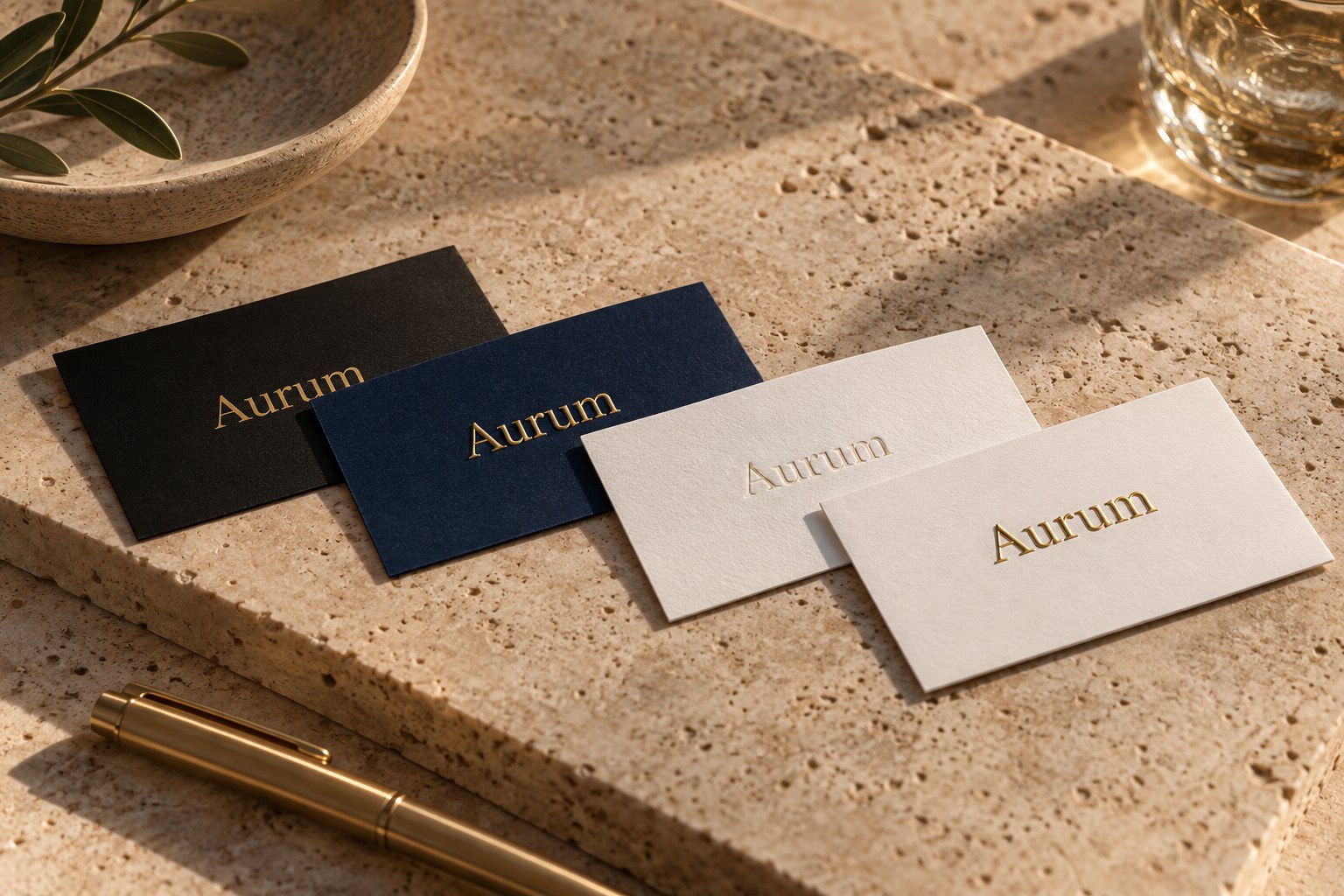
Flat foil is the route most people come to first, usually because of the price. The card is printed on a digital press. Once the toner is down, a metallic foil film is fused to the toner using heat and pressure. The foil clings only where the toner is, so the gold follows your design exactly. Because the foil sits level with the sheet, there is no texture to feel. The surface stays smooth.
Flat foil gives you the widest stock choice of the four routes. You can print on 300 GSM Matte, 360 GSM Premium, 350 GSM Heavyweight, 270 GSM Navy, or 270 GSM Black. This is the route to choose if you want gold on a dark card, because the pressed cotton cards come on white board only. Foil is applied to one side only, but both sides can be printed. That means you can have a gold logo on the front and colour or type on the back.
You choose one foil colour per card: gold, silver, rose gold, copper, or holographic. The minimum order is 100 cards. Production takes 3 to 5 working days after the design proof is approved. On price, a live example from the product page shows 250 flat foil cards at 90 x 55 mm cost $199 including GST.
That is a low per card cost for a metallic finish, but it is not the same finish as a pressed card. What you give up is the uncoated cotton texture and the recessed or raised impression of the pressed cards. What you gain is speed, colour range, and a much lower starting price. If you want more detail on the stocks and setup, the flat foil business cards product page carries the latest options.
Raised foil cards and the velvet laminate
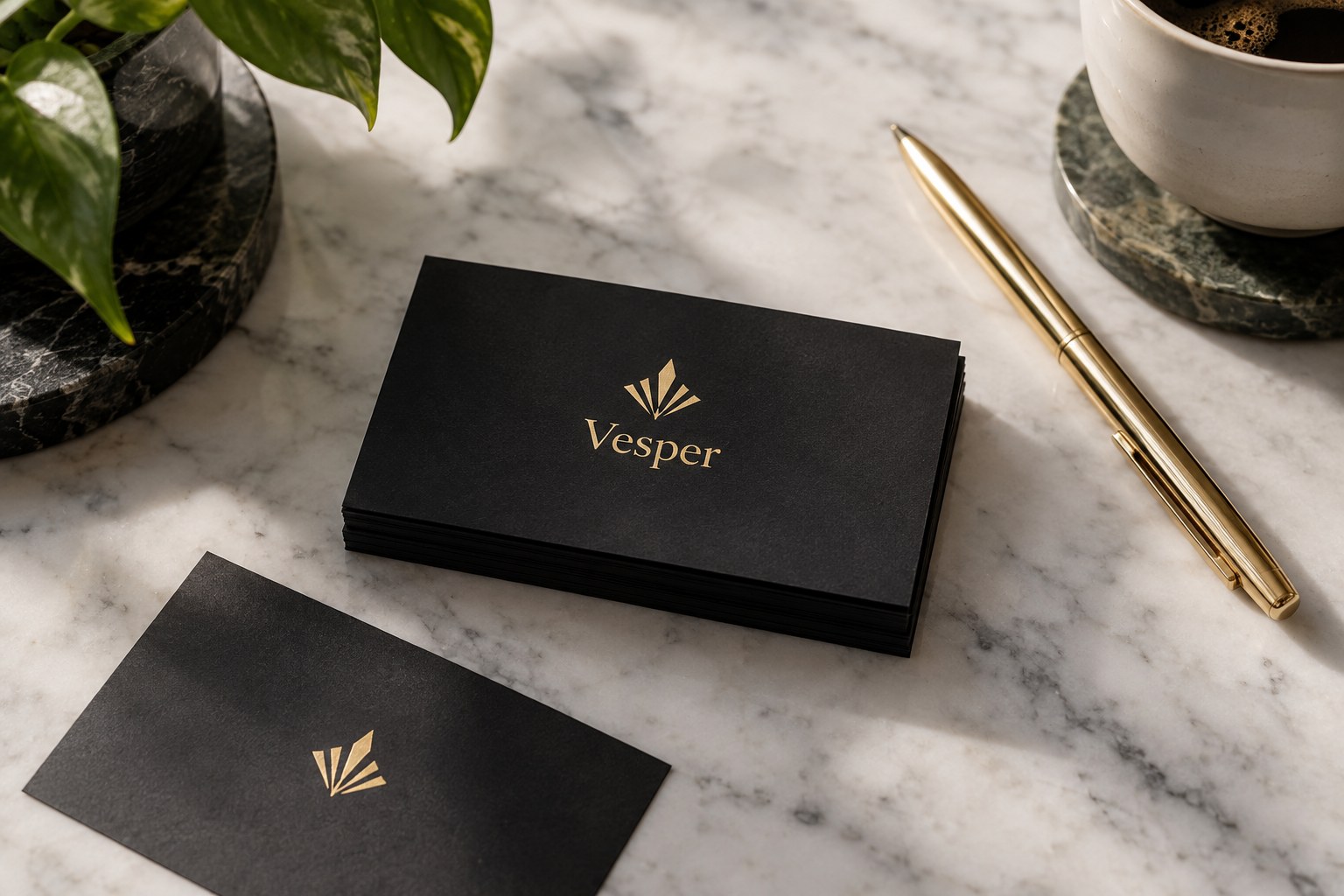
Raised foil takes the metallic film and adds height. The card combines embossing with metallic foil. The raised metallic elements are typically 100 to 200 microns high, so your gold details stand above the board. You feel the difference the moment you run a thumb over them.
The card is printed on 450 GSM Artboard with Velvet Laminate. The stock is substantial, and the laminate gives the whole card a soft, matte feel. One foil colour per card: gold, silver, or rose gold. Minimum order is 250 cards, and production takes 2 to 4 working days once your proof is approved.
On price, a live page example shows 500 raised foil cards at 90 x 55 mm cost $256.08 including GST. That is the price on 450 GSM Artboard with Velvet Laminate, front only, gold foil. It is not the same thing as an embossed foil card on cotton, even though both sit raised. The difference is the board below, which you notice as soon as you hold the two cards together. See the raised foil business cards product page for the full configuration.
Foil stamped business cards
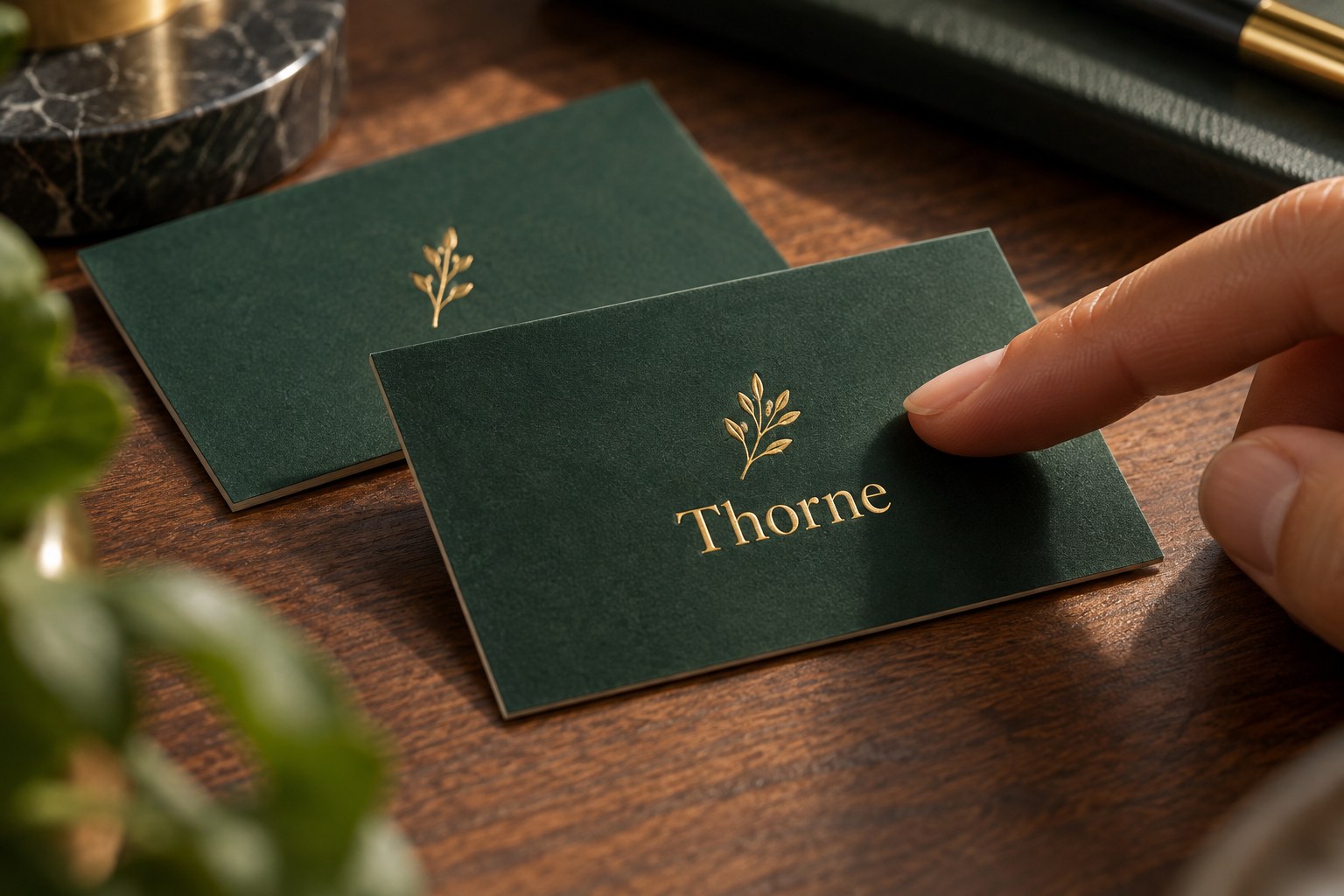
Foil stamped is the first of the pressed cotton routes. It starts with a die. The die presses metallic foil into the board with heat and pressure. The result is not glued to the surface or bonded to toner. The gold becomes part of the card’s surface, sitting inside a slight impression.
Because the stock is a soft, uncoated 300gsm Wild Cotton board, the pressure of the die leaves a recessed impression with the foil inside it. Run a fingertip across the card and you feel a gentle dip, not a raised edge. The surface is otherwise uncoated, so the card has the feel of a premium letterpress product. Stock colour is white only. The card is printed front only; the back is left unprinted.
Orders run from 100 to 250 cards in steps of 10. One foil colour per card: gold, silver, rose gold, or copper, with other colours on request. The pressed cards are made to order and take 18 to 23 working days after final design approval, with Australian delivery included. On price, 100 cards cost $541.54 including GST, and 250 cards cost $609.23 including GST.
That is a far higher cost per card than the digital routes. It is the price of cotton stock and a metal die on a run capped at 250 cards. See the foil stamped business cards product page to check the current specification.
Embossed foil business cards
Embossed foil is the fourth route. One combined die applies the foil and the emboss in a single press hit. The foiled artwork sits raised in exact register with the emboss. Foil and emboss cannot be separated on this card. If a design has gold and raised lines that run together perfectly, this is the method that keeps them locked as one.
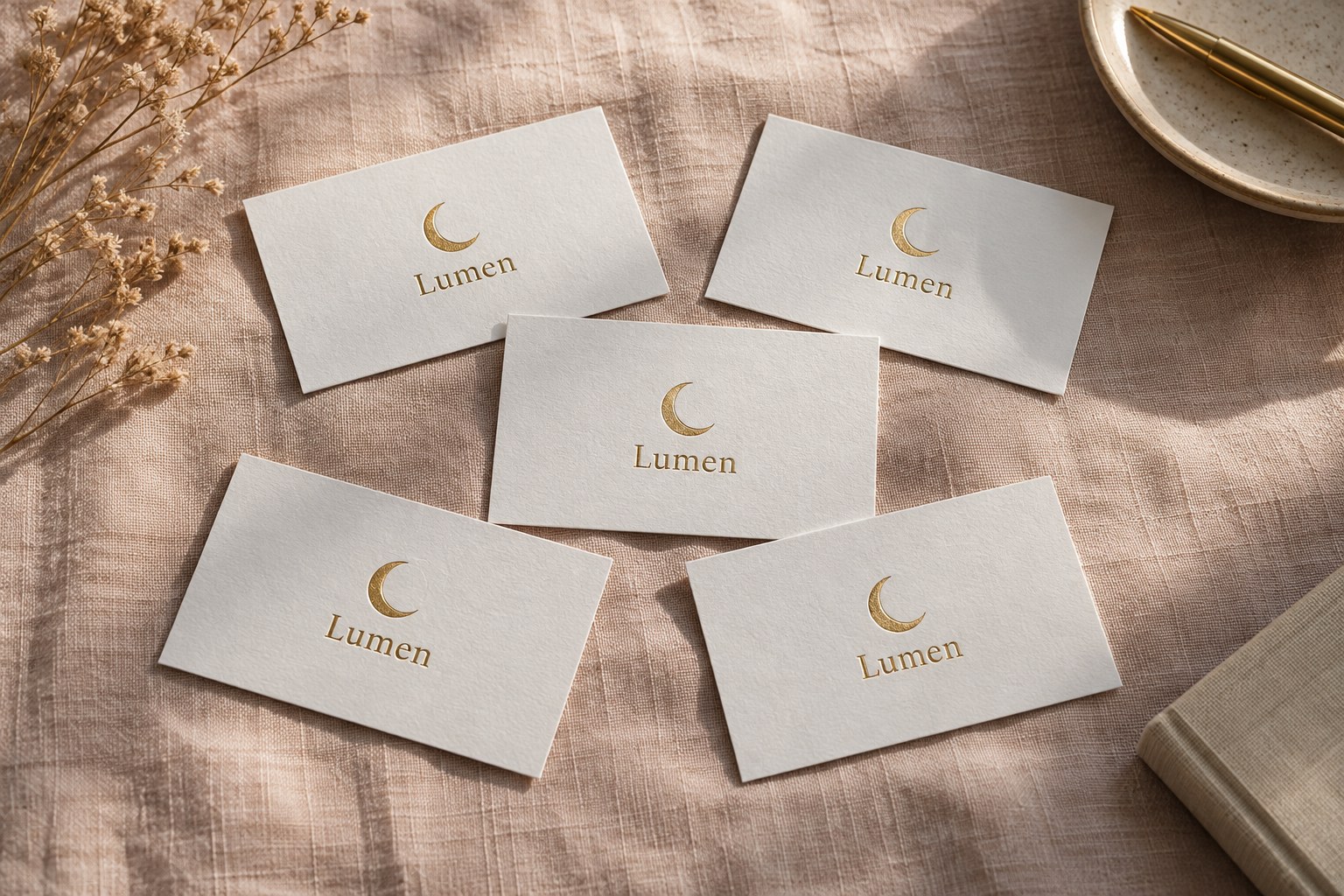
The stock is the same as foil stamped: white 300gsm Wild Cotton stock, uncoated, printed front only, with the back left unprinted. Orders run from 100 to 250 cards in steps of 10. The price and lead time match foil stamped: 18 to 23 working days after final approval, with delivery included, $541.54 for 100 cards and $609.23 for 250.
One point worth knowing: people often say gold embossed business cards to describe any raised gold card, even when they mean raised foil or a digital finish. If you are comparing quotes, ask what the stock is and whether the card is pressed into cotton. The words embossed foil on Paperlust product pages refer to the pressed cotton card, not the digital one.
When you order embossed foil business cards, you are ordering the pressed cotton card described above. If you want to know more about embossing on its own, our guide to embossed business cards in Australia explains the process in depth.
Colours, silver, and choosing a route
Flat foil gives you the broadest palette: silver and gold, plus rose gold, copper, and holographic, one colour per card. Raised foil keeps it tighter with gold, silver, and rose gold. The two pressed cotton routes offer gold, rose gold, silver, or copper, with other shades available on request.
If you want gold on a dark card, you are choosing flat foil. The pressed cards are white only. Flat foil can sit gold on 270 GSM Black or 270 GSM Navy, which is why a black business card with gold tends to come from the digital route. We have written separately about rose gold foil if you are weighing it against gold. Our guide to black business cards in Australia digs into dark stock choices.
Deadline is the next cut. If your timeline is short, the digital production windows are the only practical fit: flat foil at 3 to 5 working days, raised foil at 2 to 4, both counted from proof approval. The pressed cards take 18 to 23 working days. Quantity matters too: flat foil starts at 100, raised foil at 250, and the pressed cards run from 100 to 250 in steps of 10.
Texture is where the pressed cards earn their price. If you want the feel of cotton and a recessed or raised impression, the foil stamped route and the embossed foil route are the ones to look at. Budget is the honest constraint: $199 for 250 flat foil cards, $256.08 for 500 raised foil cards, and $541.54 for just 100 pressed cards. Two sided printing is another consideration: flat foil is foil on one side only but both sides can be printed; the pressed cards are printed front only.
Before you commit to a digital finish, order the sample pack. It costs $5.00 including GST and holds one card each of standard, flat foil, coloured paper, duplex, Scodix, and raised foil cards. It lets you feel the difference between flush flat foil and raised foil on velvet laminate. One thing it does not do is show you the pressed cotton cards. The two pressed cotton routes are not included in the sample pack, so you cannot feel the recess or the raised cotton before ordering.
Frequently asked questions
What is the difference between flat foil and raised foil cards?
Flat foil business cards are printed on a digital press, then metallic foil film is fused to the toner using heat and pressure. The foil sits level with the sheet, so there is no texture. Raised foil cards combine embossing with metallic foil. The raised metallic elements are typically 100 to 200 microns high, printed on 450 GSM Artboard with Velvet Laminate. Flat foil starts at 50 cards; raised foil at 250.
Are gold foil and gold embossed business cards the same thing?
Not always. The phrase gold embossed business cards is often used loosely for any raised gold card. At Paperlust, embossed foil is a specific pressed cotton product: one combined die applies foil and emboss in a single press hit, and the foil and emboss cannot be separated. Foil stamped is different again, the gold sits in a recessed impression on soft uncoated board. Raised foil is the digital card that adds height. So the words matter more than usual.
Can I get gold foil on a black business card?
Yes, but only with flat foil. Flat foil can be applied to 270 GSM Black or 270 GSM Navy. The pressed cotton cards are white only on 300gsm Wild Cotton stock. If gold on a dark card is your goal, flat foil is the route.
What is the minimum order for gold foil business cards?
Flat foil starts at 50 cards. Raised foil starts at 250 cards. The pressed cotton options run from 100 to 250 cards in steps of 10.
How long do gold foil business cards take?
Flat foil takes 3 to 5 working days after proof approval. Raised foil takes 2 to 4 working days. Both pressed styles take 18 to 23 working days after final approval, with delivery within Australia included.
Is copper or holographic foil available?
Copper and holographic are flat foil colours, along with gold, silver, and rose gold. Raised foil only offers gold, silver, and rose gold, so no copper or holographic there. The pressed cards can be ordered in gold, silver, rose gold, or copper, with other colours available by request.