
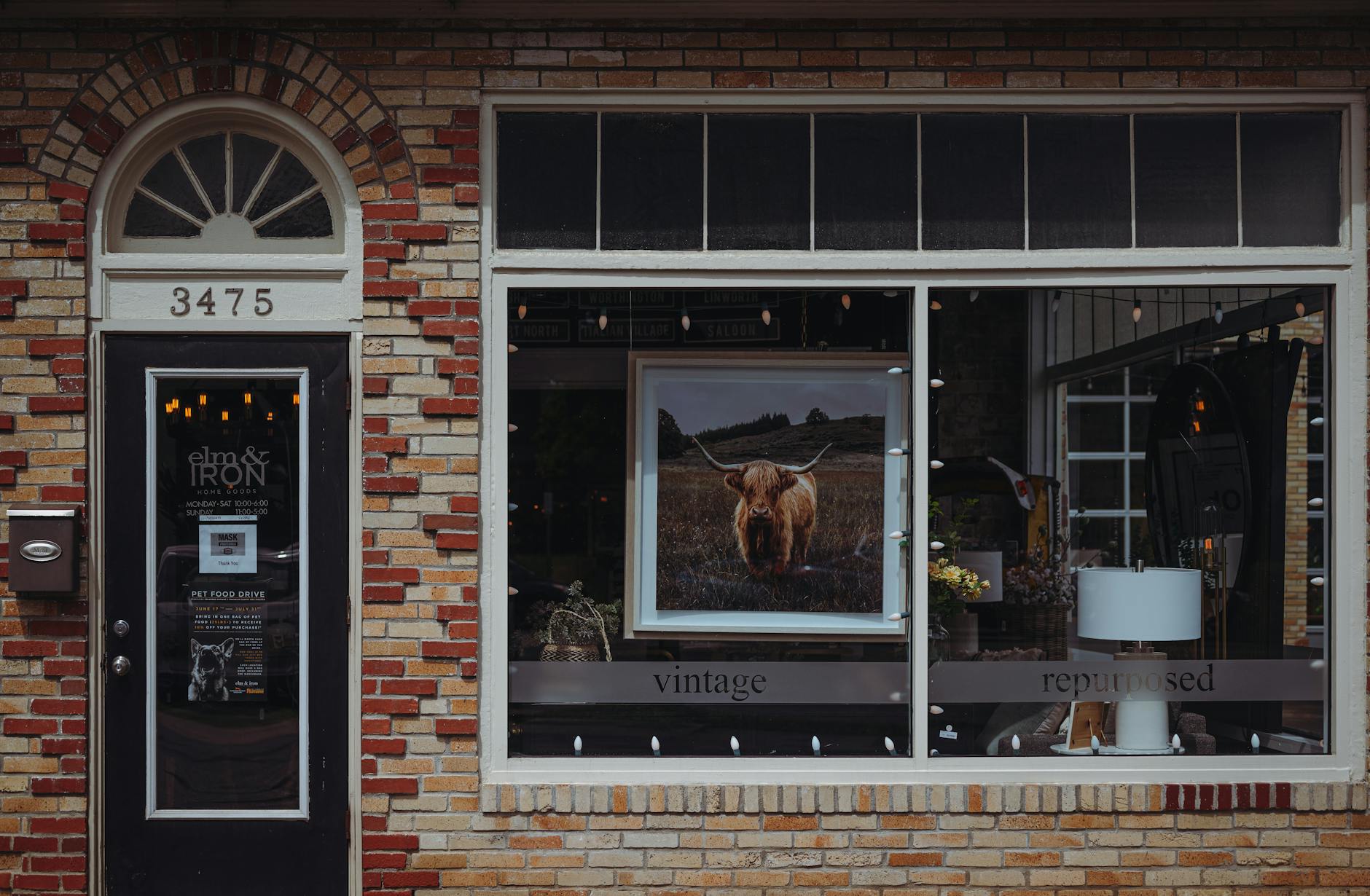
Your building says something before your staff ever do. A clear shopfront sign brings foot traffic in. A polished reception panel tells clients they are in the right hands. A well-placed A-frame stops a passer-by who would otherwise keep walking. Signage is not a one-off purchase: it is a system, and the businesses that get it right think about it that way.
This guide covers every sign type relevant to a physical premises in Australia, from fascia and window graphics through to interior wayfinding and reception panels. It is written from the buyer’s point of view: what do you actually need, what should it be made from, and how do you order it?
At a glance
- Shopfront: fascia or under-awning sign, plus window decals for ground-level visibility
- Reception and foyer: acrylic panel sign for professional indoor branding
- Footpath: corflute A-frame to capture walk-past traffic
- Wayfinding: directional corflute or printed panels for multi-tenancy buildings
- Door and window: cut-vinyl or full-colour decals for hours, logo, and contact details
- Fast Australian printing available: most signage ships within a week of artwork approval
Fascia Signs: Your Primary Street-Level Statement
A fascia sign sits on the flat facade above your shopfront, usually between the top of the window and the roofline. It is the largest, highest-visibility piece of signage your premises will carry, and it works day and night (weather permitting).
What fascia signs are made from
Most printed fascia signs use ACM (aluminium composite material) or foam-PVC board as the substrate, with UV-printed full-colour graphics. These are rigid, flat panels that can be mounted directly to the building face or sit inside a box frame. For businesses after a premium look, illuminated lightboxes are another option, though these involve installation by a trades contractor.
For small businesses wanting a fast, cost-effective fascia option, large-format digital printing on durable material is the practical entry point. Your sign installer can advise on substrate thickness for your span.
What to put on a fascia sign
Keep it to: your business name, tagline (if short), and logo. Resist the urge to add a phone number or website at this format. At street level and vehicle speed, a buyer has two to three seconds of attention. Name and logo is enough.
Window Decals and Window Film: Ground-Level Detail

Your windows do the heavy lifting at eye level. Shoppers walking past are reading your glass, not your fascia. That makes window decals one of the most cost-effective signage investments for retail and hospitality.
Types of window treatment for business
| Format | Visibility from outside | Visibility from inside | Best for |
|---|---|---|---|
| Full-colour vinyl decal | High | Blocked in covered area | Logos, promotions, hours |
| One-way vision film | High | Near-normal | Privacy with outside visibility |
| Frosted/etch vinyl | Partial (pattern visible) | Partial | Privacy, glass partition branding |
| Cut vinyl lettering | High (text/logo only) | Unblocked | Minimal, clean look |
| Static-cling decal | Moderate | Blocked in covered area | Seasonal, temporary use |
For most shopfronts, a combination works best: cut-vinyl or full-colour decal for your logo and hours on the door, frosted film for privacy on lower panels, and one-way vision or full-colour decals on display windows.
For a full breakdown of window decal formats, application methods, and removal tips, see the window decals for business guide.
A-Frames: The Footpath Closer
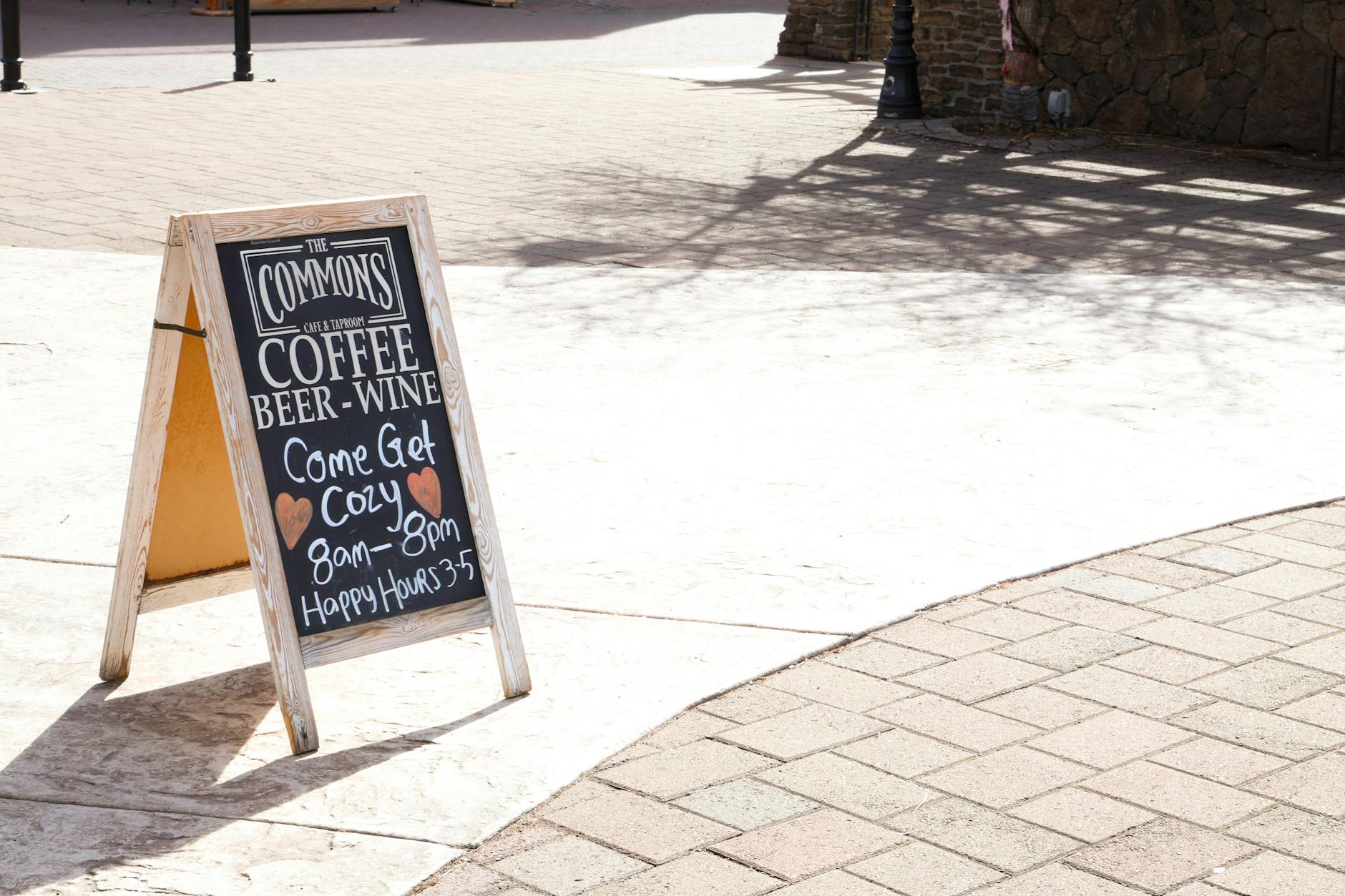
A-frame signs (also called sandwich boards or corflute A-frames) sit on the footpath outside your premises and do one job: stop a pedestrian who had no intention of coming in. They are particularly effective for cafes, retailers, beauty businesses, and any service where impulse-visit matters.
A-frames vs. other footpath signage
A-frames work in almost any space because they are portable and double-sided. You can swap the insert daily (for specials, menus, or messages) if you use a corflute insert format. Some councils require permits for footpath signage, so confirm local rules before ordering.
Corflute inserts for A-frames
Corflute (fluted polypropylene board) is the standard material for A-frame inserts. It is lightweight, weather-resistant, and prints cleanly in full colour. Standard insert sizes are typically A1 (594 x 841mm) or 600 x 900mm. You can order multiple inserts and rotate them throughout the week.
Corflute is also used for temporary directional signs, site entry signs, and real estate boards. See corflute signs: complete guide for outdoor advertising for a full breakdown, or go directly to the corflute and plastic signs product page for sizes and pricing.
Door Signage: Hours, Entry, and Compliance
Every premises needs door signage. At minimum, this means:
- Trading hours: day and time format, clearly readable at arm’s length
- Entry instructions: push/pull, buzzer, accessibility, mask requirements (where relevant)
- Contact details: phone and website for after-hours enquiries
- Compliance notices: relevant to your industry (food safety, licensed premises, etc.)
Most of this works as cut-vinyl or printed vinyl decal on glass or a flat panel beside the door. Keep font sizes at or above 12pt at 300dpi equivalent for window-mounted text at reading distance.
For glazed doors with strong backlight, frosted or white-vinyl printing gives better contrast than clear-substrate printing.
Reception and Foyer Signage: Inside the Door

Once a client or visitor steps inside, your interior signage takes over. The reception area is where acrylic panel signs deliver the clearest return.
Acrylic Panel Signs
Acrylic panel signs are printed on 3mm cast acrylic and finished with polished edges. They sit off the wall on standoff fixings (cylindrical spacers that create a floating effect), giving a high-end, architectural look without the cost of fabricated dimensional letters.
What to use them for:
- Company name and logo on the feature wall behind reception
- Brand statement or values panel in a waiting area
- Service menu or pricing board in a salon, clinic, or studio
- Door number or suite identification in a multi-tenancy building
Sizes available:
| Size | Dimensions | Typical use |
|---|---|---|
| A2 | 420 x 594mm | Desk or counter-level branding, small rooms |
| A1 | 594 x 841mm | Feature wall logo, meeting room branding |
| Custom | On enquiry | Full-width reception walls, lobby installations |
Mounting: Standoff fixings are purchased separately and are widely available from hardware suppliers. The four-corner fixing pattern suits most panel sizes. For very large panels, a six or eight-point pattern is recommended.
For full specs and pricing, see the acrylic reception panel signs product page.
Other Interior Signage Options
- Printed foam-PVC panels: Lower cost than acrylic, same wall-mounting approach, suitable for staff areas or back-of-house.
- Framed posters: A quick option for service menus, rate cards, or promotional content that changes regularly. Standard A1 and A2 sizes fit most off-the-shelf frames.
- Directional corflute: Lightweight and easy to re-position for open-plan or multi-room layouts.
Wayfinding and Directional Signs
Wayfinding covers any signage that helps people navigate: parking arrows, floor-level directories, department labels, and exit routes. For small single-premises businesses, this usually means a handful of printed directional arrows or room labels.
For offices and professional services:
- Floor number or suite identification (acrylic panel or printed vinyl)
- Meeting room naming (panel beside the door)
- Bathroom and emergency exit (compliance-grade, often purchased from a safety supplier)
For multi-tenancy buildings or larger retail:
- Building directory (printed panel near entry with tenant list)
- Lift lobby directional arrows (vinyl wall-mounted)
- Car park level identifiers (printed corflute or rigid panel)
If your premises spans multiple levels or areas, a consistent visual system across all directional signs reinforces professionalism. Use the same font, colour palette, and icon style across every piece.
Setting Up Your Artwork
Print-ready artwork for signage should meet these requirements:
- File format: PDF (preferred), AI, or EPS. Avoid Word or PowerPoint files.
- Colour mode: CMYK. Convert RGB images before submitting.
- Bleed: 3mm on all edges for any sign that prints to the edge.
- Resolution: Images embedded at 150dpi at final print size (signage is viewed at distance, so 300dpi at 1:1 is not required and produces unnecessarily large files).
- Fonts: Outlined (converted to paths), so no missing font issues on our end.
- Safe zone: Keep logos and key text at least 5mm inside the trim edge, beyond the bleed.
If you are sending brand assets to be incorporated into a layout, send logos as vector SVG or EPS files, not as low-resolution PNGs from a website.
How to Order Signage in Australia
Acrylic panel signs: Order direct at printshop.paperlust.co/products/acrylic-reception-panel-signs. Choose your size, upload artwork, approve the digital proof, and production begins. Most orders are printed within 24-48 hours of proof approval.
Corflute signs and A-frame inserts: Order at printshop.paperlust.co/products/corflute-plastic-signs. Standard production is 24 hours on the 600 x 900mm board and 2-3 business days on the other sizes. To compare substrates before you choose, start from the signage printing range.
Window decals: Order digitally printed window graphics or one-way window films. For specific decal types and sizing guidance, the window decals for business guide is the best starting point.
All signage is printed and dispatched from Australia. Delivery is available Australia-wide; express and standard shipping options apply depending on size and destination.
Frequently Asked Questions
What is a fascia sign?
A fascia sign is the main identification sign mounted on the flat facade of a building, typically above the shopfront windows. It carries your business name and logo and is the primary exterior identification sign for a retail or commercial premises.
What signs do I need for a new shopfront?
At a minimum, plan for a fascia sign (or under-awning sign) for your building identification, window decals for hours and contact details, and a door sign for compliance notices. An A-frame is a strong addition for footpath traffic. If budget allows, an acrylic panel sign in your reception completes the interior brand statement.
What is the difference between acrylic signs and corflute signs?
Acrylic signs are rigid, glass-like panels used indoors for reception branding, office identification, and premium interior applications. They are not suitable for outdoor use. Corflute signs are lightweight fluted polypropylene, designed for outdoor temporary use: A-frames, real estate boards, event directionals, and site signs. They are not recommended for permanent indoor display.
Can I get custom sizes for my shop sign?
Standard acrylic panel signs are available in A2 and A1. Custom dimensions can be arranged by enquiring through the product page. Corflute signs are available in A3, A2, A1 and 600 x 900mm, which covers most shopfront A-frame needs.
How long does shopfront signage printing take in Australia?
Acrylic panel signs are typically ready within 24-48 hours of artwork approval. Corflute signs are produced in 24 hours on the 600 x 900mm board and 2-3 business days on the other sizes. Both are shipped from Australia. Check the relevant product page for current turnaround times.
Do I need a council permit for an A-frame sign on the footpath?
This varies by local council. Most metropolitan and regional councils have specific rules around footpath signage, including permitted dimensions, hours of display, and clearance from the kerb. Contact your local council before placing a permanent A-frame on the footpath. For temporary events or markets, permit requirements are usually less strict.
What material should my reception sign be made from?
Acrylic is the most popular choice for reception and foyer signs because it has a polished, professional finish, takes digital printing cleanly, and holds up well long-term indoors. It is available in clear, white, black, matte, mirror, and frosted finishes.
Can window decals be removed without damaging the glass?
Quality vinyl window decals are designed for clean removal. Heating the decal with a heat gun or hairdryer softens the adhesive, allowing low-angle peeling without glass damage. Any remaining residue cleans off with isopropyl alcohol. Static-cling decals are the easiest to remove and reposition, making them a good choice for seasonal or temporary window graphics.