If you work in real estate in Australia, print still does the heavy lifting. A vendor’s home needs a corflute sign before it even hits the portals. An open home needs a retractable banner at the kerb so buyers turn in. A just-sold postcard drop builds your local market authority faster than a Facebook ad. And your business card is handed over at every inspection, appraisal, and settlement.
This guide covers every print item a real estate agent or principal needs, what specs actually matter for each, and how to order them through one supplier so your branding stays consistent across the whole kit.
At a glance: the 5 prints every real estate agent needs
- For-sale, auction and open-home corflute signs (3mm or 5mm flute, weatherproof)
- Retractable banners for open home entrances and office reception
- Postcards for just-listed and just-sold letterbox drops
- Standard business cards for inspections, appraisals, and networking
- A-frames (corflute insert) for footpath directional signage
Corflute For-Sale and Auction Signs
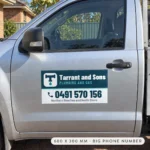
A corflute plastic sign is the first piece of print every listing needs. It goes on the front fence or mounted on a stake before the property is even publicly listed, and it stays there until settlement. For high-volume agencies, it is also the highest-quantity, highest-rotation item in the print budget.
Why corflute for real estate signs
Corflute (also called fluted polypropylene or Correx) is the standard material for AU real estate signage because it is lightweight, fully weatherproof, and inexpensive enough to treat as semi-disposable. A 3mm board handles residential for-sale and open-home applications. A 5mm board is the choice for larger format signs (A0 and above) or for anything that needs to stand unsupported in a stake for an extended campaign. After the sale, sold stickers update the board without a full reprint. They are self-adhesive white vinyl with SOLD, UNDER CONTRACT and LEASED layouts, and they apply straight over the existing corflute sign.
Digital print on corflute produces crisp full-colour output. The flute runs horizontally on landscape boards and vertically on portrait boards, which affects how the sign sits on a stake. Most residential real estate signs are landscape format so the horizontal flute is the norm.
Recommended sizes for real estate corflute
| Sign type | Common size | Format | Notes |
|---|---|---|---|
| Standard for-sale | 900 x 600mm | Landscape | Fits most residential fence stakes |
| Large for-sale / prestige | 1200 x 900mm | Landscape | Higher visual impact on wider frontages |
| Auction sign | 900 x 600mm | Landscape | Typically combined with for-sale board |
| Open home directional | 600 x 400mm | Landscape | Lightweight, easy to reposition |
| A0 site sign | 1189 x 841mm | Portrait | For larger blocks, commercial properties |
For standard residential listings, the 900 x 600mm board is the industry default. It reads well from a passing car and mounts cleanly to a stake or fence rail.
A-frames for footpath directionals
A-frames use a corflute insert panel rather than a standalone sign. The frame holds the panel at kerb height and folds flat for storage. Real estate agents typically run three to five directional A-frames per open home to route buyers from the nearest arterial road to the property. Because the panel is corflute, it is interchangeable: a different address prints on the insert for the next listing. See Paperlust corflute plastic signs for panel sizing options that fit standard A-frame hardware. For a complete frame with the print laminated onto the face instead of a swappable insert, see real estate A-frame signs.

Branding on corflute: what to brief your designer
Real estate corflute is almost always white background with agency colours, agent name, and phone number in large type. The listing address and open home date/time print in a smaller but still legible size. Key artwork rules:
- Keep text at least 15mm from any edge (bleed allowance plus safe zone)
- Phone numbers at 60pt or larger for roadside legibility
- Use CMYK values for brand colours, not RGB
- Supply files as PDF with 3mm bleed on all sides
For more detail on corflute sign sizing and print specs, see the complete corflute sign guide.
Retractable Banners for Open Homes and Office Reception
A retractable (pull-up) banner at the open home entrance does two jobs: it marks the property so buyers know they have the right address, and it reinforces your agency branding at the moment a prospect walks in. The same banner works in your office reception, at community events, and at auction presentations.
Which banner type for real estate
The standard retractable banner (also called a pull-up or roll-up banner) has a spring-loaded cassette at the base. The panel pulls up and locks into a support pole. It sets up in under two minutes and packs down to a carry bag roughly the size of a golf umbrella. For real estate, this is the practical choice.
A premium retractable banner uses a heavier-gauge base and a higher-quality vinyl panel, which reduces curl on the leading edge and gives the graphic a flatter, more polished presentation. For an office reception or a prestige auction, the premium version is worth the difference in cost.
| Feature | Standard retractable | Premium retractable |
|---|---|---|
| Base | Lightweight aluminium | Weighted aluminium, more stable |
| Panel material | Standard vinyl | Higher-gauge vinyl, anti-curl |
| Panel curl | Moderate over time | Minimal |
| Best for | Open homes, street events | Office reception, prestige auctions |
| Portability | Very portable | Slightly heavier, still portable |
Order from Paperlust premium pull up banners for the office-grade finish. For open home rotation stock where you need multiple units at competitive pricing, the standard retractable is the practical choice.
Standard banner sizes for real estate
The industry standard for retractable banners is 850mm wide x 2000mm tall. This height fills the visual field from floor to ceiling in a doorway or beside a reception desk. If the banner needs to go outdoors on a windy day, a narrower 600mm format is more stable. Avoid going wider than 1200mm with a single-pole retractable: the panel bows without extra support.
Artwork setup for banners
- Working height: 2000mm (the full visible panel, not including the cassette area)
- Bleed: 5mm on all sides
- Resolution: 300dpi at finished size
- Safe zone: keep all text and logos 50mm from top and bottom edges
- File format: PDF or high-resolution JPEG
Postcards for Just-Listed and Just-Sold Letterbox Drops
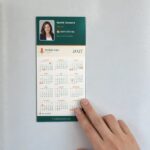
A letterbox drop postcard is one of the highest-conversion marketing tools available to a real estate agent in an established suburb. A just-listed postcard tells neighbours the property is on the market (prompting appraisal inquiries from owners who are watching comparable prices). A just-sold postcard anchors your sale result in the street’s memory, building your market authority listing by listing. For the quiet stretches between letterbox drops, fridge magnet calendars make a January drop that stays on the fridge through the year with your contact details. When a door knock finds nobody home, door hangers leave a printed card on the handle.
For the office itself and for vendors and past clients, a different format works better than a letterbox drop. The wall calendars can show your photos on the cover and each month, with the agency logo and a details line in the footer of the cover and each month’s page, and the desk calendars carry the same details in a strip along both sides.
What makes a good real estate postcard
Print quality matters because the postcard is a physical brand touchpoint that sits on a kitchen bench rather than disappearing into a social feed. Standard postcard stock for real estate drops is 350gsm with a gloss or satin laminate finish. A heavy board feels premium and reads as more credible than thin uncoated stock.
Common postcard formats for real estate:
| Format | Size | Use case |
|---|---|---|
| DL postcard | 99 x 210mm | Just-listed teaser (slimline, stands out in letterbox) |
| A6 postcard | 105 x 148mm | Standard drop, fits most letterboxes flat |
| A5 postcard | 148 x 210mm | Just-sold feature, more space for sold price + photo |
Double-sided printing is standard: the property photo or sold result on the front, agent contact details and agency branding on the back.
Paperlust Print Shop prints postcards for real estate drops, with double-sided full-colour printing as standard.
How many to print for a letterbox drop
A typical residential suburb in a metro area has 200 to 500 homes within a 5-minute walk of any given listing. For a just-listed drop, 300 to 500 postcards is a reasonable starting quantity. For a just-sold drop, the same radius. If you are building a consistent drip campaign (one postcard every 6 to 8 weeks), print in larger batches to reduce the per-card cost and keep a stock to mail from.

Business Cards: the Handover Print
A real estate agent’s business card is handed over at every inspection, every appraisal, every contract signing, and every community event. The card has to survive being pulled out of a wallet weeks after the meeting and still reflect your brand positioning. For appraisal visits, business card magnets in the 90 x 55mm size keep your name and number on the fridge door, with flat foil in gold, silver or rose gold on the matte face to make the name catch the light.
What specs matter for real estate business cards
Standard business card size in Australia is 90 x 55mm. For real estate, the key decisions are stock weight and finish:
- Stock weight: 400gsm or heavier reads as premium. Thin cards feel cheaper than the properties they represent.
- Finish: Gloss laminate makes colours pop and protects the card from moisture. Matte laminate is more sophisticated and easier to write on.
- Spot UV: a gloss coating applied selectively to the logo or a photo element creates a tactile, high-end feel at modest cost.
- Double-sided: use the back for a QR code linking to your listings, your photo, or a tagline.
For more on design choices that work for real estate agents, see real estate business cards Australia.
Order from Paperlust standard business cards for a starting quantity, or scale up for a team order.
How many to order
A busy agent handing out cards at open homes, appraisals, and community events will go through 200 to 500 cards per quarter. Order at minimum 500 at a time: the per-card cost drops significantly at higher quantities, and running out mid-campaign is a practical problem. If your agency runs 5 or more agents, a team order with consistent branding across all cards is worth setting up as a standing order.
Putting the Kit Together: Branding Consistency Across Every Print Item
Every print item a prospect receives should look like it came from the same brand. In practice, this means locking in your logo file, colour values, and typeface before you order anything.
Branding checklist before ordering
- CMYK values for all brand colours (not RGB or Pantone, unless your printer confirms Pantone matching)
- Logo as a vector PDF or high-resolution PNG with transparent background
- One primary typeface for headings and one for body text, both available as print-ready fonts
- A consistent photo treatment for property photos (same filter, same crop ratio across all collateral)
- A standard “offer zone” layout for postcards so buyers recognise your just-sold cards immediately
When corflute signs, banners, postcards, and business cards all follow the same grid, the cumulative brand impression across a suburb compounds. Buyers who have seen your for-sale signs, received your just-listed postcards, and attended your open homes all recognise your brand on sight.
Ordering from one supplier
Ordering your full print kit from one supplier means colour profiles stay consistent across substrates. A red that prints well on business card stock may shift on corflute if two different printers calibrate their CMYK profiles differently. Using a single print partner for the whole kit removes that variable.
Paperlust Print Shop handles corflute signs, retractable banners, business cards, and postcard printing under one roof. See the corflute plastic signs product page for a complete spec sheet and current pricing.
Budget-Tiered Starter Kit
| Tier | What’s included | Who it suits |
|---|---|---|
| Starter (new agent) | 50 business cards, 2 for-sale corflute signs (900x600mm), 1 retractable banner | First listings, building a kit from scratch |
| Active (established agent) | 500 business cards, 10 corflute signs (mixed sizes), 2 retractable banners, 300 postcards per campaign | Regular listing volume, active letterbox marketing |
| Principal / team | 1,000+ business cards (multiple agents), 20+ corflute signs, 4+ retractable banners, 500+ postcards per drop | Agency-level ordering, consistent brand across team |
For brand consistency across a team, brief the same designer on all items and order in batch runs rather than one-off prints.
Frequently Asked Questions
What size corflute sign do most real estate agents use?
The most common residential for-sale sign in Australia is 900 x 600mm in landscape orientation. It fits standard fence-rail and stake hardware and reads clearly from the road. Larger blocks and prestige properties often use 1200 x 900mm for greater visual impact.
How long do corflute signs last outdoors?
Standard 3mm corflute holds up well for a typical residential listing campaign of four to eight weeks. With UV-stable inks, the print will not fade significantly over that period. Signs left on fences for longer campaigns (commercial or rural listings) benefit from 5mm board, which resists warping in extended sun exposure.
What is the standard retractable banner size for an open home?
850mm wide x 2000mm tall is the industry standard for retractable banners used at open homes and office reception. This size fills a doorway visually and fits most retractable cassette hardware available in Australia.
Can I get consistent branding across corflute signs and banners from the same supplier?
Yes. Ordering corflute signs and retractable banners from the same print supplier means the CMYK colour profile is consistent across both substrates. When you use separate suppliers, colour consistency depends on each printer’s calibration, which can produce noticeable brand colour shifts.
How many postcards should I print for a just-sold letterbox drop?
For a standard metro suburb, 300 to 500 postcards covers most street-radius drops. If you are running a consistent quarterly drop campaign in a target suburb, printing 1,000 to 2,000 at a time reduces the per-card cost and keeps stock on hand for rapid deployment after each result.
Should I use gloss or matte laminate on real estate business cards?
Both are common in real estate. Gloss laminate makes colours and property photos more vivid and is slightly more moisture-resistant. Matte laminate has a more restrained, premium feel and is easier to write on. If your branding is clean and minimal, matte tends to look more considered. If you use full-bleed colour photography on the card, gloss tends to make it pop.
Do I need a different A-frame insert for each listing?
Yes. A-frame directional signs should show the property address and the open home time. A generic “open home” insert without an address is less effective for routing buyers. Corflute inserts are inexpensive to print in small runs, so ordering a fresh set of inserts for each listing is the standard approach.
Ready to kit out your next campaign? Start with corflute plastic signs for your for-sale boards, add premium pull up banners for your open home entrances, and complete the set with standard business cards. Get in touch if you want to discuss a team order or consistent branding across your full print kit. Directional boards, A-frame inserts, and auction panels are all listed in the sign printing range.