
When you’re finalising a print order, finishing is the decision that holds the most last-minute confusion. The artwork is sorted, the stock is chosen, and then someone asks: gloss or matte laminate? UV coating or nothing? Soft-touch or standard? The wrong answer can leave menus that scuff in a week, business cards that feel cheap, or flyers that cannot be recycled.
This guide covers every mainstream finishing option available in commercial print: what each one does, how it behaves in real use, and when to skip finishing entirely. The centrepiece is a direct comparison table so you can make the call before you go to print.
At a glance
- Gloss laminate: high shine, strong scratch resistance, best for product images and vibrant colour
- Matte laminate: no glare, premium tactile feel, easier to write on
- Soft-touch/velvet laminate: velvety surface, fingerprint-prone, luxury positioning
- UV coating: liquid finish cured instantly under UV light, thinner than laminate, cost-effective for short runs
- Uncoated/unlaminated: best for recyclability, writeable surfaces, and natural aesthetic stocks
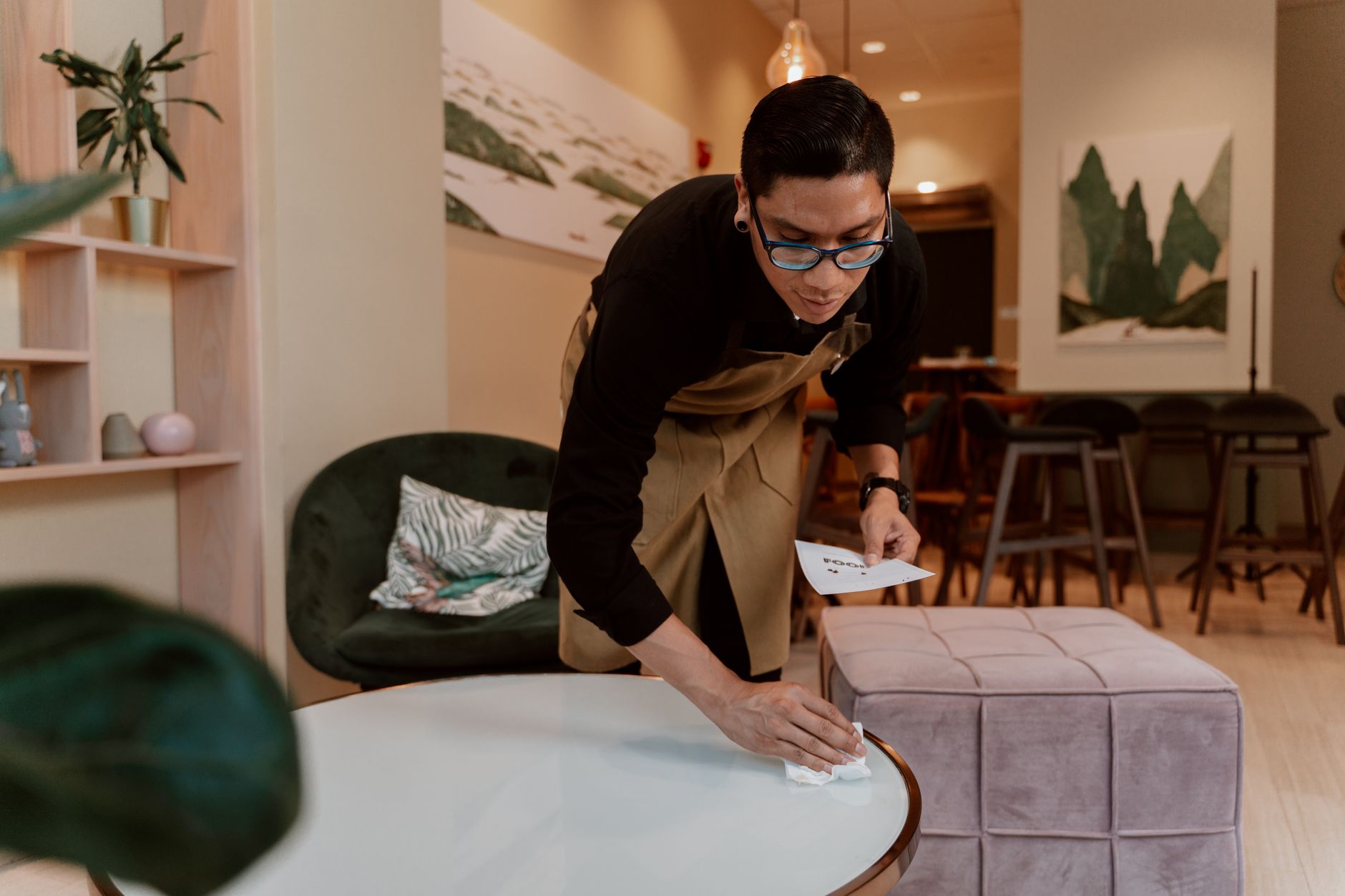
- Menus with laminate: wipe-clean, spill-resistant, significantly longer service life
The Core Comparison: Every Finish at a Glance
The table below covers the finishes most commonly available through commercial print suppliers in Australia. Where a finish is offered on a specific Paperlust Print Shop product, that is noted directly.
| Finish | Look | Feel | Durability | Writeable? | Recyclable? | Best for |
|---|---|---|---|---|---|---|
| Gloss laminate | High shine, vivid colour | Smooth, slick | Excellent | No | No (plastic film) | Menus, product packaging, covers |
| Matte laminate | Flat, no glare | Silky, soft | Excellent | Pencil/biro yes | No (plastic film) | Business cards, covers, corporate |
| Soft-touch / velvet laminate | Low sheen | Velvety, tactile | Good (fingerprints show) | No | No (plastic film) | Premium business cards, brochure covers |
| Celloglaze (gloss or matte) | Same as laminate | Same as laminate | Same as laminate | Same as laminate | No (plastic film) | Australian trade term for above |
| Aqueous / flood coating | Slight sheen or matte | Smooth | Moderate | Limited | Generally yes | Offset-printed flyers, catalogues |
| Spot UV | Gloss highlights on a matte base | Contrast tactile | Good | No | No | Business cards, invitations, premium stationery |
| Uncoated / no finish | Natural, slightly textured | Paper-raw | Moderate | Yes | Yes | Recycled stocks, writeable cards, eco brief |
A note on celloglaze: This is an Australian print industry term for the same plastic-film lamination process described as “laminate” elsewhere. Gloss celloglaze and matte celloglaze are simply gloss laminate and matte laminate under a different name. If your printer quotes celloglaze, you are getting laminate.
Gloss Laminate: When Vivid Wins
Gloss laminate applies a thin plastic film bonded to the print surface under heat and pressure. It deepens colour saturation, making photographs and bold graphics appear more vivid than on uncoated or matte stock. The surface is smooth and easy to wipe down, which is why it is the default choice for high-traffic printed items.
When to choose gloss laminate:
- Menus that will be handled daily and need to survive spills, grease, and frequent wiping
- Covers for booklets and catalogues where you want maximum visual impact
- Product labels where colour accuracy matters and the surface may get wet
- Promotional flyers that will be handled by many people over a short campaign
On the Paperlust Print Shop standard menu range, laminate is available as an upgrade on 300gsm Matte stock. It adds a wipe-resistant surface that meaningfully extends the working life of a menu, especially in cafe and restaurant settings. If you are printing menus that will be on tables every service, laminate is almost always the right choice.
When to skip gloss laminate:
- You need guests or customers to write on the printed piece (any laminate will prevent this)
- Your brief calls for a recycled or natural paper stock
- The design uses very dark colours on glossy, where fingerprints become visible quickly
- You want a high-end, understated look (gloss can read as corporate or cheap depending on the context)
Matte Laminate: The Understated Premium
Matte laminate uses the same film-bonding process but with a non-reflective film. The result is a flat, smooth surface with no glare. It is generally perceived as more premium than gloss because it reads as quieter and more intentional. Photography on matte laminate loses some saturation compared to gloss, but most designers consider the trade-off worth it for the feel.
When to choose matte laminate:
- Business cards where you want a tactile, refined impression
- Brochure or booklet covers for professional services, architecture, or premium retail
- Any printed piece that will be viewed under direct lighting where glare is an issue
- When the design is type-heavy and image-light (matte holds type legibility better under harsh light)
Matte laminate is also more writable than gloss: pencil and some ballpoint pens will mark the surface, which matters if recipients need to jot notes on the piece.
Soft-touch and velvet laminate sit in the same category but use a specialised film that creates a distinctly velvety, tactile surface. It is one of the most memorable finishes in print because the feel is unlike anything else. The trade-off is that soft-touch is the most fingerprint-prone of all laminate options. On dark-coloured designs, smudges will show within minutes of handling. Reserve it for pieces that are presented rather than passed around.
At Paperlust Print Shop, artboard stock with velvet laminate is available on standard business cards, making it accessible without requiring a custom finishing quote.
UV Coating: Lower Cost, Less Protection
UV coating applies a liquid varnish to the surface that is cured (hardened) instantly under ultraviolet light. The result visually resembles gloss laminate but is thinner, less protective, and less durable over time. UV coating scratches more easily and does not add the structural rigidity that film lamination does.
The main advantage of UV coating is cost. It is applied in-line on many offset presses, which means there is no separate laminating step. For short-run flyers, postcards, or catalogues that will be used once and recycled, UV coating can be a practical finishing choice.
Spot UV is a targeted application of the same coating: UV gloss is applied only to specific design elements (a logo, a headline, an image) on top of a matte-laminated or uncoated base. The contrast between the matte surface and the gloss highlight creates a striking tactile effect. It is most commonly seen on premium business cards, event invitations, and corporate stationery.
Where spot UV is relevant to your brief, ask your supplier specifically about it; finishes in this category vary widely between printers.
| Feature | Laminate (gloss or matte) | UV coating |
|---|---|---|
| Thickness added | Significant (film layer) | Minimal (liquid coat) |
| Scratch resistance | High | Moderate |
| Wipe-clean | Yes (good for menus) | Partial |
| Structural rigidity | Adds stiffness | Minimal |
| Cost relative | Higher | Lower |
| Recyclability | No | Generally not advised |
| Best run length | Short or long | Short runs |
When Not to Laminate
There are clear situations where laminate is the wrong choice, and choosing it anyway costs money without adding value.
Writeable surfaces. Any piece that recipients are expected to mark, sign, or annotate should stay unlaminated. Appointment cards, booking slips, wipe-and-write boards, table name cards where guests write their own name, and any form-style print are all incompatible with laminate. Even matte laminate only takes pencil under ideal conditions.
Recycled and natural paper stocks. If your brief specifically calls for recycled, kraft, seed paper, or uncoated natural stock, laminating defeats the purpose. The texture and tactile quality of these stocks is the point. Laminating over a kraft or recycled sheet also creates adhesion problems and looks incongruous.
Eco and sustainability briefs. Laminate is a plastic film. Once applied, the paper cannot be separated from the plastic and the composite item cannot be recycled through standard kerb-side or commercial paper recycling streams. If your client or organisation has a sustainability commitment, uncoated or aqueous-coated paper is the right choice. Aqueous coatings (water-based, not solvent-based) are generally considered recyclable and are widely used on offset-printed flyers and catalogues.
Short-life promotional print. If a piece is being produced for a single event or campaign and will be discarded within days, the durability that laminate provides has no practical value. Save the cost.
Premium uncoated aesthetic. Some brands deliberately choose uncoated, natural-feel paper to communicate authenticity, craftsmanship, or sustainability. An uncoated cotton-stock business card should never be laminated. The uncoated surface is the finish.
The Durability and Wipe-Clean Decision for Menus
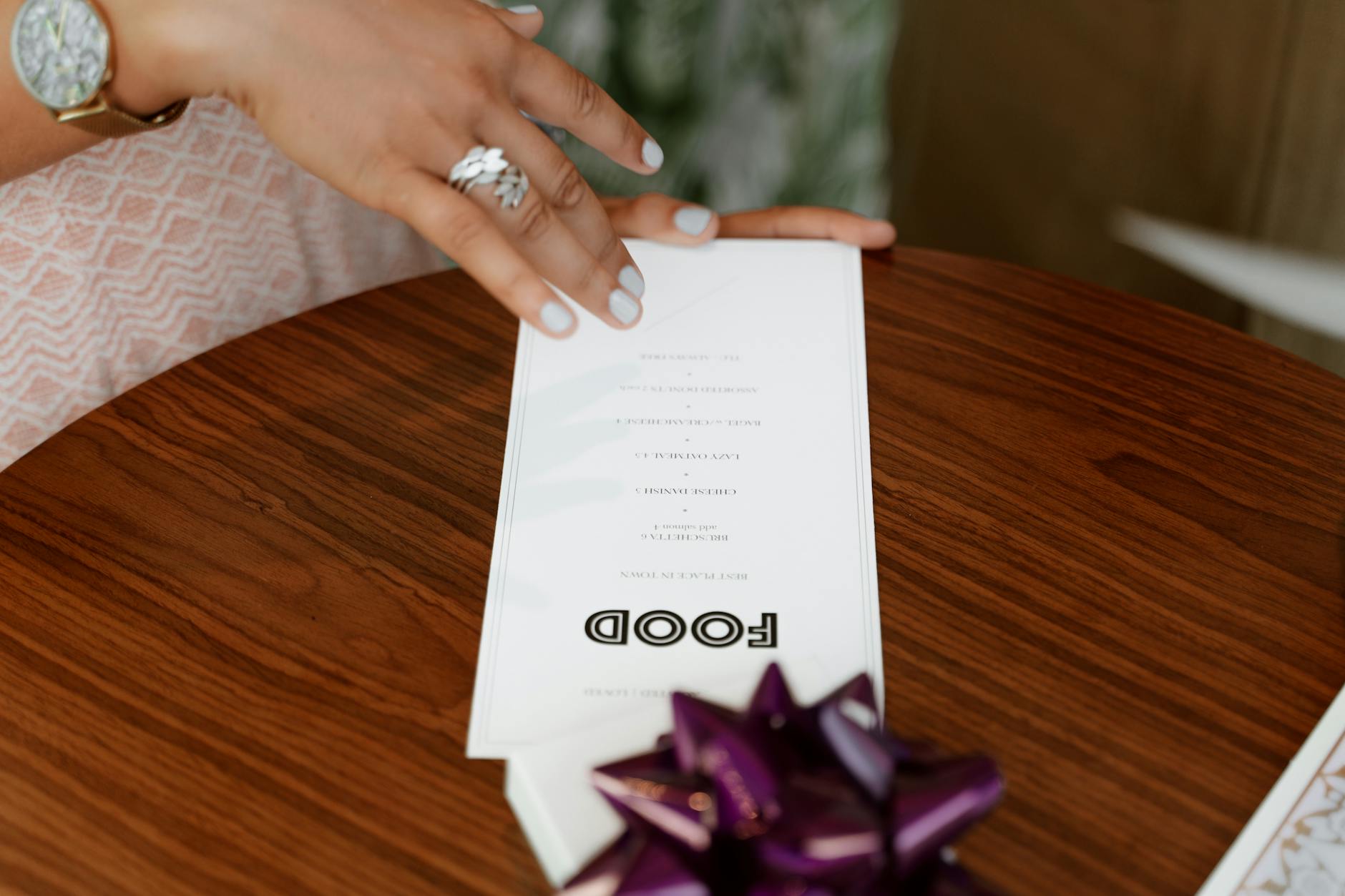
Menus are the clearest use case for understanding the value of lamination. A printed menu without lamination, on 170gsm silk or 300gsm matte, will typically show visible wear within one to three weeks of daily table service. Oil, moisture, and constant handling degrade uncoated surfaces quickly.
Matte or gloss laminate on a menu extends service life to months under the same conditions, while also making the menu wipeable between uses. This is a meaningful cost-per-use argument: a laminated menu that lasts six months costs less over its lifetime than reprinting unlaminated menus every few weeks.
For cafes and restaurants, the decision tree is straightforward:
- High turnover, daily service, casual setting: gloss laminate on 300gsm Matte stock
- Premium dining, strong design intent, prefer refined look: matte laminate on 300gsm Matte stock
- Chalkboard specials or QR-code only menus: no print lamination needed
- Single-use or weekly-reprinted specials inserts: 170gsm Silk, no laminate, reprinted frequently
The Paperlust Print Shop standard menu range offers laminate as an upgrade on the 300gsm Matte stock, available in DL, A5, A4, and A3, flat or folded. For high-use hospitality environments, this is the recommended configuration.
For more on menu stock and format decisions, see Restaurant Menu Printing Australia: Paper, Lamination and Durability.
Finishing for Business Cards: The Short Guide
Business cards see a concentrated amount of handling from a small number of people, which makes finishing choice a branding decision as much as a durability one.
- Standard matte or gloss: Clean and professional. Matte reads quieter, gloss reads bolder.
- Velvet/soft-touch: Memorable at first touch. Premium positioning. Use on artboard stock.
- Spot UV: High-contrast focal point (logo or name). Works best on matte-laminated base.
- Uncoated: Appropriate only when the stock itself (textured, natural, cotton) is the statement.
For a deeper look at finish comparison for business cards, see Matte vs Gloss Business Cards Australia. To order standard business cards with velvet laminate, select the artboard with velvet laminate option at checkout. For premium upgrades like spot UV, the Print Shop also offers flyers and other products where finish options vary by stock.
How to Decide: A Finishing Checklist
Work through these four questions before selecting a finish:
1. Will people need to write on it? Yes, skip laminate. Choose uncoated stock.
2. Does the piece need to survive handling over weeks or months? Yes (menus, covers, business cards), choose laminate. No (single-event flyers, one-time inserts), skip laminate or use aqueous coating.
3. Does your brief call for a recycled, natural, or eco stock? Yes, skip laminate. Keep it uncoated.
4. What impression do you want to create? Vivid and bold, choose gloss. Refined and premium, choose matte. Unforgettable at touch, choose soft-touch velvet. Authentic and tactile, choose uncoated.
If none of these criteria apply clearly, default to matte laminate. It is the most versatile finish: it adds durability without appearing garish, reads as premium in most contexts, and is compatible with virtually every stock and design style.
Frequently Asked Questions
What is the difference between laminate and celloglaze?
Celloglaze is the Australian commercial print industry term for what is more generically called laminate. Gloss celloglaze and gloss laminate refer to the same product: a plastic film bonded to the surface of the printed sheet. If your supplier quotes celloglaze, you are getting laminate.
Can I write on a laminated print?
Matte laminate can take pencil and some ballpoints under the right conditions, but it is not reliably writeable. Gloss laminate and soft-touch laminate cannot be written on with standard pens. If you need a writeable surface, choose uncoated stock.
Is laminated paper recyclable?
No. Standard plastic-film laminate (gloss, matte, soft-touch) cannot be recycled through kerb-side or commercial paper recycling. The plastic film cannot be separated from the paper substrate. If recyclability matters to your brief, choose uncoated stock or ask about aqueous (water-based) coating, which is generally recyclable.
How long do laminated menus last compared to unlaminated?
Under daily hospitality use, unlaminated menus on standard stock typically show significant wear within two to four weeks. Laminated menus on 300gsm matte stock can last three to six months or longer under the same conditions, depending on handling.
What is the difference between UV coating and laminate?
Both produce a surface finish, but laminate is a plastic film bonded under heat and pressure, while UV coating is a liquid varnish cured under UV light. Laminate is thicker, more durable, more wipe-resistant, and adds structural stiffness. UV coating is thinner, less protective, and lower cost. For menus and covers requiring wipe-clean durability, laminate is the better choice.
What is spot UV and when should I use it?
Spot UV is a targeted UV-gloss coating applied to specific design elements (logo, headline, image area) rather than the whole surface. It is most effective when applied over a matte-laminated base, creating a contrast between the flat matte background and the glossy raised highlight. Common uses include premium business cards, event invitations, and corporate brochures.
Does laminate make a difference to colour quality?
Gloss laminate deepens colour saturation and makes photographs appear more vivid than on uncoated or matte stock. Matte laminate has a minimal effect on saturation but eliminates glare, which can improve readability of text-heavy layouts under direct lighting. Soft-touch laminate has a similar visual effect to matte.
Can I laminate any paper stock?
Not all stocks are suitable for lamination. Very light or uncoated natural papers (kraft, recycled, seed paper) are generally not laminated because adhesion can fail, and the laminate removes the tactile quality these stocks are chosen for. The Paperlust Print Shop menu laminate option is available on 300gsm Matte stock. For other products, check individual product pages for available finishes.
Ready to choose your finish? Start with standard menus if durability and wipe-clean performance are the priority, or explore standard business cards for options including velvet laminate on artboard. For high-volume short-run print like flyers, the no-laminate options on gloss or matte stock deliver a clean result at the best cost-per-unit.