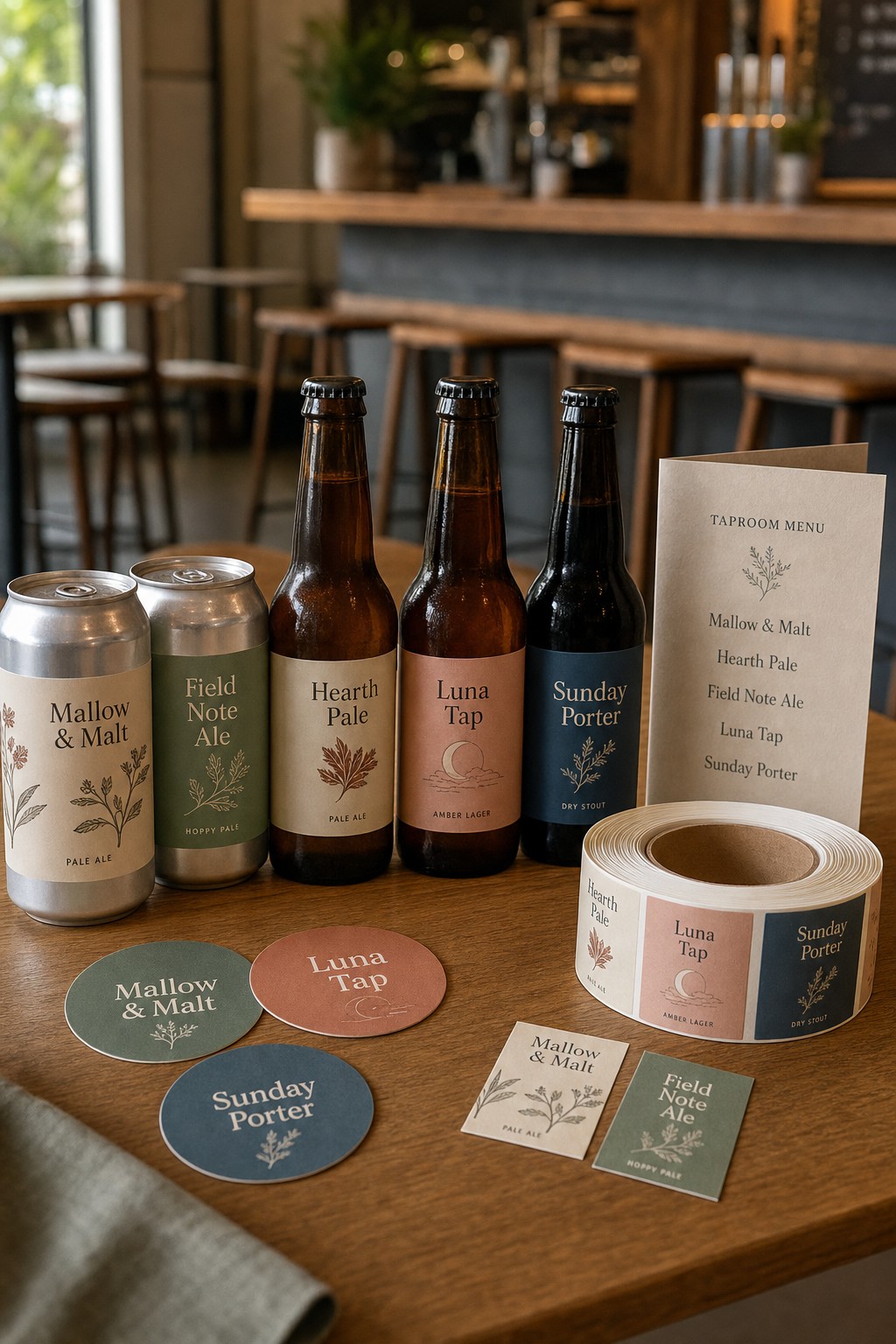
Australia’s craft beverage scene spans hundreds of independent breweries, distilleries, and cideries, and for every one of them print is a core brand touchpoint. Labels compete for attention on a fridge shelf. Coasters hold a customer’s eye for an entire session. A tap menu frames the first impression before the pour.
The common problem is sourcing print from multiple suppliers and ending up with labels, coasters, and menus that don’t quite match. This guide maps out the full print suite a craft beverage brand needs, which materials work best for each touchpoint, and how to order efficiently so everything arrives looking like it came from the same world.
Cheat sheet
- Labels for bottles and cans: waterproof synthetic or vinyl materials are non-negotiable for any product that will be chilled, condensation-prone, or handled wet
- Foil labels: gold, silver, rose gold, copper, or holographic foil applied over a full-colour CMYK base; best used for hero SKUs and premium shelf positioning
- Coasters: 355gsm Beermat Board, 95mm round, square, or rounded square; from AUD $3.46 each, minimum 50 units; QR codes printable on the face
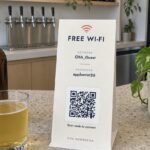
- Tap menus and drink lists: laminated 300gsm matte stock in DL or A5 handles daily wipe-downs without curling or peeling
- Brand consistency: lock your CMYK colour palette and master logo files before briefing any product so every item across the suite matches
- Flat-rate shipping Australia-wide on all Print Shop orders
- Single supplier, complete kit: ordering labels, coasters, and menus from the same print partner makes brand matching straightforward and re-ordering simple
Your Core Label Suite
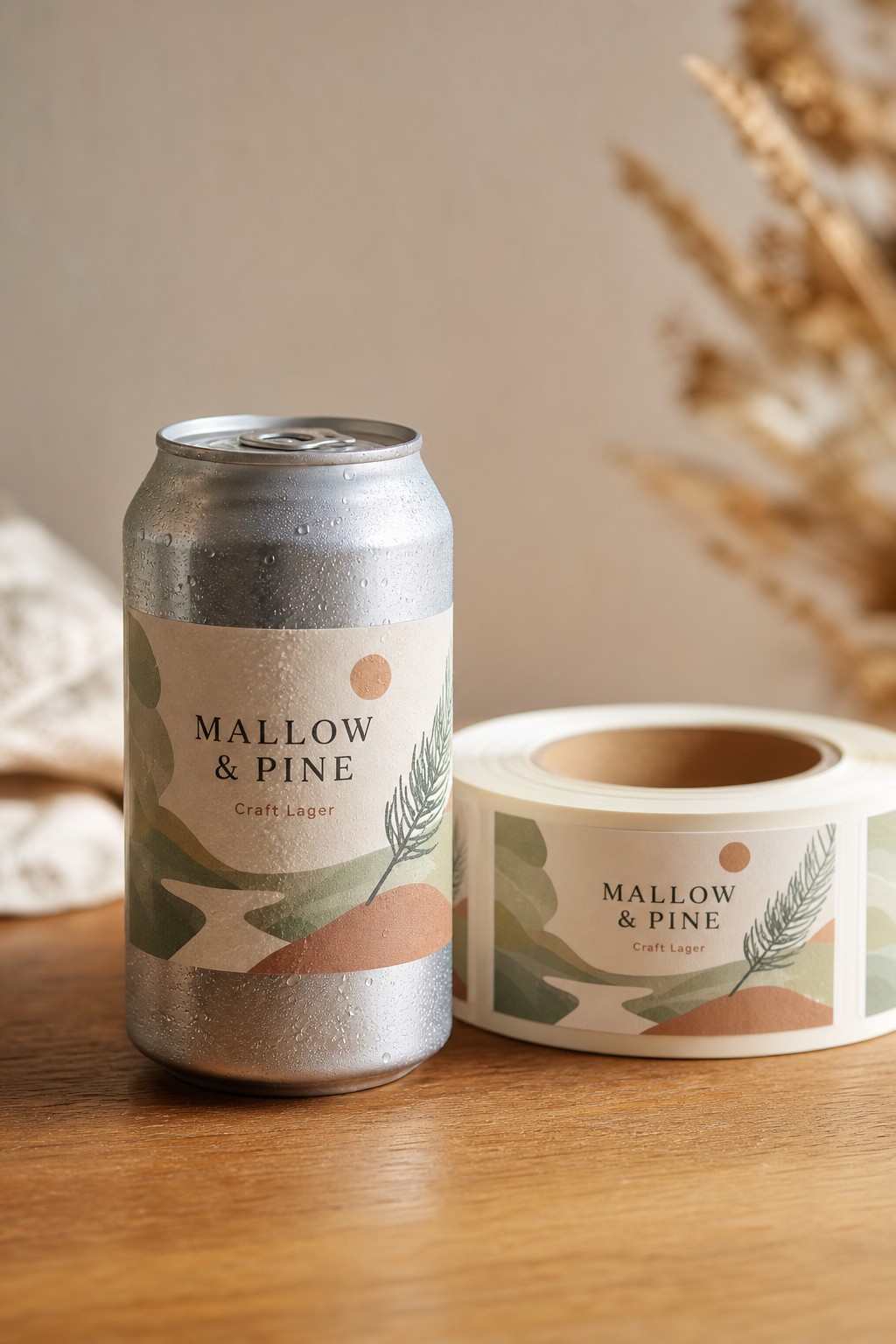
Every bottle or can your brand puts out needs a label that communicates style, conveys product information, survives refrigeration and rough handling, and competes for attention on a crowded fridge shelf or retail display. Getting the material and finish right before you commit to a print run saves the cost and delay of a reprint.
Rectangle Labels for Bottles and Cans
Rectangle labels are the industry standard for bottle and can products. They are the most versatile shape, easiest to apply consistently, and the format that retail buyers and venue operators expect.
For chilled products, meaning anything going into a fridge, behind a bar, or into an ice bucket, you need a label material that will not peel or go pulpy when condensation hits. Vinyl and synthetic paper stocks with a laminated finish handle refrigeration without losing their print quality or adhesion.
Our rectangle labels are available on waterproof vinyl and laminated synthetic paper. Common formats for beer and cider bottles run from approximately 100x50mm for smaller profile labels up to 150x75mm for a standard bottle face, though custom sizes are available for unusual bottle profiles. Variable data printing is supported, which is useful for batch numbers, vintage designations, and expiry dates on products where those details change run to run.
Circle Labels: Cap Seals, Lid Stickers, and Tap Line Badges
Circle labels cover several useful applications: cap and crown seals on bottles, small lid stickers on cans, and tap line badge stickers alongside your handle clips. Sizes from 25mm upward suit all of these, and the same waterproof vinyl and laminated paper options apply, so cap seals stay intact through refrigeration and repeated handling.
Clear Labels for Premium Spirits
For gin, vodka, and premium spirits in clear glass, a clear vinyl label creates a floating-design effect that reads as far more sophisticated than a white-ground label on the same bottle. The vinyl is printed in reverse, placing the design between the material and the adhesive, which makes it scratch-resistant from the outside. The same no-label effect is available on our clear labels, which use a clear film to keep the bottle visible while protecting the printed design.
White ink underprinting is available for elements that need opacity, such as white text or solid background blocks. The material is fully waterproof and handles refrigeration without peeling or clouding.
Foil Labels: Earning Premium Shelf Space
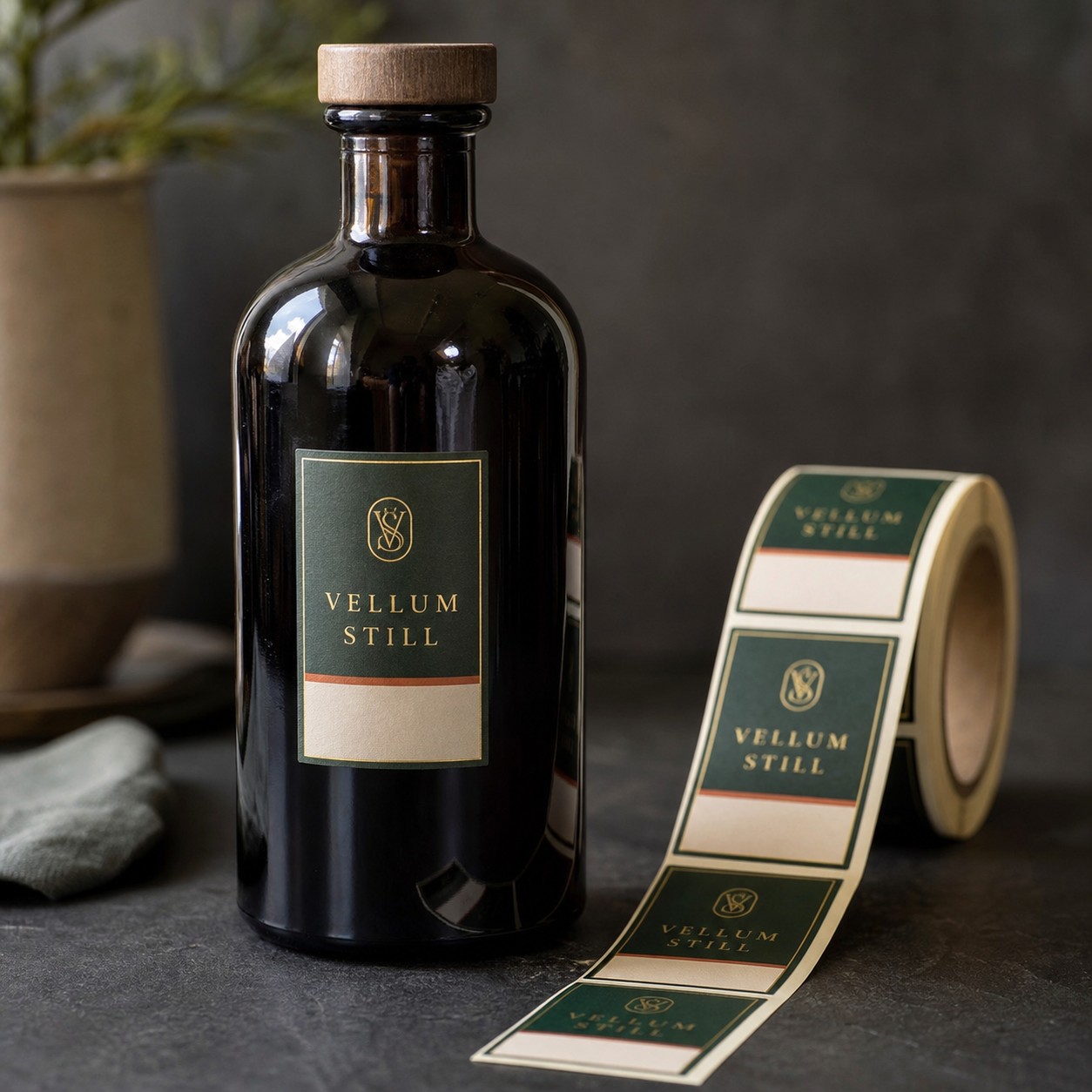
Once your core label range is sorted, the question becomes which SKUs deserve a premium treatment. This is where foil labels shift from being an aesthetic choice to a genuine commercial decision. The full shape and stock line-up sits on the custom label printing page, including the roll minimum of 500 per design.
Craft beverage retail is intensely visual. In a bottle shop fridge with dozens of products at eye level, the label that catches the light is the one that gets picked up first. Foil achieves this in a way no digital print effect can replicate, because it is physically reflective, not simulated.
Cold Foil vs Hot Foil: Choosing the Right Process
Cold foil transfers metallic film using UV adhesive. It is faster and more cost-effective for labels where foil covers accent areas only, such as a wordmark, border, or small motif.
Hot foil presses a heated metallic die onto the substrate, producing a deeper impression and stronger effect for large solid areas of foil coverage. Lead times are longer and setup costs higher, but for a flagship label meant to signal quality to a trade buyer, the result justifies it.
Both methods are available in gold, silver, rose gold, copper, holographic, and additional specialty colours. Holographic suits cider and spirit brands targeting a younger retail audience. Gold and copper sit naturally against the dark backgrounds typical of craft stout and aged whisky packaging.
Foil labels start from $0.69 inc. GST per label on rolls of 500.
Material Compatibility for Chilled Environments
Not all foil labels are built for wet environments. When ordering, specify a synthetic stock or a laminated white cast paper base. The foil element itself is durable, but a paper base without lamination will soften and peel with sustained condensation. Synthetic stocks with laminate handle refrigeration, condensation from bar ice, and heavy handling without compromising the foil or the print underneath.
Coasters: Turn Every Table into a Brand Touchpoint
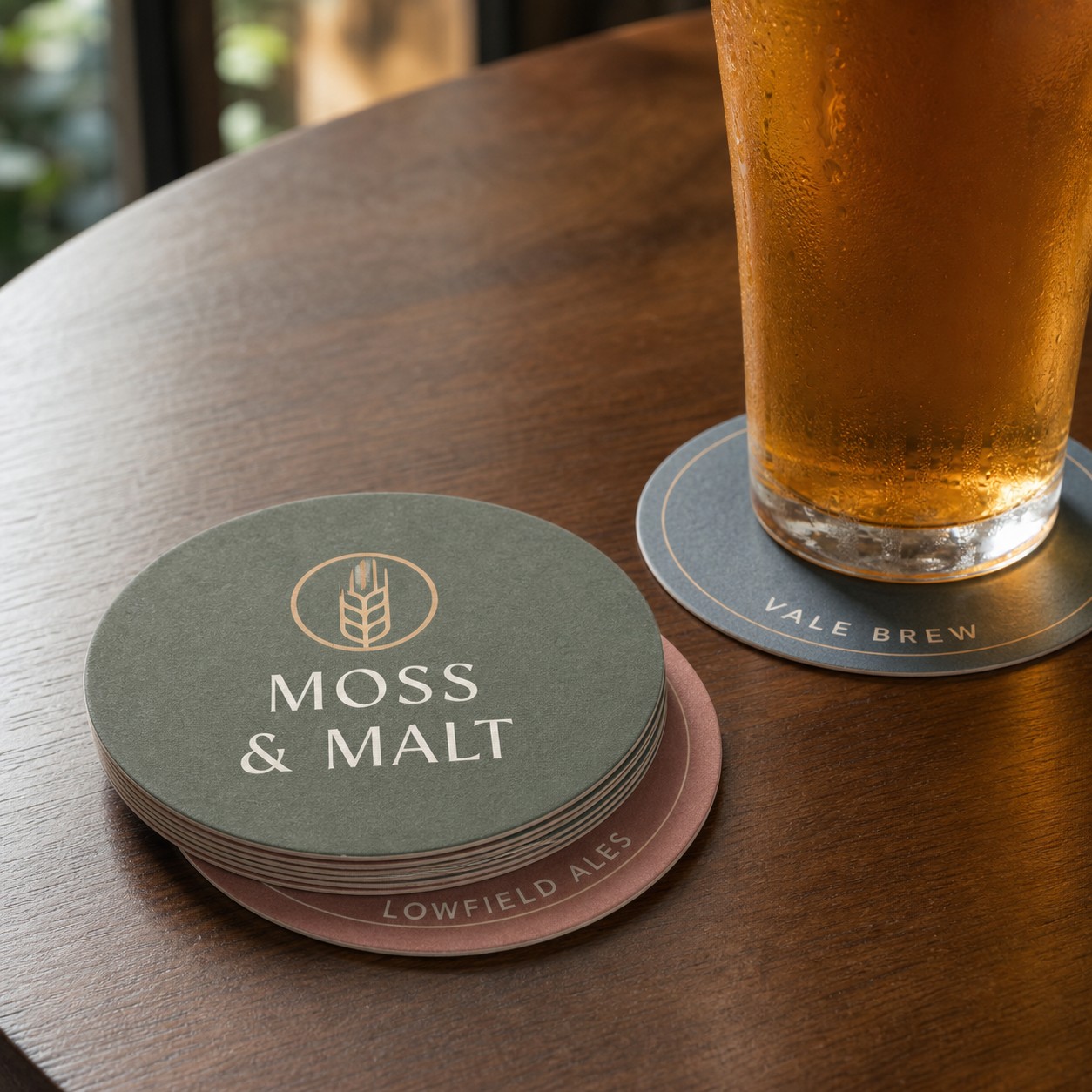
If you operate a taproom, supply venues, or run events, branded coasters are one of the highest-return print items in the kit. They are on the table, within arm’s reach, for the entire time a customer is drinking. That is genuine dwell time you are not paying for separately.
Our coasters are printed on 355gsm Beermat Board, which is thick, absorbent, and the industry-standard material for bar and hospitality use. The board soaks up condensation without curling or going soggy, keeping your branding visible from the first round to the last.
Available in 95mm round, square, and rounded square. All three are practical behind a bar. Round is the traditional format that suits most pint glasses and spirit tumblers. Square reads more contemporary and works well for craft breweries with a design-forward identity. Rounded square sits between the two for brands that want a softer feel without the full-circle format.
Full-colour print across the face allows complex artwork, and QR codes can be incorporated into the design for digital touchpoints, whether that links to your current tap list, your online shop, or a venue locator. Minimum order is 50 units from AUD $3.46 each, with volume pricing available. Production runs 3-7 working days after design approval.
Making Coasters Work Harder
The format is so familiar that it is easy to underuse it. A few practical extensions:
- Back-of-coaster space: the reverse is usually blank. A short brand story, a seasonal promotion, or your venue address makes that space functional without adding to the print cost.
- QR-linked tap lists: a coaster with a QR code that opens your current tap list saves the print cost of reprinted tap cards every time you rotate kegs.
- Limited edition runs: a short-run coaster for a seasonal release or collaboration gives regulars a tangible collectible that costs very little to produce.
- Venue supply packs: if you distribute to bottle shops or hospitality venues, include branded coasters in your venue pack alongside your bottles as a simple brand extension tool.
Tap Menus and Drink Lists
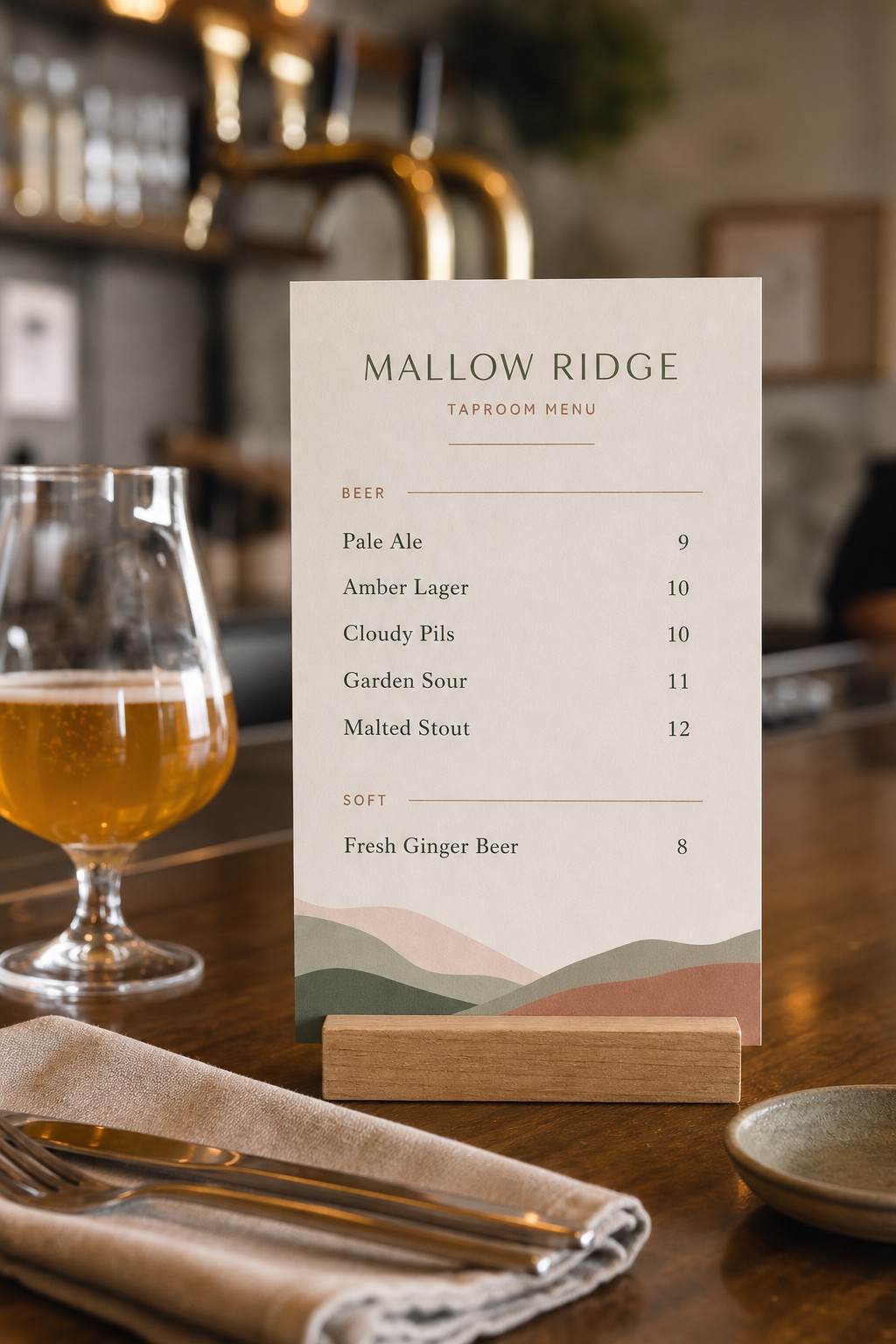
For taprooms and bar accounts, the tap menu is as important as any piece of print in your suite. It is the first thing a customer reaches for after sitting down, and the quality of the paper and print signals something about the quality of what they are about to drink.
Standard menus are available in DL (99x210mm), A5, A4, and A3. For a tap list, DL is the standard format: narrow, easy to hold at the bar, and it reads cleanly on a bar top without taking up space. A5 works well if you serve food alongside your pours. A3 suits a single shared list for a large table or a freestanding display at your taproom entrance.
For venues rotating daily or weekly, 170gsm Silk balances quality feel with the practicality of frequent reprints. For a more permanent tap list, 300gsm Matte with a laminate finish is the better choice: wipe-resistant and built to last the season. Most menu orders are printed within 24-48 hours, making short-run reprints practical when your tap list changes.
Keeping the Suite On-Brand
The biggest risk with a multi-product print order is inconsistency. If your labels print in one shade of green and your coasters in a slightly different shade, the brand story breaks down the moment a customer looks at the table or the fridge shelf.
Three practical steps to prevent this:
Lock your colour files before briefing anything. Provide the same master CMYK values across every product. Supplying an RGB file for labels and a CMYK PDF for coasters introduces visible colour variation that is difficult to correct without a reprint.
Work from a single artwork master. Your label artwork, coaster face, and menu header should all reference the same approved logo file and brand palette. If different contractors built different pieces, consolidate into one set of approved assets before going to print.
Work with a single print partner for the full suite. One supplier for labels, coasters, and menus means one point of contact for colour queries, one set of file specifications, and a much simpler re-order process.
Frequently Asked Questions
What label material should I choose for beer bottles stored in a commercial refrigerator?
Specify a synthetic or vinyl label material with a laminated finish. Paper-based labels, even premium ones, will soften and peel when exposed to sustained condensation. Synthetic and vinyl stocks are non-tearable and fully waterproof, and the laminated finish protects the print from moisture and scuffing throughout the product’s shelf life.
How many labels should I order for a new product launch?
For an initial run, starting at 500 labels per roll is a practical entry point for most craft beverage producers. It is enough to gauge retail and venue response before committing to a larger volume, while still bringing the per-unit cost down meaningfully compared to very short runs. If you are launching multiple SKUs, order each product’s label separately so the print run is matched to that specific artwork and format.
Can I get foil labels that still read well on dark-coloured bottles?
Yes. The most effective approach for dark glass is a synthetic label base printed with a full-colour CMYK design, with foil applied selectively to key elements such as the wordmark or a border. On a dark bottle, a small area of gold or copper foil against a dark-printed background creates strong shelf contrast without the label appearing crowded. Clear foil bases are less effective on dark glass; white or coloured synthetic stocks work better as a base for labels on dark bottles.
What size coasters do bars and hotels typically use in Australia?
The standard commercial coaster size in Australia is 95mm, which fits under most pint glasses, tulip glasses, and spirit tumblers. Paperlust Print Shop coasters are available in 95mm round, square, and rounded square, covering the formats used across commercial hospitality from casual bar venues to hotel dining rooms.
How do I make sure my labels, coasters, and menus all match in colour?
Provide the same master CMYK or Pantone colour values across all your product briefs. Avoid supplying RGB files for some products and CMYK for others, as the colour conversion can introduce visible variation. If you are unsure which colour profile your artwork files use, ask your designer or print supplier to audit the files before production begins.
Can I include a QR code on my coasters or tap menus?
Yes. QR codes can be incorporated into the design for both coasters and menus. Keep the QR module at a minimum of 25mm square to ensure reliable scan rates across different lighting conditions. Confirm the destination URL is live and redirects correctly before sending files to print, since a broken or redirected QR code is difficult and costly to correct on a printed run.