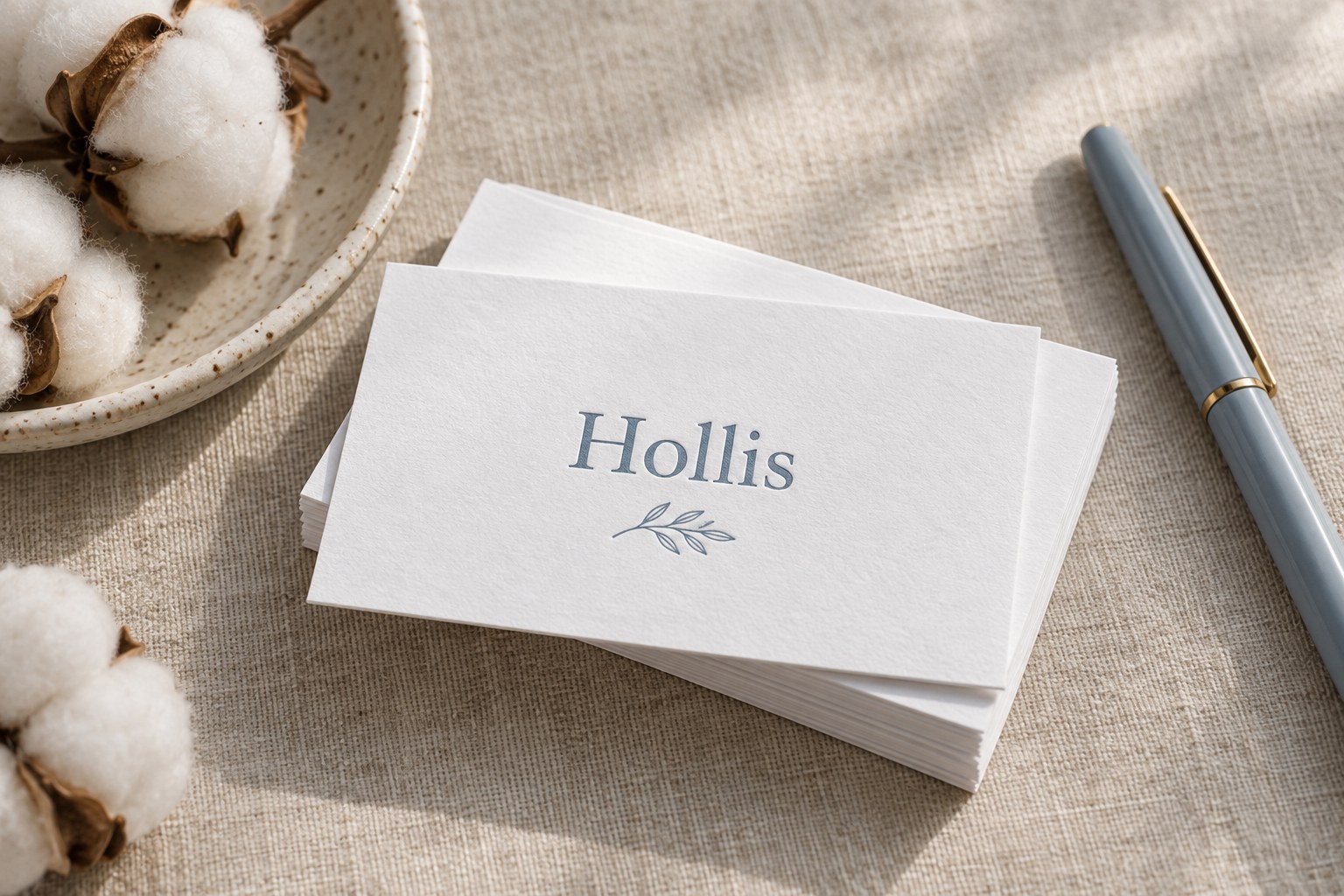
The first time someone handles a business card made from cotton paper, they usually do the same thing: they run a thumb over the lettering before they read the name. It feels softer, almost fabric-like at the edge, and the type sits pressed into the surface rather than printed flat on top.
Most search results for cotton paper are about watercolour blocks and art sheets. In business stationery, cotton paper is not a creative label. It is the physical reason a press impression, a foil mark or an embossed logo behaves the way it does.
This guide covers what cotton paper is, how uncoated stock differs from coated card, what happens under a letterpress plate, which board Paperlust presses into, and the designs and timing that make the material worth choosing or avoiding.
The short version
- Made from cotton fibre instead of wood pulp, with longer and more flexible fibres.
- Uncoated surface absorbs ink, so colour prints softer and warmer than coated stock.
- Compresses under a letterpress plate and holds the pressed impression.
- Suits one or two colours, not full-colour photography.
- Paperlust pressed cards use white 300gsm Wild Cotton, printed front only.
- Allow 18 to 23 working days from design approval including delivery.
What cotton paper actually is
Cotton paper is made from cotton fibre, usually cotton linters or cotton rag, instead of the wood pulp used in ordinary card. The fibres are longer and more flexible than wood pulp fibres, and that changes how the sheet behaves when a metal plate is pressed into it. It feels softer and less glassy than a laminated card, even before any printing happens.
Wood pulp naturally contains lignin unless a mill removes it. Lignin is the component that discolours paper over time and makes it brittle as it ages. Cotton fibre contains no lignin.
Premium cotton printing boards are often blends of cotton and wood pulp rather than pure cotton. The blend changes stiffness, cost and how the sheet responds on press. 100 per cent cotton papers also exist, but they are not the default in business card stock. For a card order, the relevant question is not a percentage. It is how the board behaves under the finish you have chosen.
There is also a common misreading about weight. The fibre and the gram weight are separate choices. A board can be heavy without being cotton, and a cotton board can be lighter than the thickest coated option. The feel comes from the fibre as much as the number on the pack.
Coated vs uncoated stock and what each does to ink
Most printed cards split into two families at the surface. Coated stock carries a clay or polymer layer, so ink sits on top of that layer and dries sharp and saturated. Uncoated business cards are porous. Ink sinks into the fibre, which produces a softer, warmer result with less snap in solid areas.
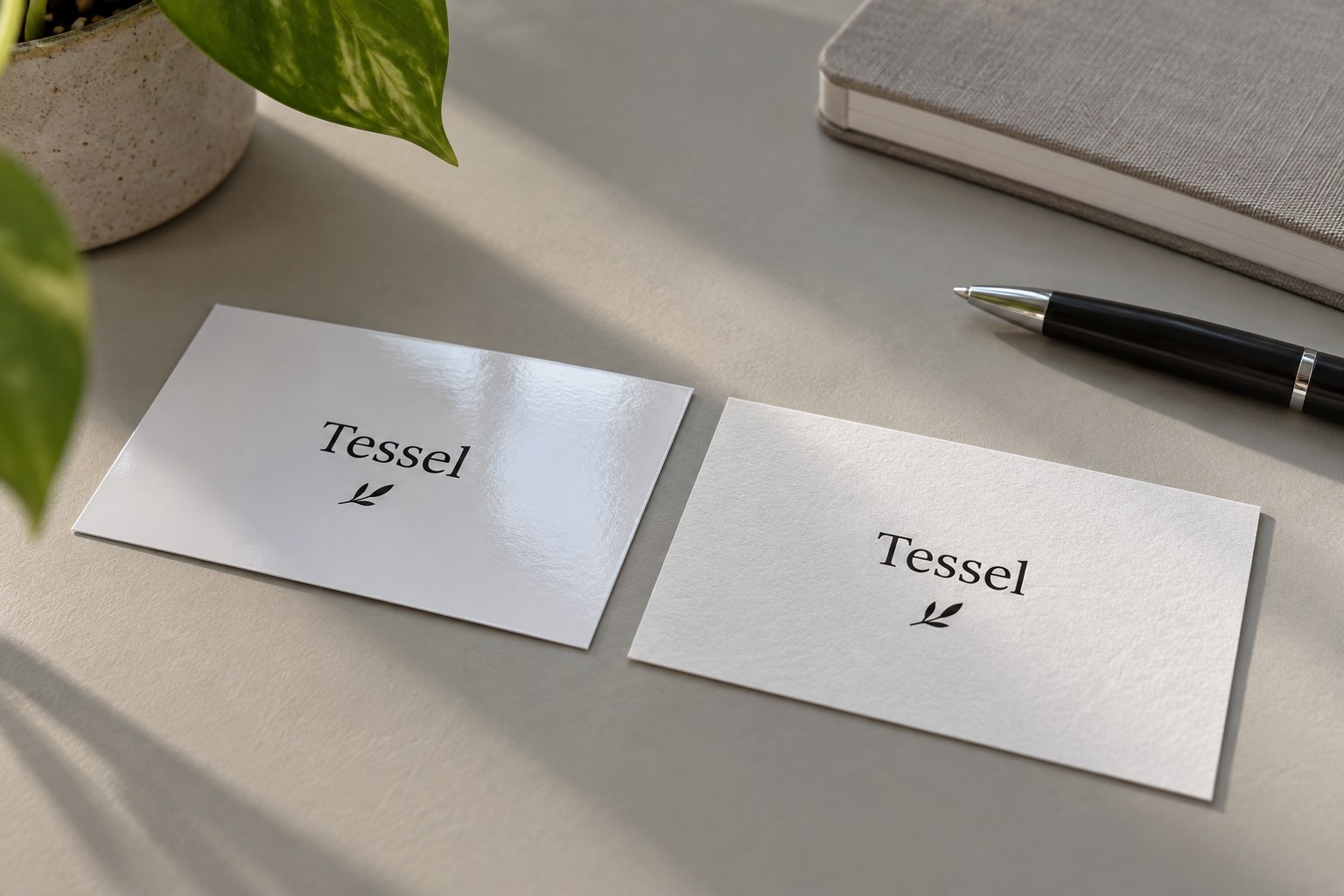
The surface difference is not only about colour. A pen writes easily on an uncoated card because the nib finds a little tooth in the fibre. On a gloss coated card the nib can slip or smear. If you have ever signed the back of a laminated card and watched the ink sit there for a beat too long, you have felt the practical difference. If you plan to write the back of a card, the surface matters as much as the print.
Full-coverage colour and photographs can print unevenly on uncoated cotton because absorption varies across the sheet. One or two colour designs suit this surface best. Paperlust’s digital premium finishes sit on a different surface entirely: a coated 450 GSM Artboard with Velvet Laminate, a laminated stock built for sharp, even colour.
| Stock | What it is made of | Surface | How ink behaves | Takes a press impression |
|---|---|---|---|---|
| Cotton board | Cotton fibre, longer and more flexible than wood pulp | Uncoated and porous | Absorbs ink, so colours print softer and warmer | Compresses and holds the impression |
| Coated artboard | Wood pulp with a clay or polymer coating | Smooth and sealed | Ink sits on top, so colour is sharp and saturated | Resists compression |
| Uncoated wood-pulp card | Wood pulp without a coated layer | Porous and matte | Absorbs ink, warmer than coated stock | Lacks the long cotton fibre that holds a deep press impression |
That divide explains the rest of this guide. Cotton board is an uncoated material, chosen for impression and feel, not for photographic colour.
Why cotton paper takes a letterpress impression
Letterpress is pressure. A raised plate is pressed into the sheet, and on a soft cotton board the fibre compresses and stays compressed. The mark is recessed into the surface, not just inked on top. On a harder coated card the same plate meets resistance, so the impression is shallow or invisible.
The material is part of the effect. Paperlust’s letterpress business cards press one PMS colour into the board on the front, so the final card is a single colour sitting inside a physical mark. The design needs to work as a relief as much as a print.
A flat monitor proof will not tell you how deep the mark will feel. The plate makes the shape, but the cotton board gives it dimension. That is why the material cannot be swapped for a coated sheet without losing the point of the process.
The plate, the pressure and the stock all show in the result. If you want to understand how the proof translates to the pressed sheet, the letterpress guide steps through the process from artwork to impression.
Foil stamping and embossed foil on cotton board
Hot foil stamping uses a heated die to transfer metallic foil under pressure. On a soft uncoated board the die leaves a visible pressed impression around the foil, so the metallic mark sits inside the sheet rather than floating on a sealed surface. That depth is the reason foil on cotton reads differently from foil on a laminated card.
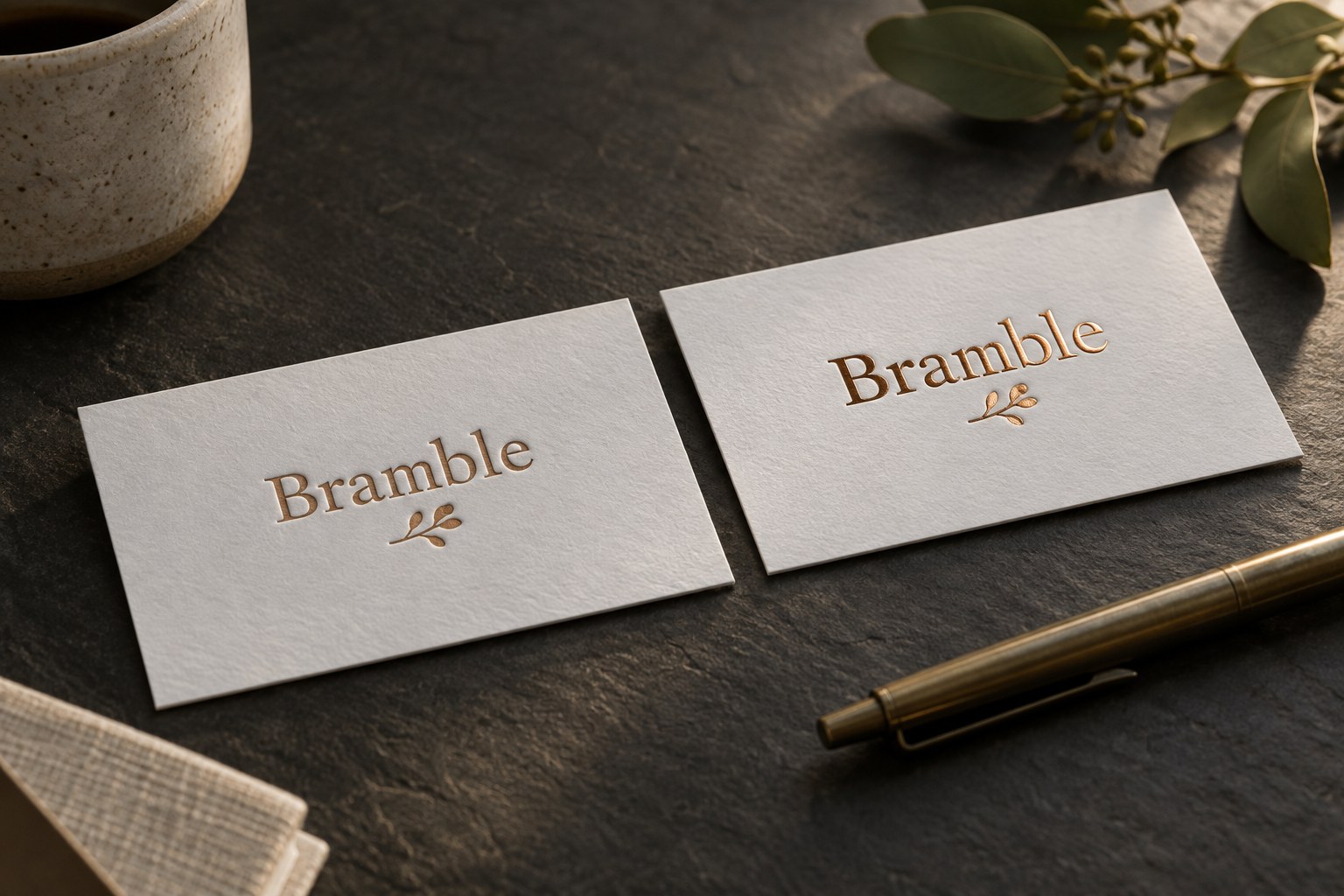
Paperlust’s foil stamped business cards use one foil colour per card. The standard options are gold, silver, rose gold or copper. Other colours are available on request. These cards cannot mix several foil colours on the same card, so artwork must be drawn as a single metallic layer.
Embossed foil business cards go one step further. A combined die applies the foil and the emboss in one hit, which keeps the raised area in exact register. Because both steps happen together, the foil and the raised shape cannot drift apart. The foil colour options stay the same: one foil colour in gold, silver, rose gold or copper.
The board Paperlust presses: white 300gsm Wild Cotton
Paperlust’s letterpress, foil stamped and embossed foil business cards are pressed into white 300gsm Wild Cotton. The board is uncoated, and white is the only stock colour offered for these three products. Each card finishes at 90 x 55 mm, with landscape as the default and portrait available at no extra cost.
Each card is printed front only. The back is left unprinted, which keeps the surface free for a handwritten note or a stamp. A plain digitally printed back is available by custom quote if the design needs it. Orders run from 100 to 250 cards in steps of 10, with larger runs by custom quote. Including GST, and the same across all three pressed products, 100 cards cost $541.54 and 250 cards cost $609.23.
Heavier cotton boards exist in the wider market, including 450gsm and 600gsm options from other suppliers. Paperlust offers one weight for these pressed cards. The decision is not about a single correct weight. It is about choosing a finished card you can hold against the price and the feel you want. If you want to compare what a gsm figure means across stocks, the paper weight guide explains the metric in plain terms.
Designs that suit a cotton board
A cotton board rewards restraint. One PMS colour in letterpress, or one foil colour in the stamped processes, gives the material the best chance to show what it does. Typography and a clear logo tend to work harder than busy artwork, because the press impression becomes part of the design. Dark ink on the white board gives strong contrast without relying on heavy ink coverage, and generous space lets the fibre surface stay visible.
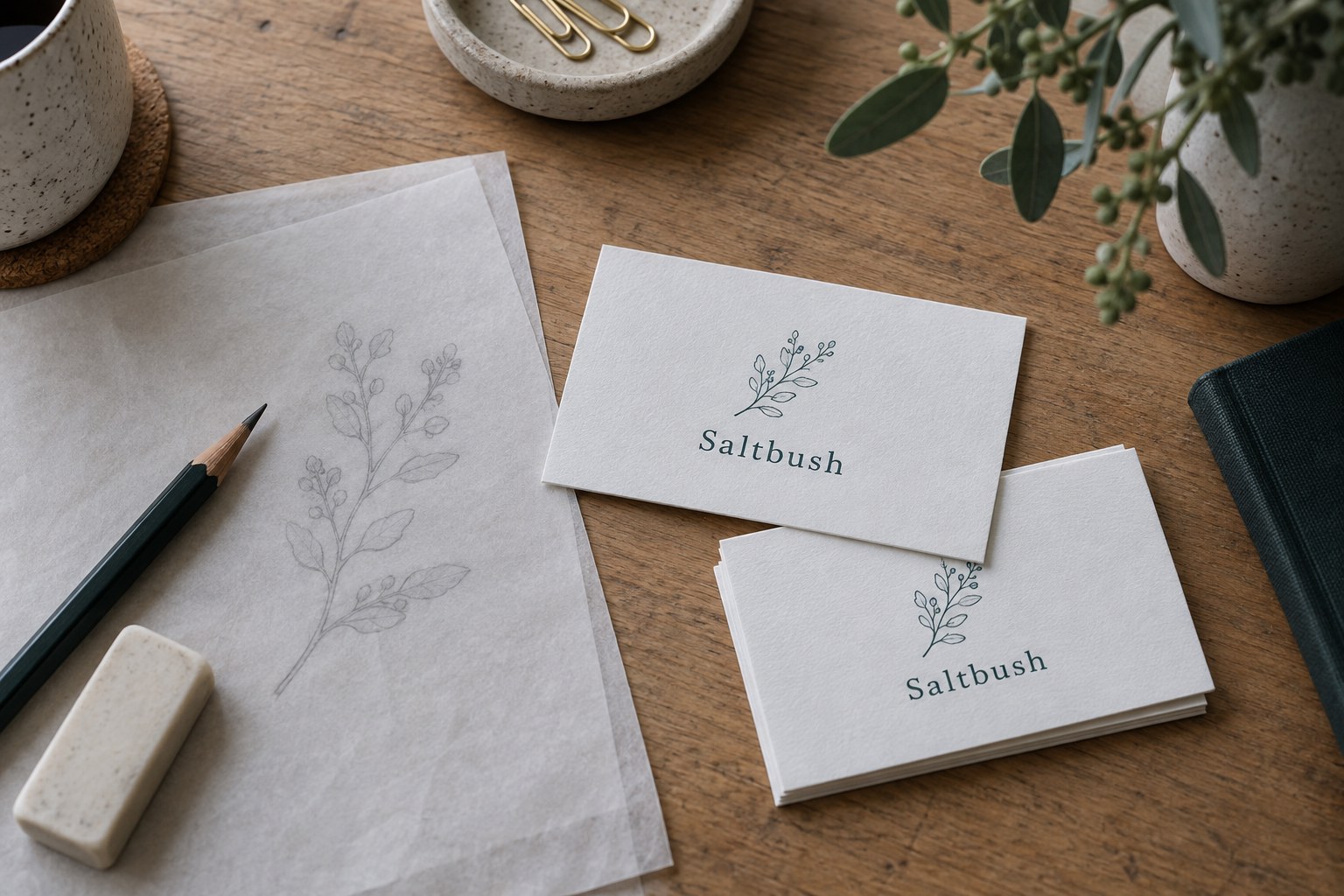
The unprinted back is part of the card. On an uncoated cotton surface a pen writes cleanly, so a short note, a meeting time or a quick sketch can be added after the card changes hands. Think of the card as a two-sided object: one side printed, the other side left open for a signature. Those are the designs that suit cotton board: printed once, touched twice.
Full-colour photography and heavy full-coverage artwork do not suit uncoated cotton board. The absorption varies across the sheet, so smooth gradients and even skin tones can become uneven. For photographic or full-colour artwork, the custom business cards range on a coated stock is the better home.
The 18 to 23 working days, price and minimums before you order
The pressed cards are made to order, not sitting on a shelf. Count on 18 to 23 working days from design approval including delivery to an Australian address. The clock starts only when you approve the design, so the proof stage is where the timeline is controlled. There is no maximum number of proof rounds, and nothing is pressed until you sign off. Put the card against the calendar before you put it against the budget. If the launch date is less than five weeks out, a pressed card is not the safe option.
Cost is the other practical point. These cards cost more than digital business cards. A run of 100 cards is $541.54 including GST, and 250 cards are $609.23. The minimum order is 100 cards.
The pressed cards suit a business that wants a small run, a single mark and a card people will keep. If recycled content is the stronger requirement for your order, the recycled business cards guide explains the options around that concern. If turnaround or full-colour artwork is the priority, a digital card is the cleaner choice.
Frequently asked questions
What is cotton paper made from?
Cotton paper is made from cotton fibre, usually cotton linters or cotton rag, instead of wood pulp. Premium cotton printing boards are often blends of cotton and wood pulp, and 100 per cent cotton papers also exist.
How does cotton card differ from regular card made from wood pulp?
Cotton fibres are longer and more flexible than wood pulp fibres. Wood pulp naturally contains lignin unless it is removed, and lignin makes paper yellow and turn brittle over time. Cotton fibre contains no lignin. Cotton card is also uncoated, so ink sinks into the fibre and colours print softer and warmer than on sealed stock.
Does uncoated card suit letterpress and foil stamping?
Yes. Uncoated cotton board compresses under a letterpress plate and holds the impression. In hot foil stamping, a heated die transfers metallic foil under pressure, and on a soft uncoated board the foil sits inside a visible pressed impression. The same softness that takes the impression makes the sheet work for both processes.
Can you write on cotton business cards?
Yes. Uncoated cotton card is porous, so a pen writes cleanly on the surface. On Paperlust’s pressed business cards the back is left unprinted, which leaves a plain cotton surface for a handwritten note or a stamp. A coated stock would not give the nib the same tooth.
What is the 300gsm Wild Cotton board used in Paperlust pressed business cards?
Paperlust presses letterpress, foil stamped and embossed foil business cards into white 300gsm Wild Cotton. The board is uncoated, and white is the only stock colour. The cards are printed front only, with an unprinted back. Heavier cotton boards exist in the wider market, but Paperlust offers this one weight for its pressed cards.
Which designs suit cotton business cards with one PMS colour?
One or two colour designs suit cotton board best. Letterpress cards use one PMS colour on the front, and foil stamped cards are built around one foil colour. Typography, a clear logo and generous space work well. Full-colour photography does not suit an uncoated cotton board.