Choosing between a postcard and a flyer can shift your response rate, cost-per-lead, and campaign shelf life by two to three times. The format is not just a design choice, it changes the medium, the postage eligibility, the perceived quality in the recipient’s hand, and the psychology of how your message is received. This guide compares both formats on every variable that matters so you can commit to the right one before you send anything to print.
Quick answer
Postcard vs Flyer: At a Glance
Both formats work. The right one depends on your distribution method, quantity, and how premium you need to look.
- Postcards (360gsm premium card) are AusPost mail-eligible, survive letterbox handling, and command stronger perceived quality
- Flyers (130-170gsm paper) cost roughly 20-35% less per unit and suit high-volume drops or event hand-outs
- Addressed postcard mail typical response: 1.5-3%; letterbox flyer drop: 0.5-1%
- At 1,000 units: postcards print from around $150-$200; flyers around $100-$150
- Hybrid strategy: postcard for VIP/existing customer mail + flyer for mass awareness drops
- Add personalisation (variable data) to a postcard and response rates climb to 2-4%
Format Basics: What Each One Actually Is
Before comparing response rates and costs, it helps to be precise about what separates a postcard from a flyer at a material level, because printers use the two terms loosely.
Postcards
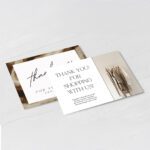
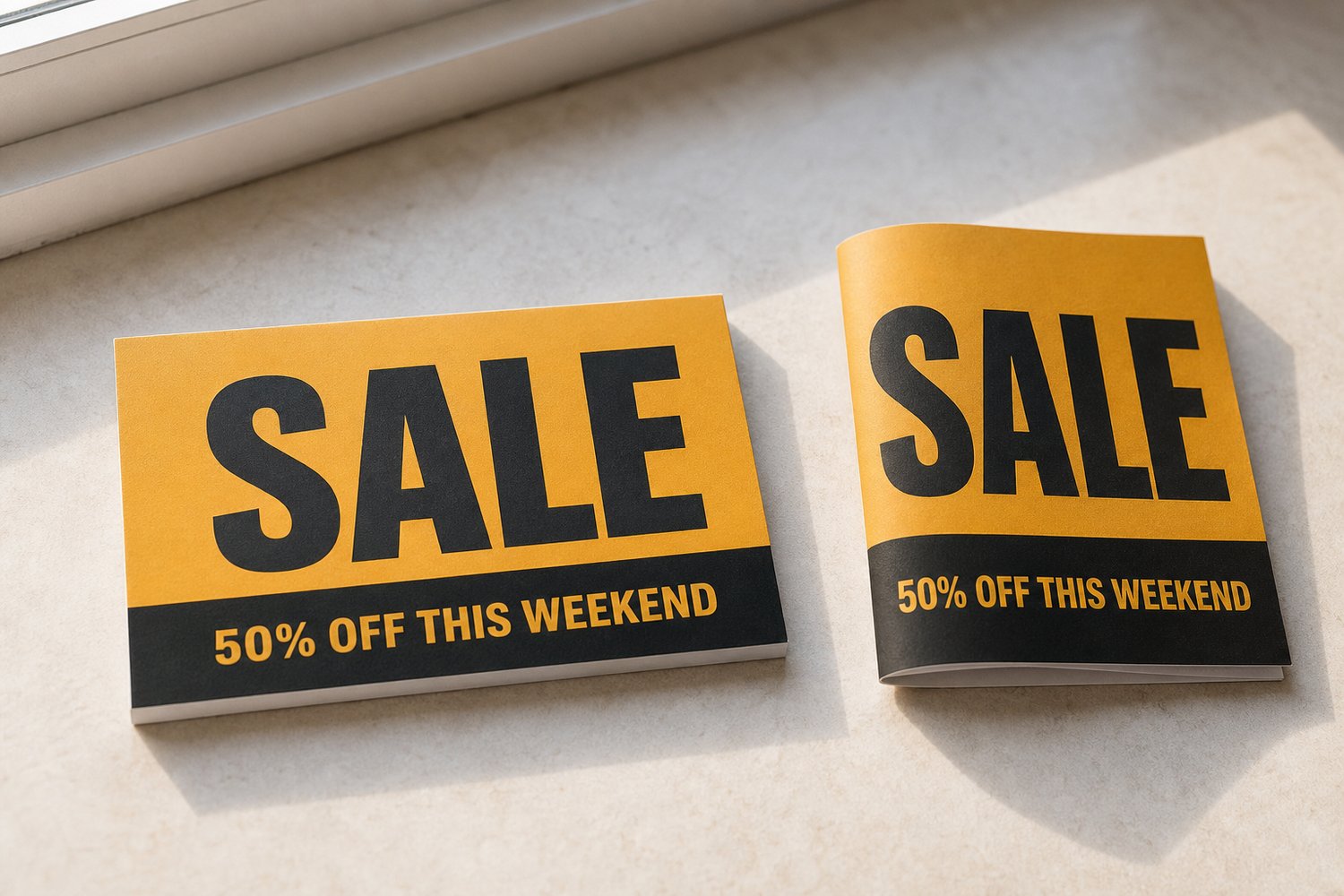
A postcard is a single-sheet card printed on heavy card stock, typically 360gsm premium stock, with full-bleed printing on both sides. The rigid weight means it holds its shape through mail sorting, survives letterbox slots without folding, and feels substantial in the hand. The card weight is also what makes it eligible for Australia Post’s addressed mail and unaddressed mail (EDM) services without needing an envelope. Standard postcard sizes (A6, A5, DL) all fit AusPost’s dimension requirements for large letters. Other finishes are available on request (silk, gloss, recycled), ask for a quote.
Flyers
A flyer is printed on lighter paper, most commonly 130gsm to 170gsm, in a leaflet format. That lower weight makes it cheaper to produce in volume, easier to stack and carry for hand-outs at events or market stalls, and simple to insert into newspapers or magazine sleeves. The trade-off is durability: a flyer dropped through a wet letterbox on a rainy morning often arrives creased or damp. It also cannot be mailed without an envelope, which adds cost and removes the postage-eligible advantage. Paperlust Print Shop offers both postcard printing and flyer printing if you want to compare quotes directly.
Side-by-Side Comparison
| Attribute | Postcard | Flyer |
|---|---|---|
| Paper weight | 360gsm premium card | 130-170gsm paper |
| Thickness / feel | Rigid, substantial | Flexible, lightweight |
| AusPost mail-eligible (no envelope) | Yes (as large letter) | No (needs envelope) |
| Durability through letterbox | High (no crumpling) | Moderate (can fold, crease) |
| Perceived quality | Premium, professional | Functional, promotional |
| Print cost per unit at 1,000 | ~$0.15-$0.20 | ~$0.10-$0.15 |
| Typical direct mail response rate | 1.5-3% (addressed mail) | 0.5-1% (letterbox drop) |
| Best use case | Addressed mail, VIP drops, premium positioning | Volume awareness, events, inserts |
When to Use a Postcard
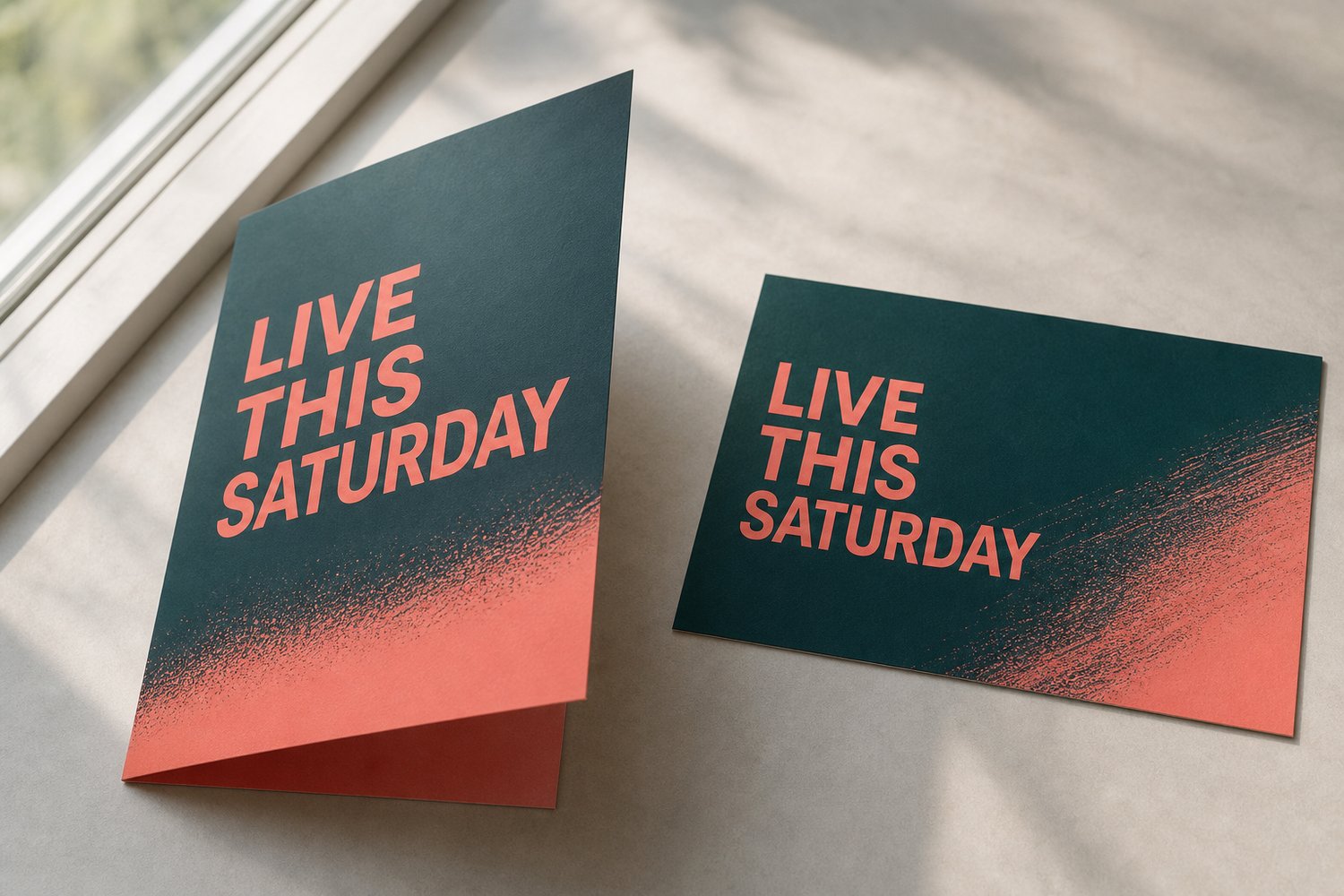
Postcards earn their premium over flyers in four distinct situations.
You want to post it directly to addresses
This is the clearest postcard win. Because a postcard is card stock and self-contained, it qualifies as a large letter through Australia Post’s addressed mail service. You can address and send 1,000 postcards to a postcode-targeted list without envelopes, envelope stuffing, or the added cost of enclosures. Flyers require an envelope to be mailed, which adds roughly $0.20-$0.35 per piece in packaging and extra labour before postage.
For unaddressed mail (AusPost’s EDM service, which delivers to every letterbox in a selected postcode), postcards also qualify as a mail piece. AusPost’s EDM rates as of 2026 start at approximately $0.30-$0.38 per piece for volumes above 1,000, depending on metro or regional zones. A flyer would need to be in an envelope or wrapped to use the same service.
Your piece needs to survive the letterbox
A 360gsm premium postcard does not crumple when pushed through a stiff letterbox slot or when sitting under three days of other mail. A 150gsm flyer folds easily, and if there is any moisture in the letterbox, it can arrive unreadable. For any campaign relying on addressed delivery, card weight directly protects your investment.
Perceived quality matters for your positioning
A postcard that weighs something in the hand signals a brand that invested in its communication. Real estate agents, financial planners, premium restaurants, and professional services businesses use postcards specifically because the physical quality of the piece reflects on the quality of their offer. Cheap paper is a subtle but real signal to the recipient that the business behind it treats its marketing as an afterthought.
You want it kept, not binned immediately
Postcards end up on fridges, pinned to noticeboards, and kept in kitchen drawers in a way that flyers rarely do. A well-designed A6 postcard with a compelling offer or striking visual has a shelf life that extends well past the initial read. For offers that do not expire quickly (a regular service, a local restaurant, a trade professional), that dwell time translates into delayed conversions that a flyer rarely generates.
When to Use a Flyer
Flyers are the better tool in situations where volume and flexibility outweigh the need for premium positioning.
Letterbox drops without postcode restrictions
If you are walking a suburb yourself or using a distribution contractor, flyers are a lower-cost option for physical letterbox delivery. You are not going through AusPost’s mail system, so the weight and format rules do not apply. A 150gsm A5 flyer is light enough to carry hundreds in a shoulder bag, and a distribution contractor typically charges $38-$50 per hundred delivery points, with the piece weight making no difference to their rate.
Events, markets, and conferences
When you are handing material directly to a person at a market stall, trade event, or conference, the economics of flyers are compelling. You might hand out 500 in a morning. A postcard at that volume is entirely viable too, but if the event audience is broad and not specifically pre-qualified, the lower per-unit cost of a flyer means you lose less on the contacts who are not a fit. At events where the audience is highly qualified (a trade show where every attendee is in your industry, for example), hand-outs can achieve response rates of 5-10% on a strong offer, which narrows the response rate gap between formats.
Inserts and printed collateral bundles
Flyers slip into bags, inside magazines, between newspapers, and into retail displays in a way that stiff postcard card stock does not. If you need a piece that works as an insert or sits in a display holder on a counter, flyer weight is the right choice for flexibility and stacking.
High volume, price-sensitive campaigns
If your campaign budget is fixed and you need to maximise reach, flyers stretch a little further: at 1,000 units you might spend $100-$150 on flyer printing versus $150-$200 for postcards. The gap is real but modest, so unless you are printing in the thousands where every cent per unit compounds, the format decision usually comes down to postage eligibility and perceived quality rather than print cost alone.
Cost Comparison in Detail
These numbers use print-only costs at Australian commercial rates for 2026. Postage, distribution contractor fees, and design are separate.
| Volume | Postcard (A6, 360gsm premium, double-sided) | Flyer (A5, 150gsm, double-sided) |
|---|---|---|
| 500 units | $100-$140 ($0.20-$0.28/unit) | $70-$100 ($0.14-$0.20/unit) |
| 1,000 units | $150-$200 ($0.15-$0.20/unit) | $100-$150 ($0.10-$0.15/unit) |
| 5,000 units | $600-$800 ($0.12-$0.16/unit) | $350-$500 ($0.07-$0.10/unit) |
| AusPost EDM postage (per piece) | ~$0.30-$0.38 (no envelope needed) | Not eligible without envelope |
| Envelope add-on for flyer mailing | N/A | +$0.20-$0.35 per piece |
| Leaflet distribution contractor | ~$38-$50 per 100 drops | ~$38-$50 per 100 drops (same rate) |
The key insight from this table: the postage eligibility gap is significant. If you want to run an addressed mail campaign, adding an envelope to a flyer effectively closes the cost gap with a postcard, since the envelope plus envelope postage (a standard letter at $1.70 as of 2026) adds $1.90-$2.05 to each flyer, versus a postcard sent as a large letter at roughly $0.30-$0.38 via EDM or the stamped large letter rate. For addressed mail, postcards are the economically rational choice.
Response Rate Differences
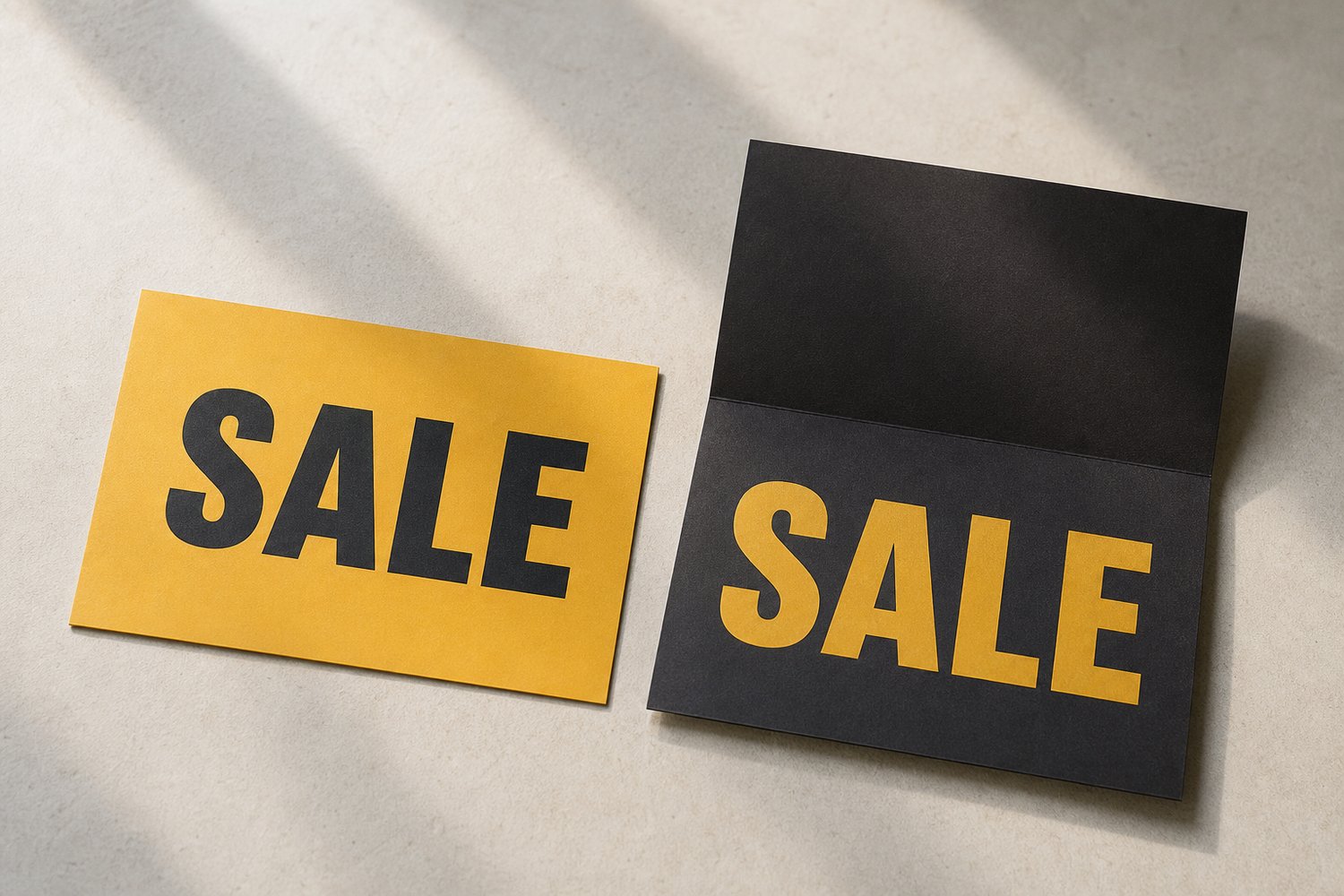
Response rate data for direct mail comes primarily from US and UK markets, where industry bodies (the ANA/DMA in the US, the DMA in the UK) track campaign results at scale. Australian campaigns follow broadly similar patterns, adjusted for the smaller postcode-level audience sizes typical in Australian metro suburbs.
Addressed postcard mail
For postcards sent via addressed mail to a purchased or owned list, typical response rates range from 1.5% to 3%. Well-designed pieces with a strong offer and postcode targeting toward the right household income bracket can push toward the top of that range. The ANA/DMA 2025 Response Rate Report cited a 4.4% average for all direct mail formats, which includes the higher-performing letter format, postcards specifically tend to land in the 1.5-3% range on their own.
Unaddressed mail / EDM letterbox drop
Unaddressed mail (where the piece goes to every letterbox in a postcode without personalisation) typically returns 0.5-1.5% response rates. The lack of name personalisation reduces relevance, and the absence of a relationship with the recipient means a higher proportion of pieces go straight into the recycling bin. Postcards still outperform flyers in this channel because they are more likely to be read before being discarded, the rigid card format physically resists being crumpled and tossed without a look.
Contractor leaflet drop (flyers, no AusPost)
Standard contractor-distributed flyer drops into letterboxes typically return 0.3-0.8% response rates. The response varies significantly based on the offer and the creative: a flyer with a compelling local offer (a discount code or a time-limited promotion) outperforms a generic awareness piece by a factor of three to five. Hand-out flyers at relevant events can reach 5-10% on a strong offer, but only because the audience is pre-qualified by their presence at the event.
Personalised postcards (variable data)
Adding the recipient’s name or a personalised offer (variable data printing, where each card is uniquely printed with different names, addresses, or QR codes) boosts postcard response rates to 2-4% on addressed campaigns. For existing customer databases where you know the recipient’s purchase history or neighbourhood, personalisation is the highest-leverage upgrade available at print stage.
Real Campaign Example: Fit Co Adelaide
A mid-sized gym in Adelaide’s inner north ran a split-format test over a six-week period to compare postcard and flyer performance across comparable inner-city residential zones. The campaign offered new members a 14-day free trial, communicated via a QR code landing page so responses could be tracked precisely.
2,000 A6 postcards (360gsm premium, double-sided), addressed mail to high-density apartment buildings in two suburbs.
5,000 A5 flyers (150gsm, double-sided), contractor letterbox drop across comparable adjacent suburbs.
Results after six weeks:
Postcards: 38 trial sign-ups (1.9% response rate). Cost per sign-up: $21.40 including printing and postage.
Flyers: 31 trial sign-ups (0.6% response rate). Cost per sign-up: $34.60 including printing and distribution.
The postcard format cost more per piece but delivered a lower cost-per-acquisition because the response rate differential was large enough to offset the print premium. This pattern holds consistently: postcard campaigns tend to generate fewer responses in absolute number (because you can afford fewer pieces per budget dollar) but a higher response rate and a lower cost-per-lead.
Hybrid Strategy: Running Both Formats Together
The most effective campaigns do not pick one format and ignore the other, they use each format where it performs best, targeting different segments with the same campaign message.
Postcard for your VIP segment
Use addressed postcards for your existing customer list, a purchased list of high-income postcodes, or a database of previous enquiries. The card’s perceived quality signals that this segment matters to you, the personalisation (even just “Dear Sarah” via variable data) increases response, and the piece is AusPost mail-eligible so delivery is tracked and reliable.
Flyer for broad mass awareness
Use unaddressed flyers for the broader geographic zone around your business or event. The goal here is awareness and reach rather than targeted conversion: you are seeding a large area with your brand and offer at the lowest possible cost per impression. The response rate will be lower, but if your average order value justifies a cost-per-lead of $30-$40, the maths can work even at 0.5% response.
Event tactic: postcard as premium, flyer as general
At trade shows, markets, or brand activations, consider carrying both. Use the postcard for attendees who engage in a conversation with you: the quality of the piece reinforces the conversation and serves as a leave-behind they are more likely to keep. Use the flyer for general foot traffic where the goal is reach, not relationship: if someone walks past your stall and takes a flyer, it costs you around $0.12 versus $0.18 for a postcard, a saving that adds up across hundreds of interactions.
Related Guides in This Series
This post is part of Paperlust Print Shop’s postcard marketing series. Depending on where you are in your planning, these guides cover the adjacent questions.
- Postcard Printing Australia: Sizes, Paper, Pricing and How to Order, the complete starting point if you are new to commercial postcard printing
- A6 vs A5 vs DL Postcards: Which Size Is Right for Your Campaign?, size selection guide with AusPost dimension comparisons
- Direct Mail Postcards for Small Business: Campaign Starter Guide, briefing, list sourcing, and response tracking for SMB campaigns
Which Format Is Right for Your Next Campaign?
Run through these four questions to make the call quickly.
Question 1: Are you mailing to specific addresses?
If yes, use a postcard. The envelope-free AusPost eligibility and lower combined print-plus-postage cost make it the clear winner for addressed campaigns.
Question 2: Is your budget under $200 for print?
If yes and you are doing a contractor drop or event hand-out, flyers give you more pieces for the same budget. If you need to mail addressed, a postcard campaign at 500 units is typically achievable at around $100-$140 printed.
Question 3: Does perceived quality affect your brand?
If you are a premium service provider, professional practice, or any business where quality signals matter (real estate, financial services, high-end hospitality), use a postcard. A flyer positions you as a promotional business, which may not match your positioning.
Question 4: Are you distributing at an event or handing material at a stall?
Flyers work well here unless you are at a high-intent event (like a home show where every attendee is a potential buyer) and the extra cost of a postcard pays off in the credibility it adds to the conversation.
Frequently Asked Questions
Can you post a flyer through Australia Post without an envelope?
No. Australia Post requires that all mail pieces be self-contained or enclosed. A flyer on its own does not qualify because it cannot be addressed and sealed without an envelope. A postcard qualifies as a large letter without an envelope because the card stock is self-supporting and the address can be printed directly on the reverse.
What is the minimum quantity for postcard printing?
At Paperlust Print Shop, postcard printing is available from low minimum quantities. Artwork is reviewed same day before production begins, with standard turnaround of 2-5 business days from artwork approval and express freight to metro areas in 1-2 business days after dispatch.
Is a 360gsm postcard too thick for letterboxes?
No. Standard residential letterboxes in Australia accommodate card stock up to around 5mm thick. A single 360gsm premium postcard (approximately 0.40-0.45mm thick) is well within that range. Where thickness matters is if you are stacking multiple cards in a single envelope, but for single-piece mail, 360gsm premium stock is optimal and gives a noticeably more substantial feel than lighter commercial card.
What sizes work as large letters with Australia Post?
Australia Post’s large letter format accommodates items up to 260mm x 360mm, 20mm thick, and 250g. A6 postcards (105 x 148mm), DL postcards (99 x 210mm), and A5 postcards (148 x 210mm) all fit comfortably within this envelope. Check the current postage guide if you are considering square formats, as dimensions outside the standard envelope range may attract a different rate.
Do flyers get a worse response rate than postcards?
Generally yes for mail-based distribution. Addressed postcard campaigns typically return 1.5-3% response rates versus 0.3-0.8% for contractor-distributed flyer drops. The gap narrows for event hand-outs where the audience is already pre-qualified, and it widens further for personalised variable-data postcard campaigns, which can reach 2-4%.
Can you print postcards with variable data personalisation?
Yes. Variable data printing allows each postcard to carry unique information, the recipient’s name, a personalised QR code linking to a unique landing page, or an address-specific offer. This is particularly effective for real estate postcards and loyalty campaigns. Paperlust Print Shop offers variable data postcard printing across the A6, A5, and DL formats.
Ready to brief your postcard or flyer campaign? Print postcards at Paperlust Print Shop, artwork review within the same business day, printed on 360gsm premium card stock, express freight across Australia.
Ready to print your postcards?
360gsm premium card. From $0.15 inc. GST. Ships AU-wide from Melbourne.