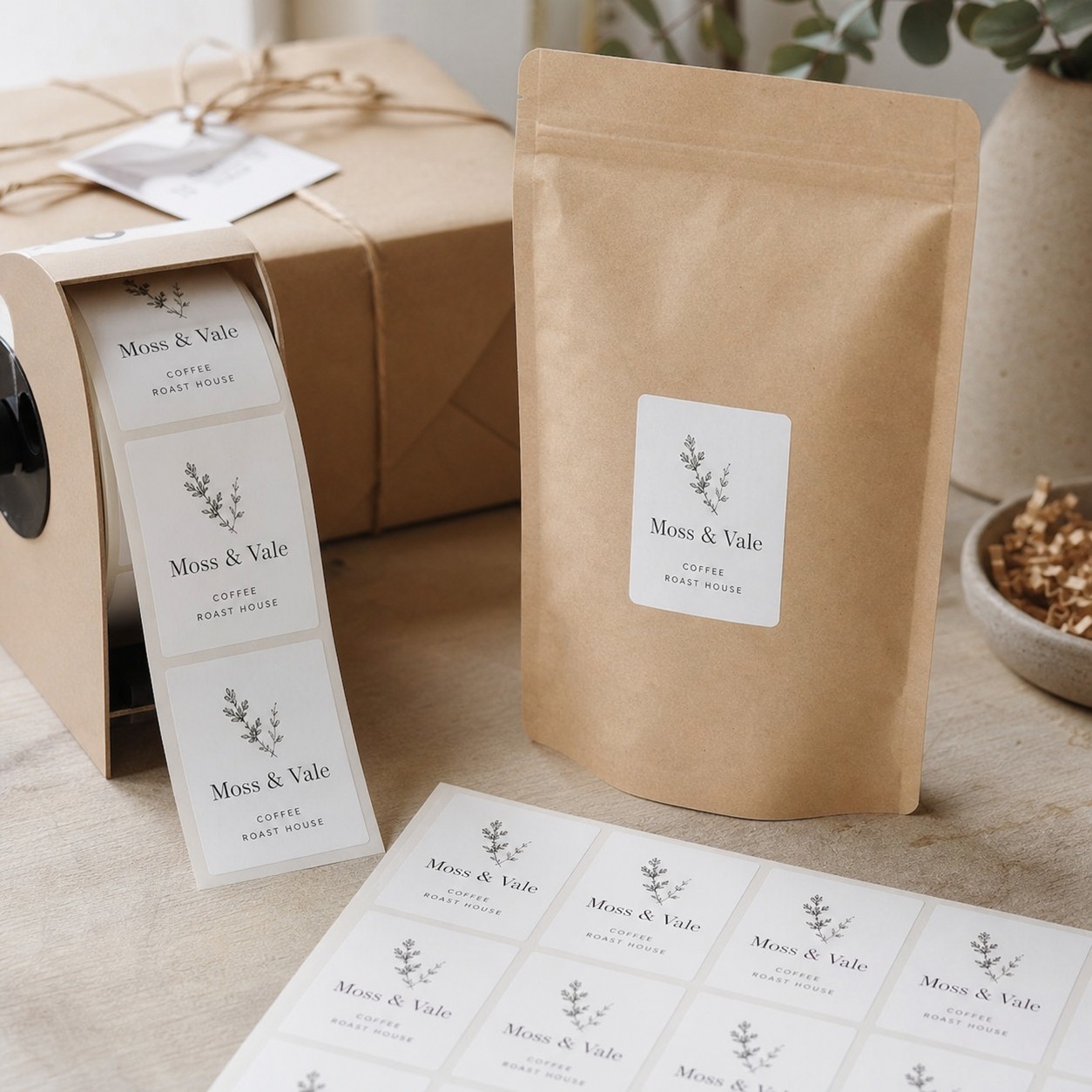
Every parcel leaving your warehouse carries a label. For most Australian ecommerce and freight businesses, that label is a blank direct thermal slip generated at the carrier portal. Functional, but forgettable. Custom printed shipping labels and address labels take the same footprint and turn it into a brand moment – at the doorstep, on the loading dock, and in the hands of every goods-in team along the way.
This guide covers everything you need to choose the right label for AU despatch: the main label types used in fulfilment, material choices, adhesive options, roll vs sheet supply formats, size guidance for common carrier requirements, and when custom printing makes more sense than blank thermal rolls.
Whether you run a growing ecommerce brand, a food or beverage operation, or a warehouse handling regular B2B freight, the right label spec reduces mislabelling risk, speeds up your packing line, and makes every shipment look like it came from a professional business.
Cheat sheet
- Standard size for AU carrier satchels and medium cartons: 100 x 150mm
- Material: white paper for dry, ambient-temperature freight; synthetic (waterproof, tear-resistant) for cold chain, outdoor, or rough-handling environments
- Adhesive: permanent for outbound parcels; removable for reusable crates or short-term labelling
- Supply format: rolls of 500+ for high-volume despatch; sheets for low-volume or on-demand laser/inkjet printing
- Variable data support: barcodes, sequential numbering, batch numbers, and expiry dates can all be incorporated into a custom print run
- Production lead time: 2-3 business days after proof approval
- Custom printed rectangle labels from $0.37 AUD per label (inc. GST)
Types of Despatch Labels Your Operation Needs
Most fulfilment workflows require more than one label type. Here is a breakdown of what each one does and where it sits in your process.
Address labels
The primary label on any outbound parcel. It carries the consignee name, delivery address, and – in most carrier workflows – a barcode or tracking number. For domestic shipping in Australia through major services, 100 x 150mm is the widely accepted size for satchels and medium cartons.
For businesses printing carrier barcodes via the carrier’s own booking platform at time of despatch, a thermal printer generates those on blank rolls on the fly. Custom printed address labels work alongside this: they carry your brand identity, return address, and any fixed content, while the carrier label handles the tracking data.
Return address labels
A smaller label showing your business name and return address, applied to the back of the parcel or the upper left corner of the front face. Useful for professional presentation, for couriers handling returns separately, and for customers who need to ship an item back without contacting you for a return label.
Fragile and handling labels
“Fragile”, “This Way Up”, “Keep Dry”, “Do Not Bend” – handling instruction labels protect goods in transit by alerting handlers before a carton is mishandled. These are typically printed in red or orange with bold iconography. They can be ordered as standalone labels or designed into a combined address and handling label, reducing the number of separate labels your team applies at the packing bench.
Integrated labels
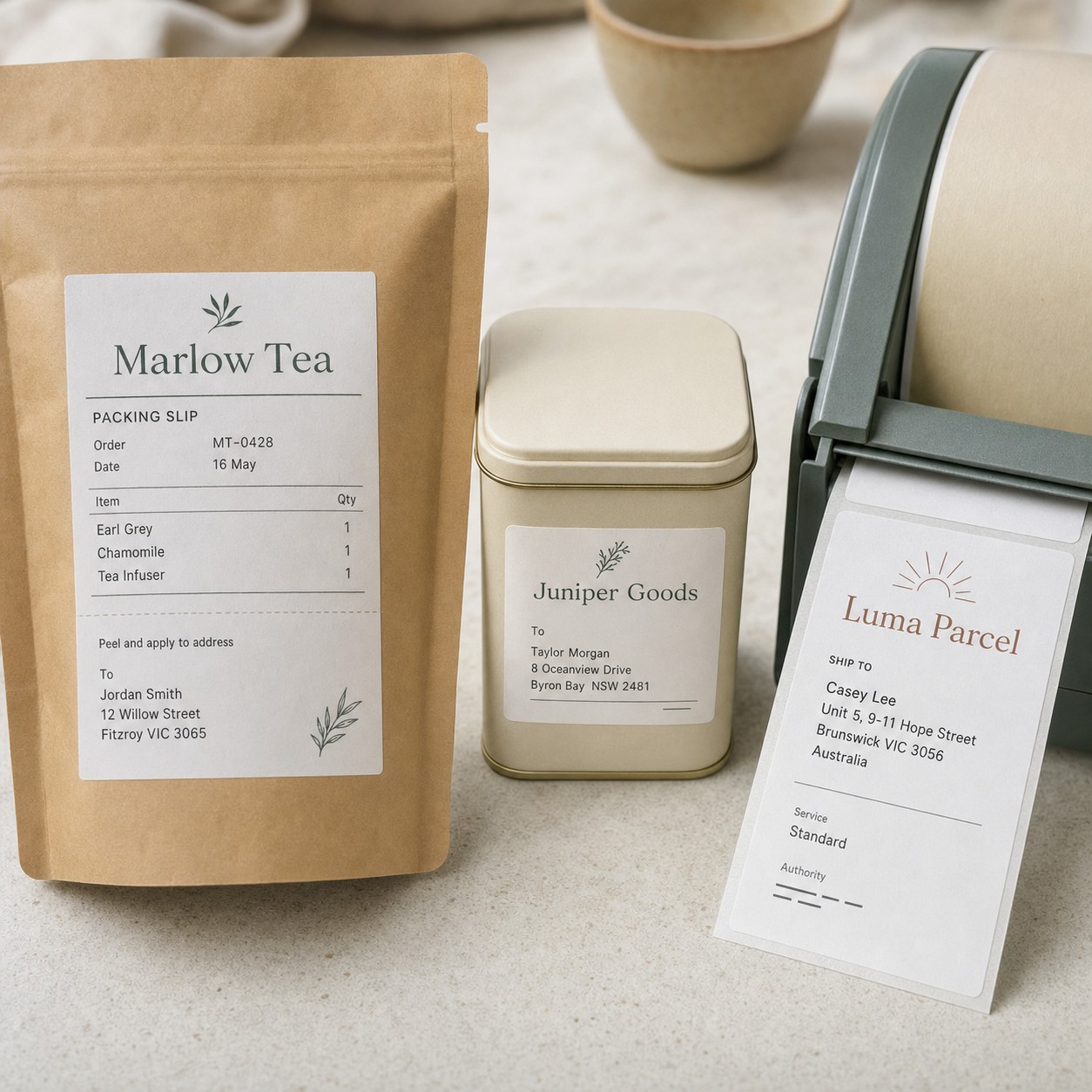
An integrated label combines a packing slip or invoice panel with a peelable address label on the same sheet or roll. The warehouse team uses the packing slip section for picking verification, then peels and applies the address label to the satchel in a single step. This reduces handling time and cuts the risk of mismatching a packing slip to the wrong parcel – a common error in high-volume operations where slip and label are separate documents.
Pallet and freight labels
For palletised B2B freight, larger labels are standard – A5 or A4 format, sometimes with GS1/SSCC-compliant barcode layouts required by 3PL warehouse scanning systems. If your freight operation needs these, confirm the required barcode format with your 3PL or freight carrier before finalising the label spec.
Paper vs Synthetic: Choosing the Right Material
Material choice is the single most important decision in specifying a freight label. The wrong call leads to labels that smudge, delaminate, or fall apart mid-transit.
White cast paper labels
White paper labels are the most affordable option and deliver excellent print quality – sharp text, accurate colours, clean barcode rendering with no scanning errors. They suit:
- Dry goods in ambient warehouse conditions
- Parcels moving through enclosed sorting facilities with no outdoor exposure
- Standard B2C ecommerce shipments in sealed satchels
Paper labels are not waterproof. If a carton gets rained on at a loading dock, or passes through a cold-chain facility where condensation forms on surfaces, a paper label will fail. For those environments, you need synthetic.
Synthetic (waterproof) labels
Synthetic labels use a polypropylene or vinyl base that resists moisture, tearing, and temperature fluctuation. They are the right choice for:
- Cold chain freight (refrigerated or frozen goods)
- Agricultural products and outdoor construction materials
- Heavy freight on timber pallets that sit on exposed loading docks
- Parcels passing through high-humidity sorting environments
- Beer, wine, and beverage bottles in transit
Synthetic labels cost a little more per unit. But the failure cost of a delaminated or illegible label in transit – a lost parcel, a failed delivery, a carrier investigation – is far higher than the price difference between paper and synthetic.
A practical rule of thumb
If your products are dry and ambient, and shipped in sealed satchels or cartons that stay indoors throughout transit: paper labels work well and keep per-unit cost down.
If your products are perishable, wet, cold, or your freight regularly sits outdoors on a loading dock before collection: specify synthetic waterproof labels.
Adhesive Options
Permanent adhesive
The standard choice for all outbound shipping labels. Permanent adhesive forms a strong, immediate bond that is difficult to remove without tearing the label. For freight in transit, this is exactly what you want – a shipping label should stay on the parcel through every handler between your warehouse and the recipient.
Use permanent adhesive on: satchels, cartons, envelopes, boxes, bottles, and any packaging that makes a single outbound journey.
Removable adhesive
Removable adhesive peels cleanly without leaving residue behind. It suits:
- Reusable plastic crates or totes that are relabelled for each trip
- Promotional labels on retail packaging with a short shelf life
- Situations where the label content needs to be updated or replaced without damaging the container
Removable adhesive is not recommended for primary outbound shipping labels. In transit, labels experience vibration, rough handling, temperature changes, and humidity variation. A removable adhesive may lift under these conditions, leaving a parcel unlabelled at a sorting facility.
Roll vs Sheet: Matching Supply Format to Your Volume
Roll labels (minimum 500 per roll)
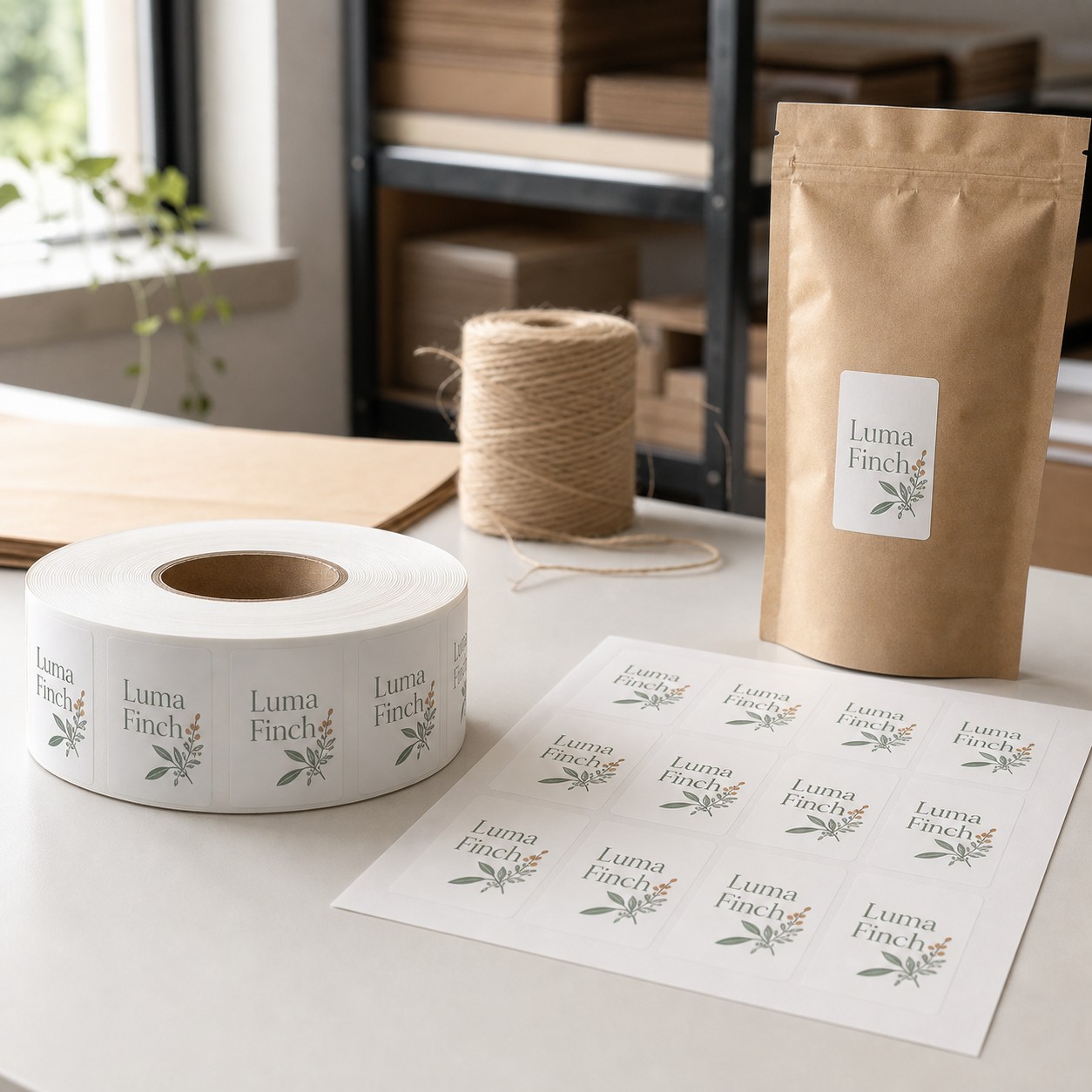
Roll format suits medium to high-volume despatch operations. Custom printed rectangle labels on rolls are compatible with label dispensers and semi-automated applicators, and they integrate cleanly into pick-and-pack workflows without adding a printing step at the despatch bench.
Key advantages:
- Consistent peel-and-apply speed across the team
- Compatible with label dispensers for higher throughput
- Your brand, return address, and handling content pre-printed on every label
- Variable data (barcodes, sequential numbering, batch numbers, expiry dates) can be built into the print run
Minimum order for custom printed rectangle labels on rolls is 500 labels. The same minimum applies across our custom labels range, including circle labels, square labels, and foil labels.
Sheet labels
Sheet labels suit lower-volume operations or businesses that need to print variable content (addresses, order numbers, names) on demand via an office laser or inkjet printer. They are typically supplied on A4 sheets with a set number of labels per sheet.
The trade-off: sheet labels require a printing step at the despatch bench for every batch, which adds time and introduces variability in print quality. For businesses processing more than 50-100 orders per day, roll format is the more efficient choice.
Size Guide for Australian Freight
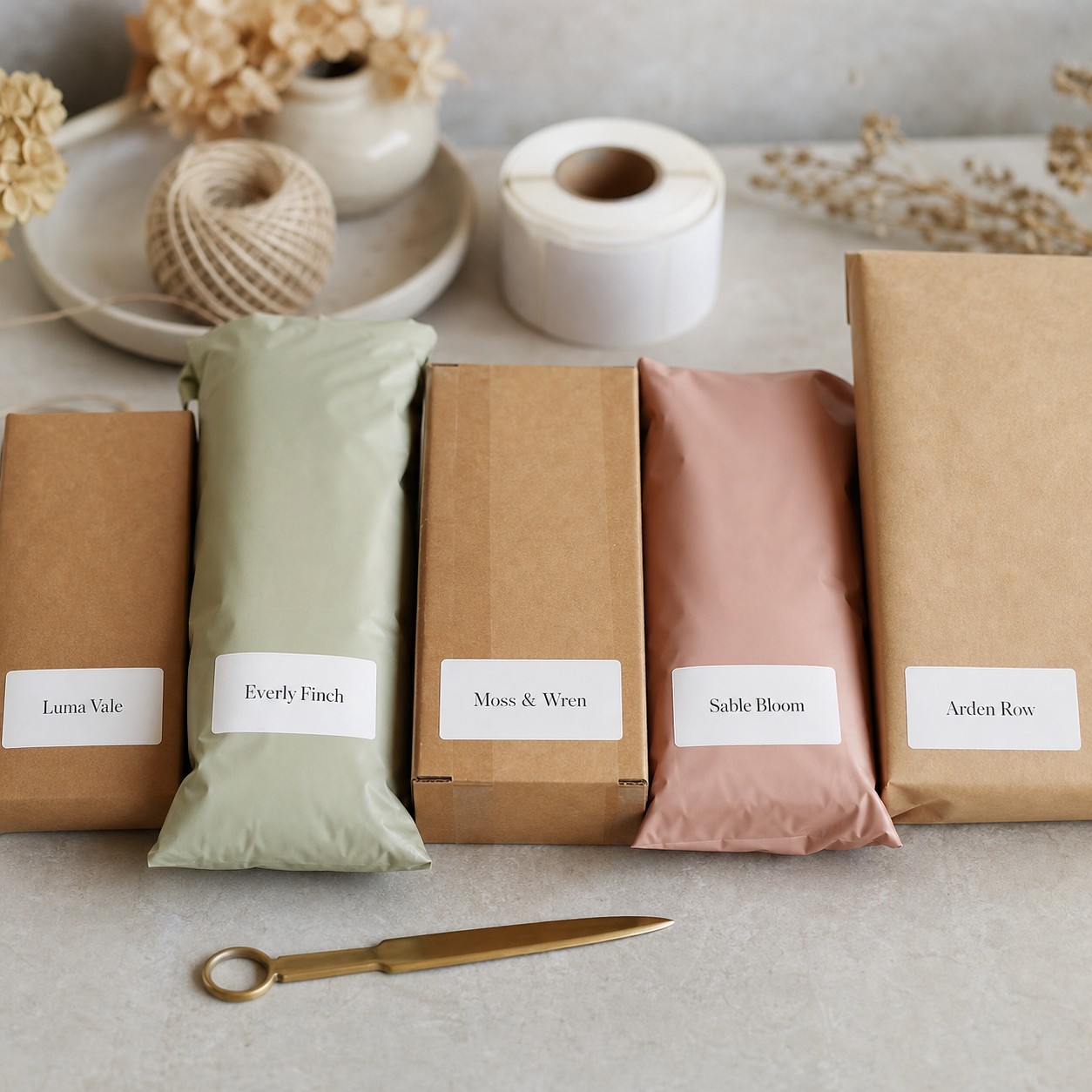
There is no single mandatory label size for Australian carriers, but there are established norms that keep your workflow smooth and your labels scannable.
| Use case | Recommended size |
|---|---|
| Standard satchels (domestic B2C) | 100 x 150mm |
| Medium cartons (domestic B2C/B2B) | 100 x 150mm or 100 x 200mm |
| Large cartons and crated freight | A5 (148 x 210mm) or A4 (210 x 297mm) |
| Return address labels | 50 x 25mm to 100 x 75mm |
| Fragile or handling instruction labels | 50 x 75mm to 100 x 100mm |
| Pallet/SSCC labels for 3PL freight | A5 or A4 with GS1-compliant barcode layout |
Rectangle labels can be produced in custom dimensions to match your specific carton size or carrier requirement. If you have an unusual format, contact the Print Shop team before ordering to confirm the right spec.
Custom Printed vs Blank Thermal: Understanding the Difference
Most AU label suppliers in this category sell blank direct thermal rolls designed to go through a Zebra, TSC, or Honeywell thermal printer and print address data from your carrier’s booking platform at time of despatch. That approach handles carrier-specific data that is generated on the fly – tracking numbers, barcodes, consignment details.
What it does not do is put your brand on the parcel.
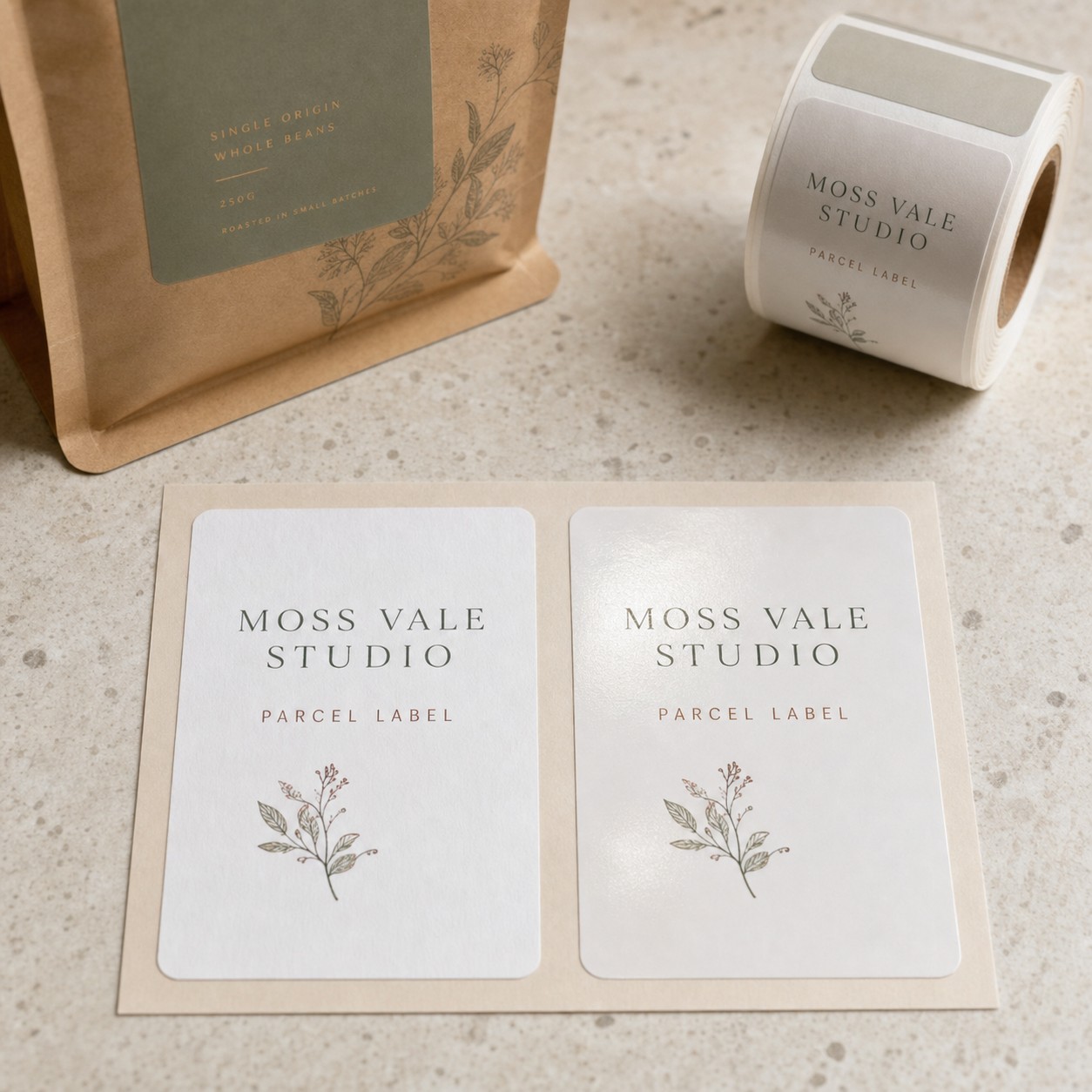
Custom printed labels from Paperlust Print Shop include your logo, brand colours, typography, and any fixed content – return address, handling instructions, your website URL – in full digital print. Variable data such as barcodes, sequential numbering, and batch or expiry dates can also be incorporated into the same print run, so you are not managing two separate label types for every order.
For businesses where brand presentation matters – DTC brands, subscription boxes, premium food and beverage, gifting operations – custom printed labels shift the label from a logistics necessity to a brand touchpoint. Every parcel that leaves your warehouse carries your visual identity. For B2B freight, branded labels signal a professional and organised supplier at goods-in.
A practical workflow for many mid-size AU ecommerce operations combines both:
- Custom printed branded labels from Paperlust for brand identity, return address, and handling instructions
- Blank thermal rolls through your own thermal printer for carrier-generated tracking barcodes at time of booking
The two complement each other. Your branded label establishes identity; the carrier barcode label handles compliance.
For custom printed rectangle labels suitable for shipping and address applications, Paperlust Print Shop’s rectangle labels are available in paper or synthetic, permanent or removable adhesive, in roll or sheet format. If your packaging uses transparent surfaces where showing the product through the label adds value, clear labels are available with the same print quality and adhesive options. For brand shapes that go beyond the rectangle, die-cut labels can be produced to any custom silhouette.
Frequently Asked Questions
What is the standard shipping label size in Australia?
100 x 150mm is the most commonly used size for domestic shipping labels across major AU services. It fits standard satchels and medium cartons and is accepted by the major domestic delivery networks. For large cartons or palletised freight, A5 or A4 labels are more practical. Rectangle labels can be produced in any custom size if your carton or carrier format requires something non-standard.
Can I include barcodes and variable data on custom printed labels?
Yes. Custom rectangle labels from Paperlust Print Shop support variable data printing including barcodes (1D and 2D formats), sequential numbering, batch numbers, and expiry dates. These are incorporated into the print run so every label in your roll carries the correct variable content without a separate printing step at your despatch bench.
What is the minimum order for custom shipping labels?
The minimum order for custom printed rectangle labels supplied on rolls is 500 labels. For lower quantities, rectangle stickers with no roll minimum may be a better starting point, though they are better suited to hand application than high-throughput despatch workflows. Contact the Print Shop team to discuss which format suits your volume.
Is synthetic better than paper for freight labels?
It depends on your environment. White paper labels are suitable for dry goods in ambient warehouse conditions shipped in sealed satchels or cartons that remain indoors throughout transit. Synthetic (waterproof, tear-resistant) labels are the better choice for cold chain freight, outdoor staging environments, heavy goods on exposed loading docks, and any application where moisture or condensation is a realistic risk. When in doubt, synthetic is the safer specification.
How long does production take for custom rectangle labels?
Production takes 2-3 business days after your proof is approved. A digital proof is supplied before production begins so you can confirm the design, check variable data formatting, and request any changes. After production, labels are despatched with flat-rate shipping Australia-wide.
Can I get removable adhesive on address or shipping labels?
Yes, removable adhesive is available as an option on rectangle labels. It peels cleanly without leaving residue, which suits reusable crates, totes, or any container that is relabelled between trips. For primary outbound shipping labels on satchels and cartons, permanent adhesive is the recommended choice as removable adhesive can lift under the vibration and temperature changes typical of freight transit.