Your ute, your tools, your hard hat, and your job site are rolling billboards the moment they carry your name. For Australian tradies running their own business, sticker printing is one of the highest-return marketing investments available: a well-placed vehicle decal generates thousands of local impressions every working week, a branded asset tag means you do not lose a $400 drill on a multi-crew site, and a smart service-completion sticker brings clients back before they even think to call a competitor. This guide covers every practical sticker use case for Australian trade businesses, the right materials for each environment, AU-specific climate and compliance considerations, and what to expect on pricing and lead times when you order.
Quick Reference: Sticker Printing for Tradies
| Trade | Primary Use Case | Best Format | Key Material Need |
|---|---|---|---|
| Electrician | Van side decal + tool asset tags | Bumper sticker + square stickers | UV-stable, permanent adhesive |
| Plumber | Ute panel + waterproof equipment ID | Bumper sticker + die-cut stickers | Waterproof adhesive, marine-grade for coastal |
| Builder / Carpenter | Site signage + truck branding + asset tags | Bumper sticker + sticker sheets | Laminate + aggressive adhesive for dusty sites |
| Painter | Van decal + warranty leave-behind stickers | Bumper sticker + die-cut stickers | Solvent-resistant for paint overspray exposure |
| Landscaper | Ute + trailer side decals | Bumper sticker (large format) | UV-stable inks, outdoor-grade cast vinyl for QLD sun |
| Mechanic | Tool labels + service-completion stickers | Square stickers + sticker sheets | Oil- and solvent-resistant face + adhesive |
| Tiler / Concreter | Ute decal + equipment ID | Bumper sticker + vinyl stickers | Abrasion-resistant laminate for dusty environments |
| Roofer | Hard-hat stickers + vehicle decal | Die-cut stickers + bumper sticker | UV-stable, low-surface-energy adhesive for helmet shell |
| HVAC / Refrigeration | Equipment ID + service-completion stickers | Square stickers + die-cut stickers | Extreme-temp resistant adhesive, chemical-resistant face |
| Lawn Care | Trailer branding + door stickers | Bumper sticker + vinyl stickers | Weather-resistant, survives irrigation splashback |
Vehicle Branding: Ute Side Decals and Door Stickers
Vehicle branding is the highest-value sticker investment for most tradies. A single bumper sticker on a ute panel reaches roughly 3,000 local impressions per day in suburban driving – making it the cheapest cost-per-impression advertising channel available to a sole trader or small crew. The ute is essentially a mobile storefront, and the side panel is prime real estate.
Ute side and panel decals
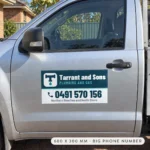
Large-format ute side decals are the flagship use case for bumper stickers. A standard ute side decal runs 600-900mm wide and 200-300mm tall, covering the door panel or rear quarter in business name, logo, phone number, and website. The format is wider than a traditional bumper sticker but uses the same outdoor-grade vinyl construction, making it the correct product to order for this use case.
Material matters significantly in Australian conditions. In Queensland, ute panels sitting in direct sun can reach surface temperatures of 70-80°C during summer. Standard calendered vinyl – the cheaper grade used in short-run indoor applications – can shrink, bubble, or lift at these temperatures. Outdoor-grade cast vinyl with UV-stable inks is the correct specification for any external ute decal in QLD, northern NSW, or the Northern Territory. Cast vinyl conforms to panel curves and contours without stress relaxation, and the UV-stable ink layer resists fade across 5 or more years of Australian sun exposure.
For tradies working coastal runs – Sunshine Coast, Northern Beaches, the Gold Coast hinterland, or the Fremantle industrial strip – salt-laden air accelerates standard adhesive degradation. Marine-grade permanent adhesive maintains its bond in high-humidity, salt-air environments and is worth specifying when you order ute decals for coastal operations. For more on paint-safe application and removal, see the guide on car stickers that don’t damage paint.
Door stickers: ABN, licence and service area
A door sticker is a smaller, more structured format than a full panel decal. Tradies typically use it to display their Australian Business Number (ABN), contractor licence number – required by law for licensed trades including plumbing, electrical, and gas fitting in most states – service area, and emergency contact number. The format is usually a rectangle or die-cut to logo shape, 200-350mm wide, applied to the driver’s door or rear door panel.
Die-cut door stickers in your logo shape rather than a standard rectangle add a premium feel that plain-cut vinyl cannot match. Custom die-cut stickers are the right format when you want the branding outline of your mark visible, not the rectangular border of the substrate. For compliance information stickers where legibility matters more than aesthetics, a clean rectangle keeps the text readable at a glance.
State licensing authorities – NSW Fair Trading, the Queensland Building and Construction Commission, the Victorian Building Authority, and their equivalents – may require the contractor licence number to be displayed on work vehicles for licensed trades. Check your state’s specific rules before finalising the door sticker design. The sticker is often the visible evidence of compliance during a site inspection.
Brand Your Ute the Right Way
Outdoor-grade bumper stickers built for Australian conditions. UV-stable inks, permanent adhesive, and full-colour print from your logo file. Minimum 10 units. Upload your artwork and get a quote.
Window Decals: Phone Number and Website on Every Ute and Van
Window decals deliver the highest impression-per-dollar return of any tradie sticker format. A rear-window decal showing your business name, phone number, and website is readable by every vehicle behind you at the lights, in traffic, and in car parks. For a sole trader doing 80 kilometres of Sydney metro or Melbourne suburban driving per day, the rear window functions as a moving billboard reaching thousands of unique eyes per week.
The standard format for rear-window application is a clear sticker printed in opaque white or full colour, applied to the inside of the rear window. Inside application protects the print from weather and UV damage and avoids any question about clearance from external vehicle finish. In states where tinting is not applied, an inside-applied clear sticker provides full visibility without obscuring rear sightlines when designed with a white or text-only layout on clear substrate.
For side windows, clear stickers work on glass as well as on rear quarter panels. Keep the design to high-contrast elements: white text on dark backgrounds reads well on glass from a distance; fine detail and mid-tone colours wash out in daylight. Use a minimum text height of 40mm for phone numbers to ensure readability at 20 metres. For the broader vehicle branding strategy and what is working for Australian trade businesses, the guide on bumper stickers for modern business branding covers the full vehicle approach.
Tool Labels and Asset Tags
Asset tagging is one of the most overlooked sticker applications for trade business owners. On any multi-crew or multi-sub-contractor job, unmarked tools disappear regularly – through honest confusion on a busy site or through outright theft. A permanent asset tag sticker with your business name and phone number means that anyone who picks up your drill, level, or pipe threader can identify it and return it. More importantly, it signals at a glance which tools belong to which crew, reducing loss significantly between jobs.
Standard asset tags for power tools and hand tools
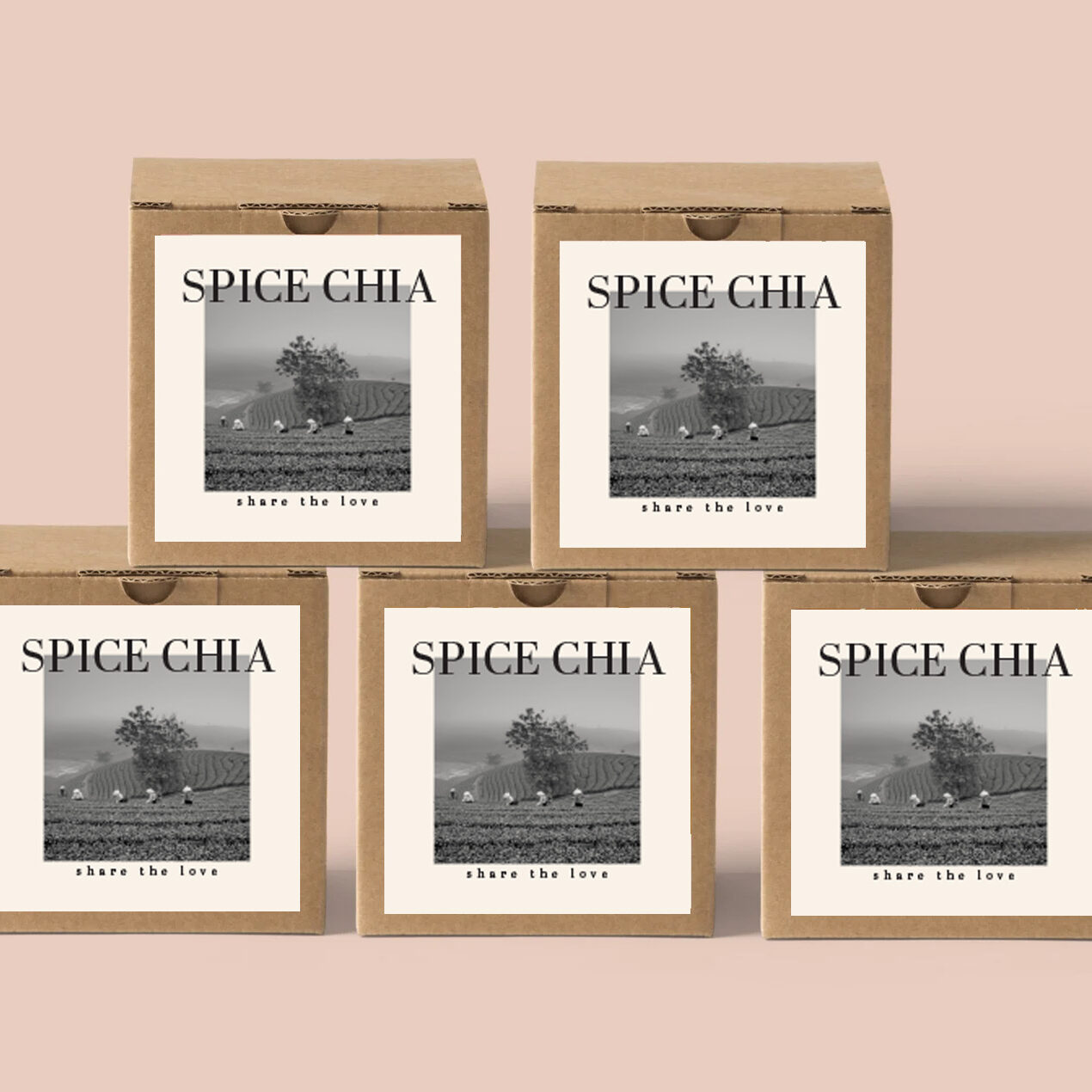
Square stickers and small rectangles in the 30-80mm range are the standard format for tool asset tags. The square format fits naturally on tool bodies, cases, and ladder rails without overhang. Order them on sticker sheets if you are tagging a large inventory in one go – sheets are the most cost-efficient way to print a high volume of small labels in a single run, keeping per-unit cost low on bulk orders.
For tool asset tags, include at minimum: business name, mobile number, and optionally a sequential ID number if you are running a formal asset register. Avoid QR codes on tool labels intended for outdoor sites – they are impractical to scan in dusty or wet site conditions, and the code surface wears poorly under heavy handling. Simple high-contrast text in your brand colours remains the most durable and readable approach for the harsh trade environment.
In Victorian conditions – Ballarat frost cycles, Melbourne winter rain, the mud on any Geelong or Mornington Peninsula slab job in July – standard paper labels delaminate within weeks when stuck to metal tool bodies. Vinyl face with a waterproof adhesive is the minimum specification for any outdoor trade environment. Paper-faced labels absorb moisture at their edges, the adhesive releases, and the label rolls off the tool within a single wet season. Do not order paper labels for outdoor tool tagging in any Australian state.
Oil-resistant labels for mechanics and HVAC tradies
Mechanics, HVAC technicians, and automotive tradies work in environments where tools are routinely exposed to engine oil, hydraulic fluid, refrigerants, and degreasers. Standard vinyl adhesive does not hold up to prolonged hydrocarbon contact – the adhesive softens and the sticker slides off the tool within weeks in a busy workshop. Oil-resistant vinyl stickers use a chemical-resistant face film and an aggressive solvent-resistant adhesive formulated for exactly this environment. Specify a matte laminate overcoat: gloss laminates become slippery when oil-contaminated, while matte maintains grip and legibility longer in dirty workshop conditions.
Equipment ID Stickers for WHS Compliance
Under Australia’s harmonised Work Health and Safety (WHS) legislation, plant and equipment used in the workplace must be clearly identified – particularly when that plant is registered or falls under specific inspection requirements. Safe Work Australia’s Code of Practice for Managing Risks of Plant in the Workplace sets out the identification requirements for hazardous plant including earthmoving equipment, elevated work platforms, cranes, and pressurised vessels. A durable equipment ID sticker is the standard way to meet the visible identification requirement on site.
Equipment ID stickers for WHS compliance typically display the plant item’s registration number (where applicable), owner’s business name, inspection due date, and safe working load or operating limits where relevant. In Queensland, the Work Health and Safety Act 2011 (Qld) and its supporting regulations require registration of plant items such as cranes, forklifts, and EWPs above specified thresholds – and those items must carry visible identification that a WHS inspector can verify on site. NSW, Victoria, and other harmonised states have equivalent requirements under their WHS regulations.
Die-cut stickers in your exact logo or compliance mark shape work well for formal plant ID, creating a branded compliance marker that is visually distinct from generic printed labels. For standard rectangular compliance formats, vinyl stickers on sticker sheets give you a fast-to-apply, durable label that survives the temperature extremes, vibration, and moisture exposure typical of mobile plant environments.
An important note on warranty stickers: under the Australian Consumer Law (Competition and Consumer Act 2010), labels stating “warranty void if removed” or “warranty void if serviced by unauthorised repairer” are not legally enforceable against consumer rights in most circumstances. Tradies using post-job branded stickers should frame them as “next service recommended,” “maintenance record,” or “service completed by [Business Name]” rather than warranty-voiding language. This protects your client relationship and keeps you on the right side of the ACL.
Custom Die-Cut Stickers for Logos, Equipment ID and More
Cut to any shape, printed on outdoor-grade vinyl in full colour. Perfect for tool labels, equipment ID tags, hard-hat logos, and custom trade branding. Upload your file and get an instant quote.
Site Signage Stickers
Site signage stickers bridge the gap between full corflute board printing and temporary paper notices. For tradies who need to brand a site hoarding, identify a work zone, or add hazard marking to a corflute board, sticker overlays are a fast, portable solution that can be applied on-site without a sign printer involved and removed when the job is done.
The most common application is a branded overlay on a standard 600mm x 400mm corflute board: your business logo and name applied to the corflute face before the board goes up on the fence line. This is faster than ordering pre-printed corflute for short-run or rotating jobs, and the boards can be reused when the sticker is removed and replaced. Outdoor-grade vinyl with a UV laminate holds up through a standard build duration – typically 3-12 months on a residential site – without fading or peeling in western Sydney abrasive dust environments or during a wet Victorian winter. When a board is going up for the length of the job rather than rotating between sites, you can order pre-printed corflute signs in 3mm or 5mm TEKflute with eyelets punched on all edges.
For NSW tradies, Construction Industry Commission regulations and local council DA conditions often require site signage displaying specific information including licence numbers, building certifier details, and DA reference numbers. A branded sticker system lets you print your standard branding separately and add the project-specific compliance text as a separate label run, keeping procurement simple and compliance flexible. Bumper stickers in a larger format work well for site identification boards where you need maximum coverage at distance. For a deeper look at outdoor sticker performance, see the guide on waterproof stickers for outdoor use.
Hard-Hat Stickers
Hard-hat stickers serve three purposes for trade businesses: crew identification (who works for whom on a multi-trade site), branding (every hard hat carrying your logo is a free impression at every client walkthrough), and safety milestone recognition (years of service or zero-incident milestones, common in larger construction crews). All three are valuable and all three use different design formats.
Crew identification and branding stickers
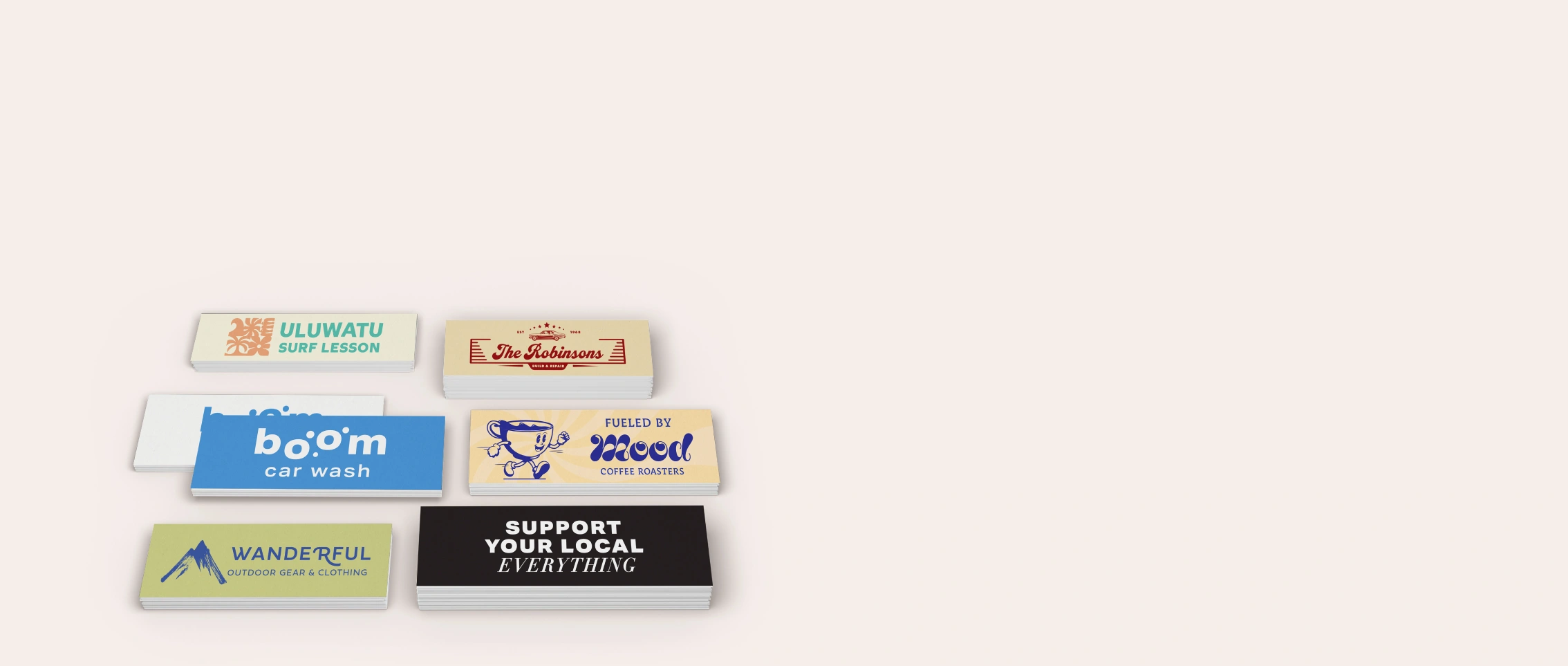
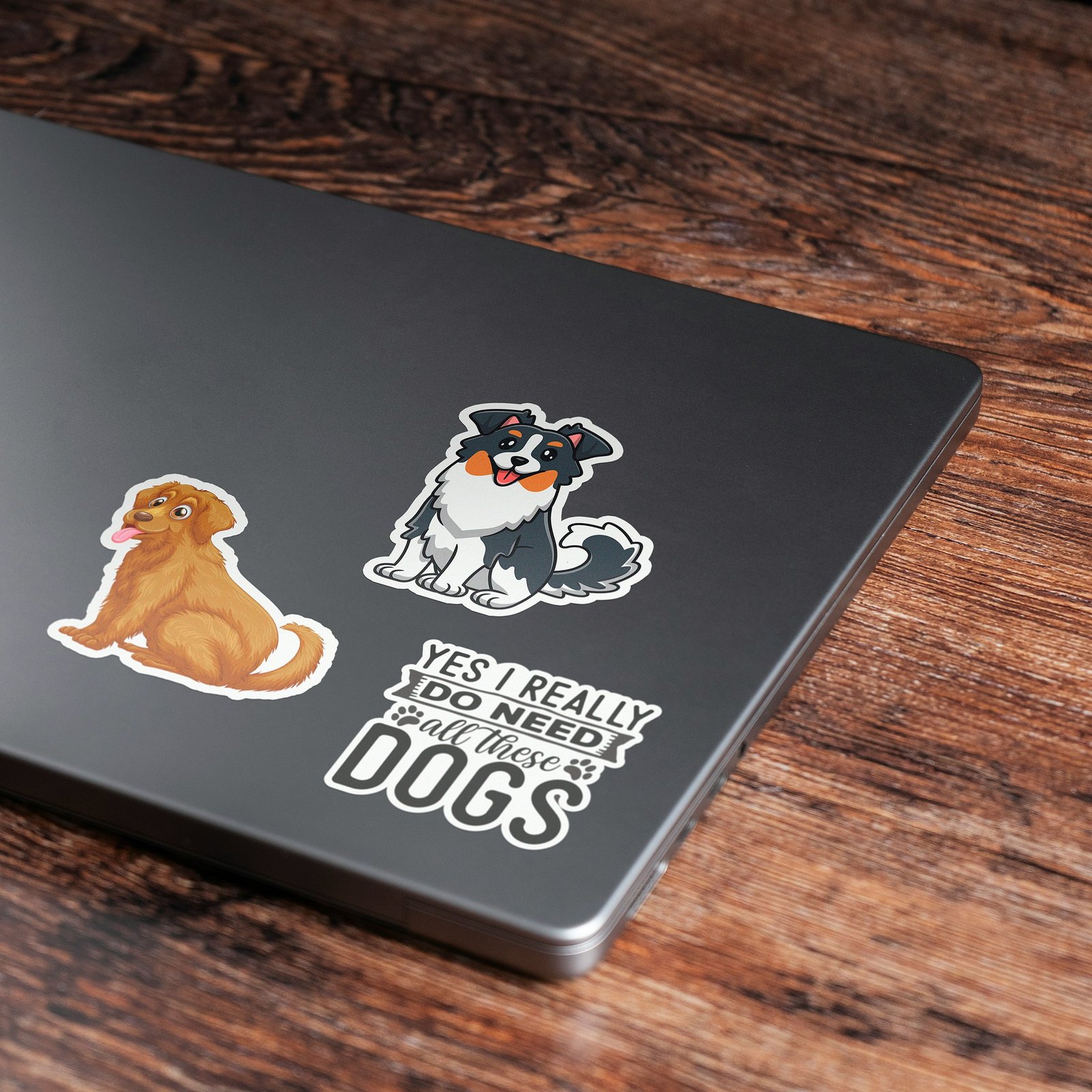
Branded hard-hat stickers are typically 60-80mm wide, die-cut to logo shape or a simple oval, and applied to the front or side of the helmet above the brim. Die-cut stickers in your exact brand mark shape look significantly more professional than rectangular labels on a helmet shell. For a crew of 10-20 workers, a run of 50-100 stickers covers the initial order, replacements from normal wear, and new starters through the year.
The hard-hat shell surface is typically polyethylene (HDPE) or ABS plastic – both low-surface-energy plastics, which means standard adhesive bonds less aggressively than it would on metal or glass. Specify an adhesive rated for low-surface-energy plastics when ordering helmet stickers. A standard vinyl sticker with general-purpose permanent adhesive will work in temperate conditions but can lift at the corners in Queensland summer heat (hard-hat surface temperatures in direct north Queensland sun can exceed 60°C) or after prolonged rain on a Brisbane, Cairns, or Darwin site. The low-surface-energy rating is the detail that matters for helmet applications in northern Australian climate zones.
Safety milestone stickers
Safety milestone stickers are popular in larger building and civil construction crews. Coloured star or circle stickers applied to the hard hat indicate years of injury-free service or completed safety training modules. These are typically ordered as sheets of small (20-30mm) die-cut shapes in 3-5 colours on a single sticker sheet, allowing a site safety manager to apply milestones progressively without ordering multiple separate products. Sticker sheets are the most cost-efficient format for this use case – a single A4 sheet can hold 30-50 small milestone stickers at very low per-unit cost.
A practical note on Australian standards: AS/NZS 1801 (Occupational Protective Helmets) specifies that accessories applied to helmets – including decals – must not damage the helmet structure or reduce its protective performance. Most hard-hat manufacturers publish an approved decal placement zone on the crown and specify that solvents should not be used to remove stickers, as solvents can degrade the ABS or HDPE polymer. Removable-adhesive vinyl is preferable for hard hats so that stickers can be replaced without solvent removal, keeping the helmet compliant.
Trade Shows, Expo Stickers, Branded Merch and Sub-contractor Stickers
Australian trade shows and industry events are a concentrated opportunity for sticker-based marketing. Events like the HIA Home Show, the Housing Industry Association Expo, Master Builders Association state expos, and regional trade supplier days bring target clients and referral partners into a single venue. Stickers handed out at trade shows are one of the highest-recall takeaways available: they travel on laptop lids, water bottles, and vehicle bumpers long after the event ends, giving you ongoing impressions from a one-time distribution cost.
Expo and trade show sticker design
Die-cut stickers in your logo shape or a bold, simple design that communicates your trade at a glance are the most effective format for trade show distribution. An 80-100mm die-cut is large enough to be visually interesting but small enough to fit on a laptop lid or water bottle without being obtrusive. Print a run of 200-500 for a regional expo or 500-1,000 for a major national event. The cost per unit drops significantly at these volumes, making trade show stickers one of the most cost-efficient branded giveaway items in any tradie’s marketing budget. See also: the guide on business stickers branding for broader B2B sticker strategy.
Branded merchandise for crew goodwill
Branded stickers on crew water bottles, hard cases, and cooler boxes build team culture and extend brand reach to client sites, supplier yards, and social media. A die-cut logo sticker on a crew member’s insulated cooler is visible at every site morning tea, and photos of the crew at work end up on personal social media feeds carrying your name. This is particularly effective for landscaping, outdoor maintenance, and construction businesses where on-site social content is already part of the marketing mix. The guide on boosting your business with vinyl stickers covers the merchandise angle in more detail.
Sub-contractor referral stickers
Sub-contractor stickers are a specific trade networking tool: a small die-cut sticker with your logo and a referral or trade account code, distributed to trusted sub-trade partners – the plumber you call when a renovation uncovers pipework, the electrician your landscaping clients always need for irrigation timers. When a sub hands your sticker to their client with a mention, it functions as a warm referral trigger. Include a short URL and a discount code printed on the sticker to make the referral trackable back to its source.
Vehicle Wrap Accents, Foil Stickers and Warranty Leave-Behind Stickers
Not every tradie vehicle needs a full wrap. For tradies with a dark-coloured fleet vehicle where standard colour print would not show well, metallic foil accent stickers provide high visual impact without the cost and commitment of a full wrap. A metallic foil sticker in gold or silver on a charcoal or navy ute door creates a premium, high-contrast brand mark that reads differently from standard vinyl and signals quality workmanship to clients before a word is spoken on site.
Foil accent stickers work particularly well for trades competing in the premium residential market – bespoke builders, high-end landscape designers, boutique electrical contractors working on architecturally designed homes. In these markets, the quality signal from your vehicle branding affects the client’s confidence in your workmanship before you arrive. A gold foil die-cut logo on a dark ute door achieves that signal at a fraction of a full-wrap cost.
Service-completion leave-behind stickers
A service-completion sticker is one of the highest-ROI repeat-business tools available to any tradie. Applied post-job to the equipment serviced or installed – the hot water unit, the air conditioning outdoor unit, the switchboard, the irrigation controller – a small branded sticker with the service date, next recommended service date, and your phone number ensures your number is on the equipment the next time it needs attention. The client does not need to search for a local tradie when your contact details are already on the appliance.
For this application, use a durable outdoor vinyl with a permanent adhesive – the sticker needs to survive 12-24 months of exposure on outdoor HVAC units, under kitchen sinks in humid environments, or in roof cavities with significant temperature swings. Avoid glossy finishes for outdoor equipment applications in coastal areas, as gloss surfaces can develop condensation hazing in high-humidity environments over time. A matte or satin finish maintains legibility longer in these conditions. Frame the sticker content as “next service recommended 2026” rather than warranty-voiding language – this is both more commercially effective and consistent with the Australian Consumer Law.
Choosing the Right Sticker Material: A Guide for Tradies
The material choice for a tradie sticker is not one-size-fits-all. The right specification depends on the application surface, the exposure environment, and the required service life. The tables below map common trade use cases to the right material and finish.
| Use Case | Recommended Material | Why | Avoid |
|---|---|---|---|
| Ute side / van panel decal | Cast outdoor vinyl, UV-stable inks, permanent adhesive | Survives 70-80°C panel temps in QLD; conforms to curves | Calendered vinyl (shrinks and lifts in heat) |
| Window decal (inside-applied) | Clear vinyl, opaque white or full-colour print | Protected from weather inside glass; optically clear substrate | External application on tinted windows (delamination risk) |
| Tool asset tag (dry workshop) | Gloss or matte vinyl, permanent adhesive | Clean application, withstands normal handling and storage | Paper face (moisture delamination in any outdoor use) |
| Tool tag (outdoor / wet site) | Vinyl face, waterproof adhesive, laminate overcoat | Resists Victorian frost cycles, QLD rain, site wash-downs | Unlaminated vinyl (print wears faster under abrasion) |
| Tool tag (mechanic / HVAC) | Oil-resistant vinyl, solvent-resistant adhesive, matte laminate | Bonds in hydrocarbon environments; matte resists workshop glare | Standard permanent adhesive (softens on contact with oil) |
| Hard-hat sticker | Removable vinyl, low-surface-energy adhesive | Bonds to HDPE/ABS; removes cleanly without solvent | Aggressive permanent adhesive (solvent needed to remove; degrades helmet) |
| Coastal / marine environment | Cast vinyl, marine-grade adhesive, UV laminate | Salt-air resistant; maintains bond in high-humidity conditions | Standard adhesive (degrades within 6-12 months in salt air) |
| Service-completion (outdoor equipment) | Matte or satin vinyl, permanent adhesive, UV stable | Survives 12-24 months on HVAC units, switchboards, irrigation | Gloss finish (hazes in coastal humidity over time) |
Finish comparison: gloss vs matte vs foil vs clear
| Finish | Best Environment | Durability | Notes |
|---|---|---|---|
| Gloss laminate | Indoor, trade show, branded merch | High | Vivid colours; can haze in coastal high-humidity outdoor conditions |
| Matte laminate | Tool labels, workshop, outdoor equipment | High | Non-reflective; better legibility in variable light; hides fingerprints |
| Unlaminated gloss | Short-run indoor use only | Low-medium | Print scratches and fades outdoors without laminate protection |
| Foil (metallic gold/silver) | Premium vehicle accents, client-facing branding | High (with protective overcoat) | Strong quality signal for premium residential and commercial market |
| Clear (no white base) | Window decals, glass surfaces | Medium-high | Substrate shows through; white ink required for text opacity |
What Each Trade Actually Orders
The use cases above map to different sticker priorities depending on the trade. Here is a practical breakdown of what Australian trade types typically order and why. Use this as a starting point for building your own sticker print brief.
Electricians
Most AU electricians order in two categories: vehicle branding and tool asset tags. A van-side bumper sticker with business name, electrical contractor licence number (required by law in most states), phone number, and website is the primary order. Tool labels in the 30-50mm square format ordered on sticker sheets cover the second priority. Electricians doing commercial work also order equipment ID labels for distribution boards and switchgear, particularly on larger projects with multiple subcontractors on site.
Plumbers
Plumbing is one of the most ute-branded trades on Australian roads. Most plumbers order a full ute panel bumper sticker covering front and rear doors, often extending to the tray sides, plus a waterproof equipment ID label set for hot water units, pressure gauges, and service completion stickers. Coastal plumbers in Queensland, WA, and NSW beachside suburbs should specify marine-grade adhesive for any sticker applied to outdoor equipment near the ocean – the salt-air exposure that degrades standard adhesive is a real and consistent problem for Sunshine Coast and Northern Beaches plumbing businesses.
Builders and Carpenters
Builders typically have a higher sticker budget than sole traders due to crew size and site scale. The primary orders are site signage sticker overlays on corflute boards, crew hard-hat stickers branded with the business name, ute and truck panel bumper stickers, and tool asset tag sheets for on-site equipment. Larger building companies also order safety milestone sticker sheets for crew recognition programs on long-duration projects.
Painters
Painters work closely with residential clients and the leave-behind sticker is particularly important in this trade. After completing a job, a painter’s sticker applied in a laundry cupboard or near the meter box with the paint colours, sheen levels, and touch-up notes used for each room is a practical leave-behind that clients genuinely keep. Painter vehicle decals should be specified on solvent-resistant vinyl – paint overspray and thinners are a real environmental hazard to stickers applied to a painter’s van in a spray situation. For the vehicle branding angle, the guide on vinyl stickers vs paper stickers covers the material decision in detail.
Landscapers
Landscaping businesses often operate both a ute and a trailer, and both surfaces are branding opportunities. Trailer-side bumper stickers in the 600-900mm range with a bold logo and phone number are the primary order. UV stability is critical: a landscaper’s equipment sits in direct sun for long hours every day across the Australian summer, and a sticker that fades in 12 months in Queensland or WA conditions is not delivering its ROI. Specify outdoor-grade cast vinyl with UV-stable inks for any landscaping vehicle or trailer application.
Mechanics
Mechanics have the most specific material requirements of any trade. Tool labels need oil and solvent resistance. Service-completion stickers for client vehicles need a permanent adhesive that bonds to painted metal and survives temperature cycling in an Australian car engine bay – ambient under-bonnet temperatures in Australian summer can reach 120°C. For under-bonnet service stickers, high-temperature adhesive vinyl rated for elevated temperatures is the correct specification; standard permanent adhesive degrades quickly in engine-bay heat. For workshop and reception branding, die-cut logo stickers distributed as client takeaways are an effective and low-cost brand-building tool.
| Vehicle Type | Best Sticker Product | Typical Size Range | Key Specification |
|---|---|---|---|
| Ute (door panel) | Bumper sticker | 500-900mm W x 200-300mm H | Cast vinyl, UV-stable, permanent adhesive |
| Van (full side panel) | Bumper sticker (custom width) | 1,000-1,500mm W x 400-600mm H | Multi-section or single large format |
| Trailer (full side) | Bumper sticker (large) | 900-1,200mm W x 300-500mm H | Bold high-contrast design for road visibility |
| Door (contact details) | Die-cut sticker | 200-400mm W x 100-200mm H | Legible at 10m; include ABN + licence number |
| Rear window | Clear sticker (inside-applied) | 400-700mm W x 100-200mm H | High contrast; minimum 40mm text height for road legibility |
Costs, Lead Times and Ordering
Sticker pricing varies by size, material, finish, and quantity. The table below gives indicative AUD price ranges for the most common tradie sticker formats at typical volume breakpoints. These are approximate figures for budgeting – confirm exact pricing at the Paperlust Print Shop sticker range when you are ready to order.
| Format | 50 units (AUD) | 100 units (AUD) | 500 units (AUD) | 1,000 units (AUD) |
|---|---|---|---|---|
| Bumper sticker (500mm x 200mm, outdoor vinyl) | $90-$130 | $150-$200 | $420-$550 | $750-$950 |
| Die-cut sticker (80-100mm logo shape) | $55-$80 | $85-$110 | $200-$280 | $350-$480 |
| Square sticker (50mm, tool asset tag) | $40-$60 | $60-$85 | $160-$210 | $270-$350 |
| Sticker sheet (A4, 10-15 small labels per sheet) | 1 sheet: $12-$18 | 5 sheets: $50-$70 | 20 sheets: $160-$220 | 50 sheets: $340-$450 |
| Clear sticker (window decal, 500mm x 150mm) | $65-$90 | $100-$140 | $280-$370 | $480-$650 |
As a general principle, sticker printing has a strong volume break. The per-unit cost of ordering 500 stickers is typically 40-60% lower than ordering 50 of the same format. If you need ute decals for a fleet of 6 vehicles, ordering all 6 runs at once is significantly more cost-effective than ordering one at a time. The same logic applies to tool asset tags for a full crew: order enough to tag your entire inventory in one run rather than topping up in small batches throughout the year.
Laminate finish adds a modest premium over unlaminated (typically 15-20%) but significantly extends the service life of the sticker in outdoor trade environments. For any sticker going on a vehicle, tool, or outdoor surface in Australia, laminate is effectively non-optional. It is the difference between a sticker that looks professional for 12 months and one that lasts 5 or more years.
Lead times and delivery
Paperlust Print Shop’s standard production run for stickers is 5 business days after artwork approval. Delivery is via free overnight Startrack Australia-wide, so most orders arrive approximately 6 business days from order placement. For urgent jobs – a last-minute trade show, a new van that needs branding this week – contact the Print Shop team directly to discuss express turnaround options.
File preparation for vehicle decals
For ute decals and van side panels, a vector logo file is the correct starting format. Your sign-writer, graphic designer, or fleet branding supplier should be able to provide an EPS, AI, or PDF vector file. If your logo only exists as a JPEG or PNG – common for sole traders who used an online logo tool – provide the highest-resolution version available. Minimum 300 DPI at the intended print size is required. A 600mm wide ute sticker printed from a 72 DPI web-resolution logo will look blurry at arm’s length. Investing in a vector version of your logo before ordering vehicle stickers is worthwhile – it is a one-time cost that pays off across every printed item your business ever orders.
For compliance and contact detail stickers where the content is primarily text, a clearly specified brief works fine. Include the ABN, contractor licence number, service area, phone number, and website URL exactly as you want them to appear. The Print Shop team can set the layout to a clean standard format if you do not have a designer involved.
Minimum quantities and reordering
- Bumper stickers: from 10 units
- Die-cut stickers: from 10 units
- Vinyl stickers: from 10 units
- Clear stickers: from 10 units
- Square stickers: from 10 units
- Sticker sheets: from 10 sheets
- Foil stickers: from 10 units
Reorders are straightforward: your artwork is retained on file after the first run. Subsequent orders of the same sticker design require only a quantity confirmation – no artwork resubmission. For a growing trade business taking on new staff or adding vehicles, this makes reordering significantly faster than the initial setup. Contact the Print Shop team with your previous order reference to reorder.
Browse All Tradie Sticker Formats
Ute decals, tool labels, hard-hat stickers, equipment ID, and service-completion leave-behinds – browse the full Paperlust Print Shop sticker range and get a quote in minutes.
Frequently Asked Questions
How long do ute side stickers last in Queensland summer?
Outdoor-grade cast vinyl stickers with UV-stable inks and a laminate overcoat are rated for 5 or more years of outdoor exposure including Queensland conditions. In direct Queensland sun, ute panel surface temperatures can exceed 75°C in summer, which will cause standard calendered vinyl to shrink, bubble, or lift at the edges within 12-24 months. For any tradie operating in QLD, the NT, or northern NSW, specify cast vinyl with UV-stable inks. This is the material difference that determines whether your ute decal looks professional after three summers or starts peeling after 18 months.
Will sticker decals damage a fleet vehicle’s paint when removed?
Outdoor-grade vinyl applied correctly to a properly prepared, factory-painted surface will not damage the clear coat when removed using a heat gun or warm water to soften the adhesive. Aggressive removal – dry peeling, pulling at sharp angles, using metal scrapers – can lift clear coat on older or re-sprayed panels. For fleet vehicles you want to return to neutral at lease end, specify a removable-adhesive option and remove stickers with a heat gun at low temperature. The guide on car stickers that don’t damage paint covers removal technique in detail.
Can I order 20 hard-hat stickers or is there a minimum quantity?
Yes – the minimum order for die-cut stickers and most sticker formats is 10 units, and orders of 10 to 50 are priced the same as a 50-sticker run, so a run of 50 costs no more than the minimum. For a crew of 10-15 workers, a run of 50 covers initial application, normal wear replacements, and new starters through the year. If you need branded hard-hat stickers alongside safety milestone stickers in multiple colours, order the branded stickers as die-cuts and the milestone shapes as a sticker sheet to keep costs efficient.
What is the lead time for a full crew’s tool labels?
Standard production is 5 business days after artwork approval, plus free overnight Startrack delivery Australia-wide. A full tool label set for a crew of 10-20 workers ordered on sticker sheets – the most cost-efficient format for bulk small labels – arrives in approximately 6 business days in most metro areas. For urgent site requirements, contact the Print Shop team directly to discuss express options.
Are your outdoor stickers UV-stable for 5 or more years on a ute?
Yes, for the correct specification: outdoor-grade cast vinyl with UV-stable inks and a UV laminate overcoat. This is the specification to request for any external ute, van, or trailer decal. Standard unlaminated or calendered vinyl is not rated for 5-year outdoor performance in Australian conditions and will fade significantly before that point. The laminate overcoat protects the ink layer from UV degradation – it is the single most important difference between a short-life and long-life outdoor sticker.
Do you supply printable templates for my sign-writer’s logo file?
Yes – Paperlust Print Shop can supply printable PDF templates for standard vehicle decal sizes. If you are working with an existing fleet branding specification from a sign-writer, you can provide those dimensions and the Print Shop team will match them. For new vehicle branding, the recommended starting point is to provide your vector logo file (EPS, AI, or PDF) with the vehicle type and panel dimensions, and the design team can set the layout to a clean standard format.
Can I get oil-resistant stickers for mechanic tool boxes and workshop equipment?
Yes. Specify an oil-resistant vinyl face with a solvent-resistant adhesive and a matte laminate overcoat when ordering. Standard vinyl stickers degrade in workshop environments where tools are regularly handled with oil and degreaser residue. The oil-resistant specification maintains adhesion and print legibility in these conditions. Mention your specific environment – diesel workshop, HVAC refrigerants, automotive – when ordering so the Print Shop team can confirm the right adhesive system for your application.
What is the difference between bumper stickers and die-cut stickers for ute branding?
Bumper stickers are rectangular or custom-rectangle formats, typically larger, printed on outdoor-grade vinyl – they are the right product for large ute panel and van side applications where you want maximum coverage and bold impact. Die-cut stickers are cut to any shape, making them ideal for your exact logo mark outline, irregular shapes, or smaller door compliance stickers where the brand mark silhouette matters more than rectangular coverage. For most ute panel applications, bumper stickers are the primary format. Die-cut stickers complement them for logo-only door applications, rear-window decals, and tool asset tags. Tradie vehicles that need one uninterrupted panel across a ute or van side get that coverage from large sticker printing, with rectangles or custom shapes cut to the panel.
Are site signage stickers compliant with WHS requirements?
Site signage stickers help you meet the identification and hazard communication requirements under Australia’s WHS Act and relevant codes of practice, but compliance depends on the specific content of the sticker and the regulatory requirements in your state or territory. For plant identification labels, equipment ID, and hazard marking, the sticker must display required information legibly and durably: outdoor-grade vinyl with laminate is appropriate for these applications. For specific compliance content requirements, check the relevant state WHS regulator guidance – SafeWork NSW, WorkSafe Victoria, Workplace Health and Safety Queensland – before specifying the sticker content.
Can I reorder the same sticker design when I take on more staff?
Yes. Your artwork is retained on file after the first order, so reorders of the same sticker design require only a quantity confirmation – no artwork resubmission needed. The same hard-hat sticker, tool label, or ute decal is reproduced exactly as the original run. Contact the Print Shop team with your previous order reference and required quantity to reorder.
What file format should I send for my ABN and contact details vehicle sticker?
For best print quality, provide your logo as a vector file (EPS, AI, or high-resolution PDF) and supply the contact detail text – ABN, licence number, phone, website – as a written brief. For compliance stickers that are primarily text, a clearly written brief is sufficient and the team will typeset to a clean standard format. Avoid sending logos from your website or social media at screen resolution: minimum 300 DPI at final print size is required for sharp output on vehicle stickers.
Are the stickers suitable for coastal environments like the Sunshine Coast or Northern Beaches?
Yes, when the correct specification is used. Tradies working coastal runs – Sunshine Coast, Northern Beaches, Wollongong, Fremantle, Darwin – should specify marine-grade adhesive for any external vehicle or equipment sticker. Salt-laden coastal air accelerates the degradation of standard adhesive, causing edge-lifting within 6-12 months even on outdoor-grade vinyl. Marine-grade adhesive maintains its bond in high-humidity, salt-air environments and is the correct call for any tradie whose ute or equipment spends significant time within a few kilometres of the ocean. See also: waterproof stickers for outdoor use – materials that last.