“Thank you for your order” is a standard message. A well-designed thank you sticker is a physical expression of that message — something the customer holds in their hands before they’ve even seen the product.
The difference is felt, not just read.
Print thank-you stickers for your unboxing
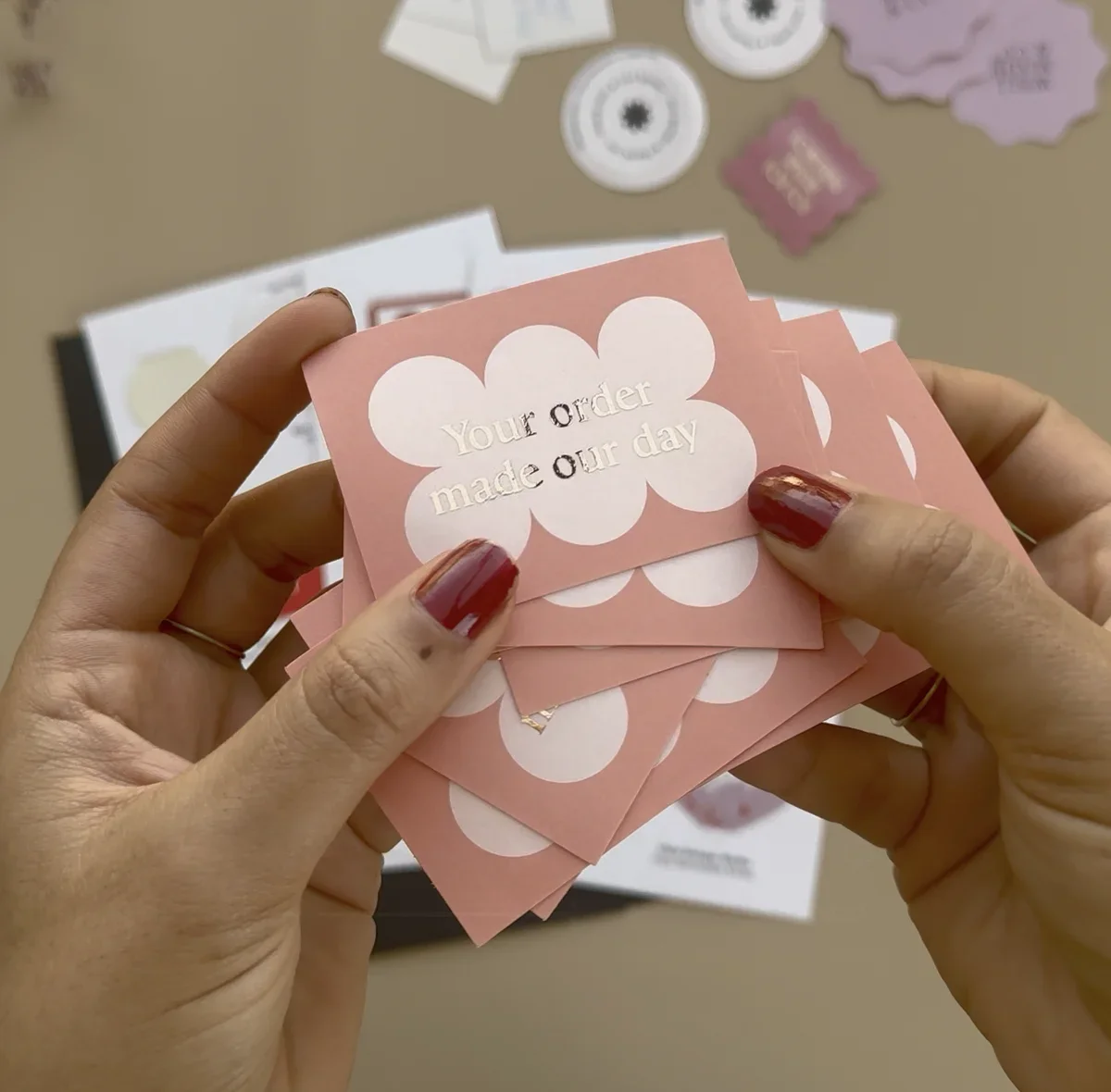
Custom die-cut shapes in laminated paper or vinyl — the small detail that turns a delivery into a brand moment.
At a Glance
Thank-you stickers for small business in 30 seconds: the most-effective thank-you stickers do three jobs at once — seal the package, reinforce the brand, and prompt a social-share moment.
How to choose: pick size to match your packaging (35–50mm for mailers, 50–75mm for boxes), material to match longevity (paper for one-use seals, vinyl for keepsakes), and finish to match brand tone (kraft for artisanal, gloss for vibrant).
- Best for mailer-bag seals: 35–50mm circle on uncoated or kraft paper
- Best for unboxing wow: 75–100mm die-cut on premium vinyl with gloss or foil
- Cheapest to scale (1000+ units): kiss-cut sticker sheets at $0.10–0.20 per unit
- Best for keepsake / pass-along: vinyl with matte finish — survives the recipient’s laptop
What Thank You Stickers Do
A thank you sticker on your packaging does three things:
- Seals the package — functional use, replaces plain tape on flaps and folds
- Brands the unboxing — the customer’s first physical contact with your brand aesthetic
- Creates a moment — a human gesture that says someone cared about this order
For handmade, artisan, and small-batch brands, this matters disproportionately. The customer chose you over a big retailer or marketplace. A branded thank you sticker reinforces why: because you’re not a factory, and the details reflect that.
Design Approaches That Work
Simple typography
“Thank you” in clean, well-chosen typography on a branded background. Doesn’t need to be elaborate. A well-set typeface in your brand colour on a contrasting background is elegant and memorable. This is the most versatile approach and works for almost every brand style.
Illustrated seal
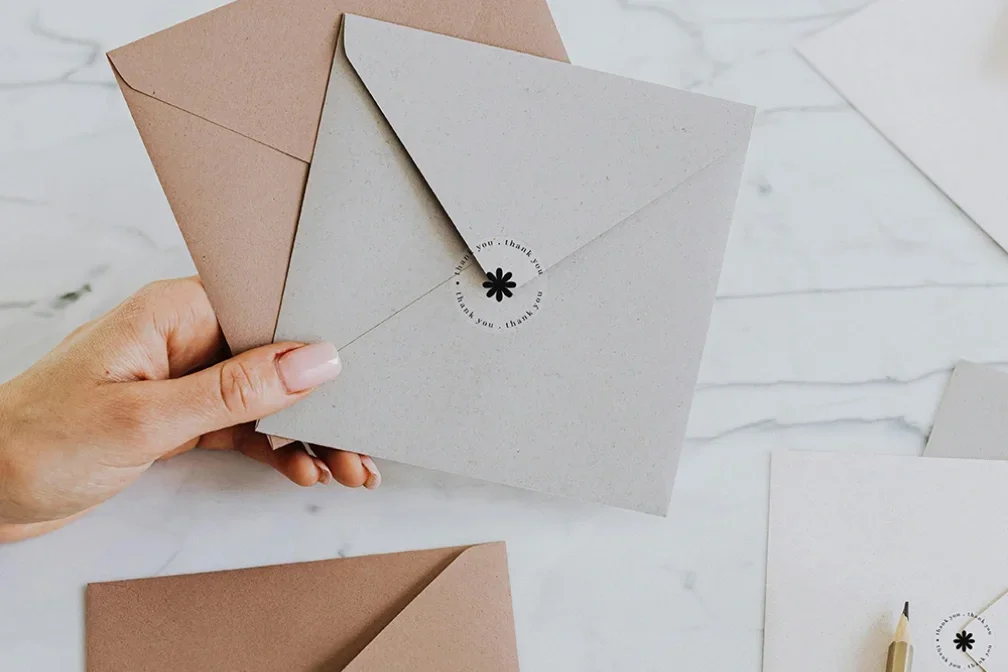
A small illustration or motif — a leaf, a bloom, a product illustration — framed by “Thank you” or your brand name. Works especially well for natural, artisan, and handmade brands where the illustration reinforces the craft narrative.
Brand logo variant
A version of your logo on a contrasting background. If your main logo is dark-on-light, try a light-on-dark version for the seal — it pops better on kraft mailers and coloured packaging.
Seasonal variant
Change the design by season or occasion: a summer thank you design, a Christmas version, a Valentine’s Day edition. Signals attention to the moment. Customers notice, and it gives them a reason to photograph the unboxing.
Size and Shape Guide
| Use case | Shape | Size |
|---|---|---|
| Sealing a flat mailer | Circle | 38–50mm |
| Sealing a box flap | Circle or oval | 50–70mm |
| Inside box accent | Rectangle | 70–100mm wide |
| Tissue paper seal | Circle | 38–50mm |
Circle stickers are the default for seals — they sit naturally on any orientation and the circular format is widely associated with wax seals and traditional quality markers. Oval stickers suit brands with horizontal logos that don’t fit elegantly in a circle. Rectangle stickers work as a label-style thank you inside a box, particularly for brands with a horizontal type treatment.
Material Considerations
Glossy white vinyl. Bright, vivid colours, clean professional finish. Works on most packaging surfaces. Good choice if your brand palette is bold or saturated.
Matte white vinyl. Softer look, premium feel, doesn’t catch light. Better for brands with a refined or minimal aesthetic. The slight extra cost is usually worth it.
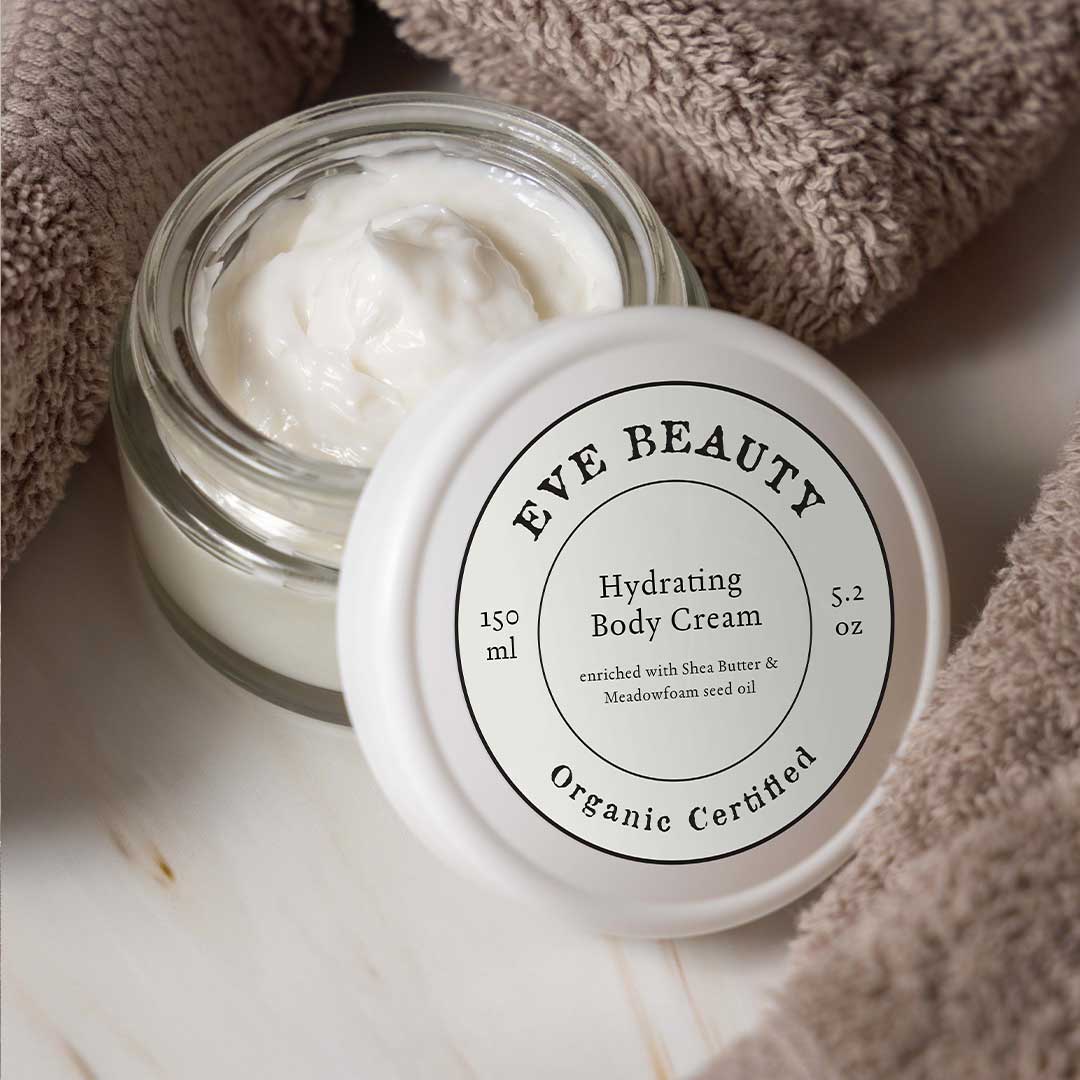
Kraft paper sticker. Brown paper backing that suits natural, artisan, eco-friendly brand aesthetics. Looks completely at home on unbleached mailers and kraft boxes — blends into the packaging rather than sitting on top of it.
Clear vinyl. The sticker appears to float on the packaging. Best on smooth surfaces like gloss-coated boxes or poly mailers. Creates a premium, minimal impression.
How to Choose Size, Material, and Quantity
Thank you stickers are a continuous-use item — one per order, every order. Calculate your annual order volume and buy accordingly. The unit cost drops substantially between 200 and 1,000 units.
For small businesses just starting: 250-500 units is a sensible first run. Enough to test the design in the field, small enough to reorder if you want to iterate on the design.
For established businesses dispatching 50+ orders a month: a 2,000-unit order brings the unit cost down to a point where the sticker costs less than your packaging tape, and you’ll have consistent supply for several months without reordering.
Browse circle stickers to configure your thank you sticker order. From 250-unit test runs to 5,000-unit continuous supply orders. Flat-rate $10 shipping Australia-wide, free on orders over $100.
Want multiple thank-you designs in one order?
Sticker sheets let you bundle seasonal, occasion-based, or product-line variants on a single print run — rotate them across orders without re-ordering.
Size and Shape Options for Thank You Stickers
The classic thank you sticker is a circle in the 38-50mm range – the size of a traditional wax seal, which carries deliberate heritage associations of care and ceremony. This size seals a tissue paper fold cleanly and reads well from a foot away when someone opens a package.
Square stickers work well for brands with symmetrical logos or patterns that don’t translate naturally to a circular crop. The 40x40mm square is a compact, elegant seal format.
Oval stickers at 50-65mm are the right format for horizontal wordmarks or logos that sit wider than they are tall. The oval frame complements horizontal compositions in a way circles don’t.
Custom die-cut shapes – a crest, a leaf, a product silhouette – turn the thank you sticker from a functional seal into a branded moment. For brands with strong visual identity elements, a die-cut that echoes those elements creates cohesion across the unboxing experience. The cost premium over standard circles or ovals is modest for quantities over 100.
Want bulk thank-you stickers for your packaging?
Order custom thank-you stickers in circle, square, or die-cut shapes — from 100 to 10,000 units, with 24–48hr turnaround and flat-rate AU shipping.
Quantity Planning for Small Business
How many thank you stickers to order depends on your monthly dispatch volume and how you’re using them. If every order gets one seal sticker, you need at least one sticker per monthly order. Add 20% buffer for failed applications, wasted stickers during packaging, and reorder lag time.
For a business dispatching 50 orders per month: order 300 units (covers 5 months with buffer). For 200 orders per month: order 1,000-1,200 units. The per-unit cost drops meaningfully at 250 and again at 500, so ordering 3-5 months of supply at once is more economical than monthly reorders.
If you use seasonal variants (Christmas, Valentine’s Day, limited edition), plan those as separate, smaller runs ordered 3-4 weeks before the relevant period. Keep your evergreen design as your core stock and layer seasonal variants on top during the relevant window.
Building a Cohesive Unboxing Experience
A thank you sticker works best as part of a coordinated unboxing system rather than as a standalone element. The customer’s experience of opening a package is cumulative – each element they encounter contributes to an overall impression of care and quality.
If your unboxing kit includes thank-you stickers, packing seals, and seasonal variants, ordering them on one custom sticker sheet consolidates the artwork file, the setup, and the shipment. A single A4 or A5 sheet can carry the thank-you message, the seal, a bonus loyalty sticker, and a seasonal variant, your packing station holds one sheet per kit rather than four loose sticker piles.
A simple coordinated system: outer mailer sealed with a branded circle sticker, tissue paper inside the box with a thank you sticker on the fold, product label (if applicable) matching the same color palette. Three sticker touchpoints, all from the same brand system. The cost per order for this setup is typically under $0.50 – less than a greeting card, with more visual impact.
Consistency matters more than elaborateness. A single circle sticker on every order, consistently applied, creates a more memorable brand impression than an elaborate unboxing that only some customers receive. Start with the seal sticker. Add the tissue sticker when volume makes it practical. Build from there.
When to Update Your Thank You Sticker Design
A thank you sticker design doesn’t need frequent updates – the value is in consistency. But there are natural moments to refresh:
Brand refresh. If your main visual identity changes, update the sticker to match. A thank you sticker in your old color palette while your website runs the new one creates dissonance at a moment you want coherence.
Seasonal variants. A Christmas version, a birthday edition, or a limited-run design tied to a product launch creates freshness without abandoning the evergreen design. Keep 80% of your stock as the standard design and 20% as seasonal variants.
When customers start commenting. If customers mention the thank you sticker – in reviews, on social, via email – you have evidence the design is landing. That’s worth amplifying. A new iteration that builds on what’s working (new color, new season, new limited-run) is a natural next step.
When the design looks dated. Typography trends move slowly, but they do move. A sticker designed five years ago might read as slightly off compared to current brand applications. An annual design review – does this still feel current? – is a low-effort way to maintain quality.
Getting Your First Thank You Sticker Right
The most common mistake with thank you stickers is over-engineering the first order. Businesses spend weeks on the design, order 1,000 units, then update their brand six months later and have surplus stock that doesn’t match current packaging. Here’s a better approach.
Start with a pilot run
Order 100-200 units of your initial design. This quantity is large enough to use across all outgoing orders for a month or two, and small enough that if you change the design, the financial downside is minimal. Use this window to observe how customers respond – do they mention the sticker? Do photos appear on social media? Does the seal hold reliably on your specific packaging materials?
Most businesses discover something they want to adjust after their first run: the size is slightly too large for their mailers, the adhesive doesn’t stick well to their specific kraft stock, or the design reads better in a different colour. A pilot run makes this discovery cheap.
Validate before scaling
Once the design is confirmed and the format is working, move to a quantity that offers real cost savings – typically 500 units for most small business volume levels. At this point, the design is stable, the format is validated, and you know the sticker is doing its job.
Circle stickers at 38-50mm are the most forgiving starting format for thank you seals – they fit almost every packaging size, they’re the most cost-effective shape to produce, and they adapt to seasonal design updates without changing the format. Get the pilot right on a circle seal first, then consider adding a custom die-cut for special occasions or premium orders once the baseline is established.
Before You Order Thank-You Stickers
- Confirm packaging size to match sticker (35–50mm for mailers, 50–75mm for boxes)
- Decide between paper (one-use seal) or vinyl (keepsake-grade)
- Match finish to brand tone (kraft + matte for artisanal, gloss for vibrant)
- Plan quantity for 3–6 months of orders to lock per-unit pricing
- Supply artwork in CMYK with 2mm bleed and outlined fonts
Ready to brand your unboxing moment?
Our die-cut and kiss-cut stickers work as packaging seals, free-with-order keepsakes, or social-share prompts — free design proof, no minimum order.
Frequently Asked Questions
What size thank you sticker is best for packaging seals?
38-50mm circle is the most versatile size for packaging seals – it works on tissue paper folds, mailer flaps, and small box closures without looking oversized. For larger mailers or rigid box closures where more adhesive surface area improves reliability, 50-65mm provides better hold. Custom die-cut shapes can be specified at similar dimensions. The key consideration is that the sticker must be large enough to close the fold reliably with some overlap, but not so large that it dominates the packaging.
Should thank you stickers be gloss or matte finish?
Matte finish is the stronger choice for most thank you sticker applications because it communicates care and quality rather than cheerful brightness. Premium and artisan brands especially benefit from matte – it aligns with the intentional, considered aesthetic those brands build. Gloss works well for food, beauty, and lifestyle brands where color vibrancy and a clean, polished surface reinforce the product positioning. If your overall packaging leans premium or craft, matte is almost always the right call for thank you stickers.
How many thank you stickers should I order as a small business?
Calculate your monthly dispatch volume and multiply by 5-6 months, then add 20% buffer. For a business sending 50 orders per month, an order of 300 units covers roughly 5 months with some margin. Per-unit cost drops at 250 units and again at 500, so buying several months of stock at once is more economical than smaller, frequent reorders. If you use seasonal variants (Christmas, limited editions), order those separately in smaller quantities timed to the relevant period – don’t inflate your core stock with seasonal designs.
Can I use a thank you sticker as a packaging seal?
Yes – combining the seal and the thank you message in one sticker is the most efficient approach for most small businesses. A branded circle or die-cut sticker in the 38-50mm range seals the packaging closure while communicating brand care simultaneously. The alternative is a separate seal (plain or branded) plus a separate insert card with the thank you message – effective but adds cost and complexity. A well-designed seal sticker that carries the thank you message does both jobs cleanly.
What material should thank you stickers be made from?
For packaging that ships in standard conditions, paper sticker stock with a quality adhesive works well and feels appropriate for brands positioned around craft, handmade goods, or sustainability. For packaging that might face moisture, humidity, or rough handling – international shipping, cold storage, bags that get left in cars – vinyl sticker stock with a laminate is more durable. If you’re applying stickers to kraft or cardboard surfaces, test the adhesive on your actual packaging material before ordering at volume – some adhesive types bond less effectively to recycled or porous surfaces.
Ready to upgrade your unboxing?
Upload your artwork, choose a finish, and we’ll handle production. Most thank-you sticker orders ship within 5 business days.