Marketing Materials
Turn your next offer, launch or event into a clear, appealing printed piece someone can take away and want to hold onto.


Our commitments
Why Paperlust Print Shop Stands Apart
Quick Turnaround
We take pride in our lightning-fast turnaround times. We understand the importance of deadlines, ensuring your orders are delivered promptly and efficiently.
Dedicated Customer Service
With us, you’re more than just a client; you’re a valued partner. Our dedicated team is here to assist you every step of the way, ensuring your complete satisfaction. Simply reach out via, and we’ll get back to you as quickly as possible
Low Minimum, Wholesale Price
We ensure that you can access high-quality printing services without the burden of large orders, making us the ideal choice for businesses of all sizes.
What is the difference between bi-fold, tri-fold, and gate-fold brochures?
Bi-fold brochures fold once to create four panels from a single A4 sheet, front, back, inside-left, and inside-right. Simple to brief, the most cost-effective brochure fold, and the fastest to produce. Tri-fold divides the sheet into three equal panels that fold inward for a six-panel piece; the folded DL width fits a standard direct-mail envelope, making it the default for letterbox and mailing campaigns.
Gate fold opens two outer panels to reveal a full inside spread, the staged reveal adds a premium moment suited to luxury product launches and high-value client packs. Z-fold creates an accordion structure that stands as a self-supporting table display, common for event booths and guide formats. Gate-fold and z-fold each add one to two production days for the scoring and secondary fold pass.
Are flyers and brochures suitable for outdoor use?
Standard flyers and brochures are printed on paper stock and are not weatherproof, they are designed for indoor distribution, direct mail envelopes, and in-store display rather than sustained outdoor exposure. Rain, UV, and humidity will affect print-on-paper stock relatively quickly.
If you need outdoor-rated collateral, screenboard composite panels and rigid PVC counter cards are the appropriate substrates for sustained outdoor display. Matte or gloss laminate on any paper-based piece extends resistance to fingerprints and light moisture, but is not a substitute for a weather-rated substrate in exposed outdoor settings.
What is the minimum order quantity?
Minimum order quantities vary by product. Flyers and postcards typically start at 100 units; brochures at 50 units; booklets at 25 units for short-run proofs and 50 units for standard production runs. Tissue paper and counter cards start at 50 units. Exact minimums are listed on each product page.
Unit cost drops notably at standard volume breaks: 250, 500, and 1,000 for flyers and postcards; 100 and 250 for booklets. If your campaign runs above these quantities, the per-unit cost savings can offset design and setup investment.
How long does production take?
Flyers, postcards, and counter cards: 3 to 4 business days after artwork approval. Bi-fold and tri-fold brochures: 3 to 5 business days. Gate-fold and z-fold: 4 to 6 days for the additional scoring and fold pass. A4 saddle-stitched booklets: 4 to 6 days. Tissue paper: 5 to 7 days. Presentation folders: 5 to 7 days. Screenboard composite panels are quoted individually.
All lead times run from artwork approval, not from order placement. If your artwork needs revision, the clock restarts from the clean-file approval. Rush production is available on most products subject to press scheduling, confirm rush availability before order placement if a deadline is non-negotiable.
Can you print custom sizes or shapes?
Yes, custom sizes are available across the range. Supply your flat dimensions and fold structure at quote stage and our pre-press team confirms feasibility within the press and folding equipment tolerances. Custom die-cut shapes for postcards and counter cards are available; standard die shapes (circle, arch, rounded-corner rectangle, tag) carry no tooling uplift, while fully bespoke one-off die shapes carry a one-time tooling cost.
Custom booklet trim sizes outside standard A4 and A5 are available; confirm at quote stage as some trimmer configurations require minimum batch quantities to be cost-effective.
What artwork file formats do you accept?
Vector formats are preferred: PDF, AI, EPS, or SVG with all fonts outlined, at 100% print size, with 3 mm bleed on all four sides. For booklets, supply as a multi-page PDF with the correct page count (multiple of four) and facing pages set up as spreads or as individual pages depending on your DTP software.
High-resolution raster files (PNG, TIFF) are accepted at 300 dpi minimum at print size. Supply artwork in CMYK where possible; RGB files are converted to CMYK for press and any colour-shift risk is flagged on the digital proof before production starts.
What sizes do postcards and flyers come in?
Postcards: DL (99x210 mm), A6 (105x148 mm), A5 (148x210 mm), and die-cut custom. Flyers: A6, A5, and A4; square formats are available on request. Brochures: flat A4 (folded to A5 bi-fold), flat A4 (folded to DL tri-fold), flat A3 (folded to A4 bi-fold), and custom flat dimensions. Booklets: A4 (210x297 mm) and A5 (148x210 mm) as standard trim sizes. Counter cards: DL portrait, A5, and A4.
Custom sizes are available across all format families at quote. Standard sizes have the best price-per-unit and fastest turnaround because they run as gang-print impositions on the press sheet.
How much do marketing print materials cost?
Pricing scales by format, paper stock, finish, quantity, and sided-ness. High-volume A5 flyers on 130 gsm coated are the lowest entry-point per unit in the range; premium gate-fold brochures on 200 gsm silk with spot UV sit at the higher end. Booklet pricing scales by page count and cover treatment. The most accurate quote is the live calculator on each product page, which shows full per-quantity tier pricing for the specific format and stock.
For multi-format campaign packs, brochures, flyers, and postcards in the same campaign order, contact our team for a bundled quote that accounts for shared pre-press preparation costs.
Do you offer recycled or FSC certified paper for flyers and brochures?
No. Flyers, brochures, postcards, diecut postcards, A4 booklets, A5 booklets, DL booklets and Corporate Christmas Cards are not printed on recycled or FSC certified paper, and we do not offer it on request either. It is simply not a stock we hold.
For these products we print on coated gloss and silk papers, and on uncoated stocks, from roughly 115 gsm to 400 gsm depending on the product. Most items can be finished with optional matte or gloss lamination, depending on the product.
Will my brochures or flyers fade or yellow over time?
Indoor-distributed printed collateral on quality coated or laminated stock holds colour effectively for the useful life of the piece, typically 1 to 3 years for brochures and flyers used in normal office and retail environments before natural handling wear becomes visible. Matte laminate provides the best balance of colour protection and surface durability for pieces handled repeatedly.
Yellowing over time is most common on uncoated paper stocks stored in warm or UV-exposed conditions; coated and laminated stocks resist yellowing significantly better. For long-run stock held in storage for 12 months or more, climate-controlled storage (cool, dry, away from direct sunlight) is recommended.
Can I see a sample or get a digital proof before printing?
Every order receives a digital proof before printing, showing the print output at exact sizing with fold lines overlaid on brochures and booklets, and die-cut paths on die-cut products. You sign off on colour, layout, content, and finish before production starts, no press run begins until you confirm the proof.
Physical sample packs of common paper stocks and lamination finishes are available on request for first-time orders or large-volume tenders, so you can confirm the paper weight and surface finish before committing to the full run.
Do you offer design help?
Yes, if you have brand assets (logo, photos, colour palette) and rough copy, our design team can build print-ready artwork for a small additional fee. Turnaround on design briefs is 2 to 3 business days before moving to proof. We also provide blank templates pre-set with bleed, safe zones, and fold-panel dimensions for the most common product sizes and fold types, available to download from the relevant product page.
For self-service briefs, our pre-press team flags layout and technical issues at file-check stage and sends back specific notes before any production starts, that catch-and-fix step is included free with every order.
What is the difference between matte and gloss lamination?
Gloss lamination applies a high-shine film that intensifies colour saturation and contrast, best for photographic-image-led flyers and retail promotions where vibrant colour is the priority. The high reflectivity can create glare on small body text in bright environments and reads as a more commercial finish.
Matte lamination applies a low-sheen film that reduces glare and reads as premium in brand-sensitive applications. It is the more popular choice across brochures and catalogue booklets where typography and image quality both matter. Matte also accepts handwriting without smearing, which makes it the better choice for any piece where recipients might annotate or sign the printed piece.
What page count options are available for saddle-stitched booklets?
Saddle-stitched booklets must have a page count that is a multiple of four because sheets nest inside each other in the press signature. Available page counts are 8, 12, 16, 20, 24, 28, 32, 36, 40, 48, and 64 pages. The most common commercial range is 12 to 32 pages for product catalogues and capability documents; 8 pages for event programmes and simple guides.
Above 64 pages, perfect-bind (square-spine glue binding) is the more appropriate production method and is available on request. If your content falls between two standard page counts, pad with additional content, a back-cover contact panel, or a full-page image spread rather than supplying a non-standard count, the press signature cannot accommodate odd multiples of four.
Frequently Asked Questions
What is the difference between bi-fold, tri-fold, and gate-fold brochures?
Bi-fold brochures fold once to create four panels from a single A4 sheet, front, back, inside-left, and inside-right. Simple to brief, the most cost-effective brochure fold, and the fastest to produce. Tri-fold divides the sheet into three equal panels that fold inward for a six-panel piece; the folded DL width fits a standard direct-mail envelope, making it the default for letterbox and mailing campaigns.
Gate fold opens two outer panels to reveal a full inside spread, the staged reveal adds a premium moment suited to luxury product launches and high-value client packs. Z-fold creates an accordion structure that stands as a self-supporting table display, common for event booths and guide formats. Gate-fold and z-fold each add one to two production days for the scoring and secondary fold pass.
Are flyers and brochures suitable for outdoor use?
Standard flyers and brochures are printed on paper stock and are not weatherproof, they are designed for indoor distribution, direct mail envelopes, and in-store display rather than sustained outdoor exposure. Rain, UV, and humidity will affect print-on-paper stock relatively quickly.
If you need outdoor-rated collateral, screenboard composite panels and rigid PVC counter cards are the appropriate substrates for sustained outdoor display. Matte or gloss laminate on any paper-based piece extends resistance to fingerprints and light moisture, but is not a substitute for a weather-rated substrate in exposed outdoor settings.
What is the minimum order quantity?
Minimum order quantities vary by product. Flyers and postcards typically start at 100 units; brochures at 50 units; booklets at 25 units for short-run proofs and 50 units for standard production runs. Tissue paper and counter cards start at 50 units. Exact minimums are listed on each product page.
Unit cost drops notably at standard volume breaks: 250, 500, and 1,000 for flyers and postcards; 100 and 250 for booklets. If your campaign runs above these quantities, the per-unit cost savings can offset design and setup investment.
How long does production take?
Flyers, postcards, and counter cards: 3 to 4 business days after artwork approval. Bi-fold and tri-fold brochures: 3 to 5 business days. Gate-fold and z-fold: 4 to 6 days for the additional scoring and fold pass. A4 saddle-stitched booklets: 4 to 6 days. Tissue paper: 5 to 7 days. Presentation folders: 5 to 7 days. Screenboard composite panels are quoted individually.
All lead times run from artwork approval, not from order placement. If your artwork needs revision, the clock restarts from the clean-file approval. Rush production is available on most products subject to press scheduling, confirm rush availability before order placement if a deadline is non-negotiable.
Can you print custom sizes or shapes?
Yes, custom sizes are available across the range. Supply your flat dimensions and fold structure at quote stage and our pre-press team confirms feasibility within the press and folding equipment tolerances. Custom die-cut shapes for postcards and counter cards are available; standard die shapes (circle, arch, rounded-corner rectangle, tag) carry no tooling uplift, while fully bespoke one-off die shapes carry a one-time tooling cost.
Custom booklet trim sizes outside standard A4 and A5 are available; confirm at quote stage as some trimmer configurations require minimum batch quantities to be cost-effective.
What artwork file formats do you accept?
Vector formats are preferred: PDF, AI, EPS, or SVG with all fonts outlined, at 100% print size, with 3 mm bleed on all four sides. For booklets, supply as a multi-page PDF with the correct page count (multiple of four) and facing pages set up as spreads or as individual pages depending on your DTP software.
High-resolution raster files (PNG, TIFF) are accepted at 300 dpi minimum at print size. Supply artwork in CMYK where possible; RGB files are converted to CMYK for press and any colour-shift risk is flagged on the digital proof before production starts.
What sizes do postcards and flyers come in?
Postcards: DL (99x210 mm), A6 (105x148 mm), A5 (148x210 mm), and die-cut custom. Flyers: A6, A5, and A4; square formats are available on request. Brochures: flat A4 (folded to A5 bi-fold), flat A4 (folded to DL tri-fold), flat A3 (folded to A4 bi-fold), and custom flat dimensions. Booklets: A4 (210x297 mm) and A5 (148x210 mm) as standard trim sizes. Counter cards: DL portrait, A5, and A4.
Custom sizes are available across all format families at quote. Standard sizes have the best price-per-unit and fastest turnaround because they run as gang-print impositions on the press sheet.
How much do marketing print materials cost?
Pricing scales by format, paper stock, finish, quantity, and sided-ness. High-volume A5 flyers on 130 gsm coated are the lowest entry-point per unit in the range; premium gate-fold brochures on 200 gsm silk with spot UV sit at the higher end. Booklet pricing scales by page count and cover treatment. The most accurate quote is the live calculator on each product page, which shows full per-quantity tier pricing for the specific format and stock.
For multi-format campaign packs, brochures, flyers, and postcards in the same campaign order, contact our team for a bundled quote that accounts for shared pre-press preparation costs.
Do you offer recycled or FSC certified paper for flyers and brochures?
No. Flyers, brochures, postcards, diecut postcards, A4 booklets, A5 booklets, DL booklets and Corporate Christmas Cards are not printed on recycled or FSC certified paper, and we do not offer it on request either. It is simply not a stock we hold.
For these products we print on coated gloss and silk papers, and on uncoated stocks, from roughly 115 gsm to 400 gsm depending on the product. Most items can be finished with optional matte or gloss lamination, depending on the product.
Will my brochures or flyers fade or yellow over time?
Indoor-distributed printed collateral on quality coated or laminated stock holds colour effectively for the useful life of the piece, typically 1 to 3 years for brochures and flyers used in normal office and retail environments before natural handling wear becomes visible. Matte laminate provides the best balance of colour protection and surface durability for pieces handled repeatedly.
Yellowing over time is most common on uncoated paper stocks stored in warm or UV-exposed conditions; coated and laminated stocks resist yellowing significantly better. For long-run stock held in storage for 12 months or more, climate-controlled storage (cool, dry, away from direct sunlight) is recommended.
Can I see a sample or get a digital proof before printing?
Every order receives a digital proof before printing, showing the print output at exact sizing with fold lines overlaid on brochures and booklets, and die-cut paths on die-cut products. You sign off on colour, layout, content, and finish before production starts, no press run begins until you confirm the proof.
Physical sample packs of common paper stocks and lamination finishes are available on request for first-time orders or large-volume tenders, so you can confirm the paper weight and surface finish before committing to the full run.
Do you offer design help?
Yes, if you have brand assets (logo, photos, colour palette) and rough copy, our design team can build print-ready artwork for a small additional fee. Turnaround on design briefs is 2 to 3 business days before moving to proof. We also provide blank templates pre-set with bleed, safe zones, and fold-panel dimensions for the most common product sizes and fold types, available to download from the relevant product page.
For self-service briefs, our pre-press team flags layout and technical issues at file-check stage and sends back specific notes before any production starts, that catch-and-fix step is included free with every order.
What is the difference between matte and gloss lamination?
Gloss lamination applies a high-shine film that intensifies colour saturation and contrast, best for photographic-image-led flyers and retail promotions where vibrant colour is the priority. The high reflectivity can create glare on small body text in bright environments and reads as a more commercial finish.
Matte lamination applies a low-sheen film that reduces glare and reads as premium in brand-sensitive applications. It is the more popular choice across brochures and catalogue booklets where typography and image quality both matter. Matte also accepts handwriting without smearing, which makes it the better choice for any piece where recipients might annotate or sign the printed piece.
What page count options are available for saddle-stitched booklets?
Saddle-stitched booklets must have a page count that is a multiple of four because sheets nest inside each other in the press signature. Available page counts are 8, 12, 16, 20, 24, 28, 32, 36, 40, 48, and 64 pages. The most common commercial range is 12 to 32 pages for product catalogues and capability documents; 8 pages for event programmes and simple guides.
Above 64 pages, perfect-bind (square-spine glue binding) is the more appropriate production method and is available on request. If your content falls between two standard page counts, pad with additional content, a back-cover contact panel, or a full-page image spread rather than supplying a non-standard count, the press signature cannot accommodate odd multiples of four.
Learn More
Marketing Materials Printed in Australia
Marketing print materials cover the customer-facing pieces a business relies on for sales conversations, trade-show presence, direct mail campaigns and in-store promotion. Locally printed in Australia on calibrated digital presses, the range includes brochures in bi-fold, tri-fold, gate and z-fold formats, flyers across a wide paper stock and gsm library, saddle-stitched A4 booklets, postcards in DL, A6 and A5 sizes, die-cut postcards, counter cards, screenboard composite panels, branded tissue paper for premium packaging inserts, and presentation folders for A4, A5 and DL documents.
The range is organised by two decision axes: format and use case. Format drives production cost, artwork complexity, and lead time. Use case drives the spec, a direct mail postcard needs entirely different paper weight, finish, and fold structure to a trade-show brochure or a luxury packaging insert. Understanding which you are printing for narrows the format choice to one or two candidates before you start briefing artwork. Our business stickers and branding collateral guide covers how sticker-format pieces integrate with the broader marketing print stack when event kits and campaign drops combine brochures, flyers, and branded stickers in a single order.
The four levers shaping a marketing materials order are format, paper stock and GSM, finish (matte, gloss, UV coating), and quantity. Pick the format first, it sets the fold structure, artwork complexity, and which stocks are available for that product. The sections below walk each lever in detail.
Shop Marketing Materials by Format
Format is the primary decision driver because it sets the physical structure, the artwork brief and the production pathway. The format sections below compare the main options in the catalogue.
Brochures: bi-fold, tri-fold, gate, and z-fold
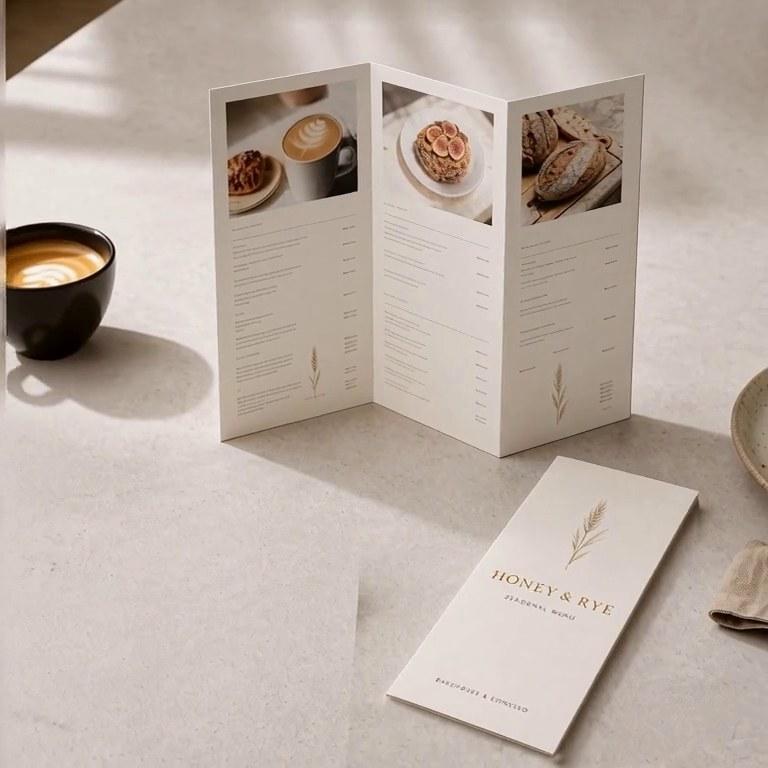
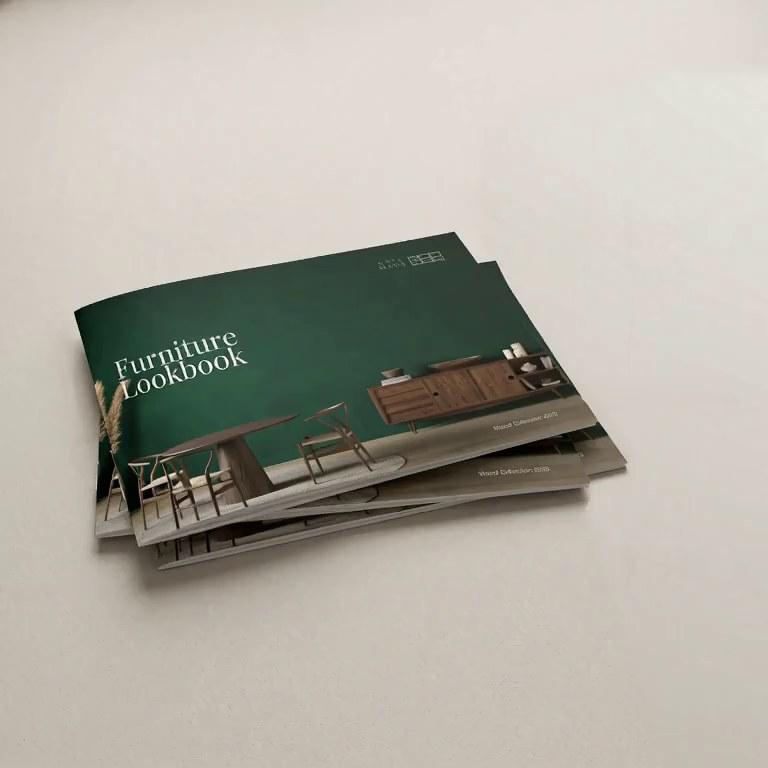
Brochures fold a single sheet into a multi-panel structure that controls the reading sequence, which is why fold type is the first artwork decision, not a finishing option. Bi-fold creates four panels from one A4 sheet: front, back, inside-left, and inside-right. Clean, cost-effective, fastest to produce, and the default format for capability statements, service menus, and accommodation guides. Tri-fold divides the sheet into three equal panels that fold inward for a six-panel piece; the folded DL width fits a standard envelope, making tri-fold the direct-mail default. Gate fold opens two outer panels to reveal a full inside spread, the staged reveal suits luxury product launches, premium event collateral, and annual-report inserts where first impression justifies the additional production step. Z-fold creates an accordion structure that stands as a self-supporting table display, making it the standard for event booth brochures and guide formats picked up standing.
Recommended paper weights for brochures run 130 to 200 gsm. Use 130 gsm coated gloss or silk for high-image direct-mail pieces; 150 to 170 gsm for standalone sales brochures; 200 gsm silk or uncoated for premium gate-fold and luxury collateral. Paper above 200 gsm requires a score line at the fold to prevent cracking at the crease. For artwork-file setup that applies equally to folded brochures and multi-page collateral, our print artwork design guide covers bleed, safe zones, font outlining, and colour profile setup.
Flyers: paper stocks, GSM, and double-sided print
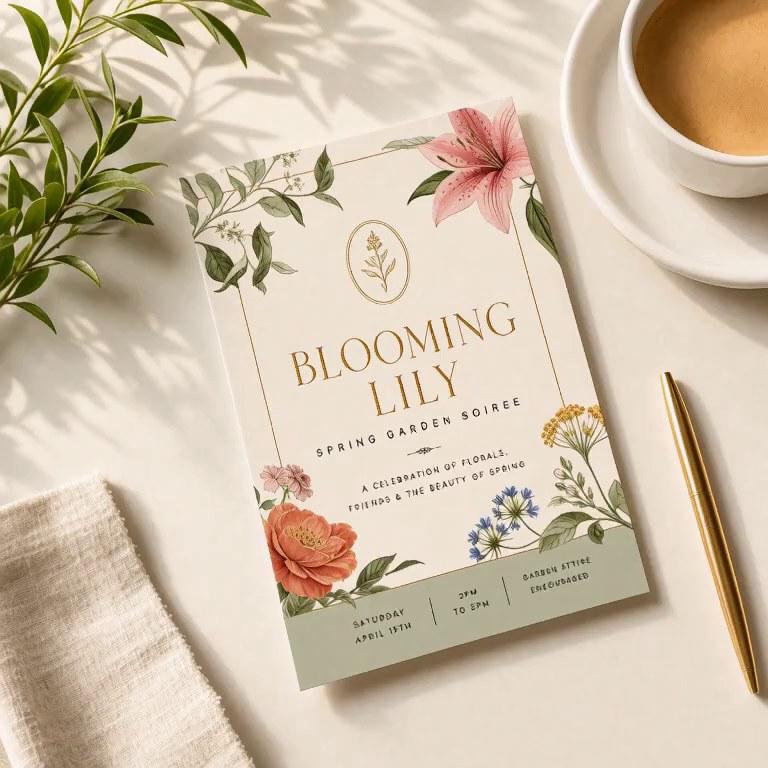
Flyers are single-sheet pieces printed one or two sides and used for in-store handouts, letterbox drops, event promotion, and trade-show giveaways. Paper stock and GSM is the critical spec decision because weight determines handling durability, perceived quality, and unit cost at volume. Three tiers cover most briefs: 90 to 100 gsm for high-volume letterbox drops and event handouts where cost per unit is the primary driver; 130 to 150 gsm coated for in-store handouts and sales collateral where the weight reads professional without a premium add; and 170 to 200 gsm for trade-show giveaways and brand-building handouts where the weight of the piece carries a quality signal before the copy is read. Double-sided print is standard across all stocks and the default recommendation for any customer-facing briefing context: a product visual on the front and a specification or call-to-action panel on the reverse.
A4 Booklets: saddle-stitched, page counts, cover weight
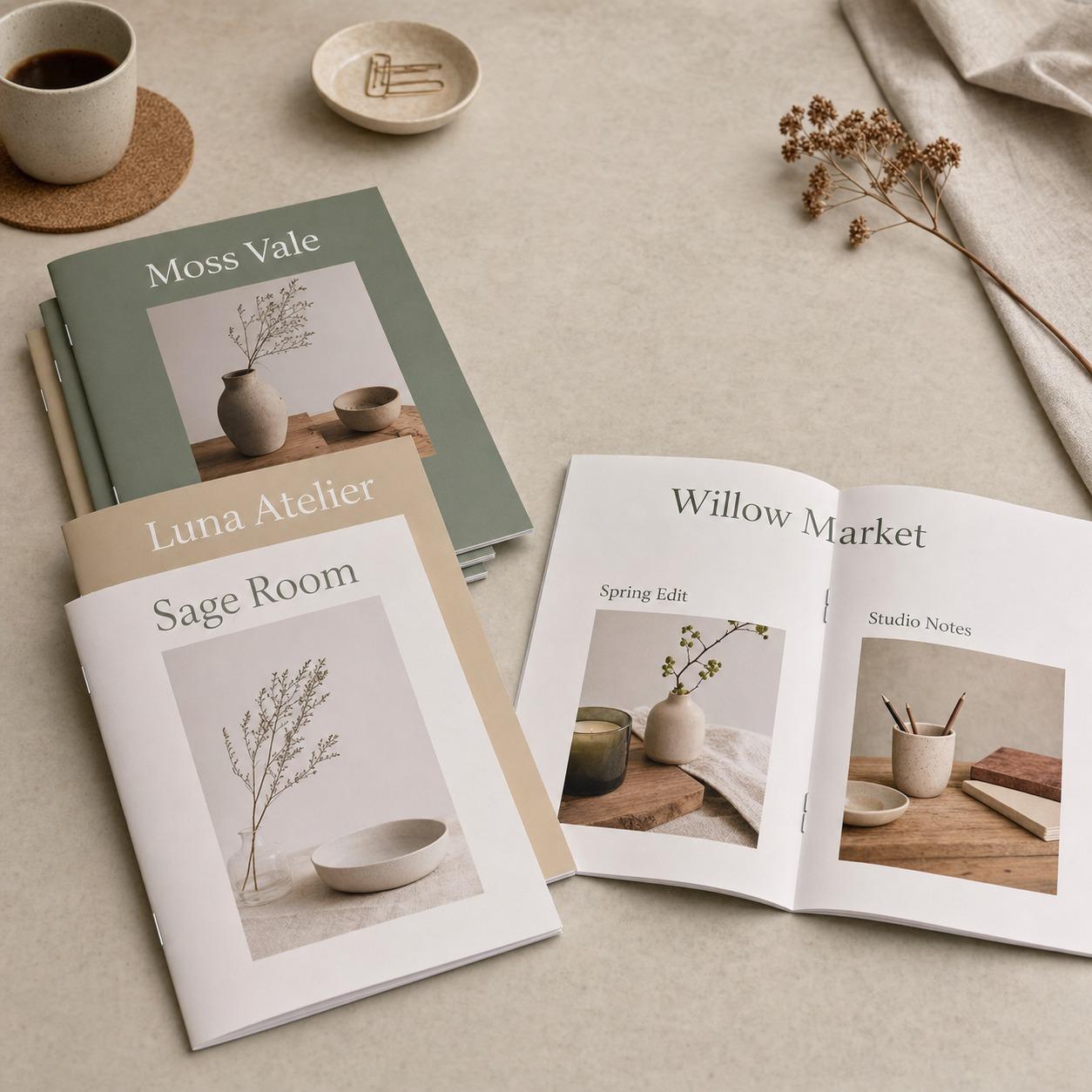
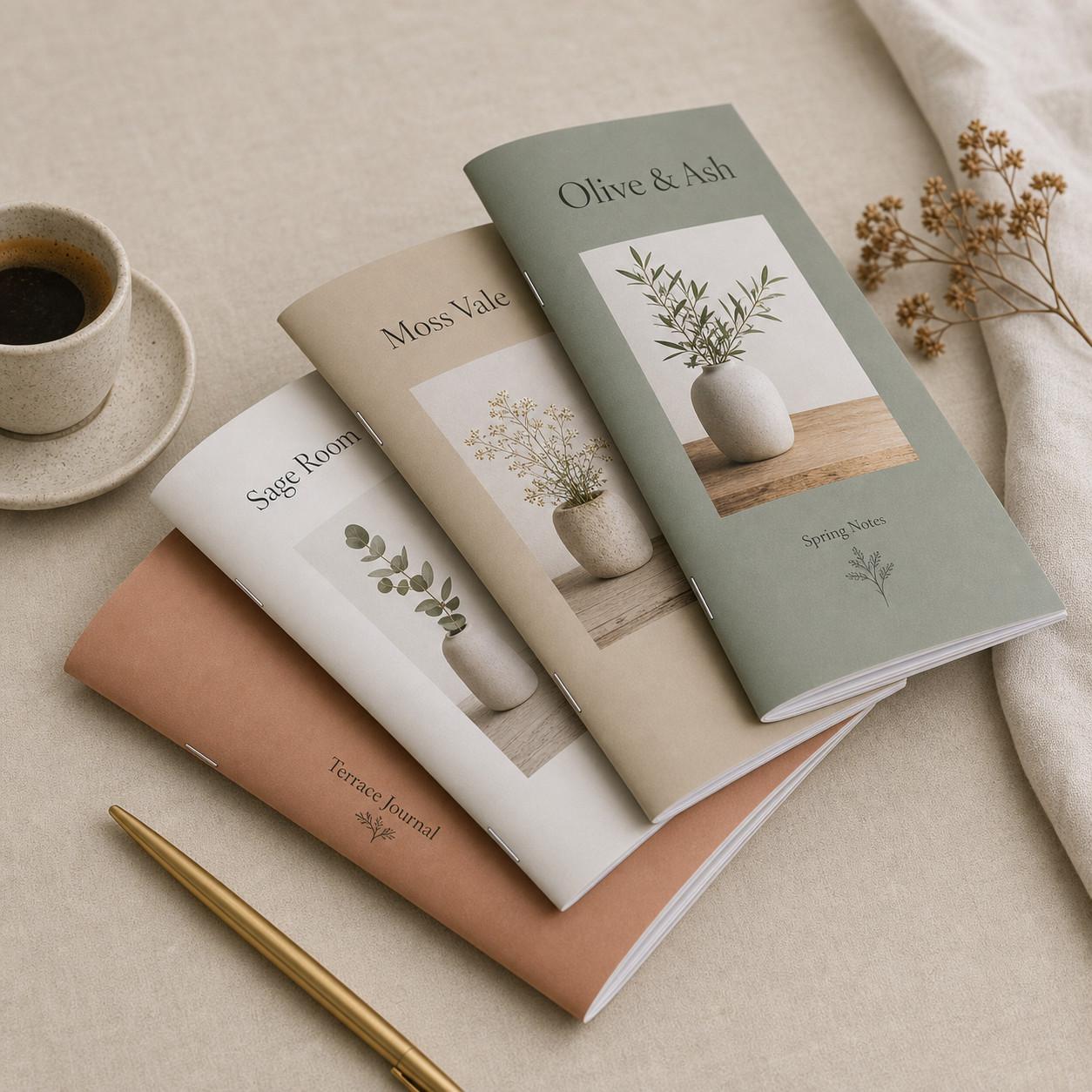
A4 saddle-stitched booklets are the standard format for product catalogues, capability documents, menus, and training guides. Saddle-stitching (two wire staples through the spine) is cost-effective for page counts between 8 and 64 pages; above 64 pages, perfect-binding is the appropriate production method and is available on request. Page count must always be a multiple of 4 because sheets nest inside each other in the press signature. Common options are 8, 12, 16, 20, 24, 32, and 48 pages. The standard cover-and-text pairing is 250 to 300 gsm silk or uncoated cover with 130 to 150 gsm text pages. Matte or gloss lamination and spot UV on the cover front are finishing options that lift the booklet from a production piece to a brand artefact worth keeping.
Postcards: DL, A6, A5, and die-cut shapes
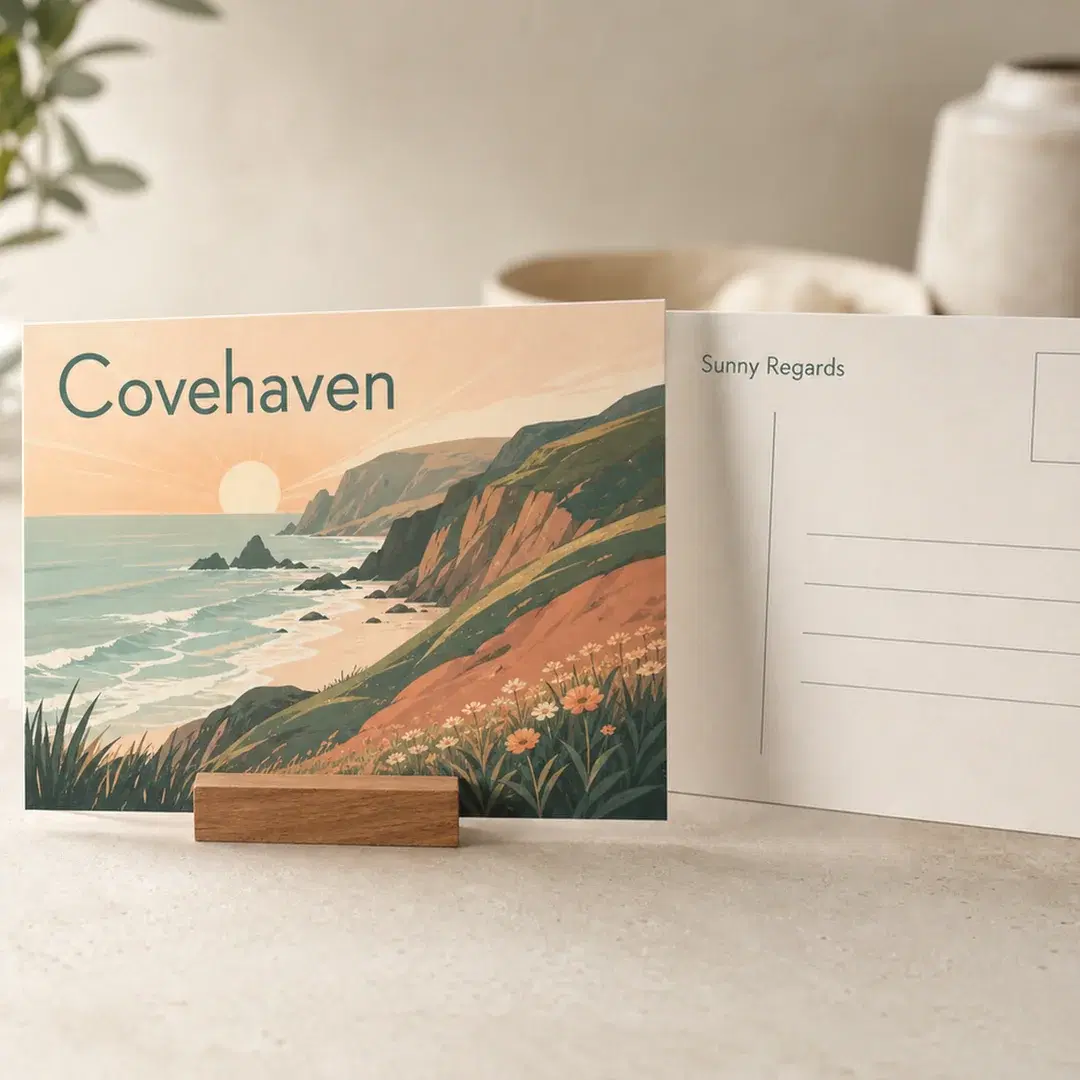
Postcards span four standard size formats plus die-cut shapes. DL (99x210 mm) is the direct-mail workhorse, the format that fits a standard Australia Post envelope without an additional fold. A6 (105x148 mm) is the most versatile counter and bag-insert size: large enough for a strong visual with copy, compact enough to sit naturally at a retail counter. A5 (148x210 mm) suits detailed product information and premium promotional drops where a smaller card would feel underscaled. Die-cut postcards are custom-shaped to a product or brand silhouette (arch, circle, tag, or bespoke cut), with standard die shapes available at no tooling uplift. Recommended paper weight is 350 gsm across the postcard range, this handles mailing without bending, reads substantial in the hand at retail, and accepts lamination and spot UV without flex.
Presentation Folders: A4, A5, DL, single and two pockets
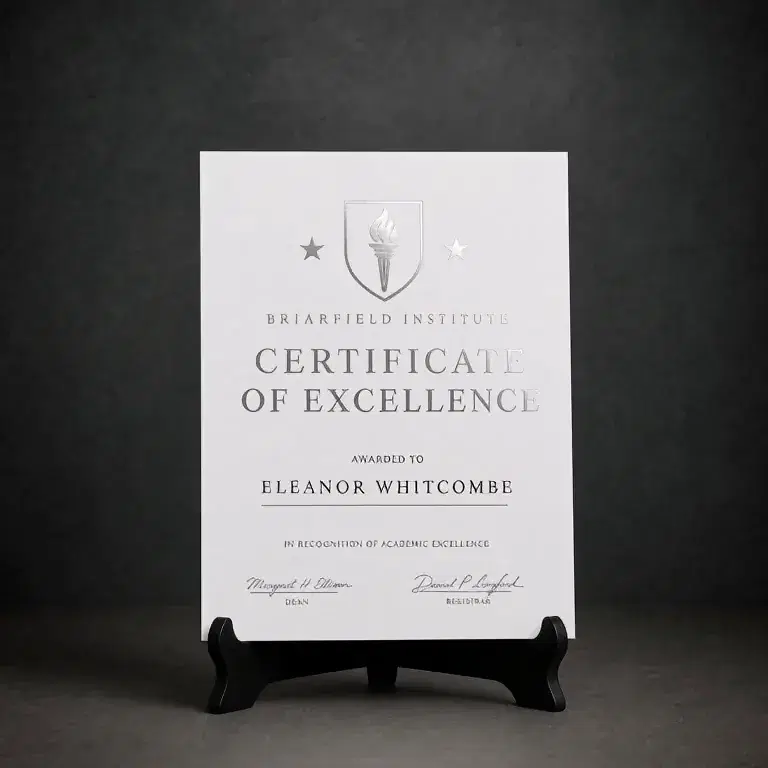
Presentation folders are full colour pocket folders printed on 350 gsm artboard and die cut from a single sheet. They arrive flat with clip-in tabs and no glue, so you fold each folder into shape as it is needed. Styles cover A4 single pocket, A4 single pocket with a 5 mm gusset, A4 two pockets with a 5 mm gusset, A5 and DL single pockets with a 5 mm gusset. A gusset adds width to the pocket for thicker documents. The A4 styles include die cut business card slits sized for standard 90 x 55 mm cards. Print the outside only or both sides, with a matt, gloss, velvet or bare artboard finish, or with velvet laminate and a raised clear Scodix finish on one side. Use presentation folders for brochures, proposals, contracts, reports, welcome packs, enrolment packs and certificates.
Counter Cards, Screenboard, and Tissue Paper
Counter cards are rigid PVC or foam-backed prints engineered to stand at point-of-sale without a separate frame. Standard sizes include DL portrait, A5, and A4; they sit at checkout counters, exhibition tables, and reception desks to carry a promotion message or brand statement at eye level. Screenboard composite panels are engineered for outdoor advertising and large-format retail: roadside displays, sponsor panels, retail awning boards, and event sponsor backdrops where the panel must survive sustained outdoor exposure. For retail-specific placement strategy, our retail window and in-store display guide covers complementary window-format treatments that pair with counter cards and screenboard panels on the same campaign. Branded tissue paper is the packaging insert format in the range, printed single-colour or full-colour on tissue stock for e-commerce unboxing, retail gift wrapping, and premium product presentation. For how tissue paper and branded packaging stickers work together in a complete unboxing kit, see our branded packaging and product stickers guide.
Format Comparison at a Glance
Side-by-side spec table for the main format families. Use it as a quick filter before drilling into the detail above.
| Format | Typical Size | Paper / Stock | Production Days | Best For |
|---|---|---|---|---|
| Bi-fold Brochure | A4 folded (210×148 mm) | 130–170 gsm coated/silk | 3–5 days | Capability statements, service menus |
| Tri-fold Brochure | DL folded (99×210 mm) | 130–170 gsm coated/silk | 3–5 days | Direct mail, real estate, retail, travel |
| Gate / Z-fold Brochure | A4 unfolded | 150–200 gsm silk/uncoated | 4–6 days | Luxury launches, premium event collateral |
| A4 Booklet (saddle-stitched) | 210×297 mm, 8–64 pages | 130–150 gsm text / 250–300 gsm cover | 4–6 days | Catalogues, capability docs, menus |
| Flyer | A6, A5, or A4 | 90–200 gsm coated/silk | 3–4 days | Events, letterbox drops, in-store handouts |
| Postcard | DL, A6, A5, or die-cut | 350 gsm coated | 3–4 days | Direct mail, counter handouts, promotions |
| Presentation Folder | A4 (219×310 mm), A5 or DL | 350 gsm artboard | 5 to 7 days | Proposals, tenders, client packs |
| Counter Card | DL portrait to A4 | Rigid PVC or 400 gsm foam-back | 3–5 days | Point-of-sale, exhibition, reception |
| Tissue Paper | A4 / A3 sheet | Tissue stock, single or full colour | 5–7 days | E-commerce unboxing, retail gift wrapping |
Shop Marketing Materials by Use Case
Direct Mail Campaigns
DL tri-fold brochures and DL postcards are the two direct-mail workhorses. DL format matches the Australia Post standard envelope window so you avoid size mismatch at the mailing house. Use 350 gsm postcards for standalone card mailers that travel without bend or crease; 130 gsm coated tri-fold brochures fold into a C4 or DL envelope without a secondary fold. Image-led pieces read best on 130 to 150 gsm coated gloss; text-heavy campaigns read better on 150 gsm silk where the matte surface reduces glare on small type.
In-Store Handouts and Counter Displays
A5 and A6 postcards, DL counter cards, and tri-fold brochures are the in-store standard. Use 350 gsm for standalone counter-display pieces that need to stand without support; 150 to 170 gsm for stack handouts at the counter or bag-insert pieces. Matte laminate reads premium in a retail context; gloss reads vibrant and is the better choice for photographic-image-led stock. For event giveaways that extend the printed collateral kit, our branded stickers and event giveaways guide covers complementary sticker-format handouts that combine well with flyers and postcards.
Sales Collateral and B2B Leave-Behinds
Capability brochures, product catalogues and specification guides are the backbone of the B2B sales kit. A4 bi-fold or tri-fold works for single-product or service briefs, while A4 saddle-stitched booklets of 8 to 24 pages suit full-range catalogues. Recommended spec: 170 to 200 gsm silk for the brochure, and 130 to 150 gsm text pages with a 250 to 300 gsm laminated cover for the booklet. Gate-fold remains the upgrade option for a product-launch reveal or a high-value client gift because the staged reading experience cannot be replicated with a flat A4 piece. A presentation folder in 350 gsm artboard carries the brochure, booklet and business card across the desk, with die cut business card slits on the A4 pocket.
Trade-Show Giveaways
The most efficient use of trade-show print budget is a two-tier strategy: high-volume A5 flyers (130 to 150 gsm) for broad booth distribution, and a premium A6 postcard or tri-fold brochure for qualified-contact handouts. The volume piece drives unit cost down; the premium piece carries a quality signal that reinforces the brand conversation at a first meeting. For foil-finish sticker giveaways that pair with brochures and flyers in the event kit, our foil stickers guide covers finish options and cost tiers for branded event giveaways.
Promotional Drops and Seasonal Campaigns
Short-run A5 flyers and DL postcards for seasonal promotions, new-product launches, and event invitations. The economics of short-run digital printing mean a 100 to 250 unit drop is cost-effective with full-colour quality consistent across the run. 150 gsm silk is the standard promotional-drop spec; matte laminate for premium seasonal campaigns where the piece competes for shelf presence in a gift or subscription context.
Luxury Packaging Inserts
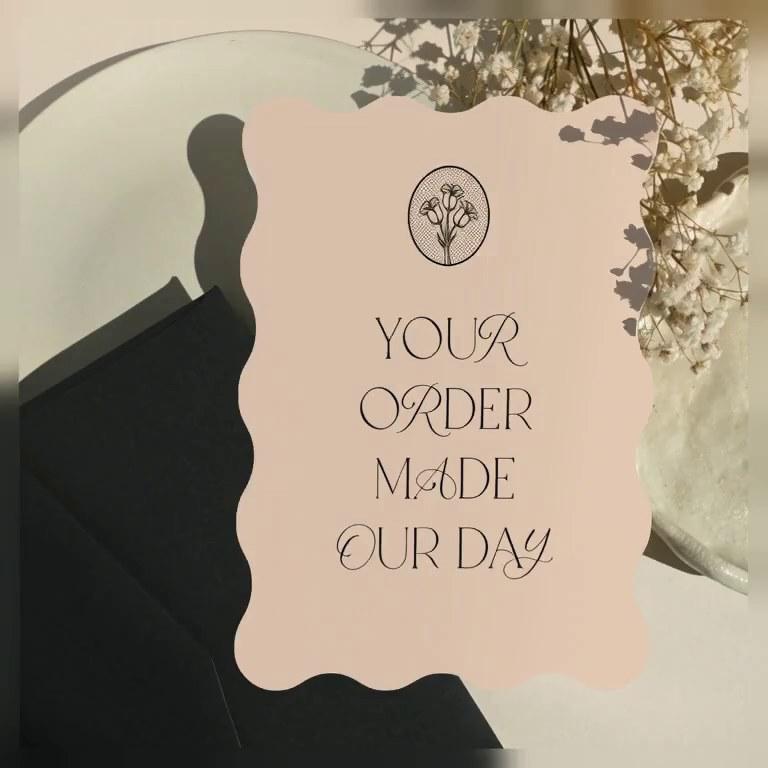
Tissue paper, gate-fold brochures, and personalised card inserts for e-commerce unboxing and retail gift bags. The quality of the insert carries brand perception at the moment the customer opens the package, which makes this the use case where upgrading stock and finish has the highest return. 200 gsm uncoated with foil or spot UV is the standard-bearer for luxury inserts; branded tissue paper with a full-colour logo repeat completes the unboxing kit.
How to Choose: A Quick-Pick Guide
If you are weighing format options against a specific brief, the quick-pick below maps common applications to a recommended starting spec. These are defaults, not absolutes, proof stage is where we tighten the spec to your exact use.
If your brief is...
High-volume letterbox drop: A5 flyer, 130 gsm coated gloss, double-sided, no laminate.
Direct mail to a qualified list: DL tri-fold brochure, 150 gsm coated silk, double-sided, matte laminate.
B2B sales leave-behind: A4 bi-fold, 170 gsm silk or uncoated, spot UV on the front cover logo.
Proposal, tender or client pack: A4 single pocket folder, 350 gsm artboard, matt laminate, die cut business card slits.
Full product-range catalogue: A4 saddle-stitched booklet, 16 to 24 pages, 150 gsm text, 300 gsm matte laminate cover.
Seasonal in-store promotion: A5 flyer, 150 gsm silk, double-sided, matte laminate.
...the recommended spec is
Trade-show broad giveaway: A5 flyer, 150 gsm coated gloss, double-sided, no laminate for unit-cost efficiency.
Trade-show premium contact piece: A6 postcard, 350 gsm, matte laminate, spot UV logo callout.
Point-of-sale counter display: DL or A5 counter card, rigid PVC or 400 gsm with laminate, scored base tab for self-stand.
Luxury packaging insert: A5 gate-fold, 200 gsm uncoated, foil or spot UV accent, plus branded tissue paper for box lining.
Premium product launch collateral: Gate-fold A4, 200 gsm silk, matte laminate, foil logo reveal on inside spread.
Paper Stocks and GSM Weight Guide
Paper stock weight is the second-biggest perceived-quality signal after format and finish. A tri-fold brochure on 130 gsm coated gloss reads as a functional piece; the same design on 170 gsm silk with a matte laminate reads as a considered brand decision. Understanding the stock ladder helps you match perceived weight to the brief.
Coated gloss
High-saturation colour reproduction with a reflective surface; best for photography-led flyers, retail promotions, and event handouts where vibrant colour is the priority. Accepts lamination and spot UV. Available from 90 gsm to 200 gsm for most products in the range. The reflective surface can create glare on small body text in bright retail environments, worth factoring in for typography-heavy pieces.
Coated silk
The same colour-accurate coated base as gloss but with a lower-sheen surface that reads as premium without glare. The recommended default for most brochures, flyers, and booklet text pages. Available 90 gsm to 200 gsm; 130 to 150 gsm covers the bulk of brochure and flyer applications. Pairs particularly well with matte laminate because the two surfaces sit at the same visual temperature.
Uncoated
A natural, slightly textured surface without a clay coating. Absorbs ink to give a warmer, softer colour reproduction that suits editorial, hospitality, fashion, and brand-identity briefs where clinical gloss would feel off-brand. Standard range is 120 gsm to 250 gsm. Ideal for booklet text pages in premium creative catalogues; the 200 gsm uncoated cover with a silk or gloss text block is a common creative-studio catalogue spec. Foil and spot UV are compatible on smooth uncoated stocks.
Specialty and premium cover stocks
Linen-textured, felt-textured, and through-dyed coloured stocks are available for booklet covers, gate-fold brochures, and luxury insert cards where the tactile quality of the paper is part of the brand statement. These are ordered as specific-run stocks rather than off-the-shelf and are quoted separately; confirm availability at order stage. All accept digital print; foil and spot UV are compatible on smooth and lightly textured variants.
Artwork Setup: Bleed, Safe Zones, and Fold Allowance
Print-ready artwork for marketing materials requires the same core technical specs as any printed piece, with fold structures adding a panel-alignment and crease-allowance requirement that flat-print jobs do not have.
Bleed and trim
Extend background colour, images, and textures 3 mm beyond the trim line on all four sides. The guillotine cuts with a tolerance of approximately 0.5 mm; without bleed, a small cut movement produces a thin white edge on backgrounds. For a DL tri-fold brochure the flat sheet before folding is typically 630 mm wide, so artwork must extend bleed on all four sides of the full unfolded sheet.
Safe zone for content
Keep all critical content, headlines, logos, contact details, QR codes, at least 4 to 5 mm inside the trim line and at least 3 mm clear of each fold line to avoid content being clipped or sitting directly on the crease. For booklets, keep text away from the spine gutter: a minimum 8 mm inside margin on stitched pages prevents text from running into the bind area where it cannot be read.
Fold allowance for tri-fold and gate-fold
For tri-fold brochures, the inside panel that folds in must be 2 to 3 mm narrower than the two outer panels to fold cleanly without buckling. A three-panel DL document is typically set up at 99 mm, 99 mm, and 96 mm, or download our pre-built template from the product page. Gate-fold panels must also account for the two outer panels meeting at centre without a gap or overlap; supply the flat artwork with the centre-crease marked as a fold guide, not a cut line. Common fold-allowance mistakes and their fixes are covered in our print artwork setup and file mistakes guide, which walks the most frequent file-submission issues our pre-press team flags across flat and folded print products.
How a Marketing Materials Order Moves Through the Press
From order placement to dispatch, every marketing materials job passes through a five-step production pipeline. Knowing what happens at each stage helps you plan timelines for campaign launches, trade-show load-in, and seasonal direct-mail drops.
1. File check
Within one business day our pre-press team opens your artwork and checks resolution, bleed, font outlining, colour profile, fold-panel dimensions, and booklet page count and imposition. Flagged issues come back with specific notes; clean files move straight to proof. For folded products, panel size and fold-allowance errors are caught at this stage before any production cost is committed.
2. Digital proof
You receive a digital proof showing the print at exact sizing with fold lines overlaid on brochures and booklets, and cut paths on die-cut postcards. You sign off on colour, layout, content, and fold alignment before production starts. No press time is committed until you confirm the proof.
3. Press
Approved files run on calibrated production digital presses for the full-colour base layer. Calibrated digital presses deliver consistent colour across reruns and across multiple products in the same campaign, important when brochures, flyers, and postcards all need to match brand colour within the same order batch.
4. Finishing: folding, lamination, stitching, die-cut
After the base print, products move to the relevant finishing path. Brochures pass through the folding press (with a score line on stocks above 170 gsm to prevent cracking at the crease). Booklets are gathered, collated, and saddle-stitched on the spine. Postcards and flyers receive lamination if specified. Die-cut postcards and counter cards go through the die-cut or CNC finishing pass. This stage adds 1 to 2 production days depending on complexity.
5. Quality check, pack, and dispatch
Finished pieces are quality-checked against the signed proof, bundled in protective wrap, and packed flat in rigid corrugated cartons to prevent edge scuff and corner crush in transit. Dispatch is by tracked courier with a tracking link sent by email; booklet orders are interleaved to prevent print-face scratching during transit.
Storage, Handling, and Distribution Tips
The way you store and handle printed collateral has a measurable effect on how well it arrives in the hands of customers and prospects, especially for direct mail, trade-show kits, and retail replenishment runs.
- Store print runs flat in the original carton at room temperature, away from moisture and direct sunlight. Coated and laminated stock is stable; uncoated stock can absorb moisture from a humid storage environment and cockle at the edges.
- For trade-show kits, pre-bundle a show allocation of brochures, flyers, and postcards into a separate carry box before loading out, this avoids handling the full stock under setup pressure and keeps the bulk run in pristine condition for post-event follow-up.
- Brochures and booklets should be stored flat, not stacked on their spine. Sustained vertical pressure on a saddle-stitched booklet spine can crease the cover over time; horizontal flat storage with a cover sheet between layers is best practice for long-run stock held over weeks.
- For direct mail, co-ordinate your print delivery timeline with your mailing house print-ready date; finished pieces typically need 5 to 10 business days of lead time at a mailing house before the drop date.
- Tissue paper should be stored flat and dry; it is sensitive to humidity and will wrinkle if stored in a damp warehouse environment. Keep sealed in the original packaging until the day of packing.
Why Print With Paperlust
Australian-printed on calibrated digital presses, with locally-stocked paper and in-house folding, lamination, saddle-stitching, and die-cut finishing. The full pipeline runs under one roof, which is why brochure, flyer, booklet, and postcard orders from the same campaign can be produced on a consistent colour profile and timeline rather than across multiple suppliers with diverging colour calibration and lead times.
Free pre-press file checks on every order, with specific notes on any artwork issues, resolution, missing bleed, fold-panel dimension errors, or booklet imposition problems, before printing rather than after. Every order receives a digital proof signed off before press, so colour, fold alignment, and content are confirmed before production cost is committed. For a worked illustration of how volume pricing scales across our print catalogue, including the most economical order quantities for multi-format campaign kits, see the Australian print pricing and volume cost guide.
Trusted by 800+ Australian Customers
★★★★★ 4.9 / 5
600+ five-star reviews on Google · 4.9/5 on Trustpilot from 177 reviews · 4.9/5 on ResellerRatings from 63 reviews
Popular Products in this Range
- Brochures
- Flyers
- A4 Booklets
- Postcards
- Die-Cut Postcards
- Presentation Folders
- Counter Cards
- Screenboard
- Tissue Paper