Corflute signs are the workhorses of Australian outdoor advertising. From real estate boards in Melbourne suburbs to election signs staked into front lawns, they’re everywhere, and for good reason. They’re affordable, fast to produce, light enough to carry in one hand, and tough enough to handle the weather. If you’re considering corflute for your next campaign, here’s everything you need to know.
At a Glance
Corflute is the cheapest rigid outdoor sign that survives 12+ months in Australian sun.
Corrugated polypropylene panel — lightweight, waterproof, UV-stable. Standard sizes 600×450mm and 900×600mm cover 80% of business jobs. Pick 5mm thickness for anything wind-exposed, 3mm for short-term or indoor.
- Default thickness: 5mm for outdoor / wind-exposed, 3mm for indoor or short-term
- Lifespan: 12–18 months outdoor in Australian conditions
- Best installations: A-frame, fence, real estate, election, construction hoarding
- Print method: Direct UV print — sharp colour, scratch-resistant
- Cost vs alternatives: 30–50% cheaper than aluminium or PVC for short-medium term
What Is Corflute?
Corflute is a corrugated fluted polypropylene plastic. Think of the structure of corrugated cardboard, but made entirely from plastic: two flat outer sheets with a ribbed, hollow core running between them. That fluted core is what gives corflute its rigidity without adding much weight.
Unlike cardboard, polypropylene is waterproof, UV-stabilised, and resistant to most chemicals. It won’t swell, warp from moisture, or fall apart in the rain. This makes it the default choice for outdoor signage that needs to hold up for weeks or months, not years.
Corflute comes in two standard thicknesses:
- 3mm is the most common choice for short-term signage, event use, and campaigns with a defined end date.
- 5mm adds extra rigidity and is better suited to outdoor installations that need to stand up to wind, heat, and extended exposure.
Why Businesses Choose Corflute
Cost is the obvious answer, but there’s more to it than that.
Price: Corflute signs start from $30.00 AUD inc GST for a single one-sided 600 x 450mm 3mm sign. At that price point, ordering 20 signs for a property campaign or 50 directional signs for an event makes financial sense.
Weight: A 600×900mm corflute sign weighs next to nothing. That matters when you’re installing and removing dozens of signs across a suburb, or setting up an event site at 6am.
Speed: Production takes 24 hours on every corflute size. When a listing drops or an event comes together quickly, that turnaround keeps you moving.
Recyclability: Polypropylene (PP plastic) is recyclable. When a campaign ends, your signs don’t have to go straight to landfill.
Versatility: Corflute cuts easily, accepts eyelets for hanging, slots into A-frame stands, and attaches to fences and stakes. One material, many installation options.
Main Uses for Corflute Signs
Corflute signs from $30.00
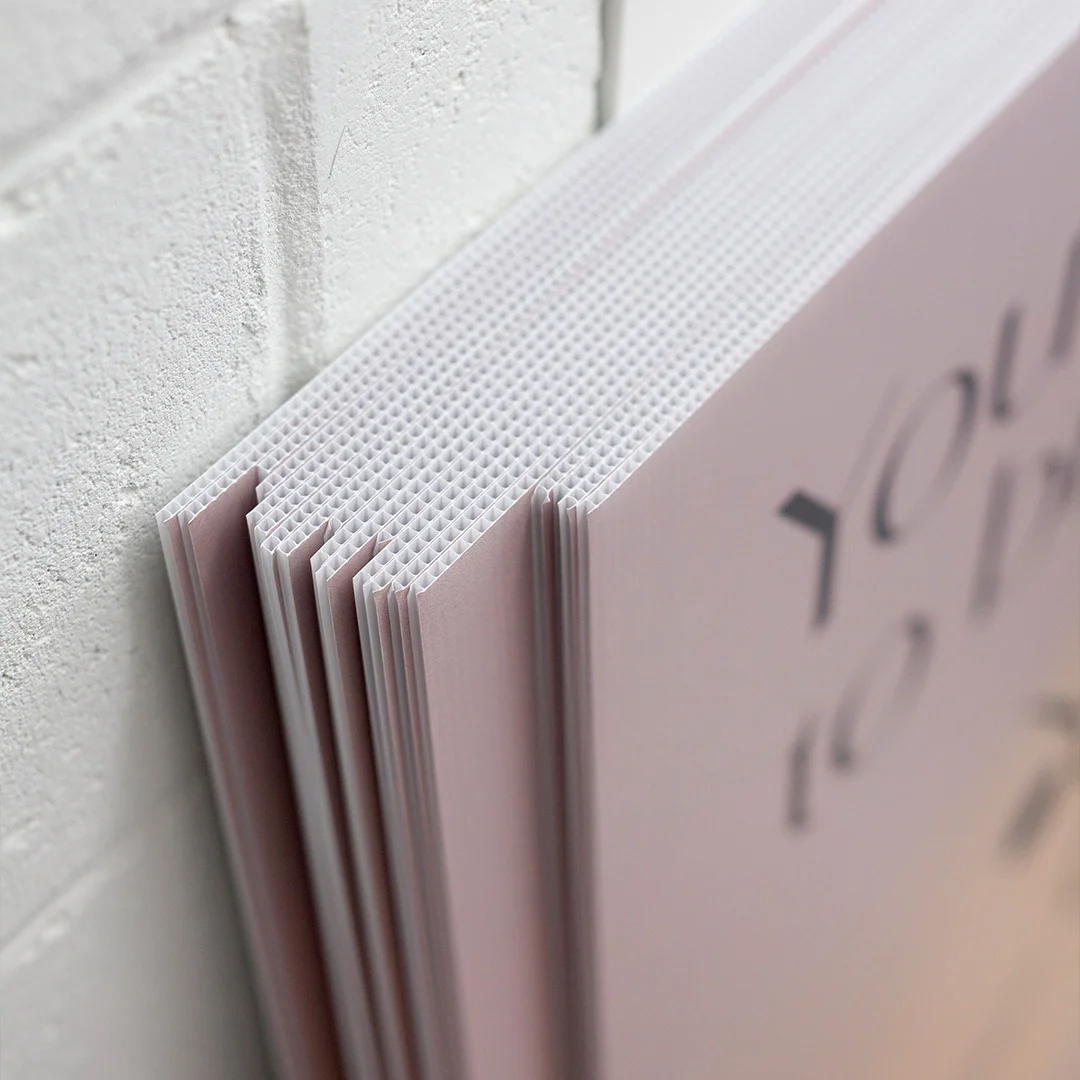
3mm or 5mm corflute, one sided or double sided, eyelets optional. From $30.00 for a single one-sided 600 x 450mm 3mm sign. Production takes 24 hours on every size.
Real Estate
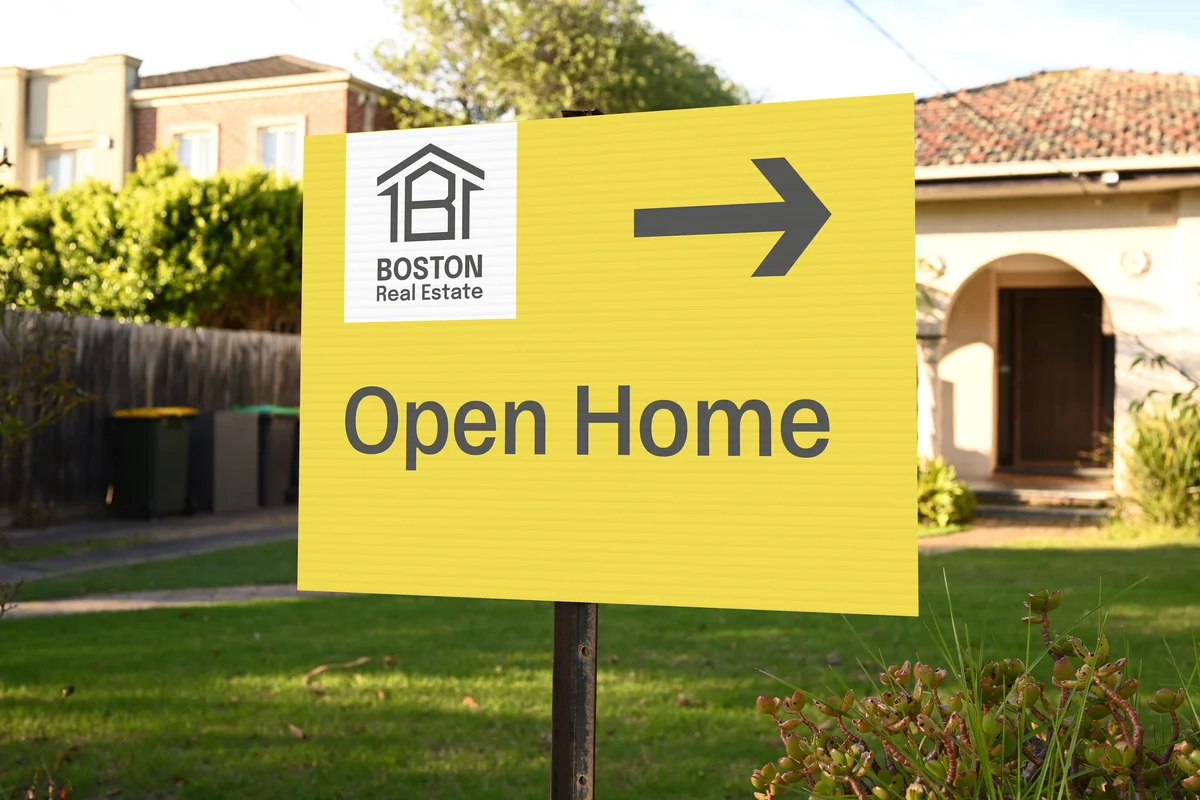
This is corflute’s home territory. Real estate agents across Australia rely on corflute for “For Sale”, “For Lease”, “Open House”, and directional signage. The 600×900mm size is the industry standard for lawn boards. Agents install them on Friday, remove them Sunday after the open, and reuse them for the next listing.
The combination of low cost, fast replacement if a sign gets damaged or stolen, and easy installation on a stake or into an A-frame makes corflute the clear choice for property advertising.
Events and Markets
From community markets in Brisbane to large-scale outdoor festivals, corflute handles event signage reliably. Directional signs, sponsor boards, wayfinding arrows, and entry point markers all work well in corflute. The ability to stack flat, transport in a ute tray, and set up quickly is a significant operational advantage.
Retail Footpath Promotions
Retailers use corflute for outdoor specials boards, footpath promotions, and temporary window displays. An A-frame fitted with a corflute insert lets you swap messaging without replacing the frame. If you’re using corflute for footpath advertising, read our guide on corflute A-frame signs for setup tips and placement strategy.
Construction and Development Sites
Building sites need signage for safety notices, contractor branding, site identification, and development marketing. Corflute handles all of these well. It ties to fencing, withstands construction site dust and occasional water, and is cheap enough that if a sign gets damaged during works, replacing it isn’t a drama. For car parks, traffic-management zones, and pedestrian areas around these sites, bollard signs wrap rigid corflute around posts to keep directional and safety messaging visible at eye level.
Elections and Political Campaigns
Election season in Australia means corflute. Candidates order hundreds of signs for residential areas, polling booth approaches, and high-traffic intersections. The 600×900mm size is standard in residential settings; larger formats work for intersections and major roads. Fast production and low per-unit cost let campaigns scale quickly as election day approaches.
Corflute Sign Sizes
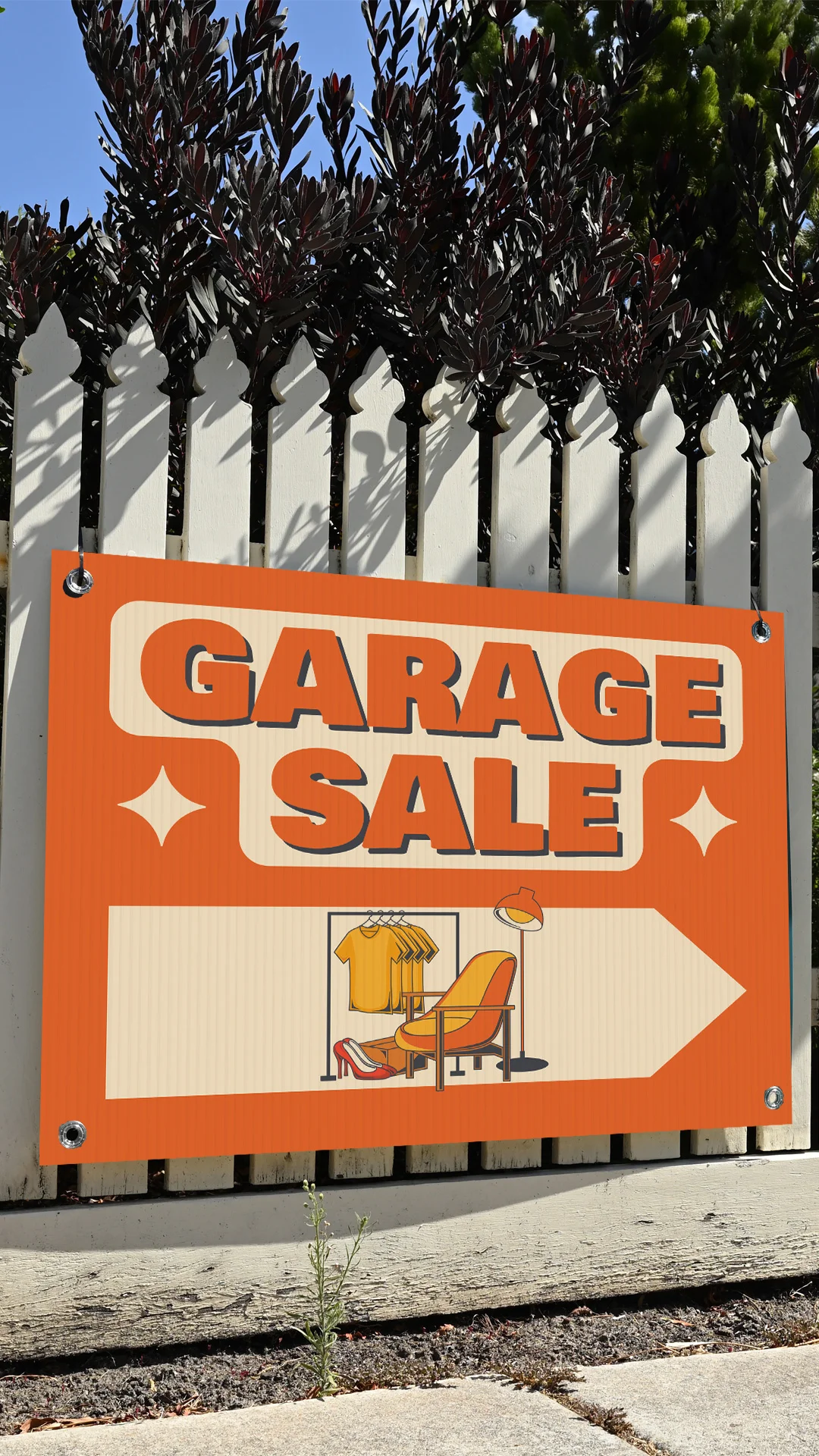
Choosing the right size matters. Too small and your sign gets overlooked; too large and it becomes impractical to install and store.
| Size | A-size guidance | Best For |
|---|---|---|
| 600×450mm | A2 buyers should choose this size. Similar in area to A2, runs landscape or portrait. | Small footpath use, indoor retail, community notice boards |
| 600×900mm | A1 buyers should choose this size. Slightly larger than A1, and the standard real estate and election board. | Most popular. Real estate boards, elections, retail outdoor, events |
| 900×1200mm | No matching A-size | High-visibility outdoor, large events, construction site ID, major road intersections |
| A3 | 297×420mm. Not a standard size on the corflute page. Exact A1, A2 or A3 corflute signs are ordered on the page as a custom size: choose Custom Dimension, type the size in millimetres, and the price shows. | Counter displays, indoor notices, small point-of-sale |
The 600×900mm format dominates because it hits the sweet spot: visible from a passing car, manageable to carry and install, and sized to fit standard A-frame stands and real estate sign systems.
3mm vs 5mm: Which Thickness?
3mm corflute is the standard for most applications. It’s light, cost-effective, and more than adequate for campaigns running up to a few months. Real estate, events, retail promos, and short-run election campaigns all suit 3mm.
5mm corflute is worth the upgrade when:
- Signs will be outdoors for more than 2-3 months
- You’re installing in exposed, windy locations (coastal sites, large open areas)
- Larger format signs (600×900mm and above) need the extra stiffness to resist bowing
- The sign needs to look sharp for a longer period, such as a development marketing campaign
For most short-term applications, 3mm is the practical choice. For campaigns where the sign needs to hold its shape and print quality over an extended outdoor run, 5mm is the better investment.
How Corflute Signs Are Printed
At volume, the value improves quickly: a 600 x 450mm one-sided 3mm corflute sign is $6.00 each inc GST at qty 100.
Installation Options
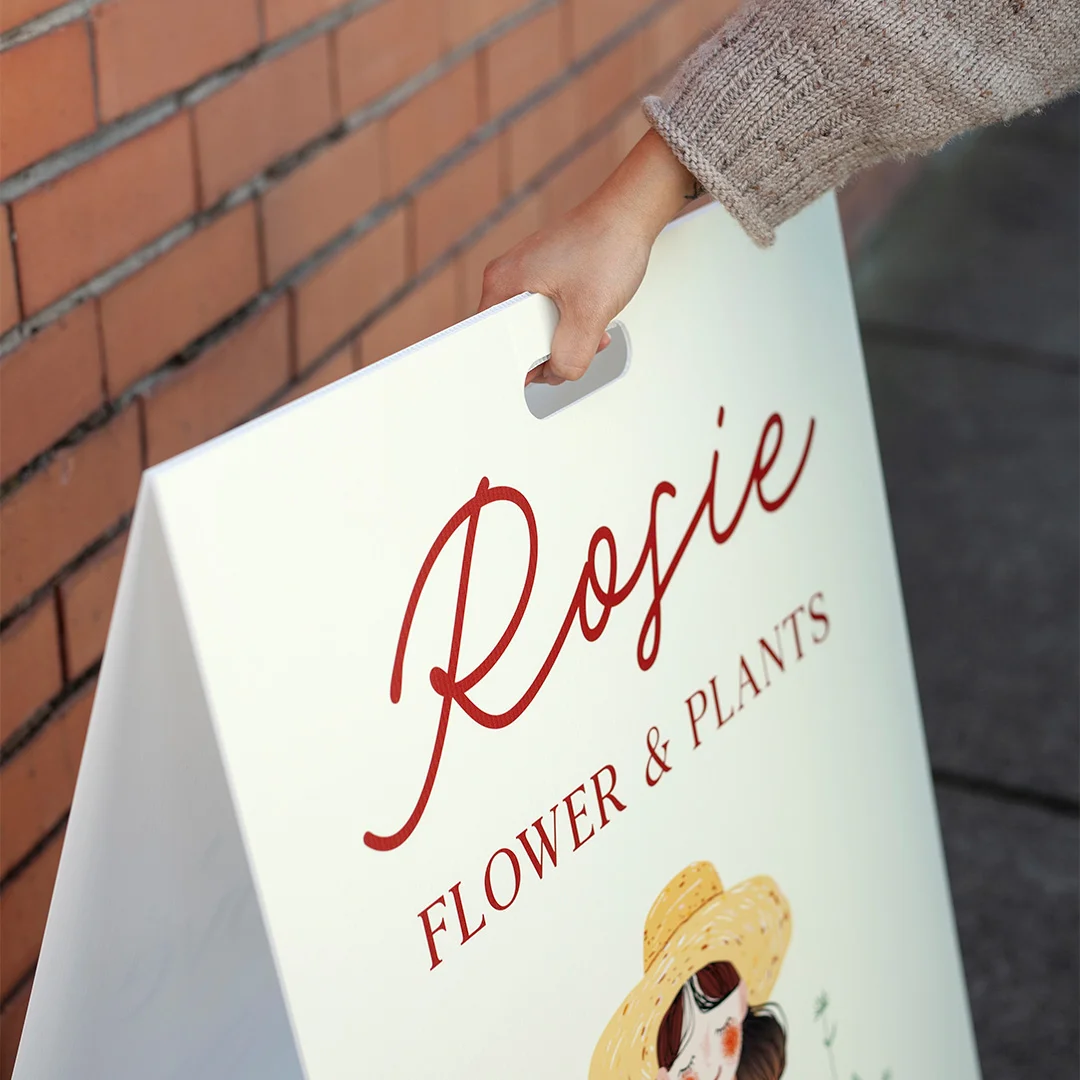
Corflute installs in several ways, depending on the application:
- Eyelets: Pre-punched metal eyelets allow signs to be hung from fences, gates, and structures with cable ties or wire.
- A-frame slots: Corflute slides directly into the channels of a standard A-frame sign stand. See our corflute A-frame signs guide for details on making the most of footpath placement.
- Corflute stakes: H-shaped wire stakes push into the sign’s fluted channels and anchor into soft ground. Standard for real estate and election signs.
- Fence ties: Cable ties through eyelets attach signs to chain-link, pool fencing, and construction hoardings.
Limitations of Corflute
Corflute is not a permanent signage material. It’s designed for short-to-medium term outdoor use. If you need signage that will last several years fixed to a building or permanent structure, corflute isn’t the right choice.
Specific limitations to be aware of:
- UV degradation: Extended exposure to Australian sun will fade colours and weaken the material over time, typically beyond 6-12 months depending on conditions.
- Wind damage: Large unsupported signs in exposed locations can bow, flex, and eventually fail. Proper installation matters.
- Not suited to permanent fixtures: Corflute shouldn’t be used as a permanent external sign on a building or fixed structure. For that, look at aluminium composite, ACM, or rigid PVC.
- Heat warping: In extreme summer heat, particularly in outback and northern Australian locations, thin 3mm sheets can warp when left flat in direct sun.
For temporary and campaign-based signage with a defined lifespan, corflute is hard to beat. For permanent installations, you need something else.
Planning a wedding? For a premium alternative to corflute, browse Paperlust’s wedding signs collection – luxury printed seating charts and welcome signs.
Where corflute falls short (semi-permanent outdoor installations exposed to constant wind, retail-entrance attention-grabbers, or events that need a recognisable shape from a distance), teardrop banners and flags are the standard alternative. The rounded teardrop shape catches wind evenly, the pole hardware is fully portable, and the dye-sublimated polyester print is built for outdoor use.
Ready to Order?
A single one-sided 600 x 450mm 3mm sign starts from $30.00 AUD inc GST, with 24 hour production on every size. Flat-rate shipping covers anywhere in Australia, at rates that vary by product size.
Order corflute signs from Paperlust Printshop and get professional outdoor signage delivered fast.
Ready to order? Browse corflute signs at Paperlust Print Shop: from $6.00 each inc GST at qty 100 for a 600 x 450mm one-sided 3mm sign, with flat-rate shipping Australia-wide. Also available: PVC signs, corflute A frames, and election signs.
Designing for Outdoor Legibility
A corflute sign that looks great on screen can still fail in the field if the design does not account for real-world viewing conditions. Outdoor signs compete with visual noise: passing traffic, sunlight, neighboring signs, and moving pedestrians. Here is how to design for the environment your sign will actually live in.
Text: Less Is More
The single most common mistake in sign design is too much text. A driver passing at 50km/h has roughly two seconds to read your sign. That means three to five words maximum for a roadside sign. For pedestrian-speed viewing, you can push to eight to ten words before legibility drops off.
Prioritize the one thing you want the viewer to remember: your business name, the event, or the property address. Everything else is noise. If you feel the urge to include your full address, phone number, website, email, and social handles on a 600x900mm corflute sign, step back and cut it to the single most important contact point.
Font Choice and Size
Use bold, sans-serif fonts. Thin or decorative typefaces lose legibility quickly at distance and in sub-optimal lighting conditions. For a 600x900mm sign viewed from 5-10 metres, your main heading should be at minimum 80-100mm tall. For roadside signs viewed from a vehicle, aim for 120mm or larger for the primary text.
Avoid using more than two fonts on a single sign. A primary font for the headline and a secondary font for supporting information is the standard structure. More than two typefaces creates visual clutter that slows comprehension.
Color Contrast
High contrast is non-negotiable for outdoor signage. The most readable combinations are dark text on a light ground, or light text reversed out of a dark background. Black on white, navy on white, white on black, and white on deep red are all proven high-contrast pairs. Avoid mid-tone combinations – grey text on a beige background, or light blue on white – as these are nearly impossible to read in bright sunlight or at distance.
If your brand colors are mid-tone, add a high-contrast border or outline to text elements to ensure legibility against backgrounds of similar value.
Artwork Setup for Print
Submit artwork as a print-ready PDF or AI file with all fonts outlined, CMYK color mode, and 3mm bleed on all sides. Keep critical content – text, logos, QR codes – at least 5mm inside the trim edge. For files containing photographic elements, ensure all images are at minimum 100 DPI at the final print size. A 600x900mm file at 100 DPI requires approximately 2,362 x 3,543 pixels for the photographic content.
How to Choose the Right Corflute Spec for Your Job
Corflute is forgiving as a material but unforgiving as a spec choice — the wrong thickness in the wrong site fails fast (3mm in wind cracks; 5mm indoor wastes budget). Use this checklist before committing to a print run.
Before you order: the corflute spec checklist
- Outdoor or indoor? — Outdoor → 5mm minimum. Indoor / one-day → 3mm fine
- Wind exposure — Open fields / coastal → 5mm + reinforced grommets
- Mounting method — A-frame → 5mm rigid. Zip-tie → either. Stakes → 5mm + treated stakes
- Lifespan target — Under 6 months → 3mm OK. 12+ months outdoor → 5mm + UV ink
- Print detail required — Photographic detail → matte print finish; bold/text-only → standard
- Quantity — Below 25 panels → standard sizes. Above 25 → custom sizing pays off
Need a quote on a corflute campaign?
Bulk orders 50+ panels — we cut to spec, drill custom hole positions, and ship pallet-rate. Quote in 24h.
Frequently Asked Questions
What are the best uses for corflute signs outdoors?
Corflute signs are ideal for temporary outdoor applications where rigid, weather-resistant signage is needed without the cost of metal or acrylic. Common uses include real estate yard signs, event directional signs, construction site hoarding, election campaign signage, and retail sale displays. Their light weight makes them easy to install and reposition, and they hold up well through typical outdoor conditions for weeks to several months depending on exposure.
How should I design a corflute sign for outdoor readability?
Keep text large and limited – three to five words maximum for a sign read at distance. Use high-contrast color combinations: dark text on a light ground, or reverse. Avoid thin fonts below 24pt on standard sizes. Logos should be simple and bold. Leave clear margins of at least 10% of the panel width on all edges. For signs viewed from a moving vehicle, treat the entire sign as a single visual unit rather than a layout with hierarchy – the reader has two to three seconds at most.
How long do corflute signs last outdoors?
Corflute with UV-resistant printing typically lasts three to six months in full sun before noticeable fading occurs. In shaded or semi-exposed positions, signs can remain presentable for twelve months or more. The fluted polypropylene substrate itself does not rust or rot and handles rain without issue. The main degradation factor is UV exposure to the ink surface. Specifying UV print significantly extends the readable life of the sign compared to non-UV digital output.
Which side of a corflute panel should I print on – fluted or smooth?
Standard practice is to print on the smooth face of the panel. The smooth side accepts ink cleanly and produces sharp text and image reproduction. The fluted side has a ribbed texture that disrupts print quality and is typically used as the back or mounting side. Double-sided corflute signs are printed on both smooth faces of separate sheets bonded back to back, or on a single panel using both faces if the flute pitch is fine enough to permit it.
What is the difference between UV and non-UV print on corflute?
UV printing cures ink instantly under ultraviolet light, producing a harder, more durable surface that resists fading and scratching significantly better than solvent or latex non-UV print. For outdoor corflute signs exposed to direct sun, UV print is strongly recommended. Non-UV output costs less and is suitable for indoor or short-term outdoor use under two months. If your signs need to look sharp through a full event season or a real estate campaign of several months, specify UV output when ordering.