The quote lands and it says embossed logo. You have seen the word on packaging and product pages, but not on the card in your hand. Will the logo stand up from the paper, or sink into it? If the phrase is being used loosely, you could approve a finish that is nothing like the sample you imagined. This article is about card and paper, not leather or promotional goods.
The difference between embossing vs debossing is direction. Embossing pushes the design up. Debossing presses it down. Once that single distinction is in place, letterpress, foil stamping and embossed foil all stop feeling like competing finishes and start lining up behind it.
This guide explains what embossing and debossing do, how the three pressed card finishes at Paperlust map onto them, what blind embossing and blind debossing are, and how to choose the finish that suits the job.
The short version
- Embossing raises the design above the surface with a matched pair of dies.
- Debossing presses the design down so it sits below the card and reads through shadow.
- Letterpress is a deboss carrying ink.
- Foil stamping sets metallic foil into a slight recess.
- Embossed foil raises the foil in one hit.
- Blind embossing and blind debossing use no ink or foil, and Paperlust does not offer them.
Embossing raises the design above the card
Embossing raises a design above the surface of the sheet. The tooling normally uses a matched pair of dies. A raised die sits on one side of the sheet and a recessed counter-die sits on the other. When the sheet is pressed between them, the paper fibres are forced upward into the shape of the die. The result is a raised area that catches light and changes the way the card feels between finger and thumb.
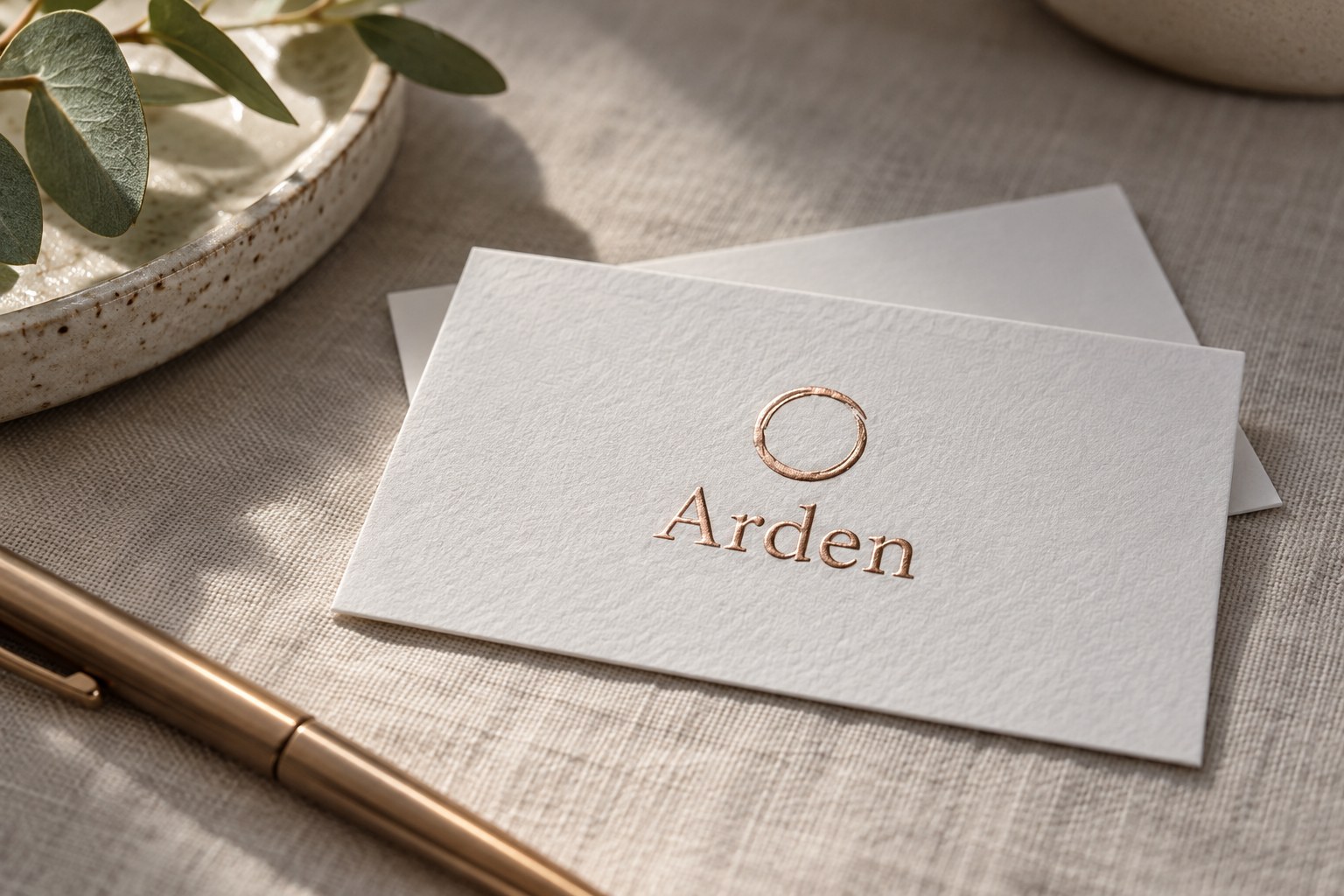
On a business card, that raised area is usually the logo, a name, a monogram or a border. Because the mark sits above the surrounding paper, it reads as prominent. Light hits the high edges first, which gives the design a sense of depth before the ink or foil colour is even considered. A subtle emboss can be felt more than seen, while a deeper one changes the card from flat to clearly dimensional.
The word itself needs one caution. In the broader market, embossed is often used loosely for any raised or tactile finish, including digital raised coatings. A coated card with a raised gloss layer is not the same thing as a die-pressed emboss. If a quote only says embossed, ask what tooling is involved.
Debossing presses the design into the card
Debossing presses a design down into the surface so it sits below the surrounding card. Instead of catching light on raised edges, a debossed mark reads through shadow. The eye sees the recess before the hand feels it, and the card takes on a quieter, more contained texture. The design is still there, but it is set into the sheet rather than standing off it.
The stock has a lot to do with how clean that recess looks. A soft, uncoated cotton board compresses and holds a pressed impression cleanly. The board moves with the die and stays in place, so the shape is sharp and even. A harder coated card resists compression, which makes the same impression look shallower and less controlled. If the board is going to carry a deboss, the board choice is not separate from the effect.
Embossing vs debossing side by side
Once you know the direction, the choice starts to feel practical. One finish leads, the other recedes. The table below sets the pressed finishes next to each other so the difference is visible at a glance.
| Finish | Direction | Ink or foil | Tooling | From Paperlust |
|---|---|---|---|---|
| Blind embossing | Raised | None | Matched die and counter-die | Not offered |
| Blind debossing | Recessed | None | Die pressed into the sheet | Not offered |
| Letterpress | Recessed | One PMS ink colour | Inked raised plate | Letterpress business cards |
| Foil stamping | Slight recess | Metallic foil in gold, silver, rose gold or copper | Heated die | Foil stamped business cards |
| Embossed foil | Raised | Metallic foil on the raised area | Combined foil and embossing die | Embossed foil business cards |
Scale changes how the direction feels. A small raised mark still catches light at its edges, which gives it presence on a mostly flat card. A large recessed mark uses the shadow itself as the feature, so a bold logo can sit below the surface and stay legible. The stock determines whether the detail survives, because a soft uncoated cotton board compresses and holds a pressed impression cleanly while a harder coated card resists compression.
Direction is only part of the decision. A raised logo usually reads as prominent, while a recessed logo reads as understated, but the ink or foil choice matters just as much as the relief. A quiet ink colour on an embossed mark can still feel restrained, and a bright foil in a recessed impression can still dominate. If you are weighing up a raised finish, the guide to embossed business cards explains how the effect translates onto different designs.
Letterpress as a deboss with ink
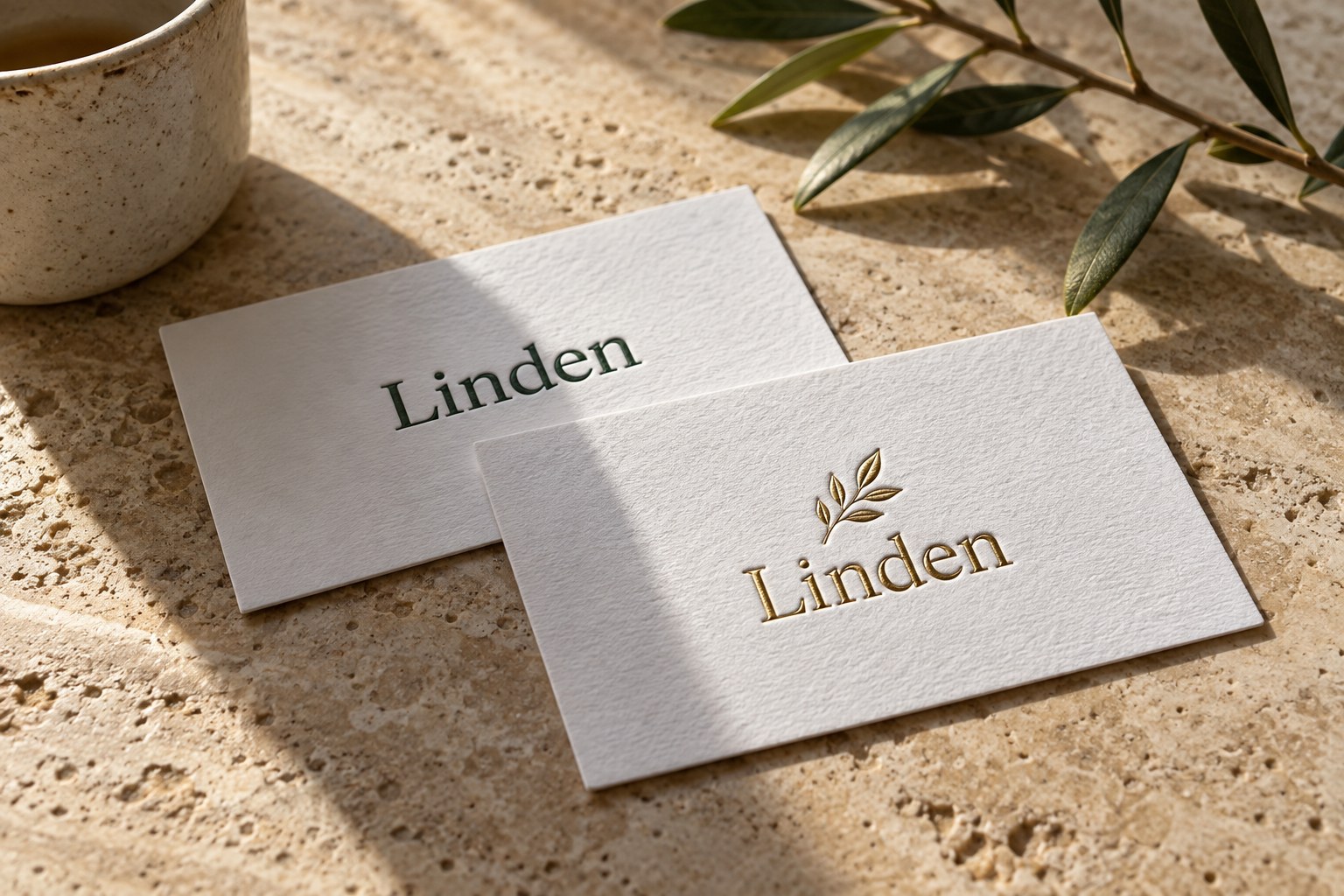
Letterpress is a deboss carrying ink. An inked, raised plate presses into the sheet, and on a soft board the ink sits inside the recessed impression rather than floating on the surface. The printed mark has both colour and depth. That is what separates it from a flat print and from a blind deboss.
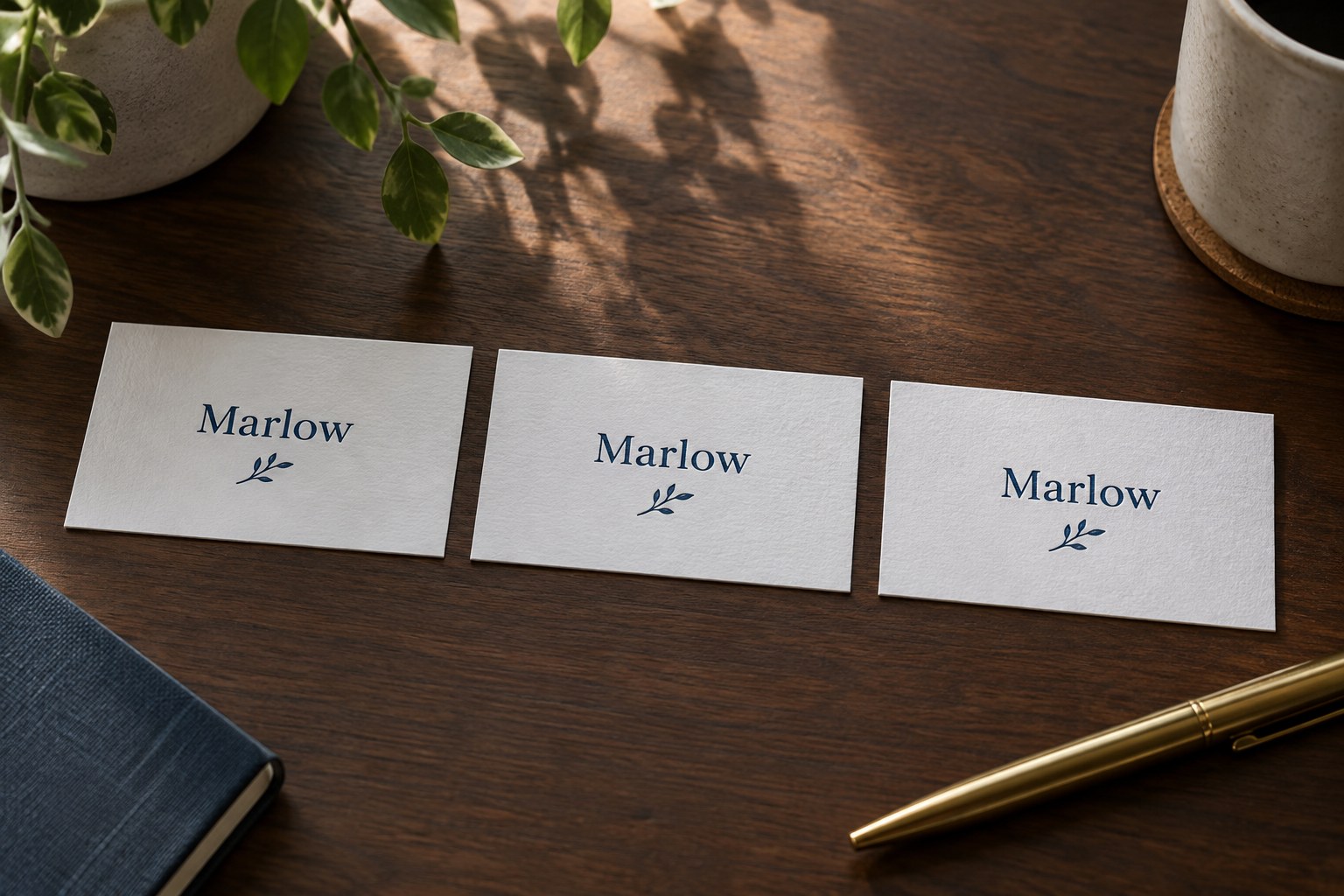
At Paperlust, letterpress business cards use this process. The cards are pressed into white 300gsm Wild Cotton premium cotton board, uncoated, with one PMS colour on the front. The marks sit recessed, and the back is left unprinted. Because the colour settles into the impression, the card reads as a single board rather than a printed layer on top. Light catches the paper around the recess, which gives the mark a slightly dimensional, pressed-in look. That is why a single PMS colour is usually enough; the relief does part of the work. Design restraint matters here: the process suits a clear logo or short line of type better than a complex image. The letterpress guide covers artwork setup and what to avoid.
Foil stamping: why the foil sits in a recess
Hot foil stamping runs a heated die over metallic foil and presses it into the board under pressure. On a soft uncoated board, the die leaves a slight recess and the foil sits inside it. The result is a real metallic surface, but it is set into the card, not raised.
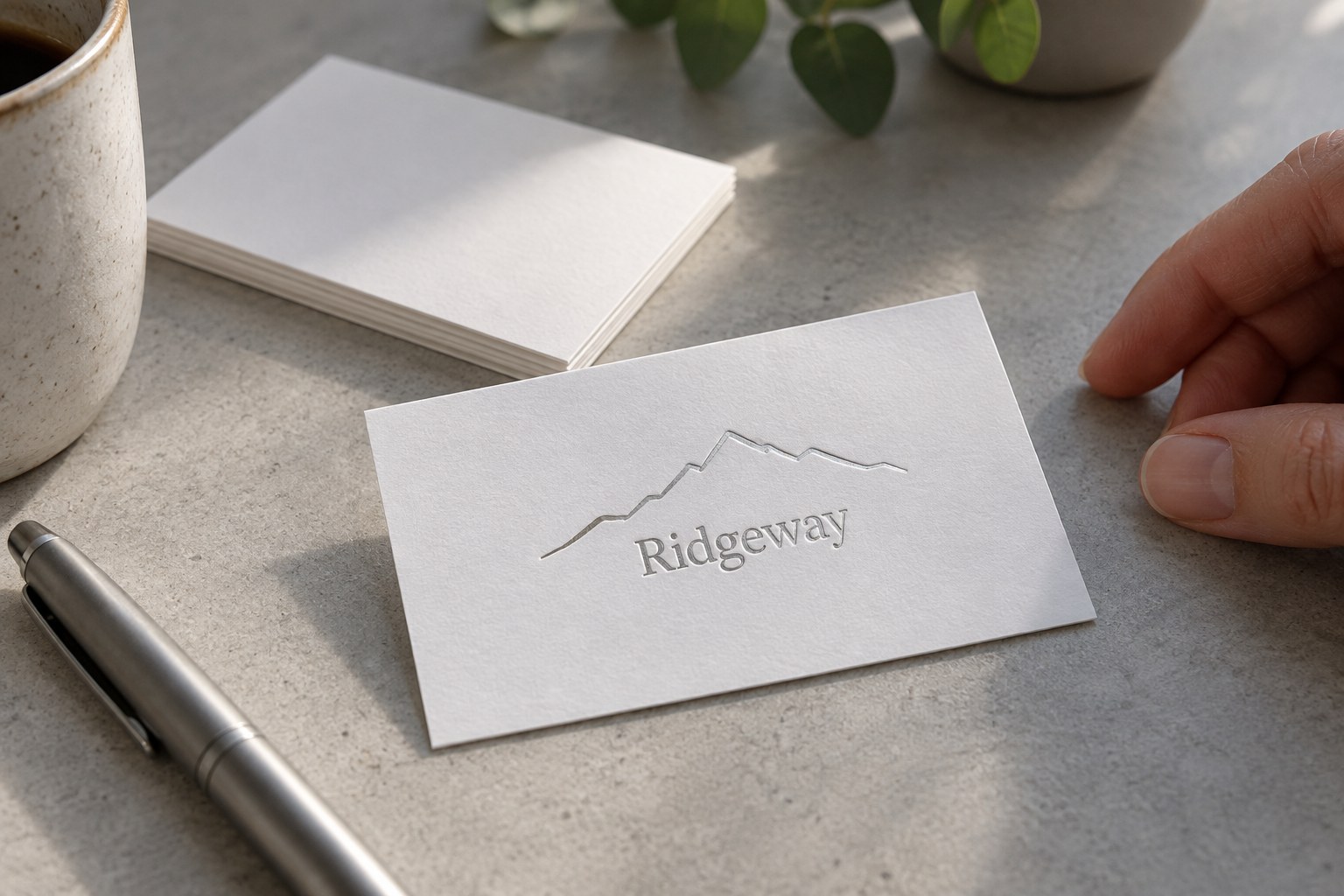
That surprises people. At arm’s length, foil stamping reads as a bright metallic mark, and it is easy to assume the metal sits on top. Run a fingertip over the print and you will feel the card dip slightly. It is a recess, not a bump. That slight recess keeps the metallic surface contained. Light hits the surrounding board edge, so the foil has a pressed-in depth rather than a raised sparkle. The one-colour format suits a focal mark, because a single metal across the card carries more weight than a crowded palette.
At Paperlust, foil stamped business cards carry one foil colour per card. The standard colours are gold, silver, rose gold and copper. Other colours are available on request.
Embossed foil: when the metal is raised
Embossed foil is the exception to the recessed rule. A combined die applies foil and emboss in a single press hit, so the foiled artwork sits raised in exact register. The embossed areas are the foiled areas. Foil and emboss cannot be separated.
That makes embossed foil different from foil stamping. Foil stamping sets the metal into a slight recess, while embossed foil raises the metal with the relief. The combined die is what keeps the two in register.
At Paperlust, embossed foil business cards use this combined process. The finish works for a logo that has to stand proud and carry metal at the same time.
Blind embossing and blind debossing: the finish without ink or foil
Both blind techniques carry no ink and no foil. The design shows only as relief, through light and shadow. Without colour, the eye has to read the card by angle and depth, which is why the approach is often described as the quietest way to add detail.
Paperlust does not offer blind embossing or blind debossing on its pressed cards. If either technique is important to the job, it will need to be sourced elsewhere. What we do offer are three pressed finishes that pair the relief with either ink or foil.
For most business card jobs, the decision comes down to the artwork and the brand colour. Start with the artwork. A restrained design with a single PMS ink colour points to letterpress, because the mark is pressed into the board and the card gains depth without adding a second material. If the design is a single logo, monogram or short line of type, the press on the front only keeps the focus on that mark, and the uncoated Wild Cotton board shows the impression as part of the card.
A metallic brand colour with a pressed feel points to foil stamping, where one foil colour in gold, silver, rose gold or copper can carry the mark in a slight recess. The board is pressed on the front only, and the single colour format means the metal should act as one voice. Other colours are available on request, but each card still uses one foil colour.
A logo that must stand proud with metal points to embossed foil, because the combined die puts the raised relief and the foil in exact register. The embossed areas are the foiled areas, so the artwork has to accept that the metal and the relief rise together.
Full colour or photographic designs belong on a digital card, because the pressed finishes at Paperlust run on white 300gsm Wild Cotton with one PMS colour or one foil colour on the front only. If the artwork relies on gradients, photography or several brand colours, a digital print gives the range those files need. Browse custom business cards for a stock and finish that matches that kind of artwork.
All three pressed cards are made to order and take 18 to 23 working days from design approval, including delivery to an Australian address.
Frequently asked questions
What is the difference between embossing and debossing?
Embossing raises a design above the surface of the sheet, usually between a raised die and a recessed counter-die. Debossing presses the design down into the surface so it sits below the surrounding card and reads through shadow.
Is letterpress a type of debossing?
Yes. Letterpress presses an inked, raised plate into the sheet, and on a soft board the impression holds the ink in a recessed mark. At Paperlust, letterpress cards carry one PMS colour on the front and the marks sit recessed.
Is foil stamping raised or recessed?
Foil stamping is lightly recessed. A heated die presses metallic foil into the board, leaving a real metallic surface in a recessed impression. The foil sits slightly into the card, not raised. Embossed foil is the raised alternative, where one combined die applies foil and emboss in a single hit.
What is blind embossing?
Blind embossing carries no ink and no foil. The design shows only as relief, through light and shadow. Paperlust does not offer blind embossing or blind debossing on its pressed business cards.
Which card stock suits embossing and debossing?
Soft, uncoated cotton board compresses and holds a pressed impression cleanly. Harder coated card resists compression. At Paperlust, letterpress, foil stamped and embossed foil business cards are pressed into white 300gsm Wild Cotton premium cotton board, uncoated.
Can foil and embossing be combined on one card?
Yes. A combined die can apply foil and emboss in one pass so the foil lands on the raised area in register. At Paperlust, embossed foil business cards use this method, and the embossed areas are the foiled areas.