Whether you are dispatching parcels from an online store, running a direct-mail campaign, or adding branded return addresses to your outgoing correspondence, a well-printed address label does quiet work for your business. This guide covers the two formats (sheets and rolls), the most common sizes in millimetres, the right material for each job, and how to set up your artwork before you order.
At a glance
- Sheet labels suit low-to-medium volumes and office printers; roll labels suit high-volume dispatch
- Most popular return-address size: 90 x 38mm (fits standard DL envelopes)
- Most popular dispatch size: 100 x 150mm (A6) or 99 x 139mm (quarter-A4)
- Materials: uncoated paper for dry indoor use, gloss for a polished look, matte for easy handwriting, vinyl for waterproof or outdoor labels
- Minimum bleed: 2mm on all sides; safe zone: 3mm inside trim
- Order via the Paperlust Print Shop rectangle-labels page for competitive Australian pricing
Sheets vs Rolls: Which Format Do You Need?
The decision between sheet labels and roll labels comes down to your volume, your printer setup, and how you apply the labels.
Sheet Labels
Sheet labels are printed on A4 stock, with multiple labels per page. They load into any standard laser or inkjet office printer, making them the practical choice for businesses that print in batches rather than continuously.
Use sheet labels when:
- You print fewer than 500 labels per run
- You already have an office printer and do not want a dedicated label printer
- You need different addresses on every label (variable data), such as a personalised direct-mail campaign
- You want a wide choice of materials: coated paper, matte, gloss or kraft finishes are all available on sheets
Common sheet configurations:
| Labels per A4 sheet | Label size (mm) | Best for |
|---|---|---|
| 2 per page | 199 x 143 | Large shipping, parcel dispatch |
| 4 per page | 99 x 139 | Standard dispatch, A6 equivalent |
| 8 per page | 99 x 67 | Smaller parcels, satchels |
| 14 per page | 99 x 38 | DL envelope return address |
| 24 per page | 63 x 34 | Compact return address |
| 33 per page | 63 x 25 | Letterbox, small format mailings |
Roll Labels
Roll labels are wound onto a core and applied with a label dispenser or thermal printer. They are the standard format for high-volume e-commerce dispatch and warehouse fulfilment. For custom shapes that still need to run through a dispenser or labelling machine, our die-cut labels are supplied on rolls.
Use roll labels when:
- You dispatch 50 or more parcels per day
- You use a thermal printer (Zebra, DYMO, Brother) or a label applicator
- You want faster application at the packing bench
- You need a long print run at a low per-label cost
The rectangle-labels product page lists the roll format with a minimum run of 500 labels per roll, with permanent or removable adhesive options to suit your application.
Common Address Label Sizes in Australia
Address labels follow a few de-facto standard sizes that align with Australia Post requirements, standard envelope formats, and common parcel dimensions. All measurements are width x height.
| Size (mm) | Format | Typical use |
|---|---|---|
| 100 x 150 | Single (A6) | Australia Post parcels, Sendle, couriers |
| 99 x 139 | Quarter A4 | Dispatch labels (4-up on A4) |
| 99 x 67 | Eighth A4 | Small satchels and padded bags |
| 90 x 38 | Return address | DL envelopes, stationery |
| 63 x 34 | Compact return | Slim envelopes, business reply |
| 50 x 25 | Mini address | Product-from labels, internal routing |
| 210 x 99 | DL single | Large return, branded envelope fronts |
A note on Australia Post compliance
Australia Post recommends a minimum label size of 50 x 50mm for parcels. The de-facto standard for most courier booking software (eParcel, Shippit, StarShipIt) is the 100 x 150mm (A6) thermal label. If you are printing from a booking system onto A4 sheets, most systems generate four 99 x 139mm labels per page.
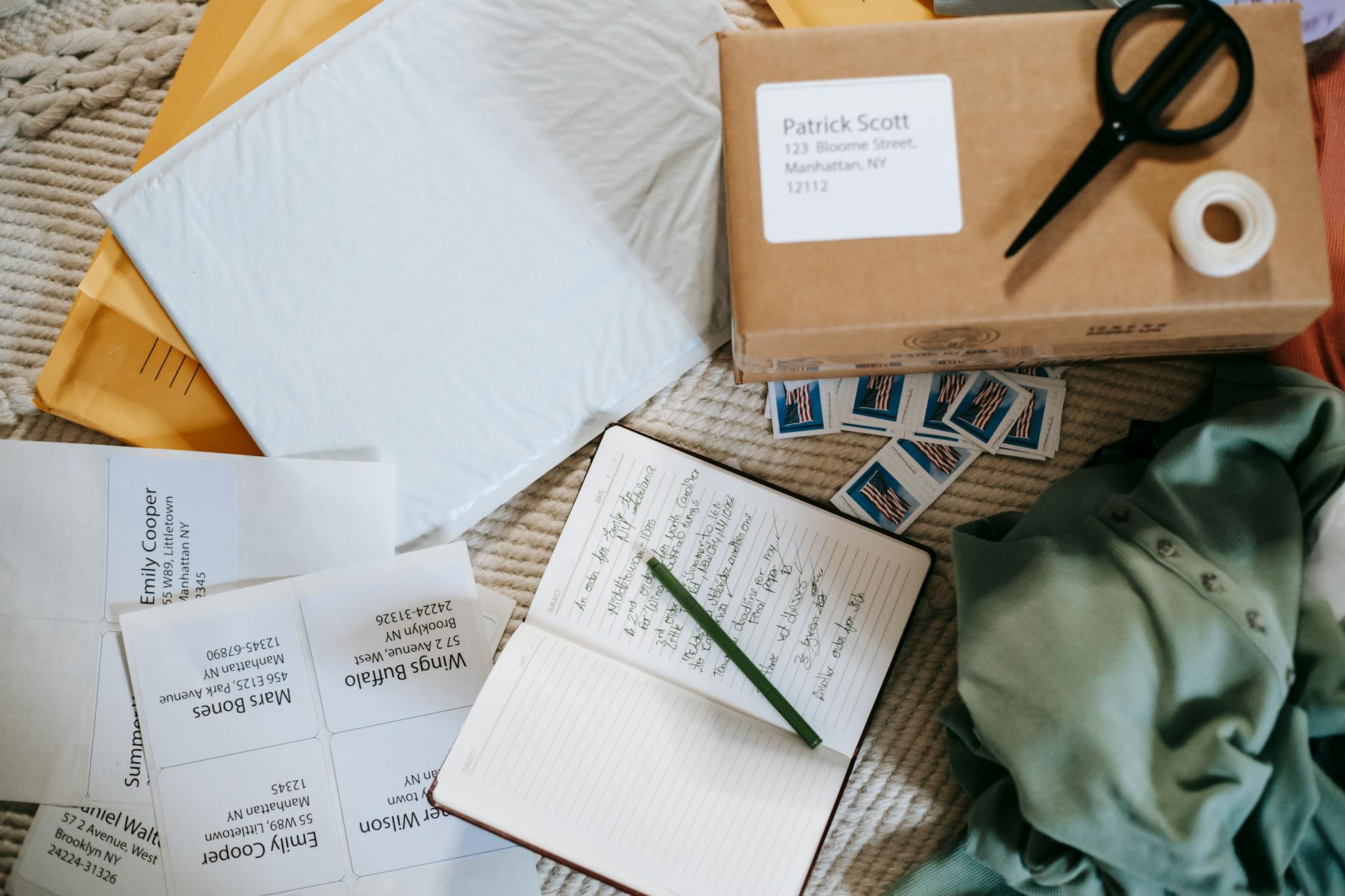
Materials and Finishes: Choosing the Right Label Stock
The material you choose affects durability, appearance, and whether the label survives the journey. Here is a practical breakdown for address labels specifically.
| Material | Finish | Durability | Best for |
|---|---|---|---|
| Uncoated paper | Matte | Low | Dry indoor mail, stationery, office use |
| Coated paper | Gloss | Low-medium | Professional appearance, dry conditions |
| Coated paper | Matte | Low-medium | Easy pen or stamp marking, mailouts |
| Vinyl (white) | Gloss | High | Waterproof parcels, outdoor bags, cold-storage |
| Vinyl (white) | Matte | High | Durable labels that still accept handwriting |
Paper labels cost less and work well for domestic mail and office correspondence where the label will not get wet. They accept ballpoint pen easily, which is useful if staff need to add parcel numbers by hand.
Gloss paper labels give a sharp, polished finish and make colours and logos pop, which is useful for branded return-address labels or customer-facing dispatch labels where presentation matters.
Matte paper labels have a slightly textured surface that reduces glare and makes them easier to read under warehouse fluorescent lighting. They also accept a Sharpie marker, which is handy at the packing bench.
Vinyl labels are the choice when durability is non-negotiable. Vinyl is waterproof, tear-resistant, and survives refrigerated transit or outdoor exposure. For e-commerce businesses shipping liquids, food, or goods through wet conditions, vinyl is worth the additional cost per label.
Use Cases: Who Needs Address Labels?
Return address labels for stationery and correspondence
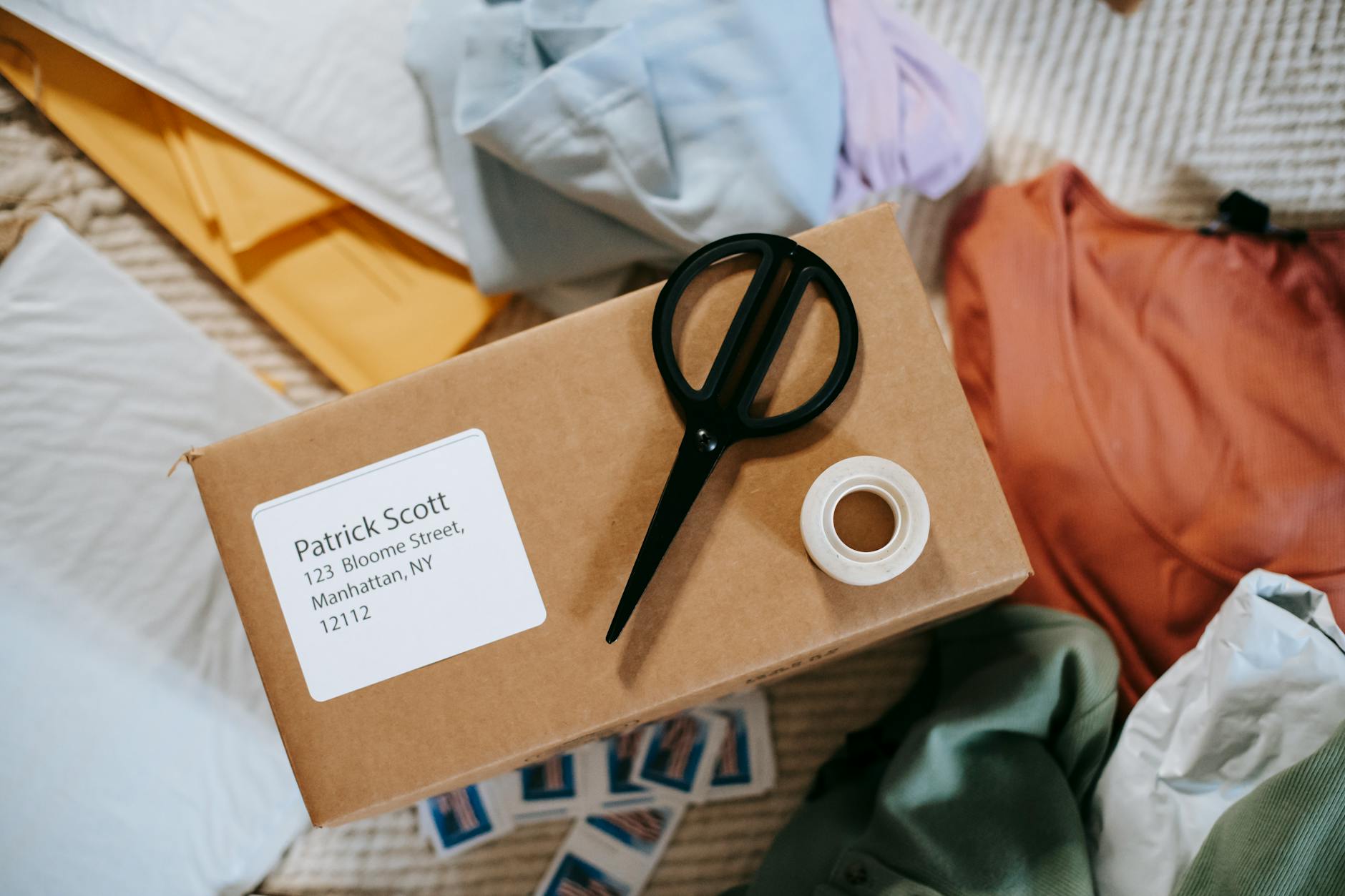
Small businesses, professionals, and individuals use return address labels on outgoing envelopes, parcels, and branded packaging. A 90 x 38mm label in your brand colours with your logo, address, and website creates a consistent, professional impression. Sheet format is ideal here, typically on a 14-up A4 sheet configuration.
E-commerce dispatch labels
Online sellers shipping through Australia Post, Sendle, Aramex, or DHL typically print dispatch labels directly from their booking platform. Branded address labels (adding your logo and return address to a plain dispatch label) can be ordered as roll stock and applied alongside the carrier label, or as a pre-printed A4 template that feeds through your office printer alongside the booking system output.
Direct-mail campaigns and letterbox drops
Bulk mailout campaigns for real estate agents, local businesses, or event promoters use sheet labels to address envelopes and reply-paid cards. These are typically printed with variable data, meaning each label carries a unique address. Your artwork supplier or print shop can accommodate CSV-fed variable data runs. For this application, a 99 x 38mm or 63 x 34mm label on a 14-up or 24-up A4 sheet is standard.
Product-from labels for wholesale and B2B
Businesses shipping from a warehouse or distribution centre use small “product from” labels on outgoing cartons to identify the sender, product batch, or despatch location. A 50 x 25mm or 63 x 34mm format on a roll is typical here. These labels are high volume and low cost per unit.
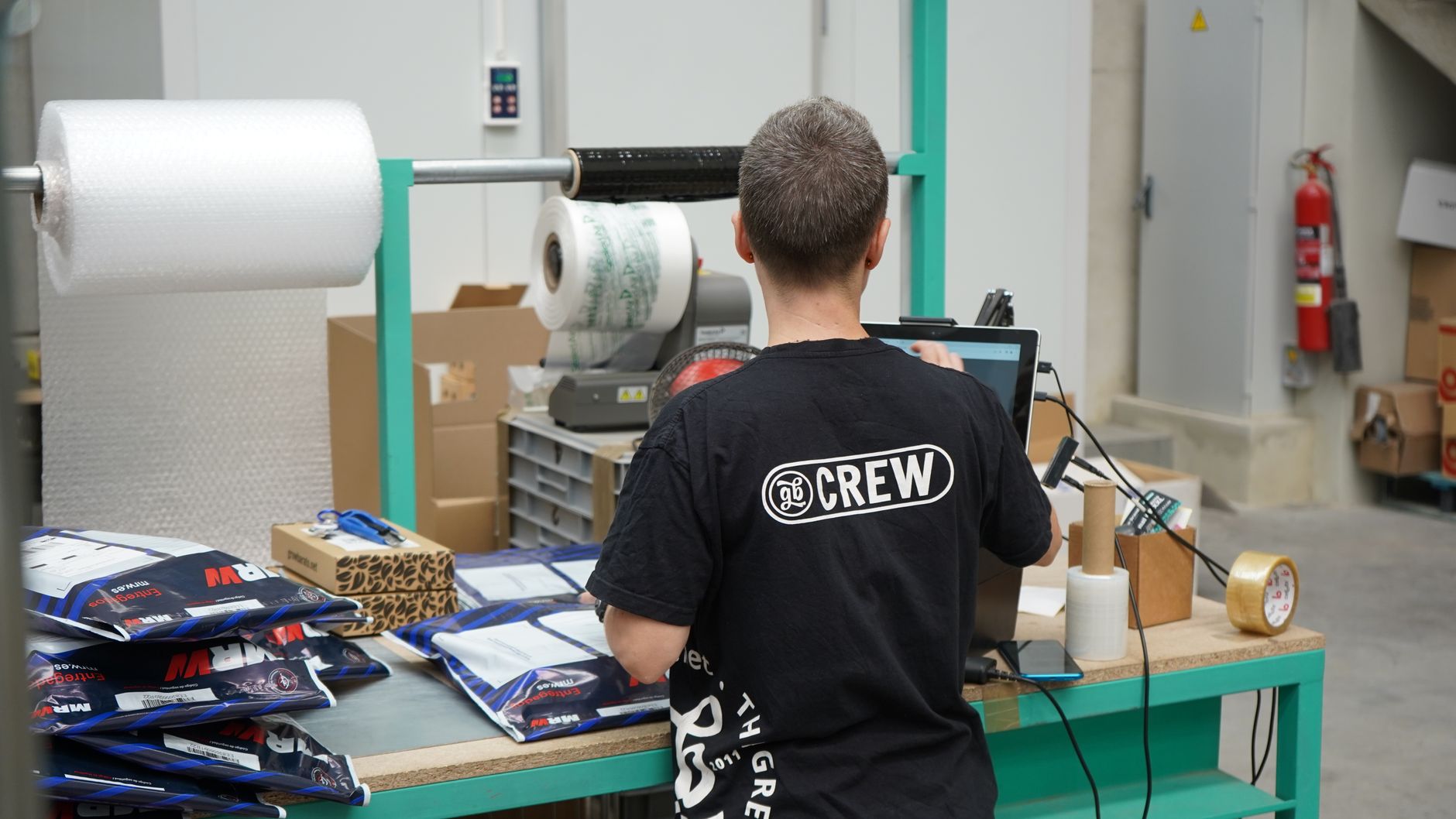
Artwork Setup for Print-Ready Address Labels
Getting your file right avoids delays and ensures the label prints exactly as designed. The following specifications apply to most professional label printers in Australia.
File format and resolution
- Supply files in PDF, EPS, or AI format where possible; high-resolution JPEG or PNG (300dpi minimum) is acceptable for simple text-and-logo designs
- Set colour mode to CMYK; RGB files will be converted and colours may shift slightly
- Do not use spot colours unless your supplier confirms spot-colour printing
Bleed and safe zone
- Bleed: extend all background colours and images 2mm beyond the trim line on every side
- Safe zone: keep all text and important logos at least 3mm inside the trim line
- For a 100 x 150mm label, your document size should be 104 x 154mm with a 3mm inner safe zone (meaning text stays inside 94 x 144mm)
Fonts
- Embed or outline all fonts before saving
- Minimum font size for readable address text: 8pt for fine print, 10pt for body address, 12-14pt for name/business name
- Avoid condensed typefaces below 9pt as they fill in on press
Barcodes
If your label includes a barcode (Australia Post barcode, QR code, or product SKU), supply it as a vector if possible. Raster barcodes must be at 600dpi minimum to scan reliably.
How to Order Address Labels in Australia
- Choose your format: sheet or roll
- Choose your size from the standard options or specify a custom dimension
- Choose your material: paper (gloss or matte) or vinyl
- Supply your print-ready artwork file with bleed
- Review your digital proof (typically returned within 1-2 business days)
- Approve and confirm print
The Paperlust Print Shop rectangle-labels page lets you configure size, material and quantity for rectangle labels and get live pricing. The team can also quote on custom sizes and larger print runs. The wider custom label printing range covers circle, square, oval, rounded-corner and die-cut formats on the same roll stocks.
For more on choosing between label types and adhesive strengths, see the related guide on custom product label printing in Australia, which covers permanent vs removable adhesives and label stock for specific surfaces. You may also find labels vs stickers: the difference and when to use each useful if you are deciding which product category fits your job.
Frequently Asked Questions
What is the standard address label size in Australia?
The most common size for parcel dispatch labels in Australia is 100 x 150mm (A6), which aligns with Australia Post and most courier booking platforms. For return address labels on DL envelopes, the typical size is 90 x 38mm or 63 x 34mm.
Can I print address labels on a normal office printer?
Yes. A4 sheet labels are designed to feed through standard laser and inkjet printers. For high-volume dispatch, a dedicated thermal label printer (Zebra, DYMO, Brother) paired with roll labels is faster and does not require ink or toner.
What is the difference between sheet labels and roll labels?
Sheet labels come on A4 pages with multiple labels per sheet and load into a standard office printer. Roll labels are wound onto a core, used with a thermal printer or label dispenser, and are better suited to high-volume applications. Roll labels have a lower per-unit cost at scale but require different printing equipment.
Are gloss or matte labels better for address labels?
Matte labels are generally preferred for address labels because they are easier to read under varying light conditions and accept pen marks. Gloss labels are preferred when visual presentation is the priority, such as for branded direct-mail campaigns. If you need to write on the label by hand at any point, choose matte.
What material should I use for parcels that might get wet?
Use vinyl labels for parcels shipped in wet conditions, cold environments, or through humid logistics chains. Vinyl is waterproof and tear-resistant. Coated paper labels can smear or detach when exposed to moisture, which may cause delivery issues.
Can I get custom-sized address labels in Australia?
Yes. Standard sizes align with A4 sheet configurations or common thermal roll widths (100mm, 75mm, 50mm rolls), but custom dimensions are available. Contact the Paperlust Print Shop to request a quote for non-standard sizes.
What is the minimum bleed for address labels?
Allow 2mm of bleed beyond the trim edge on all sides. Keep all text and logos at least 3mm inside the trim line. For a 100 x 150mm label, this means your artwork canvas is 104 x 154mm, with live matter staying within 94 x 144mm.
How quickly can I get address labels printed in Australia?
Production times vary by supplier, but for standard rectangle labels, turnaround is typically fast, with approval of your print-ready proof followed by despatch from the printer’s Melbourne facility. Check the rectangle-labels product page for current lead times.
Ready to order? Visit the Paperlust Print Shop rectangle-labels page to configure your address labels, get a live quote, and upload your artwork.