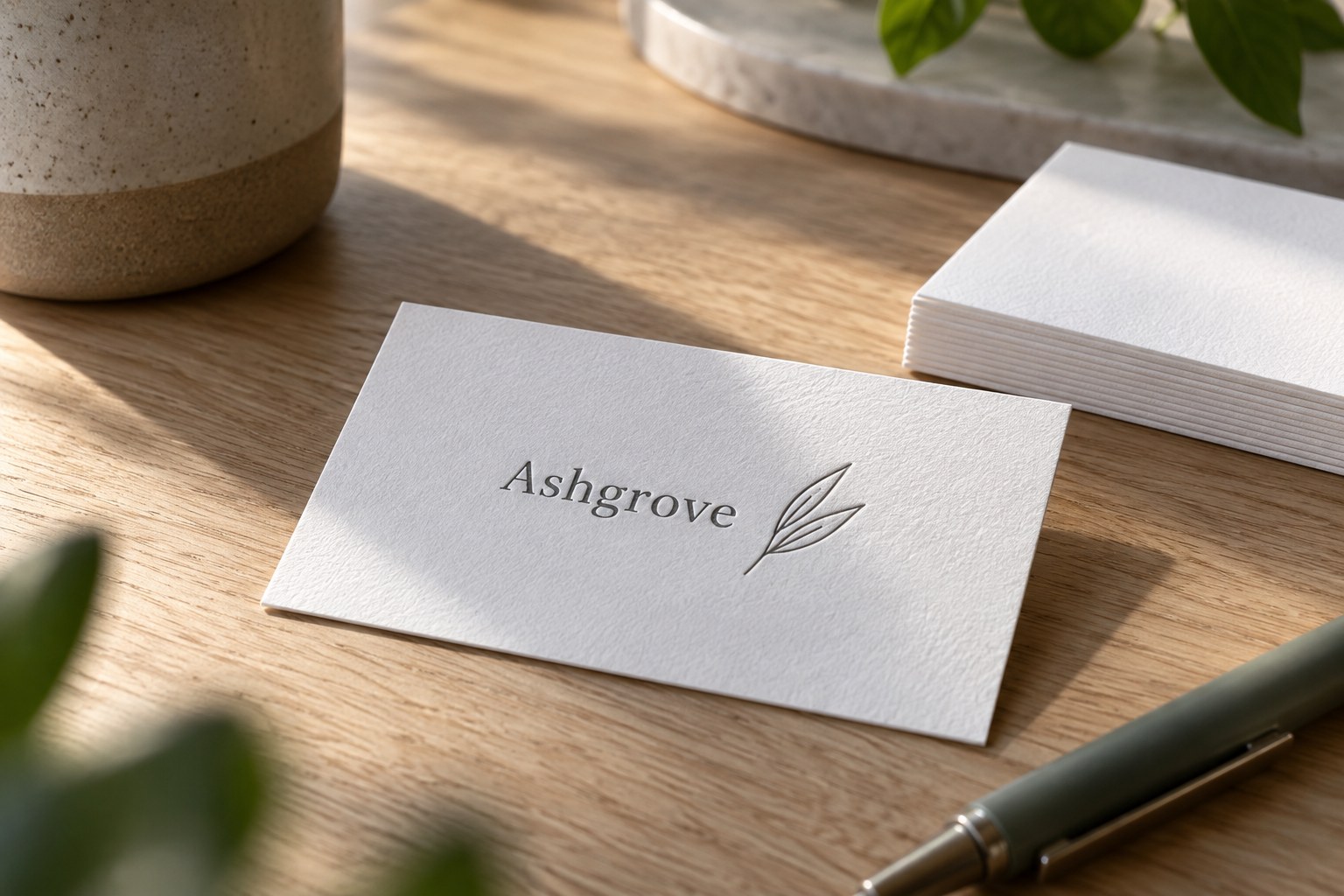
You run a thumb across a business card and feel the lettering before you read it. The type is not sitting on top of the paper. It has been pressed into it. Your thumb notices before your eye does, and the question it asks is what is letterpress.
Letterpress printing is relief printing. A raised, inked surface called a plate is pressed directly onto the sheet, so ink transfers where the raised areas touch and the pressure leaves a mark you can feel. The answer is mechanical, not mysterious.
This guide walks through the chain that turns a design file into a pressed business card: the plate, the ink, the stock, the impression and the press itself. You will see why letterpress has the constraints it does, and how the process compares with digital printing at the end.
The short version
- Relief printing: a raised inked surface presses directly into the paper.
- A photopolymer plate is made from your digital design file.
- Each colour needs one plate and one pass through the press.
- Letterpress uses solid PMS colours, not the dots of CMYK.
- Soft cotton board compresses and holds the impression.
- Paperlust letterpress cards carry one PMS colour on 300gsm Wild Cotton.
How letterpress printing works
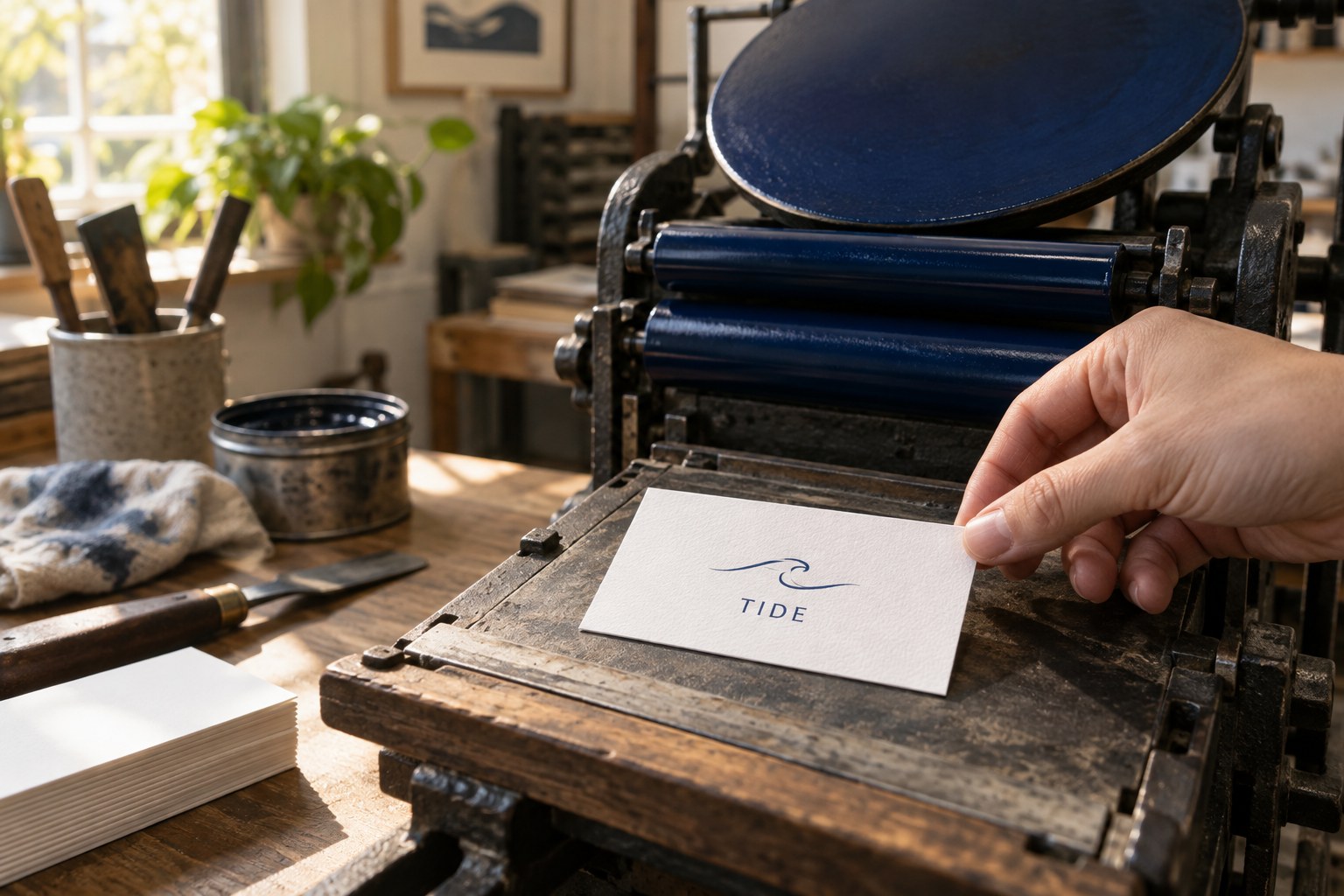
Letterpress is relief printing, which means the parts of the design you want to print are raised above the rest of the plate. The plate is inked, the paper is positioned against it, and pressure forces the sheet onto that raised surface. Ink only transfers where the plate touches. What does not touch does not print.
A digital press approaches the same job from the other direction. It lays toner or liquid ink onto the surface of the sheet without a plate and without forcing the stock. That is why digital printing can hold full colour, photographs and fine gradients, while the printed surface stays almost flat. Letterpress gives up that flexibility and gains a mark with depth.
This distinction is old. Traditional letterpress once used hand-set type, each letter arranged by hand as a separate piece of metal or wood. The principle has not changed. Only the way the plate is made has moved on.
Think of the raised surface as a very precise stamp. The plate holds every letter, rule line and solid shape at the same height, so when the press closes, the design meets the paper in one even contact. That is why letterpress favours flat colour and clear shapes. The mechanics reward edges and punish soft transitions.
This also explains why the process is stubborn about design detail. Fine lines can print, but the raised plate must support them. A soft blend has no clean edge for the plate to hold. The press is honest about what the file contains.
The letterpress plate: from metal type to photopolymer
In traditional letterpress, the plate was not a single object. It was built from individual pieces of metal or wood type, set by hand in a frame. That skill still exists, but most modern commercial letterpress work begins with a photopolymer plate.
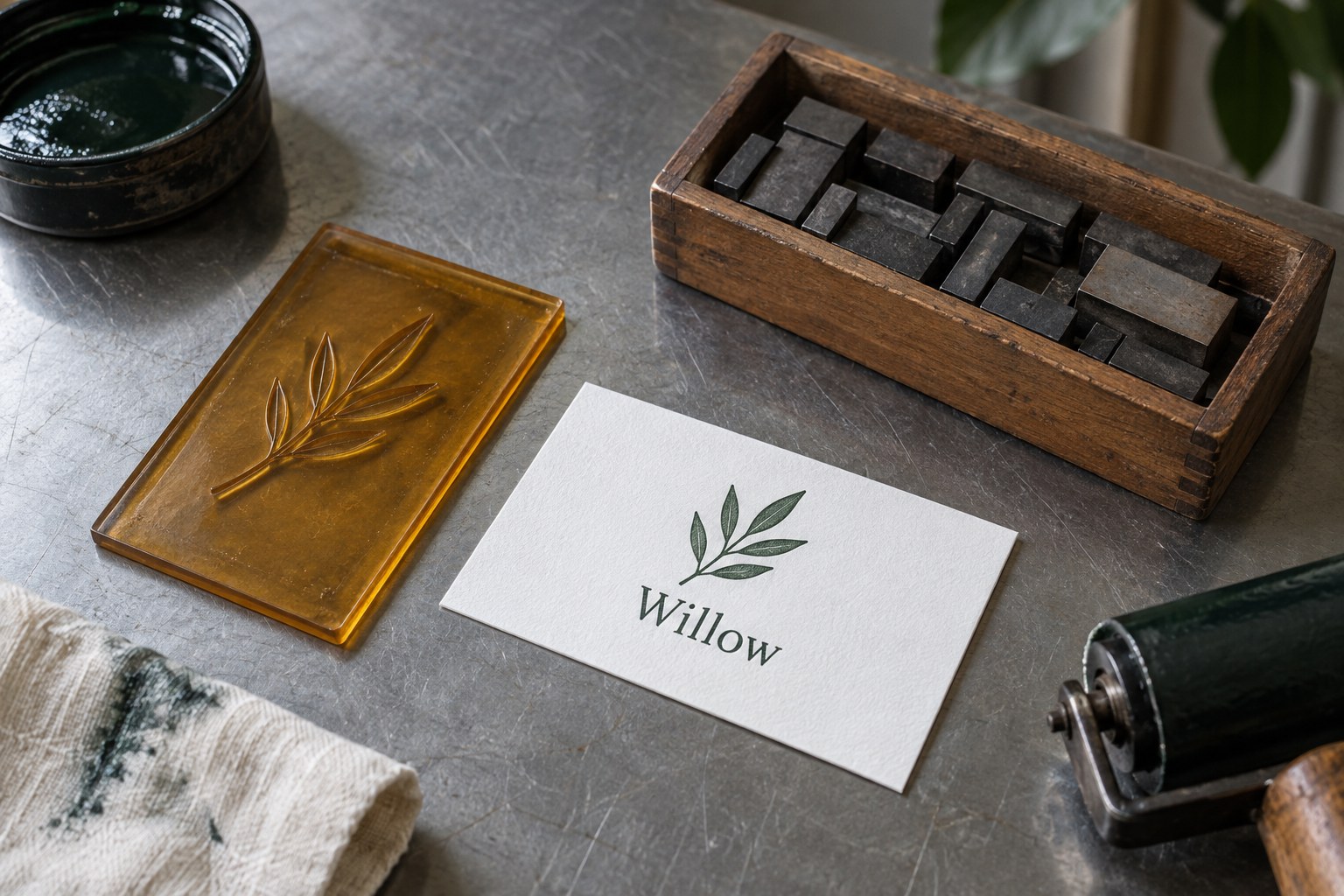
A photopolymer plate starts as a light sensitive polymer sheet. The artwork is output as a film negative, and the sheet is exposed to UV light through that negative. The areas the UV light reaches harden. The unexposed polymer is washed away, leaving the design raised above the plate surface. That raised area is what gets inked and pressed into the paper.
Because the plate carries one impression at a fixed height, it cannot swap colours halfway through a run. Each ink colour needs its own plate and its own pass through the press. A two-colour design means two plates, two setups and two trips through the machine.
The plate is the reason letterpress feels like a series of deliberate decisions. You cannot blur the edges after artwork is made. What is raised prints. What is not raised does not.
Why letterpress uses PMS ink, not CMYK
Letterpress is a spot colour process. The press does not build an image from tiny cyan, magenta, yellow and black dots the way a digital or offset job does. Instead, the ink is mixed to a Pantone formula as a solid colour. That is why a deep navy card and a bright orange card use two physically different inks, not two settings on the same machine.
This process suits uncoated stock because the paper absorbs ink differently to coated paper. That is why a Pantone Uncoated reference matters. A spec drawn from a coated fan may shift on cotton board, so the uncoated reference is the one to reach for.
Letterpress inks are also fairly translucent. Dark ink on a light stock reads clearest. A pale ink can sink into the fibre or lose contrast. Strong, simple colour holds the edge the press works so hard to create. For more on how solid spot colour differs from process colour, start with the Pantone numbers rather than the screen.
PMS inks are not printed on top of a white base. On cotton board, the fibre shows through the ink, which is why the same Pantone number can look different on coated and uncoated papers. The uncoated reference accounts for that shift in advance.
Why cotton board suits the press
Paper stock is not just a background. In letterpress it is half the mechanism. Soft, uncoated cotton board compresses under the plate and then holds that compression, so the impression stays visible long after the press has released. Harder coated stock resists compression. It may print cleanly, but the deep tactile mark is weaker.
The role of paper weight here is to give the card enough body for handling, not to replace the cotton surface. A mill could produce a heavy coated board that still refuses to hold an impression, because the coating closes the surface. Uncoated cotton leaves the fibre open enough to move.
Paperlust presses its letterpress cards into white 300gsm Wild Cotton premium cotton board. The stock is uncoated, which matters more than whether the number is high or low. Cotton board does the work.
That is why letterpress often feels softer than a coated stock under the same weight. The finish is matte, not because a laminate has been applied, but because the raw cotton surface is exposed. This raw surface is what holds the pressed mark.
Impression depth: from kiss to bite
Not every letterpress card feels the same. Press operators can tune pressure from a light kiss impression to a deeper bite. A kiss impression uses just enough pressure to transfer the ink, leaving little or no visible indentation. It was the traditional ideal: a crisp printed mark without bruising the sheet.
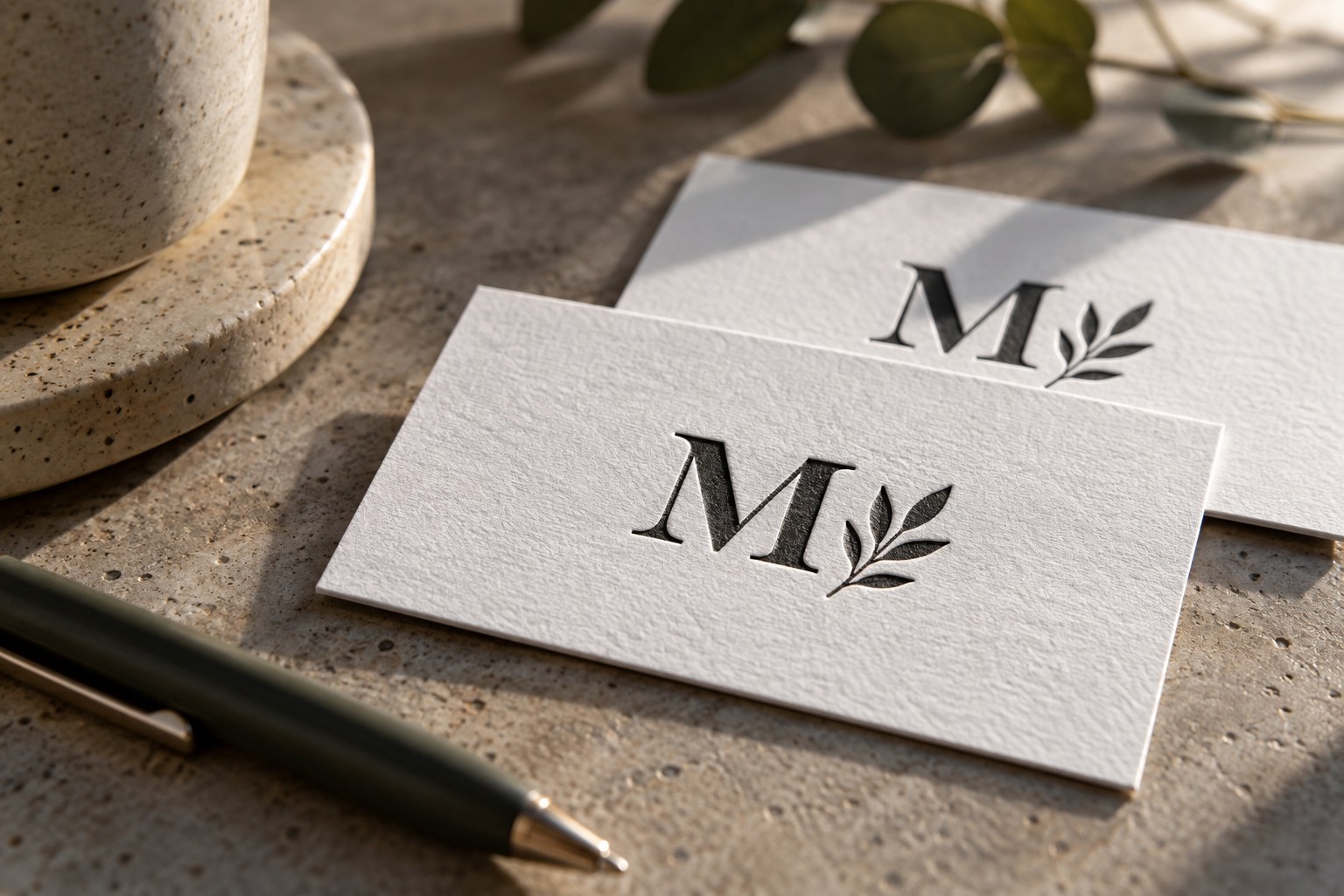
A bite impression drives the plate harder, so the design sits visibly recessed. On cotton board, the recessed areas catch shadow and your thumb follows the letters like a groove. A recessed impression is technically a deboss. Embossing is the opposite: a design raised from the sheet. Our embossed business cards guide covers that raised form.
The depth is set on press. A one colour logo on cotton can be run with a stronger bite, while a fine line of small type may need a lighter touch. The press does not care either way, but the paper does.
On a deep impression, the recessed text will hold a shadow, which means the design changes slightly under different lighting. That is part of the appeal. A flat print looks the same from every angle. A pressed card does not.
From design file to pressed business card
A letterpress job follows a set sequence. The artwork is prepared as solid vector shapes, a proof is approved, and a plate is made for each colour in the design. The press is set up, the plate is inked, and the press run follows. After printing, the sheet is trimmed to final size. A platen press, which brings a flat plate and the sheet together, is commonly used for small jobs such as business cards.
That proof step matters more in letterpress than in digital printing. Once a plate is made, changing a colour or removing a line means making another plate. Digital printing can adjust and reprint quickly, which is why the proof is the moment to catch anything the press will not support.
At Paperlust, letterpress business cards are made to order. They are pressed into white 300gsm Wild Cotton premium cotton board and cut to 90 x 55 mm. Landscape is the default orientation. Portrait costs nothing extra.
The cards print on the front only with one PMS colour. The back is left unprinted. A plain digitally printed back is available by custom quote. Orders run from 100 to 250 cards in steps of 10, with larger runs by custom quote. Nothing goes to press until the design is approved, and there is no maximum number of proof rounds.
Production takes 18 to 23 working days from design approval, including delivery to an Australian address. That is made to order work, not an off the shelf product. Before you commit, our letterpress guide walks through how to set up a design for the press.
Because the front carries a single PMS colour, the file should be built around one solid mark rather than a full colour photograph. The ink is pressed into the cotton board, so the printed marks sit recessed. Letterpress cannot reproduce photographs or gradients. It can, however, make that one mark impossible to ignore.
Letterpress vs digital printing
Letterpress and digital printing solve different problems. The letterpress vs digital printing choice usually starts with colour, but it ends with speed and feel. The table sets them side by side for a business card job, then the practical choice follows.
| Feature | Letterpress | Digital printing |
|---|---|---|
| Plate | Uses a raised plate for each colour | No plate; toner or ink is laid onto the surface |
| Colour | Solid PMS spot colours | Full colour process |
| Impression | Pressed into the stock, often recessed | Sits on the surface, almost flat |
| Photographs and gradients | Cannot reproduce photographs or gradients | Can print full colour, photographs and gradients |
| Minimum order at Paperlust | Letterpress business cards: 100 to 250 cards | Standard business cards: minimum 50 cards |
| Production at Paperlust | 18 to 23 working days from design approval, including delivery | Most stocks take 3 to 5 business days after the proof is approved |
The practical choice follows from the column you are standing in. Letterpress suits a single strong mark on a card people handle and keep. The impression gives the card a physical presence that digital printing cannot match. Digital printing suits full colour, photographs and short deadlines. If the artwork depends on a photograph or a gradient, letterpress is the wrong tool.
When that full colour job is the right one, custom business cards give you the full-colour option with a shorter production window. For letterpress, accept the constraints and design toward them: one PMS colour, simple shapes and enough time for made to order production.
Frequently asked questions
Is letterpress the same as debossing?
Letterpress and debossing are not the same process, but a deep letterpress impression creates a deboss. Debossing is the recessed result left in the paper. Letterpress also transfers ink at the same time, so the debossed mark carries colour. A pure deboss usually leaves no ink.
What is the difference between letterpress and offset printing?
Offset printing transfers ink from a plate to a rubber blanket and then to the paper, so the plate never touches the sheet and no impression is made. Letterpress is relief printing: a raised inked plate presses directly onto the paper, so the ink transfers and the pressure can leave a mark.
Which paper suits letterpress printing?
Soft, uncoated cotton board suits letterpress printing best. It compresses under the plate and holds the impression. Harder coated stock resists compression, so the mark is weaker. Paperlust letterpress cards use white 300gsm Wild Cotton, an uncoated premium cotton board.
Can letterpress print more than one colour?
Yes, but each colour needs its own plate and its own pass through the press. A two-colour design costs more and takes longer. Paperlust’s letterpress business cards print with one PMS colour on the front.
What is a letterpress plate?
A letterpress plate is the raised printing surface that carries the design. Traditional plates were built from hand-set metal or wood type. Most commercial letterpress today uses a photopolymer plate, made by exposing a light sensitive polymer sheet to UV light through a film negative and washing away the unexposed areas.
Why does letterpress cost more than digital printing?
Letterpress generally costs more per card than digital printing because each job needs a plate for each colour, press setup and a slower run, usually on a speciality stock. Digital printing uses no plate and runs faster, which keeps costs lower on full colour short runs.