There is a persistent myth that choosing recycled business cards means settling for a dull, flimsy result. The reality is the opposite: with the right stock weight, base tone and design approach, recycled cards can feel just as impressive as any conventional option. This guide covers recycled paper certifications, stock weight and base tone, and design choices that make a plain uncoated recycled card look considered.
The business case for recycled business cards is straightforward. Research consistently shows that a majority of Australian consumers now actively prefer businesses that demonstrate environmental responsibility – and a business card is one of the first physical touchpoints your brand makes. Getting the specification right means you do not have to choose between sustainability and first impressions.
Recycled Business Cards: Quick Reference
- Stock weight: 300gsm minimum; 350gsm+ for a premium feel in the hand
- Base tones: natural white (accurate colour reproduction) or kraft/warm-brown (earthy, artisan look)
- Certifications to look for: FSC Recycled mark, 100% post-consumer recycled (PCR) content, chlorine-free processing
- Finish: smooth uncoated matte face; spot UV and foil are on other Paperlust cards.
- What to avoid: plastic lamination (defeats recyclability), stock under 300gsm, large solid ink fills on kraft tone
- AU pricing guide: 250 cards front only are $139.20 inc. GST at Paperlust Print Shop; the per card price falls at larger quantities up to 10,000.
What Does “Recycled” Actually Mean on a Business Card?
Not all recycled claims are equal, and understanding the terminology will help you make a smarter buying decision and ask the right questions when comparing suppliers.
Post-consumer recycled content
The most meaningful sustainability metric is post-consumer recycled (PCR) content: paper made from waste that has already passed through consumer use, such as old office paper, cardboard packaging, and newsprint. Cards labelled “100% post-consumer recycled” offer the greatest reduction in virgin fibre demand. Some products are labelled simply “recycled content” without specifying the PCR percentage – that label may include clean factory trim waste (pre-consumer waste), which has a lower sustainability benefit than post-consumer material. When evaluating suppliers, ask specifically: what is the post-consumer recycled content percentage?
FSC certification and what it actually covers
The Forest Stewardship Council (FSC) certification is often misunderstood. FSC does not exclusively apply to recycled paper. It also covers virgin-fibre papers from responsibly managed forests. For recycled stocks, look for the “FSC Recycled” variant, which uses a circular arrow symbol and certifies that the content is 100% reclaimed material. An FSC Recycled label is the clearest, most independently verified recycled-paper claim available in Australia, covering the chain of custody from the paper mill through to the finished product.
Eco inks and low-VOC processes
Paper stock is only part of the environmental equation. Soy-based and water-based inks significantly reduce volatile organic compounds (VOCs) compared to conventional petroleum inks, and they are more compatible with paper recycling streams at end-of-life. Carbon-neutral production, powered by renewable energy, takes the sustainability case further. When briefing a printer, ask whether they use low-VOC inks and whether their facility holds any carbon-neutral certification.
The “Cheap Look” Problem – and How to Solve It
The reputation for looking budget usually traces back to three specific failures: card weight too low, base tone mismatched to the design, and print resolution that suffers on absorbent uncoated surfaces. None of these are inherent problems with recycled paper. They are specification errors.
Weight is the first dial to turn
Card thickness communicates quality before anyone reads a word. For business cards, 350gsm is the minimum weight that feels substantial in the hand. Many recycled stocks are available at 300-400gsm, so there is no reason to accept anything lighter. A 350gsm recycled uncoated card has the same physical presence as a conventional coated card at the same weight. If a supplier only offers recycled options below 300gsm, that is a product limitation worth noting – not an inherent property of recycled paper.
Natural white vs. kraft: matching tone to brand
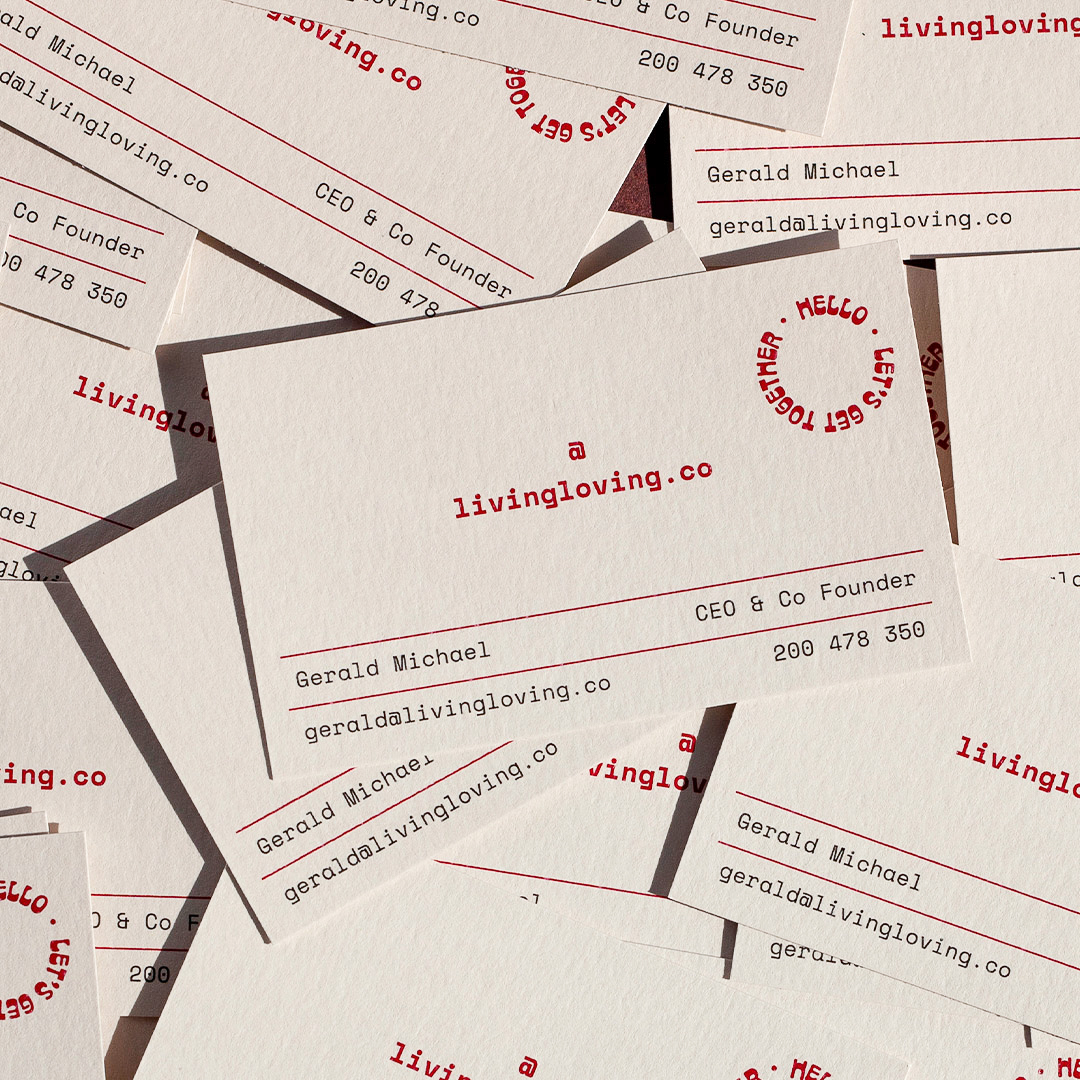
Recycled stocks come in two common base tones. Natural white stocks are produced using chlorine-free bleaching processes that remove the brown colouration of post-consumer fibre while retaining recycled content. These print colours accurately and suit any brand palette. Kraft or warm-brown stocks are unbleached, which retains the earthy colour of post-consumer fibre and signals sustainability at a glance – but they are not a universal solution. Standard CMYK colours will appear warmer and slightly muted on kraft base tones, which can cause problems for brands with cool-palette designs or precise colour-matching requirements. The rule: natural white for broad compatibility; kraft for earthy, artisan, or sustainability-forward brands where the warm tone reinforces the message.
Uncoated surfaces and ink saturation
Uncoated recycled paper is more absorbent than coated stock, which can reduce ink saturation and colour vibrancy if the file is not prepared correctly. The solution is to use a printer with an established uncoated ICC profile in their RIP workflow, and to increase ink densities slightly in your file. Most reputable Australian printers compensate for this automatically. Ask your supplier whether they use an uncoated profile for recycled stock jobs and whether they can supply a paper sample before you commit to the full print run.
Making an Uncoated Recycled Card Look Premium
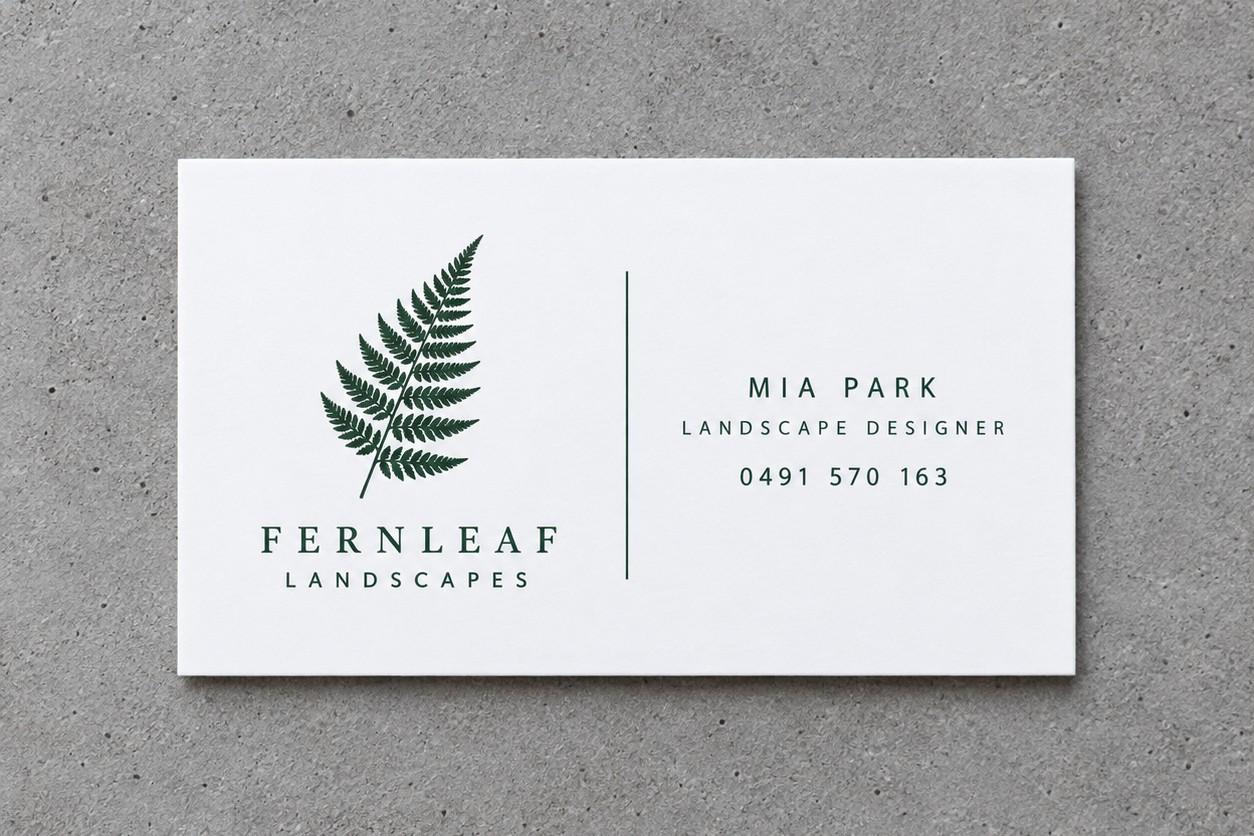
The strong answer to the eco equals cheap assumption is not a coating. On these cards it is the 350 GSM board, the bright white smooth matte face and a restrained layout that make the result feel deliberate. Spot UV and foil are finishes for other cards in the range, and the next sections explain where they fit.
Where spot UV fits in the range
Spot UV applies a clear gloss coating to a selected area of the design, such as a logo, a geometric element or a single word, so the gloss sits against a matte surround and the coated area feels different to the uncoated surface. At Paperlust Print Shop, spot UV business cards are sold on that page’s own card stock, and spot UV is not an option on the recycled card. Pick the spot UV card for the gloss contrast, or the recycled card for the uncoated board.
Where foil fits in the range
A metallic foil detail is sold on the raised foil business cards page, where it is paired with that card’s own stock. It is not an option on the recycled business cards sold by Paperlust Print Shop. On the recycled card, the premium signal comes from the board itself: 350 GSM weight, a bright white smooth matte face and generous white space around the design. That combination is what gives the card a restrained, considered feel.
Leaving it uncoated – intentionally
A fully uncoated recycled card with strong typography, generous white space, and a restrained one or two-colour palette does not need a finish to look premium. When the stock texture itself becomes the design feature, the result can be more distinctive than a generic glossy card. This approach suits professionals whose brand equity rests on restraint: architects, consultants, writers, independent designers. The critical distinction is between a card that looks unfinished and a card that looks intentionally minimal. Good typography, precise margins, and a well-chosen typeface make the difference.
Design Tips That Work With Recycled Stock
Designing for recycled paper requires only a few adjustments to standard practice, but they make a consistent difference to the final result.
Reduce ink coverage on kraft tones
Designs with large areas of solid dark ink on warm-toned recycled stock can look heavy and absorb unevenly. Favour line work, open compositions, and lighter colour palettes when working on natural brown stocks. Reserve heavyweight solid colour fills for natural white recycled cards where ink reproduction is more predictable.
Use the reverse side
A double-sided recycled card offers twice the design space and turns a functional object into something worth keeping. Using the reverse for a bold typographic element, a pattern or a short brand statement makes the card feel more valuable, which is particularly useful for service businesses whose cards sit on a desk rather than in a drawer. At Paperlust Print Shop, recycled business cards can be printed front only or front and back in full colour, and adding the back costs only a small amount at 250 cards.
Typography on uncoated surfaces
On uncoated recycled paper, fine serif typefaces at small point sizes can lose crispness due to the paper’s ink absorption. Use your primary information at 10pt or above, and ensure adequate leading (1.3 ratio minimum). Sans-serif fonts tend to hold their sharpness better on uncoated stocks at small sizes. Negative space is your ally: it lets the card breathe and makes the texture of the stock part of the composition rather than working against it.
What to Look for When Ordering Recycled Business Cards in Australia
Ask the right questions before committing
Before placing an order with any supplier, ask four questions: What is the post-consumer recycled content percentage? Is the stock FSC-certified (FSC Recycled or FSC Mix)? What inks are used? Is production based in Australia? A reputable printer will have clear, specific answers to all four. Vague or evasive responses are worth noting.
Local production reduces your overall footprint
Printing in Australia eliminates the carbon cost of international freight, shortens turnaround times considerably, and keeps quality control within a reachable supply chain. Offshore printing often appears cheaper at the headline quote level, but the shipping carbon, potential customs delays, and inability to inspect a proof before the full run can erode both the environmental and practical advantages. All Paperlust Print Shop business cards are produced in Melbourne, which means no container ship between your order and your letterbox.
Pricing guide for Australian buyers
At Paperlust Print Shop, 250 recycled business cards are $139.20 inc. GST printed front only and $146.17 printed front and back. The per card price falls as the quantity rises, up to 10,000 cards, so larger orders cost less per card. The price covers a 90 x 55 mm card in full colour on the printed sides, and production takes 3 to 5 working days after the emailed proof is approved. The table below lists the prices at each quantity for the 350 GSM ecoStar+ board.
| Quantity | Front only (inc. GST) | Front and back (inc. GST) |
|---|---|---|
| 250 cards | $139.20 | $146.17 |
| 500 cards | $157.76 | $167.04 |
| 1,000 cards | $199.52 | $208.82 |
| 2,500 cards | $308.58 | $324.82 |
| 5,000 cards | $491.86 | $517.38 |
| 10,000 cards | $870.04 | $916.44 |
Prices are order totals inc. GST for Paperlust Print Shop recycled business cards: 90 x 55 mm, 350 GSM ecoStar+ board, front only or front and back. The configurator shows current pricing.
Sustainability at Paperlust Print Shop
Every order placed with Paperlust Print Shop contributes to a tree-planting programme, so your recycled cards actively sequester carbon rather than simply minimising it. Combined with Melbourne-based production and a 100% happiness guarantee (free reprint or full refund if you are not satisfied), it is a straightforward option for Australian businesses that take their environmental commitments seriously without wanting to compromise on the physical quality of the finished product.
About Paperlust Print Shop
Paperlust Print Shop is an Australian print business based in Melbourne, producing premium custom business cards, stickers, signage, and marketing materials for brands of all sizes. Founded in 2014 and recognised as a Westpac Business of Tomorrow, the shop produces everything locally in Australia, plants a tree with every order, and backs every product with a 100% happiness guarantee. The recycled business cards are printed on a bright white 100% recycled uncoated board, while the shop’s spot UV and foil finishes sit on its other card pages.
Frequently Asked Questions
Are recycled business cards as durable as standard cards?
Yes, at equivalent weight. A 350gsm recycled uncoated card has the same rigidity and handling durability as a 350gsm conventional card. Recycled paper at proper card weight is not structurally weaker than virgin paper. The durability difference, if any, comes from weight and finish – not from the recycled content itself.
Can I get a foil finish on recycled business card stock?
Not on the Paperlust Print Shop recycled business cards. They are printed on uncoated board with nothing applied over the face, so foil is not part of that product. Paperlust sells foil on its raised foil business cards and spot UV on its spot UV business cards, and those finishes are paired with each page’s own card stock.
Will colours look different on recycled paper compared to standard white card?
On natural white recycled stocks, colour reproduction is very close to standard white coated card – any difference is minimal. On kraft or warm-toned recycled stocks, CMYK colours will appear noticeably warmer and slightly less vibrant due to the base tone. If colour accuracy is critical for your brand, natural white recycled stock is the safer choice. Always request a printed proof when ordering on a new stock for the first time.
Is uncoated recycled paper recyclable at the kerbside?
Yes. Uncoated paper business cards without plastic lamination are accepted in standard paper recycling streams across Australia. Avoid plastic laminate on eco cards, as this typically makes the card non-recyclable at kerbside. Spot UV and foil applied at small coverage areas (a logo or single design element) are generally accepted in paper recycling – the coating content is minimal relative to the paper weight.
What is the minimum order quantity for recycled business cards in Australia?
Minimum quantities vary by Australian printer. At Paperlust Print Shop, the minimum order for recycled business cards is 250 cards, priced at $139.20 inc. GST printed front only. Orders run up to 10,000 cards, and the per card price falls as the quantity rises.