You put real effort into your products. Then you pop them into a plain poly mailer and wonder why customers don’t come back. The packaging is the last thing your buyer experiences before they open what they ordered and the first thing they photograph for a review. Getting that moment right doesn’t require a redesign or a big budget. It requires four specific print items and a clear idea of how they work together.
This kit covers exactly that: the four prints that matter most for Australian online sellers, how each one earns its place in the box, and how to build a starter setup at three different budget levels.
At a glance: the print kit that makes your packaging look pro
- Die-cut stickers: seal mailers and wrapping; the fastest branding touchpoint on any order
- Rectangle labels: product identification on jars, bags, boxes and pouches; professional from shelf to doorstep
- Swing/hang tags: the finishing touch on apparel, jewellery, and handmade goods; drives perceived value
- Thank-you/insert cards (business card format): builds repeat purchase; fits inside any parcel
- All four print at competitive rates with fast Australian turnaround
- Order each from a single supplier for consistent colour across the whole kit
1. Die-Cut Stickers: Seal, Brand, and Stop the Scroll
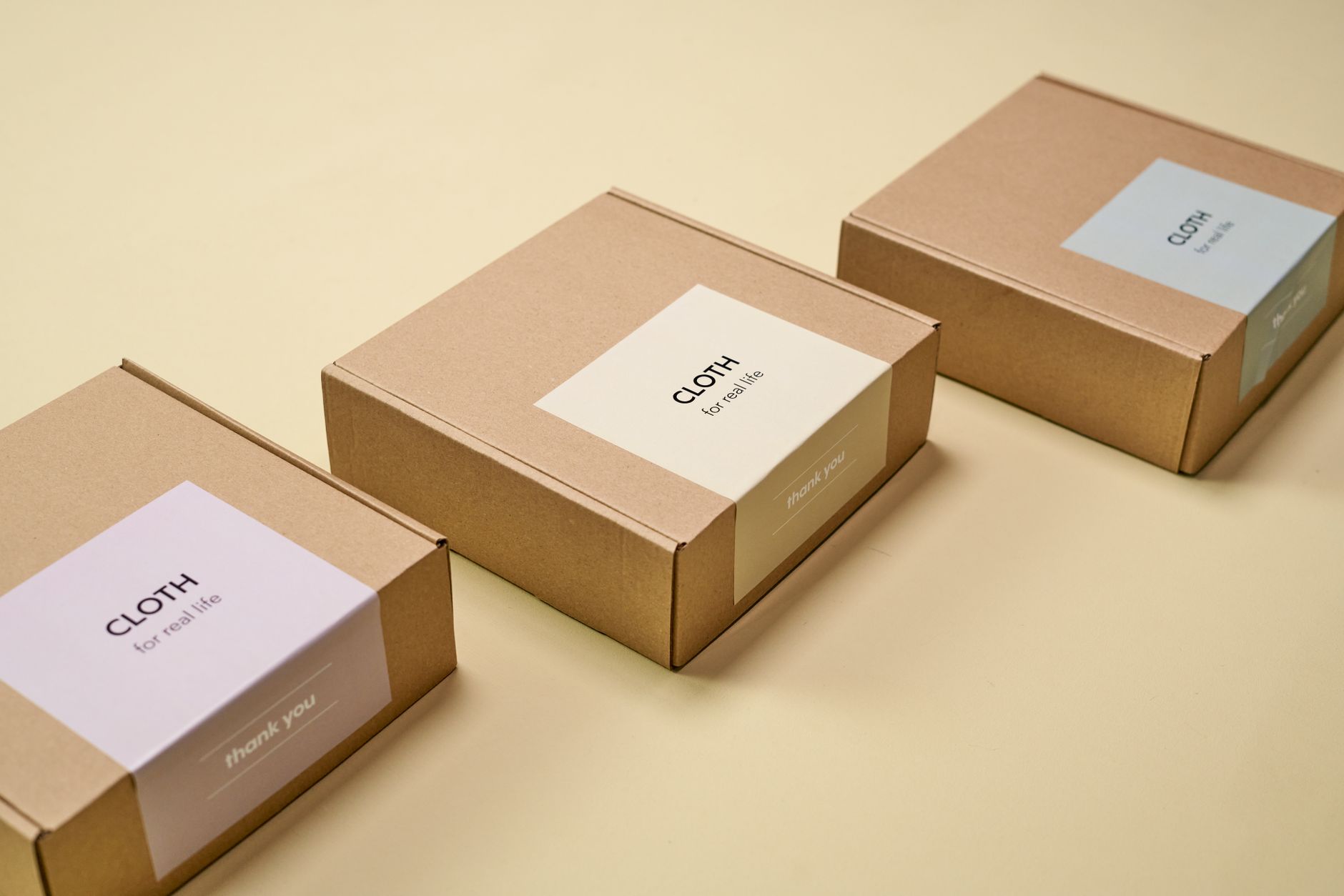
A die-cut sticker is cut to the exact outline of your artwork, so there’s no visible border and no boxy rectangle frame around your logo. For packaging, that precision matters. When a customer gets a parcel sealed with a well-cut sticker in your brand colours, it reads as intentional, not improvised.
Where die-cut stickers do the work:
- Sealing tissue paper folds inside a mailer or box
- Sealing the flap of a poly mailer or paper satchel
- Applying to the outside of a box to replace a generic “fragile” or blank kraft surface
- Adding to a freebie insert inside the parcel (sticker as a gift is a well-known Etsy retention tactic)
Die-cut stickers also come in clear vinyl, which gives a “printed directly onto the surface” effect on tissue paper or transparent packaging. If your brand aesthetic is minimal or your palette is light, clear stickers on natural kraft read beautifully. The tissue layer can be branded too: printed tissue paper takes 1 or 2 spot colors with Pantone matching, so it keys to the same palette as the stickers.
Practical notes:
- Order in small batches to start; you’ll refine your size and shape after a few orders go out
- Standard die-cut sizes for packaging run from around 40mm to 80mm; keep the proportions tight for sealing applications
- Gloss laminate holds up to handling; matte laminate photographs well
For a deeper look at how packaging stickers work across different product types, see Product Packaging Stickers: Seal, Brand, Sell.
2. Rectangle Labels: Your Product Identity, Front and Centre
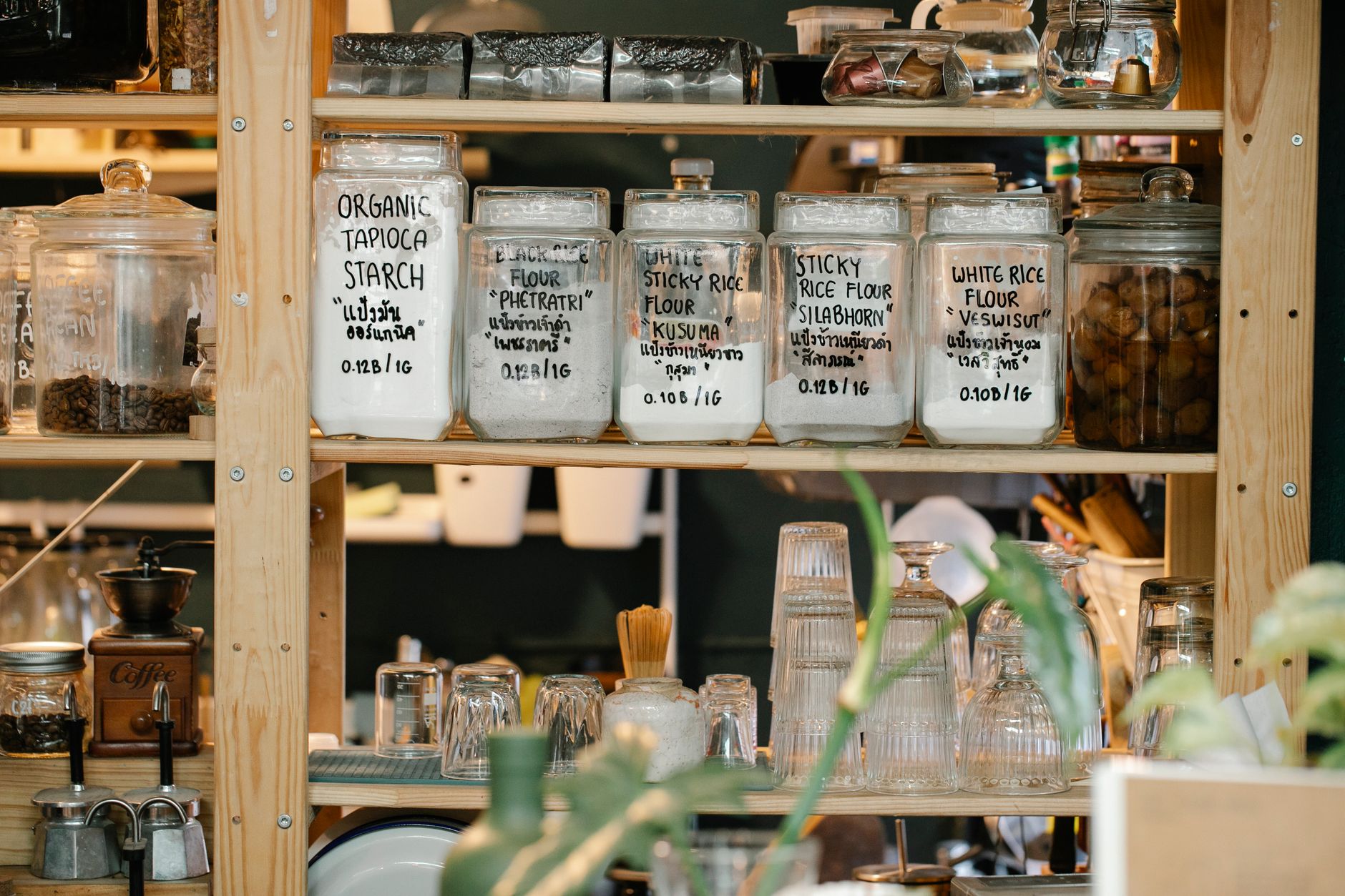
Rectangle labels do two jobs in one: they identify the product and they deliver your branding at the precise moment a buyer looks at what they actually ordered. For Etsy sellers with a physical product in a jar, pouch, bag, tube, or box, a clean rectangle label is the difference between looking handmade and looking like a brand.
What goes on a product label:
| Label type | Common content |
|---|---|
| Product label (front) | Product name, key ingredient or material, brand logo, net weight/volume |
| Product label (back) | Instructions, ingredients, warnings, batch code, contact/website |
| Shipping label | Name, address, return address, order number |
| Seal/closure label | “Thank you” message, social handle, or simple logo |
Material choices matter for your product category:
- Paper labels suit dry goods, candles, ceramics, and anything that stays indoors
- Waterproof vinyl labels suit skincare, soap, bath products, and anything that sees moisture
- Clear labels give the “no-label” look on glass jars and bottles
For a comparison of clear versus white label materials, Clear Labels for Product Packaging breaks down when each works best.
Check the rectangle labels product page for available sizes, stock options, and live pricing.
3. Swing Tags: The Detail That Drives Perceived Value
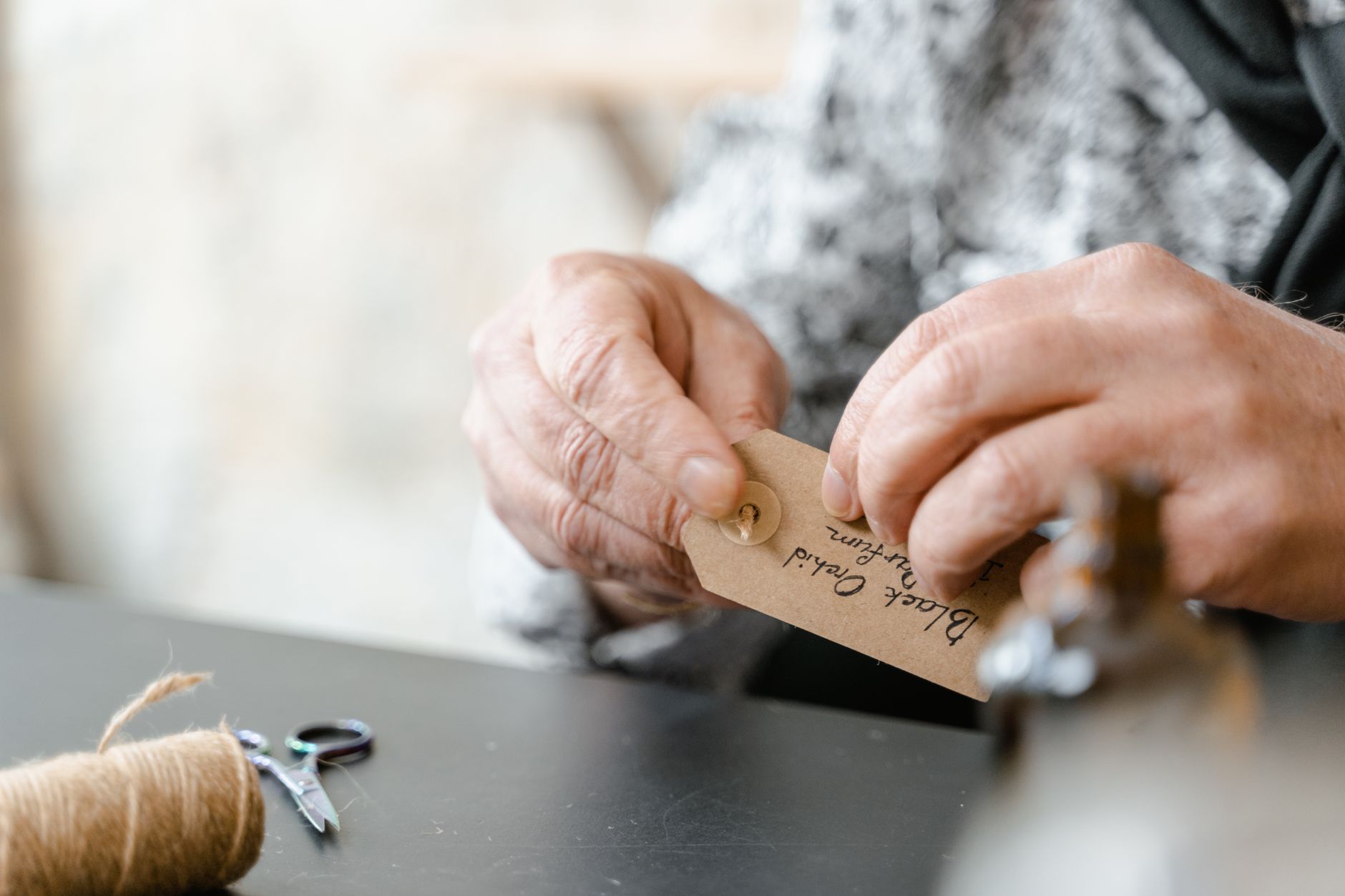
Swing tags (also called hang tags) are the small card attached to a product by cord or ribbon. They are common in apparel, jewellery, candles, handmade goods, and craft products. For Etsy sellers in particular, a swing tag signals craft quality and attention to detail in a way that a sticker alone cannot.
Your packaging kit can include swing tags, ordered online, printed in full colour on both sides and hole punched at the top centre for your own string or ribbon, on smooth white 300 GSM Matte or natural brown 290 GSM Kraft.
What makes a swing tag work:
- Front: brand logo, product name, tagline if relevant
- Back: care instructions, materials, barcode or SKU if you need it, social handle
- Stock: card weight matters; a limp tag undercuts the premium feel you’re trying to project; aim for 300gsm or above
- Cord/ribbon: white string is standard; wax cord, kraft twine, or satin ribbon all add visual texture
When swing tags are worth the cost:
Swing tags are most valuable when the product itself is displayed or photographed before purchase. For Etsy sellers, that means your product photography automatically includes the tag, which adds perceived value before a buyer even clicks through. If you sell at local markets, swing tags also carry the information your customer needs without you being present for every conversation.
| Product category | Swing tag value |
|---|---|
| Apparel, knitwear, handmade clothing | High: standard in this category; absence is noticed |
| Jewellery, accessories | High: buyer expects brand + material info on the piece |
| Candles, soap, skincare | Medium: label usually carries the product info; tag adds brand story |
| Art prints, stationery, homewares | Medium: tag makes gifting easier; adds professionalism |
| Digital goods, downloads | Not applicable |
4. Thank-You Cards: The Insert That Earns the Second Order
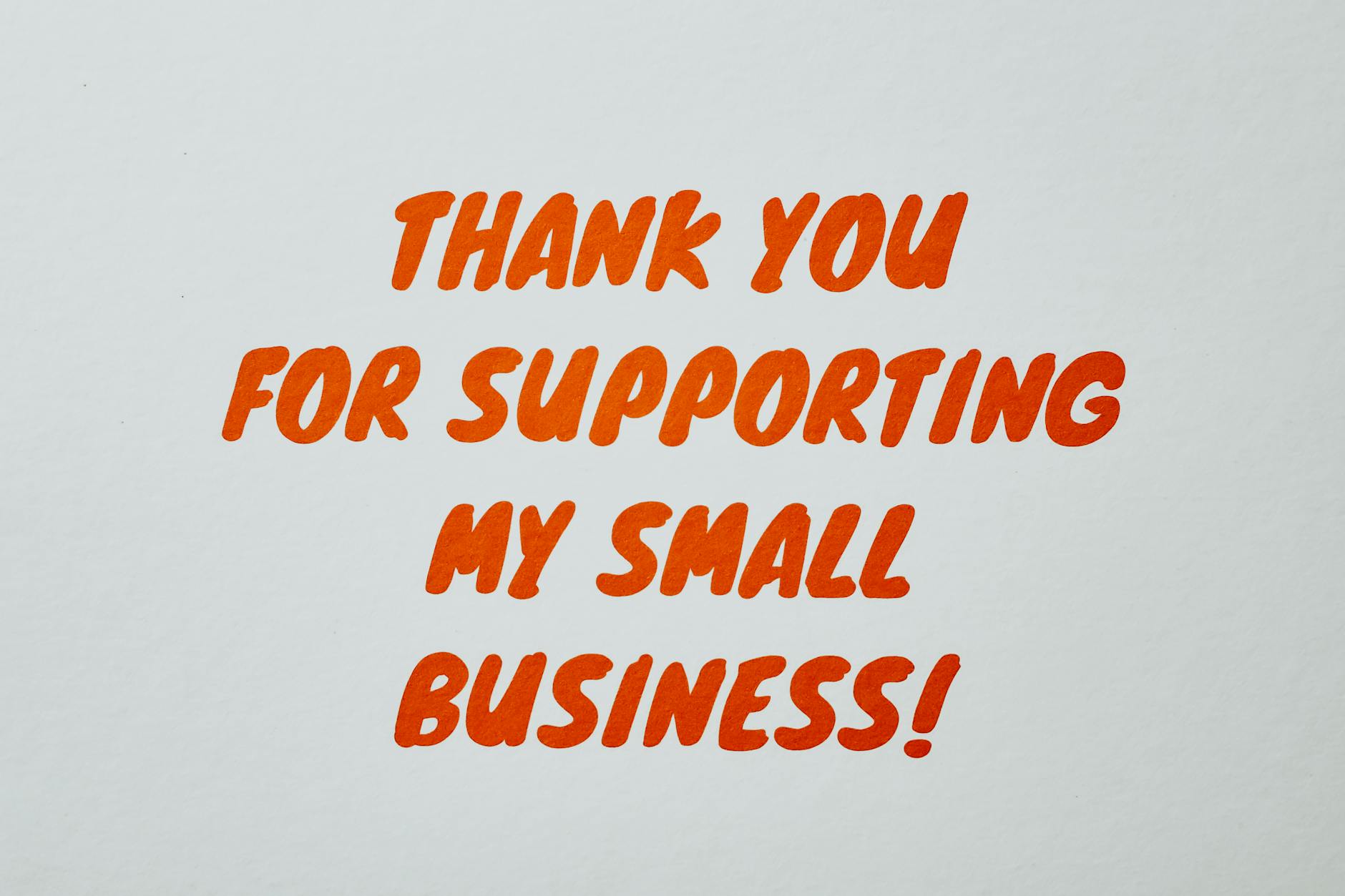
The standard business card in the Paperlust Print Shop catalogue is 90 x 55mm, which makes it the ideal format for a packaging insert card. It fits inside any parcel, costs a fraction of a larger card to print, and carries more weight than a typed note on a receipt. For review prompts, QR code stickers and review cards can be set with the Review us layout on a 90 x 55mm card, and the code opens the link you already use with no app or subscription.
What to put on a thank-you insert card:
- A short, direct thank-you message (2-3 sentences)
- Your social handles, especially if your product photographs well
- A prompt to leave a review (genuine, not pushy)
- A discount code for a second order, if your margin supports it
- Your website
Why this outperforms most other retention tactics:
Email sequences have open rates around 20-30%. A physical card inside the parcel is seen by 100% of customers who open the box. It’s the highest-reach touchpoint in your order, and the cost per insert is very low at standard business card print runs. For a clear system, plan thank-you, care and reorder insert cards so each card carries a single job rather than crowding every message onto one insert.
Print finish tip: Matte laminate photographs well if your customers share unboxing content. Gloss laminate is durable. A card stock of 350gsm or above feels substantial in the hand rather than flimsy.
See the standard business cards page for print options, finishes, and live pricing.
Putting It Together: The Unboxing Experience
Each element above earns its place individually. The bigger return comes when they work as a system.
When a customer opens your order, they experience the kit in a sequence:
- The outside of the parcel – the die-cut seal sticker on the mailer flap
- Inside the wrapping – the die-cut sticker on tissue paper or packaging wrap
- The product itself – the rectangle label, precise and legible
- The hang tag – swinging off the product, adding craft authority
- The insert card – the thank-you sitting on top or tucked to the side
None of these are complicated to order or expensive individually. Together, they produce a cohesive brand impression that photographs well, ships well, and encourages repeat purchase.
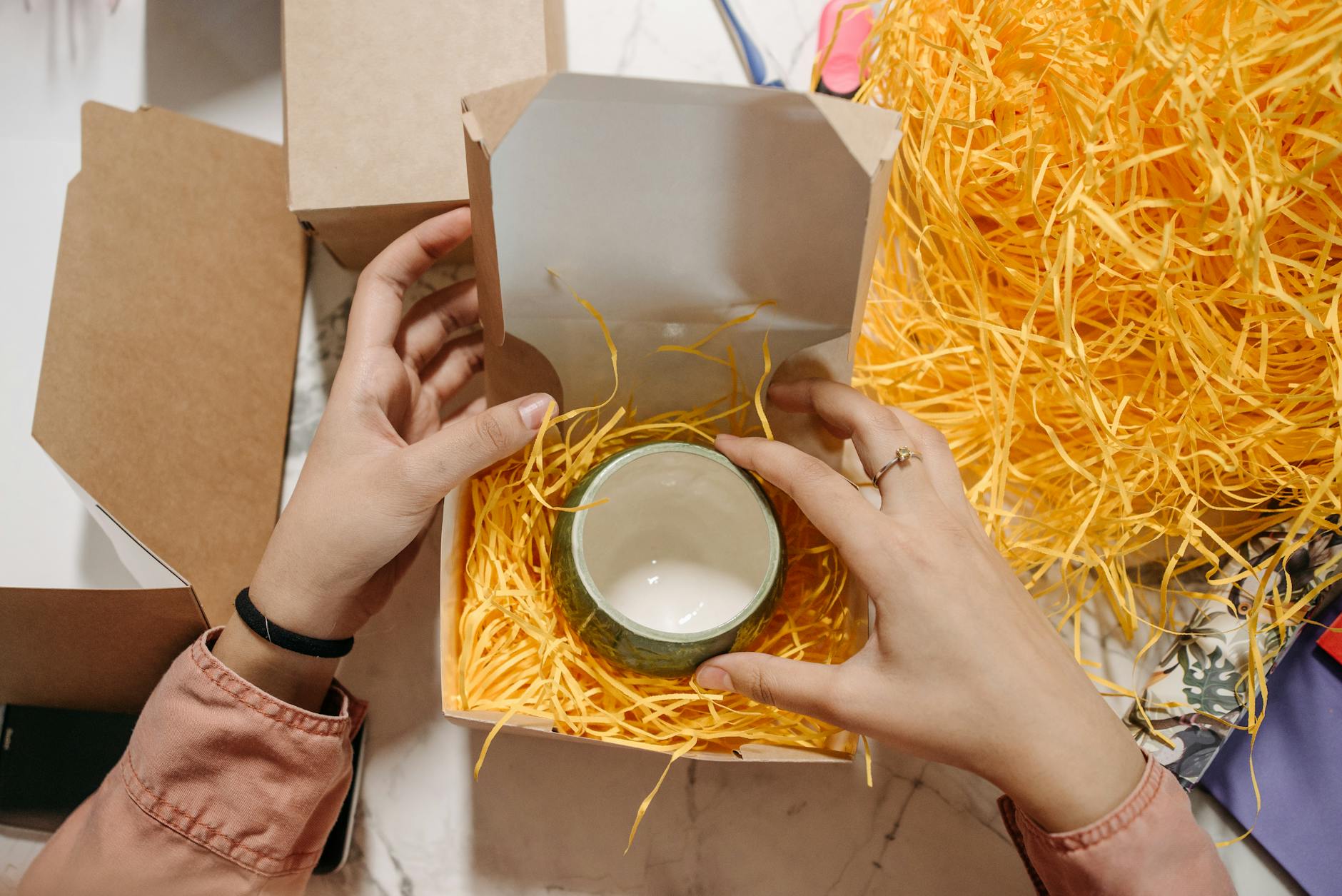
The box itself: the sequence above starts on the outside of the parcel, so the mailer is part of the kit even when it is plain. Custom full-colour mailer boxes print edge to edge in CMYK on B-flute corrugated board and start at 10 boxes, which makes a printed box realistic for a small Etsy or Shopify range. Custom kraft mailer boxes print your logo in one or two spot colours on natural brown board from 500 boxes. Both are self-locking roll end tuck front boxes: they ship flat, fold up without tape or glue, and let the customer reseal the box for a return.
Consistency across the kit: the most common mistake is ordering each item from a different supplier with slightly different colour profiles. If your brand uses a specific green or a warm navy, calibrate all four items from a single print supplier and brief them with the same CMYK values. Colour drift between items in the same parcel undercuts the premium look you are building.
Budget-Tiered Starter Kit
You don’t need to order all four items at full scale from the beginning. Here is a realistic starting approach by budget level.
| Budget level | What to order first | Rationale |
|---|---|---|
| Starter (under $150) | Die-cut stickers (small batch) + thank-you insert cards | Highest visual impact per dollar; stickers seal and brand; insert cards drive repeat purchase |
| Growing (under $300) | Above + rectangle labels | Add product identity once your label design is finalised; avoid reprinting early |
| Pro ($300+) | Full kit: stickers, labels, swing tags, insert cards | Commit once your branding is settled; order in quantities that reduce per-unit cost |
Practical tip for new stores: run your first 20-50 orders with just die-cut stickers and insert cards. Collect feedback. Then add labels and swing tags when your label dimensions and product range are stable. Reprinting because your product changed is an avoidable cost.
Frequently Asked Questions
What’s the minimum order quantity for die-cut stickers in Australia?
Minimum order quantities vary by supplier and size. At Paperlust Print Shop, you can order small batches so you’re not committed to thousands of units before you’ve tested the design. See the die-cut stickers page for current minimums and pricing tiers.
Can I order all four items from one supplier?
Yes. Ordering stickers, labels, swing tags, and insert cards from a single supplier keeps your colour profile consistent across the kit, which is important for brand cohesion. Paperlust Print Shop offers all four through the one platform.
What’s the difference between a sticker and a label?
Functionally, both are printed adhesive items. The distinction is usually use: stickers are decorative and branding-focused; labels carry product information (ingredients, weight, instructions) and are often subject to regulatory requirements in categories like food and cosmetics. For packaging, you may need both.
Do swing tags need to match my product labels?
Not precisely, but they should feel like part of the same brand family. Use the same typeface, the same logo version, and a consistent colour palette. The card stock can differ (tags are often slightly heavier), but the visual language should be coherent.
How do I brief print-ready artwork for a packaging kit?
Each product has its own artwork template. Download the template from the product page, set up your design using the provided bleed and safe-zone guides, export as a high-resolution PDF in CMYK colour mode, and upload when you order. If you are briefing a designer, share the templates early so they build to the correct dimensions from the start.
What’s the best label material for skincare or soap products?
Waterproof vinyl is the standard recommendation for products that encounter moisture, including skincare, soap, bath bombs, and similar. Paper labels are fine for dry products but will degrade if wet. Check the rectangle labels page for the available material options. The wider product labels range covers the other shapes if a rectangle does not suit your jar, pouch or tube.
Are swing tags available with a hole punched for cord or ribbon?
Yes, Paperlust Print Shop swing tags are hole punched at the top centre, ready to tie on with your own string or ribbon. Each shape has a die line template that marks the cut line, the hole position and the safe area, so set your text and logos inside that safe area and away from the hole.
How many insert cards should I order?
A standard business card print run is usually 50-250 cards. For most Etsy and Shopify sellers starting out, 100 cards covers several months of orders while keeping costs low. As your order volume grows, larger print runs reduce the per-card cost significantly.
Ready to Build Your Kit?
Start with what you need most and add from there.
- Die-cut stickers for sealing and branding every parcel
- Rectangle labels for product identification
- Swing tags for the professional finishing touch
- Standard business cards as thank-you insert cards
Order all four from Paperlust Print Shop for consistent colour and fast Australian turnaround.