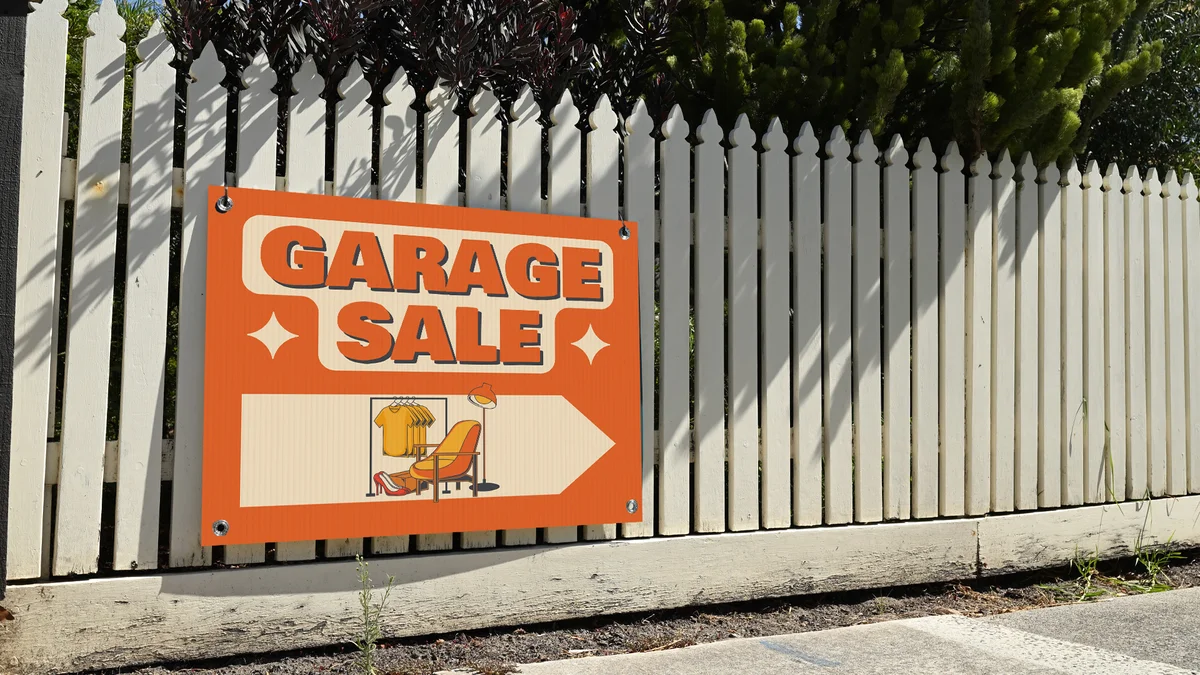
Ordering corflute signs in Australia is simpler than most businesses think. Upload your artwork, choose your size and quantity, and your signs are in production within a business day. The common problems, signs that arrive with soft print, wrong colours, or blurry edges, aren’t caused by the printing process. They’re caused by artwork that wasn’t set up correctly for large-format outdoor print. Get the file right and the rest is straightforward.
This guide covers the printing process, what to prepare, turnaround times, shipping, and what separates a quality corflute printer from one that cuts corners.
At a Glance
Corflute sign printing in Australia is fast, simple, and high-quality when artwork is set up correctly.
Production is from 24 hours, files require 300 DPI minimum at print size with proper bleed, and wide-format digital printing on industrial equipment delivers colour that holds up outdoors. Most quality issues are artwork problems, not print problems.
- Production time: Production from 24 hours after artwork approval, plus shipping
- File requirements: 300 DPI at print size, CMYK colour, 3mm bleed, vector for logos
- Print technology: Wide-format digital printing on rigid corflute
- Standard sizes: 600 x 450mm, 600 x 900mm and 900 x 1200mm; custom dimensions available
How Corflute Signs Are Printed
Paperlust Printshop prints corflute signs on wide-format printing equipment built specifically for rigid substrates like corflute, PVC, foam board (a polystyrene foam core board for indoor displays, not the same material as foamed PVC), and aluminium composite. Our PVC sign printing is the option to specify when a job needs a solid, smooth faced rigid panel rather than a fluted one.
Digital wide-format printing applies ink directly to the fluted polypropylene surface. The result is:
- Instant cure: Ink bonds to the polypropylene surface immediately, with no smearing or offsetting.
- Vibrant colour: UV inks produce saturated, accurate colour that holds up to outdoor conditions far better than water-based or eco-solvent alternatives.
- Durability: Because the ink is cured hard onto the surface rather than absorbed into it, it resists moisture, abrasion, and UV degradation more effectively than other print technologies.
This is why a properly printed corflute sign looks sharp from the moment it arrives and continues to look good through months of outdoor exposure. The print technology matters, and the wide-format platform used for corflute is industrial-grade equipment designed for exactly this kind of work.
Ready to order corflute signs?
Standard sizes 600 x 450mm, 600 x 900mm and 900 x 1200mm, custom sizes typed and priced on the page. From 24 hour production.
Turnaround Time
Production is counted from artwork approval and runs on business days. 24 hour production applies to orders of 1 to 3 signs in our standard sizes, and to orders of up to 10 signs in our standard sizes picked up from Oakleigh South; 48 hour production applies to delivered orders of 4 or more signs, to any order of more than 10 signs, and to 900 x 1200mm signs at any quantity. This covers the full production process: printing, cutting, and finishing (eyelets if selected). Weekends and public holidays are not counted as working days.
Shipping is on top of production time. Allow an additional 1-3 business days for metropolitan areas across Australia, and up to 5 business days for regional locations.
For time-sensitive campaigns, such as an election or a property listing that needs to go live quickly, order with as much lead time as possible and factor in both production and transit days. When the job involves polling places or roadside display, see our election signs for corflute options.
How to Choose the Right Corflute Sign Configuration
Three configuration choices drive the right corflute order: thickness, single vs double-sided, and laminate finish.
Thickness: 3mm corflute is the standard choice for most signs. Choose 5mm if the sign is over 600 x 900mm or will be exposed to high wind, as the extra rigidity prevents flex and cracking.
Single vs double-sided: single-sided is correct for fence-mounted, wall-mounted, or hoarding installations where only one face is visible. Double-sided is essential for A-frame use, street median signs, and any installation where the sign is approached from both directions. Double-sided typically costs 60–80% more than single-sided but doubles the visible coverage.
Laminate finish: matte laminate cuts glare and reads cleanly in direct sun — best for any sign with text-heavy content. Gloss laminate makes colours pop but increases reflection. Both extend outdoor lifespan vs no laminate. For campaigns over 6 months outdoor, laminate is worth the small added cost.
If your sign needs to stay upright outside without a fence or stake-on-ground constraint, look at custom teardrop flags as a complement. Teardrop flags are designed for variable wind, ship with their own pole and base, and work well alongside corflute signs at high-traffic events, market stalls, and trade show entrances.
Shipping Across Australia
- Flat-rate shipping for all orders shipped anywhere in Australia, at a rate that varies by product size.
- Worldwide shipping via DHL Express for international orders, at flat rates that vary by product size.
Flat-rate domestic shipping applies regardless of destination, and the rate is set by product size rather than order value. Shipping from Sydney to Melbourne and from Sydney to Darwin cost the same. DHL Express is used for international shipments, which means tracking, speed, and reliable customs handling for international customers.
Every corflute sign order ships with a flat $15 AUD standard delivery fee Australia-wide, regardless of quantity. Bulk orders pay the same flat $15 AUD fee.
| Spec | Standard | Premium | When to choose premium |
|---|---|---|---|
| Thickness | 3mm corflute | 5mm corflute | Signs over 600 x 900mm or exposed to high wind |
| Print sides | Single-sided | Double-sided | A-frame, median, or two-direction installs |
| Eyelets | None | 4 eyelets, all edges | Fence or rope-tied installations |
| Production time | From 24 hours | From 24 hours | From 24 hours |
Artwork Requirements
Getting your artwork right is the most important step in the process. Here’s what you need to know before you upload.
File Format
Submit your artwork as:
- PDF (preferred): Vector-based PDFs from Adobe Illustrator or InDesign are ideal. All fonts should be embedded or converted to outlines. Images within the PDF should be at print resolution.
- AI (Adobe Illustrator): Native AI files work well when fonts are outlined and linked images are embedded.
- High-resolution JPG or PNG: Acceptable for photographic artwork, but only if the file is at 300 DPI or higher at the final print size.
Avoid submitting Word documents, PowerPoint files, or screenshots. These are not print-ready formats.
Resolution
The most common artwork mistake: submitting a file that looks fine on screen but prints poorly at size.
Screen displays use 72 DPI (dots per inch). Print at large format requires a minimum of 300 DPI at the final print size. At 600×900mm, a 72 DPI file will produce visibly soft, blurry results, particularly on text edges and fine detail.
If your artwork is 600×900mm at 300 DPI, the actual pixel dimensions of your file should be approximately 7,087×10,630 pixels. If your file is smaller than this, the output will be soft.
A practical rule: if you’re zooming into your artwork on screen and it still looks sharp at 100% zoom, you’re likely at a safe resolution. If it looks pixelated on screen at 100% view, it will definitely look pixelated when printed.
Bleeds and Safe Zones
Set up your artwork with:
- 3mm bleed on all sides: extend your background colour or design elements beyond the trim edge to prevent white borders appearing if the cut is slightly off.
- 5mm safe zone inside the trim edge: keep all critical content (text, logos, key graphics) at least 5mm inside the trim line to ensure nothing is cut off.
These are standard print specifications and your designer should be familiar with them.
Colour Mode: CMYK
All artwork should be submitted in CMYK colour mode, not RGB.
RGB is a screen colour space: it includes colours that cannot be physically reproduced in print. If you submit an RGB file, the printer will convert it to CMYK automatically, and some colours will shift, often noticeably. Bright blues, vivid greens, and some purples are the most common offenders.
For accurate outdoor colour reproduction, always set up your artwork in CMYK from the start.
Font Embedding
If your artwork is a PDF or AI file with live text (text that hasn’t been converted to outlines), the fonts must be embedded in the file. If a font is missing on the print provider’s system, it will be substituted with a default font, which will look nothing like your intended design.
The safest approach: convert all text to outlines (paths) before exporting your print-ready file. This eliminates any font dependency.
Proofing
A digital proof is provided before production begins. Review the proof carefully: check that all text is legible, colours look accurate, artwork is centred, and no elements are cut off near the edges. Once you approve the proof, production proceeds.
If anything looks wrong in the proof, flag it before approving. Changes after approval and production has started will require a reprint.
What to Watch Out for When Ordering Online
Not all corflute printers are equal. A few things that separate quality print from a disappointing result:
Overseas Printers
Some online sign suppliers route orders through overseas print facilities, particularly in China or Southeast Asia. The attraction is low prices, but the reality often includes:
- 2-4 week shipping times, sometimes longer
- Customs delays and potential import duties
- No local support if there’s a problem
- Colour inconsistencies from calibration differences
- Quality that’s hard to verify before you order
If your campaign has a deadline and you need Australian businesses to be able to contact someone if something goes wrong, use an Australian printer.
Cheap Local Printers That Cut Corners
Not every Australian printer uses industrial-grade equipment or proper materials. Common quality shortcuts include:
- Thinner corflute than specified (advertising 3mm but supplying 2mm or below)
- Low-resolution printing that looks fine on small orders but degrades at larger sizes
- No digital proof process, meaning errors aren’t caught before production
- Eco-solvent or aqueous printing on corflute, which produces softer results than wide-format digital printing and fades faster outdoors
Quality indicators to look for: Wide-format digital printing on rigid corflute, genuine 3mm or 5mm fluted polypropylene, a digital proof process before production begins, and transparent pricing with GST included.
Bulk Orders and Custom Sizes
Standard corflute sizes cover most applications. For a non-standard size, order on the corflute page: choose Custom Dimension in the Size menu, type the width and height in millimetres, and the price shows on the page for any rectangle up to 1200 x 2400mm. Quantities above the published quantity table are still quoted by the team, so contact Paperlust Print Shop for those.
Bulk orders, such as election campaigns ordering 200+ signs or event operators needing large quantities of directional signage, typically qualify for volume pricing. Custom dimensions for unusual applications, banner formats, or very large sizes are also available on request. Builders running several sites at once are the other common bulk case: construction sign printing covers site safety, compliance and hazard boards across 600 x 450mm, 600 x 900mm and 900 x 1200mm, so a multi-site rollout can be specced and quoted as one job.
Reach out before ordering large quantities to make sure you’re getting the best available pricing and that your artwork requirements are met for the specific format you need.
Related reading:
Get Your Corflute Signs Printed
Corflute sign printing starts from $30.00 AUD inc GST for a single one-sided 600 x 450mm 3mm sign, with production from 24 hours. Flat-rate shipping across Australia, at rates that vary by product size.
Order corflute signs from Paperlust Printshop and get professional outdoor signage delivered to your door.
Print locally: Corflute signs from $30.00 AUD for a single one-sided 600 x 450mm 3mm sign, printed in Australia. Browse our sign board range at Paperlust Print Shop.
How to Get the Best Result from Your Corflute Order
The print process itself is reliable and consistent. Where corflute orders most often go wrong is in the preparation: artwork that is not set up for large-format print, or decisions made without understanding how the material behaves outdoors. Here is a practical checklist to get right before you place your order.
Specify Flute Direction for Large or Hanging Signs
Corflute has a fluted core that runs in one direction – either horizontally or vertically through the panel. For signs that will be staked into the ground (like real estate yard signs), horizontal flutes are standard because they allow the wire stake to slide into the channels from the bottom. For signs that will be hung from eyelets, vertical flutes provide better rigidity across the width of the sign. If you are ordering large-format signs for a specific installation method, specify the flute direction when you order to make sure the panel performs as expected.
Double-Sided Printing
Most corflute signs are single-sided, but double-sided printing is available for applications where your sign will be viewed from both directions – a roadside sign visible from traffic in both directions, or an A-frame insert that faces two ways. For double-sided signs, the two printed panels are typically bonded back-to-back with the smooth printed faces on the outside. Make sure your artwork accounts for the correct orientation on each side so the sign reads correctly from both directions of approach.
Laminating for Extended Life
Standard printed corflute is durable. Choose 5mm fluted polypropylene for larger signs or locations with high wind, as the extra rigidity reduces flex and helps the sign hold up outdoors.
Eyelets and Finishing Options
Eyelets are metal-rimmed holes punched through the corflute panel to allow cable ties, wire, or rope to attach the sign to a fence, frame, or structure. Specify the number and placement of eyelets when ordering – standard placement is four corners, but custom positioning is available for signs that need to hang or attach in a specific way. If you are using H-stakes for ground installation, eyelets are not required – the stake slides directly into the fluted channel at the base of the sign.
Order corflute signs with your choice of size, thickness, eyelets, and finishing at Paperlust Print Shop. Production is from 24 hours, with flat-rate shipping Australia-wide.
Need help with artwork setup?
Our team can review your file before production and flag colour, bleed, or resolution issues. Free pre-flight check on every order.
Frequently Asked Questions
What is corflute and why is it used for signs?
Corflute is a twin-wall polypropylene sheet made of two flat outer layers with a fluted (ribbed) core running between them – similar in structure to cardboard but made from plastic. This construction makes it rigid, lightweight, and weather-resistant, which is why it is so widely used for signs. It can be printed with sharp, full-color graphics, cut to shape, and mounted easily. Corflute is also recyclable and cost-effective to produce in both small and large quantities, making it the go-to material for real estate signs, event signage, and retail displays across Australia.
How long do corflute signs last outdoors?
Outdoor corflute signs typically last 6 to 24 months depending on UV exposure, rainfall, and wind. In direct harsh sunlight – common in Australian summers – UV degradation can cause colors to fade and the material to become brittle within 12 months. Partially shaded or rotated signage lasts longer. If you need a sign to stay looking sharp for more than a year outdoors, choosing a laminated face or a UV-resistant print finish extends the life noticeably. Corflute signs used indoors or in sheltered outdoor areas can last 3 to 5 years or more.
What are the best uses for corflute signs?
Corflute signs are versatile and used across a wide range of applications. Real estate agents use them for property listings and open house directional signs. Event organizers use them for wayfinding, sponsor boards, and temporary venue signage. Retailers use them for sale promotions, window displays, and sidewalk signs. Construction sites use them for safety notices and company branding on hoardings. Car parks and event sites use them as bollard signs that wrap directional messaging around existing posts. Because corflute signs are lightweight and easy to transport, they are also popular for markets, pop-up stalls, and community events where signage needs to go up and come down quickly. Construction is the one use among those with a published set of requirements behind it, and the guide steps through the construction signage a site needs from first board to final handover.
How are corflute signs printed?
Corflute signs are printed using large-format digital inkjet printing, which lays UV-curable or solvent-based inks directly onto the surface of the board. This process delivers accurate color reproduction and handles both photographic images and bold graphic designs well. After printing, signs can be laminated for extra durability or cut to a custom shape. The fluted core runs in one direction, so when ordering large signs or signs with eyelets for hanging, specifying whether the flutes run horizontally or vertically affects rigidity and how the sign handles wind load.
What sizes are available for corflute signs in Australia?
Standard corflute sign sizes at Paperlust Print Shop are 600 x 450mm, 600 x 900mm and 900 x 1200mm, plus any custom size typed and priced on the page. Buyers who search by A1 should choose 600 x 900mm, which is slightly larger than A1 and the standard real estate and election board. Buyers who search by A2 should choose 600 x 450mm, which is similar in area and runs landscape or portrait. A3 is 297 x 420mm and is not a standard size on the corflute page. Custom-sized corflute signs are ordered on the page for exact A1, A2 or A3 sizes: choose Custom Dimension in the Size menu, type the size in millimetres, and the price shows.