
The new year brings fresh goals, new campaigns, and one inconvenient truth: some of your printed materials are probably out of date. A December-January print audit is the simplest way to start Q1 looking sharp rather than scrambling for emergency reprints mid-campaign. This checklist walks through every collateral category, what to check on each item, and how to prioritise the work.
Run your print audit before Q1 kicks off. Here is what to check at a glance:
- Business cards: phone, URL, job title, ABN (if displayed), social handles, and whether the finish still reflects your brand
- Signage and banners: remove year references, expired offers, and incorrect pricing
- Flyers and brochures: strip any 2025 dates, seasonal promotions that have ended, and obsolete service lists
- Menus and counter cards: check prices, discontinued items, and opening hours
- Stickers and labels: verify contact details, barcode accuracy, and whether the design still matches your current branding
- Plan lead times early: standard business cards can turn around in as little as 24 hours; larger-format items need more runway
Why the December-January Window Is the Right Time
Most Australian small businesses operate between two rhythms: the July financial year and the January calendar reset. December-January is when both rhythms overlap, staff return from leave, and planning conversations happen. It is also when trade shows, markets, and business-to-business meetings start ramping back up after the holiday period.
Print materials ordered in January will be in hand before February’s first events. Materials ordered in March will arrive during them. That gap is where outdated cards and expired flyers do real damage. A prospect holding a card with your old website address cannot contact you. A flyer advertising a promotion that ended in November tells them you are not across the details of your own business.
A print refresh audit does not mean replacing everything. It means a deliberate pass over every collateral type to decide: still accurate, still on-brand, still fit for purpose, or flagged for reprint. That decision costs nothing. Printing without making it costs a lot more than the job itself.
Business Cards: More Than a Contact Detail Check
Business cards are the most frequently reprinted item for a reason. Contact details change, roles change, and brands evolve. The Dec-Jan window is also when businesses most often restructure, promote staff, or onboard new team members, all of which trigger a card reprint.
What to check on each card
Work through every field on the card face and back:
- Phone number: mobile and landline, if printed
- Email address: correct domain? Changed at a rebrand?
- Website URL: does it still resolve, and has it moved to a different page?
- Social media handles: Instagram in particular changes frequently
- Physical address: any office moves in the past 12 months?
- Job title: promotions, role name changes, new team structure
- ABN: if your ABN appears on the card (common for sole traders and tradespeople), verify it matches your current registration
- Logo version: compare the artwork on your card with your current brand files. Even subtle version changes look inconsistent when two team members hand out cards side by side.
Is it time to upgrade your finish?
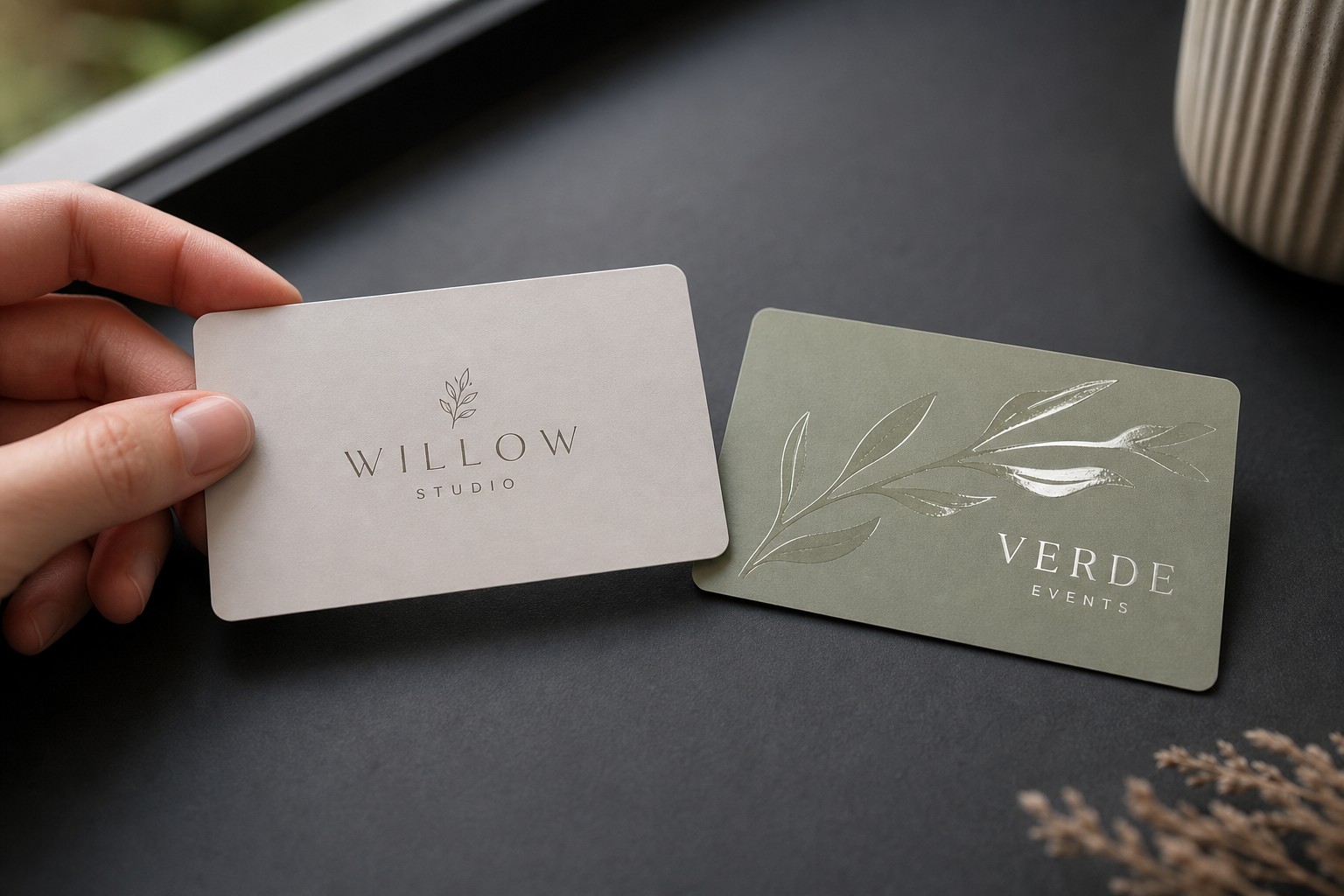
Standard digital cards on 350-400gsm stock from $0.08 per card serve most purposes, but if your first meeting is with a procurement manager or creative director, the card’s tactile quality signals how seriously you take the brief. The Paperlust Print Shop business card range covers seven finishes including Spot UV (high-gloss callouts on a matte field), Scodix (dimensional raised polymer), and Raised Foil. A Q1 reprint is a natural opportunity to reassess whether your current finish still positions you correctly for the clients you are targeting this year.
Standard business cards remain the right starting point for most businesses: 90 x 55mm (fits every standard cardholder), 24-hour production on standard digital from artwork approval, and flat-rate shipping Australia-wide.
Signage and Banners: Catch the Dated Details Before They Catch You
Permanent signage and reusable banners are the print materials most likely to stay in circulation longer than they should. A pull-up banner with a 2025 year reference, a price that was correct 18 months ago, or a QR code that now redirects to a broken page makes the business look inattentive even when everything else about the customer experience is excellent.
Corflute and outdoor signs
Check every piece of text on each panel:
- Year references anywhere in the copy
- Pricing, especially if you adjusted rates at the start of the financial year or over the holiday period
- Staff names or headshots
- Opening hours, especially if you changed trading arrangements recently
- QR codes: scan each one and confirm it routes to the intended destination
Pull-up banners and standees

These are frequently reused across multiple events and seasons. Run the same checklist above, then ask: does this banner represent the current campaign? If it was printed for a specific promotion that ended, it should be retired or stored for the next matching season, not put out at a networking event where it raises questions.
A-frames and footpath signage
A-frames visible to street foot traffic carry particular risk because passersby read them without any additional context from your team. Any year reference, any “limited time” claim that is no longer active, any staff photo that no longer matches your current team: all of these should come down before Q1 foot traffic picks up.
Flyers and Brochures: Strip the Stale Content
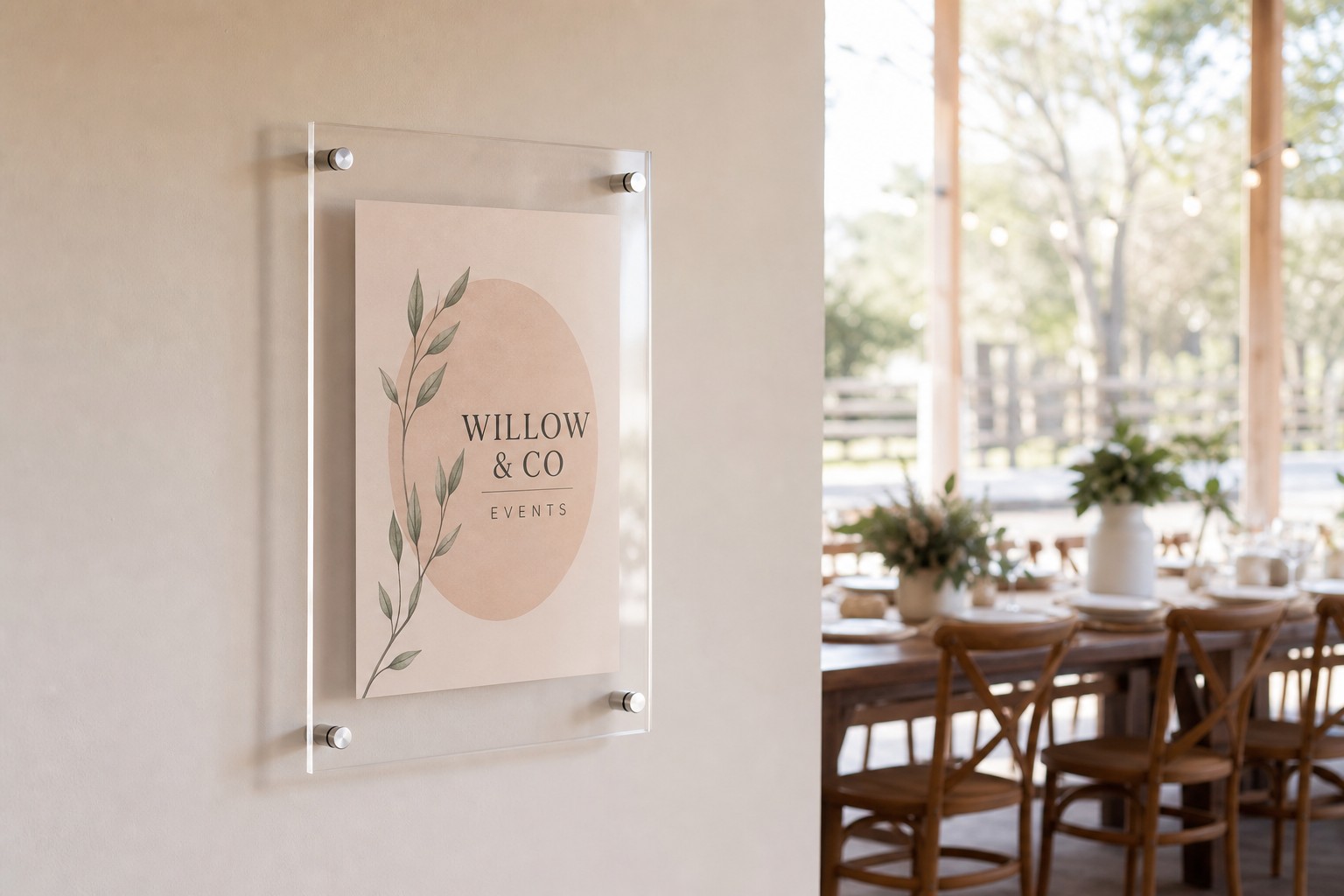
Flyers and brochures have a shorter shelf life than most business owners account for. A flyer printed for a summer sale in late 2025 should not be in your counter display in February. Run this check across every flyer and brochure currently in stock:
What goes stale fast
- Year references: scan every panel for “2025” and either update to 2026 or rewrite the line to be evergreen
- Seasonal promotions: any “Christmas sale,” “EOFY offer,” or event-specific call to action that has passed its date
- Service or product lists: have you added or removed services since the last print run?
- Pricing: a price discrepancy between your flyer and your current rates erodes trust quickly and creates problems at the point of sale
- Staff and team photos: especially relevant for professional services where client relationships are personal
The Paperlust Print Shop flyers range covers DL, A5, and A4 formats with short production windows, so a Q1 refresh does not require months of lead time.
Menus and Counter Cards: A Hospitality Non-Negotiable
For restaurants, cafes, and food businesses, a menu audit is non-negotiable. Australian consumer law requires accurate pricing at the point of sale, so a menu displaying a price that differs from what is charged at the register is a compliance issue, not just a perception issue.
What to check on menus and counter cards
- Current pricing on every item, including any changes made over the December-January trading period
- Seasonal or rotating items that have been updated
- Supplier-sourcing claims: if you describe a dish as coming from a specific farm or region, verify that relationship is still current
- Opening hours, especially if you changed them over the holiday period and have not yet updated your printed materials
- QR code links for digital menu integrations
View the full hospitality and marketing materials range for menus, counter cards, and supporting point-of-sale print.
Stickers and Labels: Brand Consistency at the Packaging Level
Stickers and labels tend to be ordered in bulk and consumed slowly, which means a label printed 18 months ago may still be on your shelf and going out on products every day. Check the following:
- Contact details: website URL, phone, and social handles
- Barcode accuracy: if your stickers carry barcodes, scan a sample and verify it resolves to the correct SKU in your system
- Current logo version: compare against your master brand files, not a screenshot from your website
- Ingredient or specification text: for product businesses with regulatory requirements, verify all text matches current formulations and any labelling law updates
- Freshness claims: if the sticker references a “new” product, a launch date, or a “limited edition,” check whether that claim still holds
Your Printable Print Refresh Checklist
Use this as your pre-Q1 walk-through. Print it out or save a copy to your shared drive so the team can run it together.
Business Cards
☐ Phone number and email correct
☐ Website URL resolves
☐ Social handles current
☐ Physical address current
☐ Job titles reflect current roles
☐ ABN correct (if displayed)
☐ Logo matches current brand files
☐ Finish appropriate for your market and client base
Signage and Banners
☐ No year references (2025 removed or updated)
☐ Pricing is current
☐ QR codes scan to live destinations
☐ Seasonal or expired promotional copy removed
☐ Staff photos and names match current team
Flyers and Brochures
☐ Year references updated or made evergreen
☐ Expired promotions stripped
☐ Service and product list accurate
☐ Pricing current
☐ Sufficient stock for Q1 (reorder before first events)
Menus and Counter Cards
☐ Every price correct
☐ Seasonal items updated
☐ QR code links live and current
☐ Opening hours accurate
Stickers and Labels
☐ Contact details current
☐ Barcode accuracy verified (scan a sample)
☐ Logo version matches current brand
☐ Regulatory and specification text accurate
Frequently Asked Questions
How often should a small business refresh its print materials?
A full audit once a year, in December or January, is a sensible baseline for most businesses. High-turnover items like flyers and menus should be reviewed each quarter or whenever pricing or service details change. Business cards typically need a reprint every 12-18 months or after any staff, role, or contact detail changes.
Do I need to reprint everything at once?
No. The point of a structured audit is to identify which items are still accurate and which are not. Reprinting only the items that need updating keeps costs controlled and prevents waste from over-ordering. Prioritise anything customer-facing that carries pricing or contact details.
How long does it take to reprint business cards?
Standard digital business cards at Paperlust Print Shop are ready in 24 hours from artwork approval, plus transit on flat-rate shipping Australia-wide. Premium finishes such as Scodix, Raised Foil, and Spot UV have slightly longer production windows. Check the business cards product page for current lead times before committing to an event deadline.
What should I do with outdated print stock?
Retire it immediately. Do not put outdated materials in circulation hoping to use them up. A stack of business cards with an old phone number handed out at a networking event actively damages your referral pipeline. Recycle paper stock where possible and remove old flyers from retail displays as soon as you confirm they are inaccurate.
Is January too late to order for February events?
Not for most print items. Standard business cards and flyers can turn around quickly enough for early-February events if ordered in the first two weeks of January. Larger-format signage, custom banners, and premium-finish items need more lead time. If your first event is in late January, order before the Christmas shutdown.
Can I use the same artwork and just update a few details?
Yes, and it is the most cost-effective approach. If your underlying design and brand are solid, updating the relevant fields in your artwork file and reprinting is quicker and cheaper than a full redesign. Paperlust Print Shop includes a free pre-press file check on every order, so your updated artwork will be reviewed before printing begins.
Related reading:
- Trade Show Booth Print Checklist – what to order for your next exhibition
- Bleed, Trim, and Safe Area: The Print Checklist for Artwork – how to prepare your files correctly before sending to print