A2 poster size in Australia is 420mm x 594mm (42cm x 59.4cm, or approximately 16.5 x 23.4 inches). It sits between A1 and A3 in the ISO A series, which makes it the go-to choice when A1 feels too dominant for the space and A3 is too small to read from a metre away.
| Format | Millimetres | Centimetres | Inches |
|---|---|---|---|
| A2 | 420 x 594 mm | 42.0 x 59.4 cm | 16.5 x 23.4 in |
We print A2 posters on 200gsm synthetic stock, which is tear-resistant and moisture-resistant. It holds up in cafes, salons, and retail windows where standard paper warps or fades.
- Size: 420mm x 594mm (42cm x 59.4cm, approx. 16.5 x 23.4 inches)
- Relation to other sizes: half of A1, double A3
- Comfortable viewing distance: 1 to 3 metres
- Minimum headline size at 2 metres: 40pt
- Minimum body text at 2 metres: 14pt
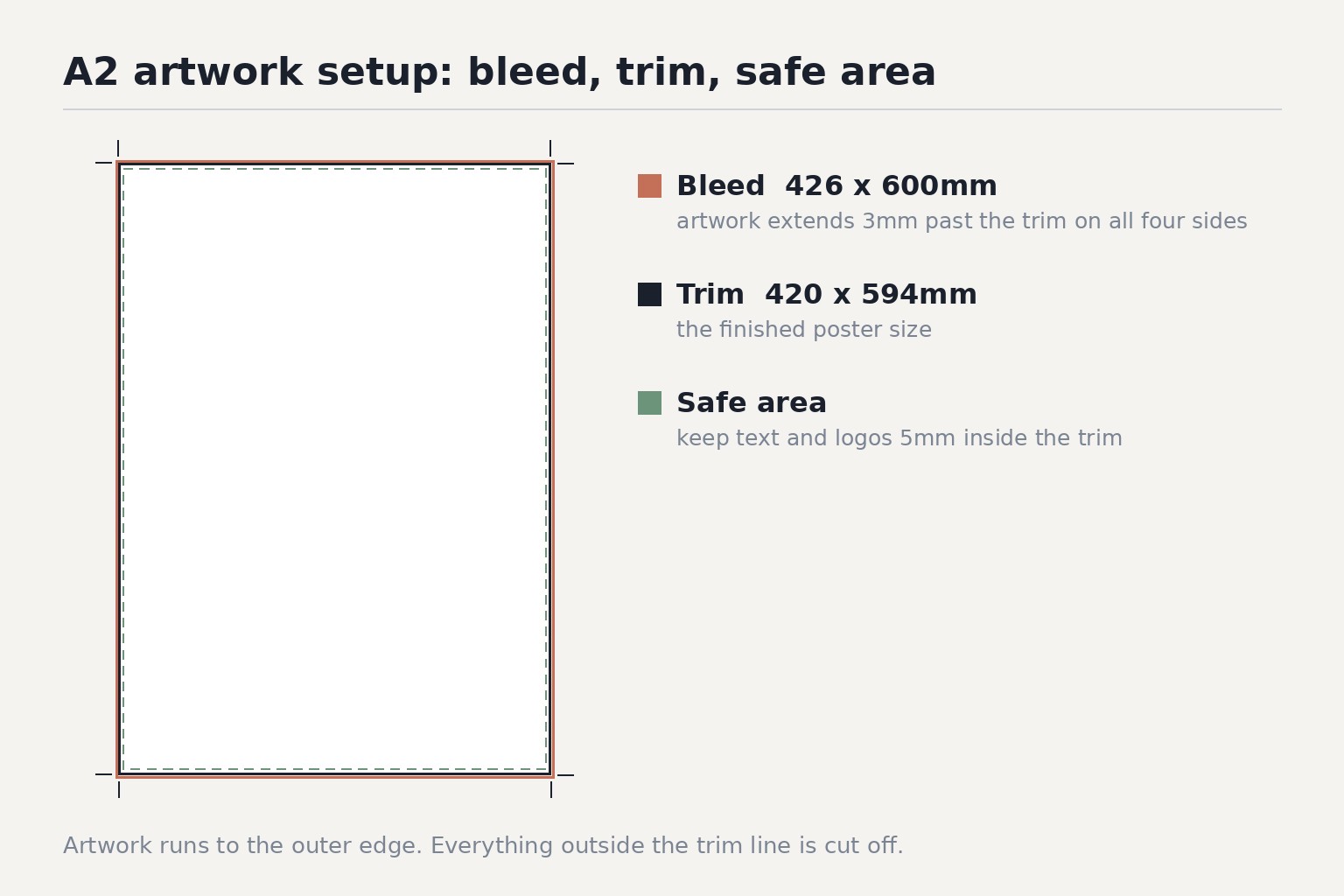
- Artwork canvas with bleed: 426mm x 600mm (3mm bleed all sides)
- Resolution: 300 DPI (4,961 x 7,016 pixels)
- Material at Paperlust: 200gsm synthetic, tear-resistant and moisture-resistant
- Default orientation: portrait (can be printed landscape on request)
Where A2 Sits in the A Series
The ISO A series follows a single rule: each size is exactly half the area of the one above it. A2 at 420mm x 594mm is half of A1 and double the area of A3. Every step up doubles the surface you are working with.
The table below gives you dimensions and a plain-language guide to which size belongs in which situation. All three are available on the Paperlust poster printing page.
| Size | Dimensions (mm) | Dimensions (cm) | Comfortable viewing distance | Choose this when… |
|---|---|---|---|---|
| A1 | 594 x 841mm | 59.4 x 84.1cm | 2 to 5 metres | You need to stop foot traffic from across a room: large retail floors, exhibition stands, shopfronts visible from the footpath |
| A2 | 420 x 594mm | 42 x 59.4cm | 1 to 3 metres | You want presence without dominating the wall: cafes, salons, gig posters, market stalls, noticeboards, in-store price boards |
| A3 | 297 x 420mm | 29.7 x 42cm | 0.5 to 1.5 metres | The viewer will always be close: counter menus, desk signage, point-of-sale inserts, pinboard notices |
Upgrading from A2 to A1 is worth doing when your venue has a long viewing corridor or when the poster needs to compete with surrounding visual noise. If you are running one A2 in a quiet interior, the additional cost of A1 delivers very little gain. If you are lining a shopfront window or running a display at a trade show, A1 earns its size.
Dropping from A2 to A3 makes sense when every viewer will be within arm’s reach. Counter menus, in-room hospitality notices, and mounted price cards all fit A3. If there is any chance a viewer might be standing 1.5 metres back, A2 is the safer format because it reads comfortably at both distances.
What A2 Posters Are Used for in Australia
A2 fills a gap that neither A1 nor A3 can close. It is large enough to read from across a room without requiring the viewer to search for it, and compact enough to sit in a tight interior without taking over the wall. If the piece is a photograph for a living space rather than a poster, photo canvas prints sit in the same size band at 40x50cm and 50x70cm.
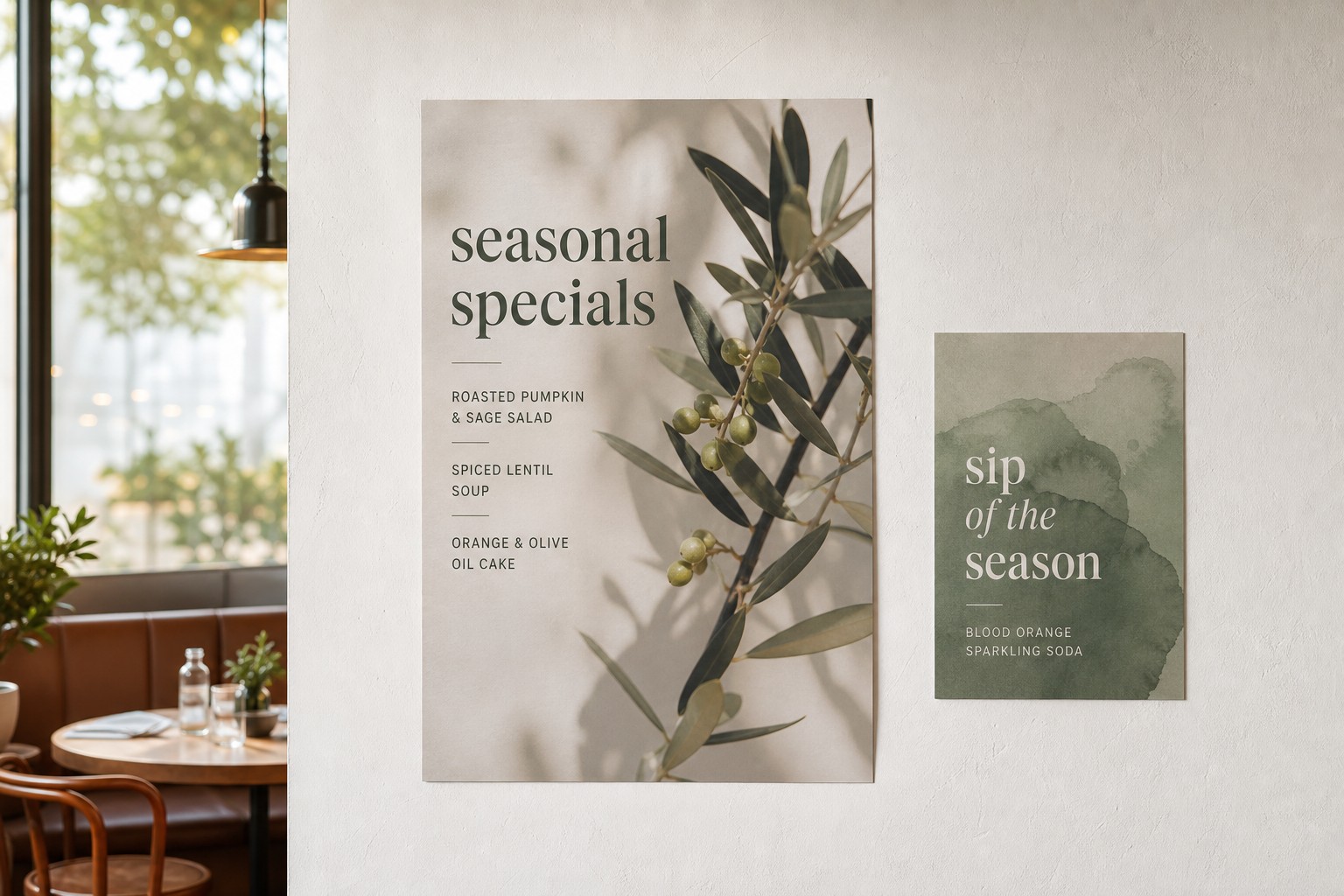
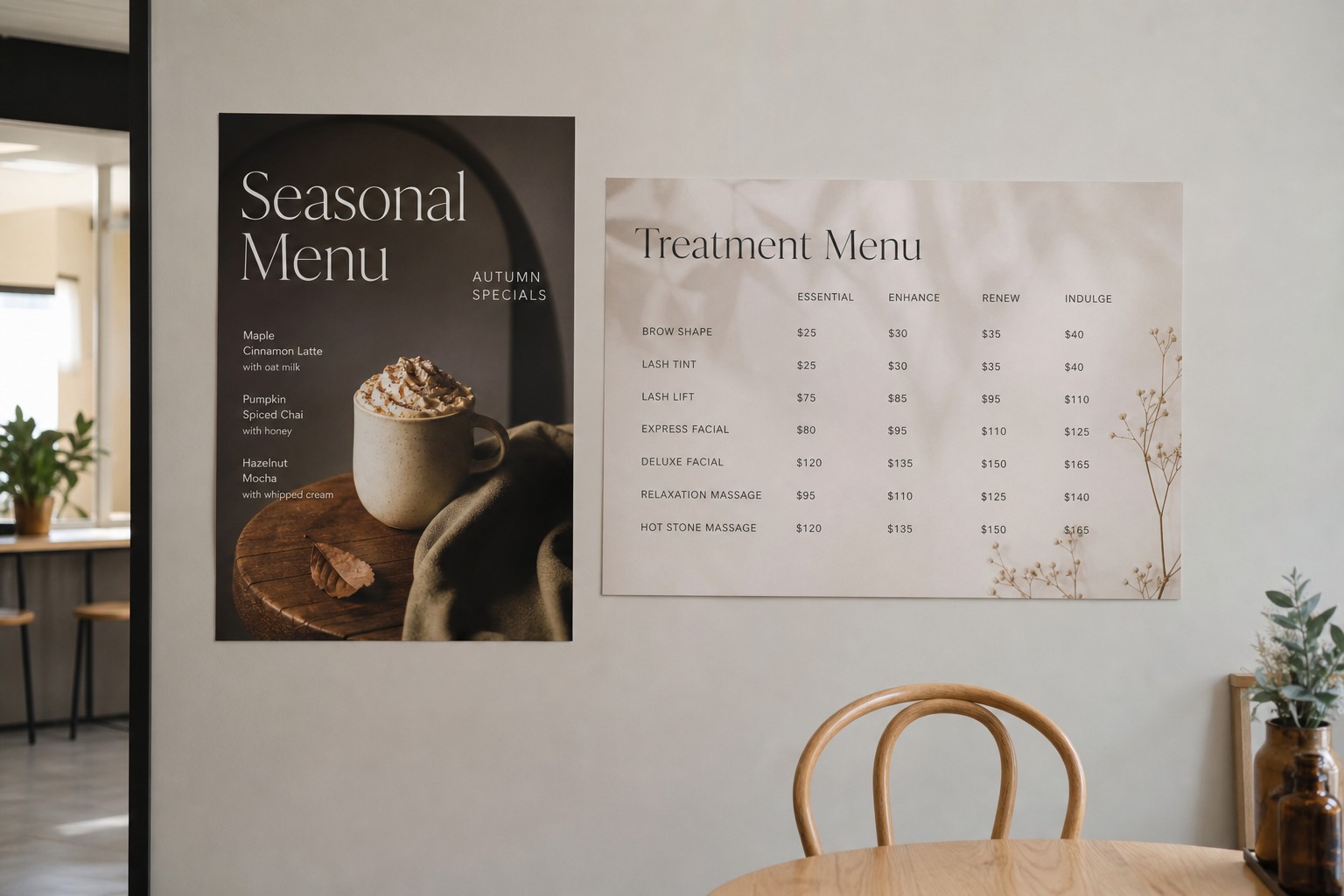
Cafes and restaurants. A seasonal specials board, a cocktail menu, or a new product announcement at A2 reads from the counter or from a table without straining. The 200gsm synthetic stock is particularly practical here: it survives humidity, coffee steam, and frequent handling far longer than standard matte or gloss paper.
Hair salons and beauty venues. Treatment menus and promotional pricing work well at A2 because they typically include enough detail (service names, prices, session lengths) to need the space, but the room is seldom large enough to justify A1. A wipe-clean synthetic surface also holds up in a hairwashing environment.
Gig and event posters. A2 is the standard run for live music posters on community noticeboards and telegraph poles across Australia. It is large enough to attract attention on a busy board and small enough to pin alongside other material without covering everything else. Where the same A2 footprint has to sit outdoors rather than under cover, PVC signs print 420 x 594mm on 3mm or 5mm rigid PVC board, which is heavier and denser than corflute and lasts longer outdoors. Corflute signs offer 600 x 450mm as the nearest size, with eyelets on all edges optional for cable-tying to fencing or hoarding.
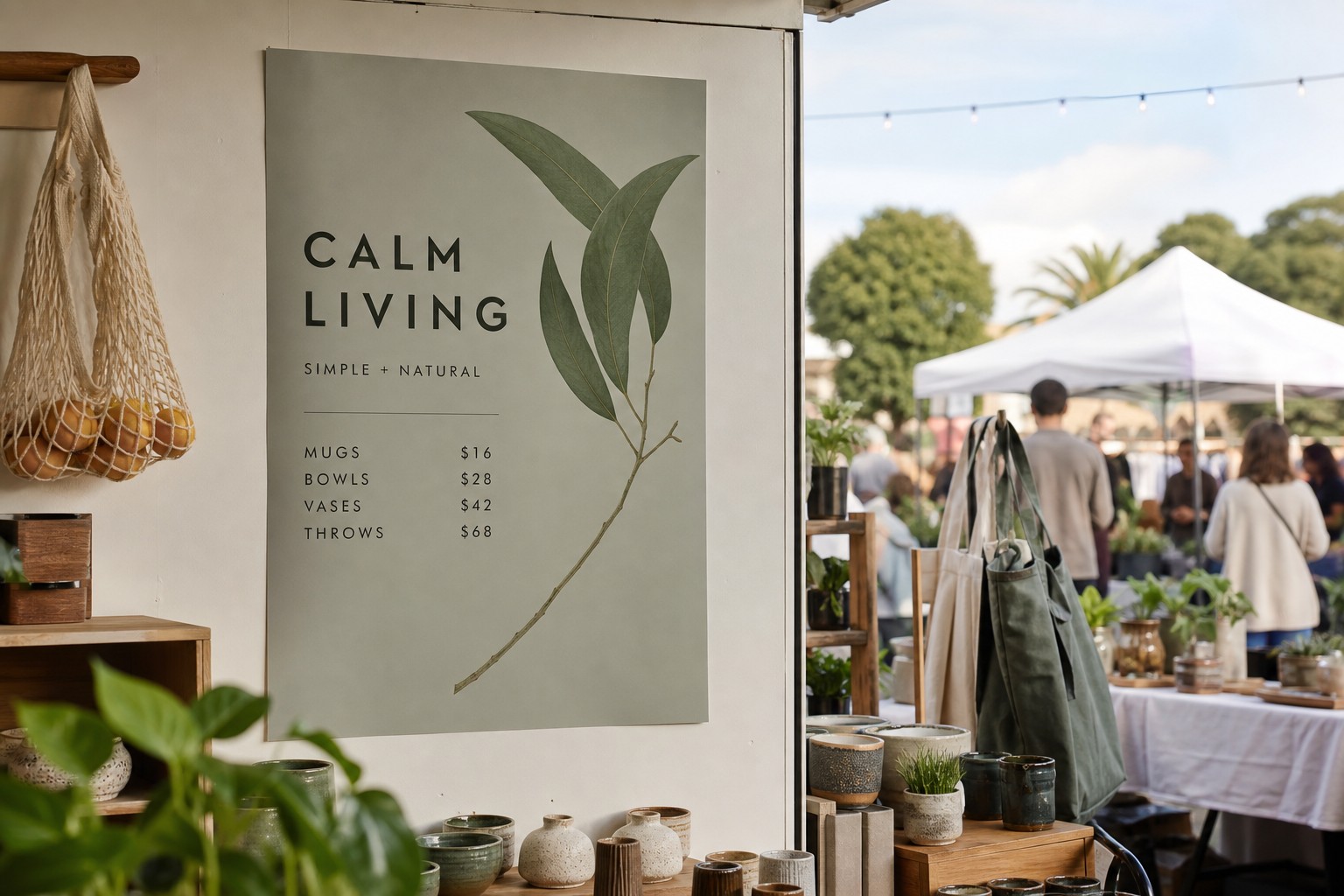
Market stalls and pop-ups. Positioned at the back of a market stall, an A2 poster reads from 2 to 3 metres away, which is roughly the distance between a walking customer and a vendor’s table. A3 tends to disappear in that environment; A1 can look overblown on a small trestle.
School and club noticeboards. Timetables, fixtures, event announcements, and coaching rosters in A2 are large enough to include a grid or table at a legible size. A3 struggles to hold a weekly schedule at readable type without the layout becoming congested.
In-store price boards. Retailers use A2 for promotional pricing panels placed on shelf ends, behind the counter, or in a window. The format is large enough to be scanned from the entry of a small shop and manageable enough to update and swap out regularly.
Viewing Distance and Minimum Type Sizes
A poster that is technically the right size can still fail if the type is too small for the distance at which it will be read. The following figures are practical print industry benchmarks.
At 1 metre (close range: counter, reception desk, noticeboard the viewer walks up to):
- Headline: 24pt minimum
- Body text: 10 to 12pt
At 2 metres (the typical gap in a cafe, corridor, or indoor retail environment):
- Headline: 40 to 60pt
- Subheading: 24 to 30pt
- Body or supporting copy: 14 to 16pt
- Fine print (phone number, address, URL): 12pt, no smaller
At 3 metres (a busy retail floor, a gig venue, or a street-facing window):
- Headline: 60 to 80pt
- Body text: 20pt minimum
- Fine print is unlikely to read reliably at this distance; keep it to what must be there
A2 is comfortably within the 1 to 3 metre range for all of these. The A1 advantage is not that it makes the same text more legible; it gives you more real estate to work with. If your A2 layout already uses correctly sized type and you still feel the poster lacks presence, the issue is usually contrast or hierarchy, not size.
Portrait or Landscape
Portrait orientation (420mm wide, 594mm tall) suits most poster applications. It follows natural top-to-bottom reading, it is more stable on a wall mount or noticeboard because the longer edge is vertical, and it handles single-column text layouts cleanly. Before mounting or framing the final print, compare this format with other common options in our guide to poster sizes for walls and frames.
Landscape orientation (594mm wide, 420mm tall) is worth considering for:
- Multi-column pricing tables where the wider format helps separate product lines or tiers
- Panoramic photography or scenic images where the composition is inherently horizontal
- Paired or sequential displays, such as two A2 landscape posters side by side forming a wider panel
- Counter or desk-top displays where the poster is supported rather than wall-hung, and horizontal reading is natural
Most event and promotional posters are printed portrait. If your brief has a horizontal layout because of the content, landscape is the right call. If you are defaulting to landscape because the design “felt that way,” check it in portrait first.
Setting Up Your Artwork
Canvas size with bleed
Set your document to 426mm x 600mm (the 420 x 594mm trim size plus 3mm bleed on every side). Position all content that must survive cutting at least 5mm inside the trim edge. Slight mechanical variation during cutting means anything placed right at the edge may clip.
For a landscape layout, flip those dimensions: 600mm wide x 426mm tall.
Resolution
Design at 300 DPI. At A2, a 300 DPI canvas is 4,961 x 7,016 pixels. Source your photographs at that pixel count or larger. Images downloaded from social media at 1,080 pixels will appear noticeably soft when printed at A2.
If you are working in Adobe Illustrator, Affinity Designer, or Figma, native vector elements (shapes, type, icons) scale without quality loss. Raster elements embedded inside a vector file must still meet the 300 DPI minimum at your final output size.
File format and font handling
Submit as PDF (preferred), SVG, or Adobe Illustrator (.ai) file. Embed all linked images and outline all fonts before exporting. Outlined fonts prevent substitution if we do not have your exact typeface installed.
What It Costs to Print A2 in Australia
Paperlust prints A2 posters on 200gsm synthetic stock. Pricing varies by size and quantity and scales down as quantities increase. For the exact A2 figure at your required quantity, configure your run on the custom poster printing page.
Once you place your order, a design proof is emailed to you and nothing prints until you approve it. Flat-rate shipping to anywhere in Australia is $15 AUD with tracking. International delivery is $35 AUD flat rate, arriving in 2 to 4 working days via DHL.
Whether you need a single display piece for one venue or a batch run for multiple sites, the per-unit cost drops as quantity rises. Use the product page to compare quantities before ordering.
Frequently Asked Questions
What is A2 poster size in mm?
A2 poster size in Australia is 420mm x 594mm (width x height in portrait orientation). This is the ISO 216 standard A2 dimension, consistent across Australia and internationally. For a broader comparison of how this fits with other standard formats, our guide to poster sizes in Australia compares each option and when it is most useful.
What is A2 size in centimetres?
A2 is 42cm x 59.4cm (width x height in portrait). In landscape orientation the dimensions are 59.4cm wide x 42cm tall.
How much bigger is A1 than A2?
A1 (594mm x 841mm) is exactly twice the area of A2 (420mm x 594mm). Visually, it is noticeably larger: roughly 41 percent taller and 41 percent wider in each direction.
What resolution should I use for an A2 poster?
Design at 300 DPI. At A2 size that gives you a canvas of 4,961 x 7,016 pixels. For photographic content, source images at this resolution or higher to avoid softness in the final print. Our guide to poster size in pixels and DPI explains what resolution your artwork actually needs across different print sizes.
What bleed do I need for A2?
Add 3mm bleed on all four sides, giving a total canvas of 426mm x 600mm. Keep all essential content (text, logos, key imagery) at least 5mm inside the trim edge to allow for cutting tolerance.
Is A2 portrait or landscape?
A2 is a sheet size. In portrait it is 420mm wide x 594mm tall. In landscape it is 594mm wide x 420mm tall. Both orientations are available. Most event and promotional use cases print portrait.
Can I print just one A2 poster?
Yes. The default order starts at a single poster. The per-unit cost is higher than a batch run and drops as quantity increases.
What is A2 in pixels?
At 300 DPI, A2 is 4,961 x 7,016 pixels (portrait). At 150 DPI for screen use or draft proofing, it is 2,480 x 3,508 pixels.