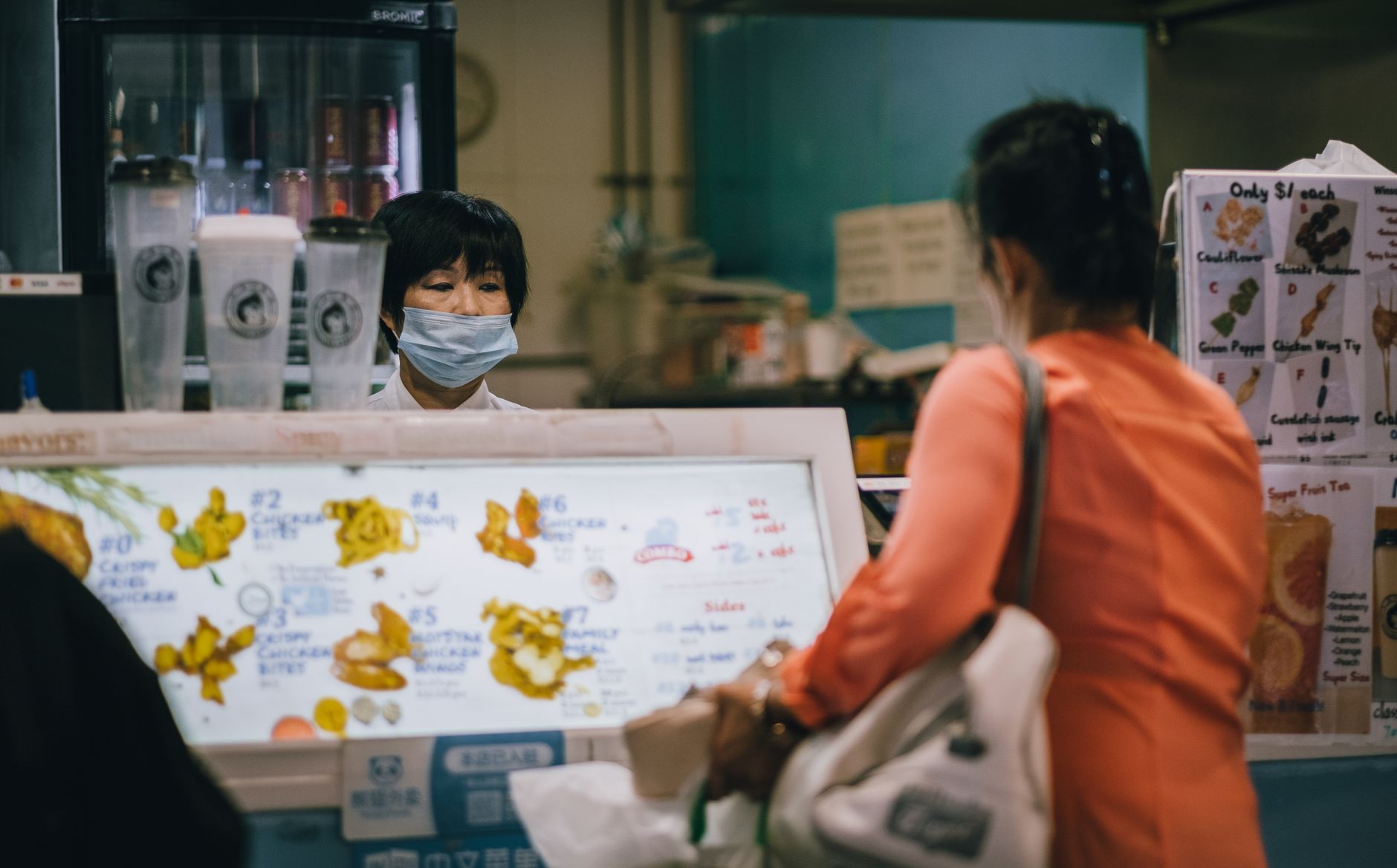
Running a cafe, restaurant, or takeaway in Australia means juggling a dozen things at once. Print is one of those areas that gets patched together over time: menus ordered from one place, signs from another, stickers from somewhere else. The result is a front-of-house that looks inconsistent and costs more than it should.
This guide covers every print item your venue needs, from dine-in menus to A-frame sidewalk signs, window decals, loyalty stickers, and promo flyers. Order it all from one place, keep your branding consistent, and stop paying a premium for rush jobs when you run out.
The prints every cafe needs at a glance
- Menus: A4 or DL, 300gsm matte with laminate for durability; folded options for compact tables
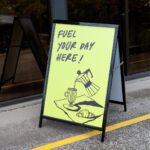
- A-frame signs: Corflute inserts, A1 or A2, swap weekly for specials and events
- Window decals: Opening hours, “order here” direction, seasonal promotions
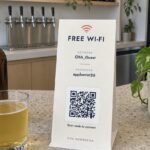
- Table talkers: A6, DL or A5 faces on laminated 300 GSM Matte card, with layouts for Scan to order, Daily specials and Wi-Fi details
- Loyalty and packaging stickers: Die-cut vinyl; minimum 10 per design, from $0.07 each
- Promo flyers: DL or A5, 150gsm gloss; DL fits a counter stand or letterbox drop
- Branding tip: Lock in one colour palette and one font pairing across every item
Dine-In and Takeaway Menus
Your menu is the single most-read piece of print in your venue. It shapes how customers order, how much they spend, and what impression they take away.
Dine-in menus
For sit-down service, standard menus from Paperlust Print Shop come in A4 (210 x 297mm), A3 (297 x 420mm), A5 (148 x 210mm), and DL (99 x 210mm) formats on either 300gsm matte or 170gsm silk paper. The 300gsm matte with laminate coating is the workhorse for table use: it wipes clean, resists moisture, and survives a dinner service without looking tatty.
A3 works well for shared tables and casual dining where you want a large format that two people can read at once. A4 is the standard for most venues. A5 suits smaller tables or a second card showing drinks and desserts only.
Takeaway and cafe menus
Takeaway venues and cafes have different needs. DL (99 x 210mm) is the format to use: it fits a counter card holder, goes into a bag as an insert, and doubles as a voucher or specials card. Folded A4 gives you four panels for a full menu in a compact footprint.
Printed gift vouchers in DL (99 x 210 mm) or A6 (105 x 148 mm) on 300gsm or 360gsm stock give cafes and restaurants a tangible item to sell at the counter. Gold, silver or rose gold foil on the title, logo or border keeps the branding polished, and Variable Data personalisation adds unique codes or names per voucher. A physical voucher is easy to hand to a customer on the spot and stays visible in a wallet or on a fridge until the next visit.
For high-volume takeaway environments, 170gsm silk is cost-effective for short-run reprints when your menu changes seasonally. If your menu is stable, invest in the 300gsm laminated version for longevity.
| Format | Best for | Stock recommendation |
|---|---|---|
| A4 flat | Standard dine-in | 300gsm matte + laminate |
| A3 flat | Shared tables, casual dining | 300gsm matte |
| DL flat | Counter card, drinks list, takeaway insert | 170gsm silk |
| Folded A4 | Full menu in compact form | 300gsm matte + laminate |
| A5 flat | Dessert or drinks card | 170gsm silk |
Production is 24-48 hours after design approval. Order quantities scale from small runs to large batches at standard-menus. Pricing starts at $1.13 inc. GST per menu.
For a deeper look at paper and lamination options for restaurant menus, see Restaurant Menu Printing Australia.
For a premium upgrade, our foil menu printing adds real metallic detail to dine-in menus on the same 300gsm stock.
A-Frame Sidewalk Signage
An A-frame on the footpath converts foot traffic into customers. It is the cheapest customer acquisition tool a hospitality business has, because the cost per impression over a year is negligible compared to any digital channel.
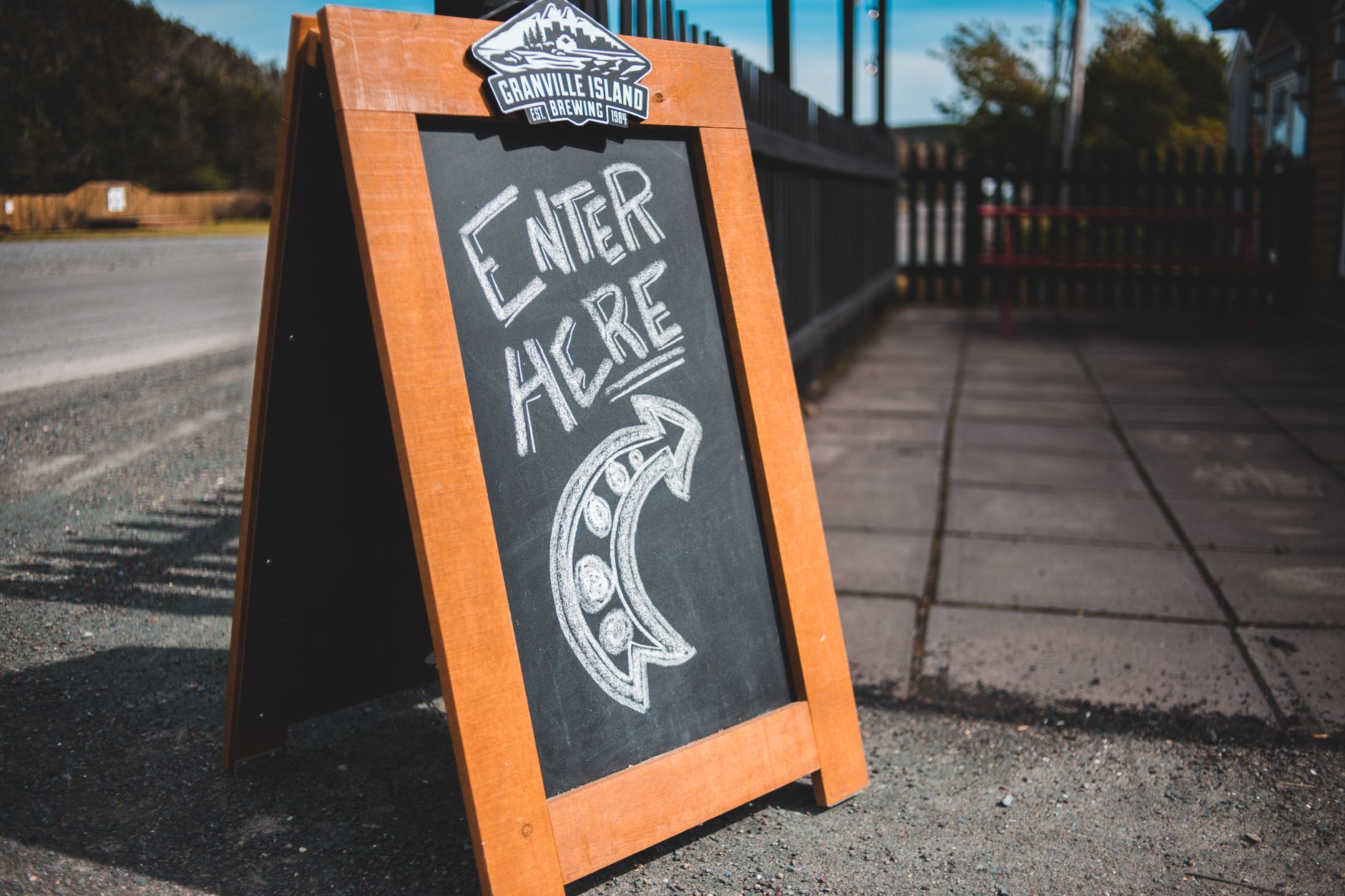
Corflute signs Melbourne make the ideal A-frame insert. At 3mm TEKflute, they are lightweight enough to swap weekly and rigid enough to hold shape in light wind. A1 (594 x 841mm) is the standard A-frame size for most hospitality venues; A2 (420 x 594mm) suits narrower footpaths or smaller frames.
Print a new insert each month for seasonal specials, or keep a permanent “Open” and directional sign year-round and order a small batch of promotional inserts for events and launches.
What to put on your A-frame
- Daily special with price
- “Now open for breakfast/lunch/dinner”
- Happy hour or BYO night
- Event night (trivia, live music)
- Seasonal promotion or new menu item
Pricing starts at $30.00 inc. GST for a single one-sided 600 x 450mm 3mm sign. Full-colour double-sided printing is available. For a complete guide to corflute sign sizing and applications, see Maximising Foot Traffic: How Corflute A-Frame Signs Can Transform Your Small Business.
Window Decals: Opening Hours, Direction and Promotions
Your shopfront glass is valuable display space. Window decals communicate your hours, guide customers to the right entrance, and run seasonal promotions without any permanent installation. For shopfront window displays that need more area than a decal, large format stickers print on premium adhesive vinyl and can be cut to a rectangle or a custom shape to fit the glass.
For a cafe or restaurant, the three most useful window decal applications are:
Opening hours. A clean, professionally printed hours decal on the front door eliminates the handwritten sign taped to the glass. It reads better, communicates quality, and only needs replacing when your hours change.
“Order here” and directional arrows. Counter service venues benefit from floor-level or mid-glass decals directing customers to the order point. Reduces bottlenecks during peak service without the need for staff to redirect people constantly.
Seasonal promotions and new menu items. A window decal running for 4-6 weeks promoting a new dish or seasonal offering costs a fraction of a digital ad and works every hour the venue is open.
One-way vision film is worth considering for larger glass panels: it keeps your interior private during off-peak hours while displaying your message clearly from the street. It is particularly effective on street-facing glass in venues where you want to maintain a warm interior atmosphere.
Loyalty and Packaging Stickers
Custom stickers are one of the highest-ROI print items for hospitality venues. They do two jobs: seal your takeaway packaging and build your brand every time a customer carries your bag down the street.
Packaging stickers and bag seals
Die-cut stickers are printed on durable vinyl with matte or gloss finish and optional lamination for water resistance. Die-cut to any shape, from a simple circle or rectangle to a custom logo outline. Minimum order is 10 stickers per design (orders of 10 to 50 are priced the same as 50); pricing starts at $0.07 inc. GST per sticker at volume.
For takeaway bags, a simple circular sticker in your brand colour with your logo is enough. It seals the bag, keeps the contents secure, and replaces a piece of tape with something that makes an impression.
Loyalty stickers and stamp cards
Die-cut stickers in small sizes (30-50mm) work well as loyalty stamps or collectible rewards for customer retention programmes. Print a sheet of logo stickers and hand them out with each coffee order. It costs less than a loyalty card per visit and requires no app or system.
For a full breakdown of how hospitality venues use stickers, see Sticker Printing for Restaurants and Cafes: The Complete Australian Guide.
Promotional Flyers
Flyers drive foot traffic before an event and keep your venue front-of-mind between visits. For a cafe or restaurant, the most effective use cases are letterbox drops in the surrounding suburb, counter displays promoting upcoming events, and bag inserts encouraging repeat visits with an offer.
Paperlust flyers are available in DL, A6, A5, A4, and A3 across three stock options: 150gsm gloss, 170gsm matte and 250gsm gloss. For most hospitality flyer work, the practical choices are:
| Format | Weight | Best for |
|---|---|---|
| DL (99 x 210mm) | 150gsm gloss | Counter display, bag insert, letterbox drop |
| A5 (148 x 210mm) | 150gsm gloss | Event promotion, menu overview |
| A6 (148 x 105mm) | 150gsm gloss | Loyalty offer, thank-you card |
| A4 (210 x 297mm) | 170gsm matte | Full menu, catering pitch sheet |
Pricing from $0.05 inc. GST per unit at volume. Production is 2-5 working days after design approval. Double-sided printing is standard.
For letterbox drops in the immediate suburb around your venue, DL is the most efficient format: it fits a standard letterbox without folding and costs the least to print and distribute. A run of 500-1,000 DL flyers for a new menu launch or a Friday night event is a straightforward, trackable marketing exercise.
Keeping Your Branding Consistent Front-of-House
Inconsistent branding is one of the most common print mistakes hospitality venues make. Menus printed at one shop, signs from another, stickers from a third party: the result is a collection of materials that look like they belong to three different businesses.
The fix is straightforward: set your brand standards once and apply them to every item you print.
Lock in your colour palette. A primary colour and one or two supporting tones. If your brand uses a deep green and cream, every printed item uses the same hex values. Not “a similar green.”
Stick to one font pairing. A heading font and a body font. Both should be readable at the sizes used on menus, signage, and stickers. Decorative display fonts that look great on an Instagram post often become illegible at 8pt on a DL menu.
Keep your logo consistent. Use the same version of your logo, at the same minimum size, on every printed item. Do not stretch, recolour, or substitute outline versions unless they are part of your brand set.
Use the same design file as the base. When you update your menu, start from the existing file rather than designing from scratch. This keeps spacing, margins, and proportions consistent across runs.
When you order all your print from a single supplier, you also reduce the risk of colour variation between items. Print calibration varies between printers; keeping everything through one production partner means your deep green stays consistent from your menus to your stickers. The table is part of that set as well, and coaster printing on 355gsm beermat board puts the same logo under every drink you serve.
Budget-Tiered Starter Kit
Here is a practical starting point depending on where you are in your venue’s life cycle.
| Tier | What to order | Approx. items |
|---|---|---|
| Opening (new venue) | A4 menus x 50, A1 corflute A-frame insert x 4, window decal hours set x 1, DL bag-seal stickers x 100 | 155 items across 4 products |
| Established (quarterly refresh) | A4 menus x 30 (seasonal update), A1 corflute inserts x 4-8 (rotating specials), DL promo flyers x 500 | Ongoing cadence |
| Event / launch | DL or A5 flyers x 500-1000, A-frame insert x 2-4, window decal x 1-2 | Short-run burst |
| Packaging upgrade | Die-cut logo stickers x 200-500, DL bag insert flyers x 200 | Brand touchpoint at takeaway point |
Order from Paperlust Print Shop and keep your brand files in one place for fast reprints when stock runs low.
Frequently Asked Questions
What type of menu is best for a busy cafe?
A4 on 300gsm matte paper with a laminate coating is the most practical for table use in a busy cafe. The laminate finish makes it wipe-resistant, which extends the life of each menu significantly in a high-volume environment. For takeaway or counter service, a DL format in a card holder is the more compact and cost-effective option.
How often should a restaurant reprint its menus?
Most venues reprint when they update pricing or add seasonal dishes, typically two to four times per year. If you are printing laminated menus on heavier stock, a smaller run reprinted more frequently is usually more cost-effective than a large run you cannot use once the menu changes.
What size corflute sign works best as an A-frame insert?
A1 (594 x 841mm) is the most common A-frame insert size and fits the majority of standard hospitality A-frames. A2 (420 x 594mm) suits smaller frames or narrower footpaths. Always measure your frame before ordering.
Can I use die-cut stickers on hot takeaway cups?
Standard vinyl die-cut stickers with lamination hold up to moderate heat and surface moisture but are not rated for direct contact with boiling liquids. For hot cups, apply the sticker to the sleeve or outer packaging rather than directly against the hottest part of the cup. For paper bags and sealed food packaging, they perform reliably at ambient temperatures.
What paper weight should I use for promotional flyers?
For counter display and bag inserts, 150gsm gloss is the standard. It has enough rigidity to stand in a card holder without flopping and enough heft to feel like a considered piece rather than a throwaway. For letterbox drops where you are printing in large quantities, 150gsm gloss keeps the per-unit cost down while still printing well.
How do I keep my branding consistent across different printed items?
Export a brand kit with your exact colour values (CMYK for print), your fonts, and your logo files before you place any order. Supply these to your print provider or use them in whatever design tool you are working with. When you reorder, use the same source files rather than recreating from memory. Colour variation between print runs is minimised when you keep all your production through the same supplier.
Do I need to design my own menus and signs?
Not necessarily. Many businesses upload their own print-ready PDF and send it straight to production. If you need design help, Paperlust Print Shop works with your existing artwork or you can brief the team on a custom design. For artwork requirements, files should be supplied as PDF, SVG, or Adobe Illustrator with 3mm bleed and outlined fonts.
Order your full cafe print kit at Paperlust Print Shop and get every item produced in Melbourne with fast Australian turnaround. Footpath boards, window panels, and counter signs sit in the custom signage range.