Our long bumper sticker presets are 30 x 100 mm (about 1.2 x 3.9 in), 50 x 150 mm (about 2.0 x 5.9 in) and 75 x 200 mm (about 3.0 x 7.9 in). Common sizes run 25 to 50mm for packaging seals, 50 to 100mm for product labels and laptop stickers, and 150mm and up for window decals. The right size comes down to viewing distance and surface area.
| Format | Millimetres | Centimetres | Inches |
|---|---|---|---|
| Bumper sticker | 30 x 100 to 75 x 200 mm | 3.0 x 10.0 to 7.5 x 20.0 cm | 1.2 x 3.9 to 3.0 x 7.9 in |
| Packaging seal | 25 to 50 mm | 2.5 to 5.0 cm | 1.0 to 2.0 in |
| Product label / laptop sticker | 50 to 100 mm | 5.0 to 10.0 cm | 2.0 to 3.9 in |
| Window decal | 150 mm and up | 15.0 cm and up | 5.9 in and up |
Getting size right means thinking about surface area, viewing distance, and the role the sticker plays. Whether you’re ordering product labels for a new skincare line, branded stickers for a merch pack, or window decals for your shopfront, the dimensions you choose will determine how professional the final result looks. Here’s the practical reference guide for every major use case.
At a Glance
Sticker size is decided by viewing distance and surface area, not what looks right on screen — get this wrong and the cleanest design fails on the application.
Match dimensions to the use case (25–50mm packaging seals, 50–100mm laptop stickers, 30×100 to 75×200mm bumper formats), account for 15–25% curve-loss on rounded surfaces, and always print a 100% paper test before committing to a full run.
- Match size to viewing distance and surface area, not what looks right on your screen.
- Quick reference: packaging seals 25-50mm, product labels 50-100mm, laptop stickers 50-100mm, bumper stickers 30×100 to 75×200mm, window decals 150mm and up.
- Curved surfaces reduce usable sticker width by 15-25% — always measure the flat printable area before ordering.
- Print a 100% scale paper test and place it on the actual surface before committing to a full run. Five minutes saves a costly reorder.
Sticker sizes chart: common ranges and the averages behind them
Sticker sizing feels like it should have a rulebook, so the search for an average usually starts after the artwork is already half finished. The honest answer is that there is no legislated standard sticker size. What exists instead is a set of conventions per use case, and the average people are really chasing is a safe starting number before they commit artwork.
The chart below gives those conventions in millimetres and inches, because sticker size habits travel internationally even when the printing is done in Australia. Every figure sits inside the Paperlust size envelope of 30mm x 30mm to 295mm x 425mm, so the chart is a practical shortlist rather than a separate product range.
| Use case | Common size range (mm) | Roughly in inches | What drives the number |
|---|---|---|---|
| Packaging seal | 25 to 50mm | about 1 to 2 in | The flap width and the lift needed to keep the seal closed |
| Laptop sticker | 50 to 100mm | about 2 to 4 in | Room for a logo without covering the whole lid |
| Product label | 50 to 100mm | about 2 to 4 in | The container face and the text that must stay legible |
| Sticker sheet | A6 105 x 148mm to A5 148 x 210mm | about 4 x 6 in to 6 x 8 in | The A6 or A5 sheet format and the number of designs sharing the page |
| Bumper sticker | 30 x 100 to 75 x 200mm | about 1.2 x 3.9 to 3 x 8 in | Readability from a following car and the long, narrow shape |
| Window decal | 150mm and up | about 6 in and up | The viewing distance and the glass area without blocking sightlines |
Two numbers actually bound every Paperlust sticker order: the minimum is 30mm x 30mm and the maximum is 295mm x 425mm, with a minimum quantity of 10 per design. Foil Stickers and Foil Vinyl Stickers are the exceptions on the small end, starting at 20mm x 20mm. If a chart value sits outside those limits, it is a convention from another supplier, not a size this range can print.
An average is a starting point, not an answer. Print the candidate size at 100 per cent on plain paper, cut it out, and hold it against the real surface: the flap, the laptop lid, the jar, the window. If it blocks too much or gets lost against the background, adjust. The chart gets you into the right range, but only a test on the actual surface tells you whether the size is finished.
Packaging Seals and Product Labels: 25-50mm
Small, circular, or square stickers used to seal boxes, close bags, or label small products. The job is simple: mark the product without overpowering it.
Standard sizes:
- 25mm circle – bag seals, gift wrapping closure, small product label
- 38mm circle – the most versatile packaging seal size; fits most boxes and bags cleanly
- 50mm circle – larger product labels, jar lids, cosmetic containers
What to put on them: Logo only, or logo + one line of text (product name, flavor, size). Don’t try to pack in a full address at 25mm – it won’t be readable.
Surface fit tip: The sticker shouldn’t cover more than about 30% of the surface it’s sealing. A 38mm sticker on a small kraft bag looks intentional. A 100mm sticker on the same bag looks like a mistake.
Choosing Between Circle, Square, and Oval Seals
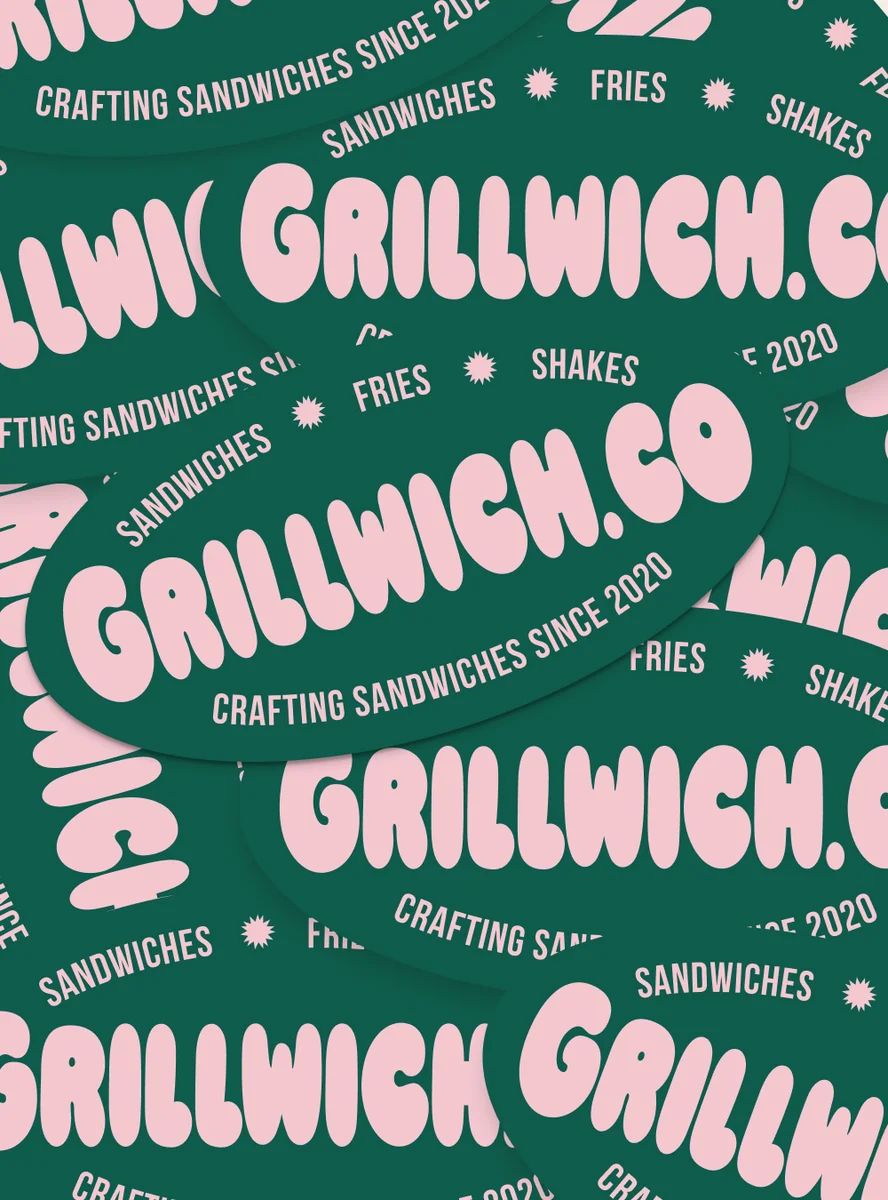
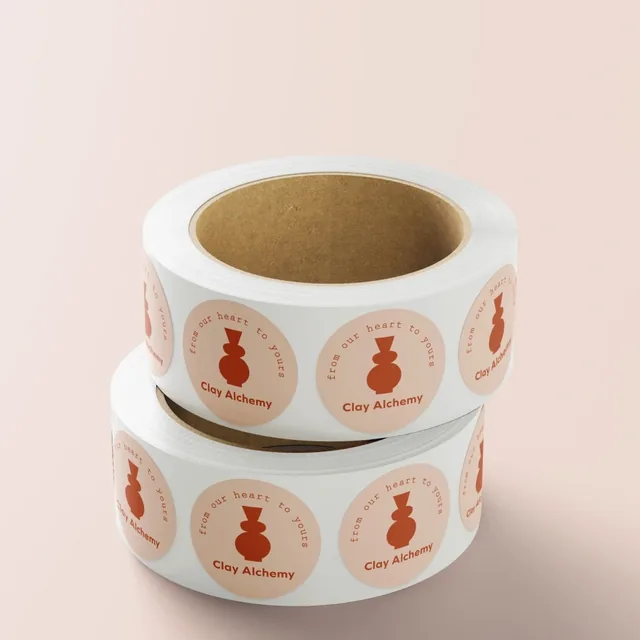
Circle stickers are the packaging seal default for a reason – they apply symmetrically and always look centered, even if they’re slightly off. Square seals work well for geometric or minimal brand identities. Oval seals are common in food and beverage, particularly for products that want a classic, handcrafted feel. The shape should reinforce your brand aesthetic, not fight it.
Order round stickers from the Australian shop in fixed diameters from 30mm to 150mm. In the United States, circle stickers for US delivery are available in the same fixed 30 to 150mm diameters.
Circle LabelsCustom Labels
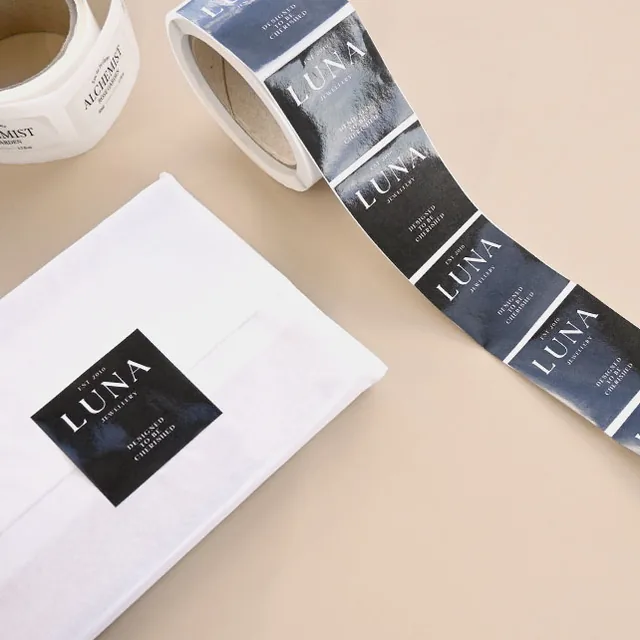
Square LabelsCustom Labels
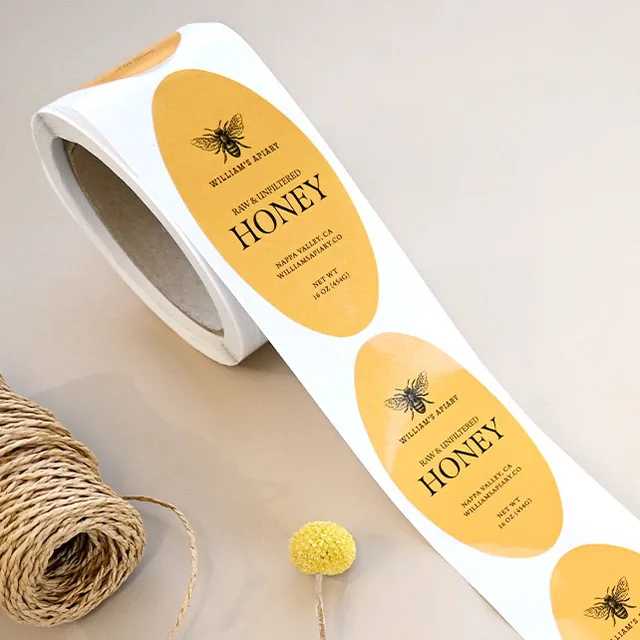
Oval LabelsCustom Labels
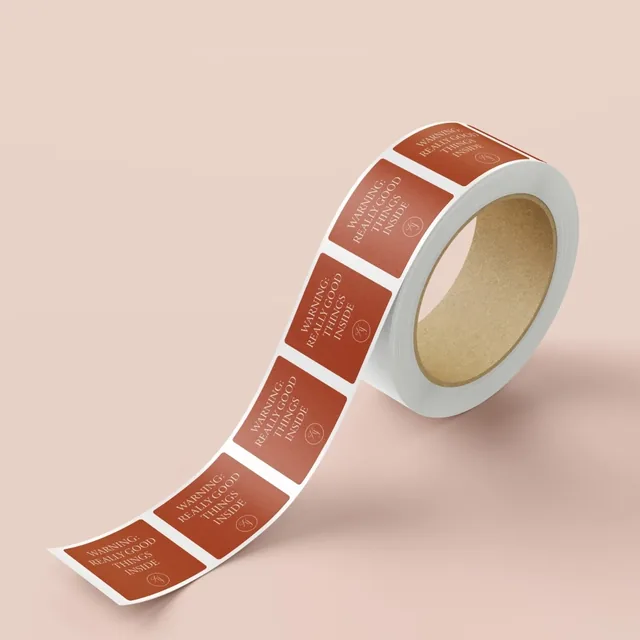
Rounded Corner LabelsCustom Labels
Laptop Stickers: 50-100mm
Laptop stickers are a culture as much as a product. Tech workers, designers, students, and creatives use them as identity markers – and they’ll judge your sticker quickly.
Standard sizes:
- 50mm circle or square – small accent sticker
- 70-80mm – the sweet spot for a single logo or wordmark sticker
- 100mm wide – good for illustrated or detailed designs that need room to breathe
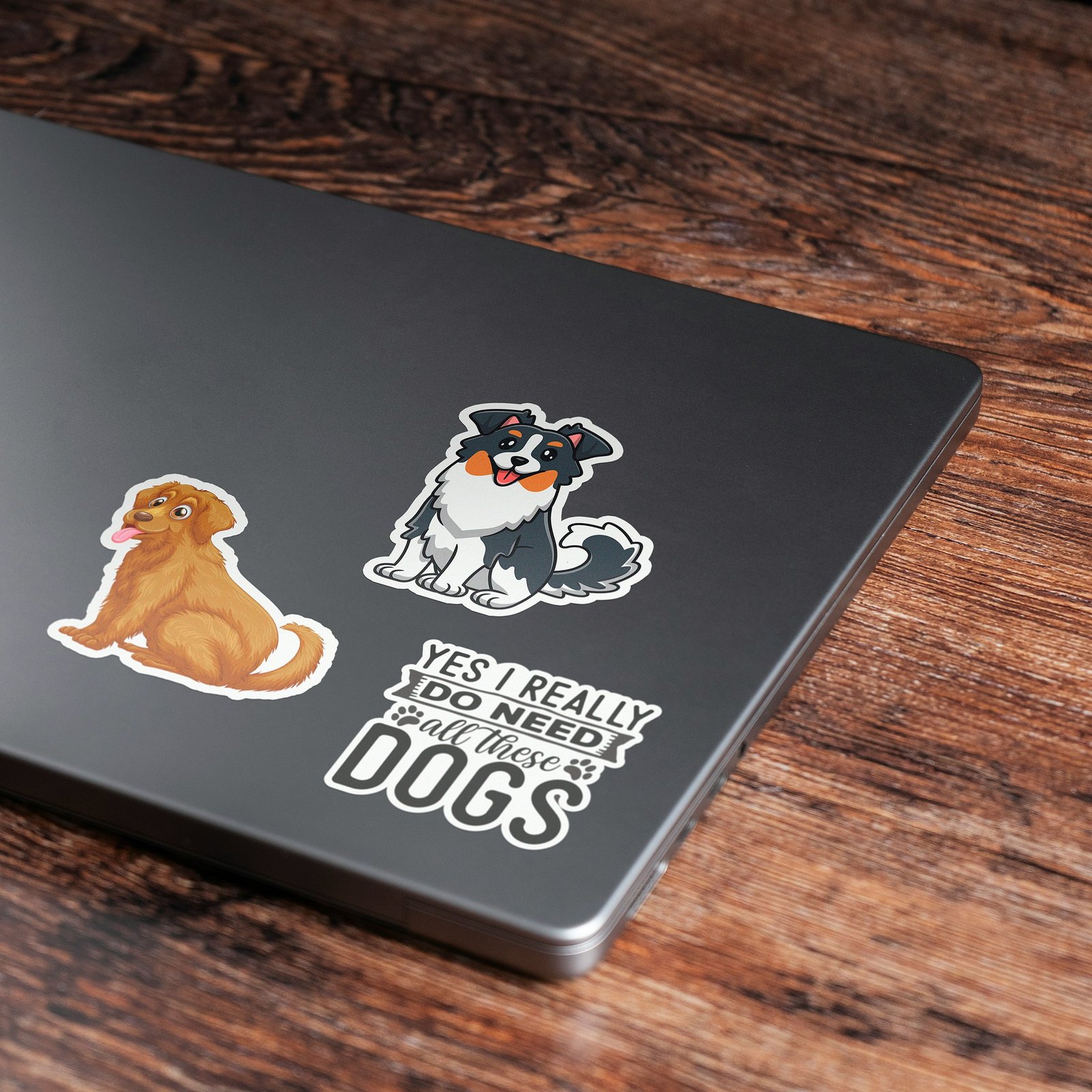
The laptop sticker rule: It needs to look good at arm’s length on a 13-15″ screen lid. Mock up your design at actual size before ordering. A logo that looks bold on your screen at 200% zoom can look timid at 70mm printed.
Finish note: For laptop lids, our vinyl stickers come in white matte vinyl or clear vinyl. The vinyl itself is the waterproof printed face, so it does not need a laminate. Glossy stickers attract fingerprints and scuff marks, especially on aluminum lids.
Die-Cut Shapes for Laptop Stickers
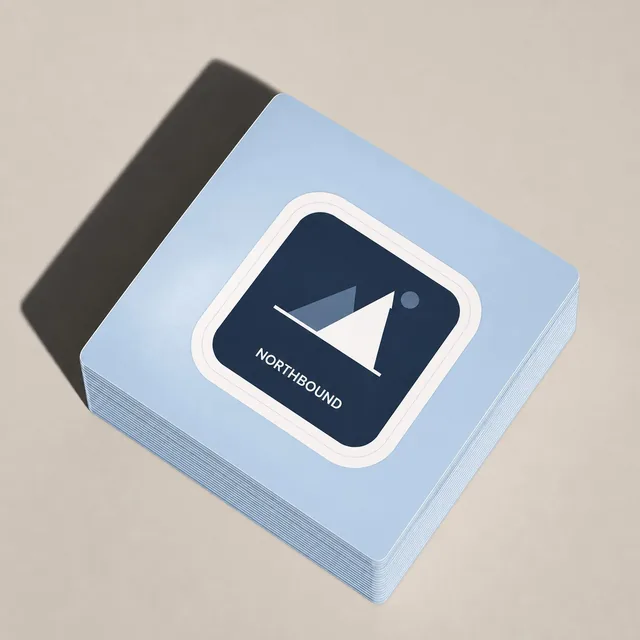
Some of the most popular laptop stickers aren’t rectangular or circular – they’re custom cut to follow the outline of a logo, character, or illustration. Die-cut stickers give laptop stickers a premium feel because the shape itself becomes part of the design. A sticker cut around a character or logo shape looks considered and intentional in a way that a rectangle never quite does. If you’re creating stickers for merchandise or brand loyalty, die-cut is worth the extra step.
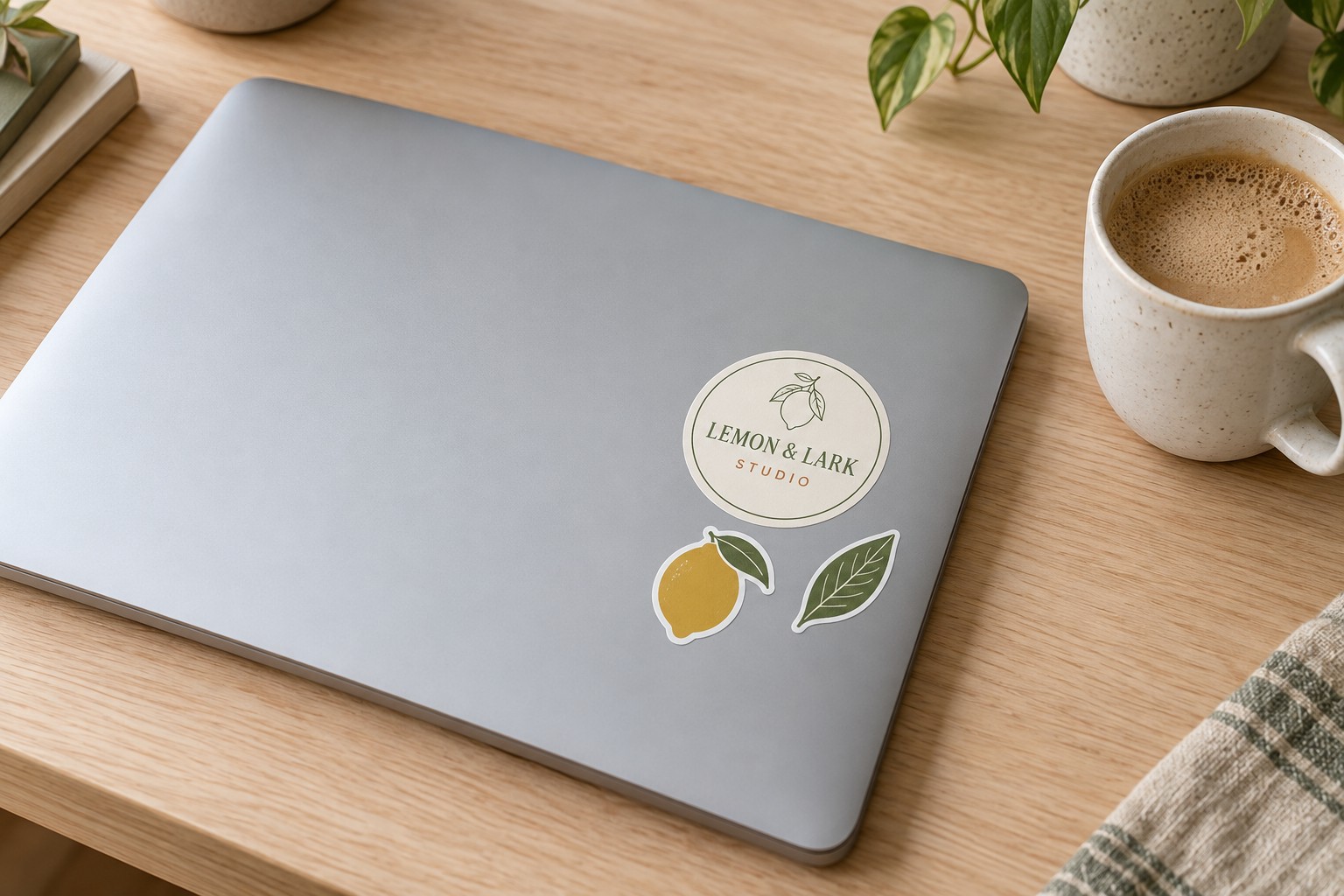
Die Cut StickersCustom Stickers
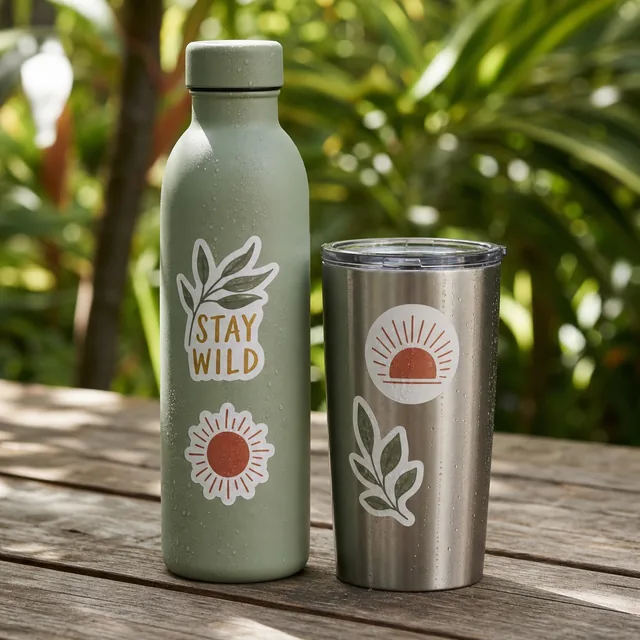
Vinyl StickersCustom Stickers
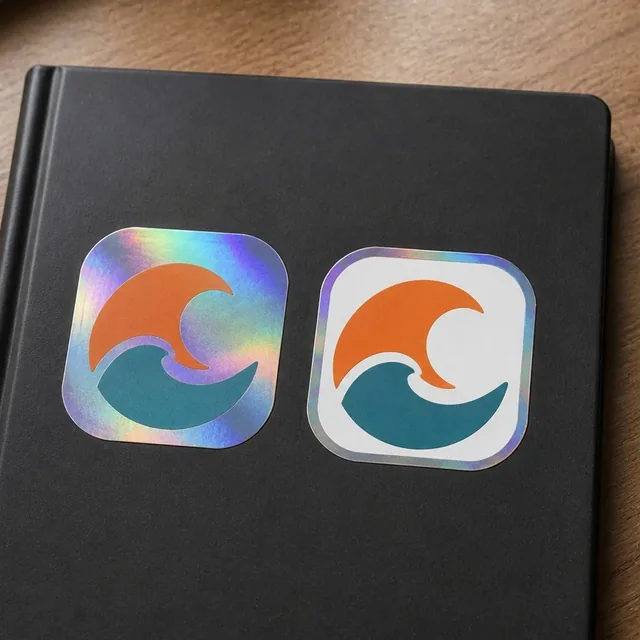
Holographic Vinyl StickersCustom Stickers
Kiss Cut StickersCustom Stickers
Product Label Stickers: 50-100mm
Used on bottles, jars, tubes, and containers – these stickers carry more information than a seal but less than full-label packaging.
Standard sizes by container:
- 50mm circle – small cosmetic jar, tin lid, spice jar
- 60-70mm rectangle or oval – sauce bottle, skincare tube, candle
- 80-100mm rectangle – larger jars, supplement bottles, mid-size containers
Critical tip: Always measure the flat printable area of your container before ordering. Curved surfaces reduce the usable sticker width by 15-25%. A 100mm sticker on a round jar with 80mm of flat label area will curl and lift at the edges.
For custom shaped labels that follow the contour of unusual containers, die-cut stickers can be cut to virtually any shape. They can be supplied on rolls for dispensers and labelling machines, and our die-cut labels are ready to order in any custom shape.
Waterproof Labels for Food and Cosmetics
If your product will be stored in a refrigerator, bathroom, or any environment with moisture exposure, you need a waterproof label. The White Gloss Sticker and the White Matte Sticker are paper-based and need a matte or gloss laminate as an optional extra to handle moisture. For Vinyl Stickers, the white matte vinyl or clear vinyl choice is waterproof as standard with no laminate, so it suits skincare and condiment bottles. When sizing a waterproof label, apply the same measurement rules – but also consider that wet surfaces reduce adhesion, so leaving a slightly larger flat area for adhesion is worthwhile on bottles that will regularly get wet. For a full production run rather than a handful of bottles, vinyl labels print on waterproof synthetic film in six shapes and come on rolls of 500.
Settled on a size?
Print custom sticker sizes from $0.07 each. Order any shape from 30 x 30 mm to 295 x 425 mm, starting at 10 stickers per design.
Sticker Sheets: Variable
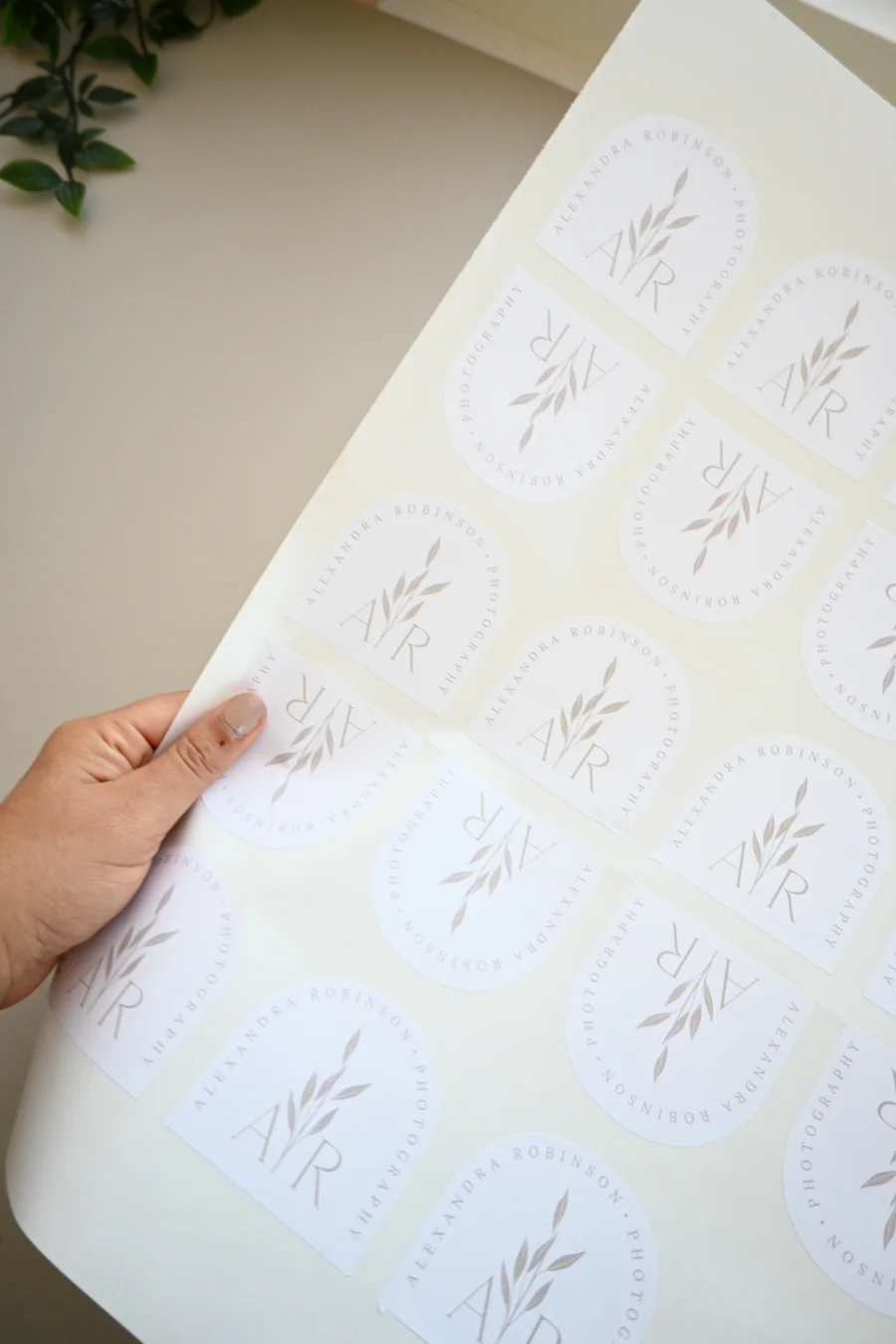
Sticker sheets pack multiple designs – or one design in multiples – onto a single sheet. Sizes vary by how the sheet is used.
For multi-design layouts, A4 sticker sheets (210mm x 297mm) fit 6 to 12 large stickers or 30 to 60 small planner stickers per sheet. A5 sheets (148mm x 210mm) suit smaller packs and pocket planner kits, and custom sheet sizes work for unboxing inserts, oversized planner sheets, and bespoke retail displays. A4 is the standard pick for retail-ready packs; A5 keeps fulfilment costs down on subscription box inserts.
In the United States, order printed sticker sheets for US delivery in A6, A5, A4 or 295mm x 420mm sizes, with custom sizes available. Minimum order is 10 sheets per design.
Common approaches:
- 100 x 150mm sheet – standard “sticker pack” size, fits 6-12 small stickers
- A5 (148 x 210mm) – popular for planner sticker sheets and merchandise
- A4 (210 x 297mm) – maximum coverage, used for sticker sets and packaging inserts
The individual stickers on a sheet can be as small as 15mm (for detail stickers and planner dots) or as large as the sheet allows.
If you are laying several stickers onto one sheet, our step-by-step guide on designing a custom sticker sheet covers spacing between stickers, bleed and cut lines.
Sticker Sheets for Merchandise and Retail
Sticker sheets work especially well as low-cost, high-perceived-value merchandise. A well-designed A5 sticker sheet can retail for $8-15 and carries a strong margin relative to production cost. Artists, illustrators, and small brands use them to monetize fan interest without the complexity of physical product. For packaging inserts, an A4 sheet folded in half fits neatly into most mailer boxes and gives customers something tangible to interact with. If you’re designing a sheet for retail display, consider that A5 fits standard greeting card display stands – which gives you a ready-made retail format without custom fixtures.
The question is whether the sticker stays on a backing sheet or becomes a separate piece, and choosing between kiss-cut vs die-cut stickers comes down to quantity, artwork detail, and how it is handed out.
Bumper Stickers: 30 x 100mm, 50 x 150mm, 75 x 200mm
Bumper stickers are long and narrow because they sit across the rear of a vehicle and need to read at a distance.
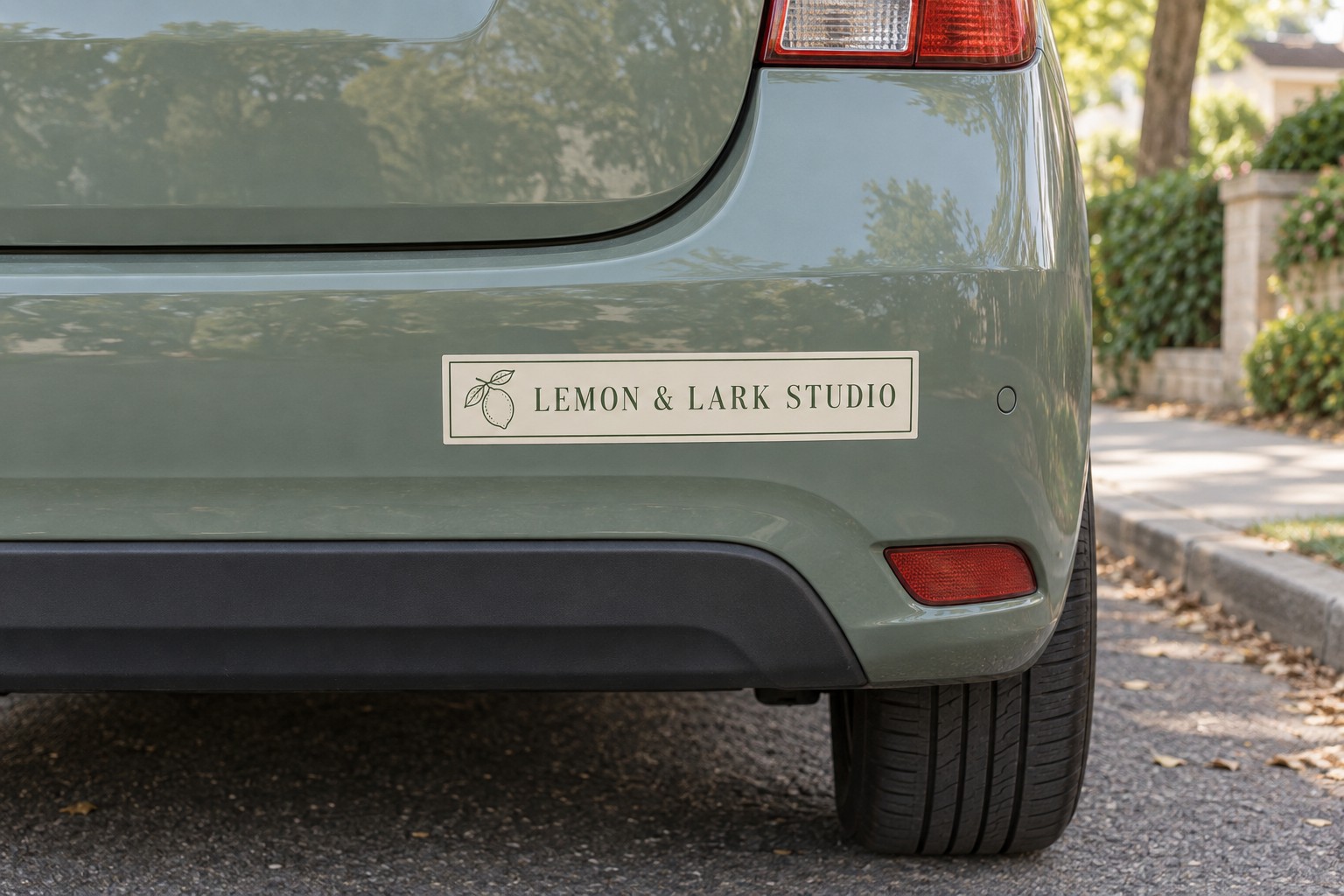
Size options:
- 30 x 100 mm, minimal room for short text or a small logo
- 50 x 150 mm, compact size for short text or logos
- 75 x 200 mm, moderate room for text and logo layouts
- 30 x 30 mm up to 295 x 425 mm, custom sizes for text or logo room
On our order form: The long presets are 30 x 100 mm, 50 x 150 mm and 75 x 200 mm. The materials are White Gloss Removable and Clear Removable, and a 75 x 250 mm layout can be ordered as a custom size within 30 x 30 mm to 295 x 425 mm.
Readability rule: At 10 metres, your sticker should communicate one thing. That means your text height needs to be at minimum 10mm for highway reading distance. Don’t go below 8mm for any key message.
See our full bumper sticker range with size options and custom configurations.
Material for Bumper Stickers
Bumper stickers face a harsh spot on a vehicle, so the material has to be right. Ours are printed on White Gloss Removable or Clear Removable stock with a removable adhesive and a plastic laminate already built in, which is why the order form has no laminate option. Print durability is up to 2 years, but how long one lasts also depends on a clean surface and careful application. For more on that, see our guide to waterproof stickers for outdoor use.

Window Decals: 150mm and Up
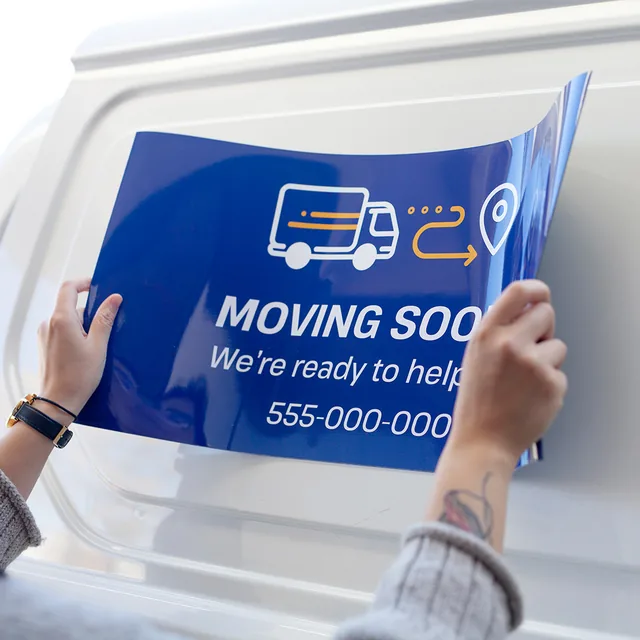
Window decals are large-format stickers for shop windows, office glass, and vehicle windows. They need to be legible from across the street – which means bigger than you think. A perforated one-way window film gives you the same street-facing impact while staying see-through from inside.
Standard sizes:
- 150 x 150mm – small window graphic, door logo
- 200 x 300mm – standard shopfront element, mid-size vehicle window
- 300 x 450mm – large window graphic, makes a statement
- Custom cut – for full-window installs or complex shapes
The viewing distance rule: Add roughly 10mm of text height for every metre of viewing distance. A text element that needs to be read from 5 metres needs to be at least 50mm tall. For window graphics viewed from the street (3-8 metres), minimum readable text is 30-50mm.
Window decals are also where material choice really matters. White vinyl blocks light. Clear vinyl lets light through – good for windows where you want to see both ways. Perforated vinyl allows visibility from inside while showing the graphic from outside. We print custom clear stickers in Australia in any shape up to 295mm x 425mm.
Window Decals for Shopfronts vs. Vehicles
The approach differs between retail windows and vehicle glass. For shopfront windows, the main concern is readability from pedestrian distance and allowing enough natural light inside. White or clear vinyl are the most common choices, with clear vinyl preferred when the window is also a display area. For vehicle rear windows, visibility and legibility at road distance are the priority. Dark-tinted windows need white or light-colored graphics to maintain contrast. Perforated vinyl – which shows a graphic from outside while maintaining visibility from inside – is popular for rear vehicle windows and shopfront applications where you don’t want to block the view entirely.
Window film, graphics and clear stickers →

One Way Window FilmsWindow & Floor Graphics

Window GraphicsWindow & Floor Graphics
Clear StickersCustom Stickers
How to Choose the Right Sticker Size: 5-Question Decision Framework
The use-case sections above give you the typical size ranges. This framework helps you nail the exact dimension when your situation falls between standard answers — or when you need to justify your choice to a designer or client.
Question 1: Where will the sticker live? The application surface determines the ceiling on size. A 100mm sticker on a kraft mailer bag overwhelms it. The same sticker on a laptop lid looks balanced. Identify the surface, then measure its flat printable area — not the total surface area, since curved sections can’t hold the sticker cleanly.
Question 2: From how far will it be read? Viewing distance dictates minimum readable text height. The rule of thumb: 10mm of text height per metre of viewing distance. A logo read at 1m needs ~10mm letters. A bumper sticker read at 10m on the highway needs at least 100mm of clear visual element. Set the text height first, then size the sticker around it.
Question 3: Is the surface flat or curved? If it’s curved (jars, bottles, tubes, vehicle panels), reduce your sticker width by 15-25% from the total surface measurement. A 100mm wide sticker on a round jar with only 80mm of true flat area will lift at the edges within weeks.
Question 4: Will it face water, sun, or wear? Outdoor exposure changes the material decision before it changes the size decision. For indoor and dry conditions, choose the paper-based White Gloss Sticker or White Matte Sticker. For outdoor jobs, Vinyl Stickers are waterproof as standard, have no laminate, are covered for one year outdoors, and should last 3 to 5 years depending on sun and weather. Plan the material first — it affects the cost-per-sticker, which then affects whether you can afford the larger size you want. If the sticker is going to live outside, start with the outdoor stickers range and size it from there.
Question 5: What’s the brand goal? A subtle product seal, a hero packaging element, or a functional label all want different sizes. Be honest about which one you’re ordering. A “hero” logo at 25mm on a white box gets ignored. A subtle accent at 100mm on a small mailer looks like a misprint. Match the size ambition to the brand role you actually need.
| Use case | Viewing distance | Critical constraint | Recommended size |
|---|---|---|---|
| Packaging seal (mailer, box) | <1m | Must not cover >30% of seal surface | 30-38mm circle |
| Product label (jar, bottle) | <1m | Curved surface penalty 15-25% | 50-100mm (measure flat area) |
| Laptop sticker | Arm’s length, 13-15″ lid | Must read bold at 70mm; matte laminate over gloss | 70-100mm |
| Sticker sheet (retail/merch) | <1m | A5 fits standard greeting card display stands | A5 (148×210mm) or A4 (210×297mm) |
| Bumper sticker | 5-10m (highway) | Text minimum 10mm; White Gloss Removable or Clear Removable stock | 30×100 to 75×200mm |
| Window decal (shopfront) | 3-8m (pedestrian) | Text 30-50mm minimum; clear vs white vinyl decision | 200-300mm+ |
| Window decal (vehicle rear) | 5-10m | Perforated vinyl for see-through; tinted glass needs light graphics | 300-450mm+ |
Common Sizing Mistakes (and How to Avoid Them)
-
Ordering based on screen size, not physical size
A sticker that looks right at your screen resolution may be much smaller in reality. Always print a test page at 100% size before ordering. -
Not accounting for curved surfaces
Flat sticker + curved surface = lifting edges. Reduce your sticker size to fit the flat area of the container. -
Scaling a design up without redesigning it
Fine detail, thin lines, and small text designed at 50mm will look blurry and lost when scaled to 200mm. If you’re changing size significantly, treat it as a design revision, not a resize. -
Ignoring the background context
A white sticker on a white wall is invisible. A clear sticker on a dark background needs white underprint. Always visualize the sticker on its actual surface, not on your screen’s white canvas. -
Guessing the surface area
Measure. Every time. Then measure again. The cost of an ill-fitting print run is higher than the cost of taking 30 seconds with a tape measure.
How to Test Your Size Before Committing to a Full Run
The most reliable way to confirm your size is correct before ordering hundreds of stickers is to print a test at 100% scale on regular paper, cut it out, and physically place it on the intended surface. This takes five minutes and can save you a costly reorder. For product labels specifically, tape the paper cutout to the actual container and look at it from normal viewing distance. If it looks right in the physical world, you’re ready to order. If it looks too small or too large, adjust and repeat. To see and feel the stocks, order the Sticker and Label Sample Pack for $5 including GST. It has fixed contents and needs no artwork. For your own design, our sticker printing in Australia begins at 10 per design, and a quantity of 10 to 50 is priced as 50.
Check Sticker Sizes at Actual Scale and in Inches
We made a printable sheet that shows actual-size outlines of the preset sizes on our order forms. Each outline is drawn to the same millimeter size shown on the order form. The sheet includes a printed ruler so you can confirm the printout is true to size before you measure anything against a surface.
Print the sheet at 100 percent or actual size with fit to page turned off. Measure the ruler before trusting anything else. Then cut out the outline and hold it against the laptop lid, bottle or bumper it is meant for.
Download the actual size sticker sheet (PDF, US Letter)
Our product sizes are set in millimeters, so the inch figures in this section are approximate. A 50 mm sticker is about 1.97 in across, not a true 2 in. The table below lists each preset size with its inch equivalent.
| Size on the order form | Approximate inches | Products |
|---|---|---|
| 30 mm diameter | 1.18 in | Circle Stickers |
| 40 mm diameter | 1.57 in | Circle Stickers |
| 60 mm diameter | 2.36 in | Circle Stickers |
| 75 mm diameter | 2.95 in | Circle Stickers |
| 90 mm diameter | 3.54 in | Circle Stickers |
| 100 mm diameter | 3.94 in | Circle Stickers |
| 150 mm diameter | 5.91 in | Circle Stickers |
| 40 x 70 mm | 1.57 x 2.76 in | Rectangle Stickers |
| 50 x 100 mm | 1.97 x 3.94 in | Rectangle Stickers |
| 70 x 120 mm | 2.76 x 4.72 in | Rectangle Stickers |
| 100 x 150 mm | 3.94 x 5.91 in | Rectangle Stickers |
| 30 x 30 mm | 1.18 x 1.18 in | Die Cut, Kiss Cut, Vinyl, Clear and Bumper Stickers |
| 30 x 100 mm | 1.18 x 3.94 in | Die Cut, Kiss Cut, Vinyl, Clear and Bumper Stickers |
| 50 x 150 mm | 1.97 x 5.91 in | Die Cut, Kiss Cut, Vinyl, Clear and Bumper Stickers |
| 60 x 60 mm | 2.36 x 2.36 in | Die Cut, Kiss Cut, Vinyl, Clear and Bumper Stickers |
| 75 x 75 mm | 2.95 x 2.95 in | Die Cut, Kiss Cut, Vinyl, Clear and Bumper Stickers |
| 75 x 200 mm | 2.95 x 7.87 in | Die Cut, Kiss Cut, Vinyl, Clear and Bumper Stickers |
| 120 x 120 mm | 4.72 x 4.72 in | Die Cut, Kiss Cut, Vinyl, Clear and Bumper Stickers |
| 200 x 200 mm | 7.87 x 7.87 in | Die Cut, Kiss Cut, Vinyl, Clear and Bumper Stickers |
| 105 x 148 mm | 4.13 x 5.83 in | Sticker Sheets |
| 148 x 210 mm | 5.83 x 8.27 in | Sticker Sheets |
| 295 x 420 mm | 11.61 x 16.54 in | Sticker Sheets |
Common US sizes do not always line up with a preset. The next table maps them to the closest preset, or to a custom size where the product allows one. For US orders, use the rectangle stickers and bumper stickers product pages to choose a preset or custom size.
| Common US sizes | Millimeters | Closest preset | Order as custom size |
|---|---|---|---|
| 1 x 1 in | 25.4 x 25.4 mm | 30 x 30 mm (Die Cut, Kiss Cut, Vinyl, Clear Stickers) | Below the 30 x 30 mm minimum |
| 2 x 2 in | 50.8 x 50.8 mm | 60 x 60 mm (Die Cut, Kiss Cut, Vinyl, Clear Stickers) | Custom size on Vinyl Stickers |
| 3 x 3 in | 76.2 x 76.2 mm | 75 x 75 mm (Die Cut, Kiss Cut, Vinyl, Clear Stickers) | Custom size on Vinyl Stickers |
| 4 x 4 in | 101.6 x 101.6 mm | 120 x 120 mm (Die Cut, Kiss Cut, Vinyl, Clear Stickers) | Custom size on Vinyl Stickers |
| 2 in circle | 50.8 mm diameter | 60 mm diameter (Circle Stickers) | Custom size on Vinyl Stickers |
| 3 in circle | 76.2 mm diameter | 75 mm diameter (Circle Stickers) | Custom size on Vinyl Stickers |
| 2 x 4 in | 50.8 x 101.6 mm | 50 x 100 mm (Rectangle Stickers) | Custom size on Vinyl Stickers |
| 3 x 10 in bumper | 76.2 x 254 mm | 75 x 200 mm (Bumper Stickers) | Custom size on Bumper Stickers or Vinyl Stickers |
| 4 x 6 in sheet | 101.6 x 152.4 mm | 105 x 148 mm (Sticker Sheets) | Custom size on Sticker Sheets |
| 5.5 x 8.5 in sheet | 139.7 x 215.9 mm | 148 x 210 mm (Sticker Sheets) | Custom size on Sticker Sheets |
Your Quick Reference
| Use Case | Recommended Size |
|---|---|
| Bag/box seal | 30-38mm circle |
| Small product label | 38-50mm |
| Jar/bottle label | 50-80mm |
| Laptop sticker | 70-100mm |
| Bumper sticker | 30 x 100 to 75 x 200mm |
| Window decal (small) | 150-200mm |
| Window decal (large) | 300mm+ |
Related reading:
Get Your Size Right Before You Print
Not sure which size is right for your surface? Browse our full sticker range with size selectors, or order 10 first and check how the size sits on the surface you have. We print in custom sizes – if your surface needs something specific, we can cut it.
From $0.07 per sticker. Standard delivery is $10 per order and express delivery is $15 per order, Australia-wide.
Bring a measuring tape to your next product meeting. The sticker size conversation is always worth having before the design conversation.
Ready to order? Shop by shape: circle stickers, square stickers, rectangle stickers, or die cut stickers for custom shapes.
Not sure on the right size?
Order a small sample run first. Test the fit, finish, and material on the actual surface before committing to your full quantity.
Frequently Asked Questions
What are the most popular sticker sizes for custom orders?
The most commonly ordered sizes are 50mm x 50mm circles, 75mm x 50mm rectangles, and 100mm x 100mm squares. These proportions suit a wide range of uses – from product packaging seals to branded giveaways. For die-cut stickers, sizes between 70mm and 100mm at the longest dimension are popular because they are large enough to display a logo clearly without being oversized. When in doubt, start with a mid-size option and adjust after seeing a sample or proof.
What size sticker is best for laptop branding?
Laptop stickers typically work best between 75mm and 120mm wide. This range is large enough to be visible and make an impact without overwhelming the lid. Many brands go for a roughly A7-card-sized rectangle or a circle around 90mm in diameter. If you are making stickers for staff or merchandise, 100mm x 70mm is a versatile choice that looks good on most laptop sizes. Vinyl stickers are the recommended material for laptops because they are durable and hold color well.
What sticker size works for packaging seals?
Packaging seals are most commonly 30mm to 50mm circles. A 38mm circle is a widely used standard that fits comfortably on the fold of a mailer bag, box lid, or tissue paper wrap. For a more substantial seal, 50mm gives extra room for a logo and tagline. Circle stickers and oval stickers both work well as seals. Make sure your design has a clear bleed area and the core visual element is centered so it still reads correctly if the sticker is applied at a slight angle. Sizing the wrap is a separate decision from sizing the seal: printed tissue paper comes in 220x300mm for small product wrapping, 380x380mm and 380x500mm for mid-size lines, and 500x750mm for large boxes and gift bags.
What size sticker is ideal for product labels?
Product label sizing depends on the container. For small jars or bottles, a 60mm x 40mm rectangle or 50mm circle is a reliable starting point. For larger containers – candles, bags, or boxes – a 90mm x 55mm or 100mm x 70mm label gives you more design space. Always measure the flat area you are applying to and leave a few millimeters of clearance on each side. Waterproof stickers are a smart choice for product labels that may encounter moisture, oils, or refrigeration. Our custom printed labels are made in circle, square, rectangle, oval, rounded-corner and die-cut shapes, so the shape can follow the container instead of the other way round.
Does sticker size affect the price?
Yes – size directly affects cost because larger stickers use more material. The relationship is not always linear though. A sticker that is 100mm wide may not cost exactly twice as much as one at 50mm wide, because printing and cutting setup costs are shared across the run. The most cost-efficient approach is to choose the smallest size that still lets your design read clearly. If you are ordering multiple sizes or shapes, getting quotes side by side in the product builder is the fastest way to compare. Sticker printing costs adjust in real time as you change dimensions.