If you’ve ever searched “custom decals” and ended up on a sticker product page, or ordered stickers when a large wall graphic was what you actually needed, you’re not alone. Print shops in Australia use the two terms almost interchangeably, and that ambiguity costs people time and money when the wrong product shows up. This guide settles the question: what each product actually is, where each performs best, and how to choose between them before you place your next order.
- Decal = large-format vinyl graphic applied to a single hard surface (window, vehicle, wall, floor) and left to cure. Built for multi-year outdoor durability.
- Sticker = individual adhesive-backed piece, typically smaller, ordered in quantity for product labels, packaging, promo giveaways, or branding kits.
- Both are commonly made from the same vinyl material. The difference is size, application method, and what the job demands.
- Order a decal when you are covering a large hard surface, need outdoor durability, or the graphic is a semi-permanent installation.
- Order stickers when you need individual pieces at quantity, palm-sized branded items, or product labels and packaging seals.
- Browse our full sticker printing range, which includes large-format options that bridge both categories.
What Actually Is a Decal?
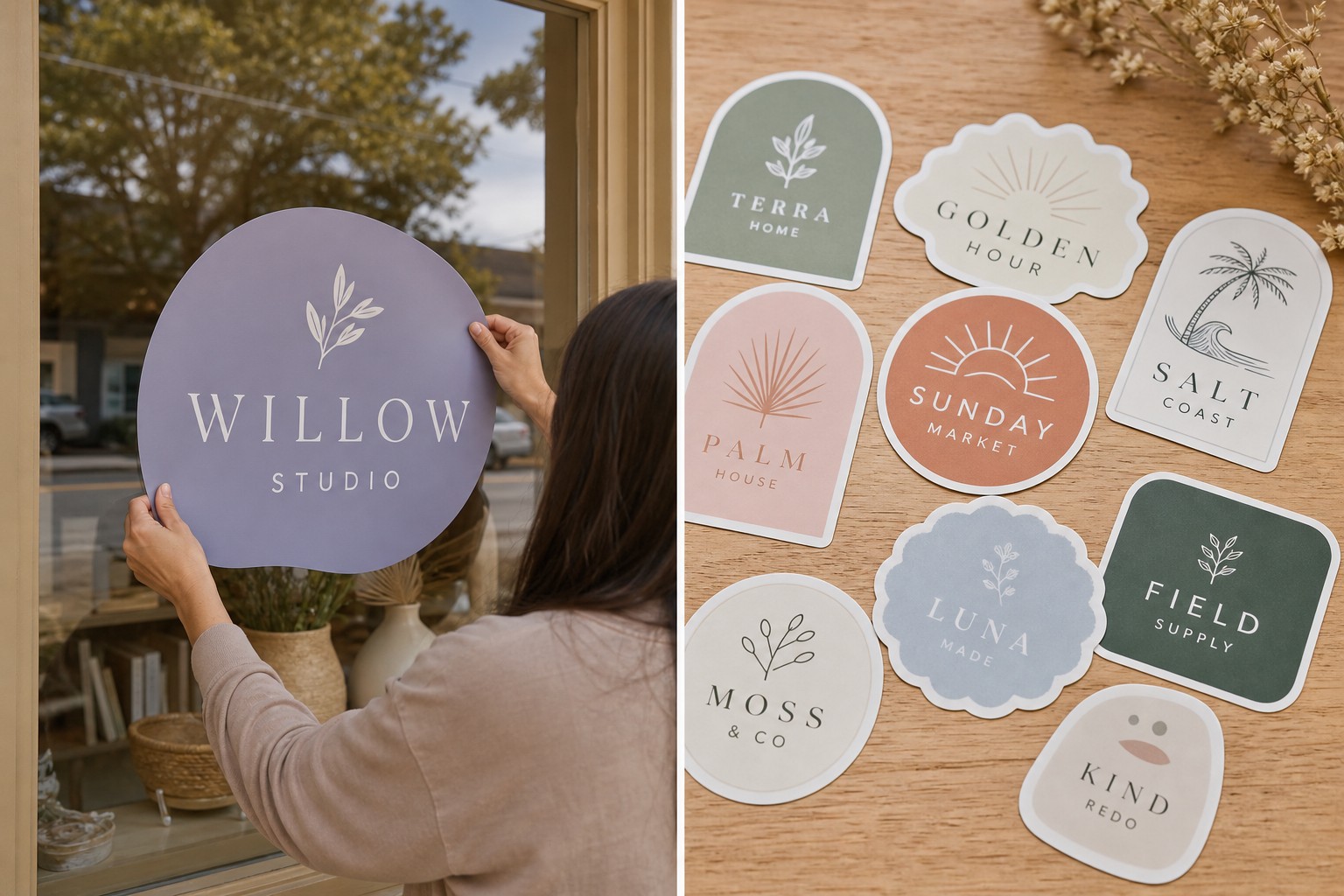
In practical AU printing terms, a decal is a large-format vinyl graphic designed to bond permanently (or near-permanently) to a hard surface. The word comes from “decalcomania,” a transfer process, and that transfer mechanic is still the key distinction from an ordinary sticker.
How the transfer works
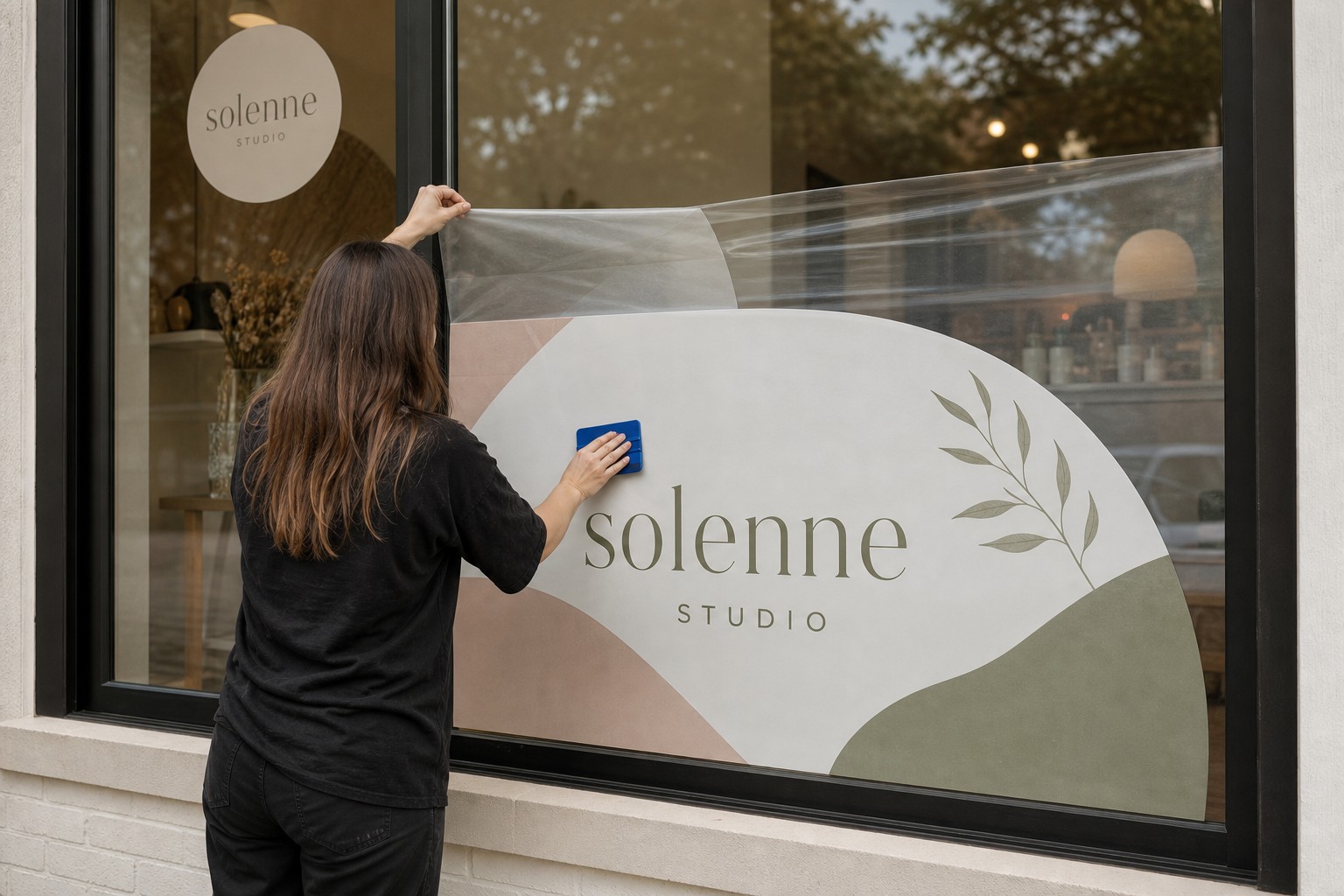
Most large decals are printed or cut on vinyl with adhesive on one side and a release liner on the other. For bigger pieces, a transfer tape sits on top of the printed face to carry the vinyl during application. The process: peel the release liner, position the graphic on the surface, squeegee from the centre outward to push out air bubbles, then slowly peel the transfer tape away at a low angle, leaving only the vinyl bonded to the surface. The graphic has no backing once applied.
This is how shopfront window logos, vehicle door graphics, and interior wall murals are installed at scale. The transfer tape carries the vinyl into position, then exits. The same transfer tape method applies when fitting perforated one-way window film to glass, leaving the printed side visible outside and the view from inside unobstructed.
Where decals work best
- Shopfront windows and glass partitions
- Vehicle doors, bonnets, and rear windscreens
- Interior feature walls and branded murals
- Floor graphics and safety zone markers
- Construction hoarding and temporary site panels
Because the vinyl bonds directly to the surface and cures under ambient UV, quality outdoor-rated vinyl graphics handle rain, heat, and direct sun exposure well. A correctly applied graphic on clean, flat glass can stay in good condition for three to five years outdoors.
What Counts as a Sticker?
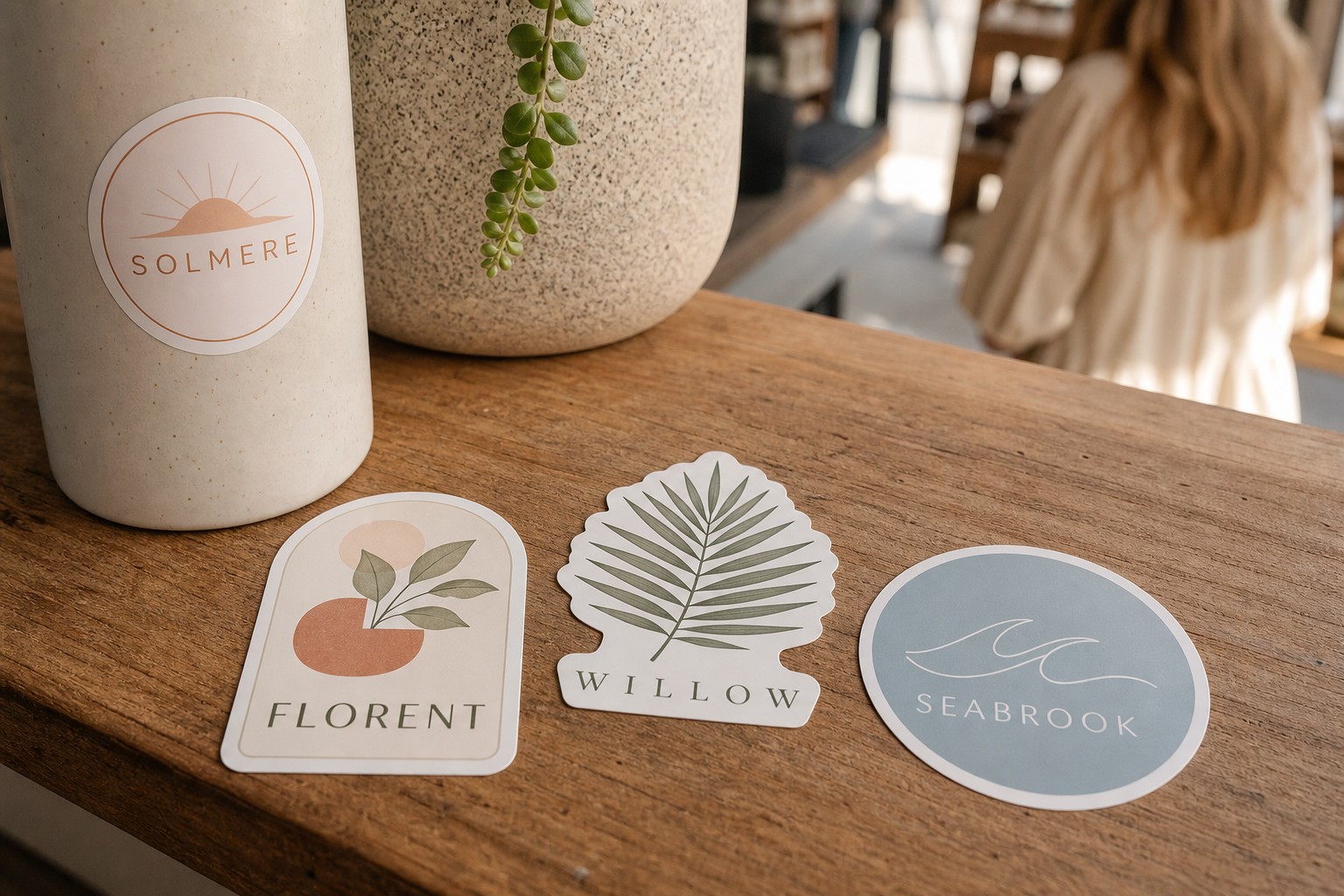
A sticker is self-contained: printed, cut to shape, and ready for individual application. Peel the backing, press it down, done. No transfer tape, no squeegee, no step-by-step installation method.
The defining characteristic
The form factor makes stickers ideal for high-volume, individual-piece applications. A small business ordering 500 logo stickers to seal takeaway bags, or a designer ordering 300 stickers to hand out at a market, needs each piece to be its own standalone unit. You peel and apply one at a time, and the order ships in a stack or on a kiss-cut sheet.
That portability and repeatability is what separates stickers from large-format graphics. The same vinyl material can underpin both products, but a sticker is sized and structured to be applied by hand to small surfaces without specialised tools.
Where stickers are used
- Product labels and packaging seals
- Laptop, water bottle, and notebook branding
- Promo handouts and trade show giveaways
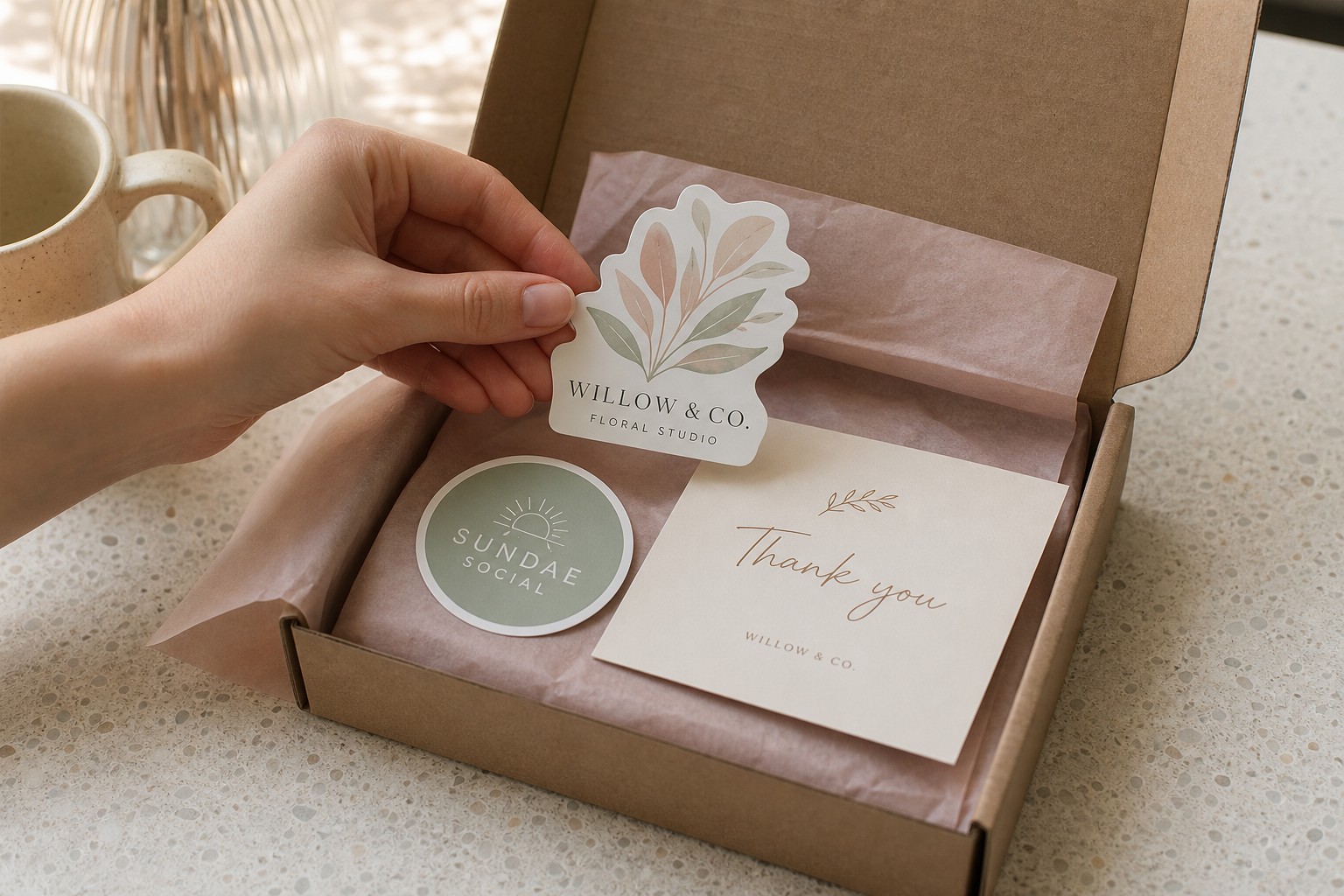
- Order fulfilment inserts and thank-you kits
- Children’s activity sheets and school reward stickers
The Real Differences at a Glance
Both products often use identical vinyl stock. The practical differences are scale, intended lifespan, and how the buyer interacts with the product.
| Factor | Decal (large-format graphic) | Sticker (individual piece) |
|---|---|---|
| Typical size | 200mm x 200mm up to full wall or window panels | 20mm x 20mm up to approx. 295mm x 425mm |
| Material | Premium adhesive vinyl (hi-tack or standard) | Vinyl (gloss/matte/clear) or paper (matte, indoor only) |
| Application | Surface bond; larger pieces use transfer tape and squeegee | Peel and press; applied individually by hand |
| Outdoor lifespan | 3-5+ years (premium outdoor vinyl) | Vinyl: 3-5 years outdoors; paper: indoor use only |
| Best surface | Glass, painted steel, flat interior walls, sealed floors | Product packaging, laptops, notebooks, bags |
| Volume sweet spot | Low quantity, high visual impact (1-50 pieces) | Higher-quantity runs (50-500+ pieces) |
| Min. order (Paperlust) | From 1 piece (large-format options) | From 10 per design (vinyl stickers) |
Order a Decal When…
You are covering a vehicle or window
Large, fixed-surface graphics on vehicles or shopfront glass need hi-tack adhesive vinyl that bonds properly to curved or vertical surfaces. Standard peel-and-press stickers will bubble or lift within weeks on a car door panel or glass exposed to Australian heat and UV. For a shopfront window logo, a vehicle fleet graphic, or a large interior wall piece, choose a large-format vinyl graphic rated for the surface. Our large-format stickers are available in hi-tack white vinyl, standard white vinyl, and clear vinyl in sizes from 200mm x 200mm up to 600mm x 900mm, built for exactly these installations.
If you need vehicle branding that removes cleanly between jobs, our car magnets are the removable alternative worth comparing.
You need a semi-permanent single-site installation
If the graphic is going on one surface and staying there for a season or more, a decal-style format is the right call. Office lobby logos, gym feature walls, warehouse safety graphics, and construction site hoarding all fit this pattern. The adhesive is designed to stay, and the vinyl is rated for the environment it is going into. For window-specific formats where visibility and privacy are the variables, our post on window decals for business covers the commercial options in detail.
The surface is hard and flat
Adhesive vinyl performs best on smooth, non-porous hard surfaces: clean glass, powder-coated steel, painted solid walls, and sealed concrete floors. Rough brick, raw timber, and fabric are poor candidates for adhesive vinyl in any format. If the surface passes the “smooth glass” test, a vinyl graphic will adhere cleanly and hold.
Order Stickers When…
You need product labels or packaging branding
Stickers at quantity are cost-effective for sealing bags, labelling jars, or branding boxes. Our vinyl stickers start from $0.76 inc. GST per piece, printed with waterproof, UV-resistant Canon UVgel ink on white or clear vinyl. Paper stickers cost less and suit dry indoor packaging where moisture is not a factor. Minimum order is 10 per design, with volume pricing reducing the per-unit cost at higher quantities.
You are running a promotional order or giveaway
Stickers are among the most retained branded items at events and markets. A run of 250 logo die-cuts to hand out at a pop-up or include in online orders costs relatively little and earns real brand impressions on laptops and water bottles for years. Both paper and vinyl work for giveaways; vinyl is the better choice if recipients are likely to stick them somewhere exposed to weather or moisture. Our guide to waterproof stickers for outdoor use sets out which materials survive water and which only claim to.
You need multiple designs or shapes in one run
Kiss-cut stickers allow multiple designs to print on a single sheet, each with its own cut line. Die-cut stickers are punched individually into any custom shape. Neither format suits a large surface installation, but both are ideal for product variety, merch packs, and branding kits where one design per sheet is not enough.
The application is seasonal or temporary
If the sticker or label will be removed and replaced regularly, stickers are the correct format. Seasonal packaging updates, short-term campaign branding, and promotional overlays on product boxes all fit here. Specify a removable-adhesive option if the surface is delicate, as standard adhesive can leave residue on some finishes.
When Large-Format Stickers and Decals Are the Same Thing
The clearest overlap in this category is the large-format adhesive vinyl graphic. Products sized 600 x 200mm or 600 x 900mm at Paperlust Print Shop are structurally identical to what most print buyers mean when they say “decal” in a shopfront or wall context. Hi-tack adhesive vinyl, applied with a squeegee, left to cure on the surface. The only difference is what the printer chose to call it.
If your print shop lists a “large-format sticker” made from hi-tack vinyl, you are looking at a decal in every practical sense. Do not let the label push you elsewhere.
For window applications involving privacy glass or visibility requirements, the format choice narrows further. Our post on window decals for business covers one-way vision film, frosted vinyl, and cut-lettering options for shopfronts and offices. For the specific question of privacy glass in meeting rooms or reception areas, one-way film vs frosted decals gives the direct comparison.
Choosing the Right Finish
Whether you order a sticker or a large-format graphic, the surface finish changes the look and determines outdoor longevity:
- Gloss laminate: high-shine with maximum colour saturation. Suits product labels, promo stickers, and window graphics where visual impact is the priority.
- Matte laminate: flat, contemporary look with reduced glare. Works well for interior wall graphics, notebook branding, and designs with dark or neutral colour palettes.
- Clear vinyl: the design appears to float on the surface with no white background showing. A strong choice for glass applications, bottle labels, and any surface where the substrate colour should show through.
- Hi-tack vinyl: stronger adhesive bond for outdoor walls or slightly textured surfaces where standard tack may not grip reliably. The correct choice for floor graphics in high-traffic environments.
Frequently Asked Questions
Is a decal the same as a sticker?
Not exactly. A decal is a type of sticker, but the term typically refers to larger vinyl graphics applied to hard surfaces like windows, vehicles, and walls. Standard stickers are smaller individual pieces used for product labels, packaging, or promotional giveaways. Both are often made from the same vinyl material. The practical differences are in size, application method, and the job the product needs to do. A floor is the fourth hard surface, but floor decals differ from a wall or window decal because the print sits under an anti-slip laminate rather than the standard finish.
Are decals more durable outdoors than stickers?
Both vinyl decals and vinyl stickers can last three to five years outdoors when made from UV-rated vinyl with a protective laminate. Large-format decals are almost always made from outdoor-rated vinyl by default. Sticker orders can include paper options that are suitable for indoor use only. If outdoor durability matters, specify vinyl on any order, whether it is labelled a sticker or a decal.
Can I order a custom decal for a vehicle or fleet?
Yes. For vehicle door logos, fleet graphics, and rear windscreen branding, large-format vinyl graphics printed on hi-tack adhesive vinyl are the right product. Paperlust Print Shop’s large-format stickers cover sizes up to 600mm x 900mm in hi-tack white vinyl, standard white vinyl, and clear vinyl. If you need vehicle branding that removes cleanly between jobs, car magnets are the removable alternative.
What is the difference between a sticker and a window decal?
A window decal is a vinyl graphic applied directly to glass and left as a semi-permanent installation. It may be a full-colour printed graphic, a frosted privacy film, or cut-vinyl lettering. A sticker on a window is typically a smaller promotional piece used temporarily. For shopfront branding, office glass partitions, and fleet vehicle windows, a window-rated vinyl graphic is the correct product. For general promo use on glass, standard vinyl stickers work well in the short term.
Do I need a professional to apply a large-format vinyl graphic?
Not necessarily. Graphics under roughly 600mm wide can typically be applied by a careful non-specialist using the squeegee method. For larger panels, or graphics covering full shopfront windows, professional installation reduces the risk of bubbles, misalignment, and edge lifting. The key steps are the same regardless: clean the surface thoroughly, apply from the centre outward, and peel transfer tape slowly at a low angle.
What is the minimum order for stickers at Paperlust Print Shop?
The minimum order for vinyl stickers is 10 pieces per design, starting from $0.76 inc. GST per piece. Volume pricing reduces the per-unit cost at higher quantities. Large-format stickers start from a lower minimum quantity and are priced from $65.72 inc. GST.
Related Reading
- Magnetic signs vs vinyl decals: if vehicle branding is the decision and you need a removable option, this guide covers the trade-off between magnets and permanent vinyl graphics.
- Window decals for business: a deep dive into commercial window formats including one-way vision, frosted, full-colour opaque, and cut-vinyl lettering.
- One-way window film vs frosted decals: for office and clinic glass where the question is privacy vs visibility.