The package insert cards you tucked into last month’s orders probably tried to do too much. A thank-you note, a discount code, care notes and a QR code were all fighting for space on one postcard, and the buyer skimmed it, set it aside and moved on.
Package insert cards work differently when you treat each one as a single job. A thank-you card says thank you. A care card explains care. A reorder card brings the buyer back to a page that still exists.
This guide covers the three jobs, formats and sizes, layouts for each card, QR codes, and how to order in the US and Australia. It ends with a first-run checklist.
The short version
- One card, one job: thank the buyer, explain care, or prompt a reorder, never all three at once.
- A business card format fits any parcel including poly mailers. Postcards suit boxes and padded envelopes.
- Give a thank-you card a brand mark, one line of thanks, and one next step.
- Give a care card a short numbered sequence, storage or care steps, and a place to get help.
- Point a reorder card at one reusable QR destination, not a discount that expires.
- Give the QR code a trial scan at the size it will print, on at least two phones, before ordering a full batch.
Why package insert cards should carry one job
An insert card earns its place by doing one thing for the person who just opened the parcel. The usual jobs for packaging inserts are saying thank you, showing how to use or care for a product, and pointing to a reorder or review page.
When one card tries to cover all of those at once, the reader has to sort through competing messages before they can decide what to do. A single clear instruction is easier to absorb during unboxing than a crowded mix of offers and notes. The parcel already contains the item and the packing materials. The card should not add another layer of decisions.
If you are mapping the rest of the printed pieces in an order, our ecommerce seller print kit is the place to start.
Choosing a size that fits the parcel
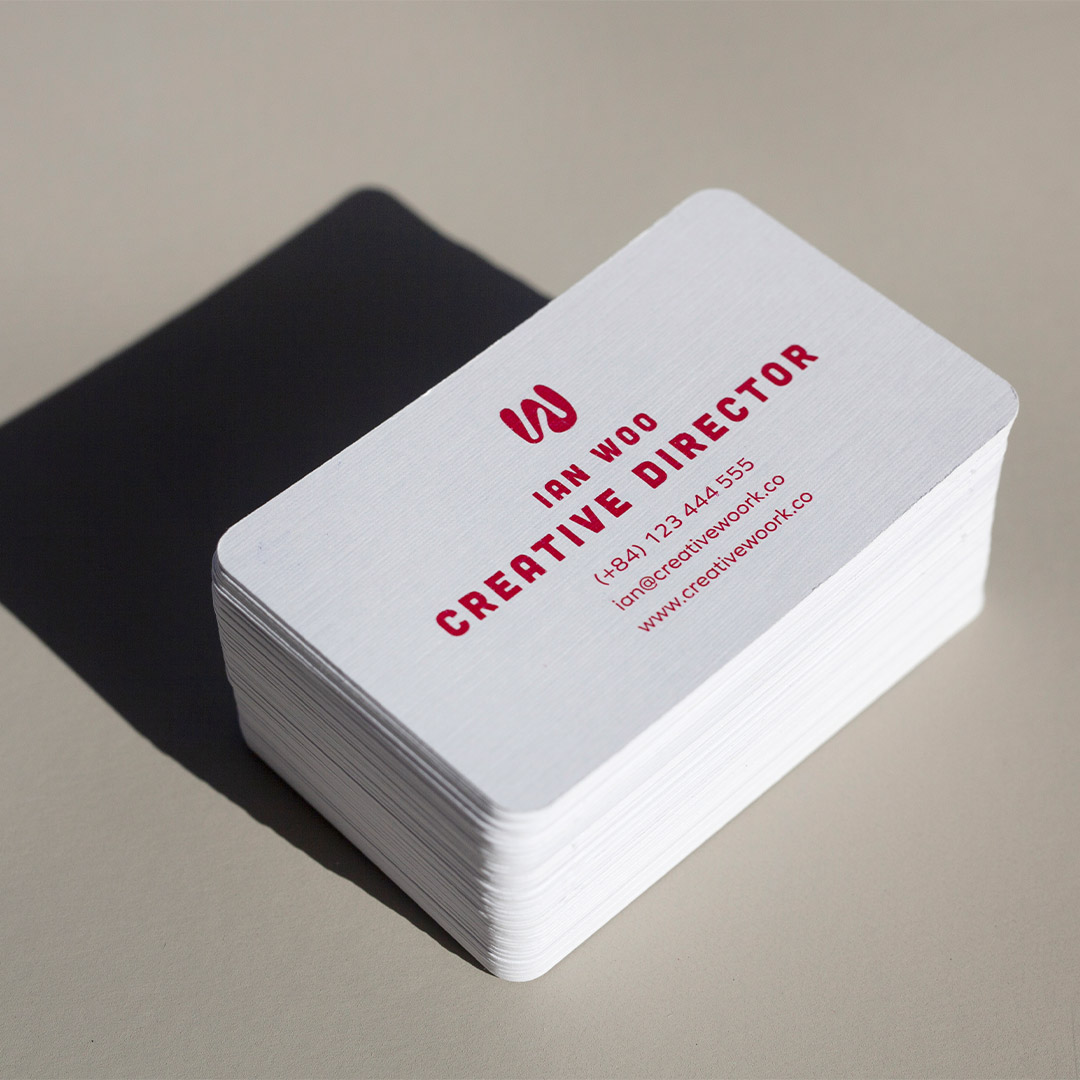
Size is a fit decision before it is a design decision. A card that sits flat in the parcel is less likely to arrive bent or be overlooked in the packing. Postcards are available in A6 at 105 x 148 mm, A5 at 148 x 210 mm and DL at 99 x 210 mm, in portrait or landscape. Standard business cards measure 90 x 55 mm as a rectangle, with rounded corners and other shapes offered.
| Format | Size | Minimum order | Best parcel fit |
|---|---|---|---|
| Standard business card | 90 x 55 mm | 50 cards | Fits any parcel including poly mailers |
| A6 postcard | 105 x 148 mm | 50 cards | Suits padded envelopes and boxes |
| DL postcard | 99 x 210 mm | 50 cards | Suits boxes |
| A5 postcard | 148 x 210 mm | 50 cards | Suits boxes |
Before ordering, hold the card against the parcel you send most often. Poly mailers and padded envelopes are thin and flexible, so a small, stiff card lies flatter inside them than a large one. Boxes allow you to use the larger formats comfortably. Keep in mind that A6 is not the same size as a 4 x 6 inch card. The 4 x 6 measurement is 101.6 x 152.4 mm, while A6 is 105 x 148 mm. A card slot or fold sized for one may not accept the other.
How to lay out a thank-you card
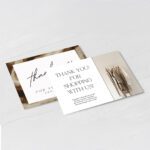
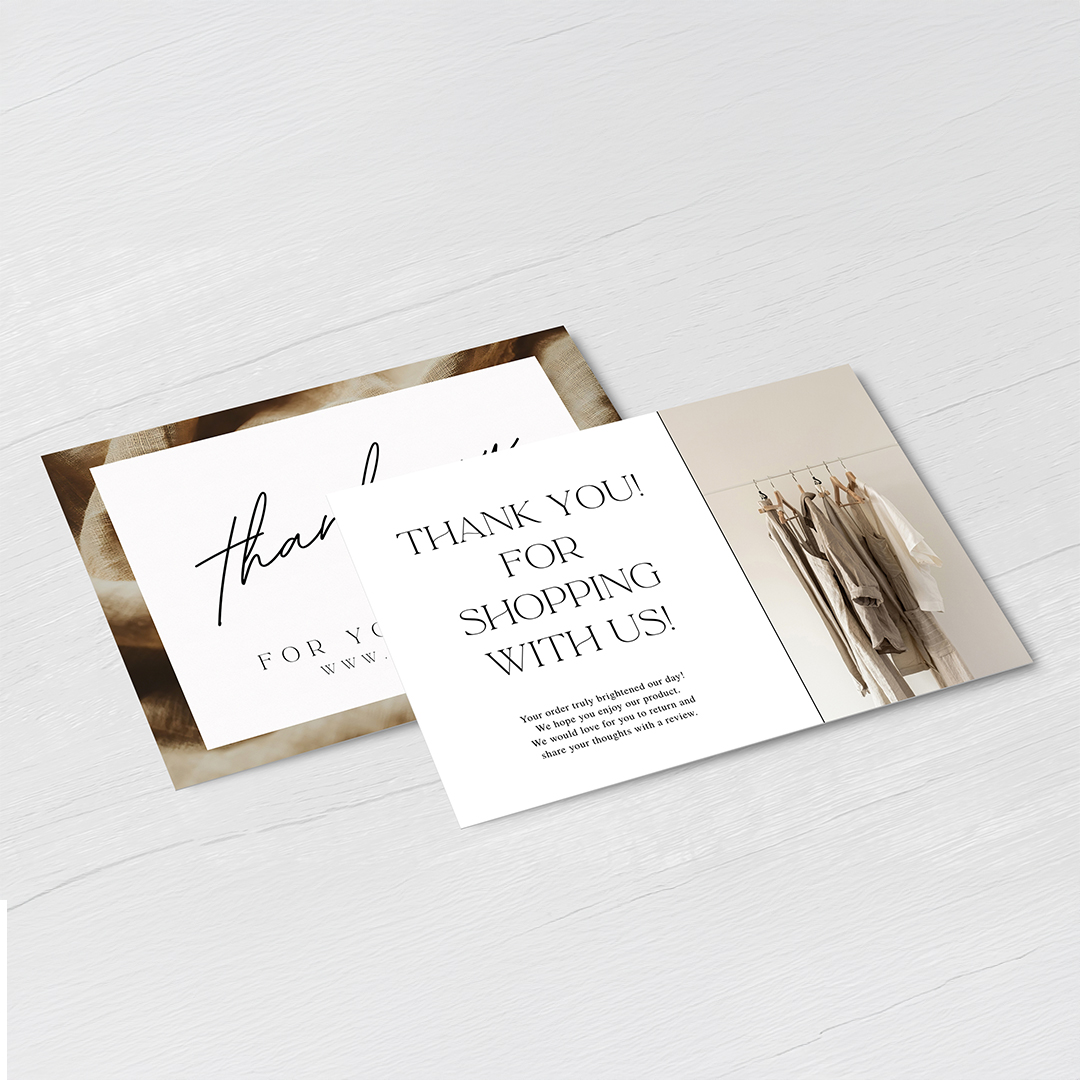
Thank you cards for small business work when they stay small. Give the card a brand mark, one line of thanks, and one next step. The next step could be a link to a review page, a social follow, or a help page, but it should be one step, not three.
Put the brand mark at the top, the thanks in the middle, and the next step at the bottom. A discount competes with the thanks. If the top says thank you and the bottom says take a discount, the reader has to process two messages before the card earns any attention.
Variable data printing on postcards lets you personalize each card with a buyer’s name or different content per card. A line like “Thanks, Sam” is an example of that personal touch, but the wording is illustrative only.
If you want to carry the thanks onto the outside of the parcel, the guide to thank you stickers explains how to coordinate that piece.
How to lay out a care card
Care cards exist to answer one practical question: how do I look after this thing I just bought. Give the reader a short numbered sequence, a product name or short identifier, and a clear place to ask for help. Two to four steps is usually enough, along with a support email or help page.
As an illustration only, you might write something like “Store away from direct sun, wipe with a dry cloth, keep the clasp closed.” That is not guidance for any specific material. The correct steps depend on what you sell.
Care cards are not the place for a discount. A buyer who is trying to work out how to store a product is not in the same mindset as a buyer who is weighing an offer, and a dated offer can lapse while the cards are still in stock.
If you sell clothing or textiles in Australia, that sector has its own mandatory care labeling rules, separate from any care card you add to the parcel. Check the care label requirements before you finalize the insert.
How to lay out a reorder card with a QR code
Reorder cards are the one insert where a QR code earns its space. Point the code at one reusable page, such as a product page, a reorder page or a review page. A reusable destination keeps the printed card useful after a promotion ends.
Add UTM parameters to the link so an analytics tool reports visits from that link separately. If the card also prints a discount code, keep that discount text separate from the reusable QR destination. The printed offer can expire while the QR code still works.
Around the code, leave an empty margin so it stands apart from other printed elements. That empty space is the quiet zone. Use a dark code on a light background for contrast, then give it a trial scan at the size it will print on more than one phone before ordering the full batch.
Variable data printing on postcards can produce unique QR codes per card. That is the clean way to tell batches or campaigns apart without changing the reusable destination.
Postcard or business card: matching the insert to the parcel
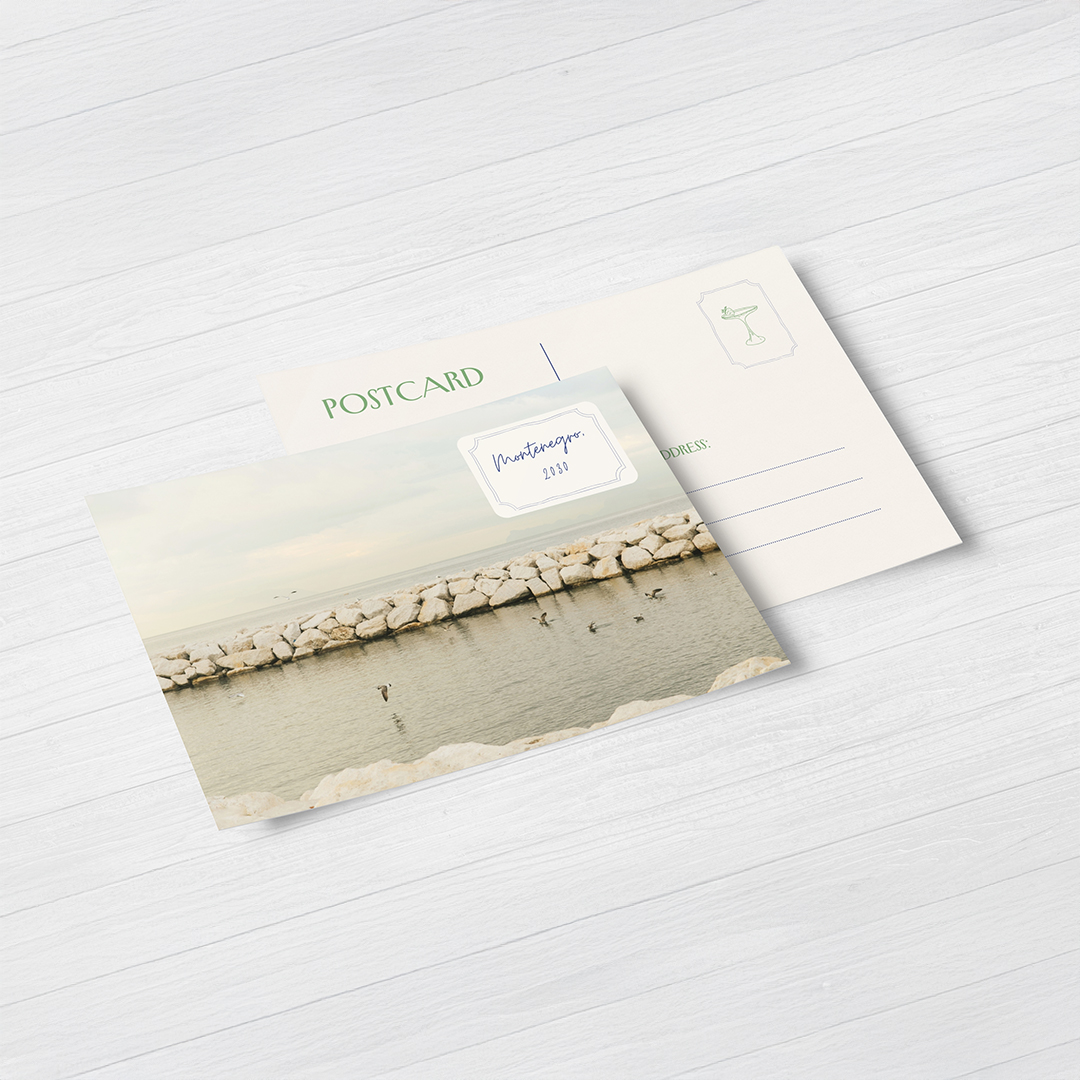
Postcards are the roomier option. The larger formats give you space for a short sequence, a bigger brand mark, or a QR code with more empty margin around it. You can print on one side or both, with 350gsm Artboard or 360gsm Premium stock, and orders start at 50.
Business cards are the fit option. At 90 x 55 mm, the rectangle sits flat in a poly mailer or any compact parcel without crowding the packing. Stock options are 300gsm Matte, 300gsm Linen, 300gsm Cotton, 300gsm Metallic, and 450gsm Artboard with Velvet Laminate. Cards can be printed front only or front and back, and the smallest run is 100.
If you ship in boxes, either format can work. A DL or A5 postcard in a small poly mailer, though, tends to look oversized. Choose the business card when the parcel is thin and flexible. Choose a postcard when the parcel has room and the message needs space.
How to print insert cards for US orders
For US insert card printing, the work splits into two product ranges. The postcards range has the A6, A5 and DL sizes shown earlier, in portrait or landscape, with 350gsm Artboard and 360gsm Premium stock. Cards can be printed single sided or double sided, and the smallest postcard batch is 50. Production takes 2 to 5 working days from artwork approval. A design proof is emailed before production begins. Supply artwork as PDF, SVG or Adobe Illustrator, with 3mm bleed and embedded images. Variable data printing covers personalized names, unique QR codes, individual addresses or different content per card.
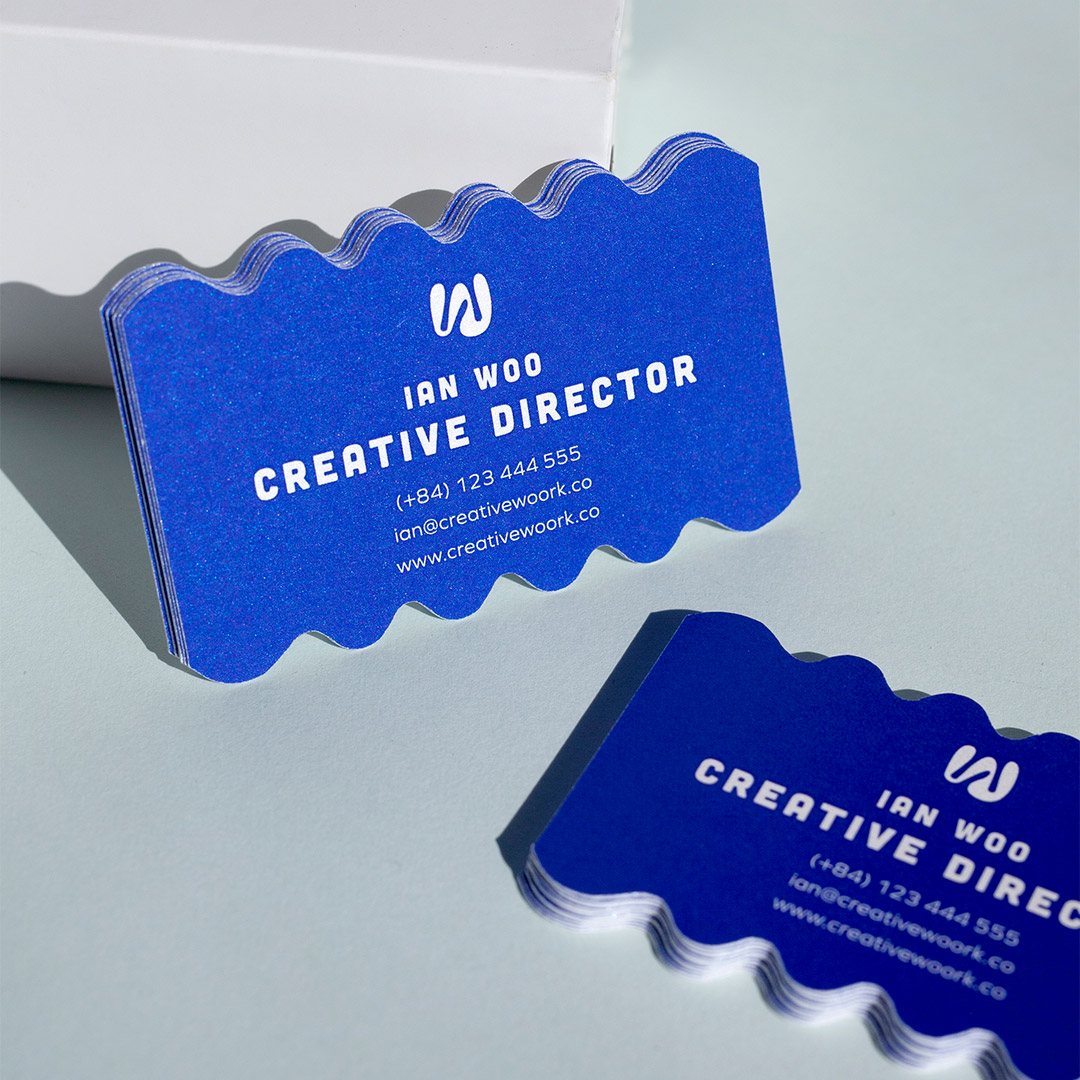
The standard business cards range is a 90 x 55 mm rectangle, with rounded corners and custom shapes also offered. Rectangle orders take 3 to 5 working days, and die cut shapes take 7 to 10 working days. 24 hour production is available on 300gsm Matte only. Shipping within the US is a flat rate, with free shipping once the order passes the threshold published on the site.
Before you approve a run, work through this checklist.
- Confirm the design proof in your inbox before production begins.
- Scan the printed QR code on a couple of different phones at its final size.
- Lay the card inside the parcel you use most often and confirm it sits flat.
- Buy enough for a typical month’s orders plus some spare.
- Check that the linked QR page is working before you pack the first card.
- Set aside one printed card from every batch as a reference.
Ordering insert cards in Australia
Australian sellers can use the same postcard printing in Australia range and business cards for Australian orders range on the local shop. Sizes, stocks, single sided or double sided printing, and the starting quantities of 50 postcards or 100 business cards match the US range. The metric measurements are the native ones on the Australian site, so A6, DL and A5 stay in millimeters rather than being converted to inches. Delivery is available standard or express across Australia.
Frequently asked questions
Which insert card size fits a poly mailer?
The safest choice for a poly mailer is the standard business card at 90 x 55 mm. Because poly mailers are thin and flexible, a compact card lies flatter inside them than a large postcard would. If your parcel is a padded envelope or a box, an A6 postcard has enough room, but reserve the larger formats for boxes.
What is the minimum order for insert cards?
Postcards begin at a quantity of 50. Standard business cards begin at a quantity of 50.
What should a thank-you insert card say?
Keep it to a brand mark, one line of thanks, and one next step. An example like “Thanks for starting this with us, find us on Instagram” is illustrative only. Adding a discount to the same card competes with the thanks, so keep the job singular.
How do I put a QR code on an insert card?
Build in a clear margin around the code, known as the quiet zone, and use a dark code on a light background. Point the code at one steady destination, such as the item’s page, a repeat-order page, or a place to leave a review. Before ordering the full batch, scan the code at the size it will print on several phones. Variable data printing can also create unique QR codes for each card.
Should care instructions and a discount go on the same card?
No. One card should have one job. Care instructions are read to solve a problem. A discount is read to prompt a purchase. A dated offer can also expire while the cards are still in stock.
How can I track whether insert cards bring customers back?
Add UTM parameters to the link printed on the card so an analytics tool can report visits from that link separately. Variable data printing can produce unique QR codes per card, which helps you tell batches or campaigns apart.
How does a postcard insert compare with a business card insert?
A postcard gives you generous space, with the A6, DL and A5 formats shown in the size table, leaving room for a short sequence or a larger QR code. A business card at 90 x 55 mm fits any parcel, including a poly mailer. Choose the postcard for message room and the business card for parcel fit.