A florist hands a card across the counter while a bucket of stems sits at the counter’s edge. A jeweller passes one over next to a tray of rings. An architect leaves one on the table after the site walk. In each of those seconds, the client is not just reading a phone number. They are testing whether the thing they are holding matches the work they are buying.
Those seconds are honest. Florists, jewellers, architects and interior designers sell taste, precision and a point of view, and a card whose finish feels rushed quietly undercuts the pitch. The choice is not simply between plain and beautiful. It sits between made-to-order pressed cards with a true impression, and faster digital cards with full colour, more stocks and lower minimums.
This guide matches each trade to a finish, compares the pressed and digital ranges side by side, and sets out what belongs on a trade card. You will find a quick match table first, then a section each for florist business cards, jewellery business cards, business cards for architects and interior designer business cards.
The short version
- Pressed letterpress, foil stamped and embossed foil cards are made on 300gsm Wild Cotton and take 18 to 23 working days once the design is approved, including delivery.
- Each pressed card carries one PMS colour or one foil colour and is printed front only.
- Digital cards take 2 to 5 working days once the proof is signed off, depending on the finish.
- Raised foil, Scodix and spot UV start at 250 cards.
- The sample pack covers the digital cards only; it does not include letterpress, foil stamped or embossed foil.
- Pressed card proofs have no maximum number of rounds, and nothing goes to press until you approve the design.
Matching a trade to a finish
Finish is part of the work. A florist who handles stems all day can carry a board with a soft, uncoated edge. A jeweller can let a raised metal mark catch the light the way a ring does. An architect can keep the card disciplined, and an interior designer can treat the stock as a small swatch. The right match should feel obvious once the brand is on the table.
The table below starts with the trade, not the product, because the brand and the calendar are easier to hold than a list of finishes.
| Trade | Pressed card that suits it | Why it fits | Faster option |
|---|---|---|---|
| Florist | Letterpress on white cotton board | A natural, crafted feel with one PMS colour and a soft board edge | Full-colour standard cards on 300 GSM Cotton, or coloured paper in Cream, Blush, Almond or Seedling |
| Jeweller | Embossed foil | A raised metal mark in gold, silver, rose gold or copper echoes the product | Raised foil on 450 GSM Artboard with Velvet Laminate in gold, silver or rose gold, from 250 cards |
| Architect | Letterpress | A restrained one-colour impression rewards a close look | Spot UV on a velvet matte ground |
| Interior designer | Embossed foil | A raised metallic accent suits a considered palette | Scodix or flat foil on navy or black stock |
Read the table from left to right. Start with the feel the brand already has, then check the deadline in the faster option column. If the pressed card needs 18 to 23 working days and the event is in two weeks, the faster column has to do the job. That is not a compromise in quality; it is a decision to buy speed and colour instead of a recessed impression.
Florist business cards
Florist work runs through shop counters, corporate and hospitality contracts, event styling for business clients, and market or pop-up stalls. In every case the card tends to be handed over while the customer is still looking at foliage, so the stock matters as much as the imagery.
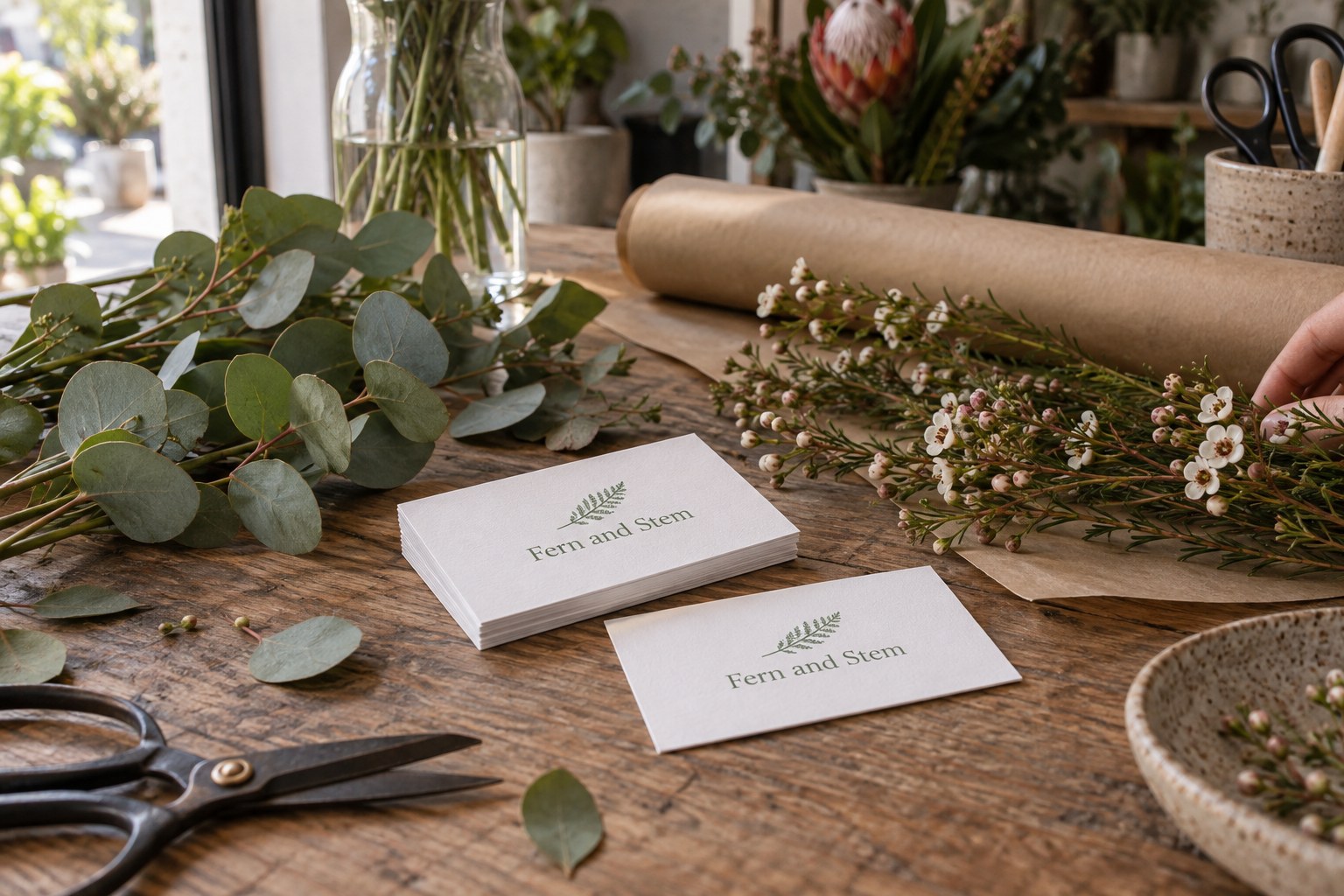
An order of letterpress business cards on white 300gsm Wild Cotton suits a florist whose brand is natural and crafted. The plate presses one PMS colour into the uncoated board, leaving the marks slightly recessed. That works well for a shop name set in clean type, a single stem drawn as a simple line, or a small monogram. The constraint is real though: a pressed card carries one colour and prints front only, so a detailed botanical illustration has to be simplified to one colour and clean shapes before it will hold together.
When the deadline is too short for the pressed card window, or the branding needs full colour, standard business cards print full colour on 300 GSM Cotton, with a 50-card minimum and most stocks need 3 to 5 business days after proof sign-off. Coloured paper business cards in Cream, Blush, Almond or Seedling are a softer stock option for a pop-up or store, with the same 50-card minimum and a 3 to 5 working day turnaround from proof approval for rectangle cards.
Jewellery business cards
Jewellery is sold up close. The client leans over a counter or a market table, so the card tends to be handled in the same moment as the metal. The finish should have a similar sense of weight and light.
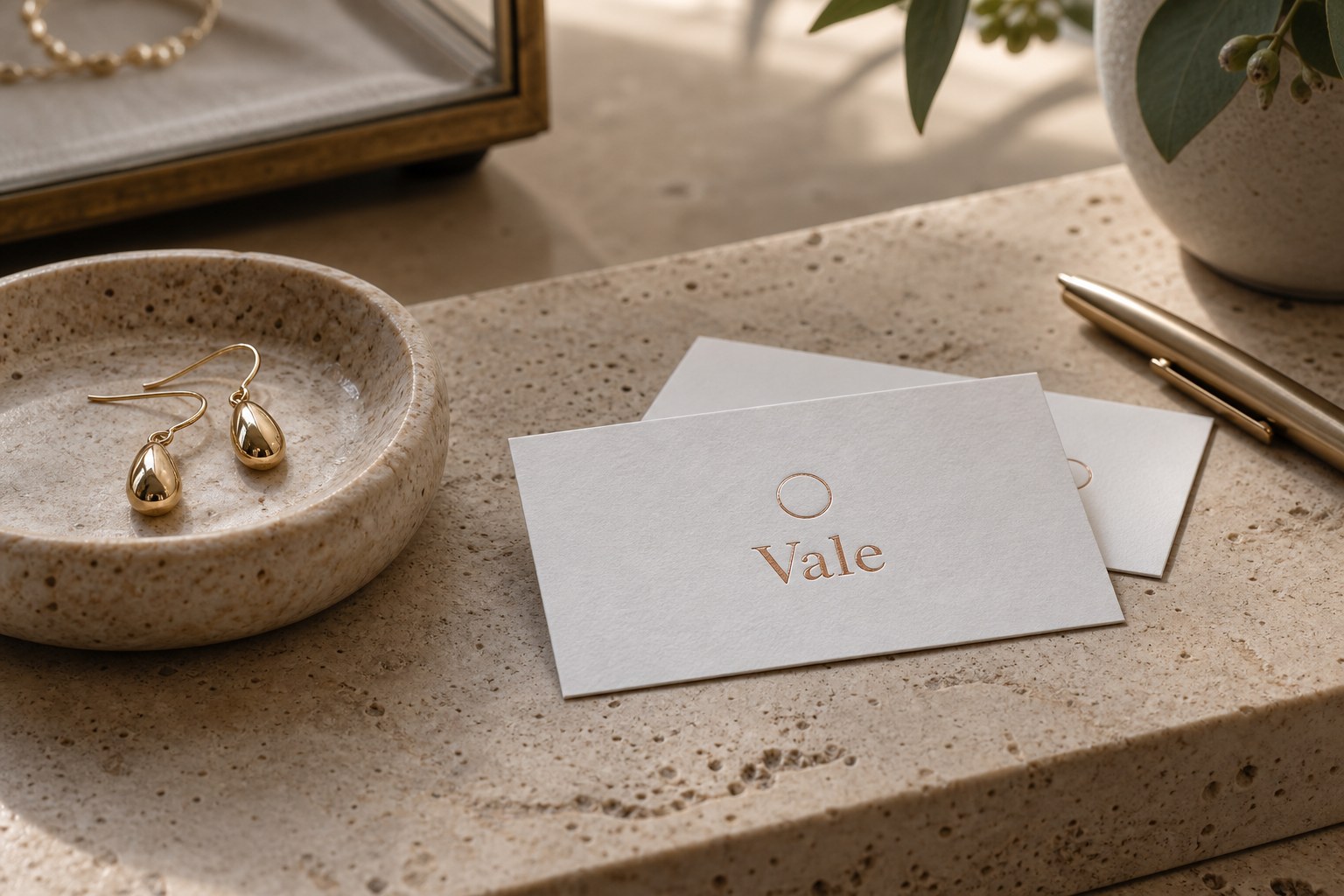
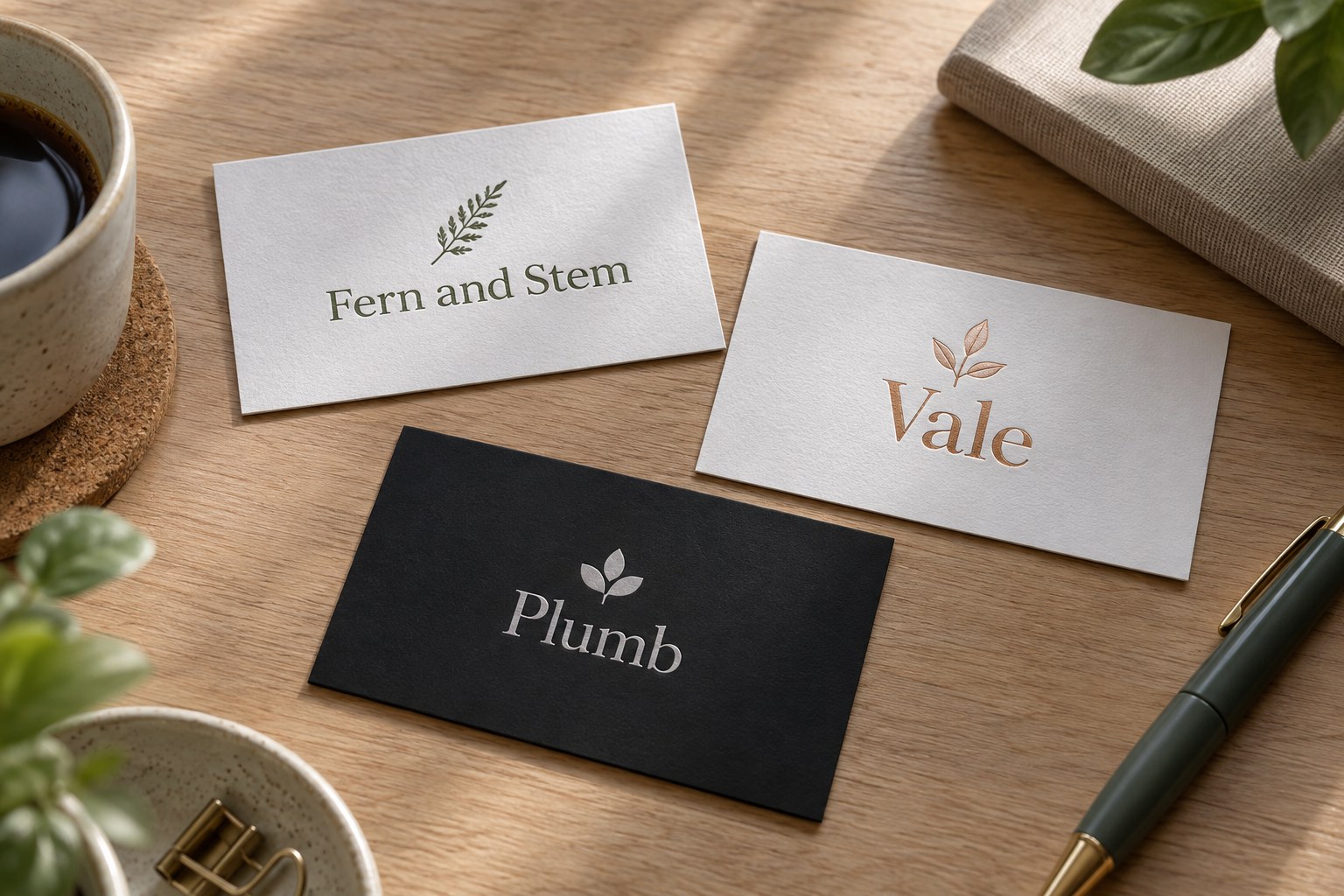
Embossed foil business cards create a raised metal mark that echoes a polished ring or cuff. Paperlust’s embossed foil cards use one combined die to apply foil and emboss in a single press hit, so the gold, silver, rose gold or copper foil sits raised in exact register on white 300gsm Wild Cotton. The card prints front only and carries one foil colour.
If the brand wants a quieter metal detail, foil stamped business cards press the foil into the board so the surface sits recessed rather than raised. It still catches light, but with less height. Both pressed options are made to order and take 18 to 23 working days from design approval, including delivery, so a maker booking into markets and trade shows needs to plan backwards from the event date.
When the show is close and you still want a raised metal mark, raised foil business cards lift gold, silver or rose gold on 450 GSM Artboard with Velvet Laminate. They start at 250 cards and take 2 to 4 working days from proof approval, which makes them a practical faster option for a metal mark without the pressed lead time.
Business cards for architects
Architecture practices tend to remove rather than add. The card usually holds little more than a name, a role, a phone number and a website, so the identity lives in the spacing, the alignment and a single quiet colour.
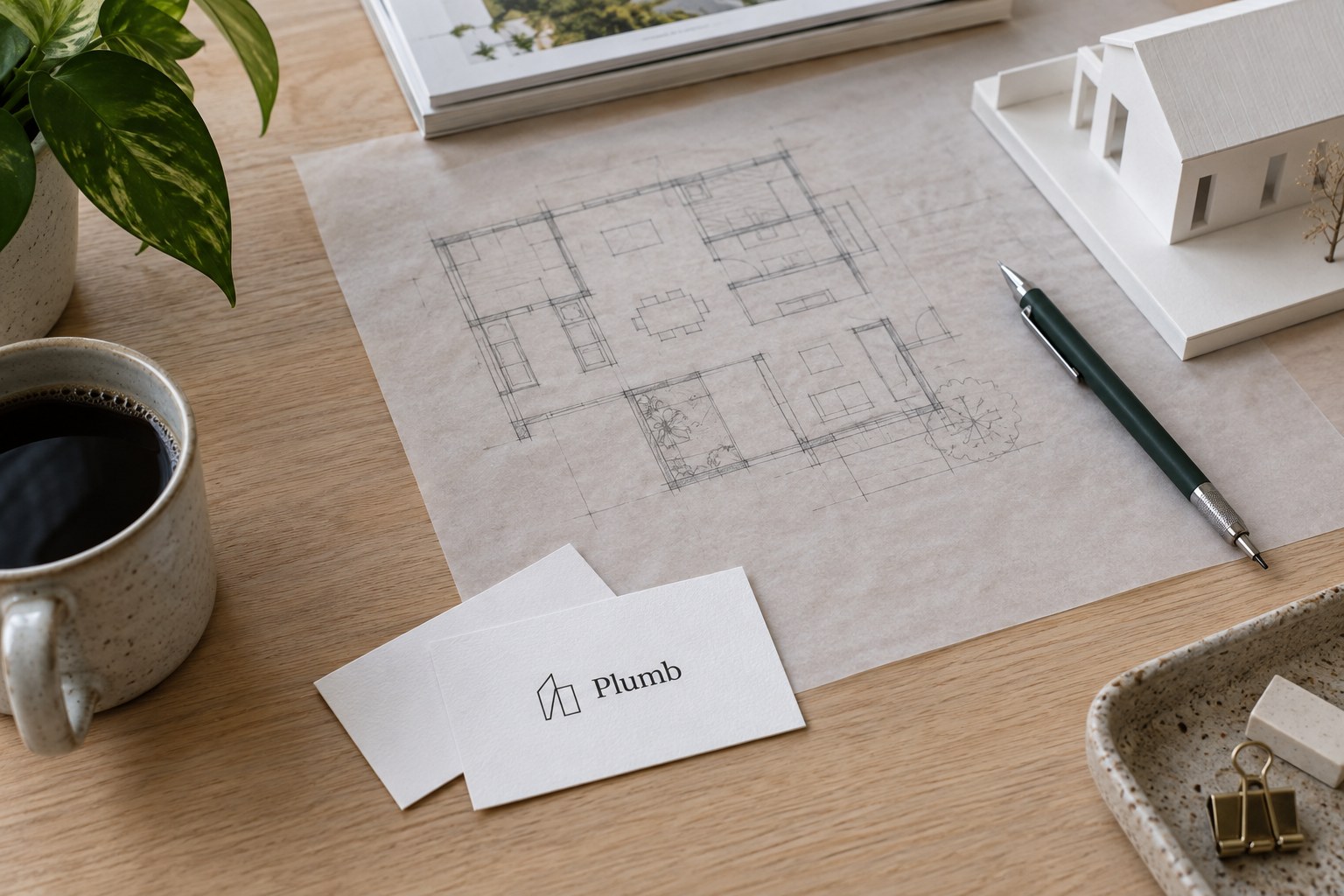
Letterpress business cards suit that restraint. Paperlust’s letterpress process presses one PMS colour into the board, leaving a recessed impression that rewards a close look. The stock is white 300gsm Wild Cotton, uncoated, and the card prints front only.
Some architects ask for blind embossing because they want relief without ink. Paperlust does not offer blind embossing or blind debossing. A practice that wants that effect can move close with letterpress in a muted PMS colour, where the impression carries the idea and the ink is intentionally quiet.
For a faster option, spot UV business cards place a clear varnish on selected areas over a velvet matte ground. The varnish is flat rather than raised, but it gives a sharp contrast between matte and gloss. The minimum is 250 cards. The 2 to 4 working day window starts only after the proof is approved.
For a closer look at how the pressed impression behaves, read the letterpress guide.
Interior designer business cards
An interior designer’s card often works as a small material sample. Before the recipient reads the name, they notice the colour of the stock, the edge, and how light moves across the surface. The card should suggest the palette of the studio.
A palette-led brand can start with coloured paper business cards, which come in 12 stocks from 270 to 300 GSM, including Black, Navy, Almond, Blush, Cream and Seedling. Full-colour CMYK prints on the lighter stocks, while white ink suits the dark stocks and keeps text crisp. The minimum is 50 cards per stock and design, and rectangle cards take 3 to 5 working days after you approve the proof.
For a metallic accent on navy or black stock, flat foil works in gold, silver, rose gold, copper or holographic. It applies foil to one side, while both sides can still be printed. Scodix business cards are another middle option: a raised clear or metallic gold gloss applied digitally over the printed design on 450 GSM Artboard with Velvet Laminate, starting at 250 cards.
Embossed foil remains the choice when the budget and timeline allow. It brings a raised metallic mark to the pressed cotton board, and it often suits a studio that presents itself through texture.
The pressed range and the digital range compared
The pressed and digital ranges answer different questions. The pressed cards are about the feel of the board and the depth of the mark. The digital cards are about colour, stocks and speed. The table below lines them up on finish, stock, minimum and lead time.
| Card | Finish | Stock | Minimum | Lead time |
|---|---|---|---|---|
| Letterpress | Pressed, one PMS colour, front only | 300gsm Wild Cotton | 100 cards | 18 to 23 working days once the design is approved, including delivery |
| Foil stamped | Pressed, one foil colour, front only | 300gsm Wild Cotton | 100 cards | 18 to 23 working days once the design is approved, including delivery |
| Embossed foil | Pressed, one foil colour, raised in register, front only | 300gsm Wild Cotton | 100 cards | 18 to 23 working days once the design is approved, including delivery |
| Flat foil | Digital, one foil colour on one side, both sides can be printed | 300 GSM Matte, 360 GSM Premium, 350 GSM Heavyweight, 270 GSM Navy or 270 GSM Black | 50 cards | 3 to 5 working days after the design proof is approved |
| Raised foil | Digital embossed foil, raised 100 to 200 microns | 450 GSM Artboard with Velvet Laminate | 250 cards | 2 to 4 working days from proof approval |
| Scodix | Digital raised clear or metallic gold gloss | 450 GSM Artboard with Velvet Laminate | 250 cards | 2 to 4 working days once proofs are approved |
| Spot UV | Digital clear varnish on selected areas, flat | 450 GSM Artboard with Velvet Laminate | 250 cards | 2 to 4 working days after proof sign-off |
| Coloured paper | Full-colour CMYK or white ink | 12 stocks, 270 to 300 GSM | 50 cards per stock and design | 3 to 5 working days from proof approval for rectangle cards |
Read the lead time column carefully. The pressed lead time of 18 to 23 working days includes delivery and begins at design approval. Digital windows run after proof approval and exclude delivery, so add transit time to any digital estimate.
Colour is the other divide. Letterpress, foil stamped and embossed foil carry one PMS colour or one foil colour, front only. Flat foil carries one foil colour on one side while both sides can be printed. Standard and coloured paper open up full colour. Pressed cards leave the back unprinted unless a plain digitally printed back is arranged separately.
Minimums also shift. Flat foil, standard and the coloured paper range start at 50 cards, while pressed orders run from 100 to 250 in steps of 10. Raised foil, Scodix and spot UV start at 250. Before choosing a finish, order the sample pack. It covers standard, flat foil, coloured paper, Scodix and raised foil, but not letterpress, foil stamped, embossed foil or spot UV. The pressed cards are not in the pack, and the proof confirms the design before anything is pressed.
What to put on a trade business card
The card should make the next step easy. Include your name, role, business name, phone, email, and website or portfolio. A QR code can open a website, portfolio or social media profile when scanned with a phone camera, which is useful for a jeweller or interior designer whose range changes often. If clients visit your shop or studio, include the street address.
Then avoid the four mistakes that most often undo a finish. First, do not force detailed artwork onto a one-colour pressed card; simplify the shape or choose a full-colour digital stock instead. Second, do not order a pressed card against a deadline measured in days, because its 18 to 23 working days starts from design approval and includes delivery. Third, do not treat every foil card as the same product. Flat foil, raised foil, foil stamped and embossed foil sit at different heights, use different stocks and are produced by different methods. Fourth, remember that the pressed cards leave the back unprinted.
Each trade has a natural finish, but the calendar and the quantity always get a vote. Compare the full range of custom business cards and choose the combination that fits both.
Frequently asked questions
Which finish suits a jewellery business?
Embossed foil suits a jewellery business when the card should echo polished metal: the foil is raised in exact register and comes in gold, silver, rose gold or copper. Foil stamped is the quieter alternative, with foil recessed into the stock. If the timeline is short, raised foil business cards offer a raised metal look on 450 GSM Artboard with Velvet Laminate in gold, silver or rose gold from 250 cards.
Can a florist get cards quickly for a market stall?
Yes, the digital range is the practical route. Flat foil and coloured paper start at 50 cards and take 3 to 5 working days after proof approval. Standard cards on 300 GSM Cotton print full colour, and most stocks take 3 to 5 business days after proof approval. Cream, Blush or Almond suit a florist stall. By contrast, pressed florist business cards require 18 to 23 working days after the design is approved, a period that includes delivery, so they do not suit a deadline measured in days.
Why do architects often choose letterpress?
Letterpress presses an inked plate into the sheet, leaving a recessed impression that rewards a close look. The one PMS colour limit encourages the restrained typography and spacing many architecture practices already use. Paperlust does not offer blind embossing, so an architect who wants relief without a heavy ink can choose letterpress in a quiet colour and let the impression carry the identity.
How do the working days differ between pressed and digital cards?
Pressed letterpress, foil stamped and embossed foil cards have a lead time of 18 to 23 working days from approval of the design, with delivery to an Australian address included. Digital finishes vary. Flat foil needs 3 to 5 working days counted from proof approval. Raised foil, Scodix and spot UV need 2 to 4 working days from proof sign-off. The coloured paper range needs 3 to 5 working days after you approve the proof.
Should I include a QR code on a trade business card?
Include name, role, business name, phone, email and website or portfolio. A QR code can open a website, portfolio or social media profile when scanned with a phone camera, and a street address matters if clients visit your shop or studio. A pressed card keeps the front to one colour and the back unprinted unless you arrange a separate printed back.
What does the sample pack include?
The sample pack covers standard, flat foil, coloured paper, Scodix and raised foil. It does not include letterpress, foil stamped, embossed foil or spot UV. Pressed card proofs have no maximum number of rounds, so you can refine the design before anything goes to press.