Choosing between A4, A3 and A2 for your framed print should not require a spreadsheet. These three sizes cover the full range of common Australian wall spaces: compact desk frames, mid-size wall accents and large statement pieces for a feature wall or above the sofa. This guide gives you the exact centimetre dimensions for each, explains how they compare within the A-series system, and helps you match the right size to the right spot in your home.
Framed print sizes at a glance
| Size | Dimensions (cm) | Best for | Price |
|---|---|---|---|
| A4 | 21 x 29.7 cm | Desk, bedside table, gallery wall accent | $79 |
| A3 | 29.7 x 42 cm | Above desk, nursery, gallery wall cluster | $129 |
| A2 | 42 x 59.4 cm | Feature wall, hallway, above sofa or bed | $179 |
All sizes available in portrait or landscape. Explore our custom framed prints to upload your artwork or photo.
Understanding the A-Series Paper System
The A-series is the standard paper sizing system used in Australia and most of the world. Each size is exactly double the area of the size below it: fold an A3 in half and you get two A4 sheets; fold an A2 in half and you get two A3 sheets. This consistent ratio is why A-series frames mix so naturally on a gallery wall; the proportions align regardless of which sizes you combine.
Here is the full run of A-sizes relevant to framing and wall art, with centimetre dimensions:
Paperlust frames prints in A4 (21 x 29.7 cm), A3 (29.7 x 42 cm) and A2 (42 x 59.4 cm). The next two sizes up, A1 poster size, A0 poster size, are poster formats with their own pages, not framed prints.
Of the full series, A4, A3 and A2 are the sizes that suit most residential spaces: large enough to have visual presence, proportioned to frame and hang comfortably, and available as printed-and-framed products rather than bare paper. You can browse the full collection of wall art prints on the Print Shop to see designs sized and ready to frame.
Which Size Suits Which Space?
A4 (21 x 29.7 cm): Desk, Shelf and Gallery Accent
At 21 x 29.7 cm, A4 is the most compact of the three and the most flexible for small-space situations. It sits comfortably on a desk or bedside table using the fold-out stand included with every frame, and it holds enough detail to work clearly on a wall without being large enough to dominate one.
Good situations for A4:
- On a desk or bedside table. The built-in fold-out stand means no wall fixing is needed. A single A4 on a work desk or bedside table reads as considered rather than cluttered, particularly for a favourite photo or a short piece of text art.
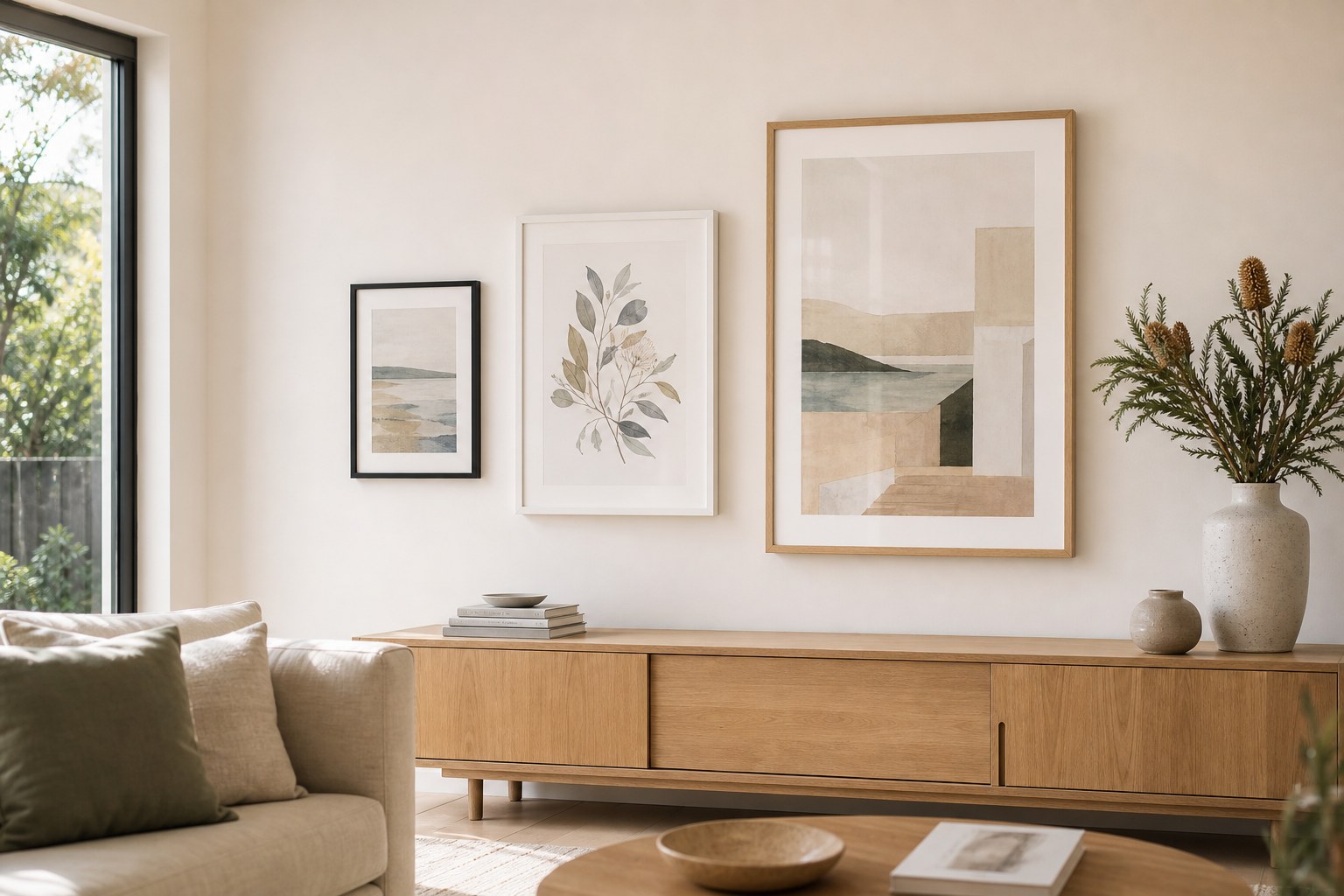
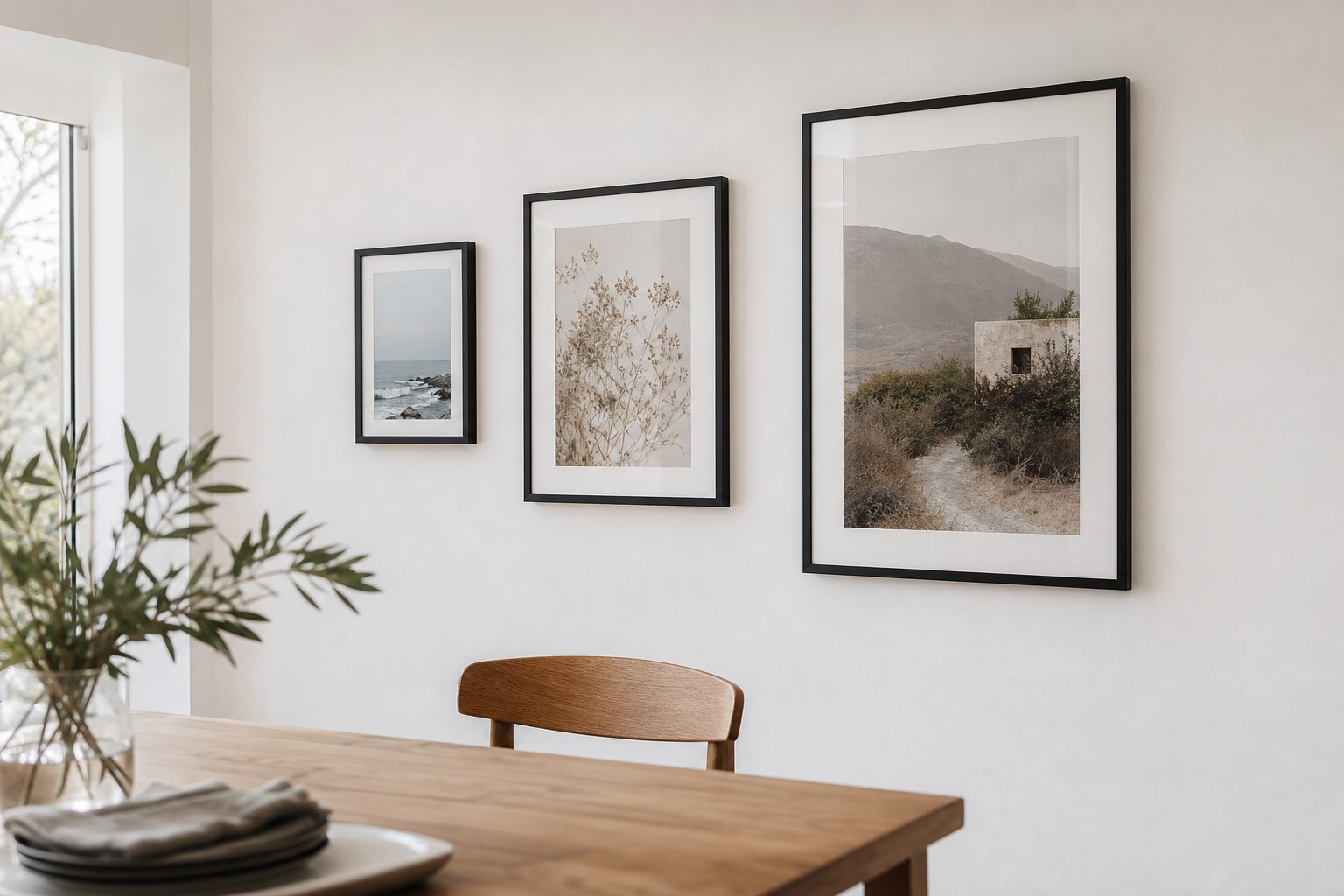
- In a gallery wall grid. A4 is the natural building block of a tight salon-style gallery arrangement. Three to five A4 prints in matching frames form a clean grid that works well in a hallway, stairwell or above a dining table.
- Paired with a larger size. One A3 alongside two A4 frames creates an asymmetric grouping that suits a short wall section above a console table or beside a doorway.
Priced at $79, A4 is also the most accessible starting point for personalised wall art.
A3 (29.7 x 42 cm): Versatile Mid-Size for Most Walls
A3 at 29.7 x 42 cm is the size that works across the widest range of rooms. It is large enough to hold its own as a solo piece on most walls, well proportioned for gallery wall clusters, and equally at home in a home office, a nursery or a living room.
Common placements for A3:
- Above a work desk or study nook. Centred above a desk at roughly eye height when seated, one A3 frame fills the wall space naturally without overwhelming it.
- In a nursery or child’s bedroom. Illustrated name prints, botanical drawings and alphabet art at A3 are legible from across the room and visually proportioned for the smaller scale of a child’s space.
- As the centrepiece in a gallery wall. One A3 placed in the middle of a mixed-size arrangement with two or three A4 frames around it creates a natural focal point without requiring a full A2.
- In a hallway. A series of A3 prints spaced evenly along a hallway wall creates a gallery feel that is cohesive and straightforward to install.
At $129, A3 delivers a noticeable wall presence at a mid-range price point.
A2 (42 x 59.4 cm): Feature Wall and Statement Pieces
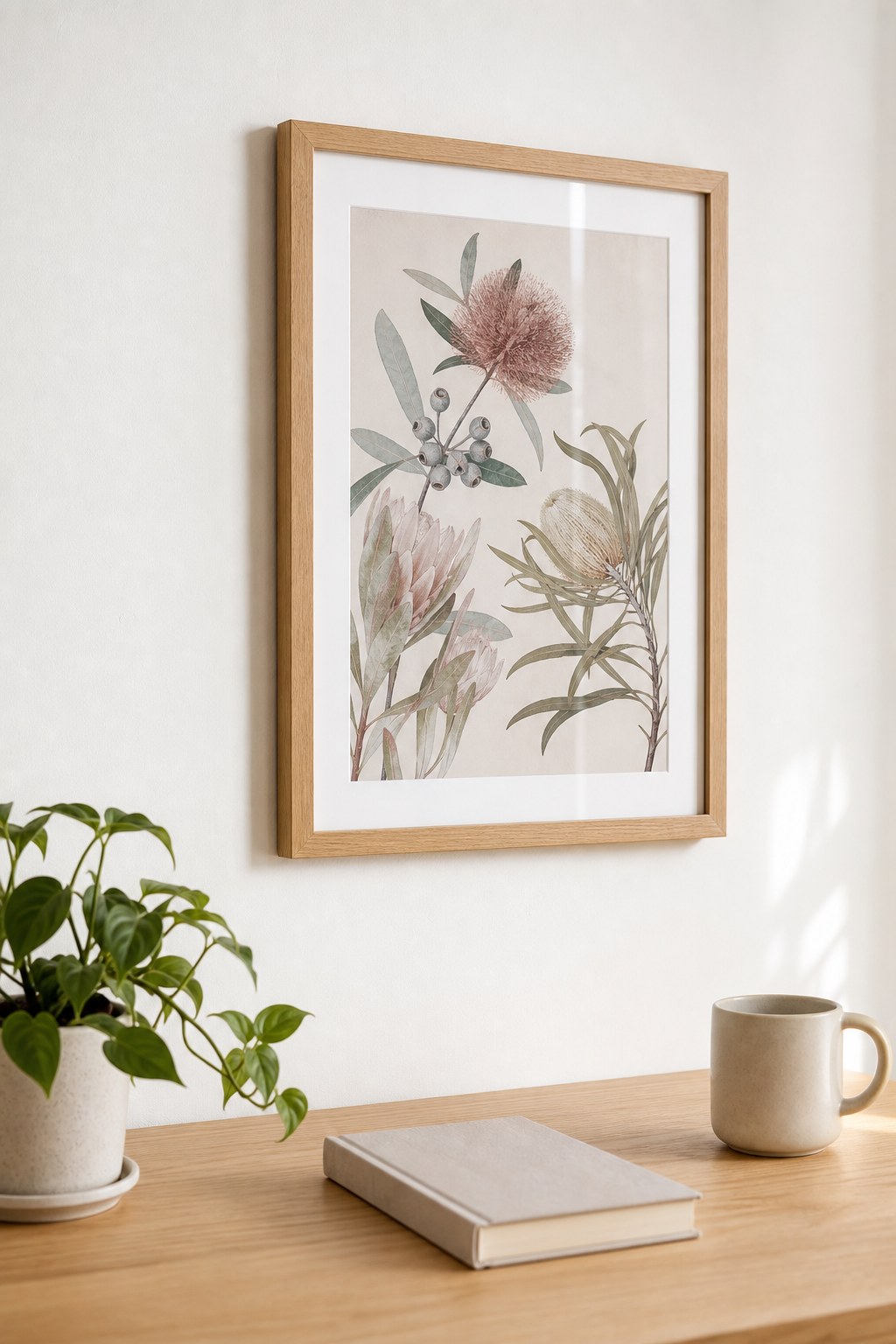
At 42 x 59.4 cm, A2 is four times the area of A4. The difference is immediate when you compare the two side by side. An A2 framed print is not a desk ornament or a supporting element in a grouping; it is a focal point that anchors a wall on its own.
Ideal placements for A2:
- Above a sofa or bed. The most common placement for A2 art in Australian homes. Centre it horizontally above the furniture, leaving approximately 15 to 20 cm between the top of the sofa back or bedhead and the bottom of the frame.
- On a feature wall. A single A2 on an otherwise bare feature wall makes an immediate impression, particularly when the surrounding furniture is low and the wall has height to fill.
- In a wide hallway or entry. A2 suits hallways where each print occupies its own section of wall, or an entrance where the frame is the first thing seen on arrival.
The shatterproof plexiglass fitted to all frames in this range is especially relevant at A2 scale. Plexiglass at this size is noticeably lighter than an equivalent glass panel, making it simpler to hang and safer if the frame is knocked during installation or repositioning.
At $179, the A2 is the most significant investment in the range, and it reads accordingly on the wall.
Mixing Sizes: Arranging a Gallery Wall
One practical advantage of the A-series system is that sizes combine well because their proportions are consistent. A gallery wall using A4 and A3 frames is a particularly strong combination: the shared aspect ratio means prints align naturally along both horizontal and vertical axes, even when frames differ in size.
A few arrangements that work well:
- Two A4s beside one A3. Place the A3 vertically with the two A4s stacked beside it. This creates a compact rectangular grouping suited to a short wall section above a console or sideboard.
- Five A4s in a staggered grid. Three prints across the top row and two below creates a grid with natural breathing room between frames. Works well in a stairwell or a dining room.
- One A3 centrepiece with A4 flanking. Place the A3 at eye height in the centre, then position one A4 on each side slightly lower. Asymmetric but visually balanced.
Keep the combined grouping in proportion to the wall and to any furniture sitting beneath it. As a general guide, the total width of the arrangement should not exceed two thirds of the width of the furniture below.
Frame Construction: Solid Wood, Plexiglass and Fine-Art Paper
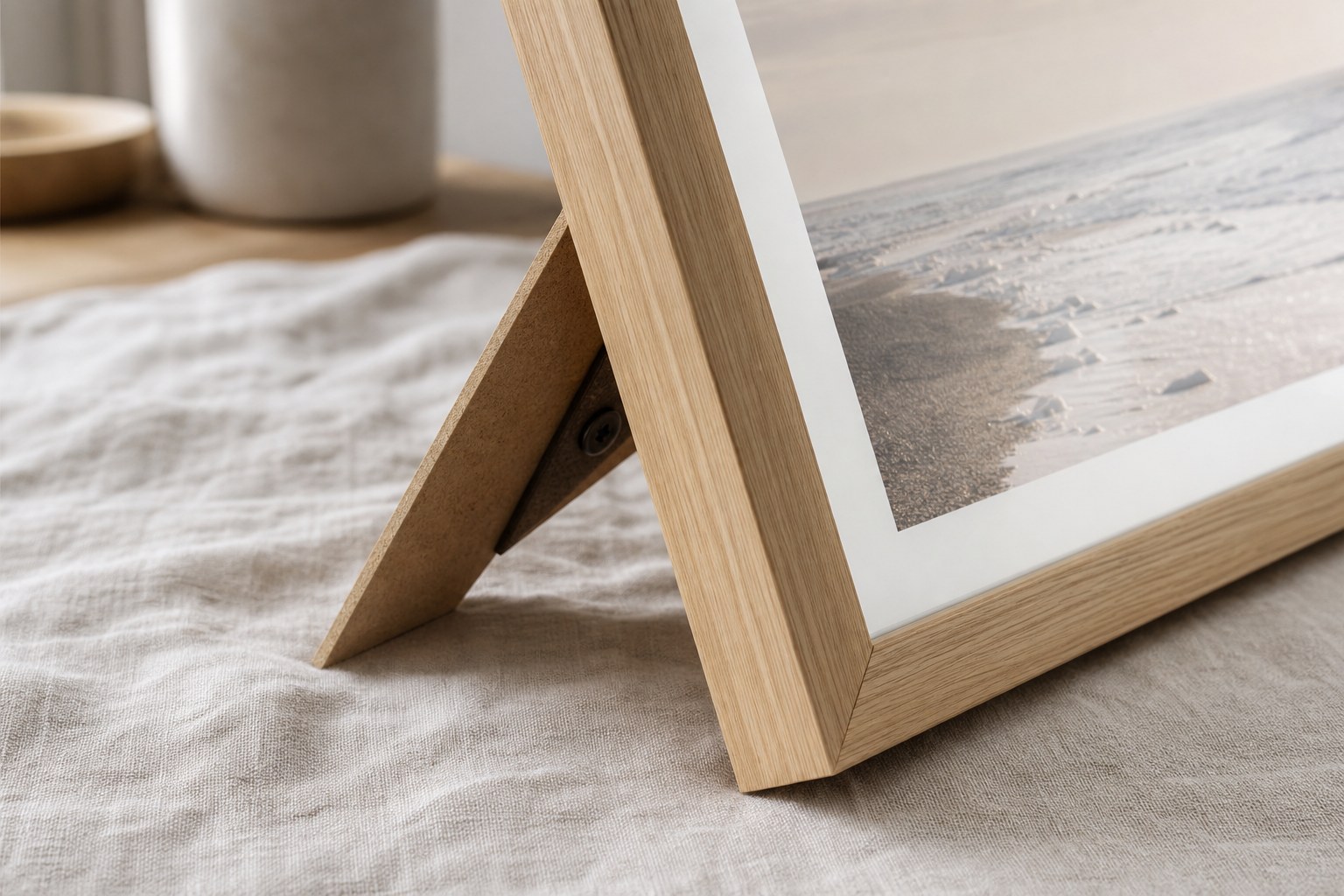
Every framed print uses the same construction across all three sizes. The frame is solid wood, available in three finishes: Black, White and Natural Oak. All three are neutral enough to suit most Australian interiors, from a coastal renter’s white walls to a mid-century modern timber palette.
The glazing is shatterproof plexiglass rather than standard glass. At A4 and A3 the difference is modest. At A2 it becomes meaningful: a plexiglass panel at this scale is noticeably lighter and will not shatter if the frame is dropped or bumped during mounting.
The print is made on 170gsm matte fine-art paper. Matte paper avoids the reflective glare that appears on glossy photographic prints, and reads clearly in most lighting conditions, including rooms with natural light from multiple directions.
Each frame ships with two display options already fitted: a fold-out stand for placing on a surface, and hanging hardware for mounting on the wall. Both are ready to use straight from the box; you do not need to choose at the time of ordering.
Production and Delivery
Production times vary by size:
- A4 is made in Australia and typically dispatched in around 6 to 7 days.
- A3 and A2 are made to order in New Zealand and typically dispatched in around 10 to 13 days.
Shipping is a flat rate of $15 Australia-wide for all framed prints, regardless of size. There are no additional freight charges for the larger A2.
FAQ
What is the biggest framed print size available?
The largest size in the range is A2, measuring 42 x 59.4 cm and priced at $179. It is best suited to feature walls, above a sofa or bed, and wide hallways where a single large piece can occupy its own wall space.
Are A-series frames portrait or landscape?
All three sizes (A4, A3 and A2) are available in both portrait orientation (taller than wide) and landscape orientation (wider than tall). The dimensions are the same in either case: portrait A3 is 29.7 cm wide by 42 cm tall; landscape A3 is 42 cm wide by 29.7 cm tall.
What is A3 in centimetres?
A3 measures 29.7 x 42 cm. It is exactly double the area of A4 and exactly half the area of A2.
Which framed print size is best for a gallery wall?
A4 and A3 are the most practical sizes for a gallery wall arrangement. A4 works well in grids of three to five prints, while A3 is a strong centrepiece in a mixed-size grouping. A2 can appear in a gallery wall but typically reads better as a standalone statement piece rather than one element among several smaller frames.
How long does delivery take for framed prints?
A4 framed prints are made in Australia and dispatched in around 6 to 7 days. A3 and A2 are made to order in New Zealand and dispatched in around 10 to 13 days. Delivery time after dispatch varies by location. All sizes ship for a flat $15 Australia-wide.