A bathroom label lives in the worst part of the house for printed paper. Steam fills the room, wet hands reach for the pump, and fingers leave a smear of oil on the jar. A label that looks fine on launch day can lift, blur or tear once it meets those conditions. For cosmetic, skincare and soap makers, the first decision is not the shape or the font. It is whether the label stock matches the conditions it will actually meet.
The Cosmetic Labels page covers roll labels for serum bottles, cream jars, tubes, pump bottles and soap packaging. This guide works through stock choice, container sizing, proofing, roll minimums and the labelling responsibility that sits outside print.
Match the material to the job
White Synthetic with matte or gloss laminate is the practical wet-use choice for containers that may meet moisture, condensation, wet hands or regular handling. It is a synthetic film, not paper. The waterproof vinyl labels page lists the face stock as synthetic polypropylene film with a permanent acrylic adhesive, which is the material class to expect for high-contact bathroom use.
| Stock | Finish options | Best used for | What to do before ordering |
|---|---|---|---|
| White Cast Paper | Matte Laminate, Gloss Laminate | Dry indoor packaging such as sealed boxes or inner cards | Check the package will not meet regular moisture or oil. |
| White Synthetic | Matte Laminate, Gloss Laminate | Jars, pump bottles, tubes and closures that meet moisture or handling | Test on the actual container and check curved surfaces. |
| Clear Synthetic | Gloss Varnish | Transparent film option on clean glass or rigid packaging | Ask for white ink underprint behind light artwork or fine text. |
Matte laminate reduces glare and gives a quieter surface. Gloss laminate deepens colour and adds more reflection. Finish and stock are chosen together on the product page. A design that reads well as a flat proof can still disappear against dark or tinted glass, so check the label at print size before uploading.
Clear Synthetic is a transparent film offered with gloss varnish in this range. Because the background is clear, colours can read lighter than they do on a white stock. White ink prints the white areas of the design, such as text or logos. It can also be used as an underprint beneath coloured elements to keep them from going transparent. On a dark or amber bottle, fine text needs that underprint or a switch to White Synthetic. The clear film can give a low-visibility border-free appearance on smooth, clean glass, but edges may still be visible on textured, coloured or curved surfaces. Treat it as a visual effect to test, not a guaranteed invisible finish.
Measure the container you actually have
The capacity printed on a bottle is not a panel size. Two 100ml bottles can have different diameters, shoulder heights and flat faces. Start from the physical package.
For a straight cylindrical section, wrap a soft tape or paper strip around the jar or bottle at the label position and record the circumference. Choose the seam gap you want, then subtract that gap. For example, if the measured circumference were 157mm and the chosen gap were 3mm, both hypothetical numbers for this calculation, the wrap width would be 154mm. That is an example only, not a supplier measurement. The seam gap is a layout choice, not a fit rule.
For tapered walls, ribs, shoulders and most pump tops, the cylinder calculation is only a starting point. Cut a paper blank, place it on the surface, and look for lifting, creasing or tilting. If the label has to bend in more than one plane, it may need a shorter panel, a different position, or a custom shape. The bottle and jar label sizing guide steps through those checks. The sticker sample testing guide helps you log what you see before you commit to a full roll.
For tubes, measure the flat printable panel at rest. A tube that flexes does not automatically mean any label will move with it. Ask the label stock and adhesive supplier whether the chosen material is suitable for the flexing you expect, then test on the actual product and container before ordering full rolls.
Label placement and application
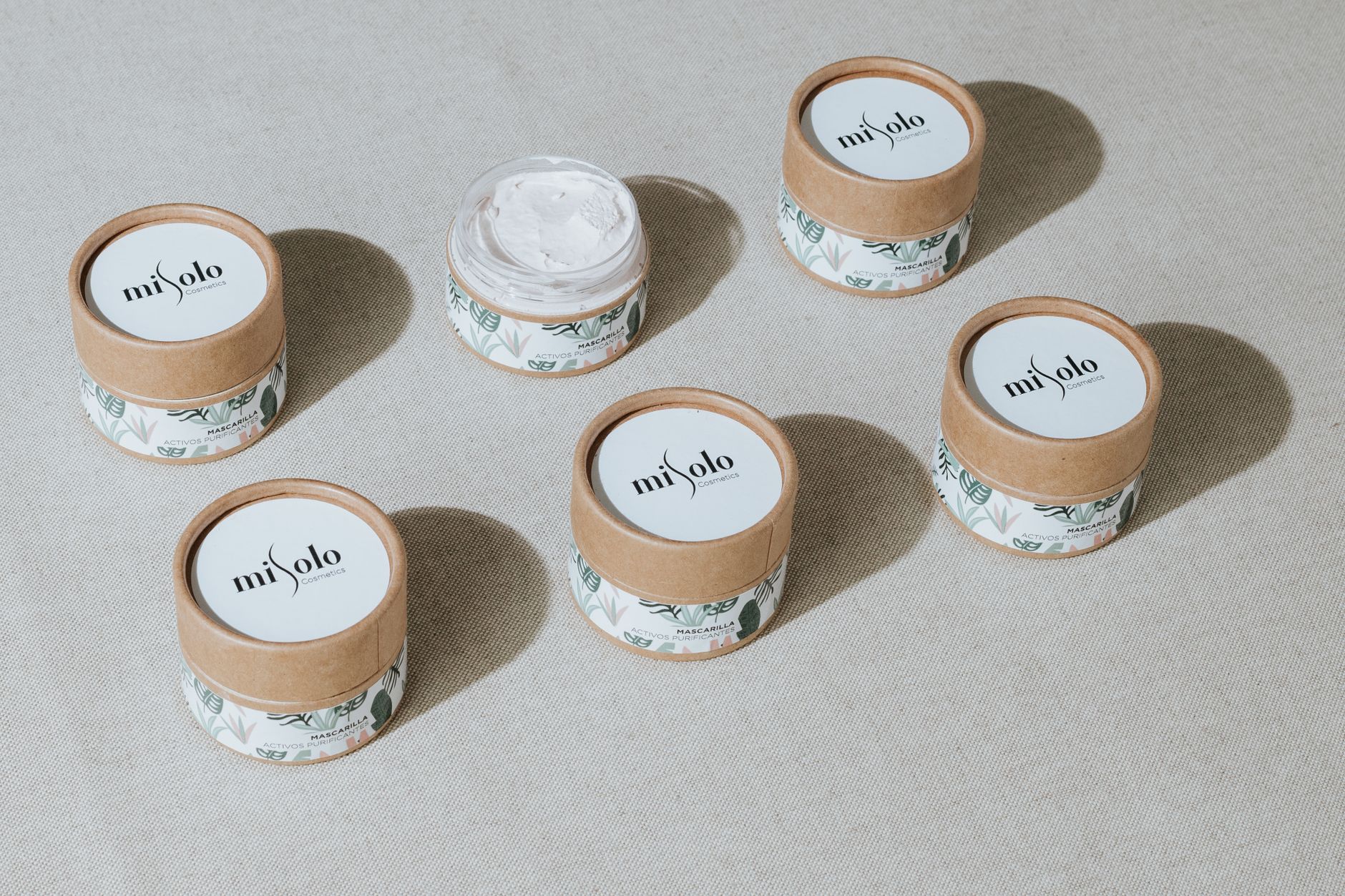
Roll labels need a clean, dry, stable surface. A bare soap bar is a poor host because the surface is soft, often oily, and changes as the bar cures. For naked soap, balms and solid products, the label usually belongs on an outer wrap, band, box, sleeve or tub. Select outer packaging that gives the label a clean, stable surface and apply the roll label to that packaging. Check with your packaging supplier that the surface is suitable before committing.
Before application, the container should be clean and dry. Follow the label material and adhesive supplier’s dwell time before exposing the labelled container to moisture or handling. Use the cleaning and application method recommended by your container and applicator supplier. Coated glass and treated plastics can behave differently, so test on the actual container material.
How a cosmetic roll-label order is configured
On the Cosmetic Labels page, choose shape, size, stock, finish and the number of designs, then upload artwork. The product is printed one-up on rolls of 500 labels per roll, ready for hand application or a labelling machine. The roll minimum applies to each design and each size. A 500-label total split across designs, sizes, stocks or finishes does not meet each configuration’s minimum. A total of 1500 across three designs of 500 each does meet the minimums, because each design has its own 500-label roll.
Treat any change in size, stock, finish or shape as a separate configuration. Use separate configurations or orders, or ask the team to confirm a mixed brief before uploading. Price each selected configuration on its live product page.
For rectangular roll labels, open the rectangle labels page. For other shapes and constructions, browse the custom labels category.
Before upload, follow the artwork instructions for the product you have selected. Not all products have a template. If a template is provided, use it for document size, finished trim, bleed and safe area. Do not transfer a template from a different product.
Standard roll labels are printed in 48 hours once you approve the proof. That is production time, not delivery. Delivery timing is separate and depends on destination and method.
Multi-scent ranges and the roll minimum
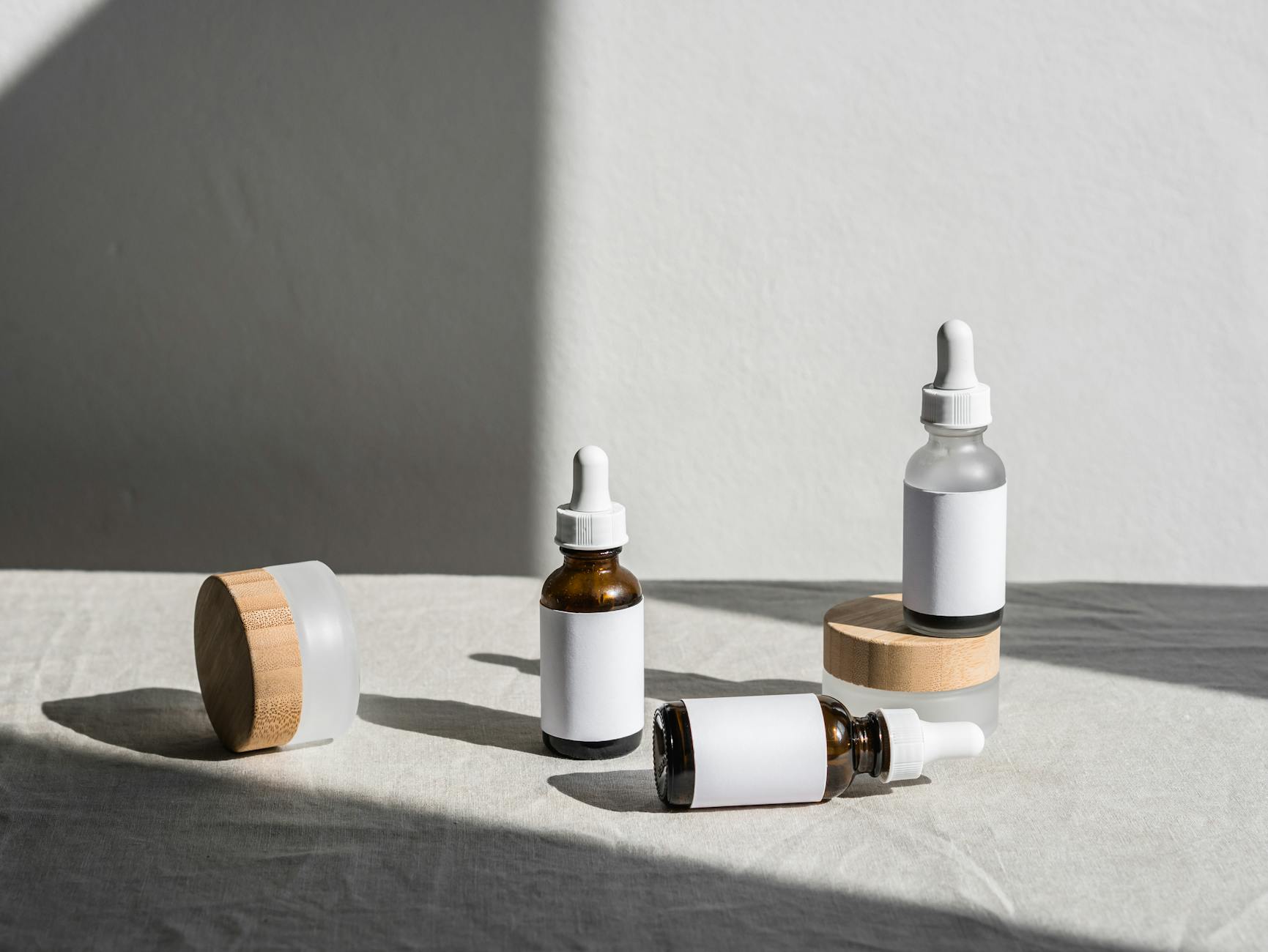
Say you make one cream in three scents and only the front label changes. That is three designs, one per scent. Each design runs on its own roll of 500, so the total is 1500 front labels across three rolls. Now take one product variant with a front, lid and back label. That single variant is three designs, and each design must meet the 500-label minimum. Do not combine the two examples: three scents with front, lid and back labels for every scent is nine designs.
Give every variant its own file name, shape, finished width and height in millimetres, material, finish, quantity, version and proof status. The multiple product variant label artwork guide outlines a planning matrix for that handoff.
Batch codes printed as part of a static file are different from variable data, where every label carries a unique code. Variable data is not automatic. If each label must vary, ask the team before ordering.
Clear roll labels and white ink
Clear roll labels have their own product page at clear labels. They use Clear Synthetic with a gloss varnish, and white ink underprinting can sit beneath coloured areas or form white printed text. The clear background can work well on clean glass and rigid packs, but it will not look identical to a white label. The clear labels for product packaging article shows how the visual effect changes on different containers.
Jars, candles and heat
Jar labels follow the same measuring approach, but candle conditions are different. A candle label can sit near a warming glass wall and fragrance oils. White Synthetic is the wet-use option on the outside of the container, but it is not a heat rating or certification. Confirm the material suitability for your intended vessel and use with the label supplier before you commit to a full roll. For candle and jar label questions, see the jar, candle and food label printing article.
Australian labelling responsibility is separate from print approval
Print approval is not regulatory approval. The digital proof checks layout, text and the dimensions you declared. It does not confirm Australian product safety compliance, and it does not check physical colour, adhesion or stock behaviour. For cosmetic and skincare products, start with the ACCC cosmetic ingredients labelling guide, then confirm the requirements for your exact product before final artwork. The label examples in this article are not complete legal labels.
Frequently asked questions
What stock should I choose for skincare labels that get wet?
Start with White Synthetic with matte or gloss laminate. That is the wet-use option for moisture, condensation and regular handling in the roll-label options. White Cast Paper is the paper option for dry indoor packaging only. Test the chosen stock on the actual container before ordering.
How do I measure a label for a jar or pump bottle?
For a straight cylindrical zone, measure the circumference where the label sits and subtract the seam gap you want. For tapered, ribbed or shouldered surfaces, cut a paper blank and test it on the container. Capacity in millilitres or grams does not define the panel size.
Do I need a separate roll for every scent or size?
Yes. The standard roll minimum is 500 labels per design and per size. Up to five designs can run in one cosmetic label order, each on its own roll. Different sizes, stocks or finishes are separate configurations. A total of 1500 across three designs of 500 each meets the minimum because each design has its own 500-label roll.
Can I use clear roll labels on dark cosmetic bottles?
You can, but test first. Clear Synthetic has no white background, so fine text can fade into a dark or tinted bottle. White ink underprint is available beneath the design. If contrast is still weak, White Synthetic is the safer base.
Does the emailed proof check Australian labelling requirements?
No. The proof is a digital check of layout, text and declared dimensions. It does not confirm legal compliance or physical colour, adhesion and stock behaviour. Check your product against the ACCC cosmetic ingredients labelling guide before final artwork.