Picking the right label format affects how professional your product looks on the shelf, how cleanly the label applies to your container, and how well it holds up to moisture, refrigeration, or regular handling. This guide covers every label shape and size available from Paperlust Print Shop, so you can choose confidently before you order.
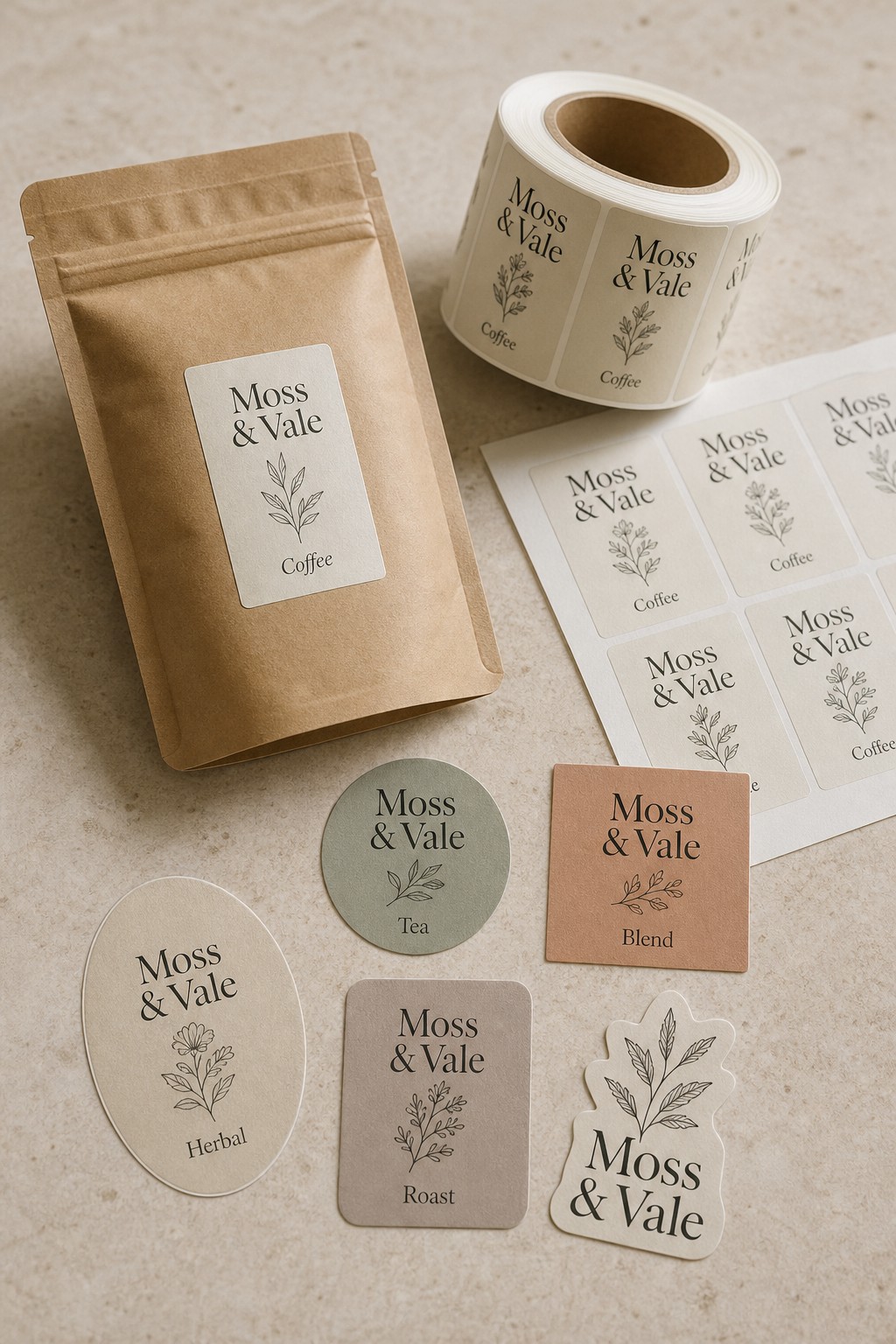
The shape you choose sends a signal about your brand. Square and rectangle labels read as structured and modern. Oval and circle formats feel organic and handcrafted. Die-cut shapes make a strong point-of-difference statement on a retail shelf. Getting this right from the start saves costly reprints and reorders down the track.
This guide covers all eight label formats, roll versus sheet supply, sizing guidance by container type, and a comparison table to help you decide quickly.
Cheat sheet
- Rectangle is the default for most products. Sits flat on boxes, flat bottles, and pouches. From $0.37/label.
- Circle and oval suit round lids, curved surfaces, and anywhere a flat rectangle would buckle.
- Square works well for candle tins, cosmetic pots, and clean modern branding. From $0.36/label.
- Rounded corner reduces corner lifting on high-touch or refrigerated products. Same base price as rectangle.
- Die-cut cuts labels to any custom shape; requires a vector dieline in 100% Magenta Spot Colour.
- Clear creates a no-label look where your design appears printed directly on the container. From $0.50/label.
- Foil labels add metallic shine in gold, silver, rose gold, copper, and holographic finishes. From $0.69/label, with 3-5 working day production.
How Container Shape Drives Label Choice
The surface geometry of your container determines which label shapes apply cleanly and stay put. A tall slim bottle has a narrow vertical panel; a wide candle tin has a flat circular lid; a kraft pouch has a broad, flat front. Match your label shape to the surface first, then refine your choice based on brand aesthetic.
Some practical pairings:
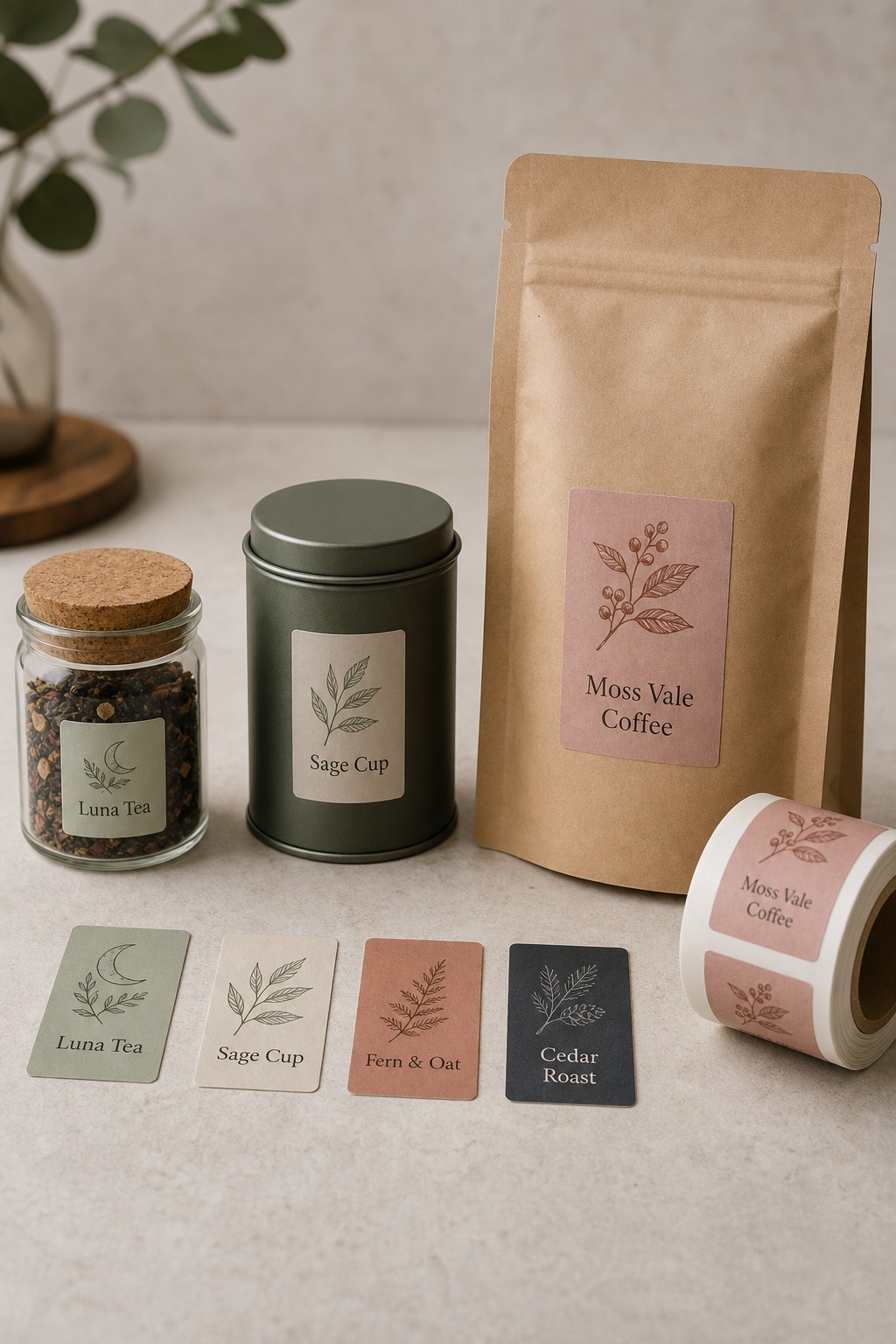
- Cylindrical bottles and jars: rectangles or ovals wrap the curved body; circles sit flat on the lid
- Flat surfaces (boxes, pouches, folded bags): rectangles and squares apply flush without buckling
- Irregular or tapered shapes: oval or die-cut labels follow the contour more naturally
- Premium glass or clear containers: clear labels create the no-label effect
Sizing matters equally. A label that is too wide will buckle at the edges on a cylindrical container. A label that is too tall will overlap the shoulder curve of the bottle. Leave 2-5mm clearance at each edge.
To measure a cylindrical container: wrap a strip of paper around it and mark where the strip meets itself. The length from edge to mark is your maximum label width. Measure the height of the flat area between the shoulder taper and the base for your maximum label height.
Rectangle Labels
Rectangle labels are the most widely used label format in Australia. Their straight edges and parallel corners sit flush against flat panels, making them practical for bottles, boxes, sachets, pouches, and packaging inserts.
Common uses include wine and condiment bottles with a wide, flat body, product back panels for ingredients lists and barcodes, shipping and logistics labels where text density is high, and compliance panels on cartons and retail packaging. Rectangles are also the most economical choice at high volumes because they nest tightly on a roll with minimal material waste.
Common standard sizes: 100mm x 50mm for small bottles and jars; 150mm x 75mm for wine or sauce bottles. Custom sizes are available on request via the product page.
Circle Labels
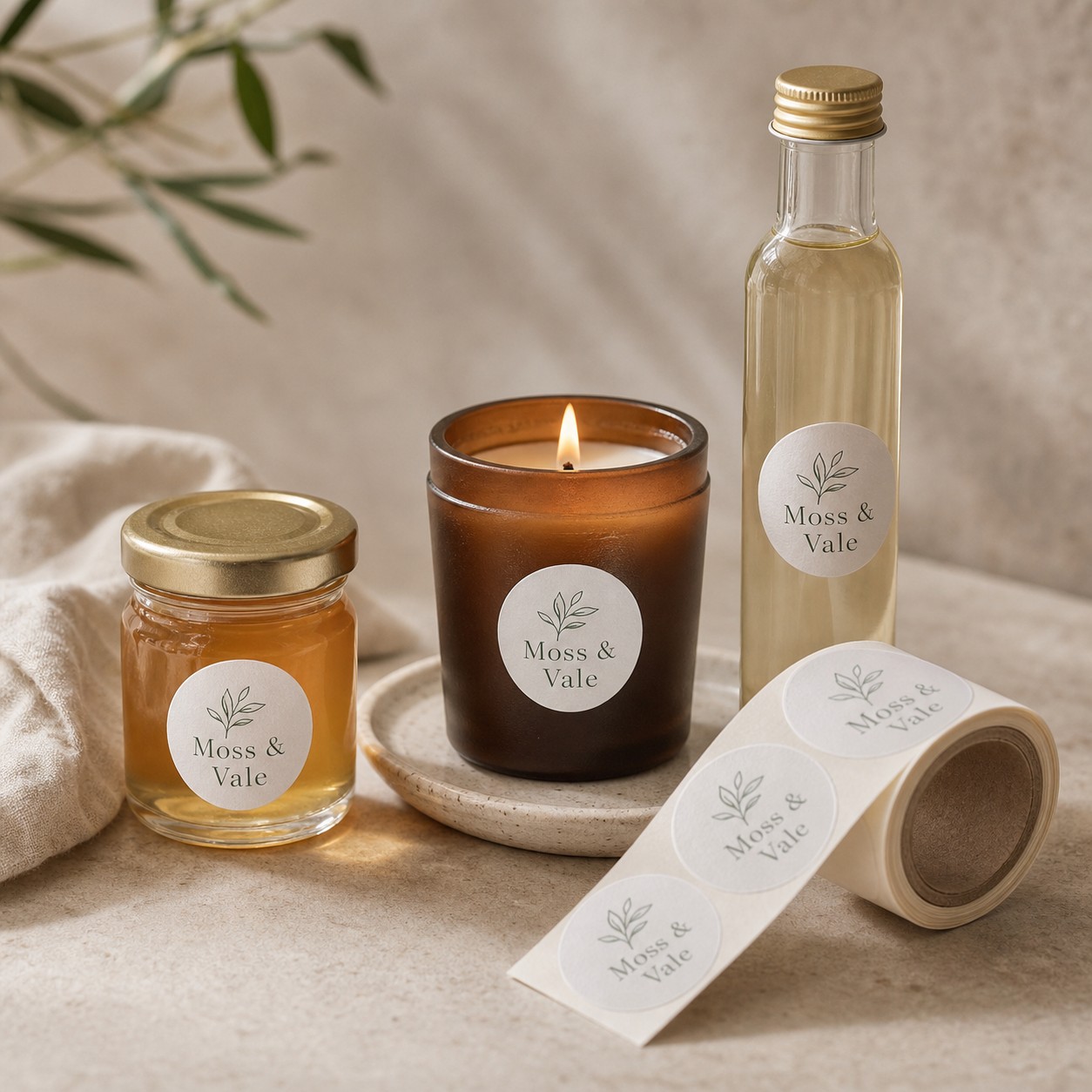
Circle labels are the standard choice for round surfaces. They sit flush on jar lids, bottle caps, and tin lids without the corner buckling you get from a rectangle on a curved surface.
Popular diameters: 38mm for standard jam and honey jar lids, 50mm for medium candle tins and small cosmetic pots, 76mm for larger packaging seals. Sizes range from 25mm to 150mm in diameter.
Circle labels also work as brand seals and closure stickers on packaging boxes. The centred, symmetrical layout gives even simple designs a finished, intentional look. Minimum order on rolls is 500 labels; circle stickers are available without a minimum for smaller quantities.
Square Labels
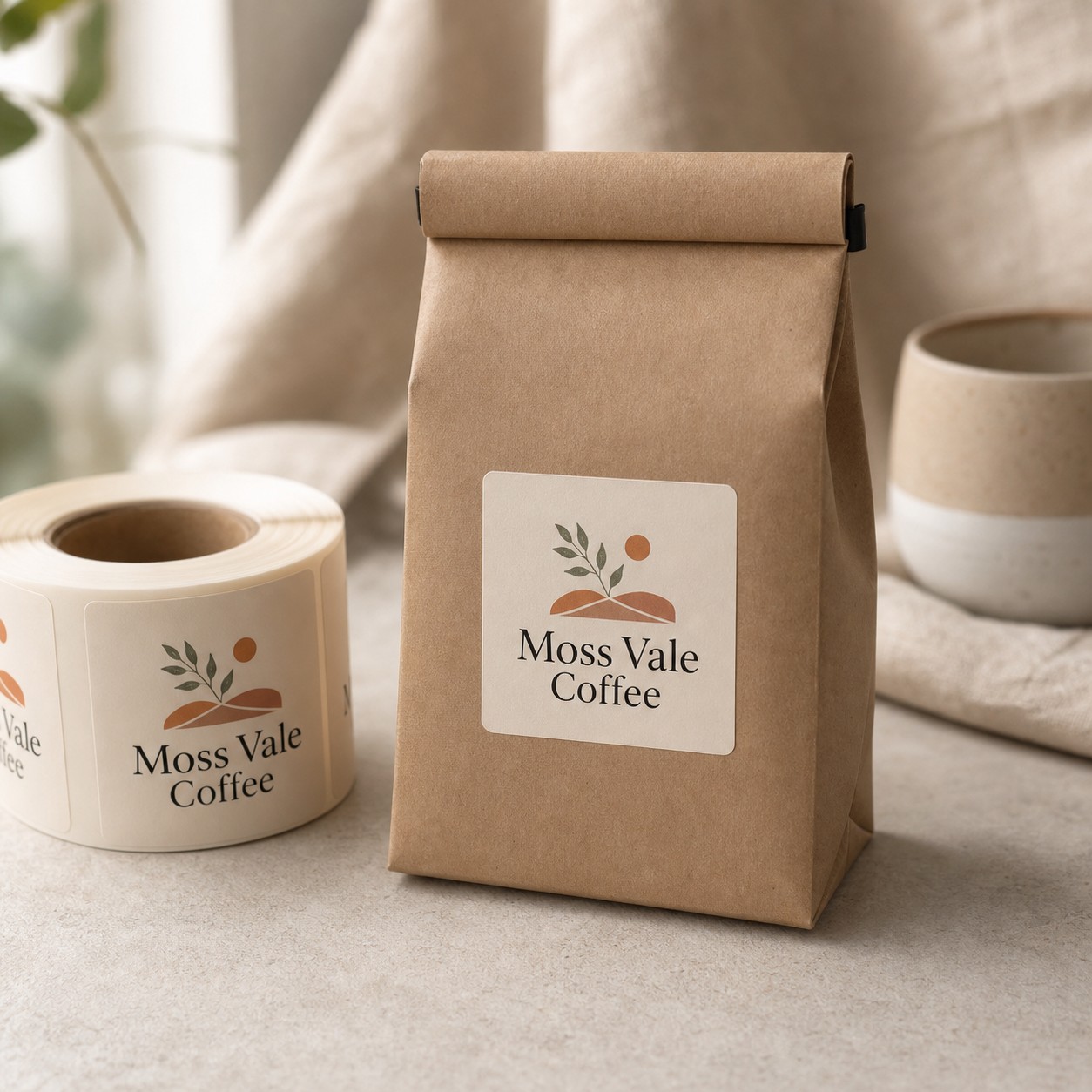
Square labels combine the structural quality of a rectangle with a balanced, contemporary feel, suiting clean modern branding in cosmetics, home fragrance, and specialty food. Sizes range from 30mm x 30mm up to 150mm x 150mm, from $0.49/label.
For a full breakdown of square label use cases, finishes, and the sharp corner peel watch point, see our square, oval and rounded-corner labels shape guide.
Oval Labels
Oval labels give you more horizontal space than a circle for brand names and net weight declarations while keeping a soft, organic feel, which is why they dominate wine, condiment, and cosmetics packaging. Custom dimensions are available, from $0.51/label, with 2-3 working day production.
For detailed oval use cases and finish recommendations by category, see our shape guide.
Rounded Corner Labels
Rounded corner labels are rectangle labels with corners softened to a 2mm–8mm radius, which resists lifting and peeling far better than sharp 90-degree corners on refrigerated or high-touch products. Same base price as rectangle, from $0.48/label.
For the full rundown on corner-radius options and where each one suits, see our shape guide.
Die-Cut Labels
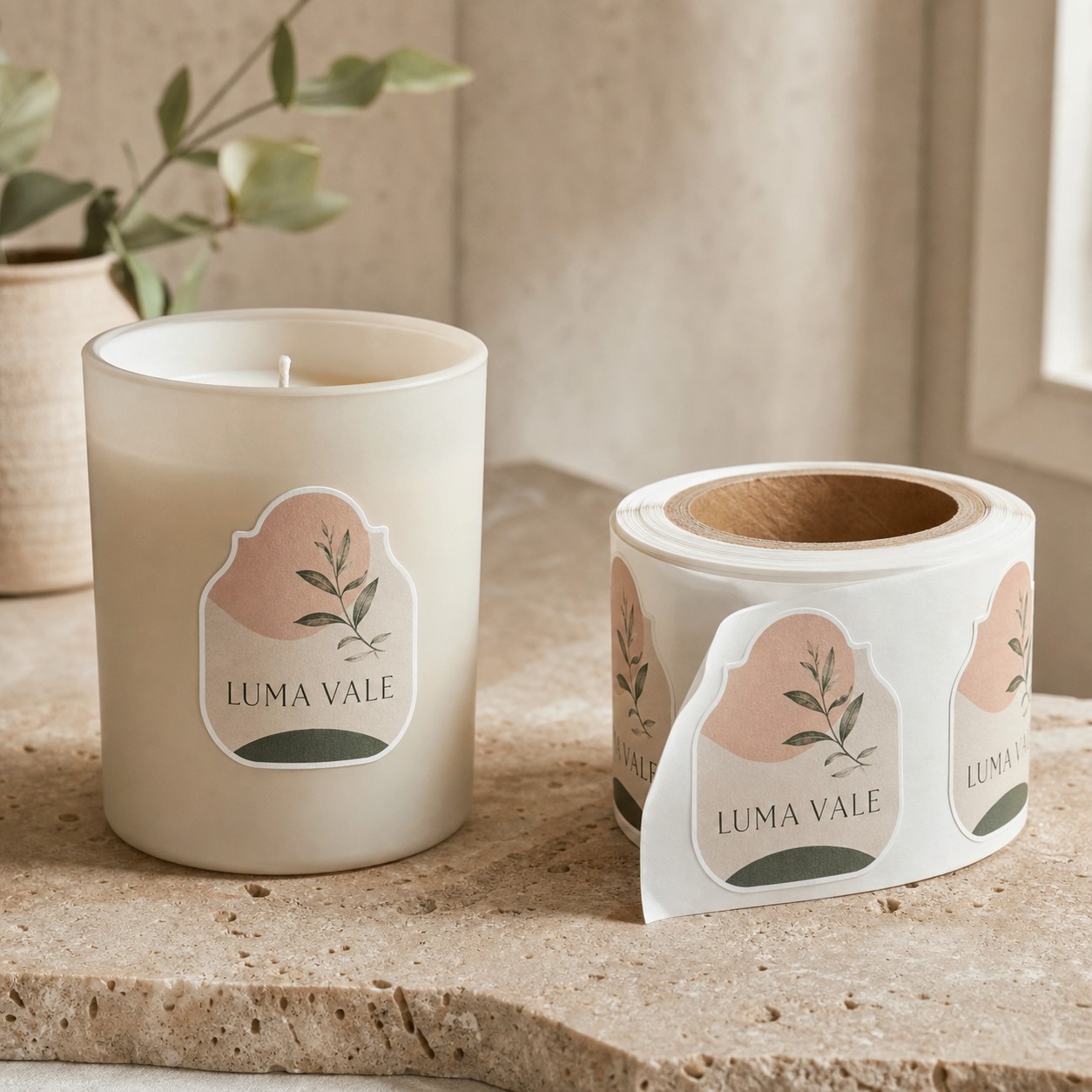
Die-cut labels are precision-cut to any shape you specify. The cut follows a vector dieline you supply as part of your artwork file, set to 100% Magenta Spot Colour on its own layer. Artwork must be supplied as PDF, SVG, or Adobe Illustrator format with 3mm bleed, outlined fonts, and embedded images.
Common shapes include modified rectangles with notched corners, shield or badge silhouettes, arched tops, and custom brand outlines. The main advantage is that the label shape becomes part of the brand identity itself. A honey label cut into a hexagon or a coffee label shaped like a kraft bag stands out from standard formats on a retail shelf.
Minimum order is 500 labels. Production is 2-3 working days for paper or synthetic base stock, and 4-5 working days for foil variants.
Clear Labels
Clear labels are printed on transparent synthetic material. When applied to glass or clear plastic, the design appears to float directly on the surface with no visible border, creating the impression it was printed on the container itself.
This no-label aesthetic is highly effective for premium glass bottles, cosmetic serums, candle jars, and luxury food packaging. Technical options include:
- White ink underprinting for solid white elements or opaque backgrounds within the design
- Reverse printing (design on the adhesive side) for scratch protection on glass
- Solvent inks for fade and moisture resistance
- Custom sizes and shapes
Clear labels start from $0.50/label. For smaller quantities under 500, clear stickers are available as an alternative without the roll minimum.
Foil Labels
Foil labels add metallic shine to product packaging. Available in cold foil and hot foil application methods, they suit wine and spirits, premium cosmetics, gourmet food, and gift packaging where a luxury finish supports the brand positioning.
Available foil colours: gold, silver, rose gold, copper, holographic, and custom specialty options.
Cold foil is faster and more cost-effective, suited to small accent areas and shorter runs under 1,000 labels. Hot foil uses traditional heat-stamping for larger solid metallic areas, producing an ultra-premium result well suited to longer print runs. Hybrid printing combines foil with full-colour CMYK graphics, so you can apply metallic elements selectively alongside photography or illustration.
Foil labels start from $0.69/label. Production is 3-5 working days. Minimum order is 500 labels. For smaller quantities, foil stickers are available without the roll minimum.
Roll Labels vs Sheet Format
Most label products have a minimum order of 500 labels supplied on a roll. Rolls are the standard format for production environments: they fit standard label dispensers and keep application consistent at volume.
If you need fewer than 500 labels, or if you only need occasional small quantities for events, samples, or seasonal products, sticker-format versions of most shapes are available with no minimum order requirement. The trade-off is a higher cost per unit at small quantities.
| Supply format | Minimum order | Best for |
|---|---|---|
| Roll labels | 500 labels | Production lines, regular restocking, volume orders |
| Sheet stickers | No minimum | Small runs, samples, events, seasonal products |
Which Label Format Is Right for You?
| Format | Best surface | Typical sizes | From (inc. GST) | Production |
|---|---|---|---|---|
| Rectangle | Flat bottles, boxes, pouches | 100x50mm to 150x75mm+ | $0.37 | 2-3 working days |
| Circle | Jar lids, bottle caps, tin lids | 25mm to 150mm dia. | $0.36 | 24-48 hours |
| Square | Candle tins, cosmetic pots | 30x30mm to 150x150mm | $0.36 | 24-48 hours |
| Oval | Wine bottles, condiment jars | Custom | $0.38 | 2-3 working days |
| Rounded corner | High-touch, refrigerated products | Custom (2-8mm radius) | $0.36 | 2-3 working days |
| Die-cut | Premium, artisan packaging | Custom (dieline required) | $0.36 | 2-3 working days |
| Clear | Glass bottles, clear packaging | Custom | $0.50 | 2-3 working days |
| Foil | Wine, spirits, gift packaging | Custom | $0.69 | 3-5 working days |
Frequently Asked Questions
What label shape works best for wine bottles?
Oval or rectangle labels are the most common choices for wine bottles. Oval suits a classic, premium aesthetic and applies neatly to the curved body of a standard 750ml bottle. Rectangle labels work on bottles with a wide, flat front panel. For ultra-premium positioning, combine a standard shape with a foil finish, or commission a custom die-cut silhouette.
What is the minimum order for custom labels?
Most label formats at Paperlust Print Shop have a minimum order of 500 labels, supplied on a roll. If you need fewer than 500, sticker-format equivalents are available with no minimum. Options include circle stickers, square stickers, and general custom stickers in most sizes.
Do I need a dieline file for die-cut labels?
Yes. Die-cut labels require a vector dieline supplied as part of your artwork file. The dieline must be on its own layer and set to 100% Magenta Spot Colour. Artwork files should be in PDF, SVG, or Adobe Illustrator format with 3mm bleed, outlined fonts, and embedded images.
Can I print white text on clear labels?
Yes. White ink underprinting is available on clear labels. This lets you include white text, logos, or opaque colour blocks within a transparent label. Without a white underprint, CMYK inks on clear film produce washed-out results because there is no white base to build colour contrast from.
How do I measure the right label size for a cylindrical container?
Wrap a strip of paper around your container and mark where it meets itself. The distance from edge to mark is your maximum label width. For height, measure the flat labelling area between the shoulder taper and the base curve. Allow 2-5mm clearance at each edge so the label does not wrap over the curves.
What is the difference between cold foil and hot foil labels?
Cold foil is faster and more economical, suited to small accent areas and shorter runs under 1,000 labels. Hot foil uses heat-stamping for larger solid metallic areas with an ultra-premium result, and suits longer production runs or designs with extensive foil coverage. Both methods are available through foil labels at Paperlust Print Shop.