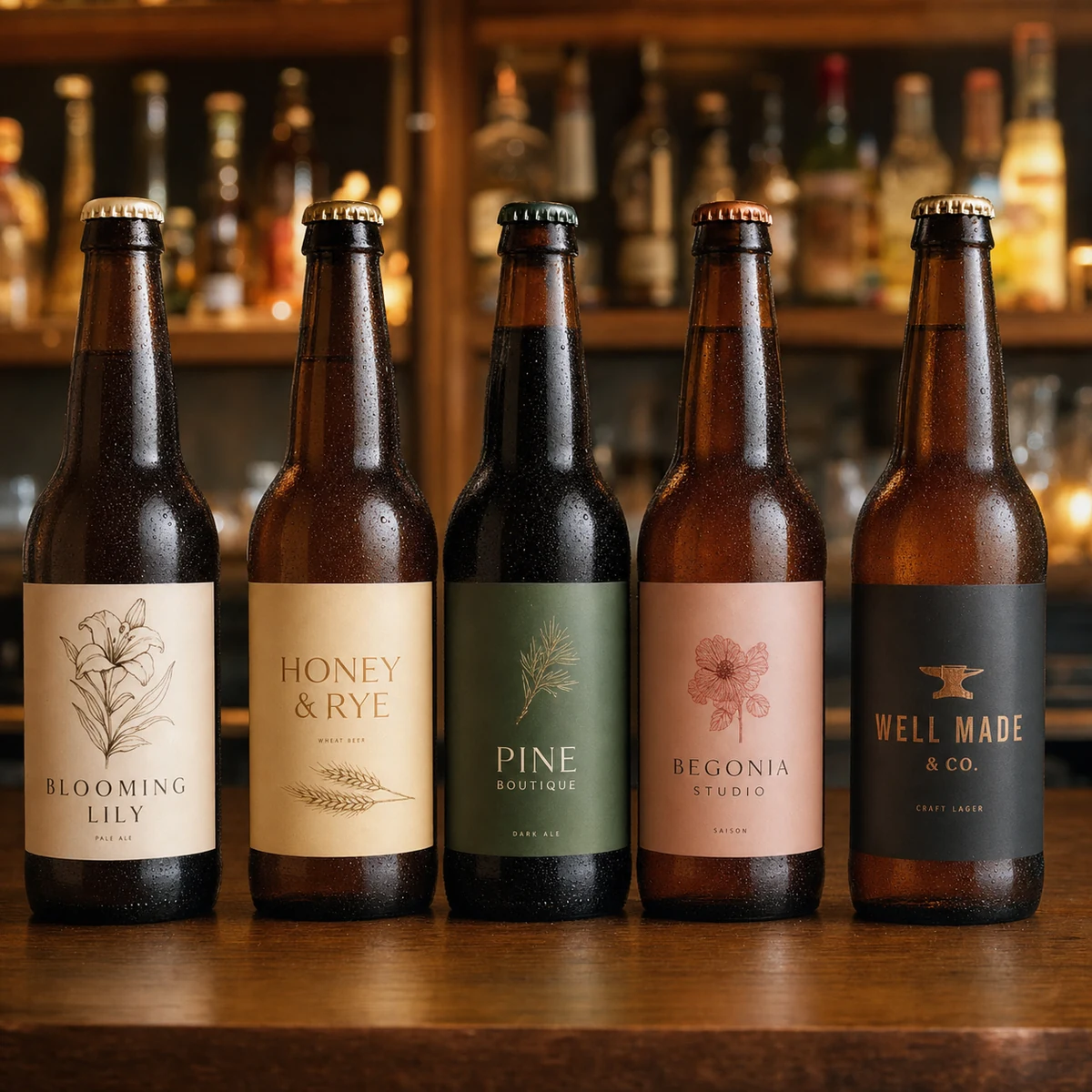
The first cold stubby out of the esky is where a label proves itself. Condensation forms, fingers grip, the bottle goes back into the ice, and a stock that felt fine in a dry sample drawer is suddenly working hard. Craft beer label printing in Australia is less about choosing a look and more about choosing the roll label that holds up on the exact bottle or can a brewery fills.
This guide walks through the Paperlust Print Shop beer and spirits roll range, the stock and finish options inside it, how to size labels from the real vessel, and what to test before printing a full run. Keep the Beer and Spirits Labels product page open while you work through it.
Start with the shape and roll format
The beer and spirits route sits in the broader custom labels category. It is supplied on rolls, printed one up and die cut to shape, with 500 labels per roll. That roll format suits hand application and semi-automatic or automatic label applicators, and the unwind direction can be requested at proofing.
Shape choices in this product include rectangle, oval, rounded corner, circle, and custom die-cut. The product page lists the current set sizes; treat it as the live size list rather than working from a bottle type. If cap seals are part of the same run, the circle labels range is a separate product line with its own sizes. For a square panel, the square labels range is likewise separate, so do not assume one range’s size list carries across to another.
Choose stock and finish around moisture
Three roll stocks belong to the beer and spirits product: White Cast Paper, White Synthetic, and Clear Synthetic. White Cast Paper pairs with matte or gloss laminate and is suited to dry indoor packaging only. White Synthetic also pairs with matte or gloss laminate and is the stock to trial when the filled container will face condensation, cold storage or repeated handling. Clear Synthetic carries a gloss varnish rather than a laminate and suits a transparent look. White ink can create white printed elements, and a white underprint can sit beneath coloured design areas to keep them visible on a clear or dark surface.
| Stock | Finish pairing | Use for | Before ordering |
|---|---|---|---|
| White Cast Paper | Matte Laminate or Gloss Laminate | Dry indoor packaging | Keep the intended use dry; do not plan it for condensation or ice exposure |
| White Synthetic | Matte Laminate or Gloss Laminate | Moisture, condensation and repeated handling trials | Trial it on the actual filled bottle or can under the conditions you expect |
| Clear Synthetic | Gloss Varnish | Transparent label look, with white ink or white underprinting as part of the design | Confirm legibility and adhesion on the filled vessel before committing |
If you are comparing a waterproof option outside the beer range, the waterproof vinyl labels product page is a separate line with its own face stock and size list. Do not carry its adhesive or finish behaviour across to every roll label or sticker. The clear labels range is the separate clear film route for a transparent background. Outside roll labels entirely, the textured stickers range is a distinct tactile dry packaging option.
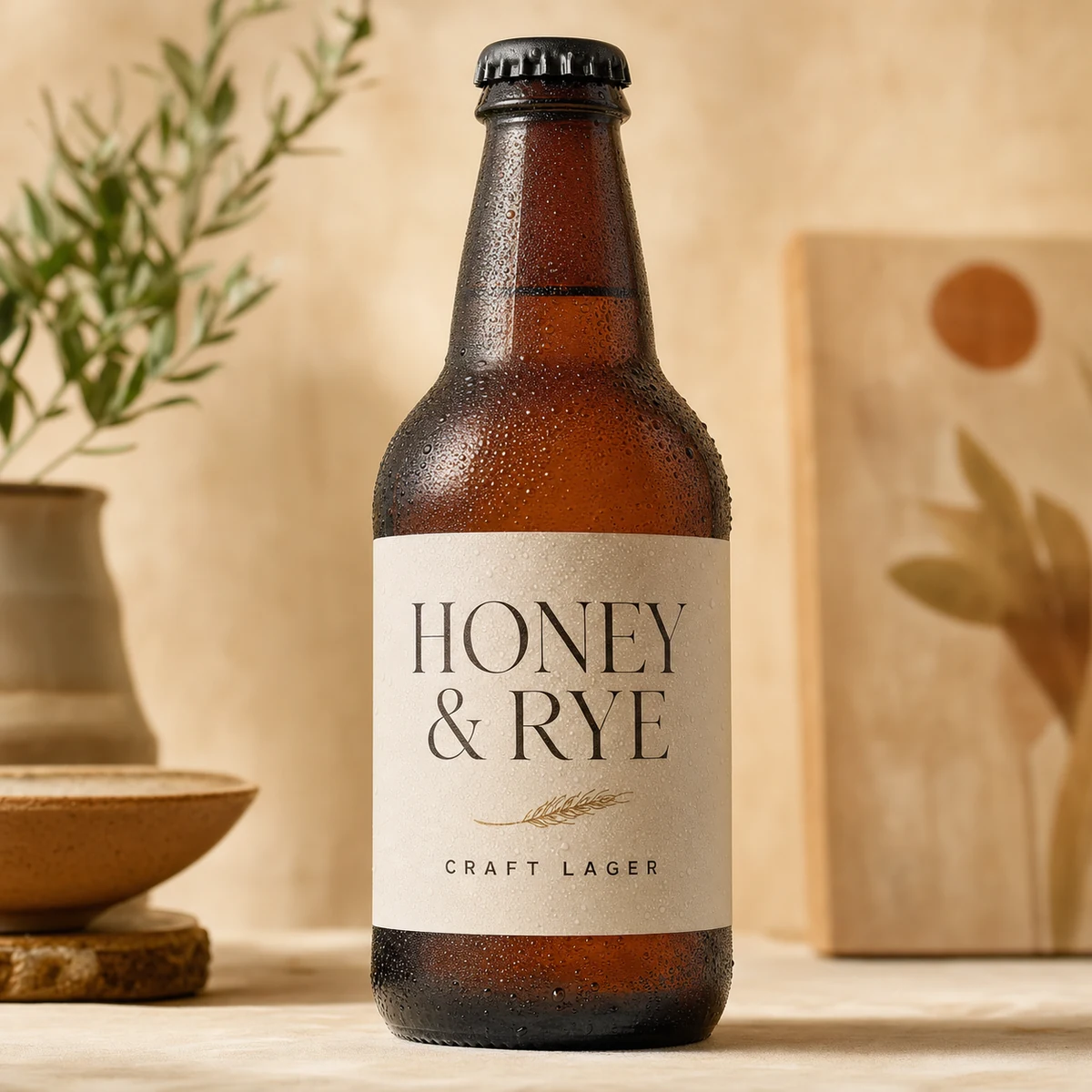
Measure the label band on the actual vessel
Capacity in millilitres does not tell you the label panel. Measure the straight section of the bottle or can where the label will sit. For a cylindrical surface, wrap a paper strip or soft tape around the vessel, record the circumference, choose the seam gap, and subtract that gap from the measured circumference to get the wrap width. A tapered, ribbed or shouldered bottle needs a paper fit test before you settle on a rectangle.
For a straight-sided wrap, the rectangle labels range is often the natural starting point, but it still needs measured panel dimensions. If you use a printable ruler, print it at actual size and follow the calibration checks referenced in the bottle and jar label sizing guide. The same measurement discipline applies in the wine bottle label printing guide if your business also bottles wine.
Plan quantities as separate designs
A separate 500-label minimum applies to every design and every size. Up to five designs can be included in one order, each design printing separately on its own roll. A hypothetical run of 500 front labels and 500 back labels is two designs: 1,000 labels in total, with each design meeting its 500 minimum. Three seasonal beers at 500 each would be 1,500 labels across three rolls, again meeting each design’s minimum. Whether that draws any combined pricing is not assumed; ask the team to confirm the quote for your planned designs.
Keep different sizes, stocks and finishes as separate configurations when you plan, because a change in any of those creates a separate minimum. If you are unsure whether a mixed brief fits one order, ask the team before uploading artwork. Follow the artwork instructions shown on the chosen product page. If a template appears for your selected shape and size, use it; if not, ask the team for file settings before you export.
Run the right test before the full roll
Apply the stock to a clean, dry container under the supplier’s application conditions and allow the recommended dwell time before exposing paired samples to the intended cold storage, condensation and handling. Service temperature is not the same as application temperature, so treat those as separate questions when you test. A label that holds on one bottle does not prove a different can or coated glass will behave the same way, so test on the actual vessel you will fill. A material sample, a digital proof, and a printed run of your own artwork answer different questions: the proof checks layout and declared dimensions, not physical colour, adhesion or stock behaviour.
If you need a walk-through of the method, the sticker sample testing guide covers the process. Do not treat a small sticker run as an exact test of a different roll label stock.
Foil is a separate product path
If a limited release calls for a metallic finish, the foil labels range is a separate product line rather than an upgrade to the standard beer roll. Treat it as its own brief and check its current choices before you plan the run.
Compliance is part of the artwork brief
Alcoholic beverage labels carry mandatory information obligations that sit outside print production. Start at the FSANZ alcoholic beverage labelling page and confirm the current requirements for your actual product before finalising artwork. Paperlust prints to the artwork you supply; print approval is not regulatory approval.
What to expect after you order
Ordering a beer roll label means selecting shape, size, stock, finish, number of designs and quantity, then uploading artwork. An emailed proof follows, and nothing prints until you approve that proof. Roll label production takes 48 hours after proof approval; that is production time only and is separate from delivery. If clean removal or a specialist application is part of the plan, ask the team before ordering, because permanent and removable adhesive requirements need confirming before the run. If each label needs to vary individually, ask the team because automatic per-label variable data is not a standard part of the roll workflow.
Frequently asked questions
Does the 500-label minimum apply per design or across the whole order?
The 500-label floor applies to every design on its own roll and every size on its own roll. Up to five designs can sit in one order, with each design on a separate roll. A hypothetical three-design run at 500 each totals 1,500 labels and meets each design’s minimum; it does not act as one combined quantity tier unless the team confirms combined pricing.
Can I plan a label from a standard 375ml bottle size?
No. Capacity does not describe the label panel. Measure the straight section of the actual vessel at the label band. For a cylinder, subtract your chosen seam gap from the measured circumference. Tapered or shouldered profiles need a paper fit test.
Is Clear Synthetic a clear PVC vinyl?
No. Clear Synthetic in the beer and spirits range is a transparent film, not clear PVC. White ink can form white printed areas, while a white underprint may sit under coloured areas when opacity matters.
Can I add foil to a standard beer roll label order?
No. Foil is a separate product range with its own choices. Treat it as a separate brief for limited or metallic runs.
Does the emailed proof tell me how the label will perform on a cold bottle?
No. The proof checks layout, text and declared dimensions. Physical colour, adhesion, stock feel and cold-chain behaviour need a trial on the actual filled vessel under real conditions.
Which stock should I trial for labels that get wet?
White Synthetic is the stock to trial for condensation, moisture and repeated handling. Keep White Cast Paper to dry indoor use. Test the chosen White Synthetic on a clean, dry filled container, allow dwell, then expose paired samples to the intended conditions.