Gymea LilyEllis Rowan, 1880sFramed from $109.00
Ellis Rowan: Australian Wildflower Prints
Ellis Rowan's Australian wildflowers come ready-made as art prints, framed prints or canvas. Every piece is printed in Australia from files in public collections.
Colour
Room
Size
Format
Gymea LilyEllis Rowan, 1880sFramed from $109.00 Sturt's Desert PeaEllis Rowan, 1880sFramed from $109.00
 Queensland Silver WattleEllis Rowan, 1885Framed from $109.00
 Western Silver WattleEllis Rowan, 1885Framed from $109.00
 Bull BanksiaEllis Rowan, 1880sFramed from $109.00
 Firewood BanksiaEllis Rowan, 1885Framed from $109.00
 Silver BanksiaEllis Rowan, 1886Framed from $109.00
 Heath-leaved and Silver BanksiaEllis Rowan, 1886Framed from $109.00
 Acorn BanksiaEllis Rowan, 1880sFramed from $109.00
 Mangles' and Two-coloured Kangaroo PawEllis Rowan, 1885Framed from $109.00
 Kangaroo Paws and CatspawEllis Rowan, 1886Framed from $109.00
 Scarlet Honey MyrtleEllis Rowan, 1880sFramed from $109.00
 Red-flowered PaperbarkEllis Rowan, 1886Framed from $109.00
 Mottlecah Gum BlossomEllis Rowan, 1880sFramed from $109.00
 Smooth-barked Apple BlossomEllis Rowan, 1880sFramed from $109.00
 Silky OakEllis Rowan, 1880sFramed from $109.00
 Pink Wax FlowerEllis Rowan, 1870-1921Framed from $109.00
 Blue LeschenaultiaEllis Rowan, 1906Framed from $109.00
 FeatherflowerEllis Rowan, 1880Framed from $109.00
 Native Rose BoroniaEllis Rowan, 1880sFramed from $109.00
 Purple Coral PeaEllis Rowan, 1880Framed from $109.00
 Native Wax Flower (Hoya)Ellis Rowan, 1887Framed from $109.00
 Blue WaterlilyEllis Rowan, 1911Framed from $109.00
 Illawarra Flame Tree and Honey MyrtleEllis Rowan, 1885Framed from $109.00
 A Bunch of West Australian Wild FlowersEllis Rowan, 1889Framed from $109.00
 Lilly Pilly Blossom with a Cruiser ButterflyEllis Rowan, 1885Framed from $109.00
 Golden BowerbirdsEllis Rowan, 1917Framed from $109.00
 Racket-tailed KingfisherEllis Rowan, 1917Framed from $109.00
 Golden WattleEllis Rowan, 1880sFramed from $109.00
 Old Man BanksiaEllis Rowan, 1880sFramed from $109.00
 Red Kangaroo PawEllis Rowan, 1880sFramed from $109.00
 Crimson BottlebrushEllis Rowan, 1886Framed from $109.00
 Red Flowering GumEllis Rowan, 1886Framed from $109.00
 Fern-leaf Grevillea with ButterfliesEllis Rowan, 1891Framed from $109.00
 Christmas BellsEllis Rowan, 1885Framed from $109.00
 Sydney Rock OrchidEllis Rowan, 1880sFramed from $109.00
 Giant WaterlilyEllis Rowan, 1911Framed from $109.00
 Little CorellasEllis Rowan, 1917Framed from $109.00
 Eclectus ParrotsEllis Rowan, 1917Framed from $109.00
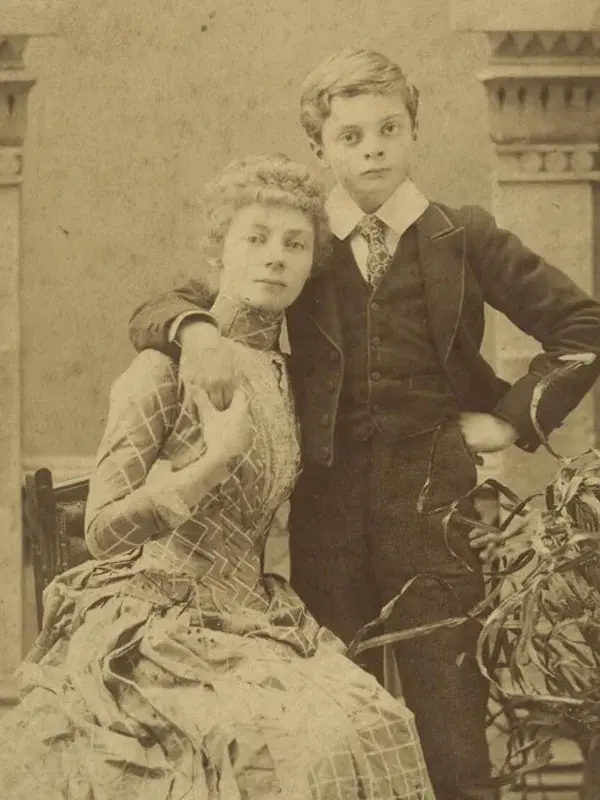
Marian Ellis Ryan (1848 to 1922) was born in Melbourne and, after her marriage to Frederic Rowan in 1873, spent her life painting wildflowers, birds, insects and butterflies. She travelled widely in Australia, crossed to Queensland six times and made two visits to Papua and New Guinea between 1916 and 1918. The National Library holds her watercolours and gouaches.
Image: National Library of Australia, public domain.
Wall art sizes and prices
| Size | Art Print | Framed | Canvas |
|---|---|---|---|
| A3 / 30x40 cm | $65.00 | $149.00 | $129.00 |
| A2 / 40x50 cm | $85.00 | $199.00 | $159.00 |
| 50x70 cm | $89.00 | $249.00 | $219.00 |
| 60x90 cm | $115.00 | $329.00 | $289.00 |
$10 standard or $15 express per order, Australia wide. Printed in Australia, ships in 3-5 business days.
Who was Ellis Rowan?
Ellis Rowan (1848 to 1922) was born Marian Ellis Ryan in Melbourne. She married Frederic Rowan, a British army officer, in 1873. Wildflowers, birds, insects and butterflies were her subjects for the rest of her life, and you will see them throughout this collection. Her travels were wide, taking her to Queensland six times and to Papua and New Guinea twice between 1916 and 1918. Melbourne's 1888 Centennial International Exhibition gave her its highest honours.
Where do these prints come from?
They come from scans of Ellis Rowan watercolours in a public collection. We clean the files for dust, marks and colour balance, and that is the only change. You can see the old paper tone as she left it. Each artwork page carries an image credit line naming the institution that holds the original.
Which flowers suit a gallery wall?
Waratah, banksia and kangaroo paw hold a wall alone, and wattle softens heavier flowers. These wildflower prints work well as a set of three or four. Above a sofa, you can hang a pair of 50 x 70 cm canvases. Above a bed, one 70 x 100 cm canvas is enough. On a mantel or shelf, you can lean an A4 and an A3 framed print together without mounts.
What paper are they printed on?
Your art print or framed print uses 200gsm archival matte, printed as an archival giclée. Some sizes offer a textured etching paper as an upgrade. A framed print puts that same sheet behind perspex, inside a slim 20 mm frame in black, white or an oak look finish. You can add a white mount. Canvas is a separate product: a 400gsm stock on a 38 mm stretcher with mirrored edges.
Can I order prints for an office or café?
Yes, you can. Five or more of a single artwork brings the cost per piece down, and the quantity pricing sits on the product page. Offices, cafés, rentals and fit-outs are the usual reasons to buy in multiples. One banksia repeated along a corridor pulls a long wall together, and nobody has to match a set.
Frequently Asked Questions
Who was Ellis Rowan?
Ellis Rowan (1848 to 1922) was born Marian Ellis Ryan in Melbourne. She married Frederic Rowan, a British army officer, in 1873. Wildflowers, birds, insects and butterflies were her subjects for the rest of her life, and you will see them throughout this collection. Her travels were wide, taking her to Queensland six times and to Papua and New Guinea twice between 1916 and 1918. Melbourne's 1888 Centennial International Exhibition gave her its highest honours.
Where do these prints come from?
They come from scans of Ellis Rowan watercolours in a public collection. We clean the files for dust, marks and colour balance, and that is the only change. You can see the old paper tone as she left it. Each artwork page carries an image credit line naming the institution that holds the original.
Which flowers suit a gallery wall?
Waratah, banksia and kangaroo paw hold a wall alone, and wattle softens heavier flowers. These wildflower prints work well as a set of three or four. Above a sofa, you can hang a pair of 50 x 70 cm canvases. Above a bed, one 70 x 100 cm canvas is enough. On a mantel or shelf, you can lean an A4 and an A3 framed print together without mounts.
What paper are they printed on?
Your art print or framed print uses 200gsm archival matte, printed as an archival giclée. Some sizes offer a textured etching paper as an upgrade. A framed print puts that same sheet behind perspex, inside a slim 20 mm frame in black, white or an oak look finish. You can add a white mount. Canvas is a separate product: a 400gsm stock on a 38 mm stretcher with mirrored edges.
Can I order prints for an office or café?
Yes, you can. Five or more of a single artwork brings the cost per piece down, and the quantity pricing sits on the product page. Offices, cafés, rentals and fit-outs are the usual reasons to buy in multiples. One banksia repeated along a corridor pulls a long wall together, and nobody has to match a set.
Learn More
Ellis Rowan and the wildflowers she painted
Marian Ellis Ryan (1848 to 1922) was born in Melbourne and married Frederic Rowan, a British army officer, in 1873. Wildflowers, birds, insects and butterflies were her subjects for the rest of her working life. Her travels crossed Australia, including six trips to Queensland, and took her twice to Papua and New Guinea between 1916 and 1918. Melbourne's 1888 Centennial International Exhibition gave her its highest honours.
The National Library collection holds her watercolours and gouaches of Australian flowers and birds, made between 1870 and 1920. The Australian Government bought them from her sister, Blanche Ryan, in 1923. You can order Ellis Rowan prints made from those sheets here. Her copyright has expired, so anyone is able to print them, and the Australian Masters collection applies the same approach to other painters and printmakers.
The flowers in this collection
Waratah, banksia, wattle and kangaroo paw feature across these botanical prints, and several sheets take the plant's common name as their title. Named works include Gymea Lily, Sturt's Desert Pea, Golden Wattle, Queensland Silver Wattle, Western Silver Wattle, Old Man Banksia, Bull Banksia and Firewood Banksia. All date from the 1880s.
Try three or four wildflower prints together. Set a heavy banksia sheet beside a lighter wattle one and the group reads as deliberate, not accidental. The wall art range explains how the three formats differ and which sizes each takes.
Paper, frames and the old paper tone
Unframed art prints give the most direct view of a watercolour, because the brush marks carry the picture and a frame line would cut into them. The standard sheet is a 200gsm archival matte, printed as an archival giclée, and some sizes let you upgrade to a textured etching paper.
A framed print uses that same archival matte paper and arrives ready to hang. It sits behind perspex rather than glass, in a slim 20 mm frame in black, white or an oak look finish. A white mount is optional; the standard finish comes without one.
Canvas uses a 400gsm stock on a 38 mm stretcher with mirrored edges. The picture stays complete across the face, and each side repeats a sliver of the image border. A float frame or a classic frame is optional, in black, white or oak look.
Ellis Rowan worked on sheets that are mostly upright and close to A-series proportions. That makes A3, A2 and 50 x 70 cm framed prints the natural fit. The old paper tone stays warm and a little uneven, not bleached white. An Exhibition poster layout is also offered, with her name, the title, the year and her dates set in our own type.
Where the originals are
Every print traces back to the National Library of Australia, which holds the originals, and each artwork page names it in an image credit line. Public museum and library collections supplied the files behind the prints. We clean each one for dust, marks and colour, and leave the picture itself untouched.
We make the prints ourselves, and no museum or library endorses them. For bird subjects on the same wall, the birds & botanicals range covers them.
Printed in Australia and delivered nationwide
Each piece is printed in Australia and leaves us within 3 to 5 business days. Delivery is $10 per order for standard or $15 per order for express, added at checkout Australia wide.
Each print credits the National Library of Australia, which holds the originals.