Stickers are one of the most versatile marketing and packaging tools available to Australian businesses. But with so many formats on the market, choosing the wrong type can mean poor adhesion, wasted budget, or a look that undercuts your brand. This guide covers every major sticker type, what each one is best for, and a plain-language decision framework so you can order with confidence. Browse the complete sticker printing range, or read on for a format-by-format breakdown.
At a glance
- Most versatile for branding: die-cut stickers and kiss-cut stickers
- For the most weather-facing use, choose outdoor vinyl stickers. Our vinyl option carries a one-year outdoor guarantee and an expected life of 3 to 5 years with proper application.
- Best for glass, bottles, and windows: clear stickers
- Best for premium packaging: holographic, foil, or clear stickers
- Roll stickers = fastest application for high-volume packaging lines
- Sheet stickers = most economical for low-volume or multi-design runs
The Different Types of Stickers
Die-Cut Stickers
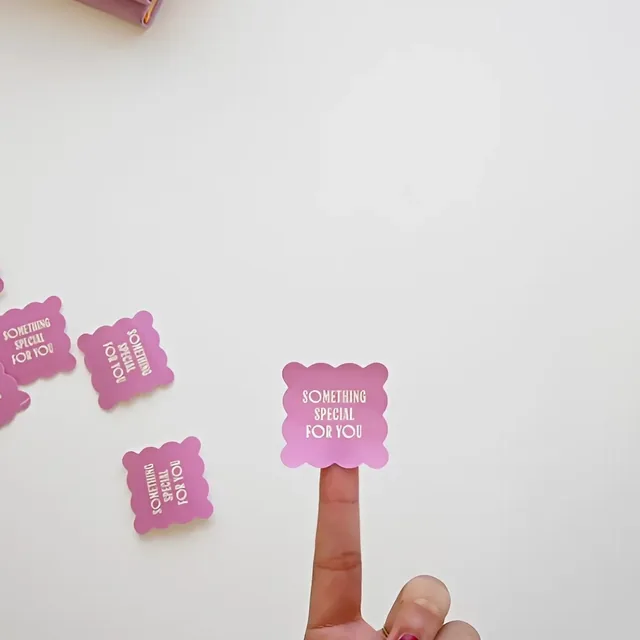
Die-cut stickers are cut to the exact outline of your design, no white border, no square background. A logo sticker shaped like a star, a product seal shaped like a ribbon, a label that perfectly follows the silhouette of an illustrated character: these are all die-cut.
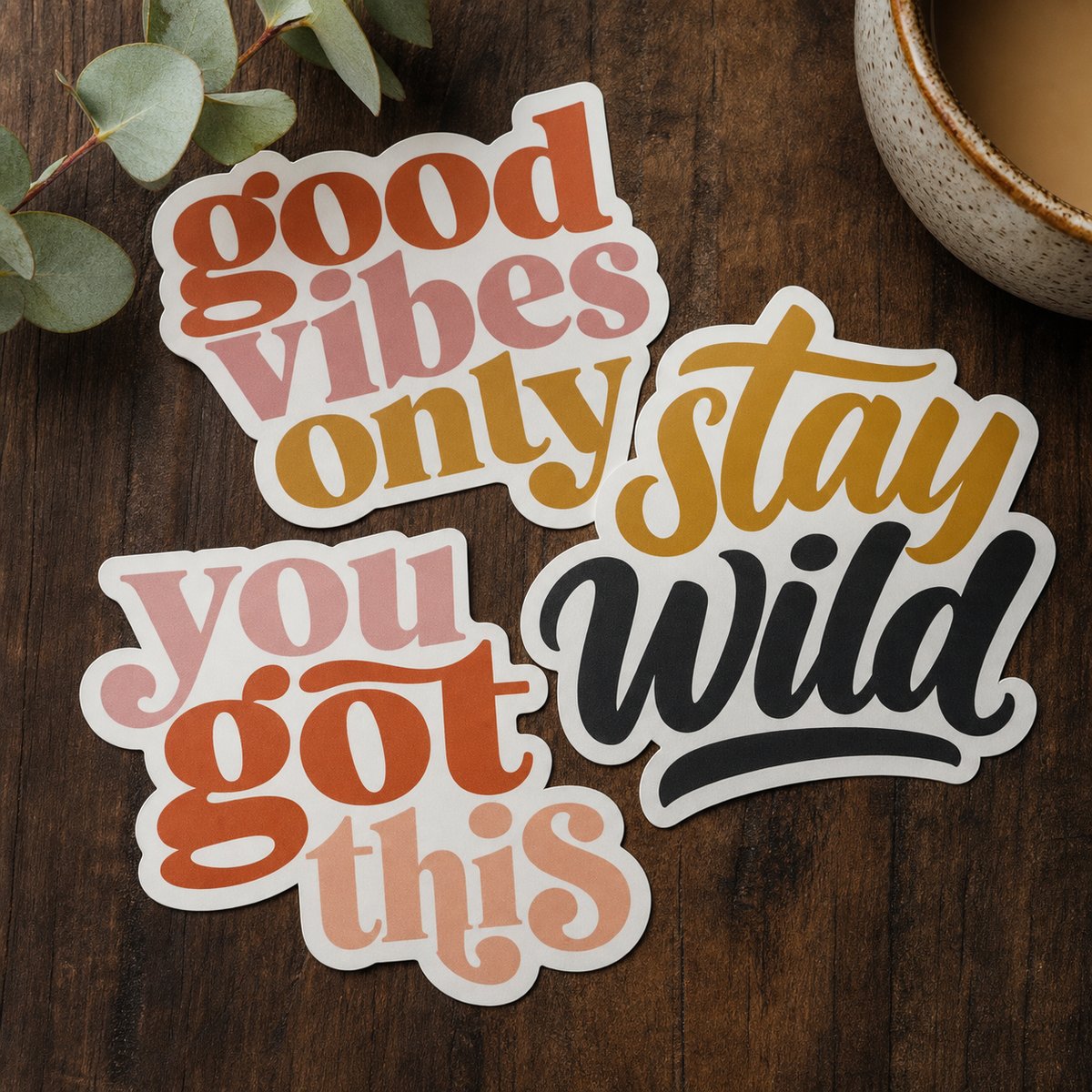
Best uses: product packaging labels, brand logo stickers, promotional giveaways, laptop and device stickers, retail shelf stickers.
Die-cut stickers are cut all the way through to the backing, following the exact shape of the design. See die-cut sticker options.
Kiss-Cut Stickers
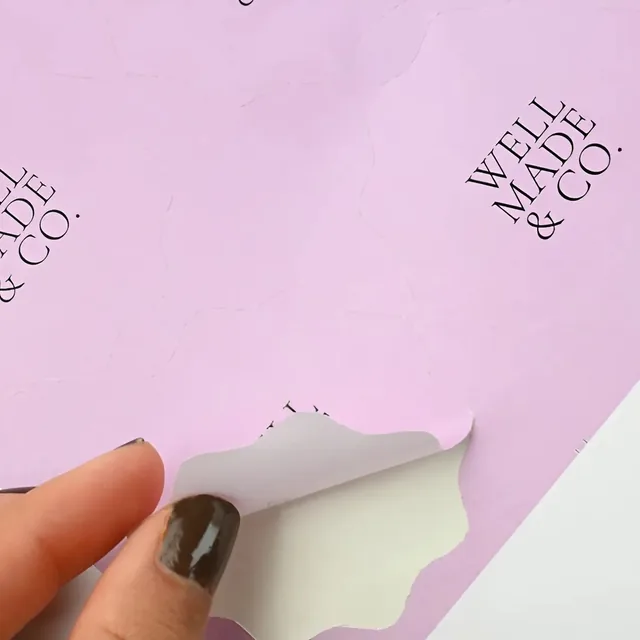
Kiss-cut stickers are cut through the face material but not the backing sheet. The sticker sits inside a border of backing paper, which makes peeling easy and also acts as a built-in “frame” for display. The practical difference from die-cut: kiss-cut are easier to peel quickly, which matters on a market stall or in a fulfilment workflow.
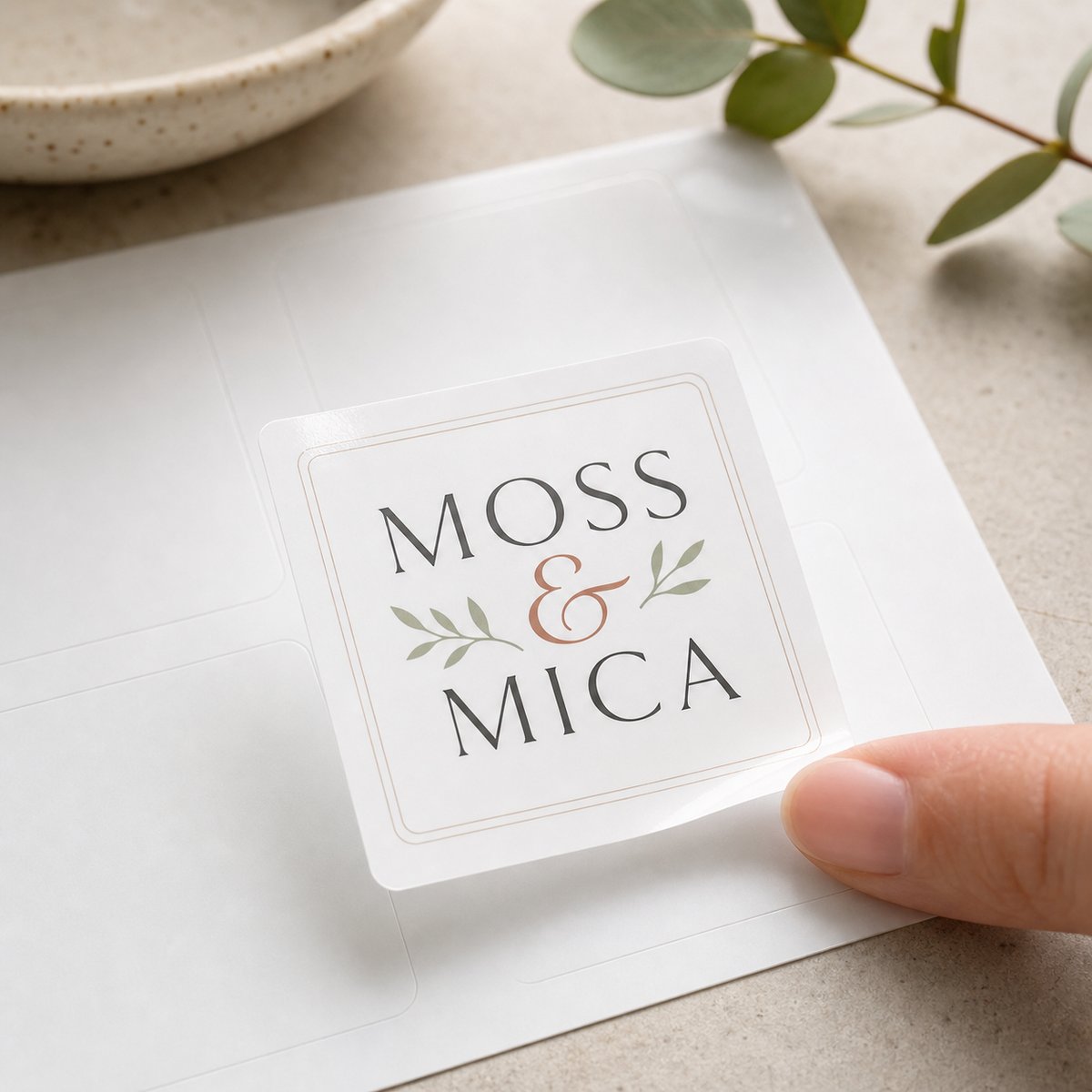
Best uses: sticker packs, merchandise, subscription boxes, event giveaways, sticker designs with fine detail (the border protects delicate edges during handling).
Order kiss-cut stickers online, or if you are deciding between die-cut and kiss-cut, read our detailed comparison of kiss-cut vs die-cut stickers to see exactly which suits your workflow.
Vinyl Stickers
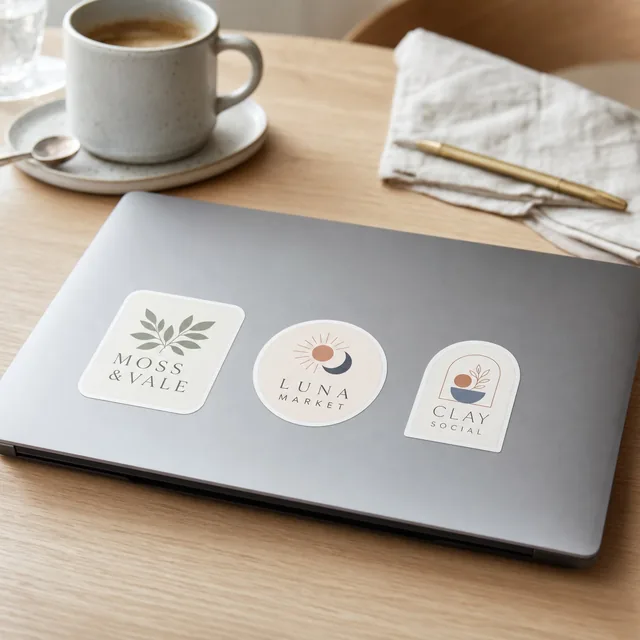
Vinyl stickers are printed on a robust polymer film rather than paper. Paperlust Vinyl Stickers are printed with UV-cured ink and have no laminate. They carry a one-year outdoor guarantee and an expected life of 3 to 5 years with proper application, but sun, heat and abrasion can affect how long the sticker keeps its look. They are not dishwasher safe.
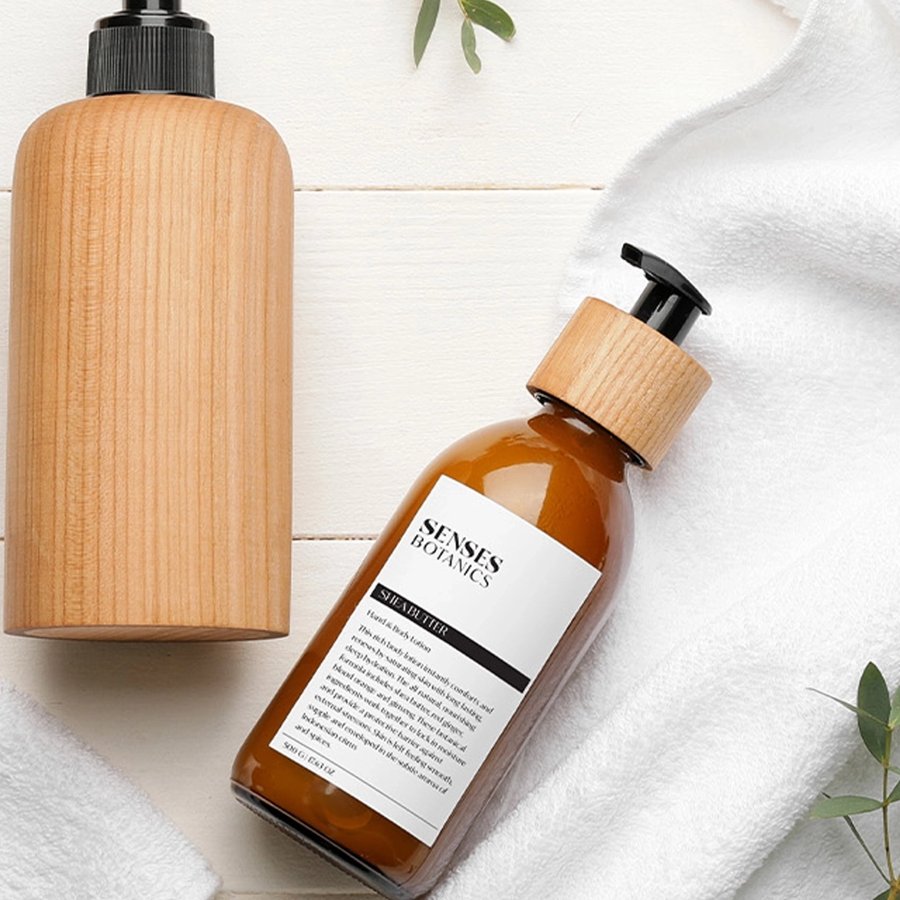
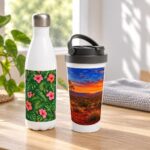
Best uses: Common uses include outdoor signage, vehicle branding, laptop panels, cafe windows and bottles that are hand washed rather than put through a dishwasher.
Vinyl stickers are the default choice when longevity or outdoor exposure is a requirement. Browse outdoor sticker options.
Clear Stickers
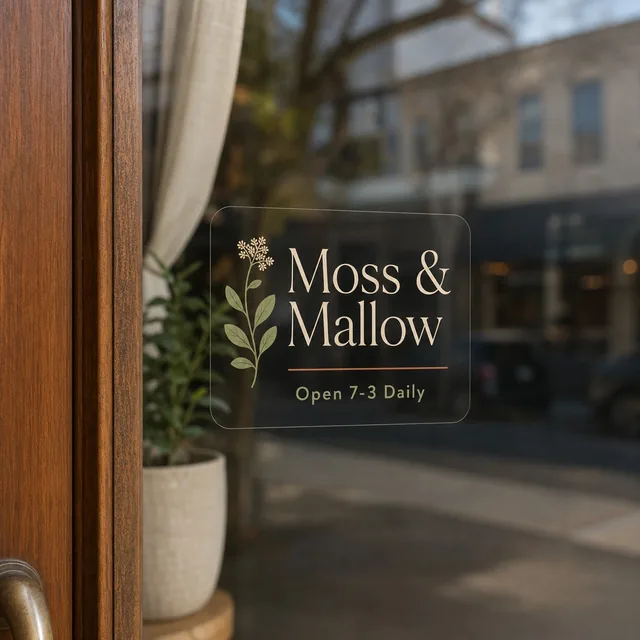
Transparent stickers use a clear film substrate instead of white. When applied to glass, packaging, or a surface with a visible colour or texture, the sticker appears to float directly on the surface with no white background border. This gives a premium, printed-on look.
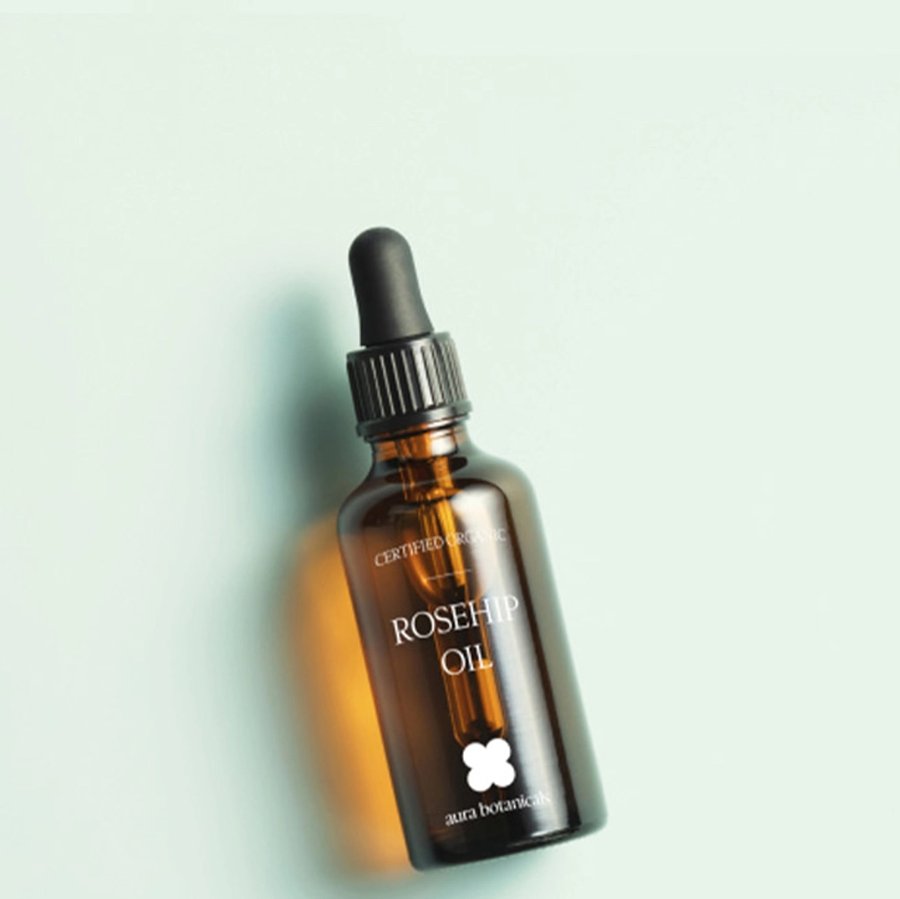
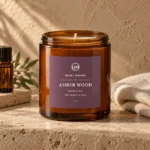
Best uses: product labels on glass jars and bottles, cosmetic packaging, candle labels, window graphics, beverage labels, premium brand applications where a “no-label” look is valued.
Clear synthetic film is also offered on Sticker Sheets as the Clear Sticker stock. See our full guide to clear stickers for surface-pairing advice.
Sheet Stickers
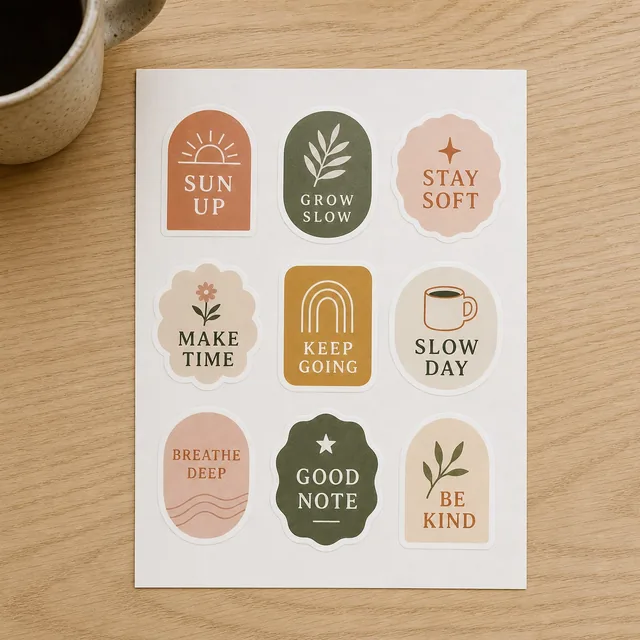
Custom sticker sheets can carry repeated copies of one sticker or varied artwork within an approved sheet layout. The Number of Designs field refers to the layout, not the total piece count. Two or more submitted designs normally print on separate sheets unless you ask for them on the same sheet.
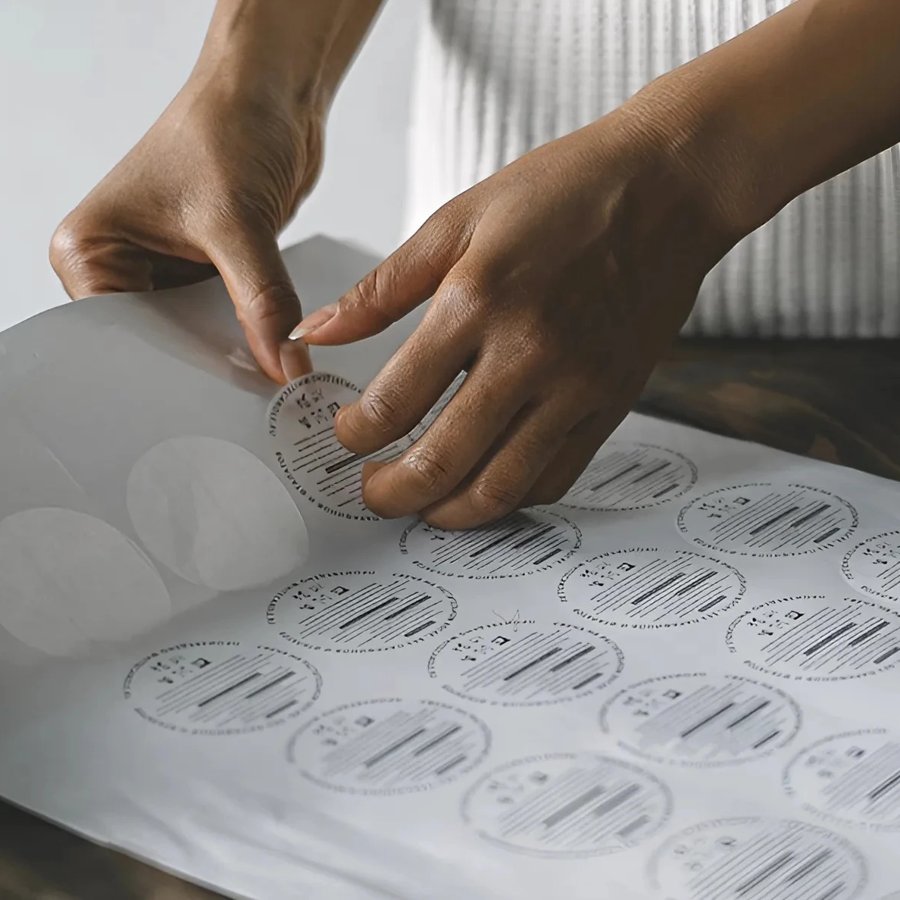
Best uses: planner stickers, journaling stickers, sticker packs sold as merchandise, reward stickers, event labels where you need a small run of varied designs without ordering each design separately.
Sheet stickers work well for stationery, small-business merchandise, and craft markets.
Roll Stickers
Roll stickers (also called labels on a roll) are printed on a continuous roll of backing tape, each sticker kissed-cut in sequence. They feed through label dispensers, applicators, and labelling machines, making them the practical choice for any high-volume application workflow. When you need a custom shape on the same roll format, our die-cut labels are cut to order and ready for label dispensers and applicators.
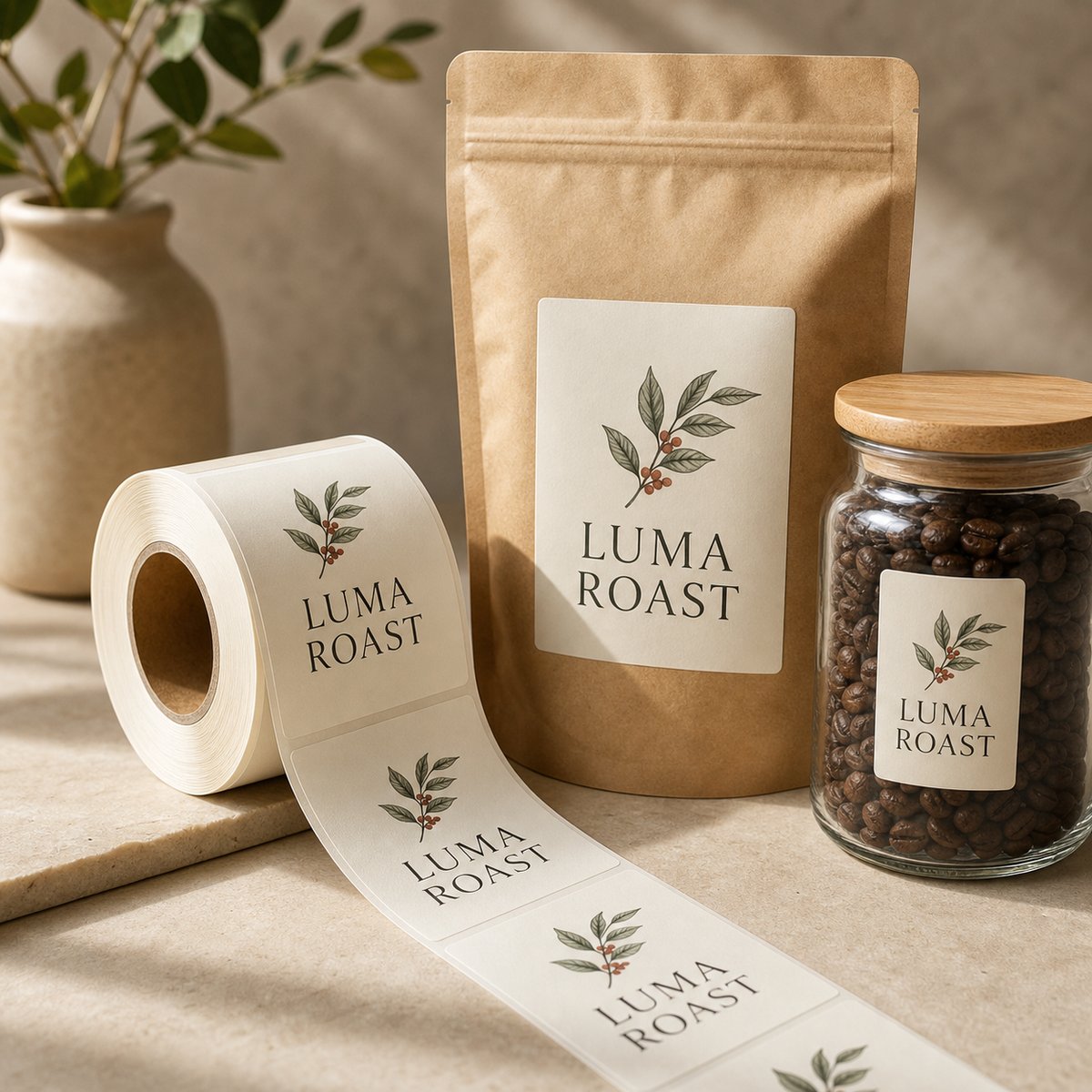
Best uses: product labels in food, beverage, cosmetic, or retail manufacturing; postage labels; return-address labels; any application where speed of labelling matters.
If you are sealing packaging by hand and applying 50 or fewer stickers a day, sheets or individual kiss-cut stickers are often more practical. If you are labelling hundreds of units per day, rolls become the clear efficiency choice.
Holographic Stickers
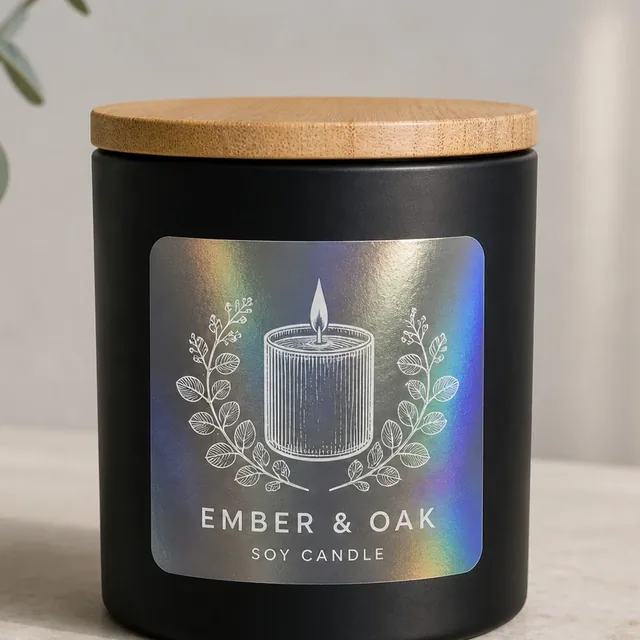
Holographic stickers use a rainbow-refractive foil substrate that shifts colour as the viewing angle changes. They attract attention on a shelf and communicate “premium” without a heavy price premium over standard vinyl.
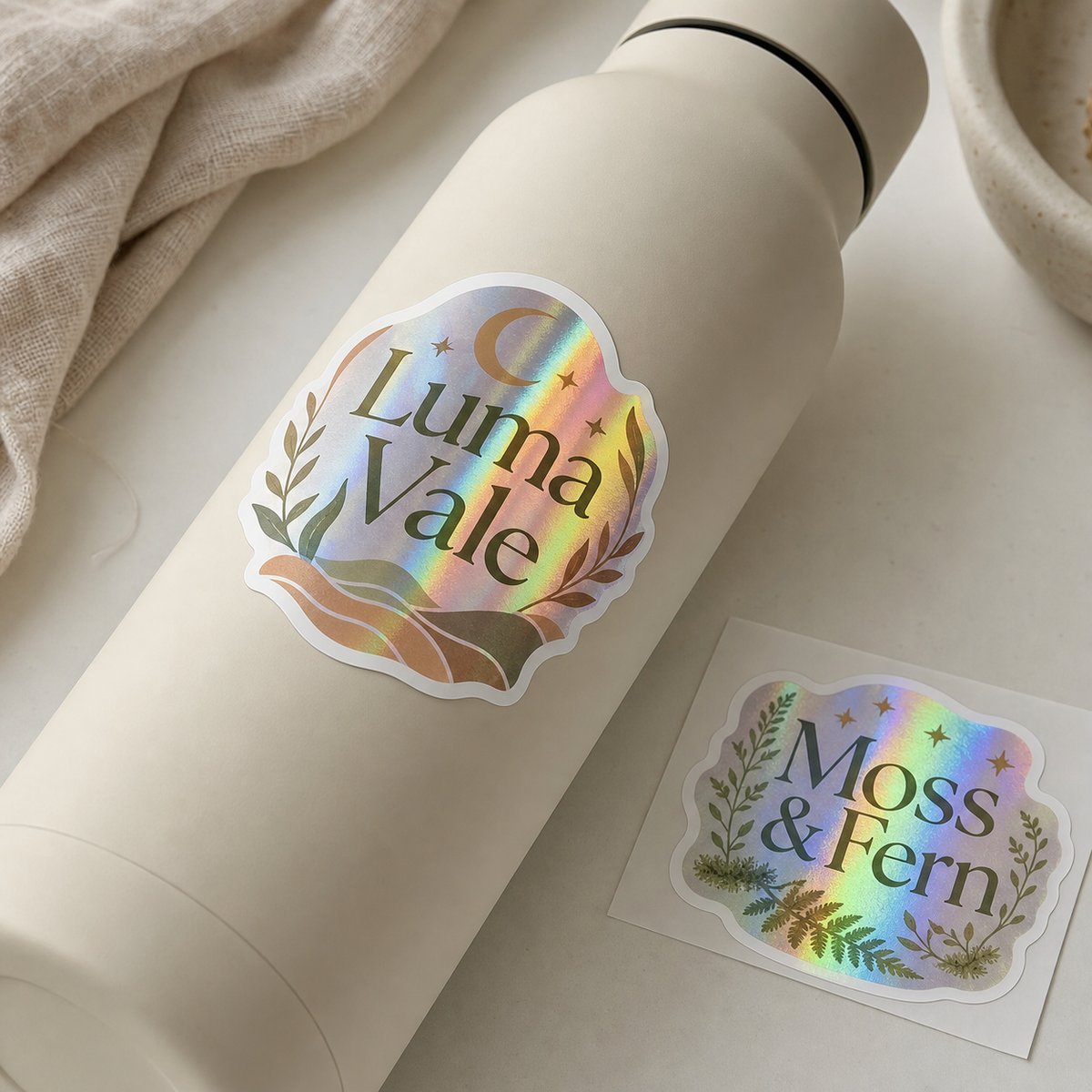
Best uses: limited-edition product launches, premium packaging seals, collectible sticker merchandise, events and brand activations, cosmetics and personal care labels.
These stickers are made from water resistant holographic vinyl and are cut to the shape of your artwork, giving them a comfortable home indoors and a lifespan of up to 2 to 3 years outside. You can buy holographic stickers online for a rainbow finish across the whole surface. See the holographic sticker guide for design and finishing detail.
Foil Stickers
Foil stickers use a metallic foil layer (gold, silver, rose gold) over or in combination with standard print. They read as luxury and are strongly associated with premium products, certificates, awards, and high-end packaging seals.
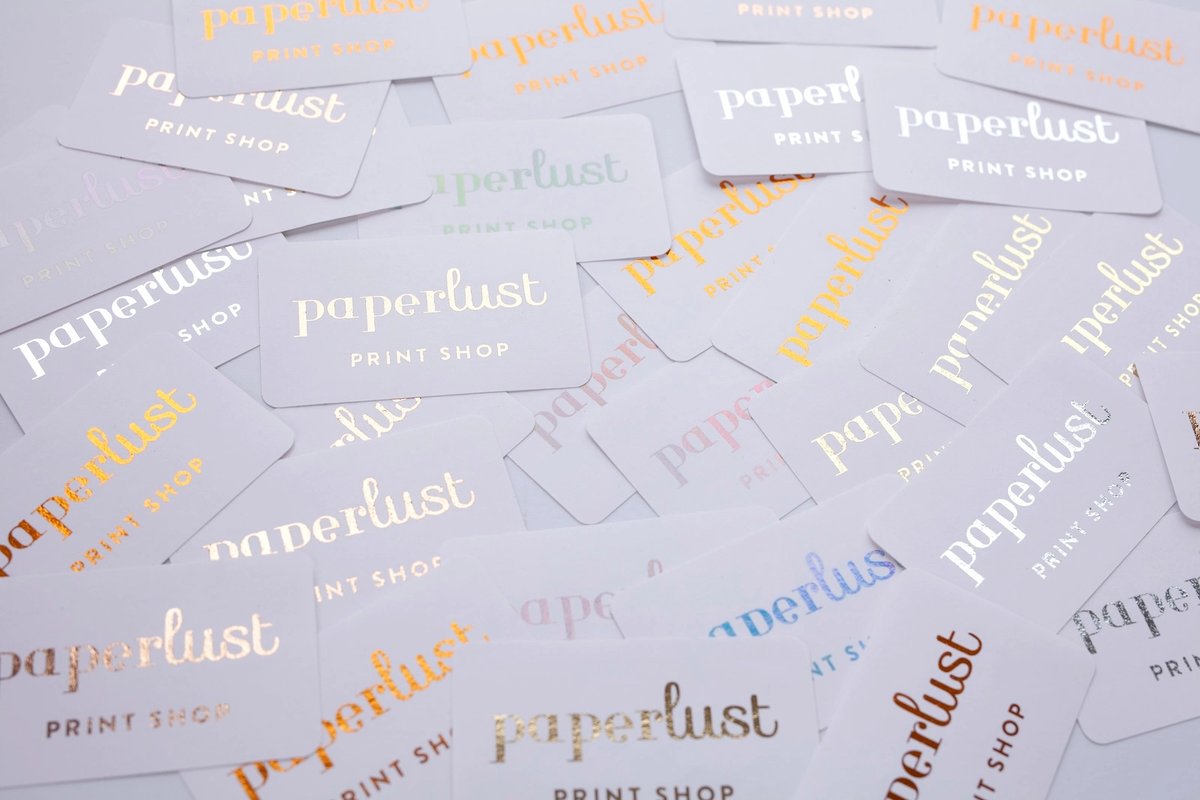
Best uses: product authentication seals, certificate stickers, award labels, premium gift packaging, event stickers for gala and corporate functions.
Foil stickers are generally an indoor-use format. They do not hold up well to water submersion or sustained outdoor conditions.
Bumper Stickers
Bumper stickers are a specific format: large (typically 300 x 100mm or similar), printed on heavy-duty vinyl or polyester with a strong permanent adhesive designed for flat exterior surfaces, particularly vehicle paint and glass.
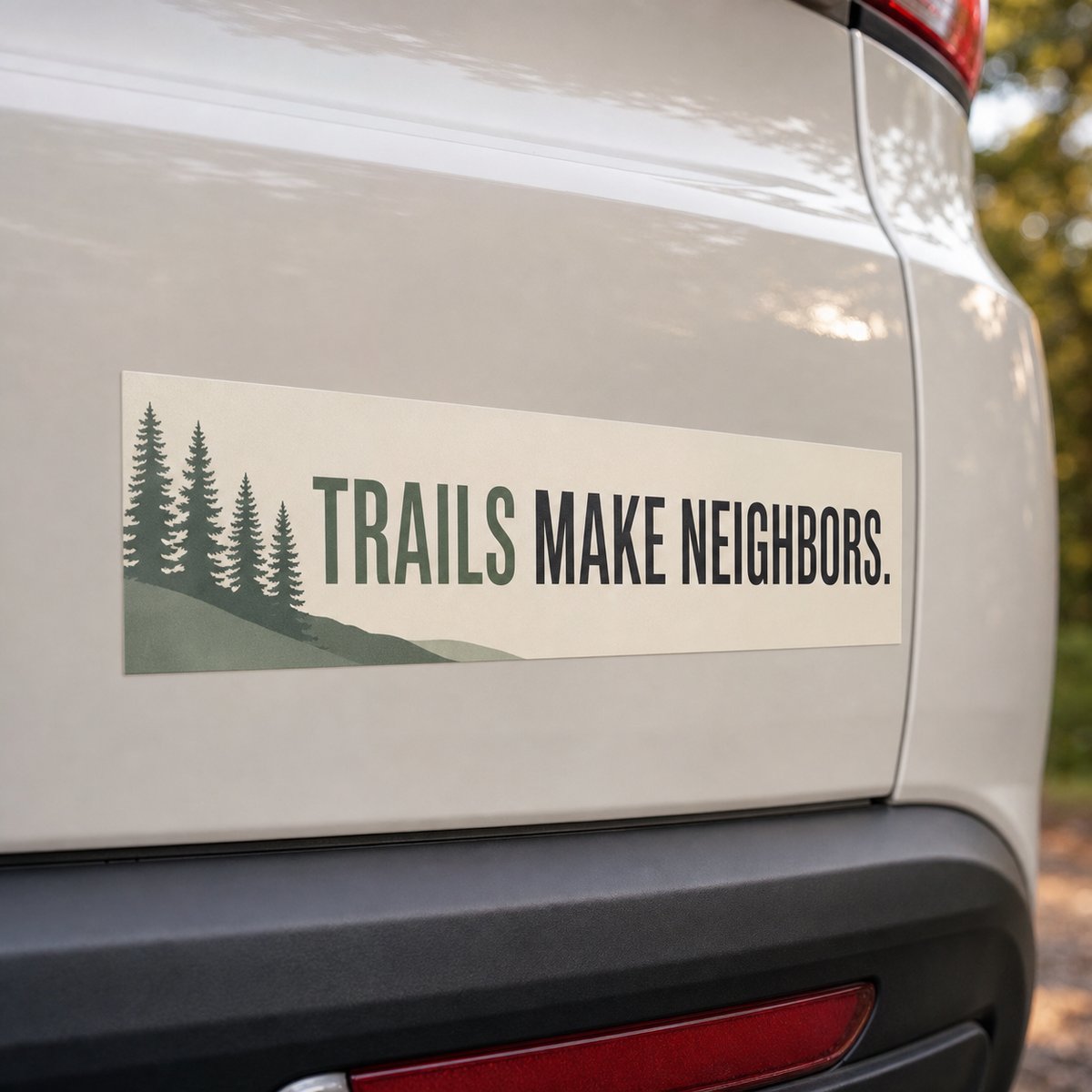
Best uses: political campaigns, community causes, event promotion, vehicle fleet branding at low cost.
Standard vinyl stickers can function as bumper stickers if sized appropriately. The term “bumper sticker” now more broadly refers to the use case (vehicle-applied advocacy or branding) than a distinct material category.
Decal Stickers
Decals are large-format, typically outdoor-rated vinyl stickers applied to vehicles, storefronts, or walls. Vehicle wraps and full-door decals fall into this category. They are installed as graphics rather than peeled from a small backing sheet.
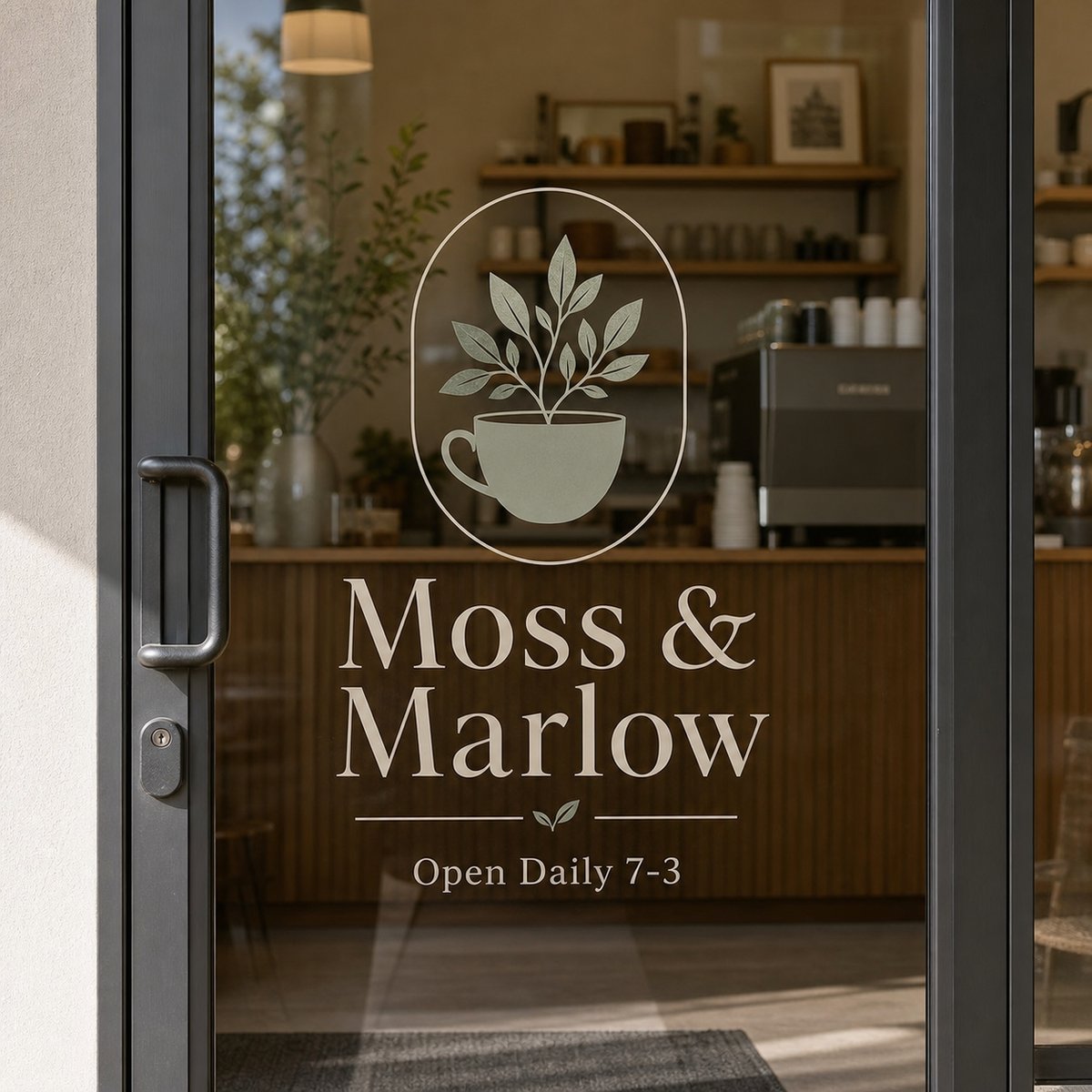
Best uses: vehicle fleet branding, shopfront window and door graphics, wall murals, large promotional graphics.
Decals overlap with window stickers and vehicle stickers in common usage. If the graphic is vehicle-applied and covers a substantial area, it is typically called a decal or wrap. The floor is another surface that carries the term, though floor decals are a separate build with an anti-slip laminate over the print.
Die Cut StickersCustom Stickers
Kiss Cut StickersCustom Stickers
Sticker SheetsCustom Stickers
Circle StickersCustom Stickers
Sticker Formats Compared: Quick-Reference Table
| Sticker Type | Substrate | Best Application |
|---|---|---|
| Die-cut | White matte or gloss paper | Logo stickers, packaging labels, branding |
| Kiss-cut | White matte or gloss paper | Sticker packs, subscriptions, merchandise |
| Vinyl | Polymer film | Outdoor, vehicles, water bottles, laptops |
| Clear | Clear synthetic film | Bottles, glass, candles, windows |
| Sheet | White matte or gloss paper; clear synthetic film | Planners, craft, small-run variety packs |
| Roll | Paper or vinyl | High-volume labelling, product lines |
| Holographic | Foil film | Premium packaging, collectibles, events |
| Foil | Metallic foil | Seals, certificates, luxury packaging |
| Bumper | Heavy-duty vinyl | Vehicles, campaigns |
| Decal | Vinyl / specialty film | Vehicle graphics, shopfronts, murals |
Sticker material: the decision hiding inside the format choice
Most sticker orders start as a format decision, and that is where the trouble begins. You pick a die cut sheet or a clear vinyl sticker because the shape fits the label, then learn during proofing that the material was the choice that actually governed how long the sticker would last outdoors. The material options on a menu can hide that decision behind a format name, so separate the two before you lock in artwork. Format says how the sticker is cut and presented. Material says how it behaves once it is stuck, and on brick, concrete and patterned tile walls the material that holds is a high tack film.
Cut shape and face material are separate choices
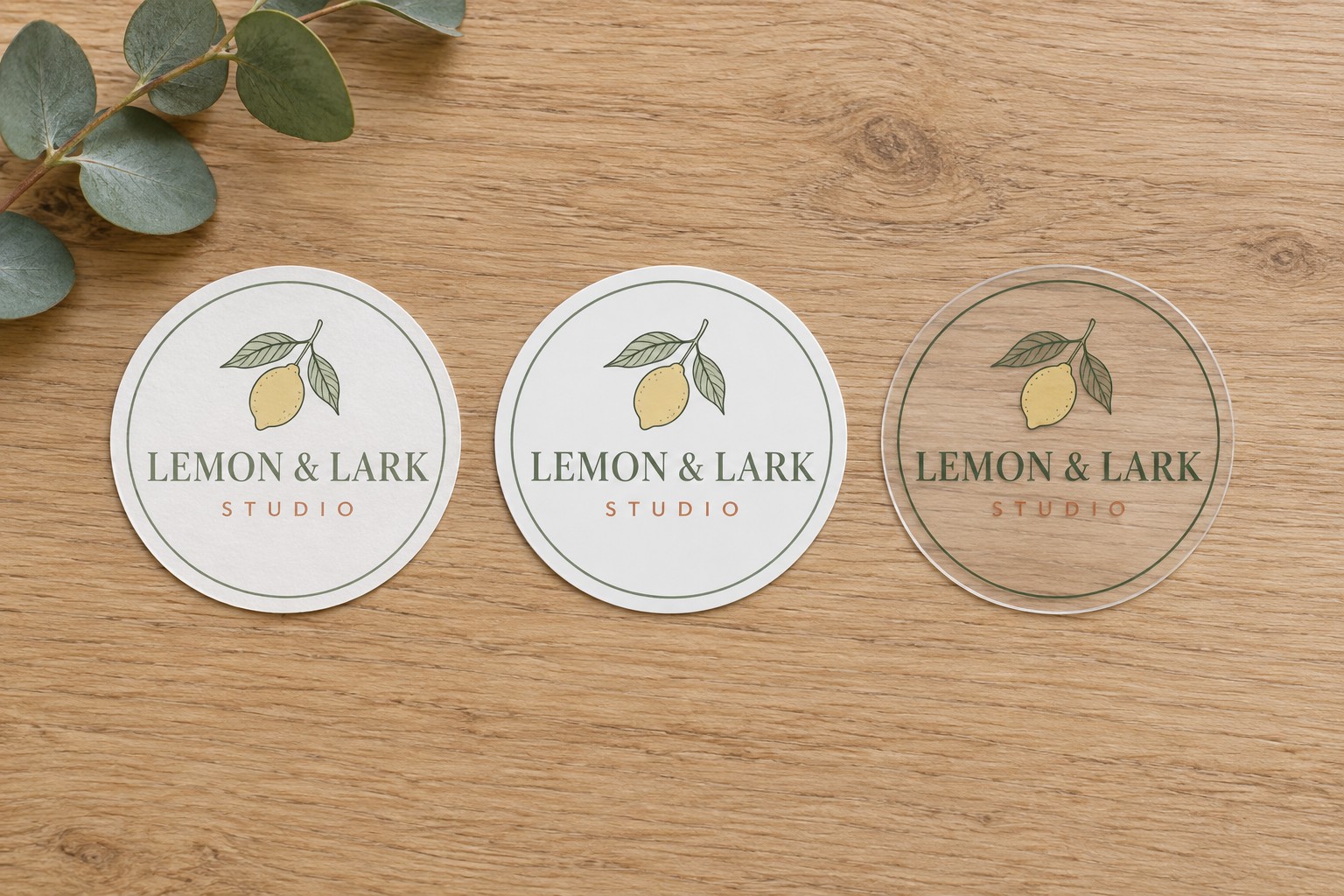
A die-cut outline tells you only how a sticker was cut, not what it is made from. The same outline can be printed on paper sticker stock, white vinyl or clear film, so a die-cut sticker is not automatically vinyl. Our standard die-cut and kiss-cut stickers are paper sticker stock. The material is the part that decides how the sticker behaves once it is stuck.
| How stickers are supplied | White paper sticker stock, gloss or matte | White vinyl | Clear film |
|---|---|---|---|
| Individual stickers in a chosen size | Die Cut Stickers or Kiss Cut Stickers (White Gloss Sticker or White Matte Sticker) | Vinyl Stickers (White Matte Vinyl) | Clear Stickers (Clear Sticker) or Vinyl Stickers (Clear Vinyl) |
| Several stickers on one sheet | Sticker Sheets (White Gloss Sticker or White Matte Sticker) | Not offered | Sticker Sheets (Clear Sticker) |
| Standard circles and rectangles | Circle Stickers or Rectangle Stickers (White Gloss Sticker or White Matte Sticker) | Not offered | Not offered |
Read the table by column first. Dry packaging and handling suit paper stock. Water, sun and washing call for vinyl. See-through jobs call for clear film. Then use the row to choose how the stickers should be supplied: individual stickers in a chosen size, several stickers on one sheet, or standard circles and rectangles.
In the United States shop, for dry packaging and handling, choose die cut stickers on paper stock. Water, sun and washing call for vinyl stickers in waterproof white matte or clear. For a see-through look, clear stickers on synthetic film are the product to pick.
Vinyl
White Matte Vinyl gives an opaque white background for artwork and branding, while Clear Vinyl has a see-through background that lets the surface show through. Choose the colour and transparency that suits the design, and check adhesion and removal suitability on the intended surface before you apply. Both are part of the same Vinyl Stickers range, not separate durability grades, and the same UV-cured print process applies to each appearance.
Clear and speciality films
Clear Stickers are a clear synthetic film with a clear permanent adhesive. Unprinted areas stay see-through with no white border. You can order Digital Print or Foil + Digital Print; the foil option includes a laminate, so it is less clear than Digital Print. That suits bottles, windows and packaging where a white rectangle would interrupt the label. Foil vinyl stickers combine metallic foil with vinyl for outdoor durability. They are the metallic option when the brief asks for shine but the placement still has to live outside, and they do not trade the weather resistance away for the finish.
Holographic is available in two ways. You can order holographic stickers as a full surface rainbow holographic vinyl, die cut to shape and water resistant for up to 2 to 3 years outdoors. Alternatively, holographic is one of five foil colours listed under foil stickers, alongside gold, silver, rose gold and copper, applied to selected areas of the design.
What changes at large format
Large format stickers remain the one sticker product where material is a stated option on the order rather than a property you accepted when you chose the format. The declared options are White Vinyl, Hi-Tack White Vinyl and Clear Vinyl, and the format sizes run 200 x 200 mm, 600 x 200 mm and 600 x 900 mm with a die cut shape finish. The high tack adhesive is there for rough and difficult wall surfaces such as brick, smooth concrete and patterned tile, where a standard adhesive lifts at the edges, and that is the point where you choose the adhesive by specification rather than accepting the default film that came with the format.
Choose the material against the surface and the exposure before the format locks the artwork. Format is the decision you can see in a photo; material is the decision the sticker lives with once it is stuck. A window that gets afternoon sun, a bottle that sits in an esky, a carton that gets thrown around: each one eliminates some films before a single contour is cut. Settle that first, and the rest of the order is composition. Leave it until proofing, and you are designing around a material you never actually chose.
Vinyl, clear, holographic and foil stickers →
Vinyl StickersCustom Stickers
Clear StickersCustom Stickers
Holographic Vinyl StickersCustom Stickers
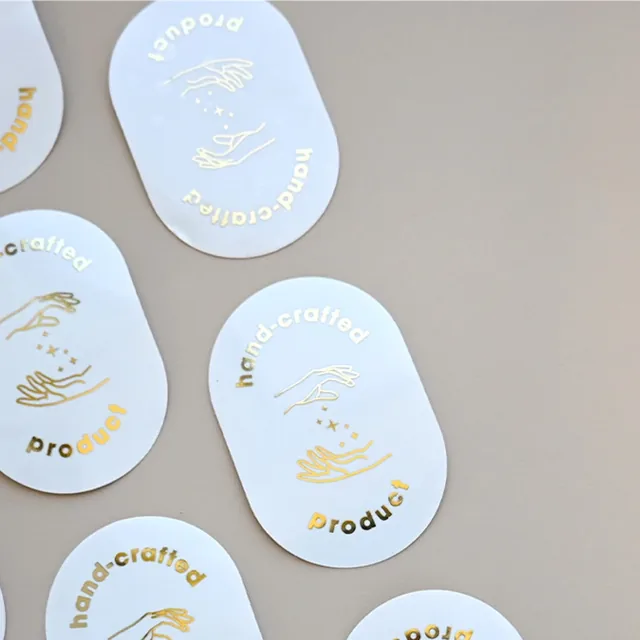
Foil StickersCustom Stickers
Which Sticker for Which Use: A Decision Guide
Not all sticker briefs are the same. Here is how to match format to requirement.
You need a brand logo sticker for packaging
Use die-cut if you want a clean, borderless finish that follows the shape of your logo. Use kiss-cut if your design has fine detail or you want peel-friendly backing for a customer gift or sticker pack. Use clear if the packaging surface is coloured or textured and you want the print to appear directly on the surface.
You need a round seal or a rectangular information sticker
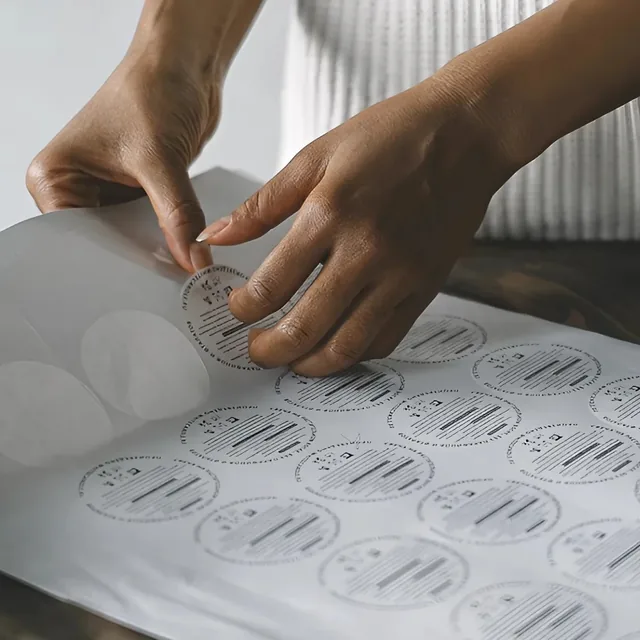
Choose circle stickers for round seals on lids, jars and packaging closures, or for a round logo. They run from 30 to 150 mm diameter. Use rectangle stickers when the job is product information on flat packs, boxes and pouches: ingredients, instructions or barcodes need a straight reading edge. Rectangles come in 40 x 70, 50 x 100, 70 x 120 and 100 x 150 mm, or a custom size. Both stocks are white matte or white gloss paper with an optional laminate.
You need outdoor-rated stickers
Use vinyl (standard or clear). Paper based stickers and foil stickers are not rated for sustained outdoor exposure. A holographic vinyl sticker can survive a season or two outside: the water resistant film lasts up to 2 to 3 years outdoors. For long term rain, vehicle washing or constant sun, standard vinyl is the more dependable choice. Our guide to waterproof stickers for outdoor use works through each substrate and what happens to it in water.
You need product labels at volume
Use roll labels if you are applying labels to products in any kind of volume workflow. They are compatible with manual dispensers and automated applicators. For low-volume artisan products, sheet or kiss-cut stickers allow you to order smaller quantities without a high unit cost. This is the point where many buyers realise they want custom labels rather than stickers: labels are supplied on rolls for product, packaging, and shipping lines, and come in circle, square, clear, and foil options. The waterproof option in that range is our vinyl labels, printed on synthetic film and supplied on 76mm rolls of 500.
You need a premium or luxury feel
Use holographic for a rainbow shifting, eye catching premium effect. Use foil (gold, silver, rose gold) for an understated luxury seal. Use clear for a “no label” premium appearance on glass or bottles. All three have a place on indoor packaging, while the holographic vinyl format can also sit outside for up to 2 to 3 years.
You need a promotional giveaway sticker
Use die-cut or kiss-cut on a paper substrate for an affordable, brandable giveaway that people will actually use. Vinyl is the upgrade if you expect the sticker to end up on water bottles, laptops, or outdoors.
You need vehicle or large-format graphics
Use vinyl decals or a specialist vehicle-wrap product. Standard small-format stickers are not designed for large-scale vehicle application.
Sticker Adhesive Types: Permanent vs Removable
The sticker format describes the visual result, while the material and adhesive are separate specifications. Permanent, removable and repositionable are different requirements. The comparison below is general guidance only. Check the adhesive listed on your chosen product and ask the Paperlust team about temporary removal needs before you order.
| Adhesive | Use When |
|---|---|
| Permanent | Packaging, branding, vehicles, outdoor surfaces. Designed to bond strongly and stay. |
| Removable | Retail pricing labels, temporary campaign stickers, event stickers on surfaces the owner may need to clear. |
| Repositionable | Wall stickers and decorative decals where the end-user may want to move them. |
If you need to remove sticker residue already on a surface, our guide to removing sticky residue covers every common surface.
Surface Pairing: Match the Sticker to the Application
The sticker substrate must be compatible with the surface. Here is a practical pairing guide.
| Surface | Recommended Sticker Type |
|---|---|
| Glass bottles and jars | Clear synthetic film, permanent adhesive |
| Cardboard packaging | Die-cut or kiss-cut paper sticker |
| Plastic containers | Vinyl sticker or clear sticker |
| Vehicle paint and glass | Vinyl sticker or decal |
| Laptop or device | Vinyl sticker, kiss-cut |
| Water bottle (stainless or plastic) | Waterproof vinyl sticker |
| Timber or uneven surfaces | Die-cut vinyl; avoid paper in humid conditions |
| Shopfront window | Clear vinyl decal or window film |
| Fabric or clothing | Specialist heat-transfer or fabric-adhesive products (not standard stickers) |
Stickers and window graphics →

Floor StickersWindow & Floor Graphics

Large Format StickersMagnets & Large Stickers
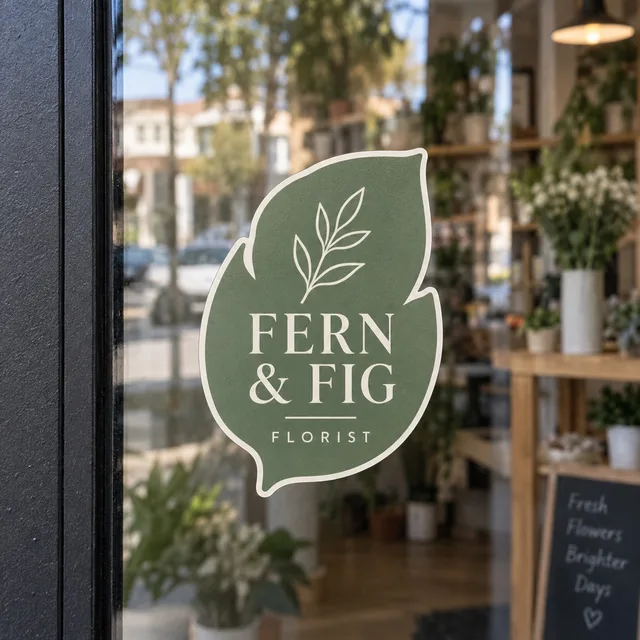
High Tack StickersCustom Stickers
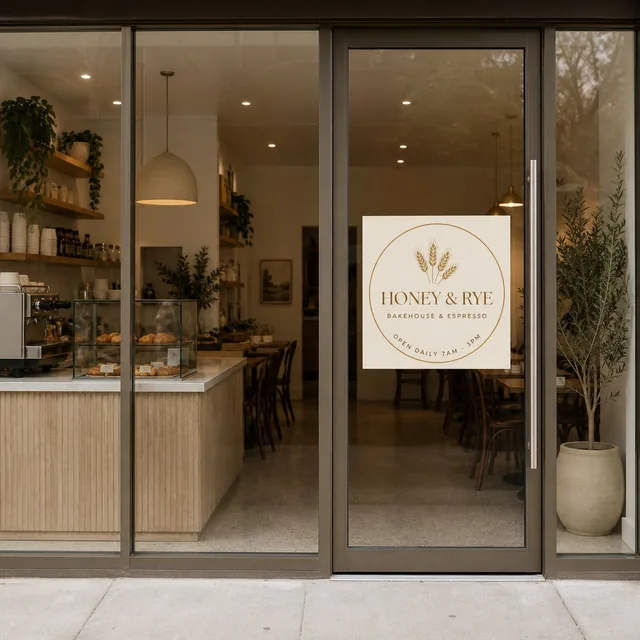
Window GraphicsWindow & Floor Graphics
How to Set Up Your Artwork for Sticker Printing
Regardless of sticker type, these setup rules apply:
- Supply files as CMYK, not RGB. Screen colours shift when converted to print; a well-calibrated CMYK file gives you accurate results.
- Add a bleed and safe zone. For die-cut and kiss-cut stickers, add at least 2mm bleed outside the cut line and keep important design elements at least 2mm inside the cut line.
- Export as a high-resolution PDF or EPS. 300 DPI minimum for any raster elements. Vector art scales cleanly.
- Include the cut path as a separate spot colour layer (typically named “Dieline” or “CutContour”) when supplying die-cut artwork to your printer.
- For clear stickers, add a white underprint to opaque areas. Without a white base, CMYK inks on a clear substrate print translucent, which looks faded on dark packaging.
If you are unsure about file setup, the Paperlust team reviews artwork before printing and can flag issues before they reach the press.
How to Order Stickers in Australia
Paperlust Print Shop offers die-cut stickers, square stickers, and vinyl stickers printed in Melbourne with Australian turnaround times. Upload your artwork, choose your quantity and finish, and get an instant quote.
For clear stickers, holographic, and foil sticker options, check the current product listings or contact the team directly for a quote. Before a full run, try a printed sample on the actual surface, then use how to test sticker samples to check the result.
Frequently Asked Questions
What is the difference between die-cut and kiss-cut stickers?
Die-cut stickers are cut all the way through to the backing, following the exact shape of the design. Kiss-cut stickers are cut through the face material only, leaving the backing sheet intact around the design. The practical result is that kiss-cut stickers are easier to peel and handle, and the backing acts as a border, which suits sticker packs and merchandise. Die-cut gives a cleaner, borderless finish when applied. See our full die-cut vs kiss-cut comparison for more detail.
Are vinyl stickers waterproof?
Yes. Vinyl stickers use a polymer film substrate that does not absorb water. They are rated for outdoor use, vehicle application, and repeated washing. Paper stickers and holographic foil stickers are not waterproof and will lift or delaminate when exposed to sustained moisture.
What is the most durable sticker type for outdoor use?
Paperlust Vinyl Stickers are printed with UV-cured ink and have no laminate. They carry a one-year outdoor guarantee and an expected life of 3 to 5 years with proper application, but sun, heat and abrasion can affect how long the sticker keeps its look. They are not dishwasher safe.
Can I get clear stickers without a white border?
Yes. Clear stickers are printed on a transparent film substrate. When applied to a surface, the clear areas of the sticker become invisible and the printed design appears to sit directly on the surface. If any areas of your design need to be opaque (for example, white text), those areas require a white underprint layer in the artwork file.
What is the minimum order quantity for sticker printing in Australia?
The minimum is 10 per design for die-cut, kiss-cut, vinyl, clear, circle and rectangle stickers. Sticker sheets start at 10 sheets per design, with custom quantities typed in multiples of 10. Vinyl labels come on rolls of 500.
When should I use sheet stickers instead of individual stickers?
Custom sticker sheets can carry repeated copies of one sticker or varied artwork within an approved sheet layout. The Number of Designs field refers to the layout, not the total piece count. Two or more submitted designs normally print on separate sheets unless you ask for them on the same sheet.
Are holographic stickers suitable for outdoor use?
Yes, within limits. Paperlust Print Shop’s holographic vinyl stickers resist water and can stay outdoors for up to 2 to 3 years. If the job will face constant sun, heavy rain or regular washing, standard vinyl remains the longer lasting choice. For a paper sticker, a holographic foil finish is an indoor only option.
How do I choose between a permanent and removable adhesive?
Use permanent adhesive for any sticker that is intended to stay in place for the life of the product, packaging, or surface. Use removable adhesive for temporary retail labelling, event stickers, campaign stickers on rental or shared surfaces, or any application where the surface owner may need to remove the sticker without damage.
Ready to Order?
Choosing the right sticker type makes a tangible difference to how your brand shows up in the world. Browse die-cut stickers and vinyl stickers at Paperlust Print Shop, or contact the team if you need help matching a format to your specific application.