 SOAP NoteStandard · from $31.20 / 50Front & back
Physio and Allied Health Business Cards
Ready-made physio and allied health business cards for clinics, chiropractors, osteopaths, podiatrists, accredited exercise physiologists and massage therapists. Pick a design, add your details, approve the free PDF proof and it prints in Melbourne.
Card type
Colour
More filters
SOAP NoteStandard · from $31.20 / 50Front & back Towel StackColoured Paper · from $41.20 / 50Front & back
 Tape StripStandard · from $43.20 / 50Front & back
 Plumb LineFlat Foil · from $121.60 / 50Front & back
 InsoleStandard · from $31.20 / 50Front & back
 Trigger MapSpot UV · from $164.61 / 250Front & back
 Crutch TagStandard · from $43.20 / 50Front & back
 Lumbar IndexRaised Foil · from $208.96 / 250Front & back
 Walk TestRecycled · from $38.60 / 50Front & back
 PennateScodix · from $183.45 / 250Front & back
 ClipboardStandard · from $38.60 / 50Front & back
 CompassColoured Paper · from $56.20 / 50Front & back
 Stack HeightStandard · from $116.67 / 250Front & back
 Voucher BackFlat Foil · from $126.60 / 50Front & back
 Referral PadStandard · from $31.20 / 50Front & back
 ExhaleColoured Paper · from $41.20 / 50Front & back
 Depth MarkerStandard · from $38.60 / 50Front & back
 Nought To TenColoured Paper · from $41.20 / 50Front & back
 DermatomeStandard · from $31.20 / 50Front & back
 Height ChartColoured Paper · from $68.20 / 50Front & back
 WorkwearStandard · from $62.20 / 50Front & back
 Wheat BagColoured Paper · from $41.20 / 50Front & back
 ArcStandard · from $43.20 / 50Front & back
 Face CradleColoured Paper · from $56.20 / 50Front & back
 Gum LeafColoured Paper · from $68.20 / 50Front & back
Nothing quite right?
A designer creates your card from your brief for $49.90. Two options on the first proof and three rounds of changes.
Matching appointment cards and flyers

What should a physio put on a business card?
Start with your name and profession, written as registered or accredited: Physiotherapist, Chiropractor, Osteopath, Podiatrist, Remedial Massage Therapist or Accredited Exercise Physiologist. Then show the clinic name and address, phone, and a booking link or QR code. Add your Ahpra registration number if you choose to show it, what you treat in plain words, and only the health fund, GP care plan or NDIS lines that apply. A space on the back for the next appointment is the practical detail patients keep.
Does a physio or chiropractor need their Ahpra number on the card?
In Australia, showing the Ahpra number is optional. If you show it, use the three-letter profession code plus 10 digits, such as PHY for a physiotherapist or CHI for a chiropractor, and label it as the registration number. Do not use it as a quality mark. Registration is managed by Ahpra and the national boards under the Health Practitioner Regulation National Law.
Can a physio card say specialist or show reviews?
Registered physiotherapists, chiropractors and osteopaths cannot use specialist, specialises in or specialty, because those words imply specialist registration that does not exist in those professions. Write works mainly with runners, substantial experience in, or sports chiropractor. A college-awarded physio title must be spelled out in full, for example Specialist Musculoskeletal Physiotherapist (as awarded by the Australian College of Physiotherapists in 2008). Testimonials and star ratings about clinical care are out, so no QR code that links to reviews.
What can a remedial massage therapist call themselves?
Remedial massage is not registered with Ahpra, so a card cannot say registered health practitioner and cannot use physiotherapist, chiropractor, osteopath or podiatrist. The safe title is Remedial Massage Therapist. Health fund provider numbers belong to one person at one clinic address, and mobile services or PO boxes are not accepted as clinic addresses. Massage and Myotherapy Australia members use AAMT plus their member number where a fund has not issued its own.
What can an allied health card say about health fund rebates or GP care plans?
For health fund rebates, write only what the practitioner can claim. Remedial massage providers need a fund-issued provider number tied to one person at one clinic address. HICAPS goes on the card only when there is an active facility for the funds claimed. Since 1 July 2025 GP chronic condition management plans cover up to 5 allied health services a calendar year, so write GP care plan referrals welcome, never free with Medicare. For NDIS, write Registered NDIS provider only if registered with the NDIS Quality and Safeguards Commission, or NDIS participants welcome (plan-managed and self-managed) if unregistered.
Which card suits a clinic, a mobile massage therapist or a podiatrist, and how does ordering work?
Clinics and podiatrists often choose Standard Business Cards for the 300 GSM or 450 GSM Artboard range and the front and back option. A mobile massage therapist may prefer Coloured Paper Business Cards, which print on coloured stock in CMYK or white ink, or Recycled Business Cards for a bright uncoated feel. Choose a ready design, add your details on the Upload Artwork step, approve the free PDF proof, and nothing prints until you do.
Frequently Asked Questions
What should a physio put on a business card?
Start with your name and profession, written as registered or accredited: Physiotherapist, Chiropractor, Osteopath, Podiatrist, Remedial Massage Therapist or Accredited Exercise Physiologist. Then show the clinic name and address, phone, and a booking link or QR code. Add your Ahpra registration number if you choose to show it, what you treat in plain words, and only the health fund, GP care plan or NDIS lines that apply. A space on the back for the next appointment is the practical detail patients keep.
Does a physio or chiropractor need their Ahpra number on the card?
In Australia, showing the Ahpra number is optional. If you show it, use the three-letter profession code plus 10 digits, such as PHY for a physiotherapist or CHI for a chiropractor, and label it as the registration number. Do not use it as a quality mark. Registration is managed by Ahpra and the national boards under the Health Practitioner Regulation National Law.
Can a physio card say specialist or show reviews?
Registered physiotherapists, chiropractors and osteopaths cannot use specialist, specialises in or specialty, because those words imply specialist registration that does not exist in those professions. Write works mainly with runners, substantial experience in, or sports chiropractor. A college-awarded physio title must be spelled out in full, for example Specialist Musculoskeletal Physiotherapist (as awarded by the Australian College of Physiotherapists in 2008). Testimonials and star ratings about clinical care are out, so no QR code that links to reviews.
What can a remedial massage therapist call themselves?
Remedial massage is not registered with Ahpra, so a card cannot say registered health practitioner and cannot use physiotherapist, chiropractor, osteopath or podiatrist. The safe title is Remedial Massage Therapist. Health fund provider numbers belong to one person at one clinic address, and mobile services or PO boxes are not accepted as clinic addresses. Massage and Myotherapy Australia members use AAMT plus their member number where a fund has not issued its own.
What can an allied health card say about health fund rebates or GP care plans?
For health fund rebates, write only what the practitioner can claim. Remedial massage providers need a fund-issued provider number tied to one person at one clinic address. HICAPS goes on the card only when there is an active facility for the funds claimed. Since 1 July 2025 GP chronic condition management plans cover up to 5 allied health services a calendar year, so write GP care plan referrals welcome, never free with Medicare. For NDIS, write Registered NDIS provider only if registered with the NDIS Quality and Safeguards Commission, or NDIS participants welcome (plan-managed and self-managed) if unregistered.
Which card suits a clinic, a mobile massage therapist or a podiatrist, and how does ordering work?
Clinics and podiatrists often choose Standard Business Cards for the 300 GSM or 450 GSM Artboard range and the front and back option. A mobile massage therapist may prefer Coloured Paper Business Cards, which print on coloured stock in CMYK or white ink, or Recycled Business Cards for a bright uncoated feel. Choose a ready design, add your details on the Upload Artwork step, approve the free PDF proof, and nothing prints until you do.
Learn More
What physio business cards should show
Patients glance at a card between check-in and the treatment room, so the details have to land in the order they look for them. Begin with who is treating them, then where the clinic is and how to book, and let the rest support the decision.
- Your name and profession, written the way it is registered or accredited: Physiotherapist, Chiropractor, Osteopath, Podiatrist, Remedial Massage Therapist or Accredited Exercise Physiologist.
- Clinic name and address.
- Phone number and a booking link or QR code.
- Ahpra registration number where you choose to show it.
- What you treat in everyday language.
- Only the extras that apply: health fund details, a GP care plan line or an NDIS line.
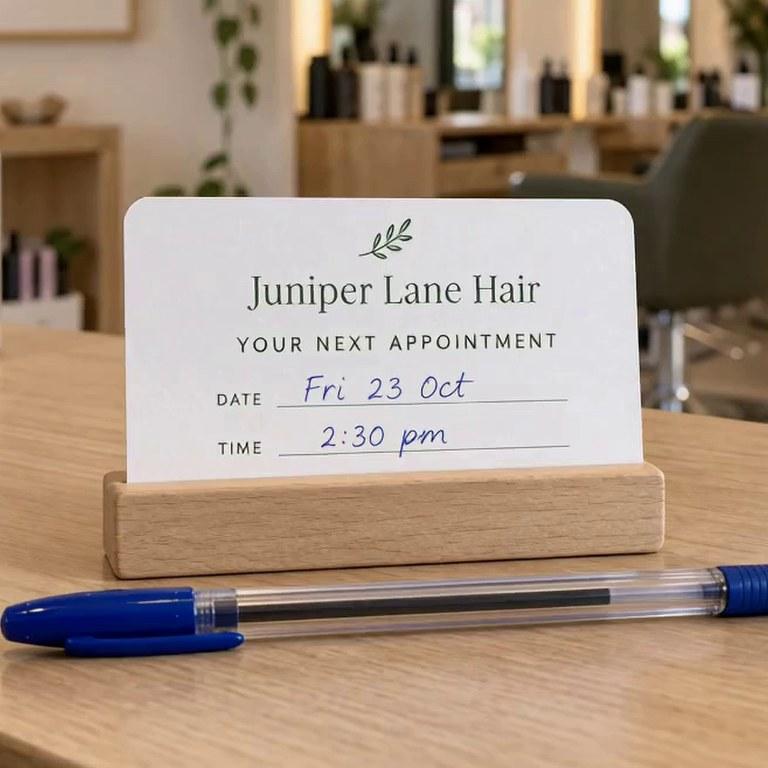
- A blank next-appointment area on the reverse.
What an allied health card may and may not say
Physiotherapy business cards and chiropractor cards count as advertising under Ahpra rules, so wording starts with what registration allows. Only a registered practitioner may call themselves a physiotherapist, physical therapist, chiropractor, osteopath, podiatrist or chiropodist. Massage, myotherapy, Bowen therapy and reflexology are not on the Ahpra register, so their cards never claim to be a registered health practitioner and never use a protected title.
If you add your Ahpra number, use the three-letter profession code and 10 digits, such as PHY for a physiotherapist or CHI for a chiropractor, and label it as your registration number, not a quality mark. Avoid specialist, specialises in and specialty for physiotherapy, chiropractic and osteopathy, because those words point to a specialist registration that does not exist. Write works mainly with runners, substantial experience in, or sports chiropractor. A college-awarded physio title appears in full, for example Specialist Musculoskeletal Physiotherapist (as awarded by the Australian College of Physiotherapists in 2008). A chiropractor or osteopath who uses Dr puts the profession right next to it: Dr Lee (Osteopath).
Registered practitioners cannot show testimonials, star ratings about clinical care, or a QR code that links to reviews. Any gift, discount or first-visit offer needs its terms on the card. Do not promise a fixed outcome, claim to be the top choice, or include anything that encourages unnecessary visits. For an exercise physiologist, the line is Accredited Exercise Physiologist (AEP), because ESSA accreditation applies rather than Ahpra registration.
Remedial massage health fund provider numbers sit with one person at one clinic address. Mobile addresses and PO boxes do not meet the clinic address requirement. Massage and Myotherapy Australia members use AAMT plus their member number where no fund number has been issued. HICAPS belongs on a card only when there is an active facility for the funds being claimed.
From 1 July 2025 the GP chronic condition management plan covers up to 5 allied health services in a calendar year, so the card line is GP care plan referrals welcome, never free with Medicare. NDIS wording says Registered NDIS provider only with NDIS Quality and Safeguards Commission registration, never NDIS approved. An unregistered practitioner writes NDIS participants welcome (plan-managed and self-managed). On ABNs, ASIC does not require an ACN on business cards, and the ATO has no rule forcing a sole trader to print an ABN there. Company names and numbers belong on invoices and similar documents. When a line worries you, check the Ahpra advertising hub or your national board before printing.
Choosing the card behind the design
Physio business cards need to survive a wallet, a car console and a damp bathroom shelf, so stock matters as much as layout. Most designs here were built for Standard Business Cards, which print at 90 x 55 mm on 300 GSM Matte, Linen, Cotton or Metallic, or 450 GSM Artboard with Velvet Laminate, front only or front and back.
Coloured Paper Business Cards create a deeper first impression on 270 GSM Black or Navy, 290 GSM Kraft, 300 GSM Forest Green, Hunter Green, Burgundy, Cream and more, in CMYK or white ink. Recycled Business Cards are the uncoated, bright option: 350 GSM ecoStar+ 100% recycled board about 0.45 mm thick, with FSC Recycled and EU Ecolabel on the paper maker's specification sheet.
If the design started on Standard Business Cards, it can move to Rounded Corner Business Cards and Recycled Business Cards, so one layout can serve a whole team. Designs built around a finish or coloured stock stay on their original card, and many can also appear as a Standard edition, the same layout printed flat on Standard Business Cards.
From gallery proof to the treatment room
Choose a ready design and it opens on the card it was made for, with the recommended options already selected. On the Upload Artwork step, enter your name, business name, phone, email and any registration details your trade requires. We set those into the layout and email a free PDF proof within 1 to 2 business days. Nothing prints until you approve it. A ready design carries no set-up fee. We can move the design to another shape or orientation in-house at no charge. Each design shows both sides in several colourways. For design changes or a card from your logo, the Custom Design service provides a dedicated designer, two first-proof options and three revision rounds. If physio business cards here are not the right fit, browse other business card designs.
Matching print for the whole clinic
Carry the same name, colour and wording from the card to the paper patients keep. Appointment Cards give each patient the next session time and a line for the exercise to remember, plus the clinic phone number. Flyers for GPs and other referrers state what the clinic treats and how to refer. The clinic print kit helps you gather the full set for the practice.
Proof first, print second
Every ready physio and allied health card starts with a free PDF proof. No job goes to print until you approve it.
Your cards are produced in Melbourne, and a ready design carries no set-up fee, so you pay only the card's print price.
Business Cards by industry
- Beauty business cards
- Builder business cards
- Cafe and Food business cards
- Cleaning business cards
- Corporate business cards
- DJ and Events business cards
- Electrician business cards
- Fitness business cards
- Florist business cards
- Hair and Barber business cards
- Health Clinic business cards
- Lawn Mowing and Landscaping business cards
- Lawyer and Conveyancer business cards
- Mechanic and Car Detailing business cards
- Photographer business cards
- Plumbing business cards
- Real Estate business cards